
The Nervous System and Homeostasis Chapter 11 1


- Slides: 92
The Nervous System and Homeostasis Chapter 11 1
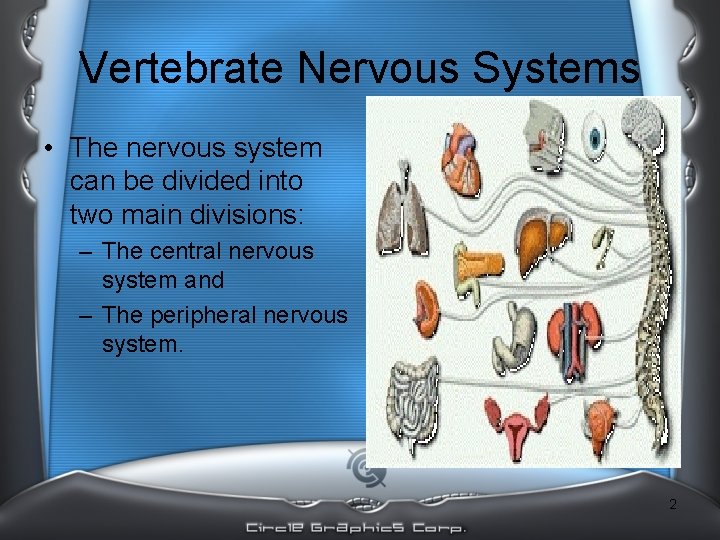
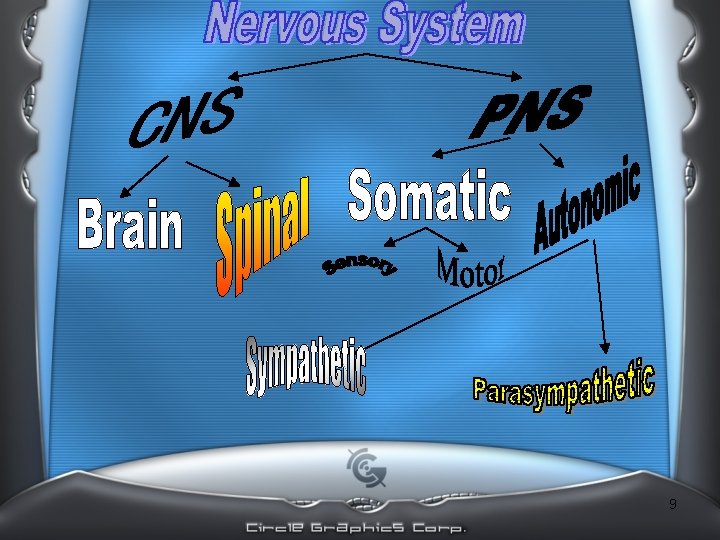
Vertebrate Nervous Systems • The nervous system can be divided into two main divisions: – The central nervous system and – The peripheral nervous system. 2
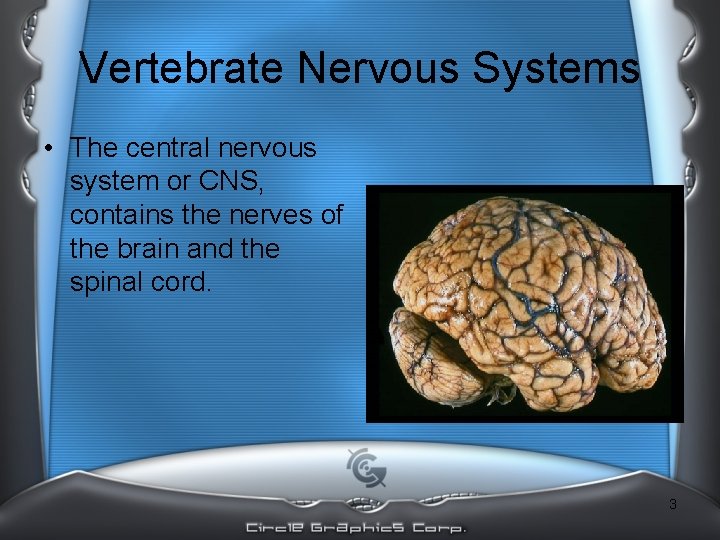
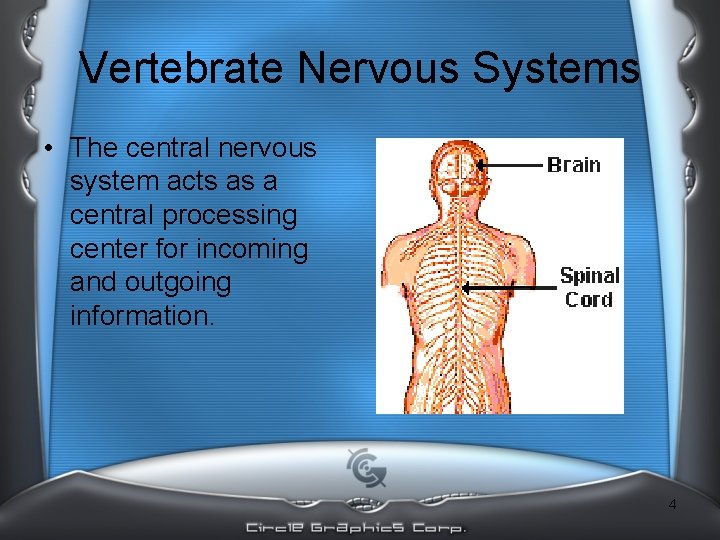
Vertebrate Nervous Systems • The central nervous system or CNS, contains the nerves of the brain and the spinal cord. 3
Vertebrate Nervous Systems • The central nervous system acts as a central processing center for incoming and outgoing information. 4
CNS 5
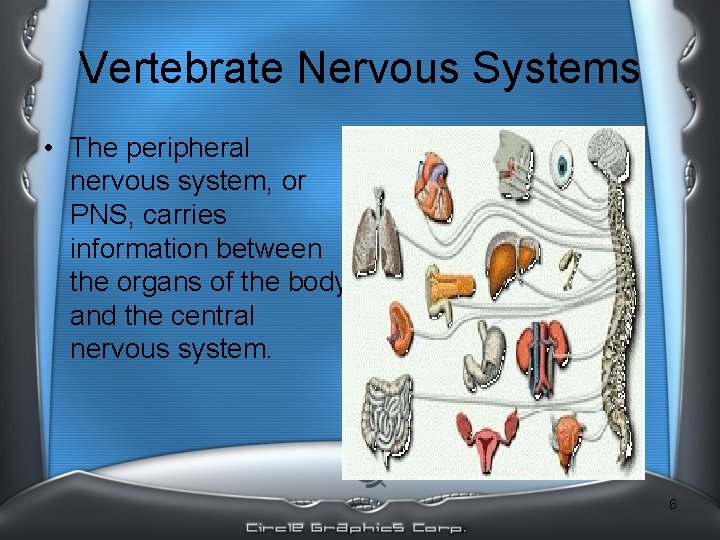
Vertebrate Nervous Systems • The peripheral nervous system, or PNS, carries information between the organs of the body and the central nervous system. 6
Vertebrate Nervous Systems • The PNS can be further divided into somatic and autonomic nerves. • Somatic nerves are those that control skeletal muscle, bones, and skin. • Sensory somatic nerves relay information about the environment to the CNS, while motor somatic nerves initiate an appropriate response. 7
Vertebrate Nervous Systems • The autonomic nerves are special motor nerves that are designed to control the internal organs of the body. • The two divisions of the autonomic system – the sympathetic and parasympathetic. 8
9
• The nervous system contains two different types of cells. • These are glial cells and neurons. 10
• Glial cells are often called neuroglial cells. • These are nonconducting cells used for structural support and metabolism within the nerve cell. 11
• Neurons are the functional unit of the nervous system. • They are categorized into three groups: the sensory neurons, the interneuron's and the motor neurons. 12
• Sensory neurons relay information about the environment to the central nervous system. • Eyes=light, skin=pressure, mouth=taste… 13
• Interneurons link neurons with the body. • They are found mainly in the brain and spinal cord, they integrate and interpret the sensory information and connect incoming sensory neurons to outgoing motor neurons. 14
• Motor neurons relay information to the effectors. • Muscles and glands are effectors because they cause things to happen (reactions). 15
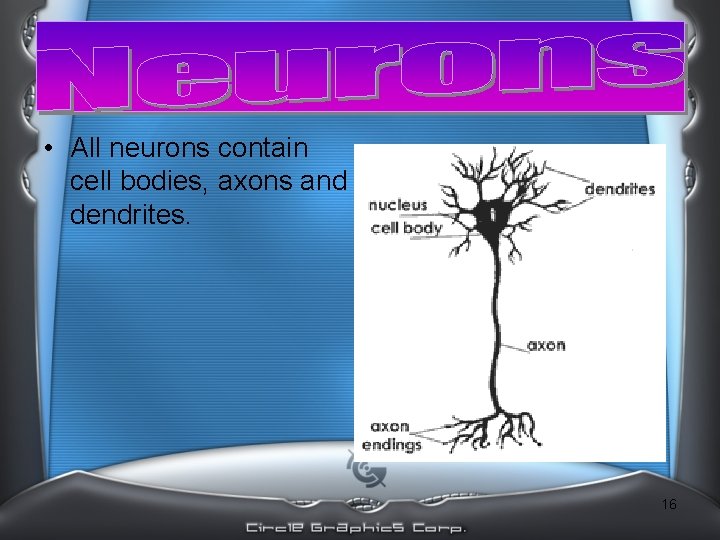
• All neurons contain cell bodies, axons and dendrites. 16
• Dendrites receive information. • They do this in two ways: either from specialized receptors, as in the case of sensory neurons, or from other nerve cells, as in the case of motor neurons. • Dendrites conduct nerve impulses towards the cell body. (cell body with a nucleus) 17
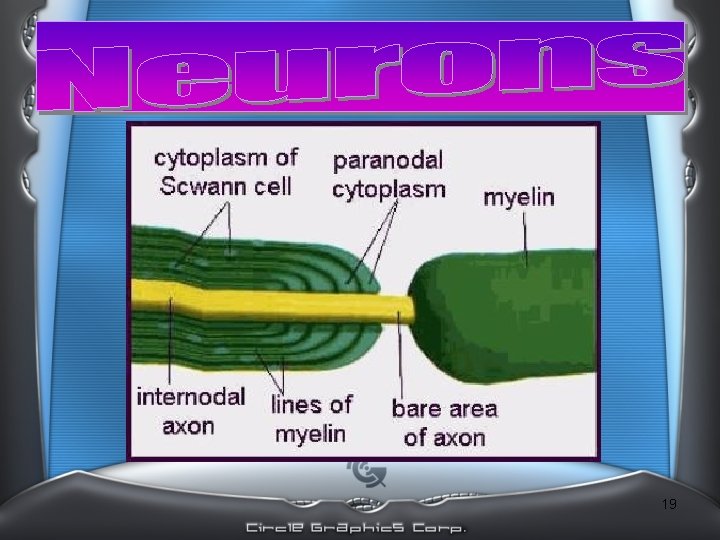
• Axons are extensions of the cytoplasm. • They carry nerve impulse away from the cell body. • The axon is extremely thin. • Many axons are covered with a coat of fatty protein called a myelin sheath. • This acts as insulation for the neurons. 18
19
• The myelin sheath is formed by Schwann cells. • It prevents the loss of charged ions from the nerve cell. • The sections of uncovered nerve between the myelin sheath are known as nodes of ranvier. 20
21
• If a nerve has a myelin sheath it is called myelinated. • Nerve impulses jump from one node to another. • This jumping drastically speeds up the nerve impulse. 22
• With this in mind which nerve do you think conduct impulses faster, myelinated or unmyelinated? 23
• The speed is also affected by the diameter of the axon. • The smaller the diameter of the axon, the faster the message is passed. 24
• All nerves found in the peripheral nervous system contain a thin membrane named the neurilemma. • The neurilemma surrounds the axon and promotes the regeneration of damaged axons. 25
• Nerves in the brain that contain myelinated fibers and a neurilemma are called WHITE MATTER. • Other nerves in the brain and spinal cord are referred to as GRAY MATTER. 26
• Because it’s the neurilemma that fixes nerves, the gray matter doesn’t heal if it gets damaged. 27
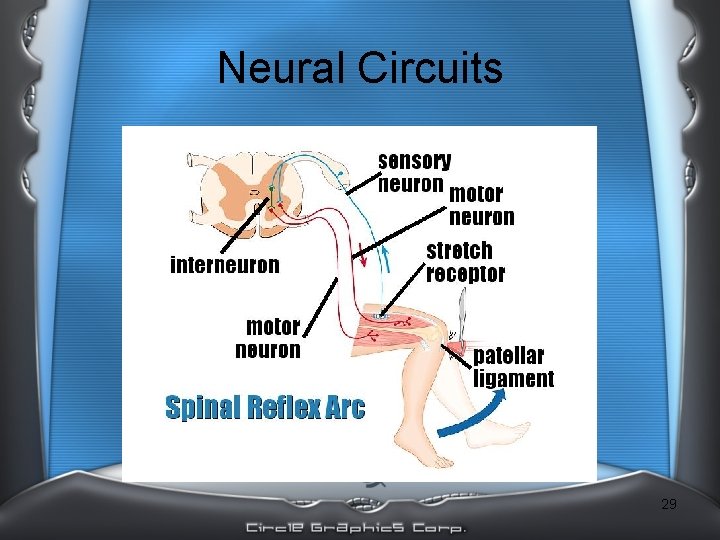
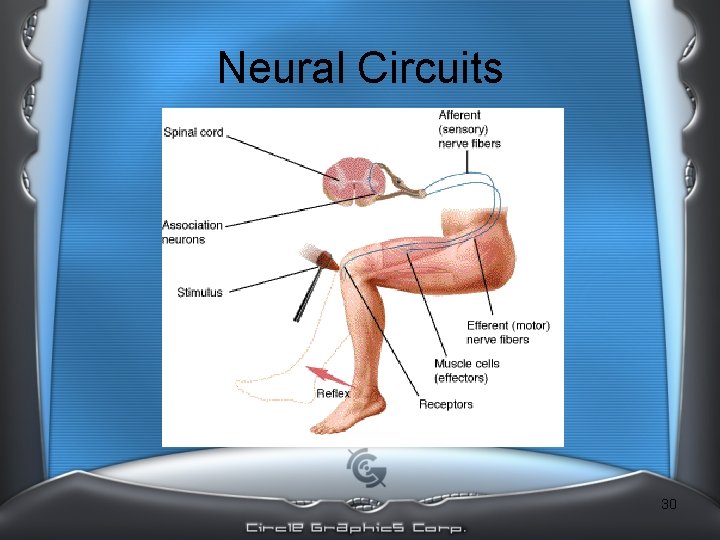
Neural Circuits • The simplest neural pathway is called a reflex arc. • Here the reflex occurs without brain coordination. • Reflex arcs contain five components: the receptor, the sensory neuron, the interneuron in the spinal cord, the motor neuron and the effecter. 28
Neural Circuits 29
Neural Circuits 30
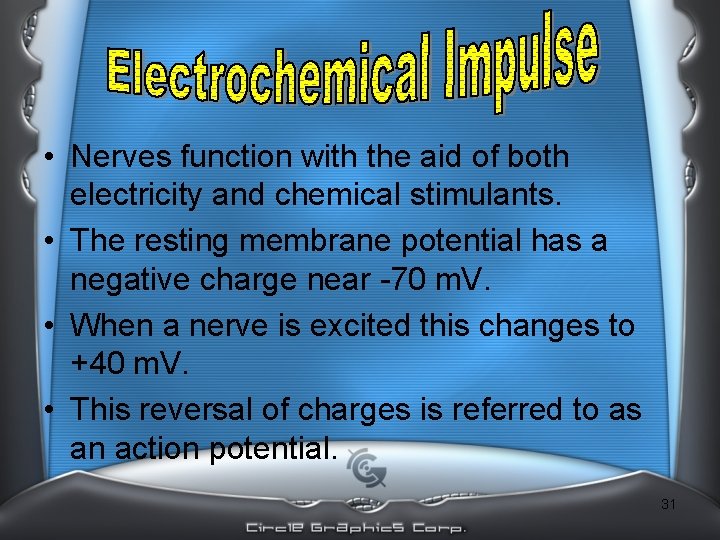
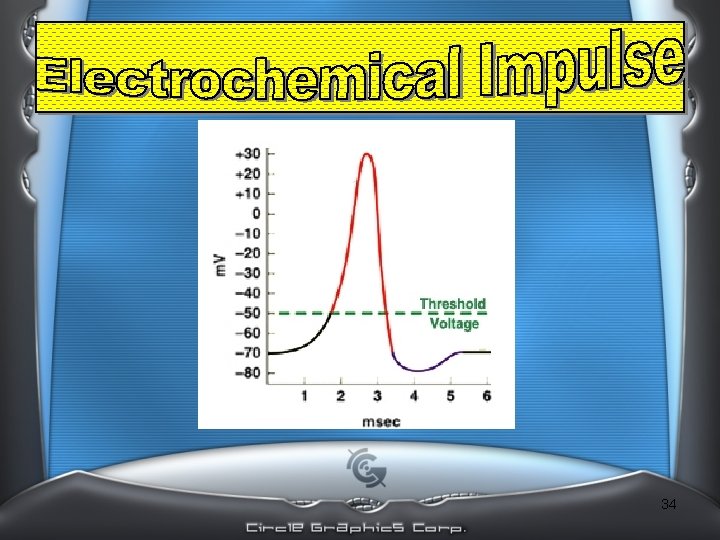
• Nerves function with the aid of both electricity and chemical stimulants. • The resting membrane potential has a negative charge near -70 m. V. • When a nerve is excited this changes to +40 m. V. • This reversal of charges is referred to as an action potential. 31
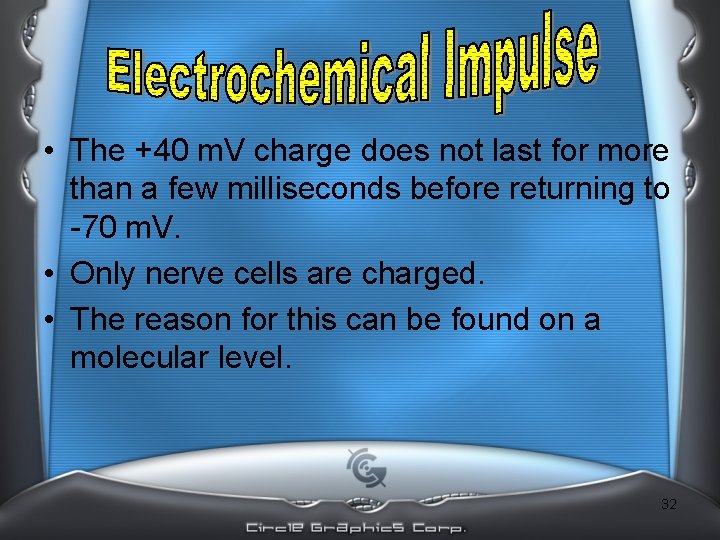
• The +40 m. V charge does not last for more than a few milliseconds before returning to -70 m. V. • Only nerve cells are charged. • The reason for this can be found on a molecular level. 32
• Neurons have a rich supply of positive and negatively charged ions both inside and outside the cell. • The electrochemical event is caused by an unequal concentration of positive ions across the nerve membrane. 33
34
• A potassium pump, located in the cell membrane, pulls potassium ions into the cell. • A sodium pump pushes sodium outside of the cell. • The highly concentrated potassium ions in the cells have a tendency to diffuse out, similarly for sodium coming in. 35
• The resting membrane is said to be charged or POLARIZED. • A charge of -70 m. V (millivolts) indicates the difference between the number of positive charges found on the inside of the nerve membrane compared to those on the outside. 36
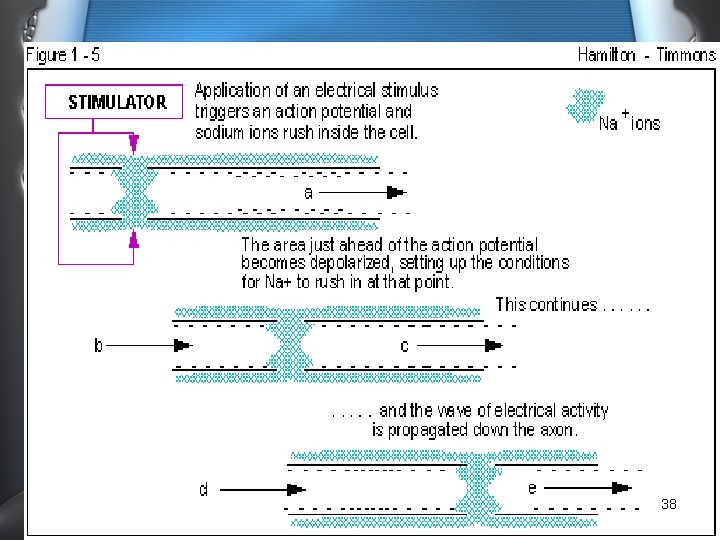
• When a nerve cell is excited, the membrane becomes more permeable to sodium than potassium. • The highly concentrated sodium ions rush into the nerve cell and charge attraction. • This rapid influx of ions causes a charge reversal or DEPOLARIZATION. 37
38
• Once the voltage inside the nerve becomes positive, the sodium gates slam closed and the inflow of sodium is stopped. • The potassium gates open and they diffuse out of the cell. 39
• The sodium and potassium are now of opposite sides as to where they started. • The pumps soon fix this and all is regained. • The energy supply from ATP maintains the polarized membrane. • Repolarization is the process of restoring the original polarity. It takes about 0. 001 s 40
• Nerves conducting an impulse cannot be activated until it has been repolarized completely. • The period of time required for a nerve cell to become repolarized is called the REFRACTORY PERIOD. • It usually lasts between 1 and 10 milliseconds. 41
Threshold level • This is the minimum required intensity of the stimulus to incur a reaction. • Any stimulus below this level does not initiate a reaction. • Increasing the intensity of the stimuli above the critical threshold does not produce an increased response. 42
All or none • This is known as the all or none response. • Nerves don’t react halfway, it’s all or nothing. • The frequency is the difference when it comes to varying stimuli. • The greater a stimulus, the greater the frequency of impulses. 43
All or none • Different nerve cells also have different threshold levels. • One nerve might fire if you touch a 40 degree burner, while two might fire if it’s 50 degrees… • The greater the number of impulses reaching the brain, the greater the intensity of the response. 44
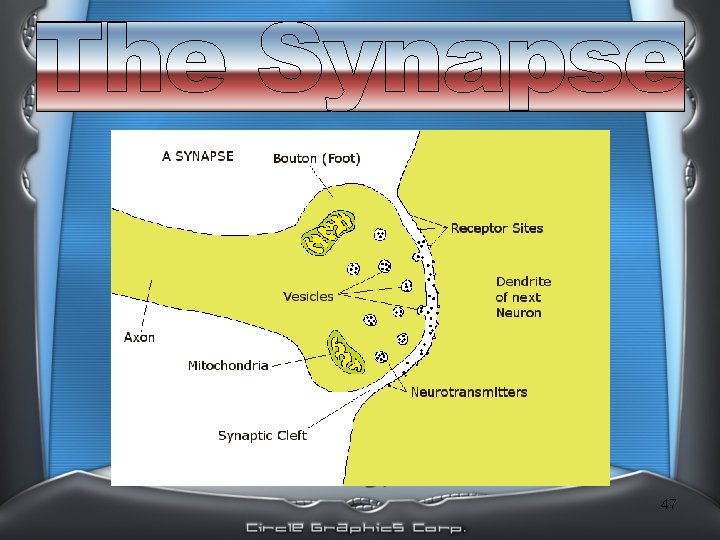
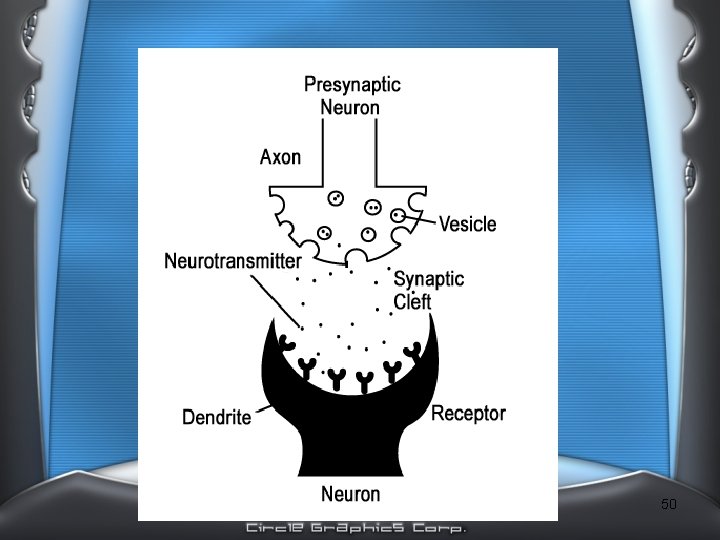
• A synapse is a small space between neurons, or between neurons and effectors. • They rarely are only two meeting. • Small vessicles (sacs) containing transmitter chemicals are located in the end plates of axons. 45
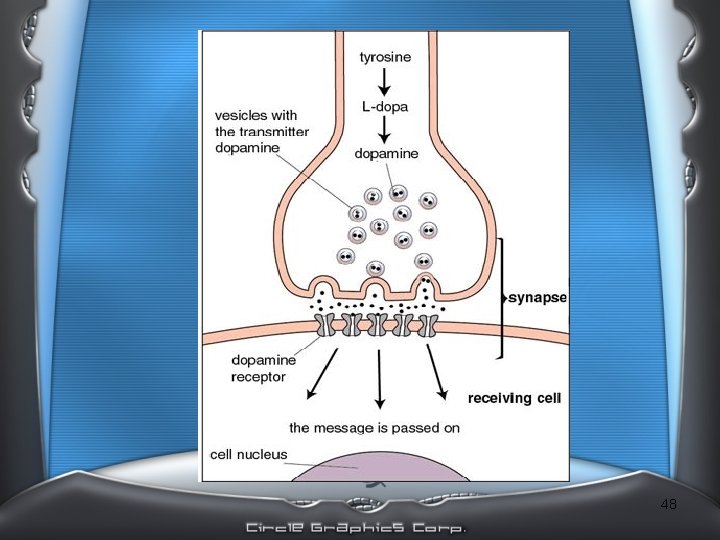
• The transmitter chemicals are released from the presynaptic neuron. (before the synapse). • They diffuse across the synapse and cause depolarization in the postsynaptic neurons. In the dendrites. 46
47
48
• Nerve transmission slows across the tiny synapse. • Diffusion is a slow process. • Reflex arcs have few synapses to cross. 49
50
• These are the chemicals that cause depolarization. • Acetylcholine is a typical transmitter found in the plates of axons. • Acetylcholine can act as an excitatory transmitter that can act on many postsynaptic neurons by opening sodium ion channels. 51
• The release of cholinesterase follows the acetylcholine and destroys it. • Otherwise the acetylcholine would keep the gates open and a second response could not come through. • Once destroyed, the gates close. 52
• Inhibitory transmitter chemicals make the postsynaptic membrane more permeable to potassium. • This creates a hyperpolarized nerve cell. • That is, it’s even more negative and more sodium gates are required to be open to activate the cell. 53
• Other neurotransmitters include: serotonin, dopamine, gamma-aminobuteric acid (GABA), and glutamic acid. • Norepinephrine (noradrenaline) are also neurotransmitters found in both central and peripheral nervous systems. 54
• Summation is when two excitatory neurons are needed to fire a third. 55
Disorders • Various disorders have been associated with transmitter chemicals. • Parkinson’s, is inadequate levels of dopamine, causes involuntary muscle tremors and contractions. • Alzheimer's, depression, schizophrenia…etc. 56
Homeostasis and the Autonomic Nervous System • The autonomic nervous system is part of the peripheral nervous system. • All autonomic nerves are motor nerves that act automatically. • That is, without conscious control. 57
Homeostasis and the Autonomic Nervous System • Somatic nerves are those that are consciously controlled. • Autonomic nerves act to restore homeostasis (balance). • The autonomic system is made of two systems. • The sympathetic and parasympathetic. 58
• The sympathetic system prepares the body for stress, while parasympathetic returns it to normal. 59
Origins • The sympathetic nerves come from the thoracic vertebrae and lumbar vertebrae. • The parasympathetic nerves come from the brain and cervical area as well as caudally (tail bone). 60
• Nerves that leave directly from the brain are called cranial nerves. • The VAGUS NERVE is a very important one. 61
• The vagus nerve regulate the heart, bronchi of the lungs, liver, pancreas and the digestive tract. 62
• The brain and spinal cord compose the CNS. • Enclosed within the skull, the brain is surrounded by three protective membranes known as meninges. 63
• The outer membrane is called the dura mater. • The middle layer is called the arachnoid. • The inner layer is known as the pia mater. • Cerebrospinal fluid circulates between the inner and middle layers as well as through the central canals of the spinal cord. 64
• It acts as a shock absorber and a transport medium. • It carries nutrients to cells of the brain while relaying wastes from cells to the blood. • Doctors can extract this fluid to diagnose bacterial or viral infection. • This is known as a spinal tap. 65
66
67
• The spinal cord acts as a relay center. • It relays sensory nerve information to the brain and carries motor nerve messages from the brain to muscles and glands. • It emerges from the skull through an opening called the foramen magnum. • It extends down the back in a canal within the vertebral column. 68
• Both white and gray matter are contained within the spinal cord. • Which areas contain what? 69
• The interneurons are organized into nerve tracts that connect the spinal cord with the brain. • The dorsal nerve tract brings sensory information into the spinal cord. • The ventral nerve tract brings motor information from the spinal cord to the peripheral muscles and organs. 70
71
• The complexity of the brain is one feature that distinguishes animals. • Being called a bird brain is not a compliment. • Humans may lack strength and agility of similar sized animals, however our brains more than make up the difference. 72
• The human brain is composed of three distinct parts: – The forebrain. – The midbrain. – The hindbrain. 73
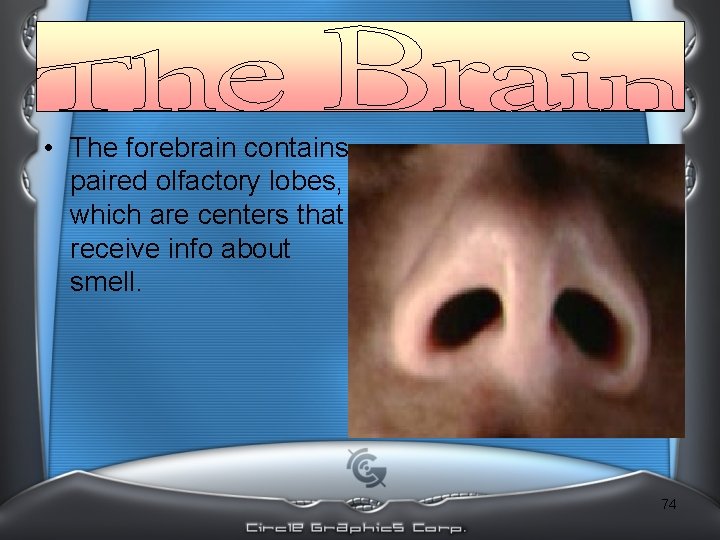
• The forebrain contains paired olfactory lobes, which are centers that receive info about smell. 74
• The cerebrum is also in the forebrain. • Here personality, reason, speech and memory originate. • The surface of the cerebrum is called the cerebral cortex. • Composed of gray matter, the cortex has many folds that increase its surface area. • Deep folds are called fissures. 75
• The right side of the brain has been associated with visual patterns and spatial awareness. • The left side of the brain is linked with verbal skills. • Your ability to learn may be associated with the dominance of one of these hemispheres. 76
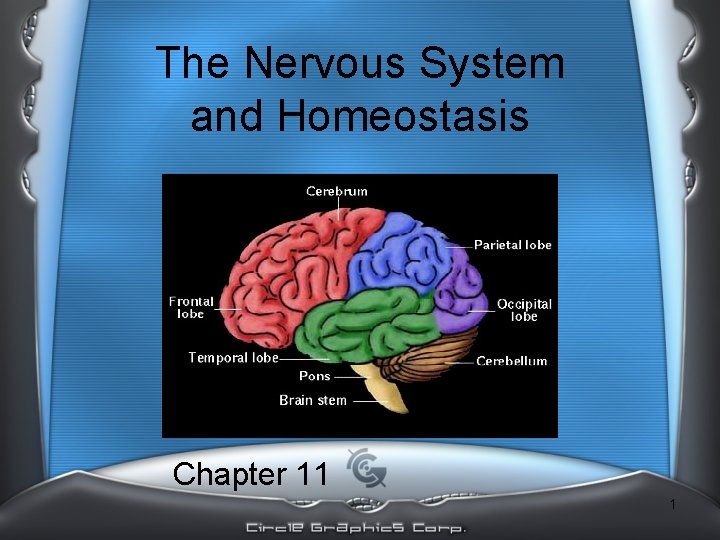
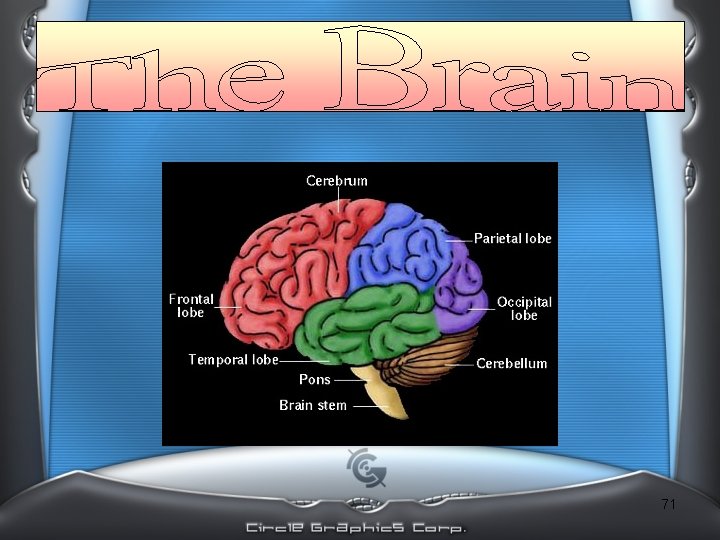
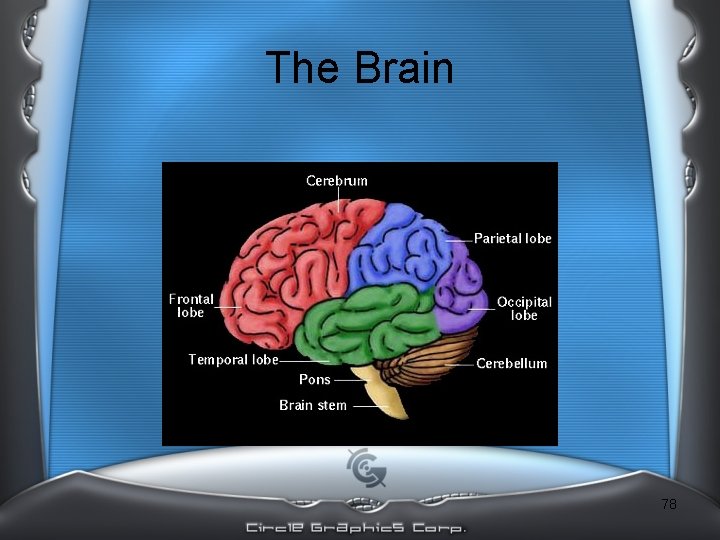
• A bundle of nerves termed the corpus callosum allows communication between the two hemispheres. • Each hemisphere can be further subdivided into four lobes. – The frontal lobe. – The temporal lobe. – The parietal lobe. – The occipital lobe. 77
The Brain 78
• The frontal lobe’s motor areas are associated with voluntary muscles. 79
• The temporal lobe’s sensory areas are associated with vision and hearing. 80
• The parietal lobe’s sensory areas are associated with touch and temperature awareness. 81
• The occipital lobe’s sensory areas are associated with vision. 82
• Below the cerebrum is thalamus, which coordinates and interprets sensory information. • Below the thalamus is the hypothalamus. • A direct connection between the hypothalamus and the pituitary gland unite the nervous system with the endocrine system. 83
• The mid brain consists of four spheres of gray matter. • The mid brain acts as a relay center for some eye and ear reflexes. 84
• The hind brain joins posteriorly with the spinal cord. • The cerebellum, pons and medulla oblongata are the major regions of the hindbrain. • The cerebellum is the largest section of the hind brain. It controls limb movements, balance, and muscle tone. 85
• The pons, passes information between the two regions of the cerebellum and between the cerebellum and the medulla oblongata. 86
• The medulla oblongata is the posterior region of the hindbrain. • It acts as a connection between the central and peripheral nervous systems. • Also regulates involuntary muscle action. • Coordinates the autonomic nervous system. 87
Natural and Artificial Painkillers • Endorphins and enkephalins are our bodies natural painkillers. • These are what runner’s feel when they get a runner’s high. • They are manufactured by the brain. 88
Natural and Artificial Painkillers • Pain is thought to be interpreted by special cells in the stantia gelatinosa or SG. • When stimulated SG cells a transmitter chemical that informs the injured organ or tissue of the damage. • The greater the amount of pain transmitter attached to the injured organ, the greater the pain. 89
Natural and Artificial Painkillers • Endorphins and enkephalins can attach to these receptor sites and reduce the pain. • Opiates such as heroin, codeine and morphine act in the same way as endorphins. • Opiates attach to the neurons in the CNS, preventing the production of pain transmitters. 90
Natural and Artificial Painkillers • When you get addicted to these drugs, the natural endorphins are no longer needed and therefore not produced. • If the user quits, they will be in great discomfort. 91
The End 92