
The Nervous System and Behavioral Disorders Nervous System
The Nervous System and Behavioral Disorders
Nervous System o o Controls body functions with electric impulses Two physical systems n Central nervous system o o n Brain Spinal cord Peripheral nervous system o All other nerve tissue
Nervous System (con’t) o Two functional systems n Somatic nervous system o n Controls skeletal muscles Autonomic nervous system o Controls: n Smooth muscles n Cardiac muscles n Glands
The Neuron o o Basic functional unit of nervous system Two types of fibers extend from cell body n Dendrite o n Carries impulses toward cell body Axon o o Carries impulses away from cell body Some covered with myelin
The Neuron (con’t) o Types of neurons n Sensory neurons o n Motor neurons o n Transmit impulses towards CNS Transmit impulses away from CNS Connecting neurons o Contact at synapse
Nerves o o o Bundles of neuron fibers in PNS Ganglion = collection of cell bodies along nerve pathway Most nerves contain both sensory and motor fibers
The Brain o Cerebrum n n n Largest part of brain Composed mostly of white matter Also houses cerebral cortex o o n n Thin outer layer of gray matter Higher brain functions Divided into two hemispheres Deep groove separates hemispheres o Called longitudinal fissure
Meninges o Set of three protective layers covering brain and spinal cord n Dura mater o n Arachnoid o n Outermost layer Middle layer Pia mater o o Thin, vascular inner layer Attached directly to brain and spinal cord tissue
The Spinal Cord o o Extends from medulla oblongata to between 1 st and 2 nd lumbar vertebrae Consists of: n Gray matter o n Central area surrounded by white matter White matter o Contains tracts for impulses
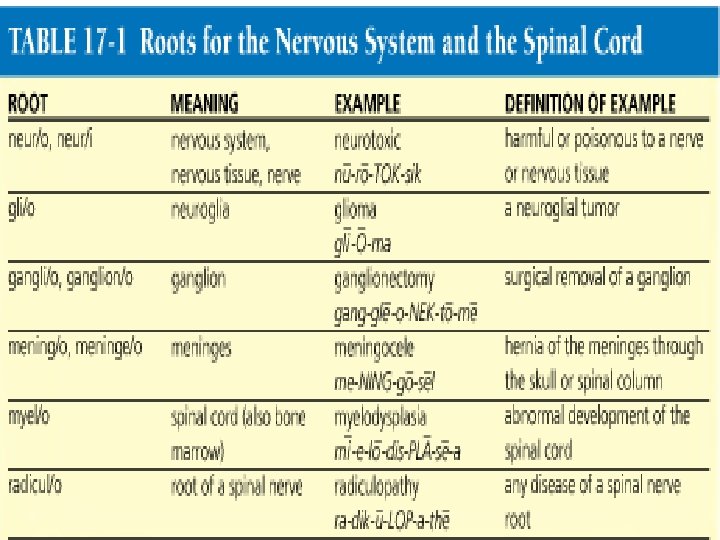
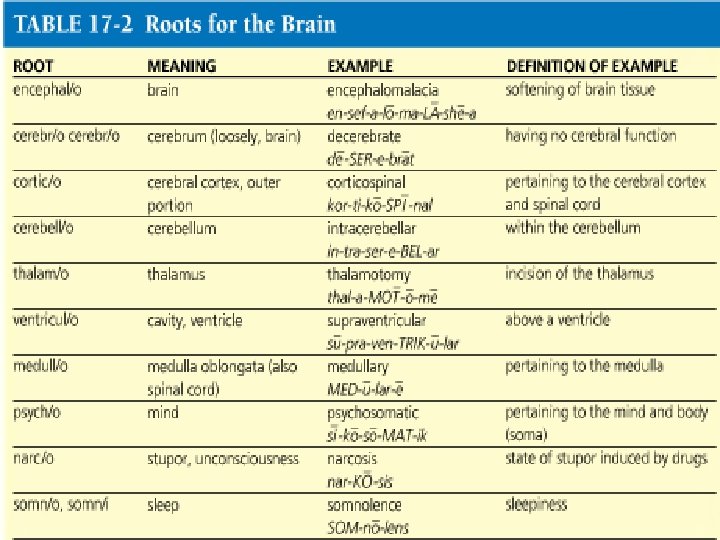
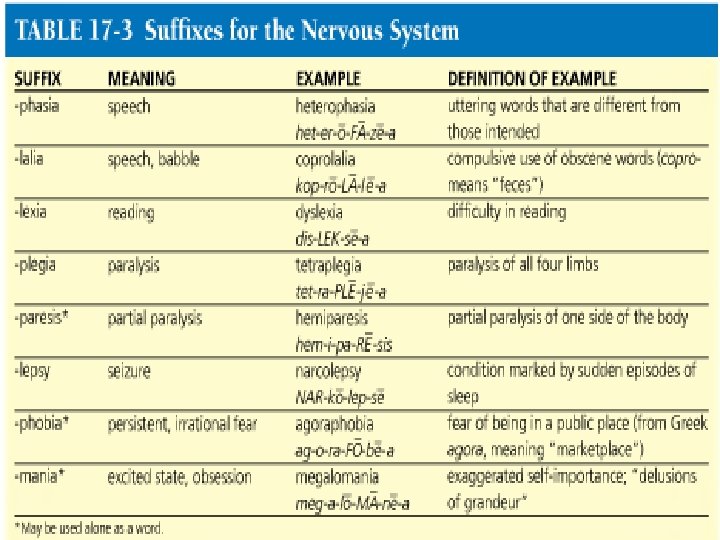
Vascular Disorders o Stroke or cerebrovascular accident n n Any occurrence of brain tissue not getting oxygen 3 rd leading cause of death in developed world Leading cause of neurologic disability Risk factors: o o o Hypertension Atherosclerosis Heart disease Diabetes mellitus Cigarette smoking Heredity
Trauma o Epidural hematoma n n o Subdural hematoma n n o Bleeding between dura mater and skull bone Usually results from blow to side of head Bleeding between dura mater and arachnoid Usually results from blow to front or back of head Concussion n n Can result from blow to head or fall May also encounter contrecoup injury
Infections o Bacterial meningitis n o Inflammation of meninges o Common symptom is stiff neck o Diagnosed with lumbar puncture Viral meningitis (another form) n n Encephalitis (inflammation of the brain) Also includes other viruses that affect CNS: o o o Rabies Polio HIV
Neoplasms o o o Tumors originating in nervous system, usually involving neuroglia Called gliomas Symptoms are dependent on size and location: n n n Seizures Headaches Vomiting Muscle weakness Interference with one of the senses (hearing, vision)
Degenerative Diseases o Multiple sclerosis n n Patchy loss of myelin with hardening of tissue in CNS Symptoms: o o o n Vision problems Tingling, numbness in arms Urinary incontinence Tremor Stiff gait Exact cause is unknown
Degenerative Diseases (con’t) o Parkinson disease n o Leads to: n n n o Failure of midbrain neurons to secrete dopamine Tremors Muscle rigidity Flexion at joints Akinesia Emotional problems Treated with L-dopa
Degenerative Diseases (con’t) o Alzheimer disease n Unexplained degeneration of neurons n Atrophy of cerebral cortex n May cause: o Progressive loss of recent memory o Confusion o Mood changes
Epilepsy o o Seizures caused by abnormal electric brain activity Seizures vary: n n o o o Brief and mild (petit mal) Major (grand mal) Serious seizures result in loss of consciousness and convulsions Diagnosed with EEG revealing brain activity abnormalities Treated with antiepileptic and anticonvulsive drugs
Sleep Disturbances o o Dyssomnia = general term for sleep disorders Insomnia n o Insufficient or nonrestorative sleep Narcolepsy n n Brief, uncontrollable “attacks” of sleep Treated with: Stimulants o Regulation of sleep habits o Short daytime naps Sleep apnea o o n n Failure to breathe for brief periods during sleep Usually results from upper airway obstruction
Behavioral Disorders o Anxiety disorders n Generalized anxiety disorder o o Chronic excessive and uncontrollable worry May be accompanied with: n Muscle tensing n Restlessness n Dyspnea n Palpitations n Insomnia n Irritability
Behavioral Disorders (con’t) o Panic disorder n o Phobias n o Extreme, persistent fears centered around objects or situations Obsessive-compulsive disorder n o Anxiety with episodes of intense fear Condition w/ repetitive behaviors to relieve anxiety Attention-deficit-hyperactivity disorder n n Difficult to diagnose due to overlapping symptoms Treated with stimulant drugs
Depression o o Usually coexists with physical or emotional conditions Characterized by feelings of: n n n o Dysthymia n o Feelings of sadness Hopelessness Lack of interest Form of depression triggered by serious event Bipolar disorder n Depression with episodes of mania
Psychosis o o Mental state with gross misconception of reality Characterized by: n n n o Delusions Paranoia Hallucinations Schizophrenia n From of chronic psychosis
Drugs Used in Treatment o Psychotropic drugs n o Acts on mental state Category of drugs includes: n n Antianxiety (anxiolytics) Mood stabilizers Antidepressants Antipsychotics (neuroleptics)
- Slides: 30