
THE NEPHRON Filtering units of the kidney About
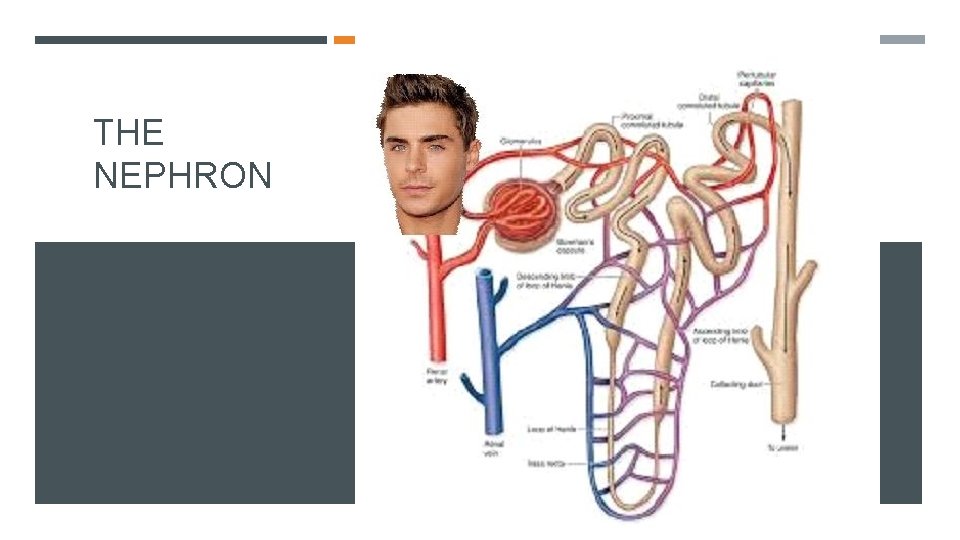
THE NEPHRON
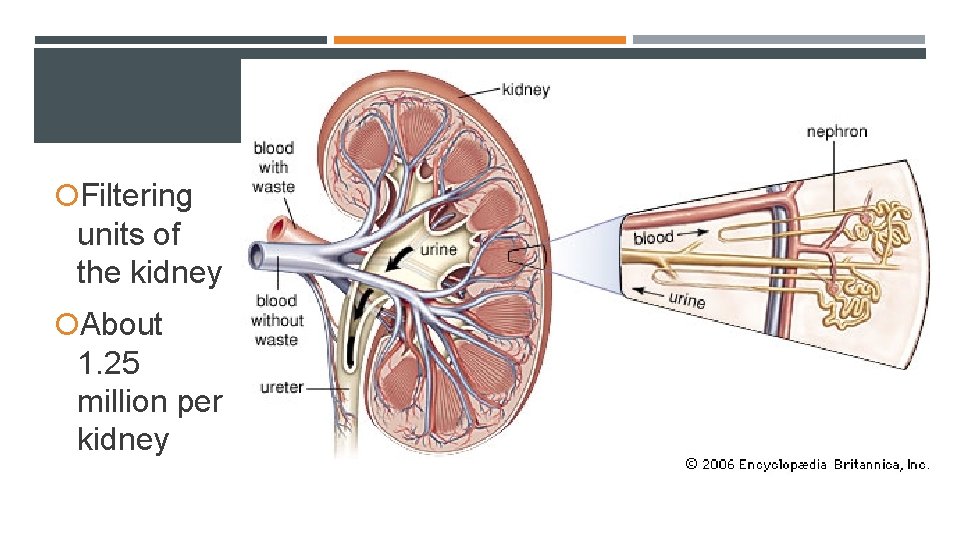
Filtering units of the kidney About 1. 25 million per kidney
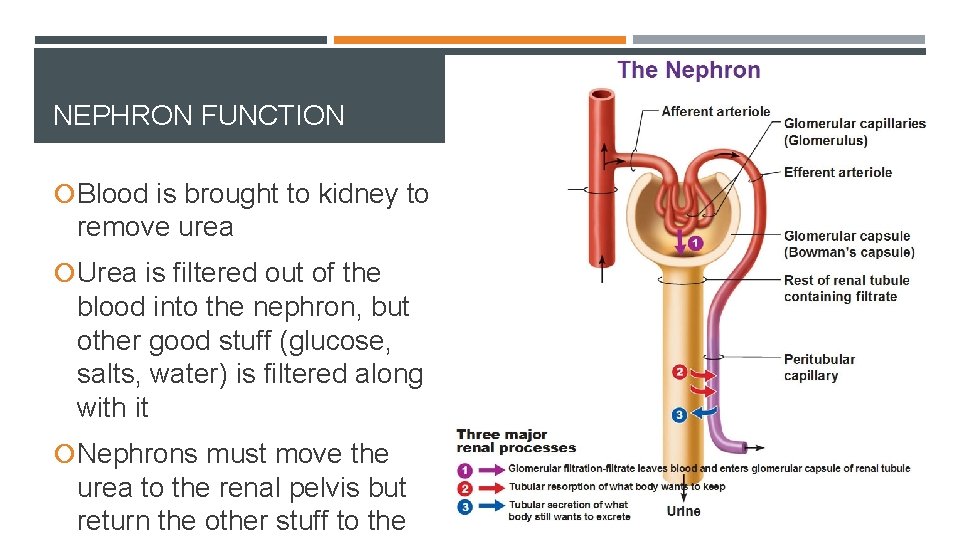
NEPHRON FUNCTION Blood is brought to kidney to remove urea Urea is filtered out of the blood into the nephron, but other good stuff (glucose, salts, water) is filtered along with it Nephrons must move the urea to the renal pelvis but return the other stuff to the
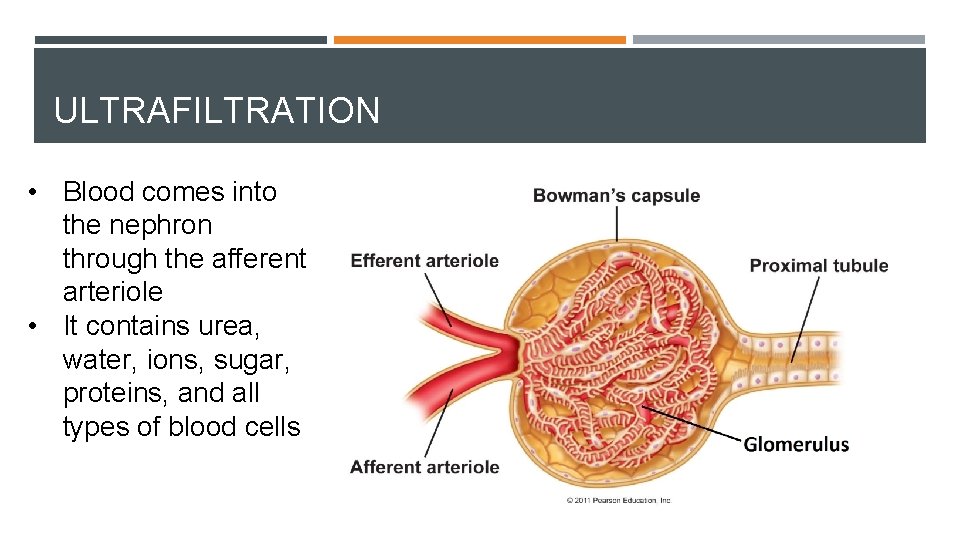
ULTRAFILTRATION • Blood comes into the nephron through the afferent arteriole • It contains urea, water, ions, sugar, proteins, and all types of blood cells
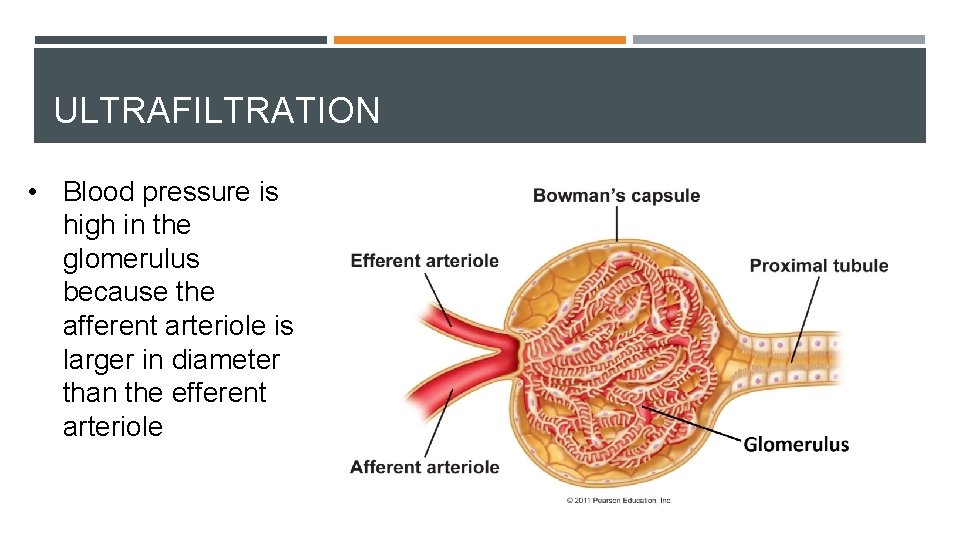
ULTRAFILTRATION • Blood pressure is high in the glomerulus because the afferent arteriole is larger in diameter than the efferent arteriole
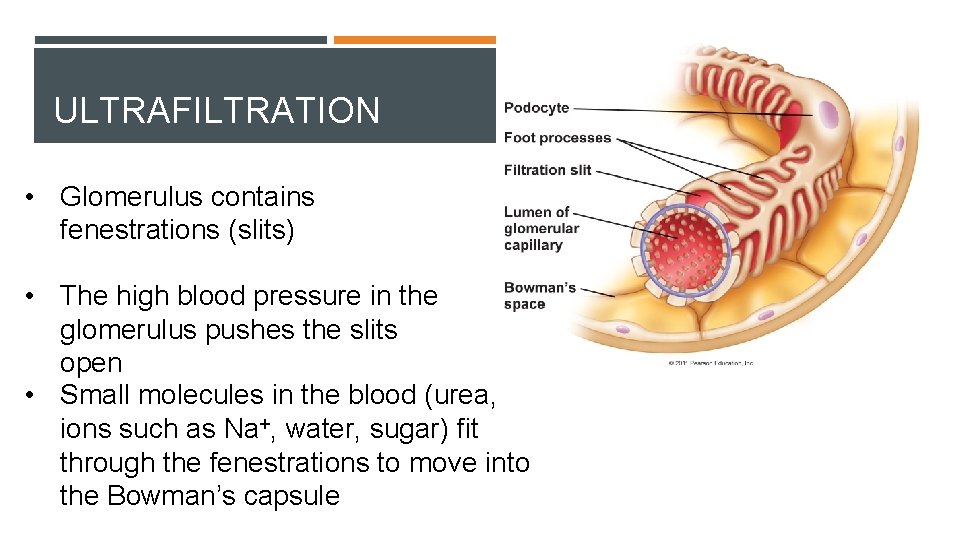
ULTRAFILTRATION • Glomerulus contains fenestrations (slits) • The high blood pressure in the glomerulus pushes the slits open • Small molecules in the blood (urea, ions such as Na+, water, sugar) fit through the fenestrations to move into the Bowman’s capsule
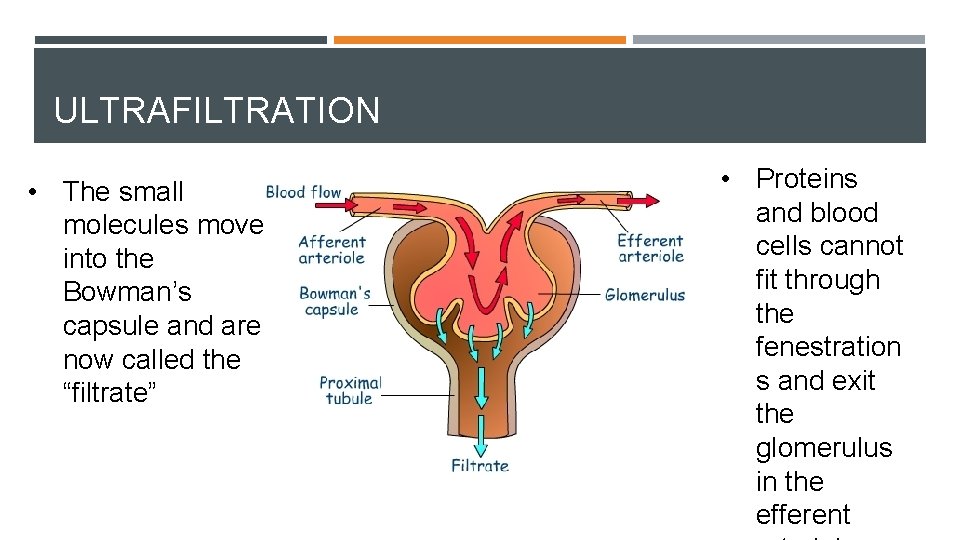
ULTRAFILTRATION • The small molecules move into the Bowman’s capsule and are now called the “filtrate” • Proteins and blood cells cannot fit through the fenestration s and exit the glomerulus in the efferent
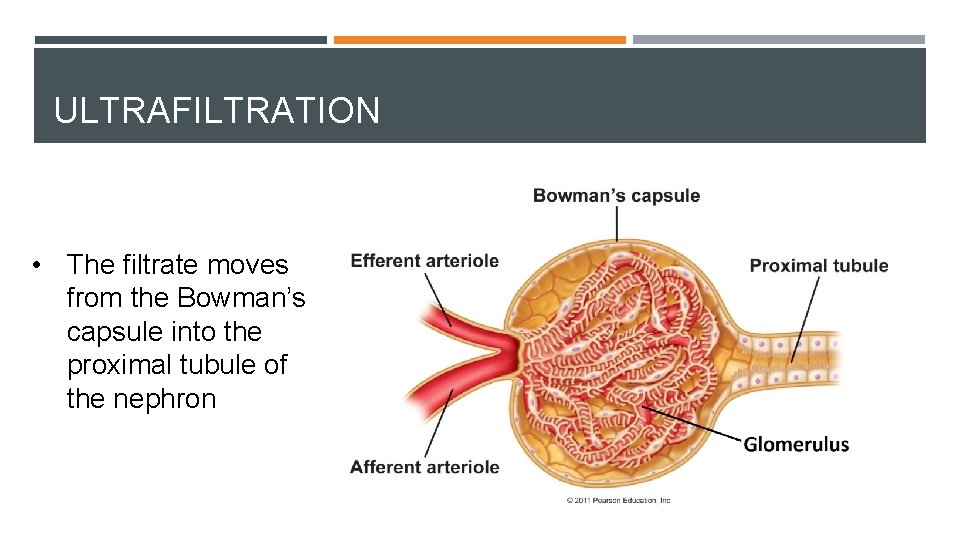
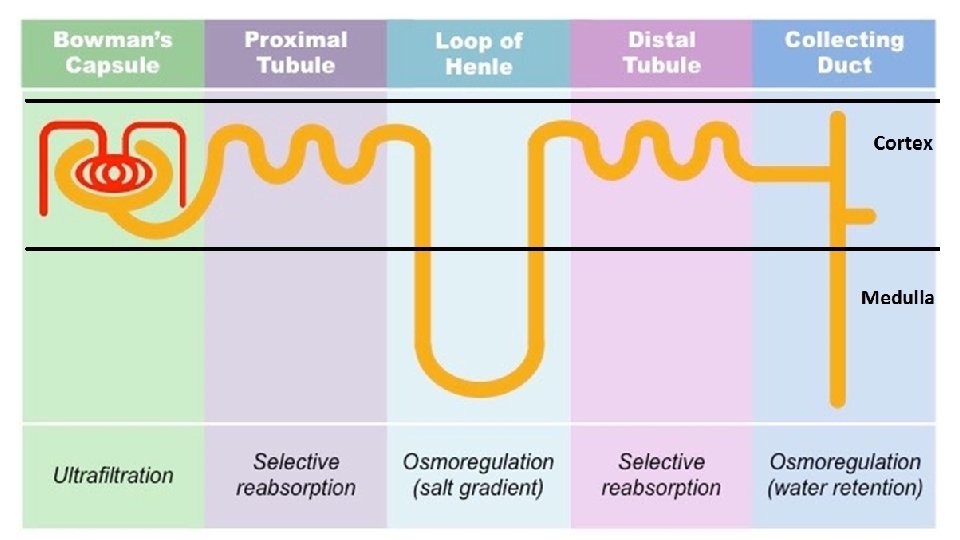
ULTRAFILTRATION • The filtrate moves from the Bowman’s capsule into the proximal tubule of the nephron
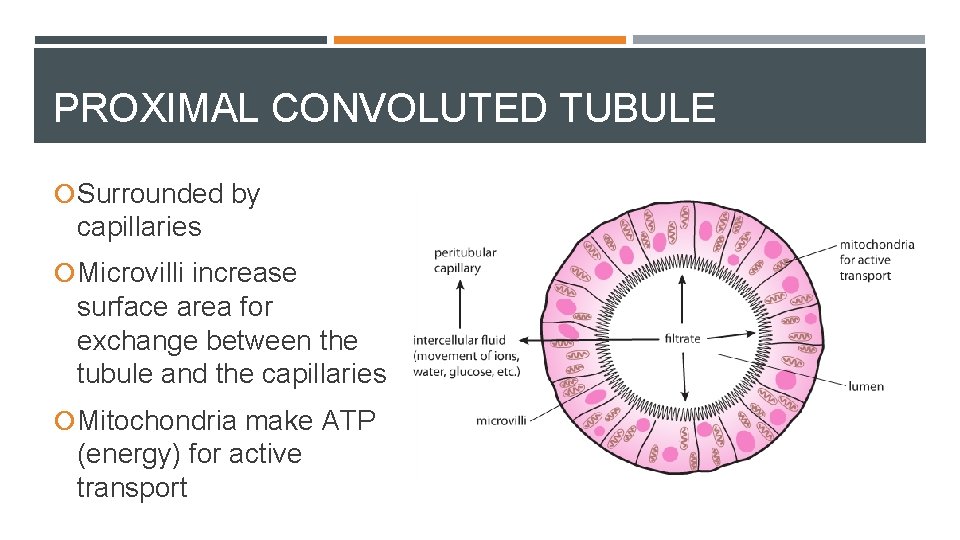
PROXIMAL CONVOLUTED TUBULE Surrounded by capillaries Microvilli increase surface area for exchange between the tubule and the capillaries Mitochondria make ATP (energy) for active transport
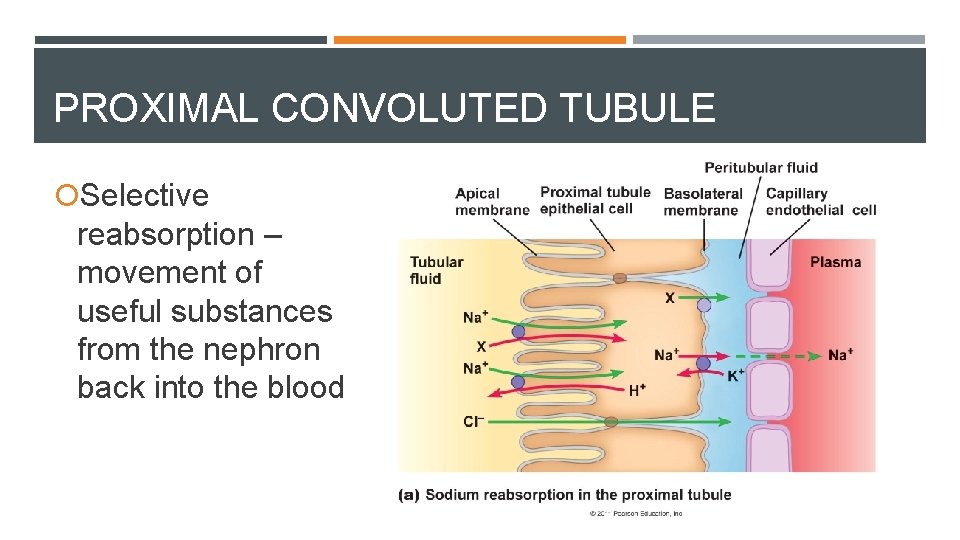
PROXIMAL CONVOLUTED TUBULE Selective reabsorption – movement of useful substances from the nephron back into the blood
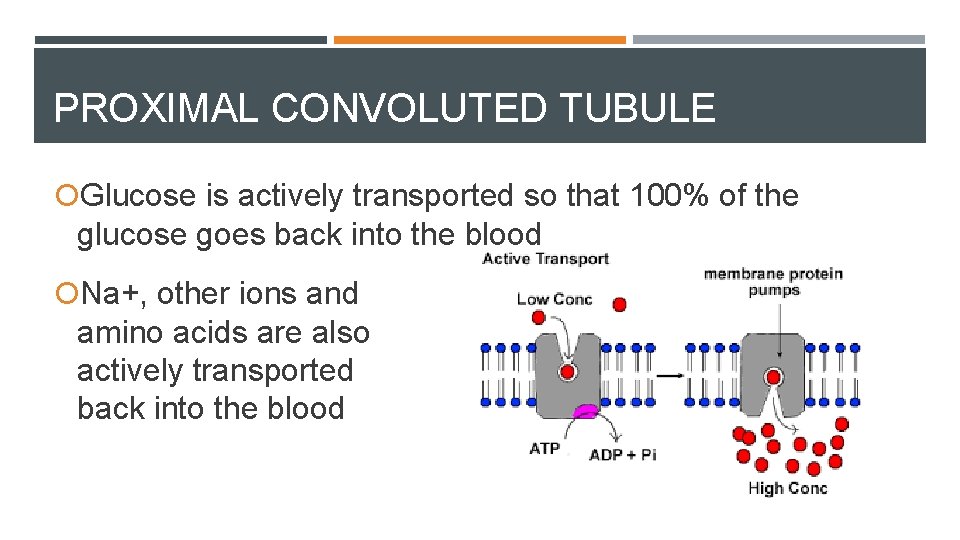
PROXIMAL CONVOLUTED TUBULE Glucose is actively transported so that 100% of the glucose goes back into the blood Na+, other ions and amino acids are also actively transported back into the blood
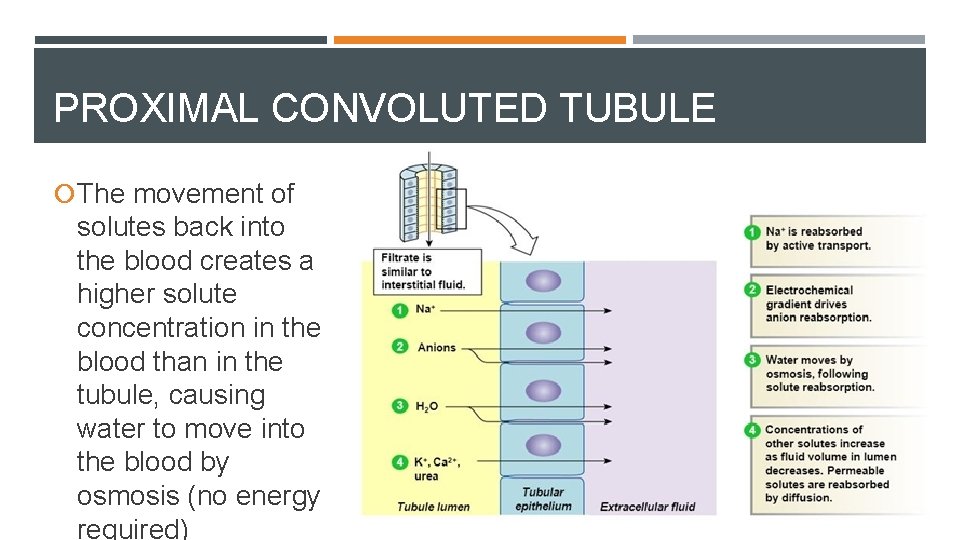
PROXIMAL CONVOLUTED TUBULE The movement of solutes back into the blood creates a higher solute concentration in the blood than in the tubule, causing water to move into the blood by osmosis (no energy required)
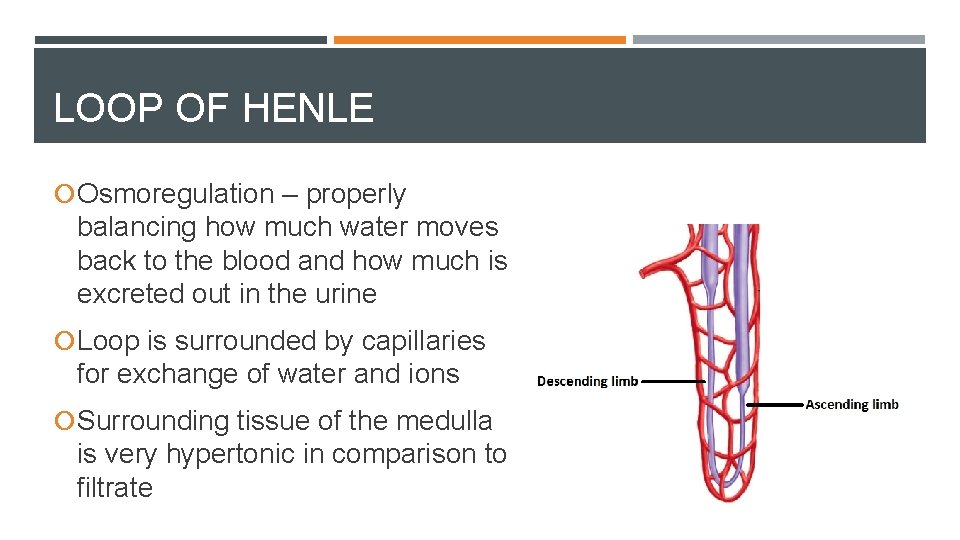
LOOP OF HENLE Osmoregulation – properly balancing how much water moves back to the blood and how much is excreted out in the urine Loop is surrounded by capillaries for exchange of water and ions Surrounding tissue of the medulla is very hypertonic in comparison to filtrate
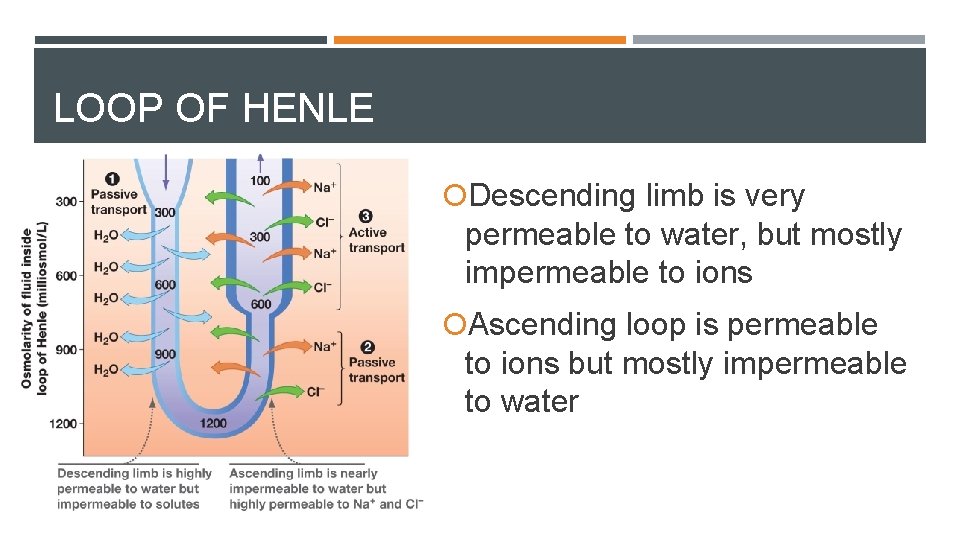
LOOP OF HENLE Descending limb is very permeable to water, but mostly impermeable to ions Ascending loop is permeable to ions but mostly impermeable to water
DISTAL CONVOLUTED TUBULE Selective reabsorption More active transport of Na+ back to the blood (making surrounding tissues even more hypertonic)
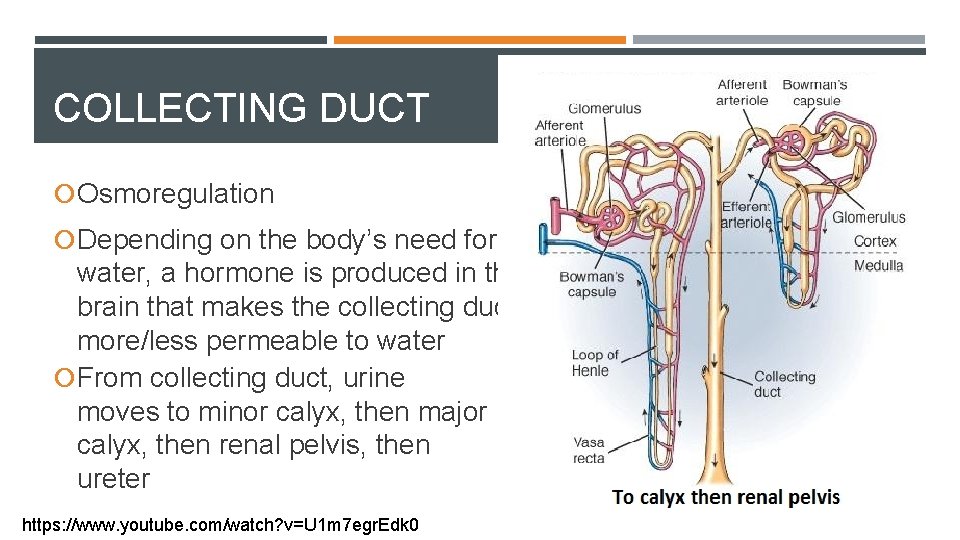
COLLECTING DUCT Osmoregulation Depending on the body’s need for water, a hormone is produced in the brain that makes the collecting duct more/less permeable to water From collecting duct, urine moves to minor calyx, then major calyx, then renal pelvis, then ureter https: //www. youtube. com/watch? v=U 1 m 7 egr. Edk 0
- Slides: 17