
The Neonate Neonate A newborn baby during its
The Neonate

Neonate • A newborn baby during its first month
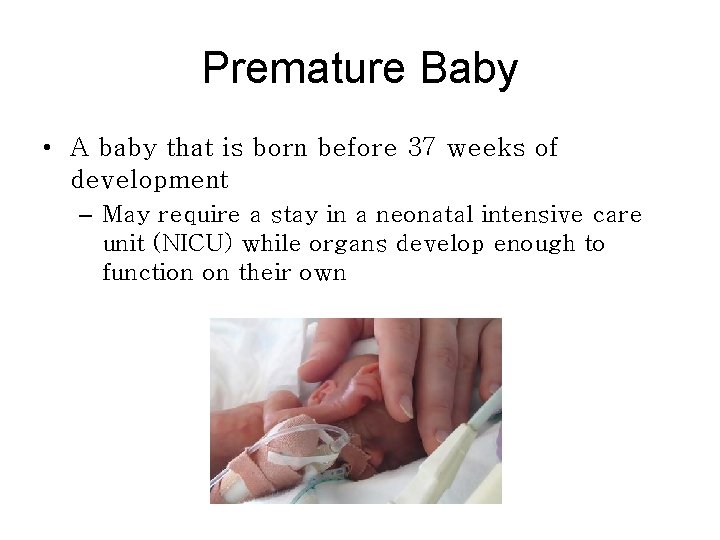
Premature Baby • A baby that is born before 37 weeks of development – May require a stay in a neonatal intensive care unit (NICU) while organs develop enough to function on their own
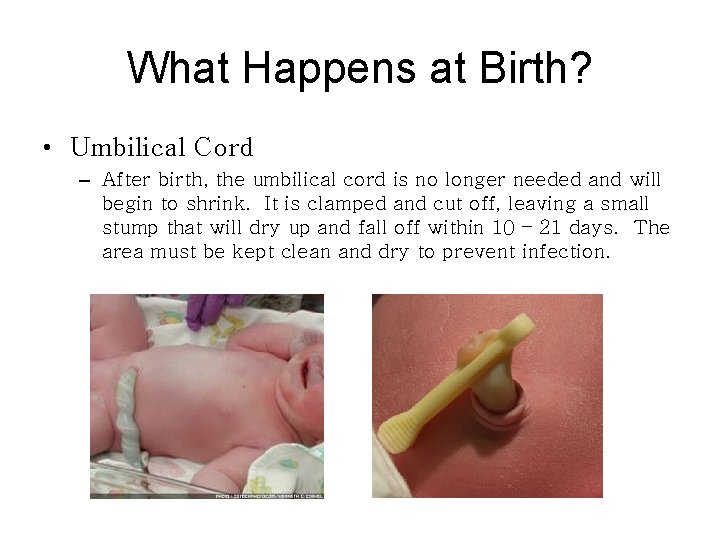
What Happens at Birth? • Umbilical Cord – After birth, the umbilical cord is no longer needed and will begin to shrink. It is clamped and cut off, leaving a small stump that will dry up and fall off within 10 – 21 days. The area must be kept clean and dry to prevent infection.
What Happens at Birth? • APGAR Scale-The physical condition of the baby is rated at 1 minute and again at 5 minutes after birth – Five factors are rated from 0 to 2, and a perfect score is 10 • A-Appearance or coloring • P-Pulse • G-Grimace or reflex irritability • A-Activity • R-Respiration
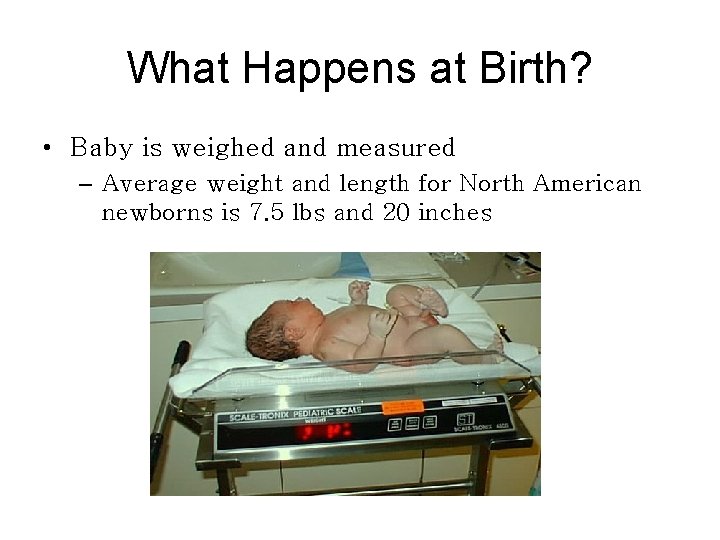
What Happens at Birth? • Baby is weighed and measured – Average weight and length for North American newborns is 7. 5 lbs and 20 inches
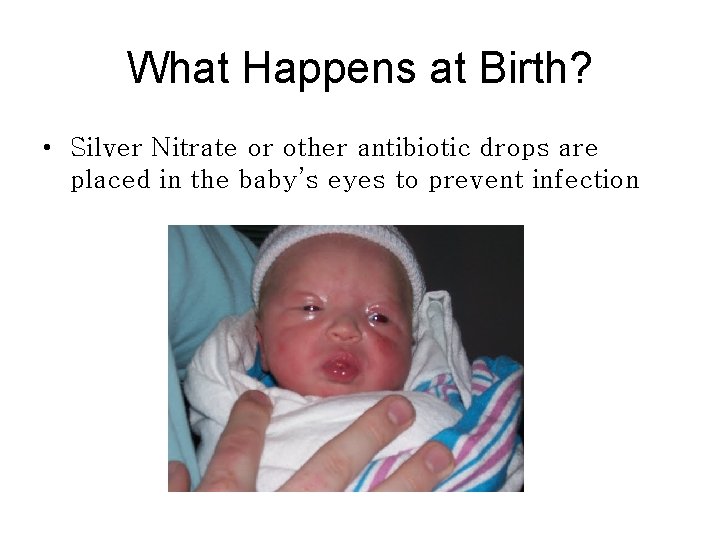
What Happens at Birth? • Silver Nitrate or other antibiotic drops are placed in the baby’s eyes to prevent infection
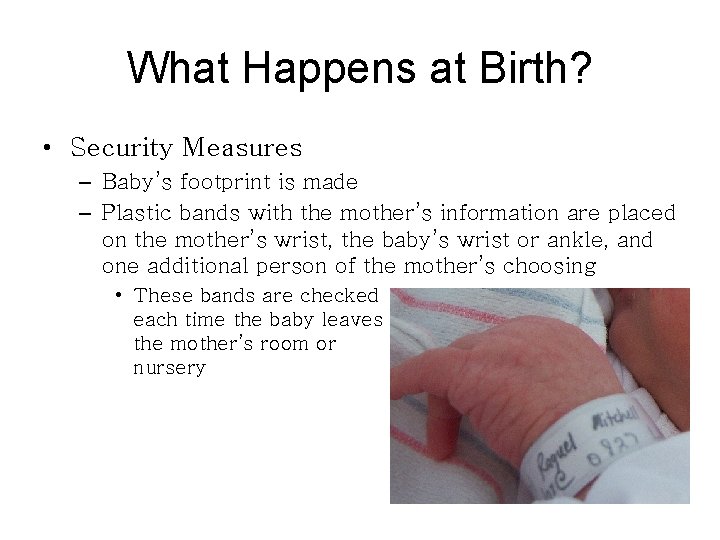
What Happens at Birth? • Security Measures – Baby’s footprint is made – Plastic bands with the mother’s information are placed on the mother’s wrist, the baby’s wrist or ankle, and one additional person of the mother’s choosing • These bands are checked each time the baby leaves the mother’s room or nursery
What Happens at Birth? • Other procedures done in the first few days – PKU Test-Baby’s heel is pricked and blood is tested for an essential enzyme – Blood from the umbilical cord is tested to determine the baby’s blood type and screen for certain diseases – One or two hearing screenings will be given – Male infants may be circumcised – Forms will be filled out for a birth certificate and Social Security Number
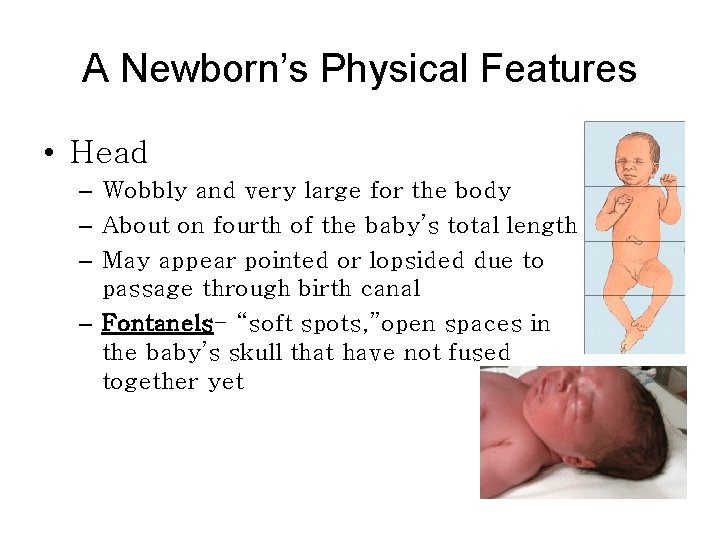
A Newborn’s Physical Features • Head – Wobbly and very large for the body – About on fourth of the baby’s total length – May appear pointed or lopsided due to passage through birth canal – Fontanels- “soft spots, ”open spaces in the baby’s skull that have not fused together yet
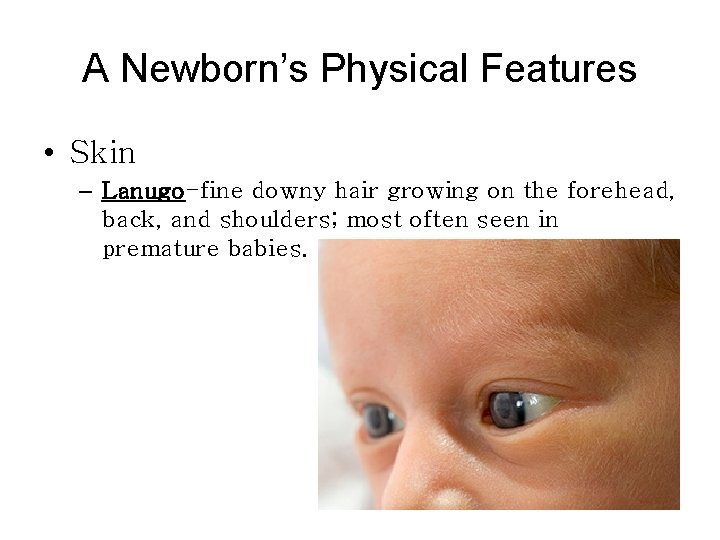
A Newborn’s Physical Features • Skin – Lanugo-fine downy hair growing on the forehead, back, and shoulders; most often seen in premature babies.
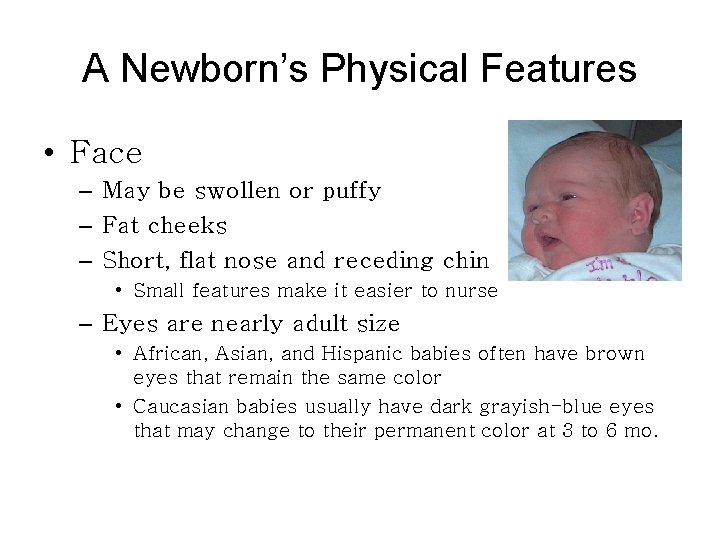
A Newborn’s Physical Features • Face – May be swollen or puffy – Fat cheeks – Short, flat nose and receding chin • Small features make it easier to nurse – Eyes are nearly adult size • African, Asian, and Hispanic babies often have brown eyes that remain the same color • Caucasian babies usually have dark grayish-blue eyes that may change to their permanent color at 3 to 6 mo.

A Newborn’s Physical Features • Skin – Vernix-thick, white pasty substance covering a newborn’s skin • Protects fetus’s skin in the womb from constant exposure to amniotic fluid
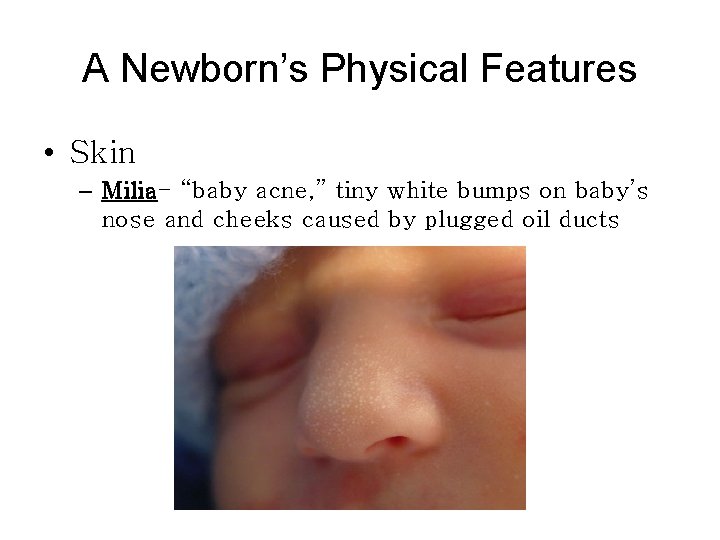
A Newborn’s Physical Features • Skin – Milia- “baby acne, ” tiny white bumps on baby’s nose and cheeks caused by plugged oil ducts
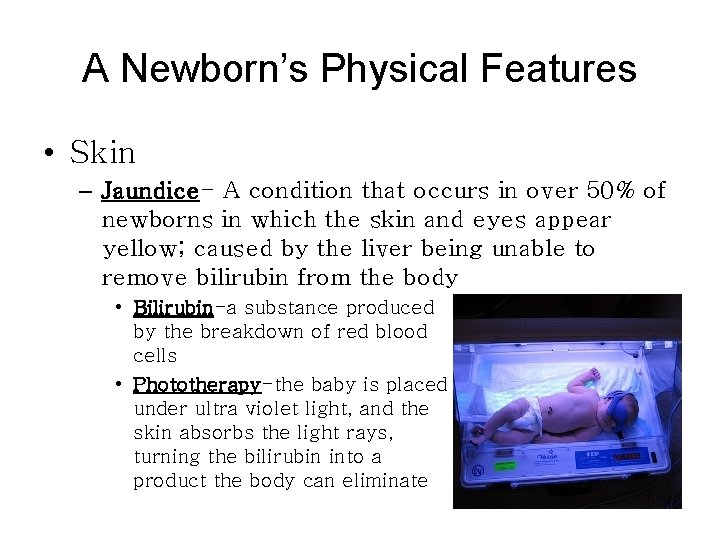
A Newborn’s Physical Features • Skin – Jaundice- A condition that occurs in over 50% of newborns in which the skin and eyes appear yellow; caused by the liver being unable to remove bilirubin from the body • Bilirubin-a substance produced by the breakdown of red blood cells • Phototherapy-the baby is placed under ultra violet light, and the skin absorbs the light rays, turning the bilirubin into a product the body can eliminate
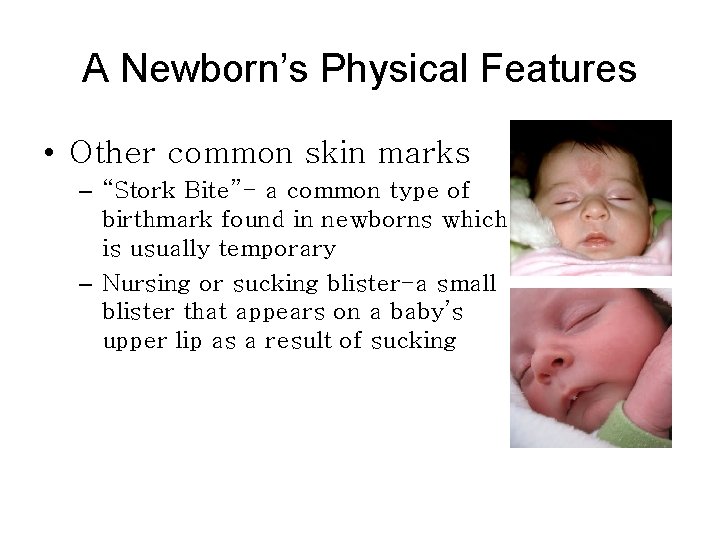
A Newborn’s Physical Features • Other common skin marks – “Stork Bite”- a common type of birthmark found in newborns which is usually temporary – Nursing or sucking blister-a small blister that appears on a baby’s upper lip as a result of sucking
Basic Needs of Newborns • • Food, Water, & Elimination Clothing Cleanliness Rest and Sleep Crying Sucking Health Care Safety
- Slides: 17