
The NCAR Community Climate System Model CCSM Community

- Slides: 6
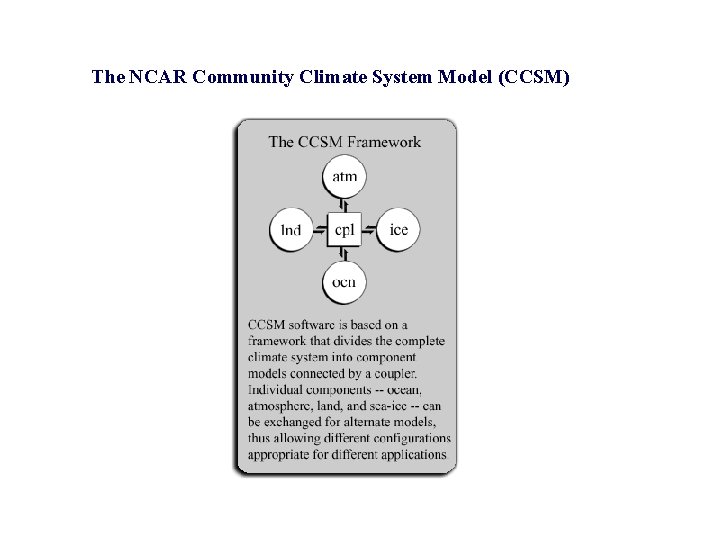
The NCAR Community Climate System Model (CCSM)
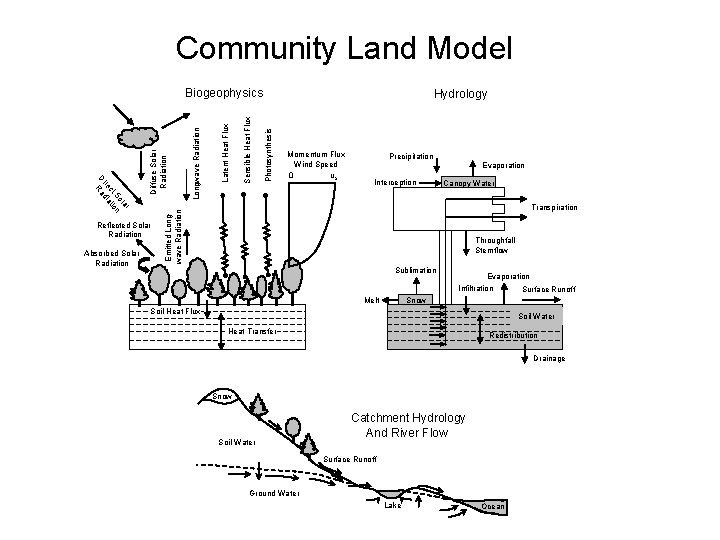
Community Land Model Reflected Solar Radiation Absorbed Solar Radiation Photosynthesis Sensible Heat Flux Latent Heat Flux Longwave Radiation Hydrology Momentum Flux Wind Speed 0 ua Precipitation Evaporation Interception Canopy Water Transpiration Emitted Longwave Radiation r la So n ct tio re ia Di Rad Diffuse Solar Radiation Biogeophysics Throughfall Stemflow Sublimation Evaporation Infiltration Surface Runoff Snow Melt Soil Heat Flux Soil Water Heat Transfer Redistribution Drainage Snow Soil Water Catchment Hydrology And River Flow Surface Runoff Ground Water Lake Ocean
CLM Subgrid Structure Gridcell Landunits Glacier Wetland Vegetated Lake Columns Soil Type 1 PFTs Urban
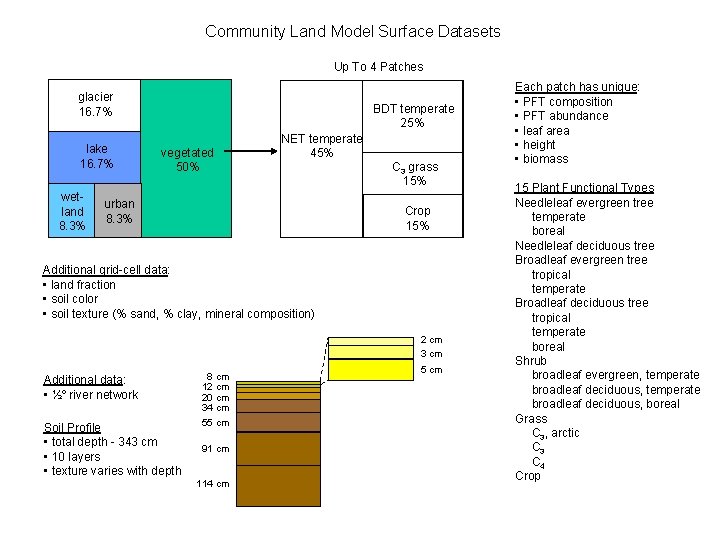
Community Land Model Surface Datasets Up To 4 Patches glacier 16. 7% lake 16. 7% wetland 8. 3% BDT temperate 25% vegetated 50% NET temperate 45% urban 8. 3% C 3 grass 15% Crop 15% Additional grid-cell data: • land fraction • soil color • soil texture (% sand, % clay, mineral composition) 2 cm 3 cm Additional data: • ½º river network Soil Profile • total depth - 343 cm • 10 layers • texture varies with depth 8 cm 12 cm 20 cm 34 cm 55 cm 91 cm 114 cm 5 cm Each patch has unique: • PFT composition • PFT abundance • leaf area • height • biomass 15 Plant Functional Types Needleleaf evergreen tree temperate boreal Needleleaf deciduous tree Broadleaf evergreen tree tropical temperate Broadleaf deciduous tree tropical temperate boreal Shrub broadleaf evergreen, temperate broadleaf deciduous, boreal Grass C 3, arctic C 3 C 4 Crop