
The Nature of Science Regular Biology Waggy The
The Nature of Science Regular Biology Waggy
The Periodic Table of the Elements

Essential Elements for Life • Carbon (used in virtually every molecule) • Hydrogen (important ingredient in amino acids) • Nitrogen (important ingredient in amino acids) • Oxygen (helps power Cellular Respiration) • Phosphorus (bones & teeth) • Sulfur (important ingredient in amino acids)
Why is carbon so important? • It has the ability to bond to up to 4 other atoms due to the 4 free electrons in the outer electron shell

• It also has the ability to connect to other atoms in different ways: • chains rings • Sheets • This allows it to make a multitude of complex structures needed by the human body

• Because of this Carbon is found in virtually EVERY life form on earth, including us • Making us Carbon-based life-forms
Chemical Reactions • When two or more atoms are connected by a chemical bond, it is called a molecule • There are two types of chemical bonds: – 1. Ionic – 2. Covalent
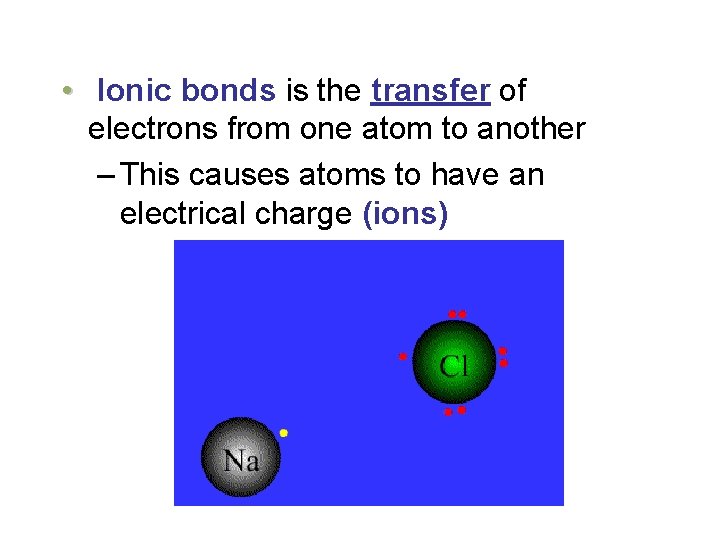
• Ionic bonds is the transfer of electrons from one atom to another – This causes atoms to have an electrical charge (ions)
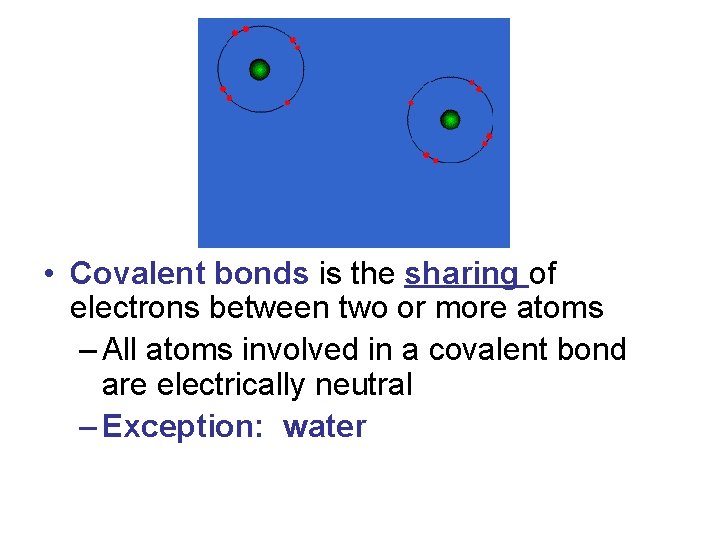
• Covalent bonds is the sharing of electrons between two or more atoms – All atoms involved in a covalent bond are electrically neutral – Exception: water
Things that affect chemical reactions • All living things have a tolerance range for environmental factors • If one or more of these factors move outside an organisms tolerance range it could lead to death of the organism • p. H - even a small change in p. H can change how molecules interact with each other • if the p. H is too high or too low it can actually change the shape of a protein and sometimes destroy it
• The strength of an acid or a base is measured on a p. H scale – An acid is measured from 0 -6. 9 – A base is measured from 7. 1 -14 – A neutral substance is 7. 0
- Slides: 11