
The Nature of Science Chapter 1 1 Science
- Slides: 13
The Nature of Science Chapter 1 -1 Science 8
Science in Society n What is science? n Science—way or a process used to investigate what is happening around you – Helps solve problems – Helps answer questions
n Is science new? n Science is not new – People throughout history have tried to explain things happening around them
n How do people find answers to questions in daily life? Start with a problem to solve n Look for clues n Find answers n
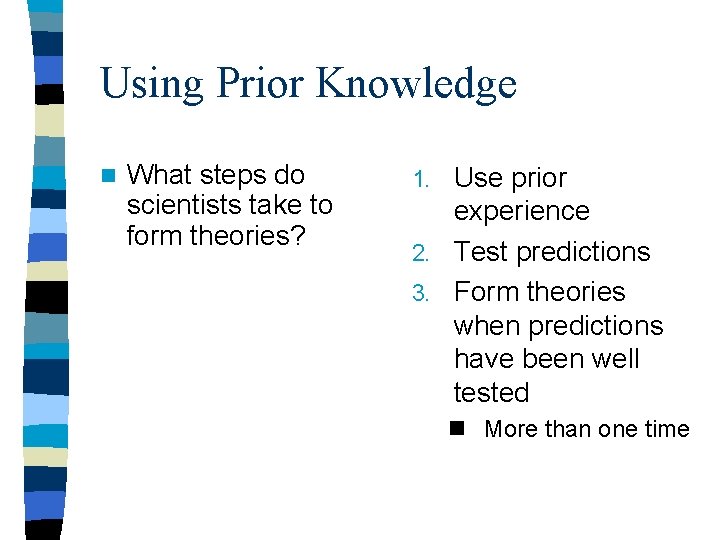
Using Prior Knowledge n What steps do scientists take to form theories? Use prior experience 2. Test predictions 3. Form theories when predictions have been well tested 1. n More than one time
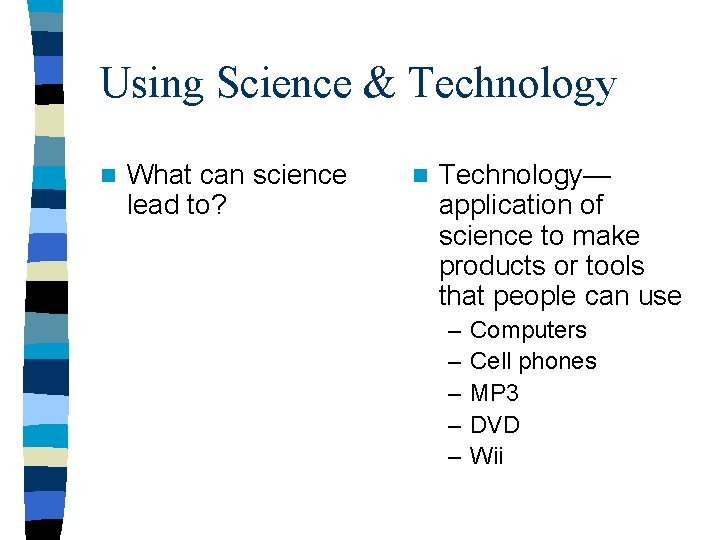
Using Science & Technology n What can science lead to? n Technology— application of science to make products or tools that people can use – – – Computers Cell phones MP 3 DVD Wii
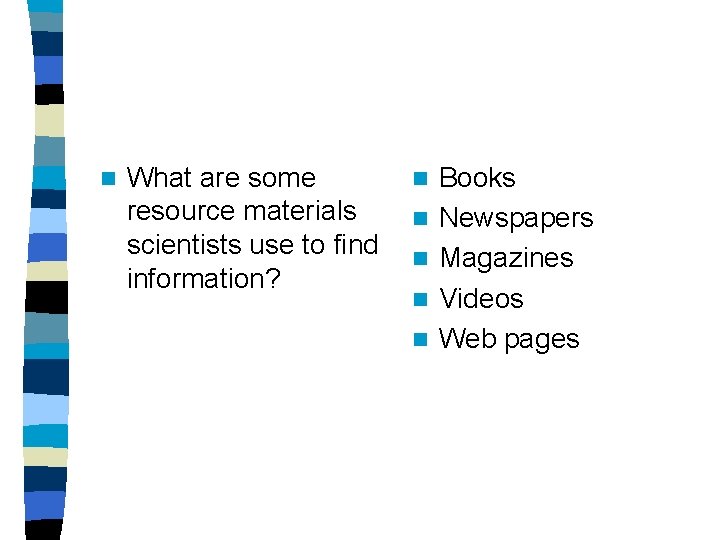
n What are some resource materials scientists use to find information? n n n Books Newspapers Magazines Videos Web pages
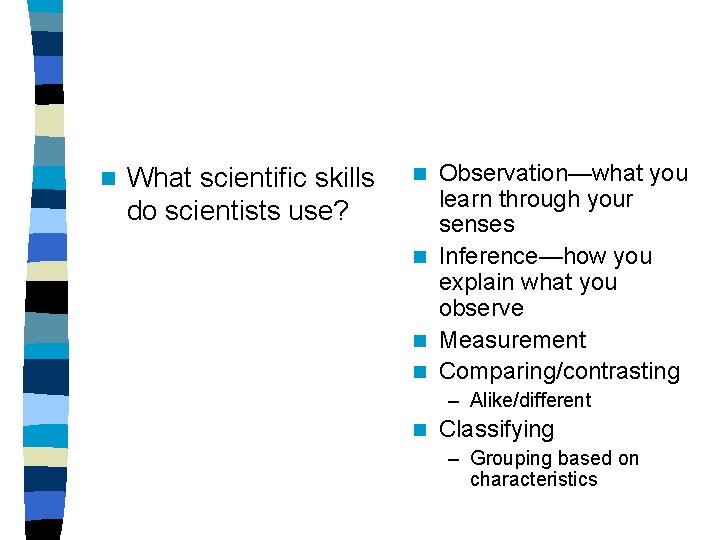
n What scientific skills do scientists use? Observation—what you learn through your senses n Inference—how you explain what you observe n Measurement n Comparing/contrasting n – Alike/different n Classifying – Grouping based on characteristics
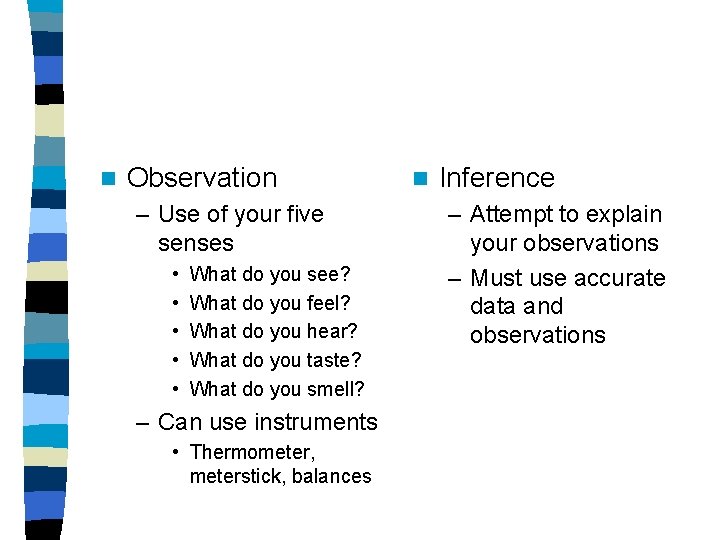
n Observation – Use of your five senses • • • What do you see? What do you feel? What do you hear? What do you taste? What do you smell? – Can use instruments • Thermometer, meterstick, balances n Inference – Attempt to explain your observations – Must use accurate data and observations
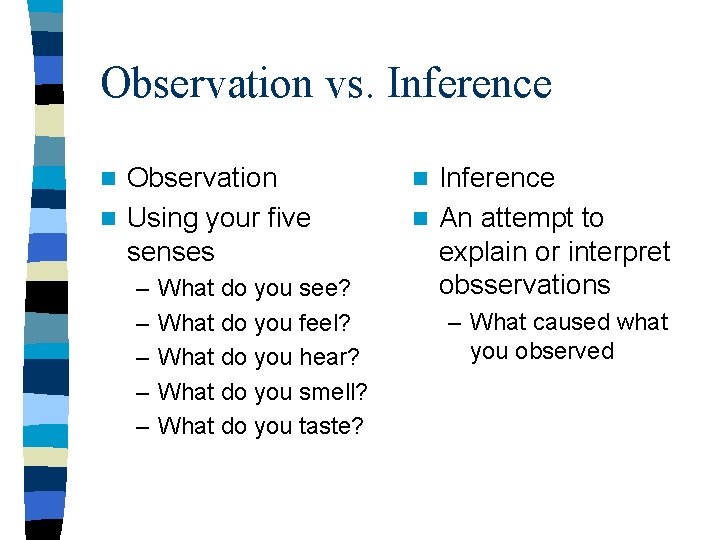
Observation vs. Inference Observation n Using your five senses n – – – What do you see? What do you feel? What do you hear? What do you smell? What do you taste? Inference n An attempt to explain or interpret obsservations n – What caused what you observed
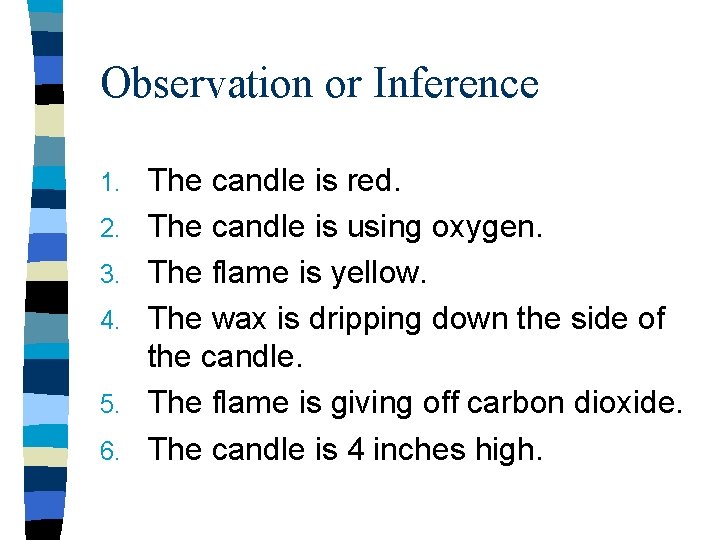
Observation or Inference 1. 2. 3. 4. 5. 6. The candle is red. The candle is using oxygen. The flame is yellow. The wax is dripping down the side of the candle. The flame is giving off carbon dioxide. The candle is 4 inches high.
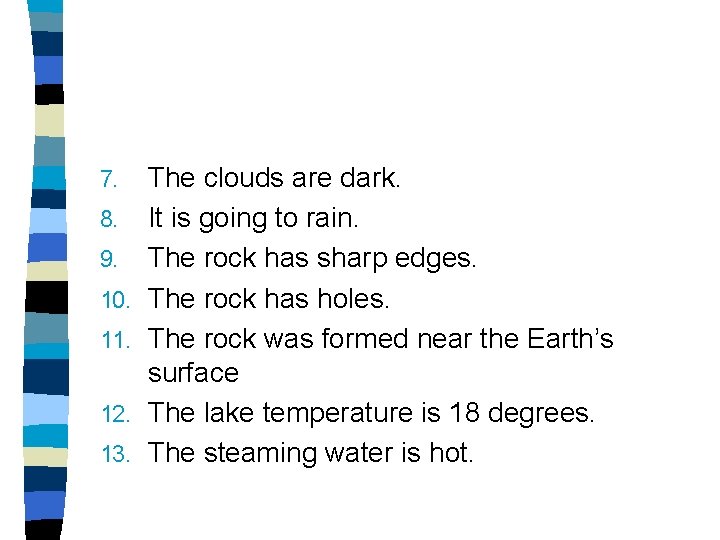
7. 8. 9. 10. 11. 12. 13. The clouds are dark. It is going to rain. The rock has sharp edges. The rock has holes. The rock was formed near the Earth’s surface The lake temperature is 18 degrees. The steaming water is hot.
n What information should be included in science journals? 1. 2. 3. 4. 5. 6. 7. Observations Procedures followed Materials/equipment Results of investigations Measurements Problems that occurred Data, tables, charts, graphs