
The Nature of Memory Making Memories Distinct Memory





- Slides: 47
The Nature of Memory Making Memories
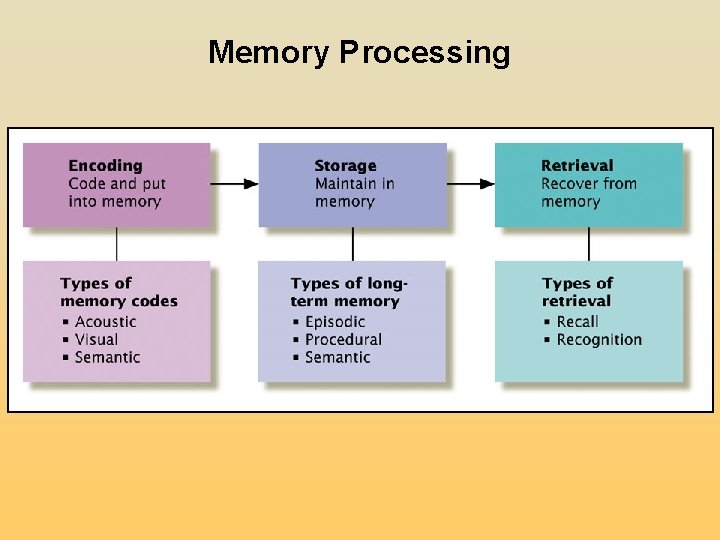
Distinct Memory Systems Episodic Personal or W W W Semantic General Information and Meaning Procedural “Doing” versus “Saying”
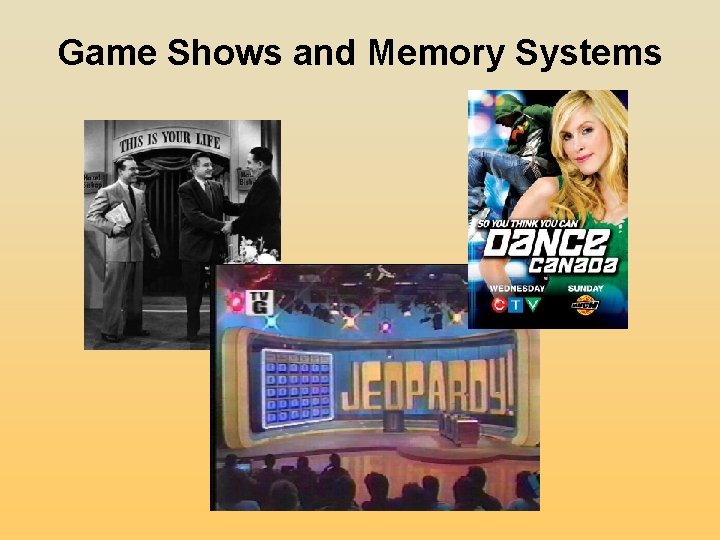
Game Shows and Memory Systems
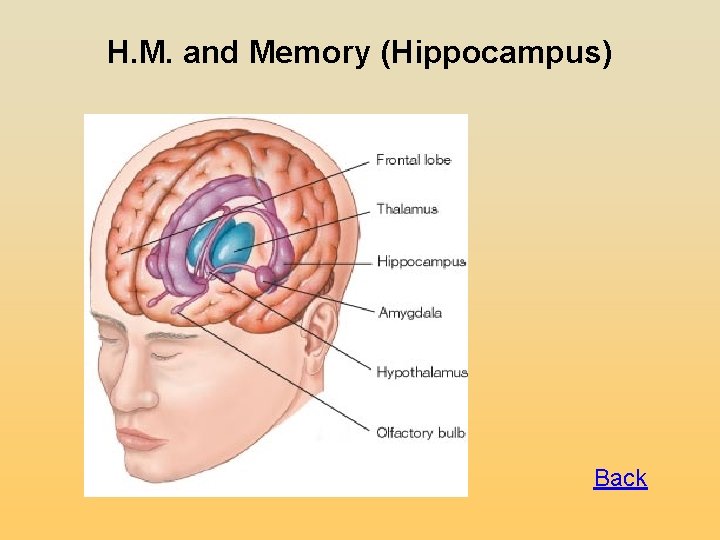
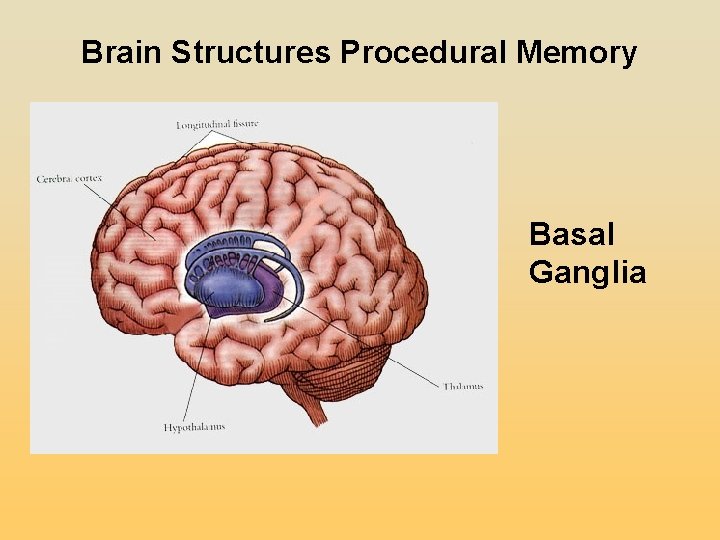
Biological Evidence Episodic Memory Loss “Clive Wearing” New Memories Lost (Episodic and Semantic) “H. M. ” Procedural Memory Loss Parkinson’s / Depression
Back
H. M. and Memory (Hippocampus) Back
Brain Structures Procedural Memory Basal Ganglia
Memory Processing
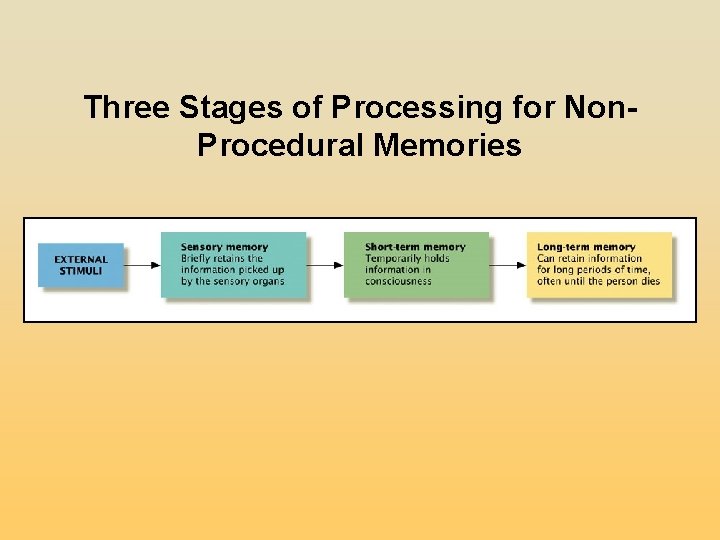
Three Stages of Processing for Non. Procedural Memories
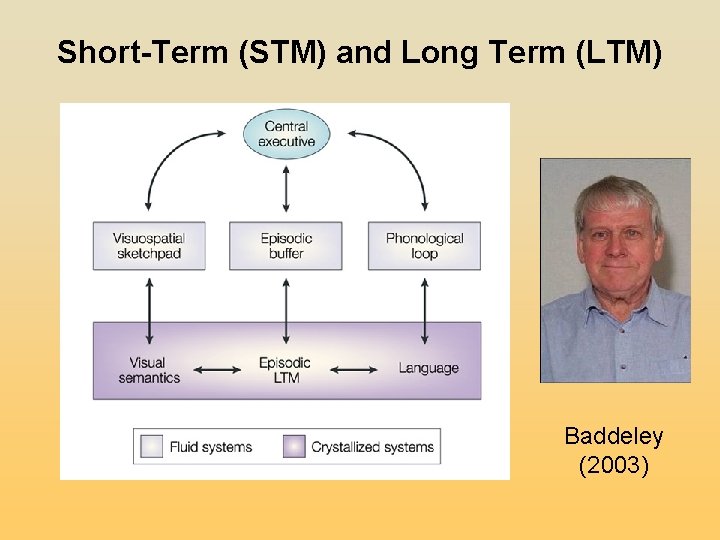
Short-Term (STM) and Long Term (LTM) Baddeley (2003)
Sensory Memory Briefly holds information Experience constant flow Select important information Remainder fades quickly Duration Visual < 2 seconds Auditory < 5 seconds
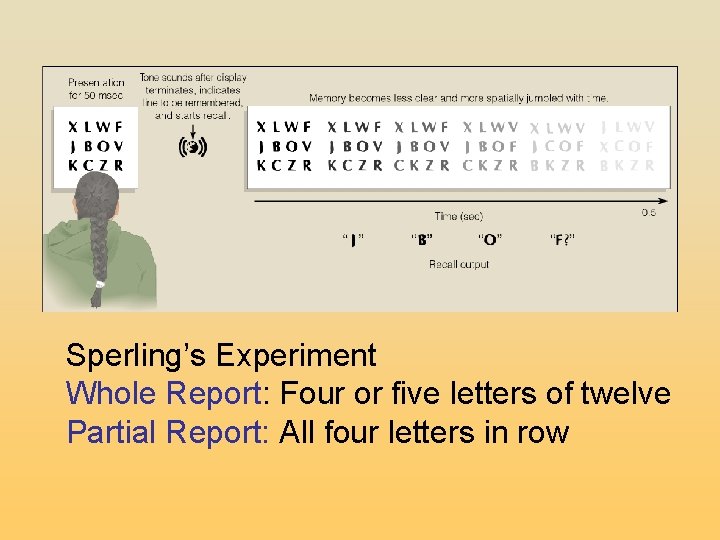
Sperling’s Experiment Whole Report: Four or five letters of twelve Partial Report: All four letters in row
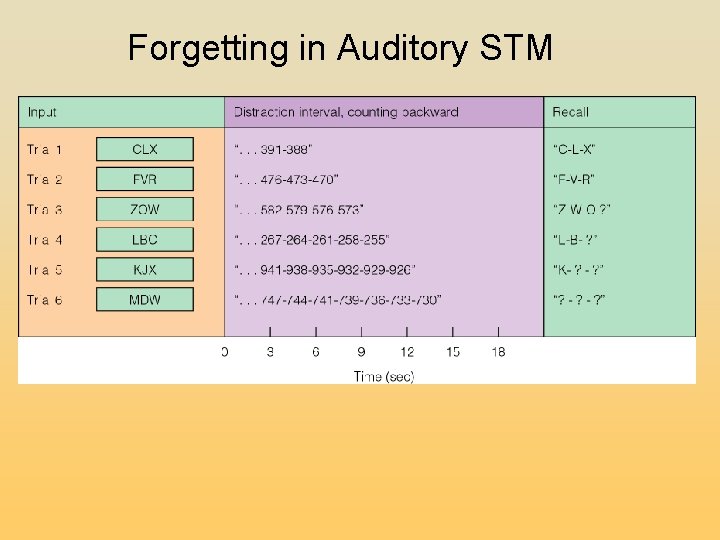
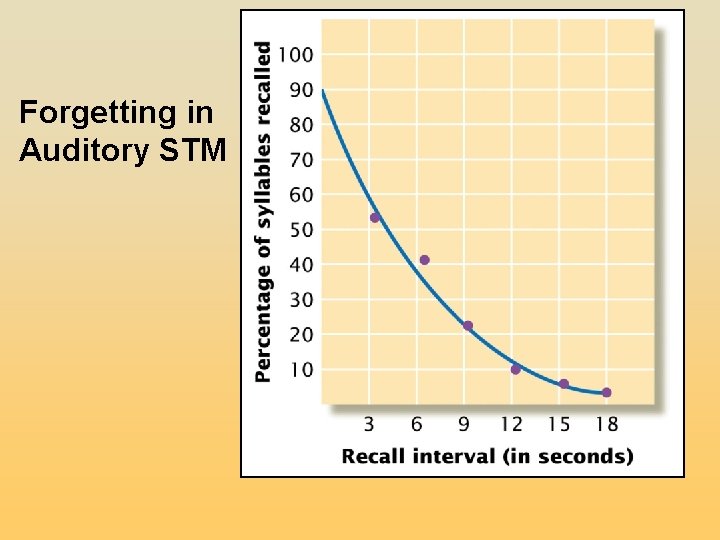
Auditory STM (Phonological Loop) Lasts about 18 seconds without rehearsal Contains 7 items on average Language self-talk Two components: maintenance (rehearsal) and manipulation (elaboration).
Forgetting in Auditory STM
Forgetting in Auditory STM
In Class Slide
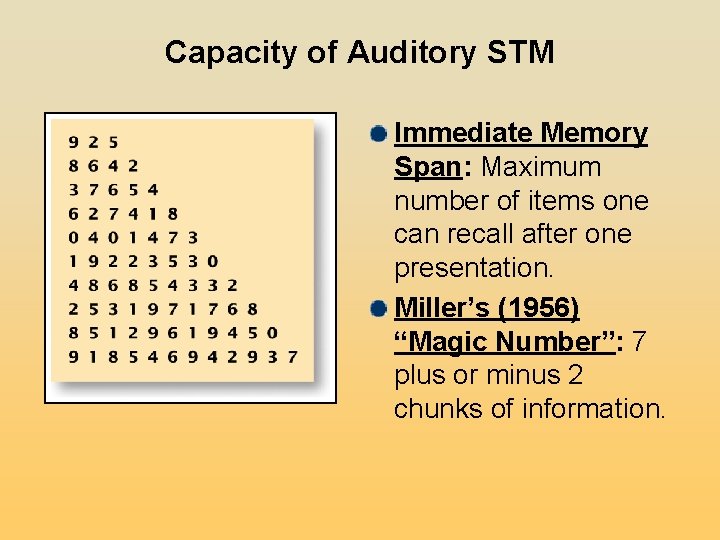
Capacity of Auditory STM Immediate Memory Span: Maximum number of items one can recall after one presentation. Miller’s (1956) “Magic Number”: 7 plus or minus 2 chunks of information.
In Class Slide
Chunking in STM Chunks are meaningful groups. Bigger chunks expand STM. Digit span can be increased. Expert memory for chess positions
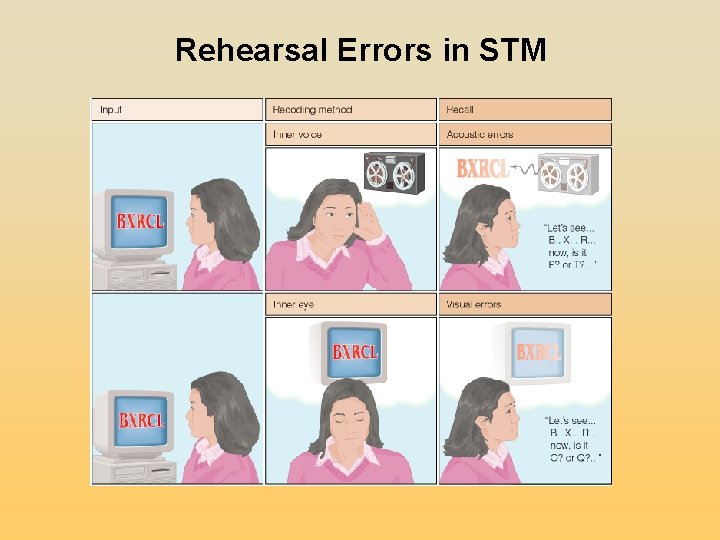
Rehearsal Errors in STM
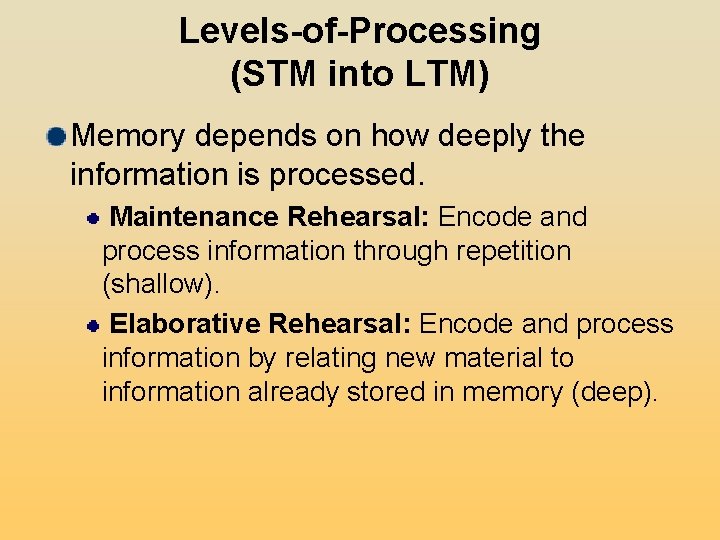
Levels-of-Processing (STM into LTM) Memory depends on how deeply the information is processed. Maintenance Rehearsal: Encode and process information through repetition (shallow). Elaborative Rehearsal: Encode and process information by relating new material to information already stored in memory (deep).
In Class Slide
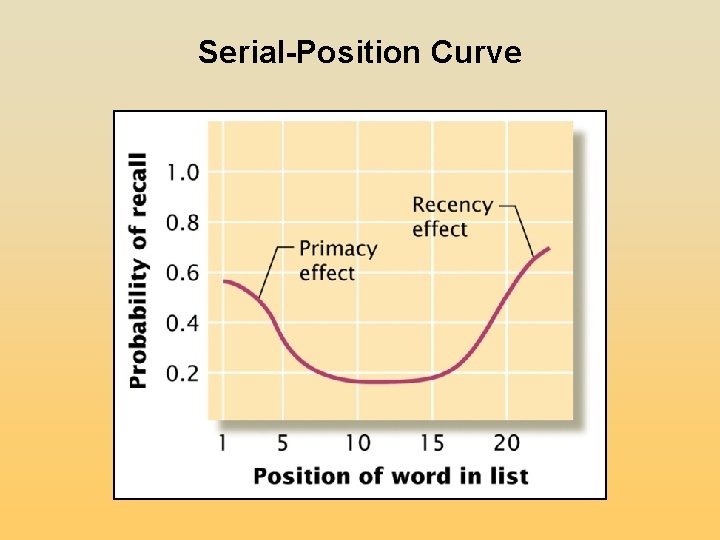
Serial-Position Curve
Long-Term Memory (LTM) Relatively Permanent Semantic, Episodic, or Procedural Subject to distortion (your memory is not a DVD recorder) Retrieval Failures Cause “Forgetting”
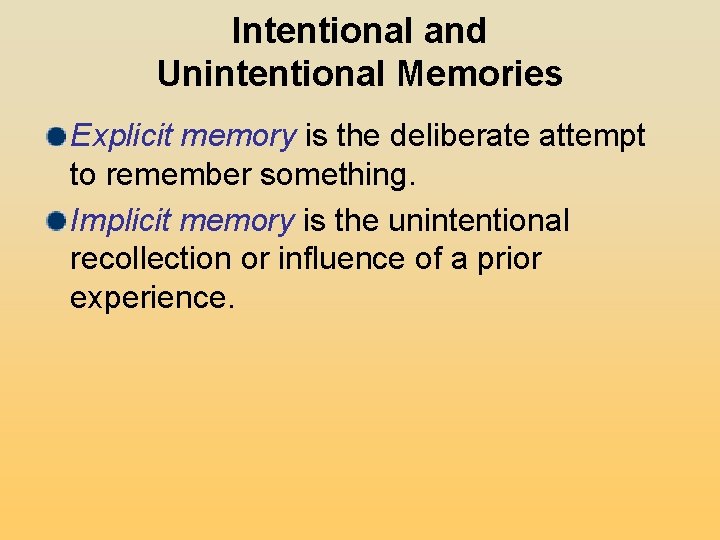
Intentional and Unintentional Memories Explicit memory is the deliberate attempt to remember something. Implicit memory is the unintentional recollection or influence of a prior experience.
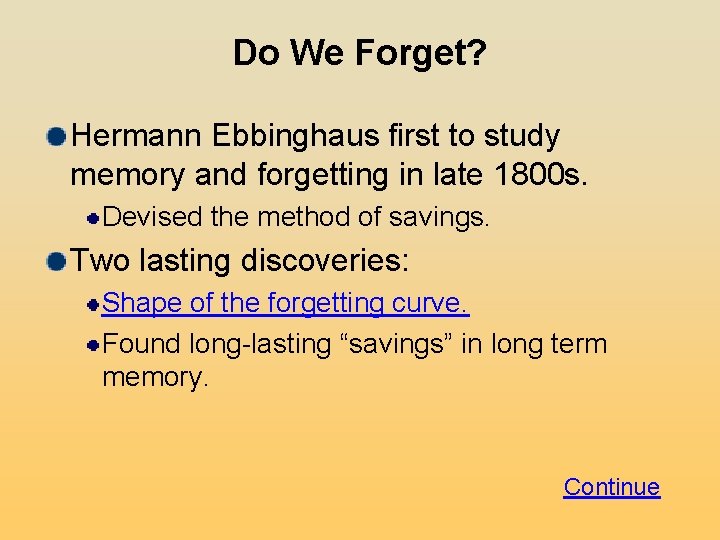
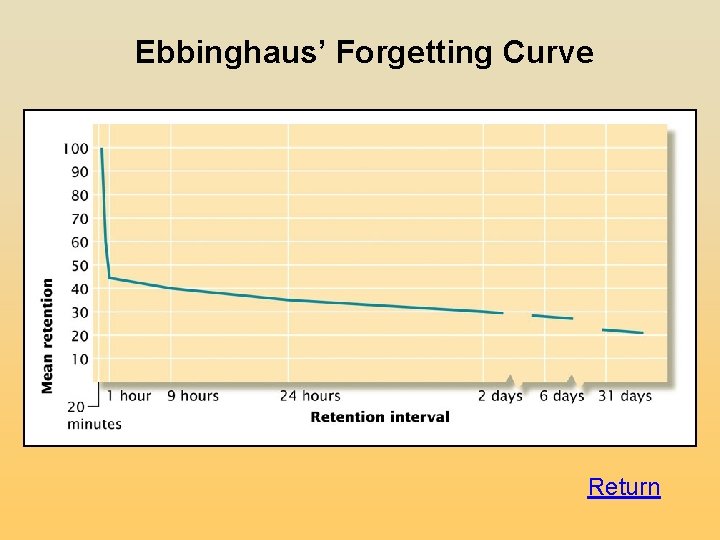
Do We Forget? Hermann Ebbinghaus first to study memory and forgetting in late 1800 s. Devised the method of savings. Two lasting discoveries: Shape of the forgetting curve. Found long-lasting “savings” in long term memory. Continue
Ebbinghaus’ Forgetting Curve Return
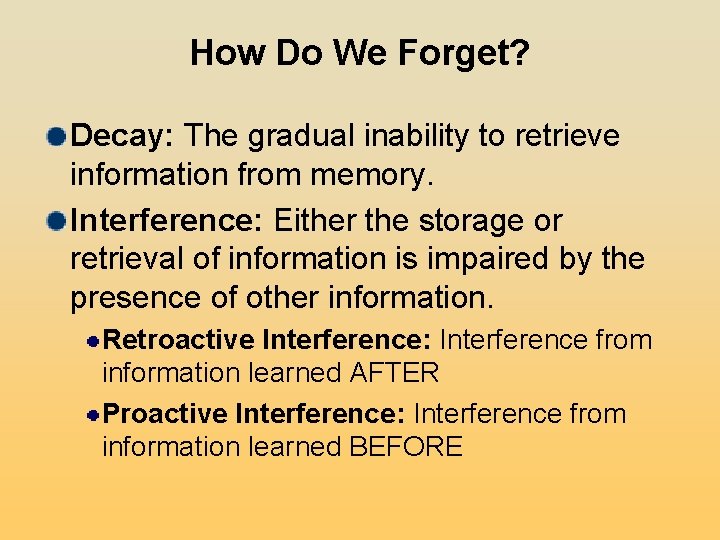
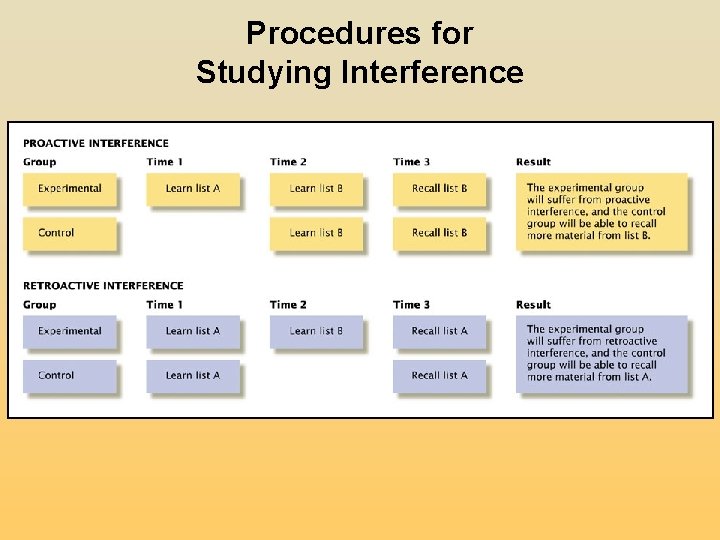
How Do We Forget? Decay: The gradual inability to retrieve information from memory. Interference: Either the storage or retrieval of information is impaired by the presence of other information. Retroactive Interference: Interference from information learned AFTER Proactive Interference: Interference from information learned BEFORE
Procedures for Studying Interference
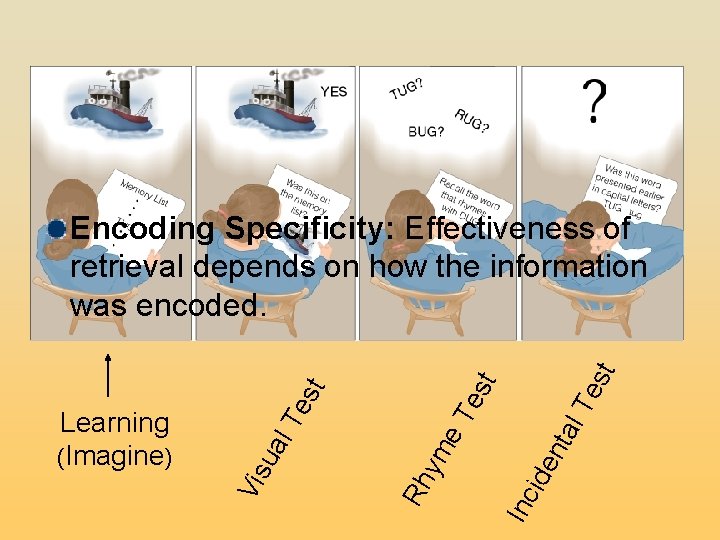
nta l ide Inc Te me Rh y Te st t es l. T ua Vis Learning (Imagine) st Encoding Specificity: Effectiveness of retrieval depends on how the information was encoded.
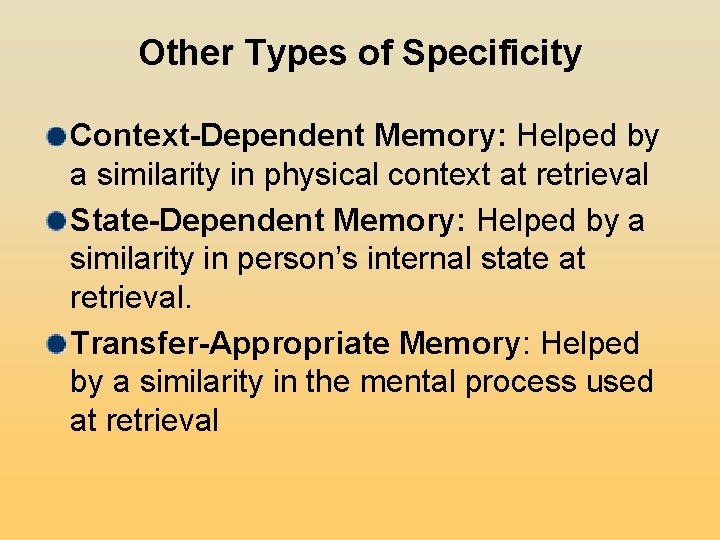
Other Types of Specificity Context-Dependent Memory: Helped by a similarity in physical context at retrieval State-Dependent Memory: Helped by a similarity in person’s internal state at retrieval. Transfer-Appropriate Memory: Helped by a similarity in the mental process used at retrieval
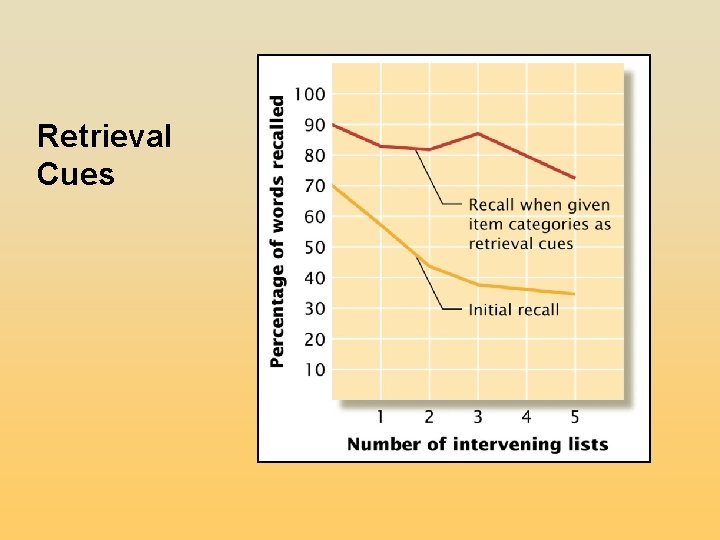
Retrieval Cues
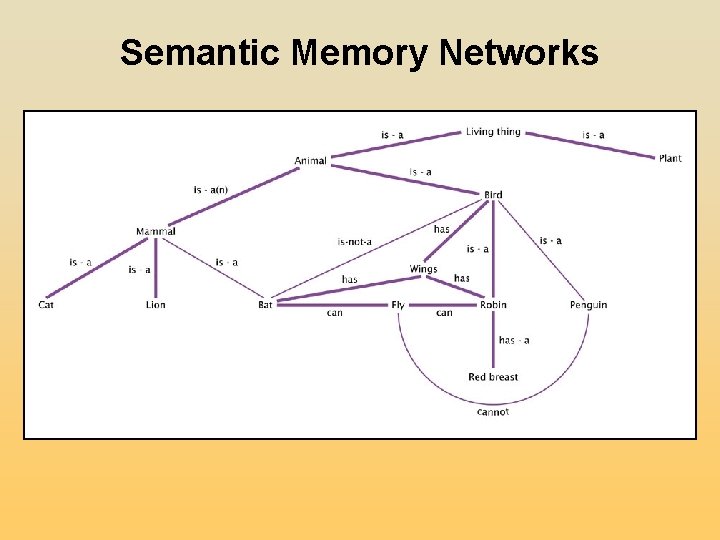
Retrieval from Semantic Memory Semantic memory network theories suggest that information is retrieved through the principle of spreading activation.
Semantic Memory Networks
Can lead to: Tip-of-the-tongue phenomenon is an example of incomplete knowledge. False Memories Demo
In Class Slide
Improving Memory
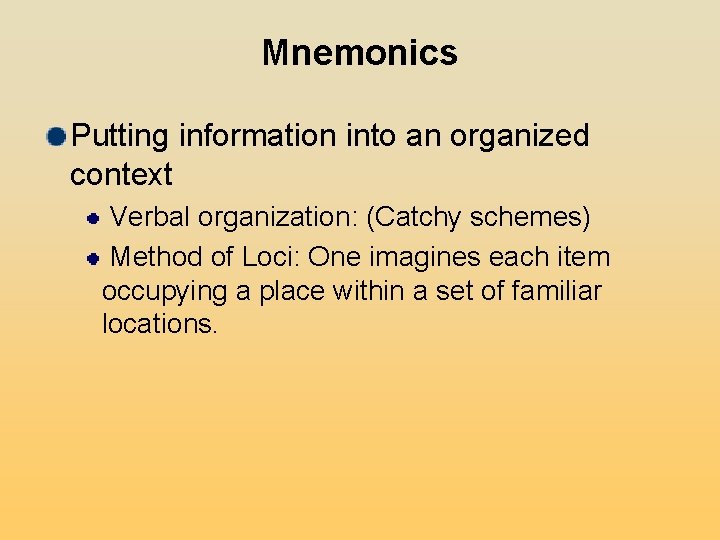
Mnemonics Putting information into an organized context Verbal organization: (Catchy schemes) Method of Loci: One imagines each item occupying a place within a set of familiar locations.
Retrieval From Episodic Memory formation affected by not only what we perceived, but also by what we already know. Existing knowledge is used to organize new information as we receive it.
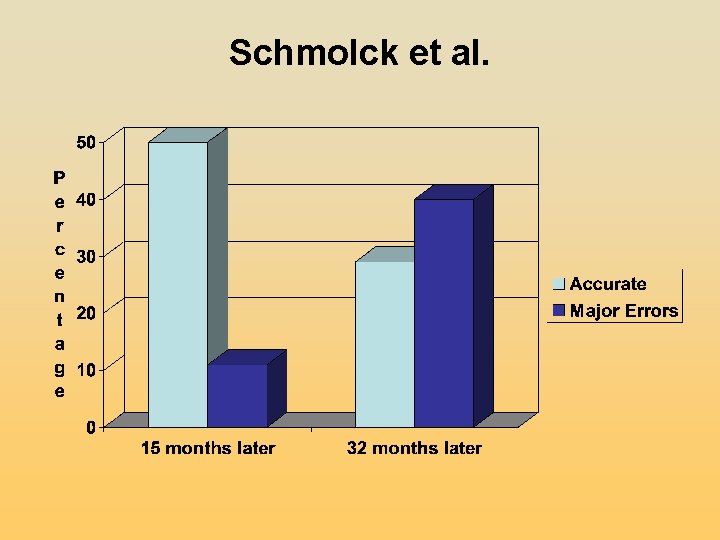
Distortions of Episodic LTM Where were you? Example: Schmolck, Buffalo, & Squire (2000)
Schmolck et al.
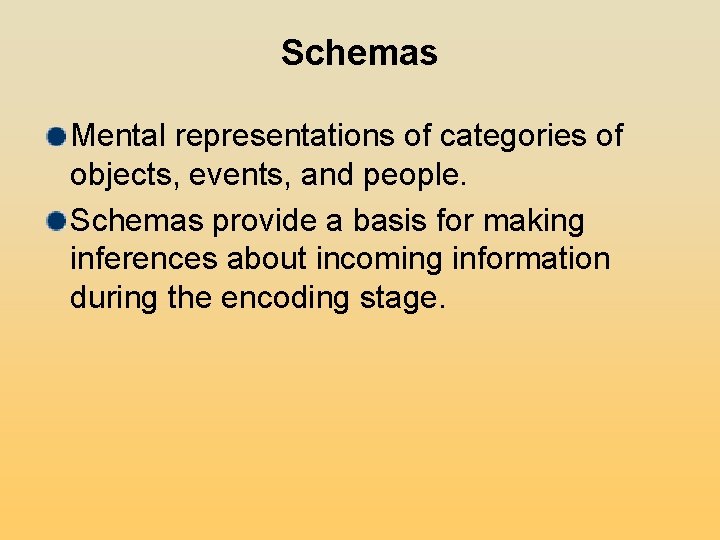
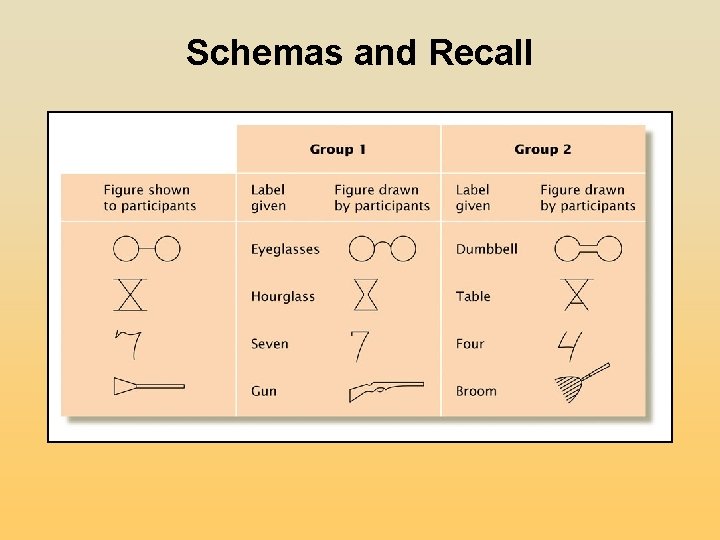
Schemas Mental representations of categories of objects, events, and people. Schemas provide a basis for making inferences about incoming information during the encoding stage.
Schemas and Recall
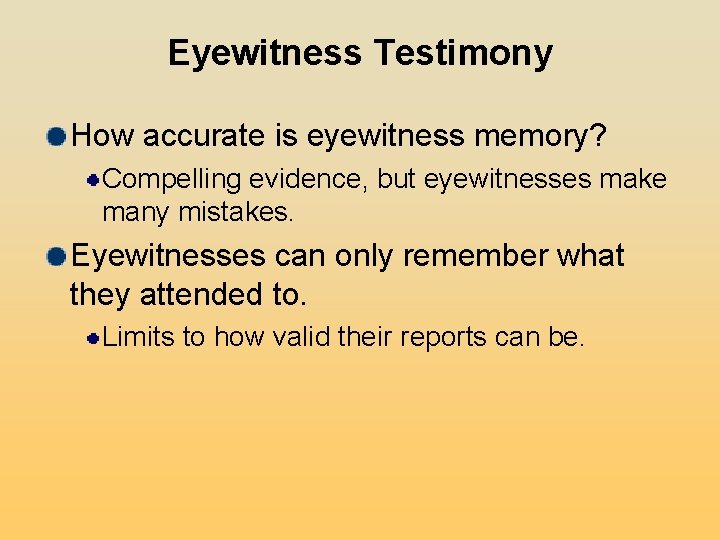
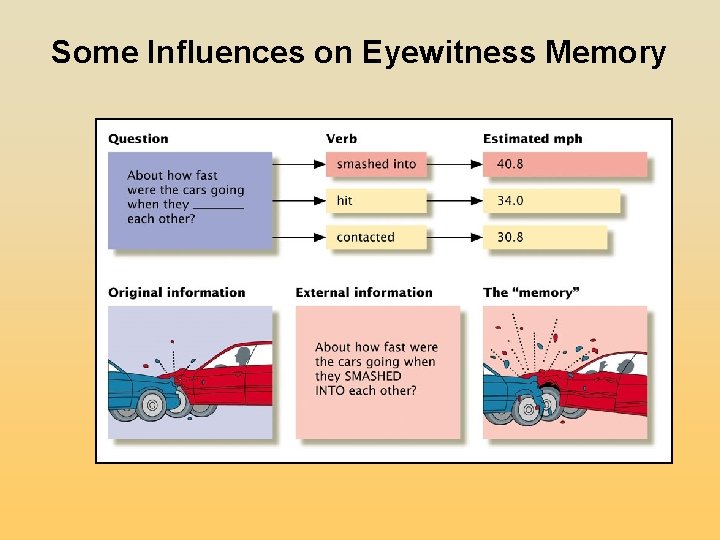
Eyewitness Testimony How accurate is eyewitness memory? Compelling evidence, but eyewitnesses make many mistakes. Eyewitnesses can only remember what they attended to. Limits to how valid their reports can be.
Some Influences on Eyewitness Memory
Eyewitness Testimony (cont’d) Jurors’ belief influenced by the witness. But, extremely detailed testimony does not guarantee accuracy. Jurors tend to believe confident witnesses But, witnesses’ confidence higher than their accuracy.
Eyewitness Testimony (cont’d) Weaknesses in eyewitness testimony amplified by: Source Amnesia: Remembering past choice not actual event (police line-ups). Reconsolidation: Act of remembering changes memory Recovery Memories Repression (weak evidence) Motivated Forgetting (strong evidence) Implanted Memories (strong evidence)