
The Nature of Light Part 1 Properties of

- Slides: 25
The Nature of Light
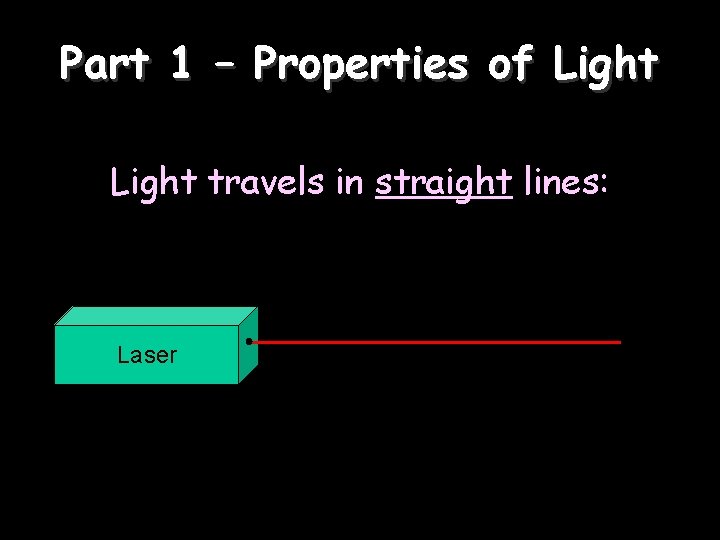
Part 1 – Properties of Light travels in straight lines: Laser
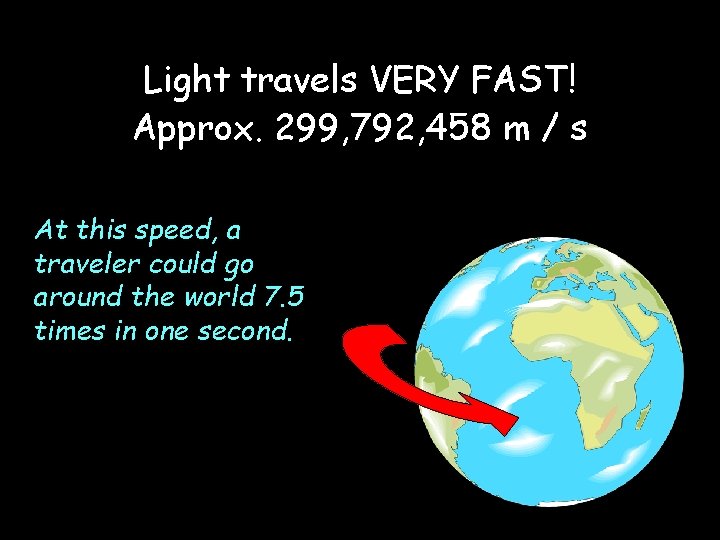
Light travels VERY FAST! Approx. 299, 792, 458 m / s At this speed, a traveler could go around the world 7. 5 times in one second.
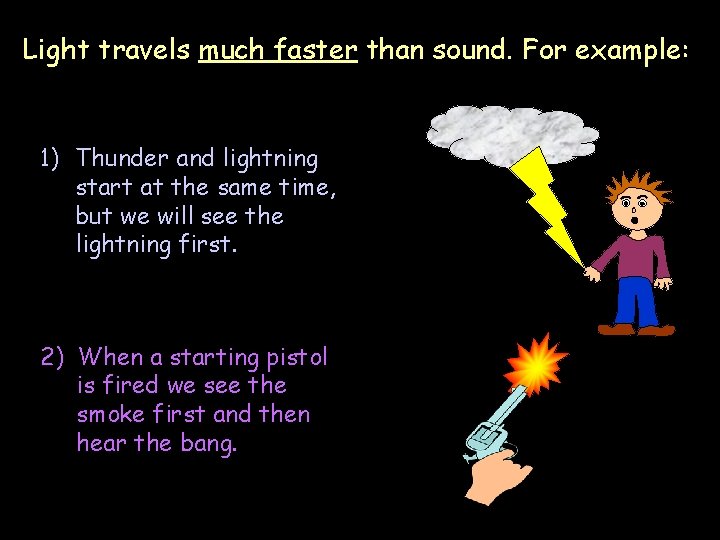
Light travels much faster than sound. For example: 1) Thunder and lightning start at the same time, but we will see the lightning first. 2) When a starting pistol is fired we see the smoke first and then hear the bang.
It’s tricky… Light can be described as a wave OR as a stream of particles! Wave-Particle Duality! http: //www. youtube. com/watch? v=Df. Pepr. Q 7 o. Gc
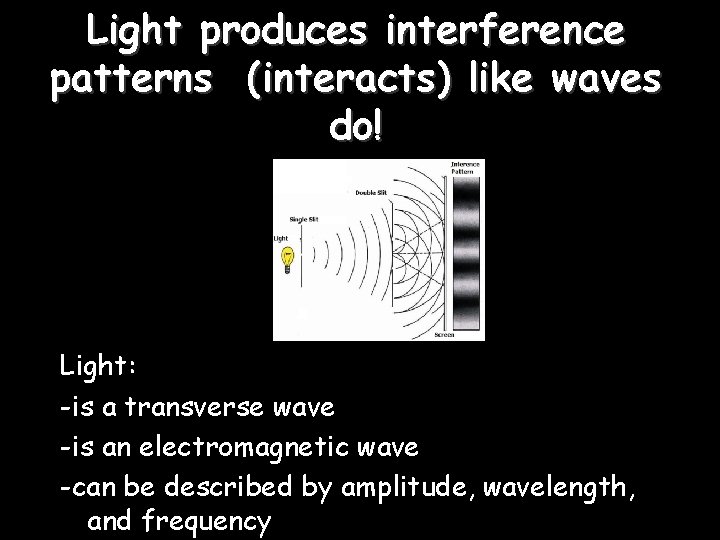
Light produces interference patterns (interacts) like waves do! Light: -is a transverse wave -is an electromagnetic wave -can be described by amplitude, wavelength, and frequency
But the wave model doesn’t explain everything! Example: When light strikes a piece of metal, electrons may fly off the metal’s surface. Like they are separate particles?
So… Light can also be modeled as a stream of particles. In this model, units of light are called photons. * Photons are not ordinary matter! • Have no mass • Little bundles of energy • Energy carried by a photon is proportional to frequency.
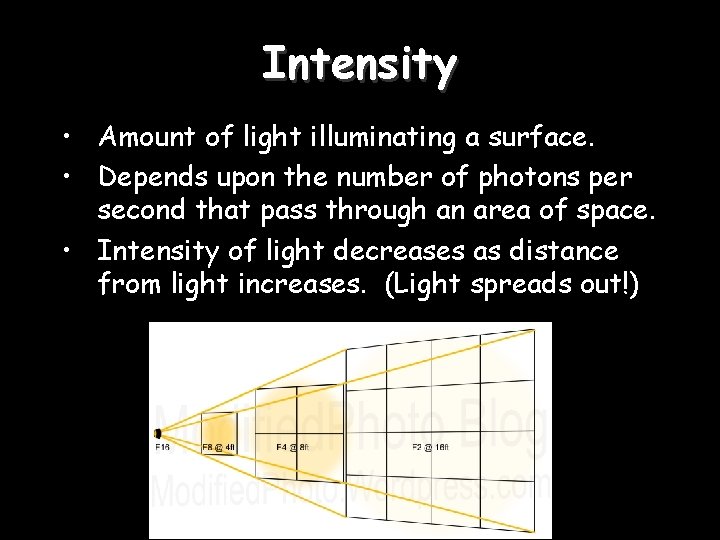
Intensity • Amount of light illuminating a surface. • Depends upon the number of photons per second that pass through an area of space. • Intensity of light decreases as distance from light increases. (Light spreads out!)
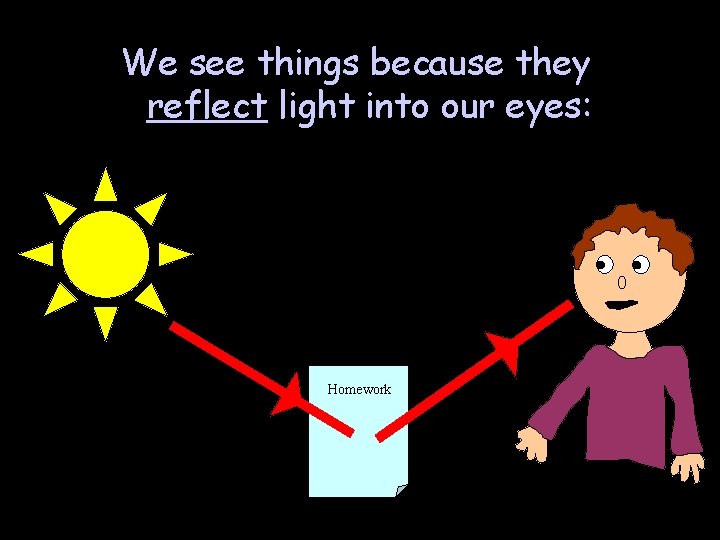
We see things because they reflect light into our eyes: Homework
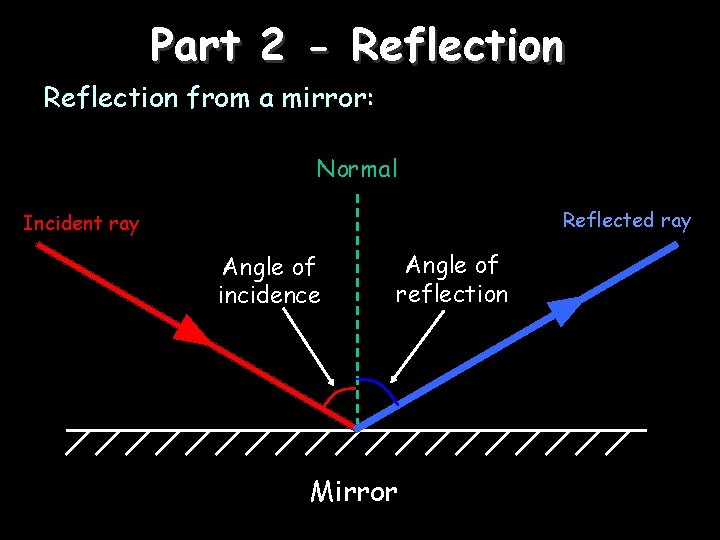
Part 2 - Reflection from a mirror: Normal Reflected ray Incident ray Angle of incidence Angle of reflection Mirror
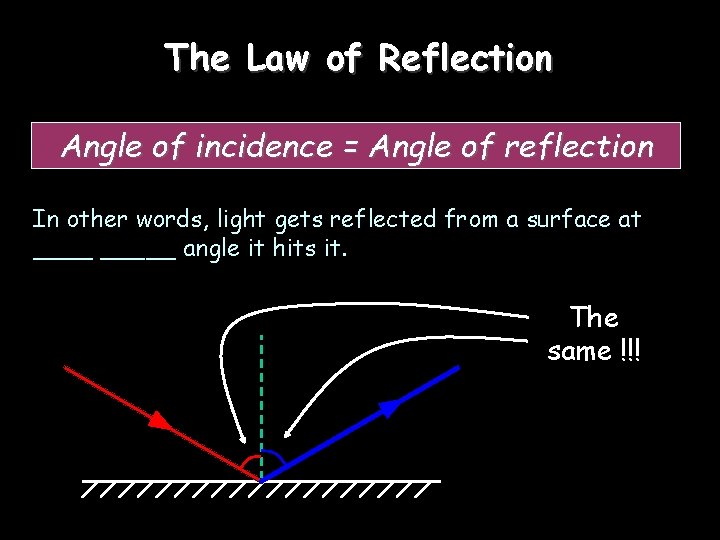
The Law of Reflection Angle of incidence = Angle of reflection In other words, light gets reflected from a surface at _____ angle it hits it. The same !!!
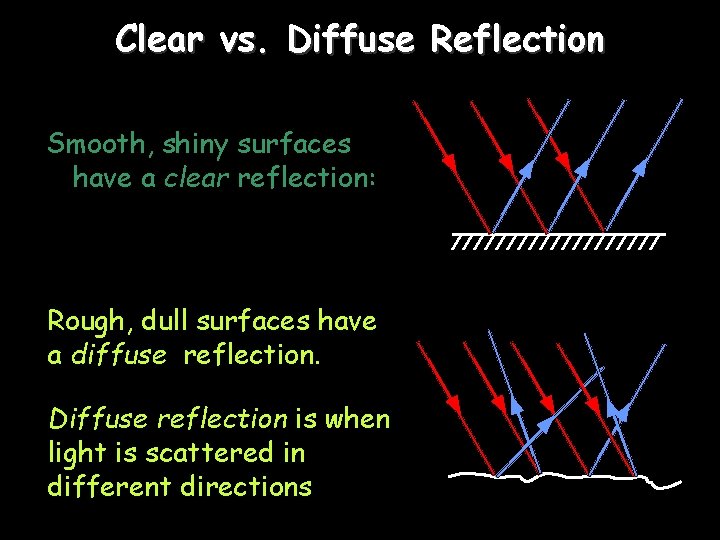
Clear vs. Diffuse Reflection Smooth, shiny surfaces have a clear reflection: Rough, dull surfaces have a diffuse reflection. Diffuse reflection is when light is scattered in different directions
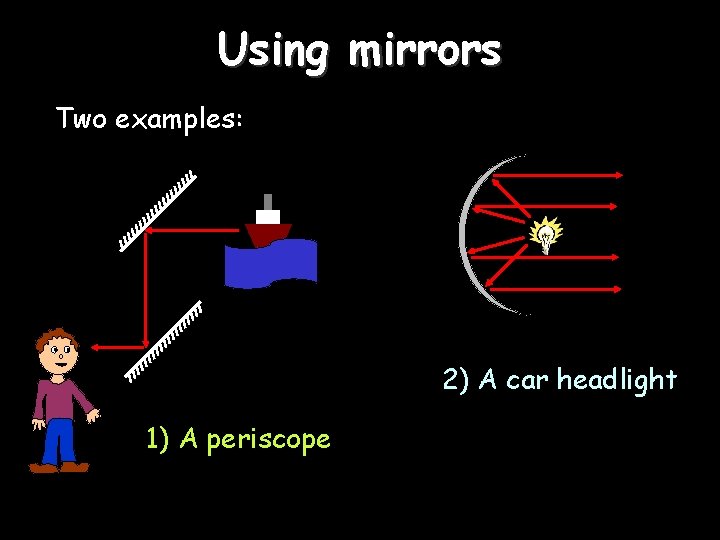
Using mirrors Two examples: 2) A car headlight 1) A periscope
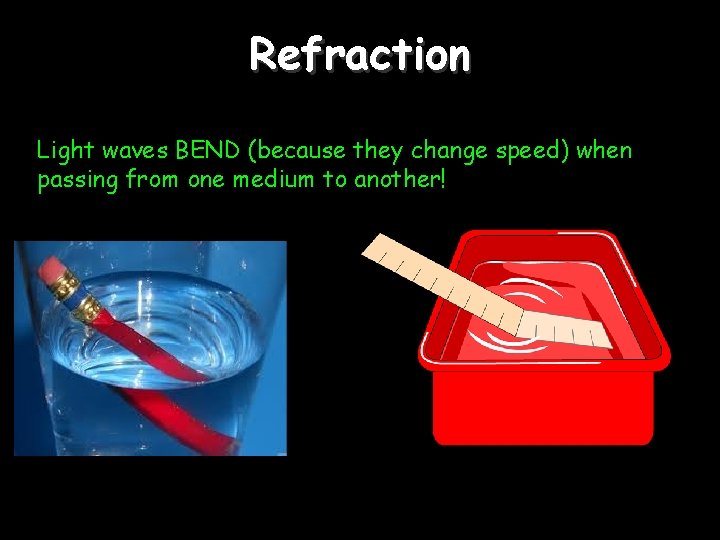
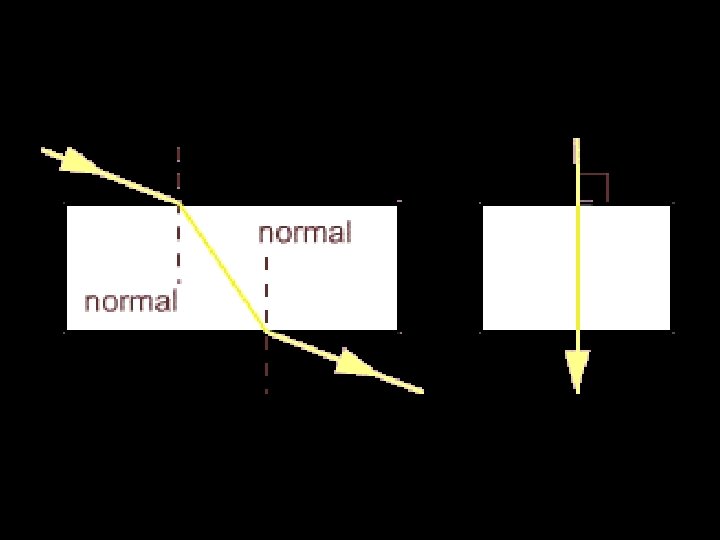
Refraction Light waves BEND (because they change speed) when passing from one medium to another!
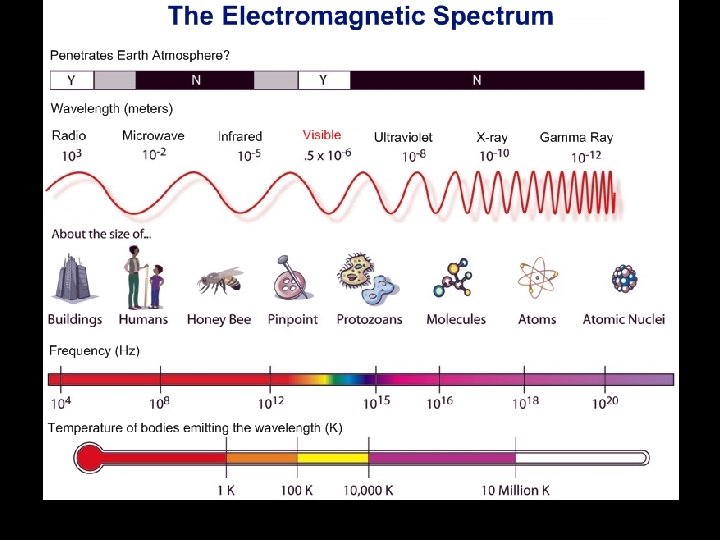
Electromagnetic Spectrum Human eyes can detect light waves that have wavelengths of 400 nm (violet) to 700 nm (red) Visible Spectrum is only a small part of the EM Spectrum!
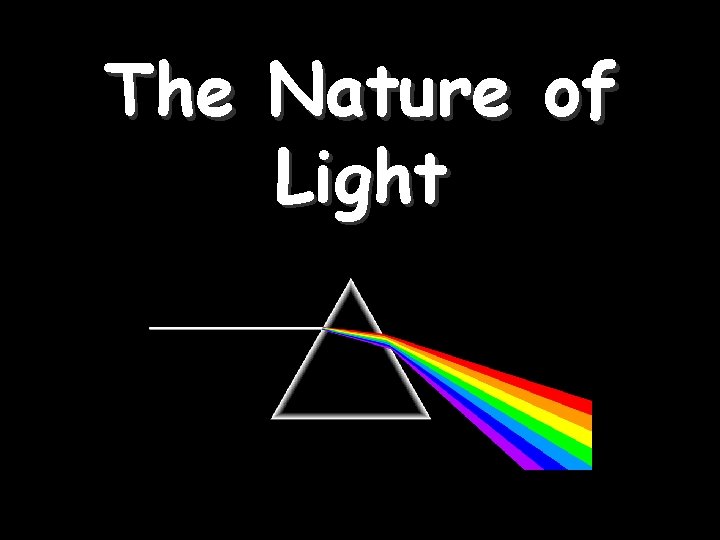
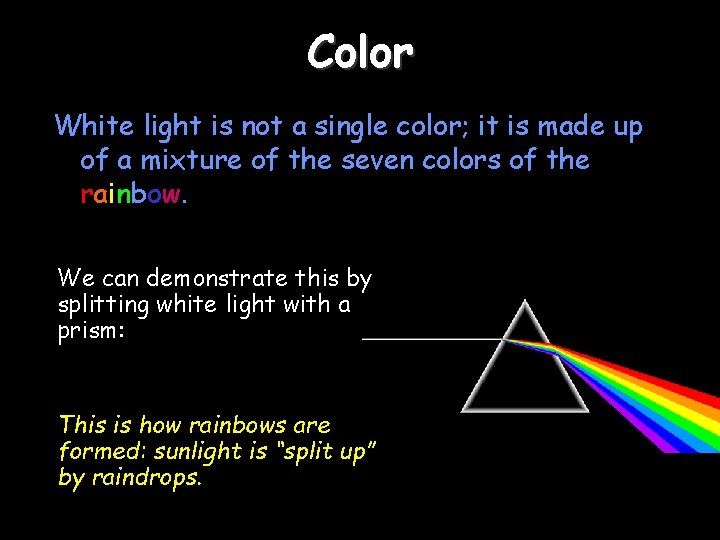
Color White light is not a single color; it is made up of a mixture of the seven colors of the rainbow. We can demonstrate this by splitting white light with a prism: This is how rainbows are formed: sunlight is “split up” by raindrops.
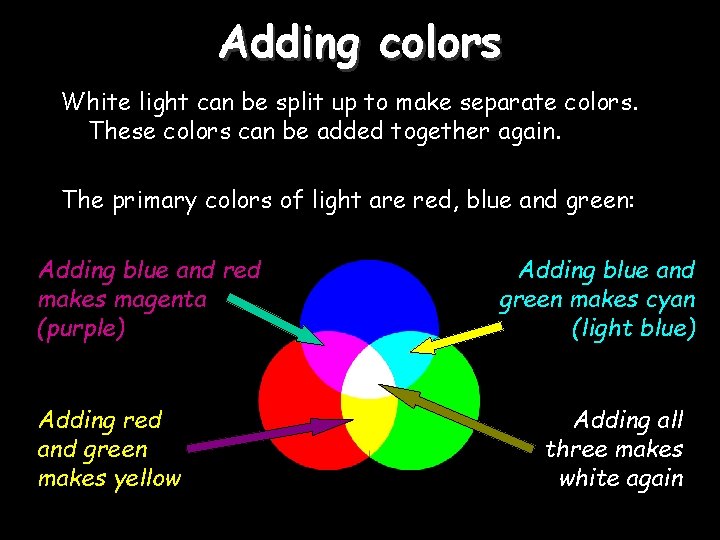
Adding colors White light can be split up to make separate colors. These colors can be added together again. The primary colors of light are red, blue and green: Adding blue and red makes magenta (purple) Adding red and green makes yellow Adding blue and green makes cyan (light blue) Adding all three makes white again
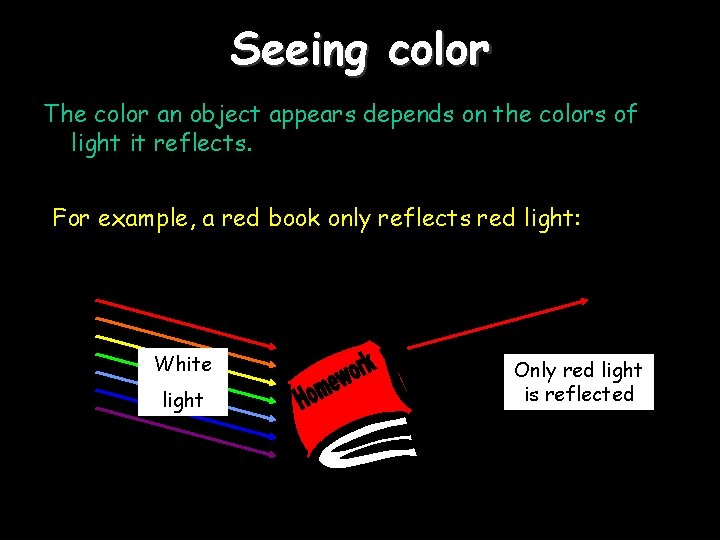
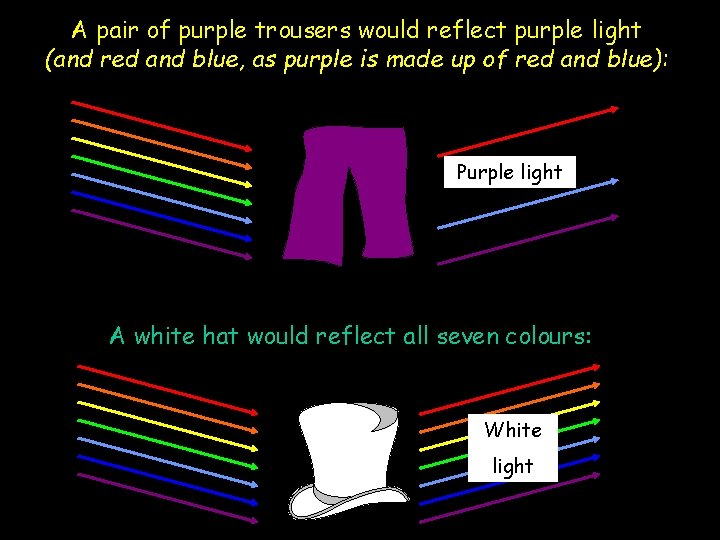
Seeing color The color an object appears depends on the colors of light it reflects. For example, a red book only reflects red light: White light Only red light is reflected
A pair of purple trousers would reflect purple light (and red and blue, as purple is made up of red and blue): Purple light A white hat would reflect all seven colours: White light
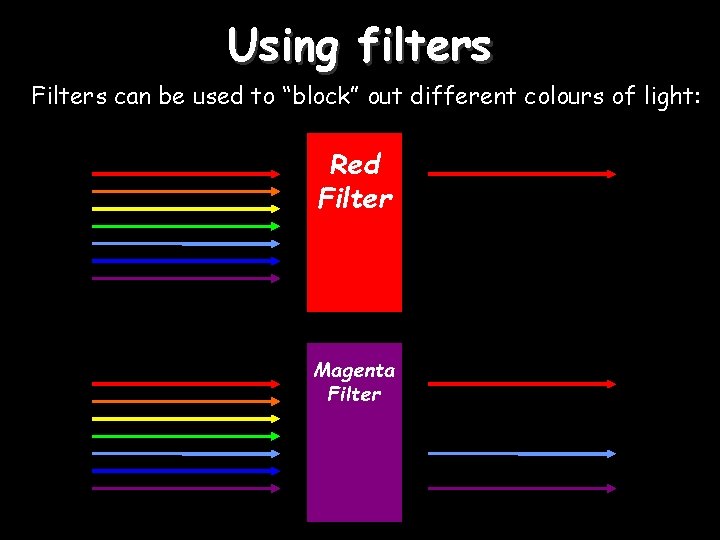
Using filters Filters can be used to “block” out different colours of light: Red Filter Magenta Filter
http: //www. youtube. com/watch? v=R 3 un. Pc. JDb. Cc
EM Spectrum • Consists of waves at all possible energies, frequencies, and wavelengths. • Each part has unique properties! • Radio waves – communications/radar • Microwaves – cooking/communication • Infrared Light – warmth • UV Light – part of sunlight • X rays & gamma rays – medicine