
The nature of knowledge Information is acquired by
The nature of knowledge ‘Information is acquired by being told, whereas knowledge can be acquired by thinking. ’ Fritz Machlup, 1902 -83
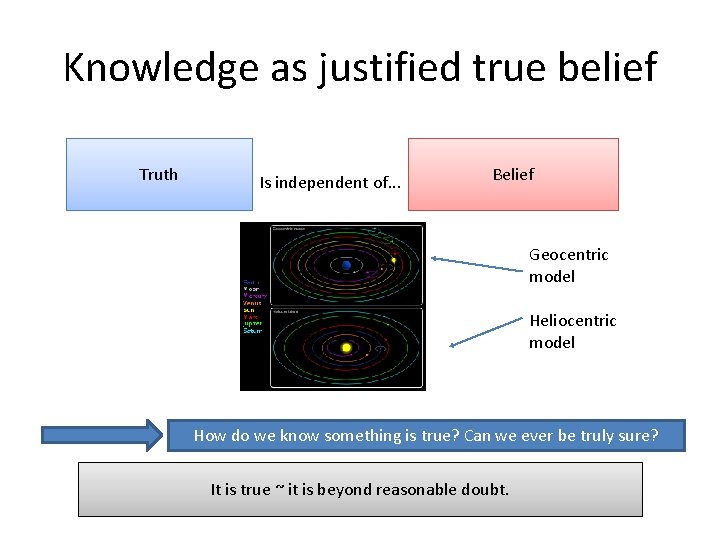
Knowledge as justified true belief Truth Is independent of. . . Belief Geocentric model Heliocentric model How do we know something is true? Can we ever be truly sure? It is true ~ it is beyond reasonable doubt.
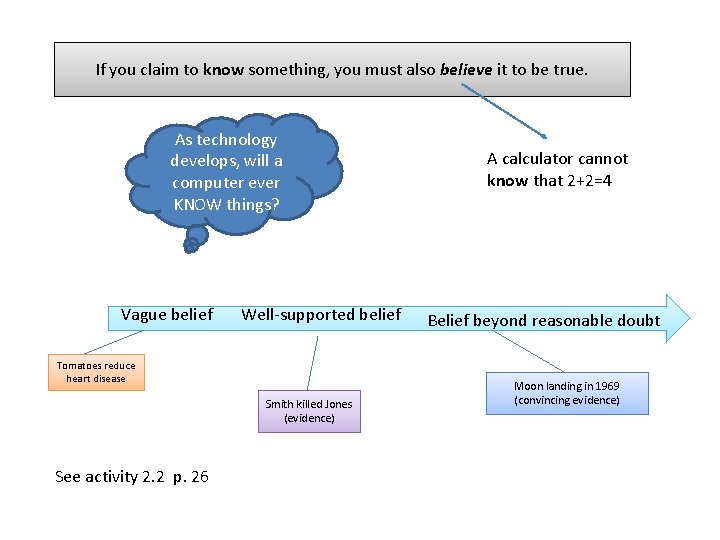
If you claim to know something, you must also believe it to be true. As technology develops, will a computer ever KNOW things? Vague belief Well-supported belief Tomatoes reduce heart disease Smith killed Jones (evidence) See activity 2. 2 p. 26 A calculator cannot know that 2+2=4 Belief beyond reasonable doubt Moon landing in 1969 (convincing evidence)
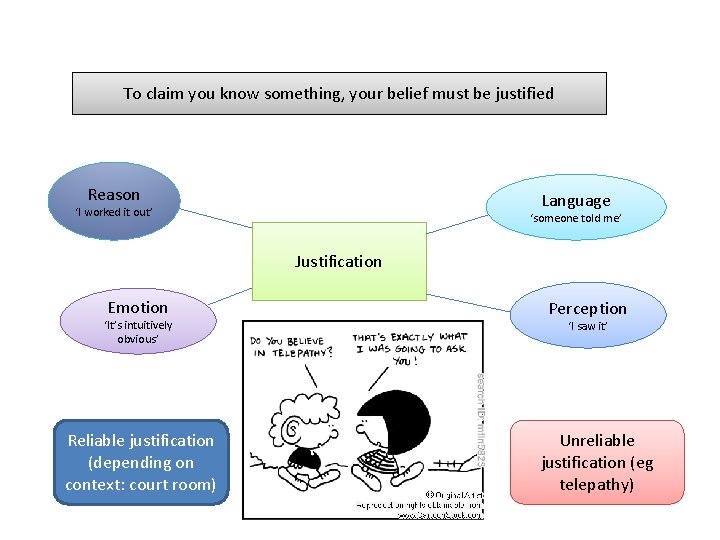
To claim you know something, your belief must be justified Reason Language ‘I worked it out’ ‘someone told me’ Justification Emotion ‘It’s intuitively obvious’ Reliable justification (depending on context: court room) Perception ‘I saw it’ Unreliable justification (eg telepathy)
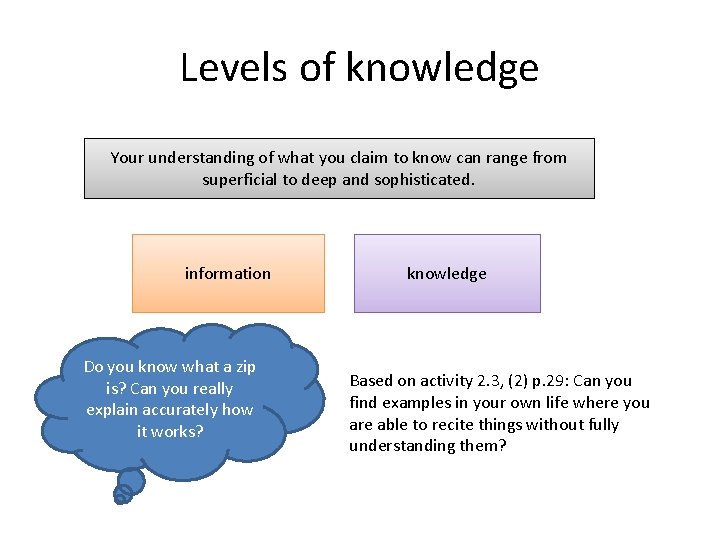
Levels of knowledge Your understanding of what you claim to know can range from superficial to deep and sophisticated. information Do you know what a zip is? Can you really explain accurately how it works? knowledge Based on activity 2. 3, (2) p. 29: Can you find examples in your own life where you are able to recite things without fully understanding them?

Second-hand knowledge How much could you know about the world if you never trusted anyone? What is the function of language in passing on second-hand knowledge? What are the dangers associated with this? =Knowledge by authority =Knowledge by testimony Main sources of second hand knowledge: Cultural tradition, school, the internet, expert opinion, the media. Can you think of any other sources?
Cultural Tradition How does the culture you grew up in have an influence on the way you see the world?
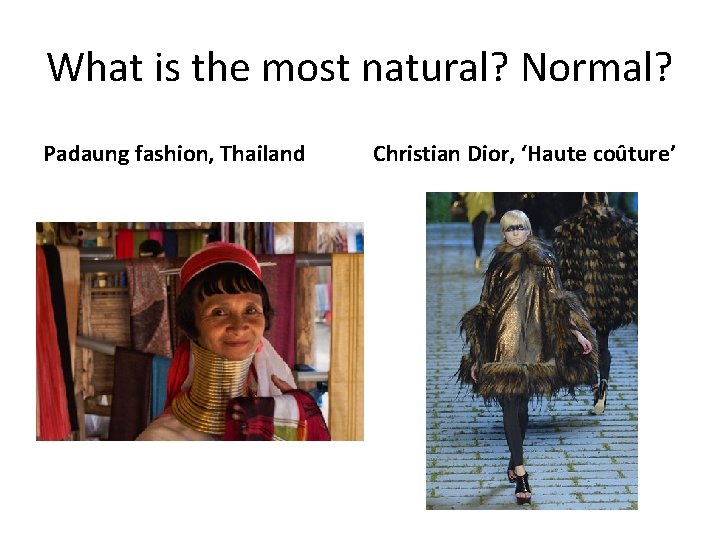
What is the most natural? Normal? Padaung fashion, Thailand Christian Dior, ‘Haute coûture’
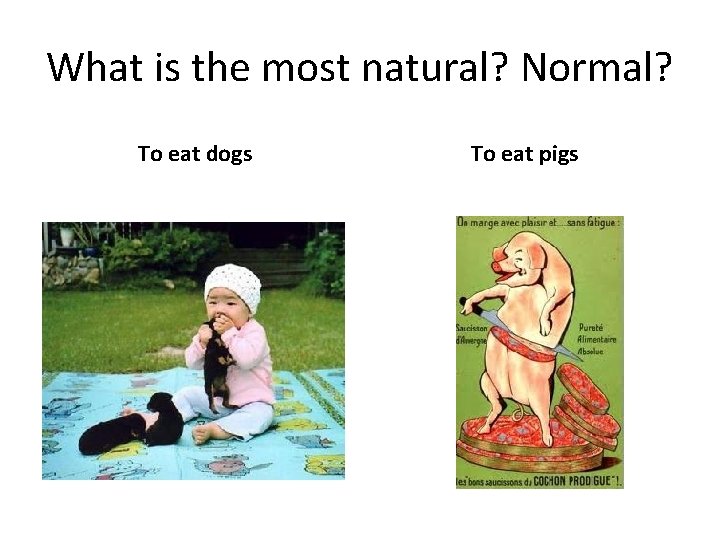
What is the most natural? Normal? To eat dogs To eat pigs
School What’s the difference between education and indoctrination? See act 2. 6 (1). What opinions are teachers in your country expected to keep silent about and to what extent can this be justified?
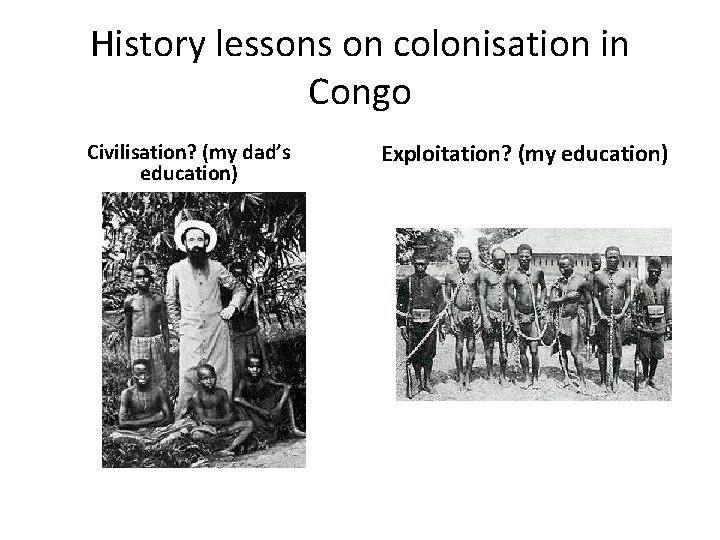
History lessons on colonisation in Congo Civilisation? (my dad’s education) Exploitation? (my education)
The internet Is the internet a source of information or of disinformation? See p. 32 for Internet Urban Legends
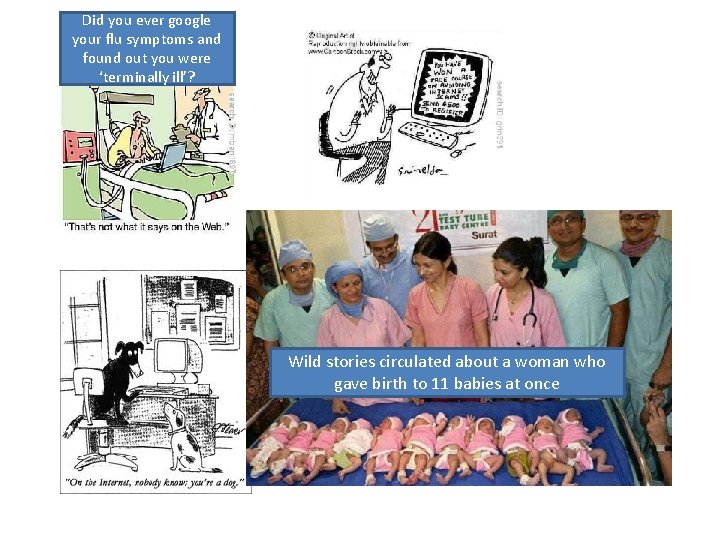
Did you ever google your flu symptoms and found out you were ‘terminally ill’? Wild stories circulated about a woman who gave birth to 11 babies at once
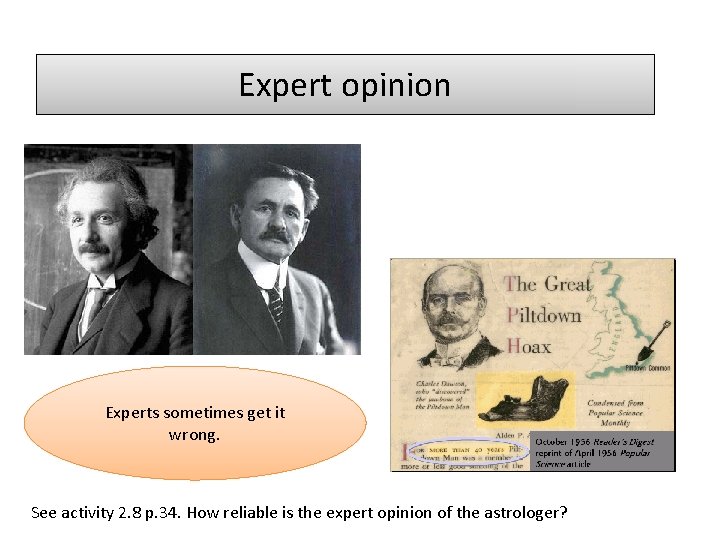
Expert opinion Experts sometimes get it wrong. See activity 2. 8 p. 34. How reliable is the expert opinion of the astrologer?
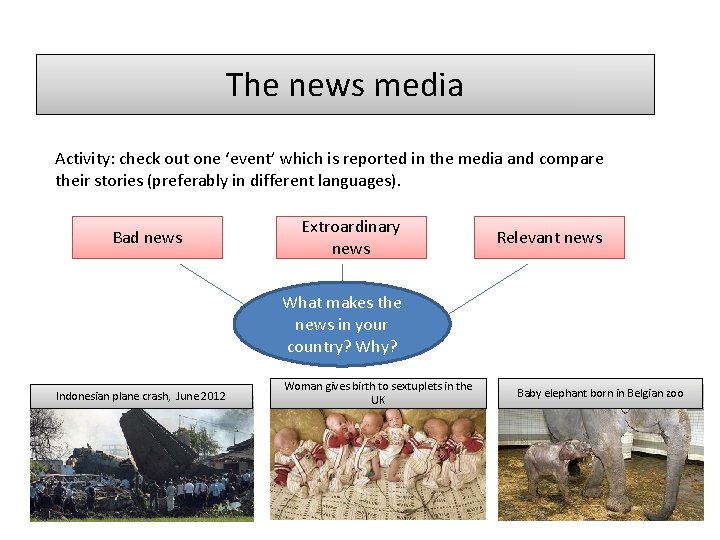
The news media Activity: check out one ‘event’ which is reported in the media and compare their stories (preferably in different languages). Bad news Extroardinary news Relevant news What makes the news in your country? Why? Indonesian plane crash, June 2012 Woman gives birth to sextuplets in the UK Baby elephant born in Belgian zoo
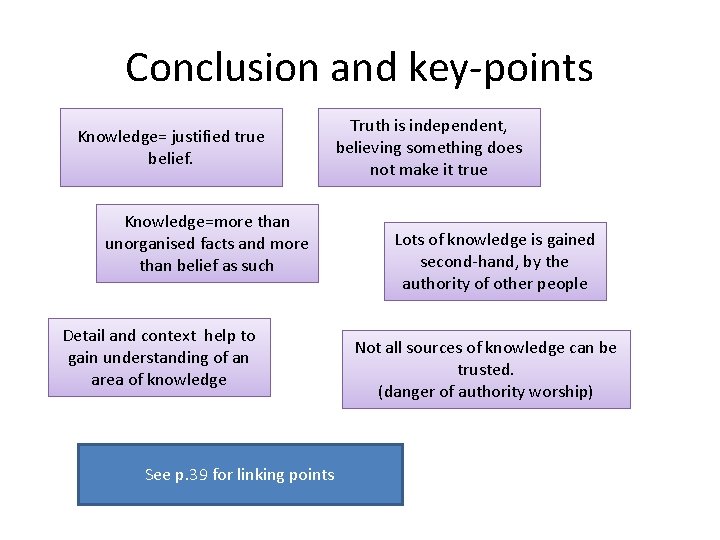
Conclusion and key-points Knowledge= justified true belief. Knowledge=more than unorganised facts and more than belief as such Detail and context help to gain understanding of an area of knowledge See p. 39 for linking points Truth is independent, believing something does not make it true Lots of knowledge is gained second-hand, by the authority of other people Not all sources of knowledge can be trusted. (danger of authority worship)
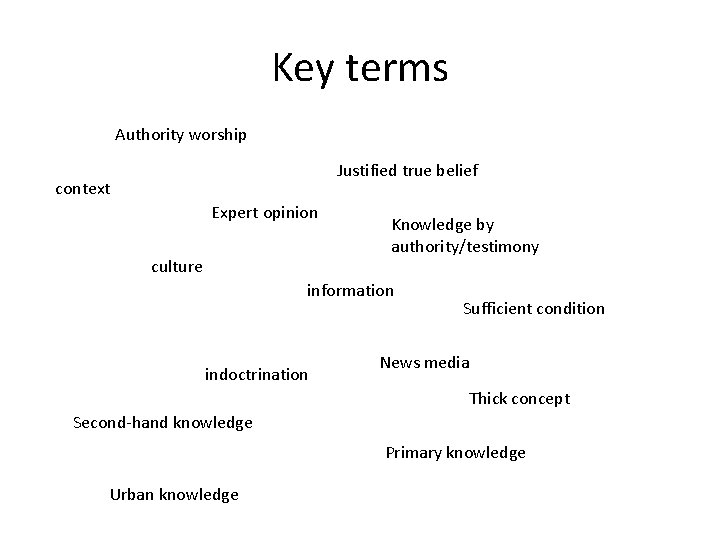
Key terms Authority worship Justified true belief context Expert opinion culture Knowledge by authority/testimony information indoctrination Sufficient condition News media Thick concept Second-hand knowledge Primary knowledge Urban knowledge
- Slides: 17