
The Nature of Gases Kinetic Theory Kinetic Energy

- Slides: 13
The Nature of Gases
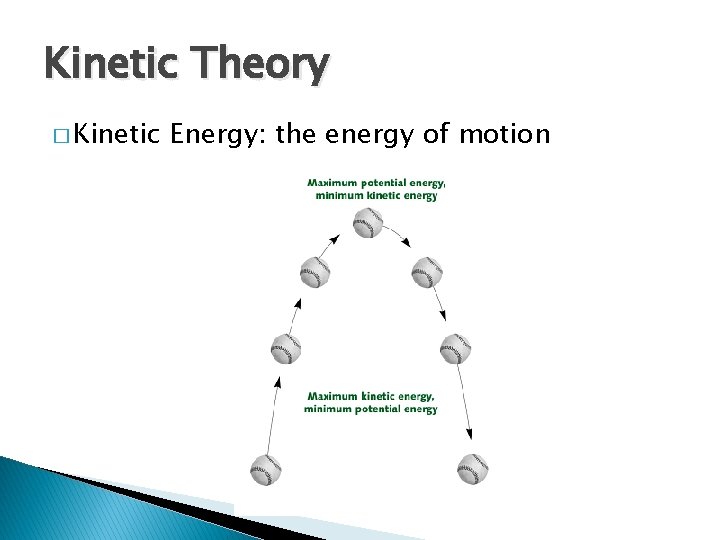
Kinetic Theory � Kinetic Energy: the energy of motion
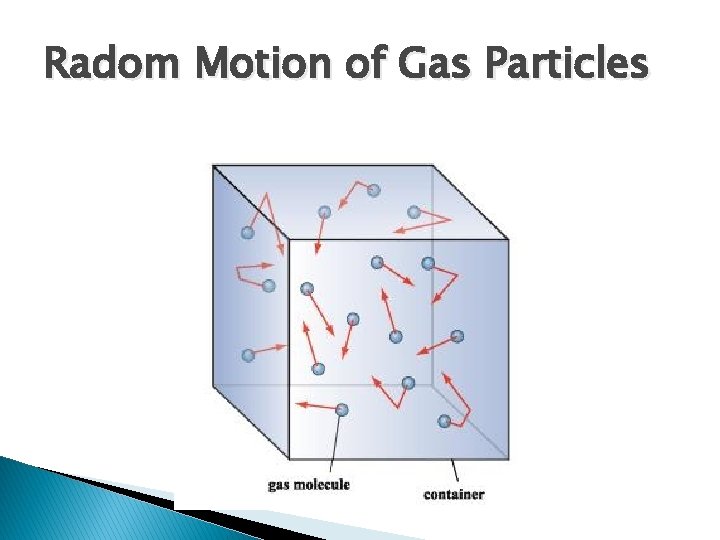
Kinetic Theory � Gas particles are small, hard spheres with insignificant volume ◦ No attractive or repulsive forces � Gas particle motion is rapid, constant, and random ◦ Particles move in straight paths until they collide ◦ O 2 travels at 1700 km/hr ◦ Move from D. C. to Mexico City in 115 minutes � All collisions between gas particles are elastic ◦ Energy is simply transferred between particles
Radom Motion of Gas Particles
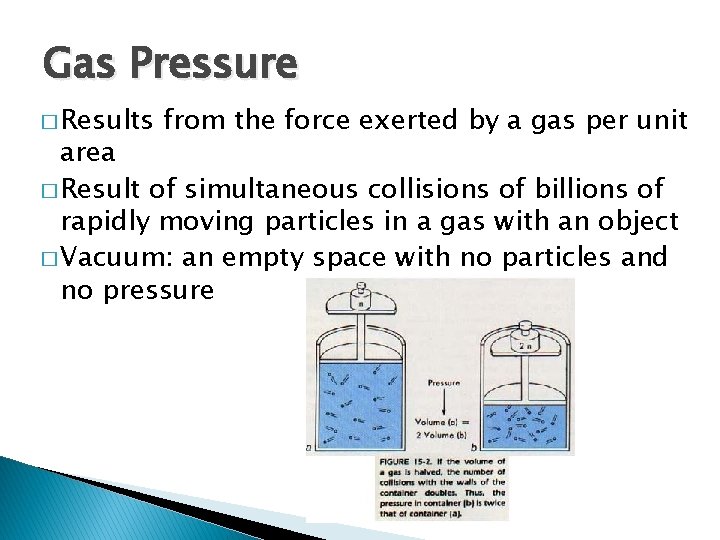
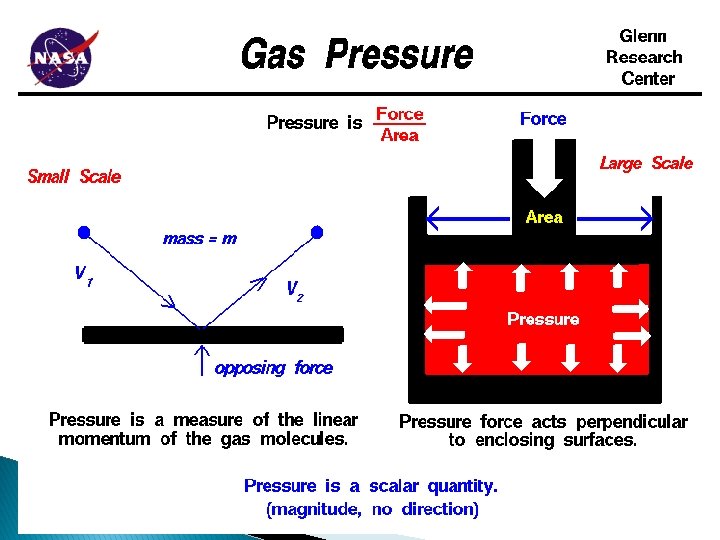
Gas Pressure � Results from the force exerted by a gas per unit area � Result of simultaneous collisions of billions of rapidly moving particles in a gas with an object � Vacuum: an empty space with no particles and no pressure
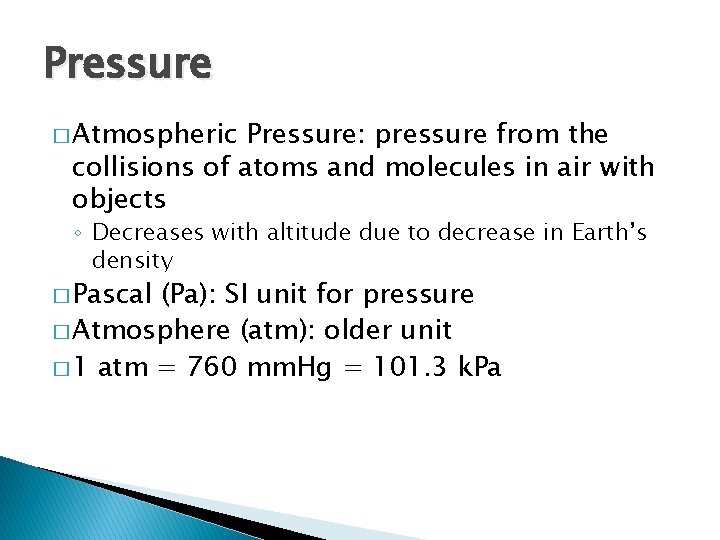
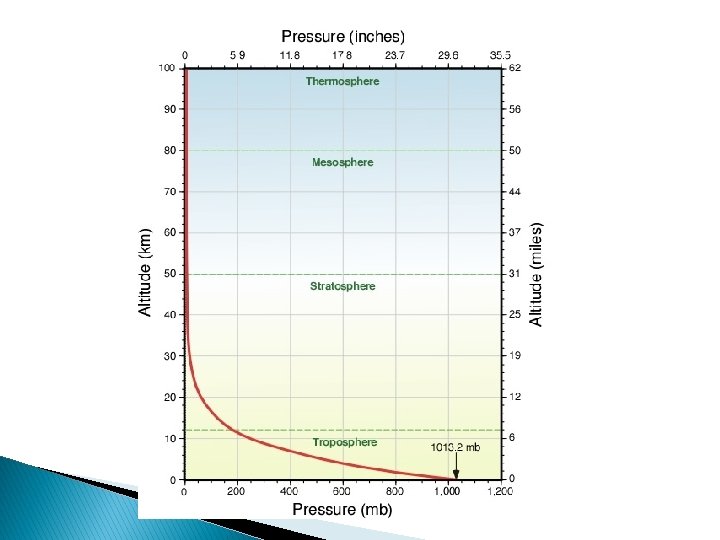
Pressure � Atmospheric Pressure: pressure from the collisions of atoms and molecules in air with objects ◦ Decreases with altitude due to decrease in Earth’s density � Pascal (Pa): SI unit for pressure � Atmosphere (atm): older unit � 1 atm = 760 mm. Hg = 101. 3 k. Pa
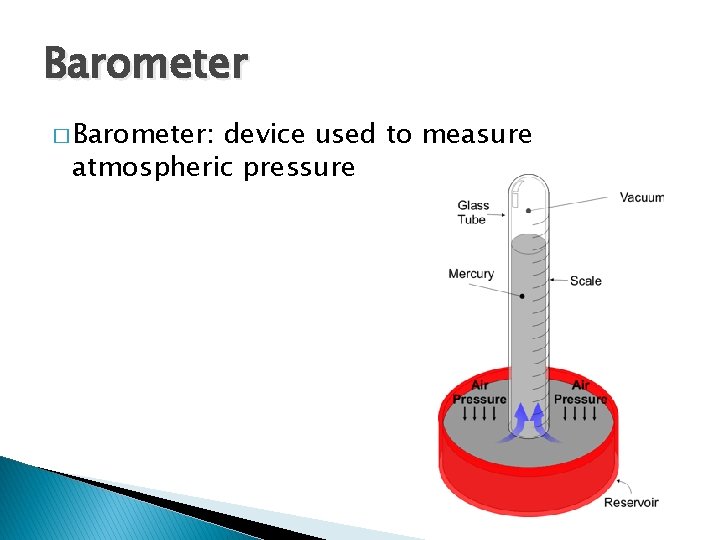
Barometer � Barometer: device used to measure atmospheric pressure
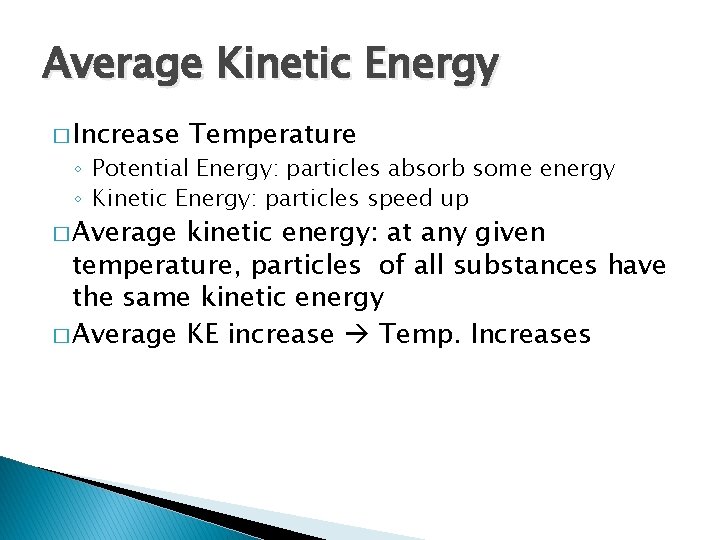
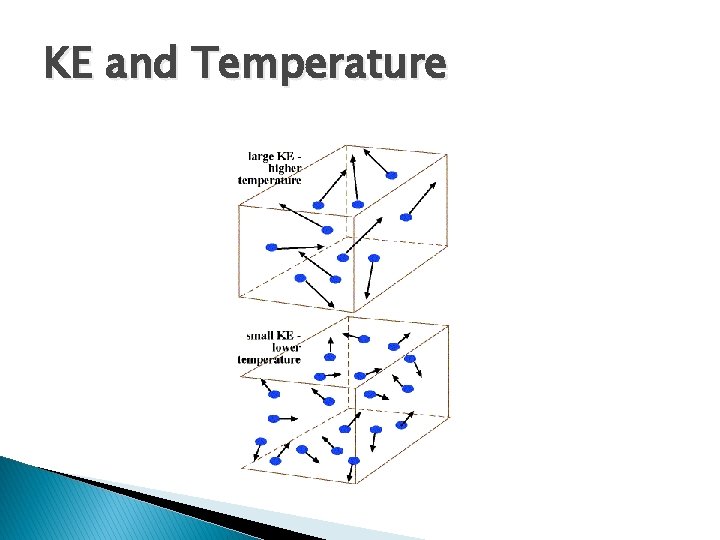
Average Kinetic Energy � Increase Temperature ◦ Potential Energy: particles absorb some energy ◦ Kinetic Energy: particles speed up � Average kinetic energy: at any given temperature, particles of all substances have the same kinetic energy � Average KE increase Temp. Increases
KE and Temperature
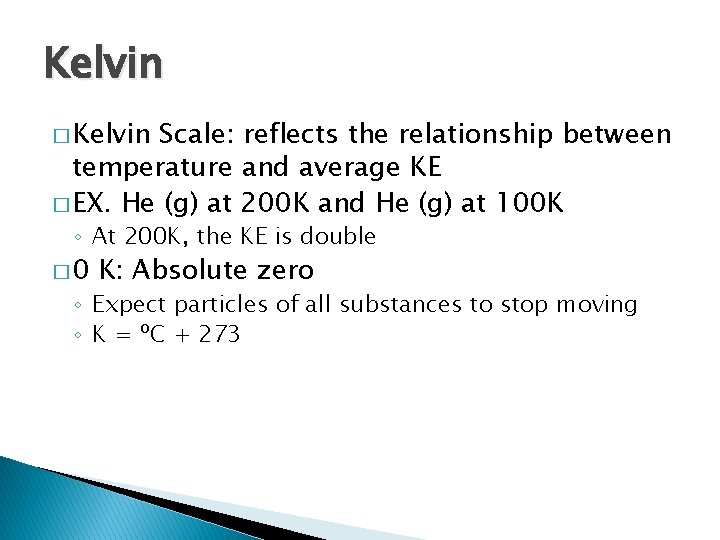
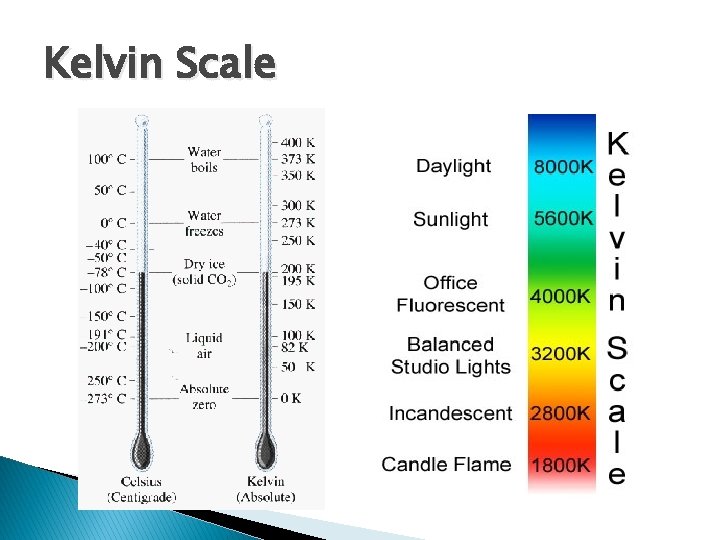
Kelvin � Kelvin Scale: reflects the relationship between temperature and average KE � EX. He (g) at 200 K and He (g) at 100 K ◦ At 200 K, the KE is double � 0 K: Absolute zero ◦ Expect particles of all substances to stop moving ◦ K = ºC + 273
Kelvin Scale