
The Nature of Biotechnology Next Generation Science Common
The Nature of Biotechnology
Next Generation Science /Common Core Standards Addressed! HS-LS 1 -1. Construct an explanation based on evidence for how the structure of DNA determines the structure of proteins which carry out the essential functions of life through systems of specialized cells. [Assessment Boundary: Assessment does not include identification of specific cell or tissue types, whole body systems, specific protein structures and functions, or the biochemistry of protein synthesis. ]
Agriculture, Food and Natural Resource Standards Addressed! BS. 01. 03. Analyze the relationship and implications of bioethics, laws and public perceptions on applications of biotechnology in agriculture (e. g. , ethical, legal, social, cultural issues). • BS. 01. 03. 01. a. Research and summarize the emergence, evolution and implications of bioethics associated with biotechnology in agriculture.
Bell Work!: 1: Briefly describe biotechnology and its use throughout history. 2: Describe the capabilities of biotechnology today. 3: Distinguish between the two main areas of biotechnology.

Terms: § § § Biotechnology Chromosome Decipher DNA Enzyme Gene Hereditary Molecule Plasmid Recombinant Virus
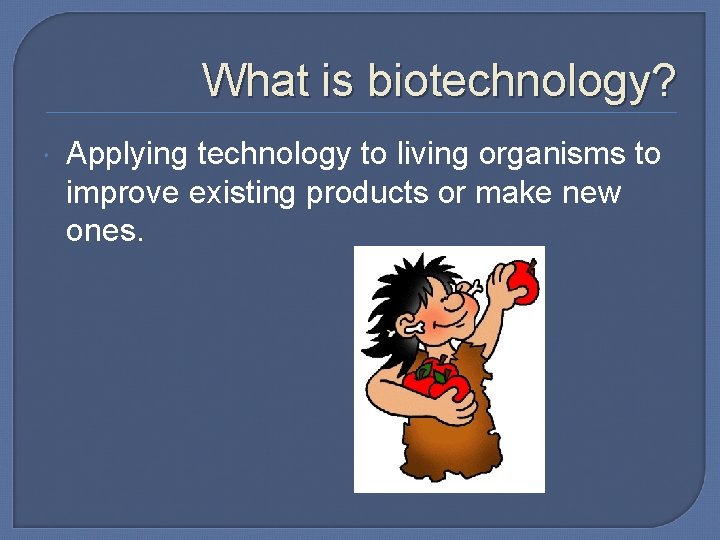
What is biotechnology? Applying technology to living organisms to improve existing products or make new ones.

Landmarks in Molecular Biotechnology Research
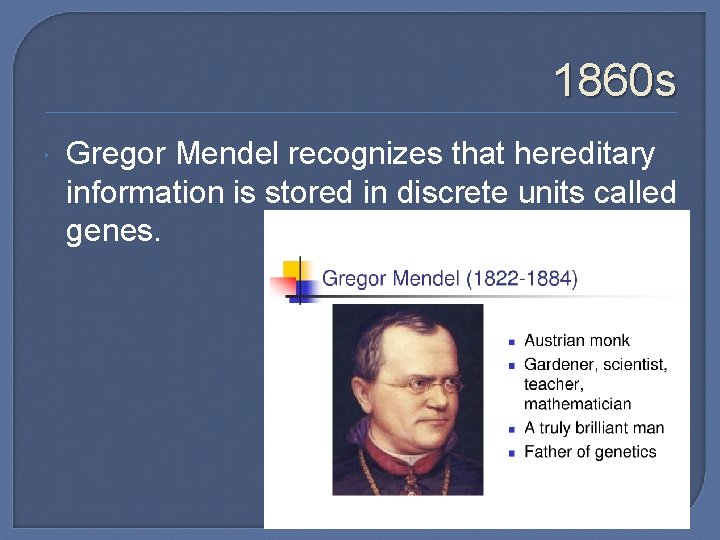
1860 s Gregor Mendel recognizes that hereditary information is stored in discrete units called genes.
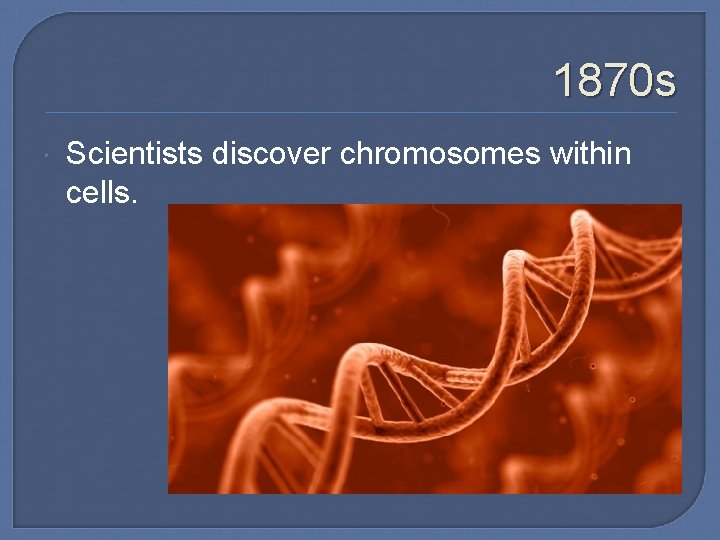
1870 s Scientists discover chromosomes within cells.
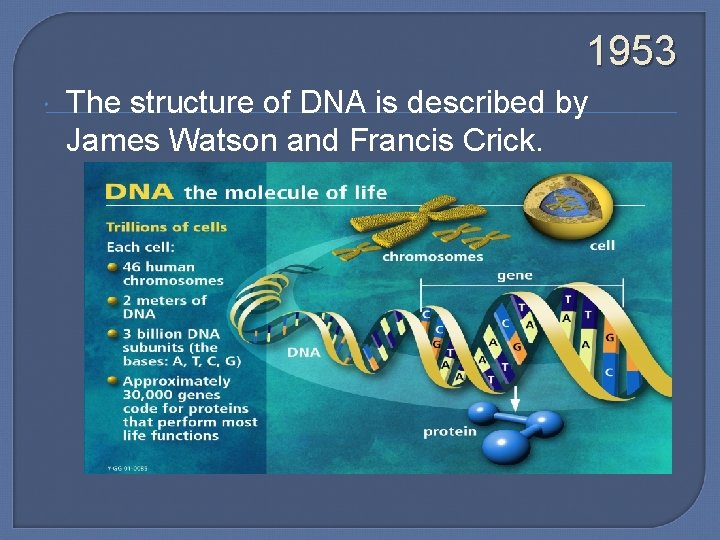
1953 The structure of DNA is described by James Watson and Francis Crick.
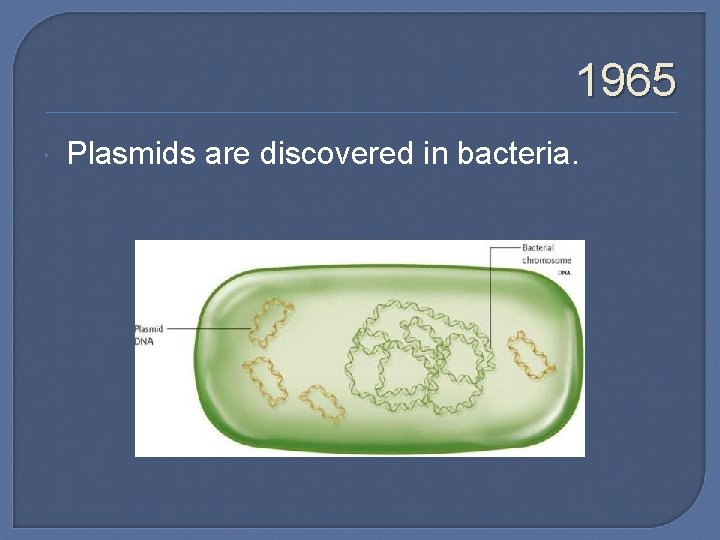
1965 Plasmids are discovered in bacteria.
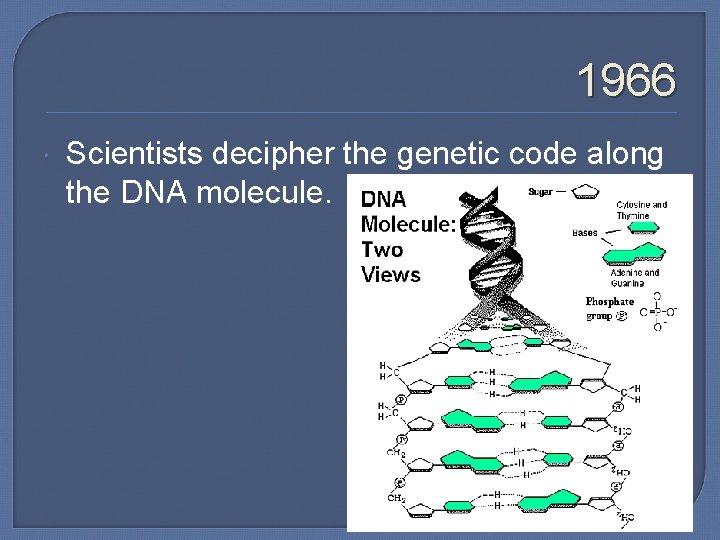
1966 Scientists decipher the genetic code along the DNA molecule.
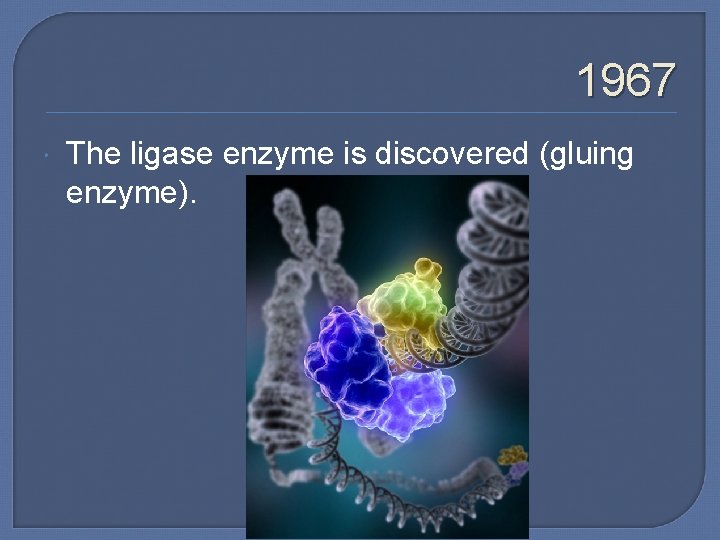
1967 The ligase enzyme is discovered (gluing enzyme).
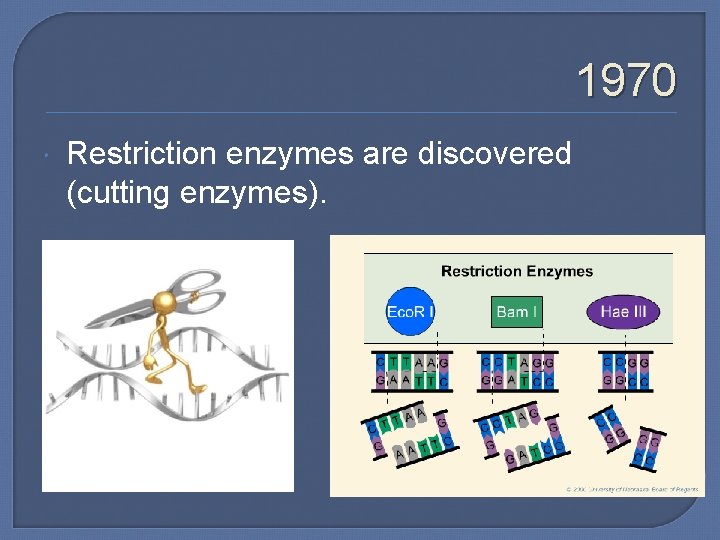
1970 Restriction enzymes are discovered (cutting enzymes).
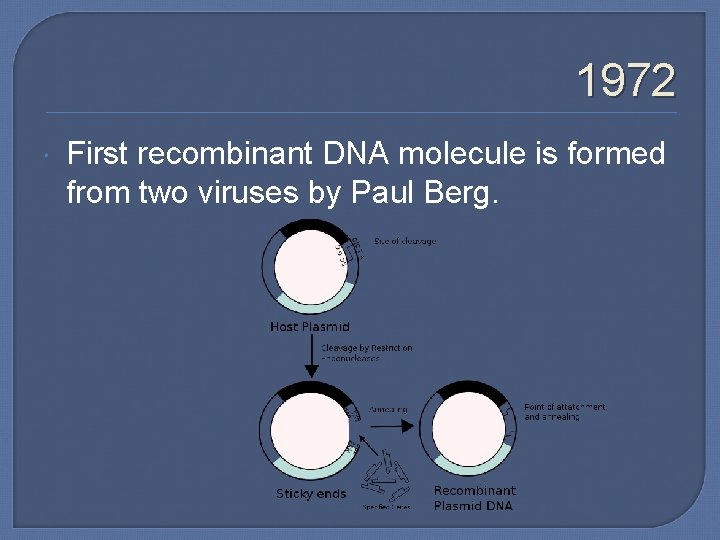
1972 First recombinant DNA molecule is formed from two viruses by Paul Berg.
1973 First DNA fragments are inserted into plasmid DNA and then reinserted into E. coli bacterium.
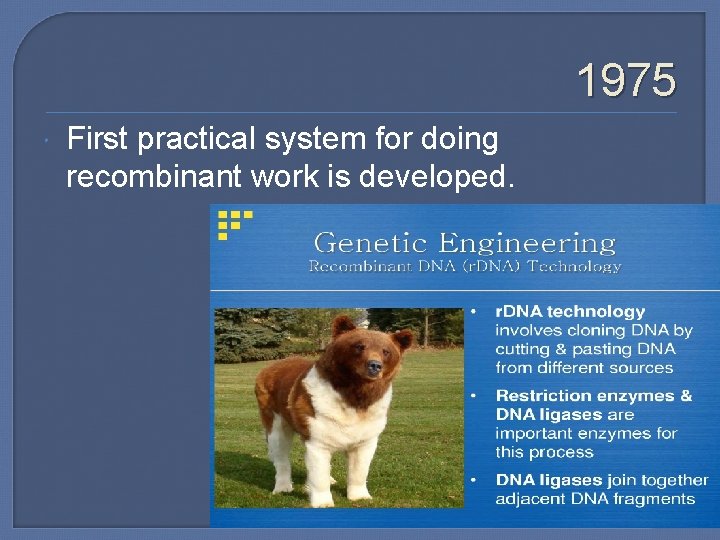
1975 First practical system for doing recombinant work is developed.
1978 Recombinant insulin is produced in bacterial cells.
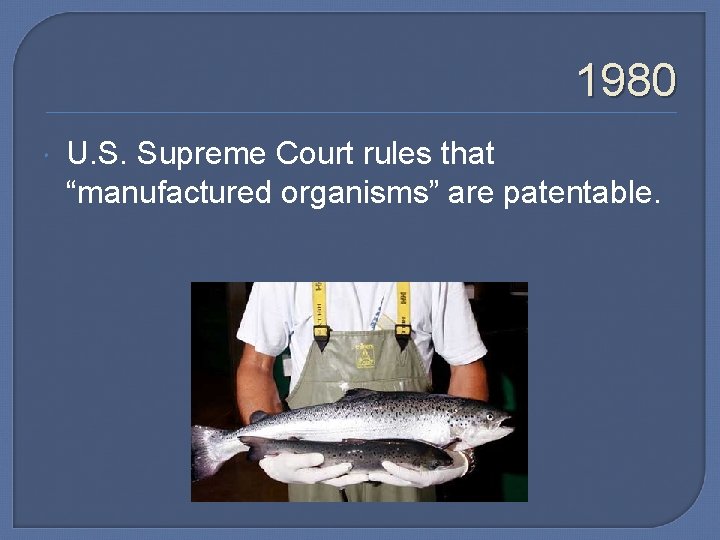
1980 U. S. Supreme Court rules that “manufactured organisms” are patentable.
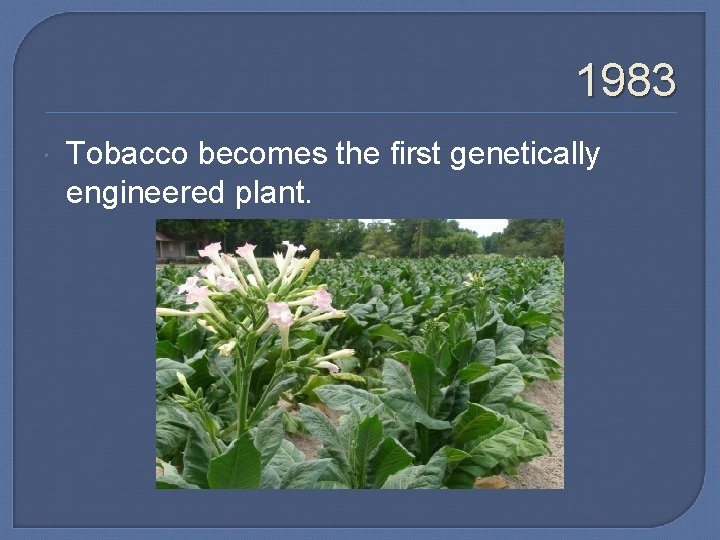
1983 Tobacco becomes the first genetically engineered plant.
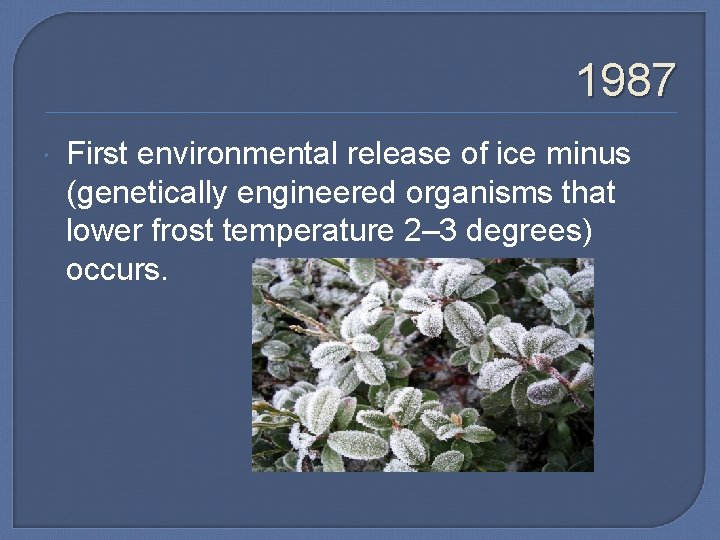
1987 First environmental release of ice minus (genetically engineered organisms that lower frost temperature 2– 3 degrees) occurs.
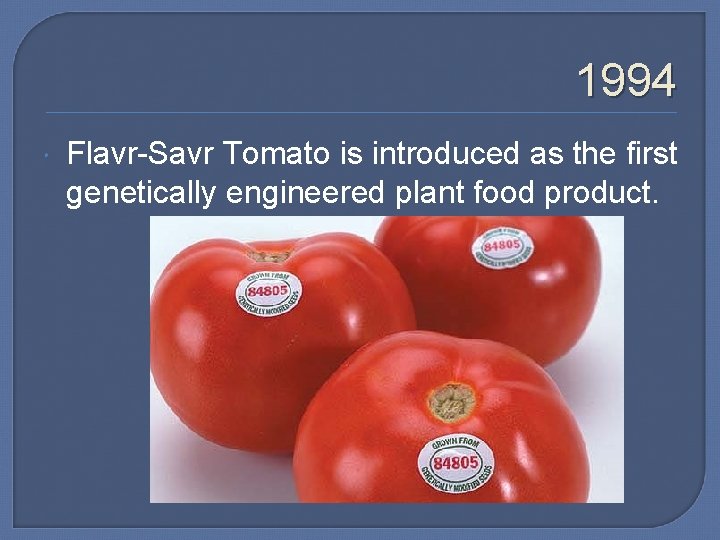
1994 Flavr-Savr Tomato is introduced as the first genetically engineered plant food product.
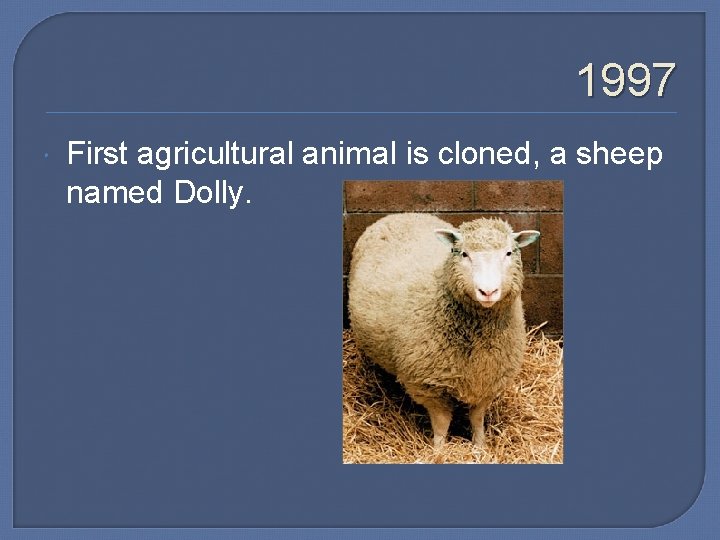
1997 First agricultural animal is cloned, a sheep named Dolly.
KEYS TO ADVANCEMENT TO DATE: Mechanization Cost-effective crop protection and fertilization Improved plant and animal breeding Efficient transportation system
LIMITATIONS TO CONTINUED PROGRESS: Lack of purchasing power of poor countries. Predicted world population growth -additional 2. 5 billion people by 2020 -total 8 billion, 9 billion by 2050. Economic development raises demand for high quality foods.
Biotechnology has been used by people for centuries. Yeast used for bread and bacteria used in fermentation and cheese production were some of the first applications of biotechnology. Improvement by selection was an early method to choose and keep the best plants and animals for further use. Hybridization of crops involves the controlled pollination of plants. Breeding livestock to obtain desired characteristics in the offspring is known as selective breeding.
Biotechnology has two main areas of application Organismic biotechnology involves practices that promote healthier and more productive organisms. The area of biotechnology that involves changing an organism at the cellular level is referred to as molecular biotechnology.
The End!
- Slides: 29