
The National Pipeline Mapping System Identifying Pipeline Segments

- Slides: 36
The National Pipeline Mapping System -Identifying Pipeline Segments that can Impact HCAs www. npms. rspa. dot. gov Steve Fischer GIS Manager US DOT/Office of Pipeline Safety DPS - 11 400 7 th Street, S. W. Washington, DC 20590 202. 366. 6267 steven. fischer@rspa. dot. gov Sam Hall GIS Analyst US DOT/Office of Pipeline Safety DPS - 11 400 7 th Street, S. W Washington, DC 20590 202. 493. 0591 samuel. hall@rspa. dot. gov
What is the NPMS? l A GIS created by OPS in cooperation with government and industry l Natural gas transmission and hazardous liquid pipelines; LNG facilities l Geospatial data, attribute data, and metadata l A voluntary initiative
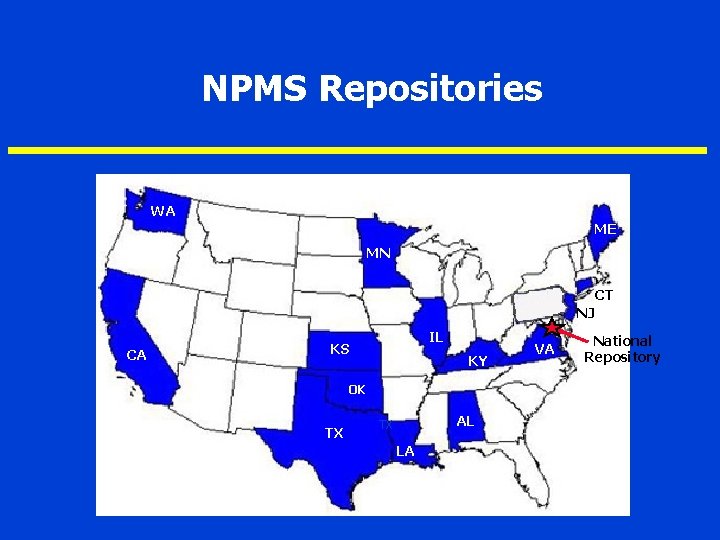
The NPMS Model l Repositories : National : 14 Repository in Alexandria, Virginia state repositories: ê Alabama, California, Connecticut, Illinois, Kansas, Kentucky, Louisiana, Maine, Minnesota, New Jersey, Oklahoma, Texas, Virginia, Washington ê New repositories are solicited through the Commerce Business Daily (CBD)
NPMS Repositories ME WA ME MN CT NJ CA IL KS KY OK TX AL TX LA VA National Repository
NPMS Repositories (cont. ) l State repositories collect data for pipelines within their state boundaries. l The National Repository collects data for states without repositories and incorporates state repository data into a seamless national dataset.
The NPMS Model (cont. ) l Standards : Operator Standards ê describe NPMS how operators can participate in the : Repository Standards ê describe the operations of the National Repository and the state repositories l Both sets of standards may be downloaded from the NPMS website.
Status of the NPMS As of July 1, 2001, the NPMS contains: l 86% of hazardous liquid pipelines l 42% of natural gas transmission pipelines l 56% of all pipelines being collected
The Role of the NPMS at OPS
Integrity Management Program IMP - Rulemaking Pipeline Integrity Management in High Consequence Areas [Hazardous Liquid Operators with 500 or More Miles] : Objective: To improve pipeline safety through new requirements for testing, integrated evaluation of risk information, improved federal/state oversight of integrity management plans, and enhanced communication to communities.
High Consequence Areas l Key Feature: IMP provides protection for OPS-defined High Consequence Areas (HCA’s). l HCA’s are geographic areas where the consequences of a pipeline release would be most adverse.
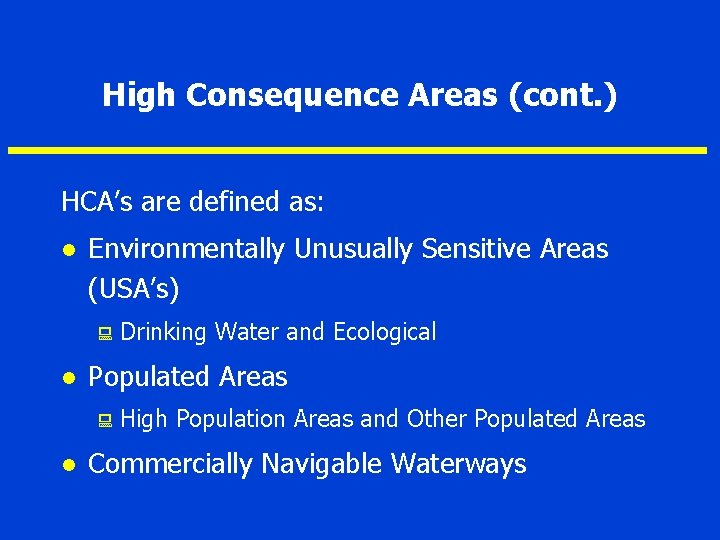
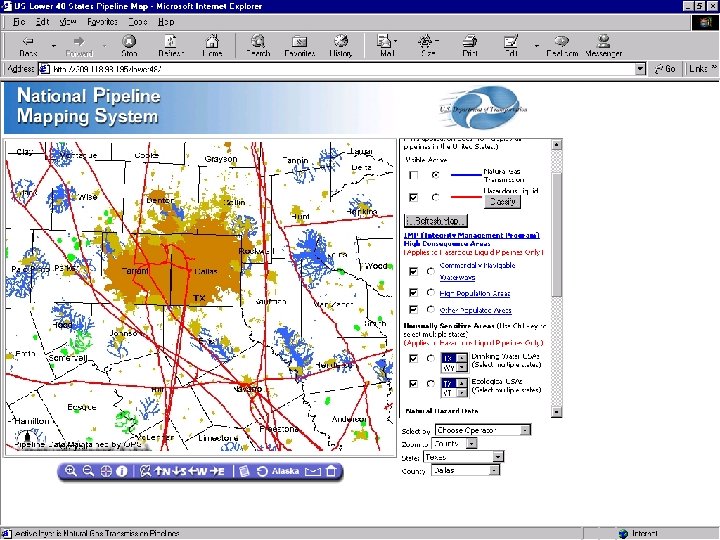
High Consequence Areas (cont. ) HCA’s are defined as: l Environmentally Unusually Sensitive Areas (USA’s) : Drinking l Populated Areas : High l Water and Ecological Population Areas and Other Populated Areas Commercially Navigable Waterways
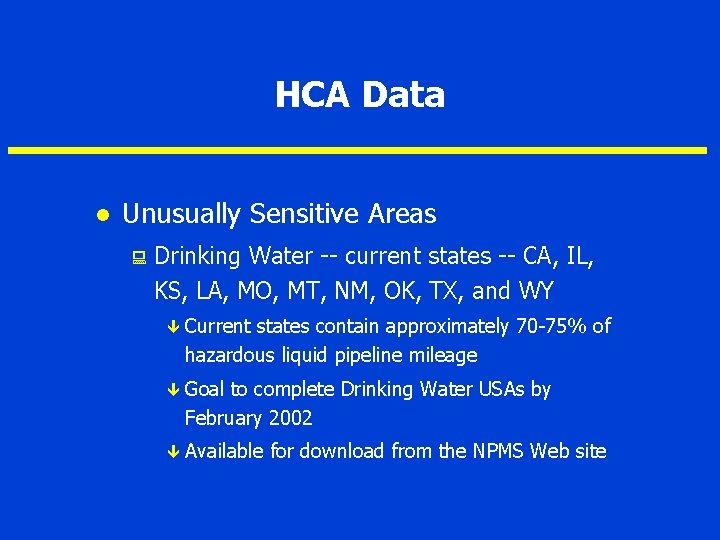
HCA Data l Unusually Sensitive Areas : Drinking Water -- current states -- CA, IL, KS, LA, MO, MT, NM, OK, TX, and WY ê Current states contain approximately 70 -75% of hazardous liquid pipeline mileage ê Goal to complete Drinking Water USAs by February 2002 ê Available for download from the NPMS Web site
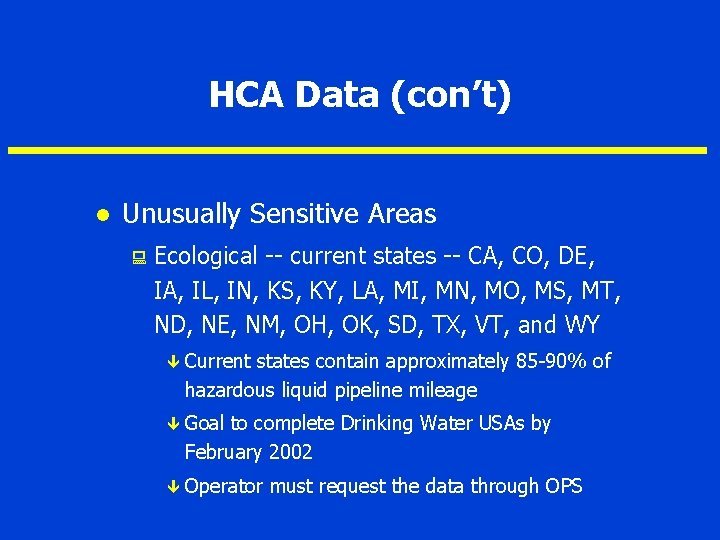
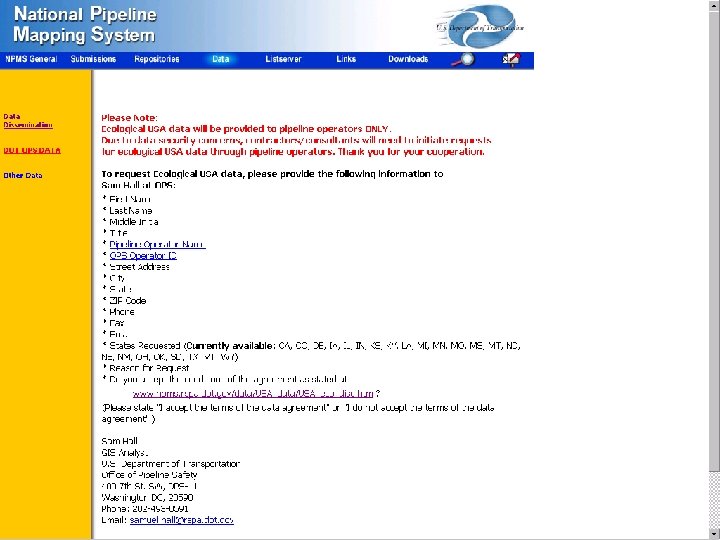
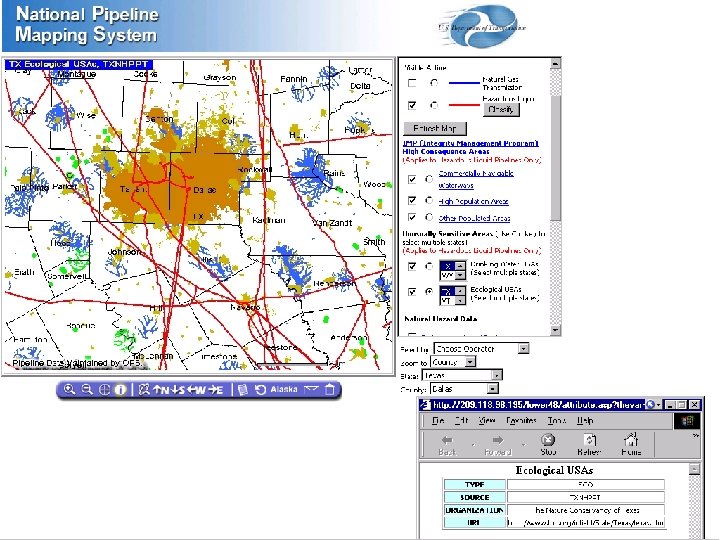
HCA Data (con’t) l Unusually Sensitive Areas : Ecological -- current states -- CA, CO, DE, IA, IL, IN, KS, KY, LA, MI, MN, MO, MS, MT, ND, NE, NM, OH, OK, SD, TX, VT, and WY ê Current states contain approximately 85 -90% of hazardous liquid pipeline mileage ê Goal to complete Drinking Water USAs by February 2002 ê Operator must request the data through OPS
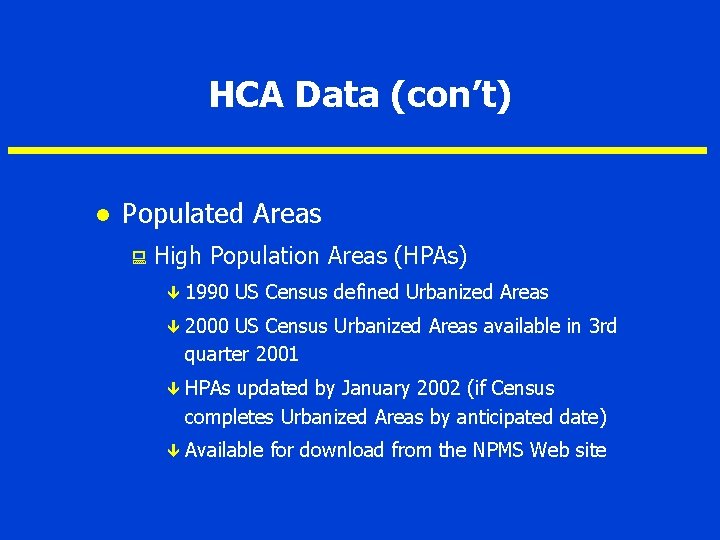
HCA Data (con’t) l Populated Areas : High Population Areas (HPAs) ê 1990 US Census defined Urbanized Areas ê 2000 US Census Urbanized Areas available in 3 rd quarter 2001 ê HPAs updated by January 2002 (if Census completes Urbanized Areas by anticipated date) ê Available for download from the NPMS Web site
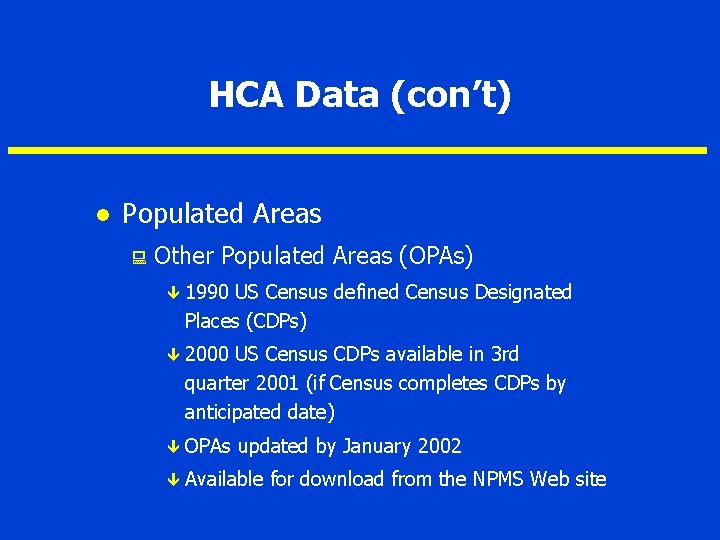
HCA Data (con’t) l Populated Areas : Other Populated Areas (OPAs) ê 1990 US Census defined Census Designated Places (CDPs) ê 2000 US Census CDPs available in 3 rd quarter 2001 (if Census completes CDPs by anticipated date) ê OPAs updated by January 2002 ê Available for download from the NPMS Web site
HCA Data (con’t) l Commercially Navigable Waterways (CNWs) ê National Waterway Network created by various agencies including US Coast Guard and US Army Corps of Engineers ê Identifies only waterways that support large commercial traffic ê Available for download from the NPMS Web site
Additional Data Layers (non-IMP) Additional data currently available: l Earthquake, hurricane, flood, and landslide hazard indexes l State/County boundaries l U. S. DOT BTS National Transportation Atlas Data
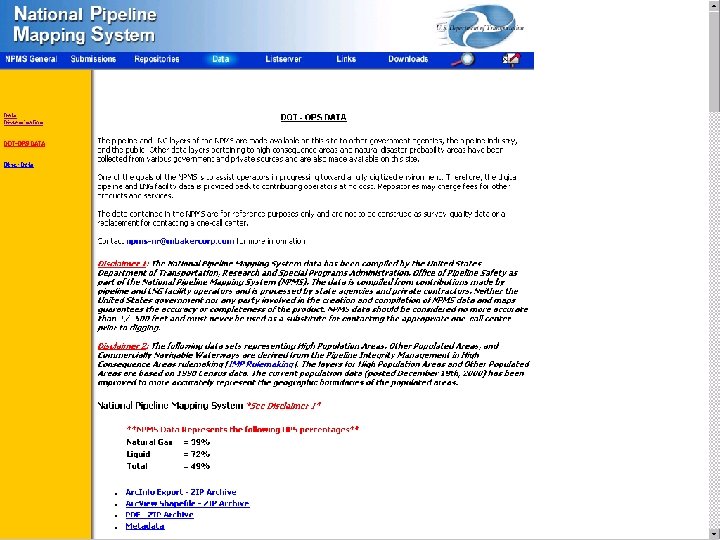
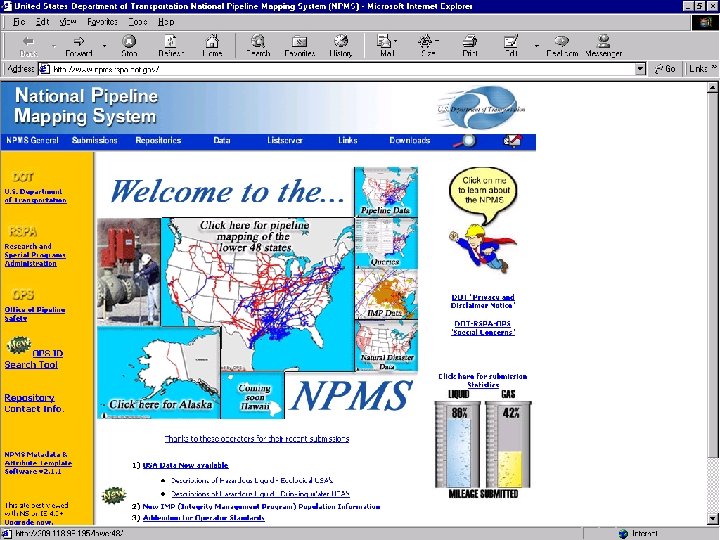
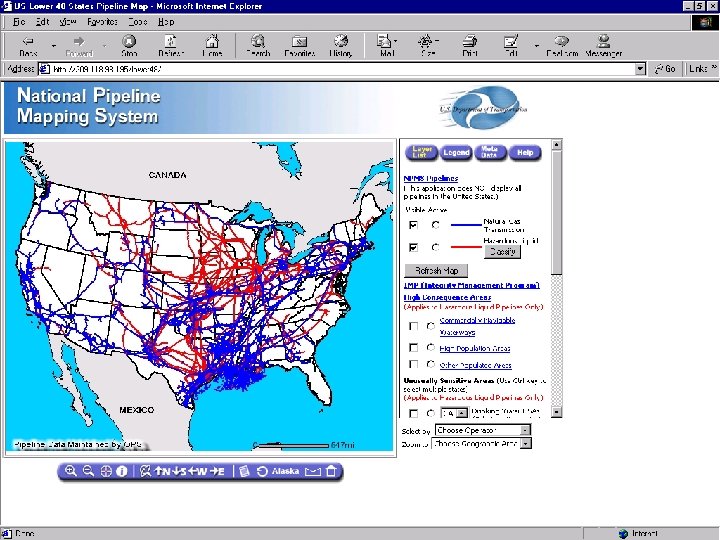
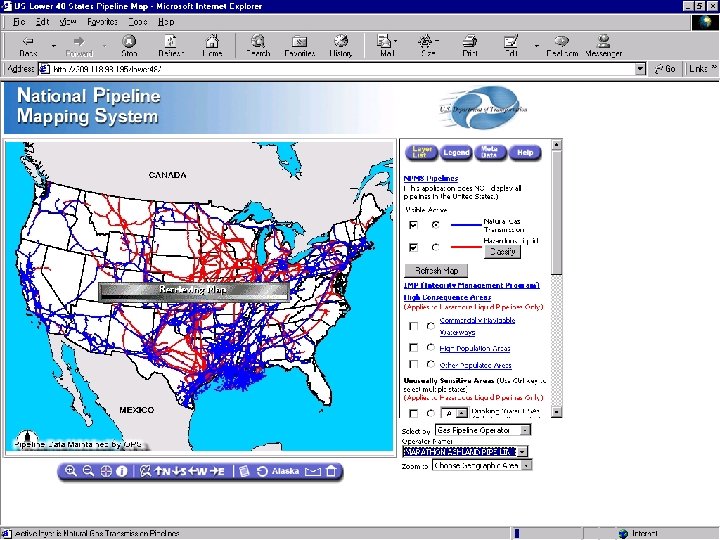
Data Analysis Options www. npms. rspa. dot. gov ¶ Data download for use with operator inhouse GIS · GIS-lite - an alternative solution for operators without GIS capabilities Ì OPS developed Internet mapping application
Option 1 - Data Download
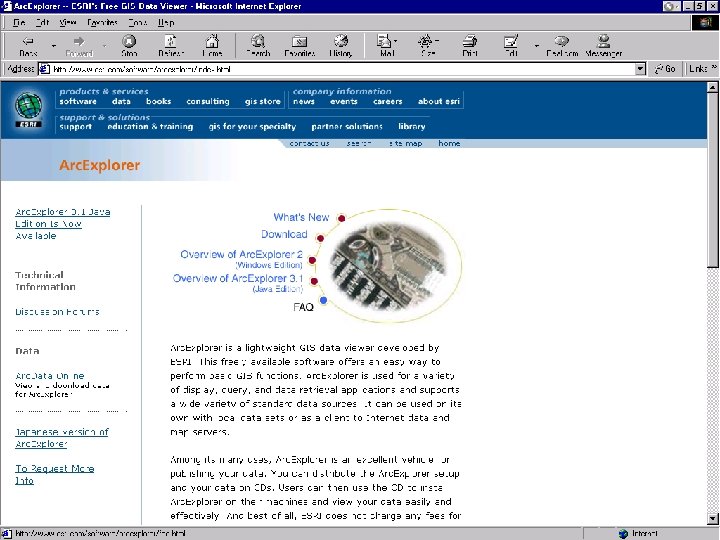
Option 2 - GIS-Lite -- A Lightweight GIS Viewer
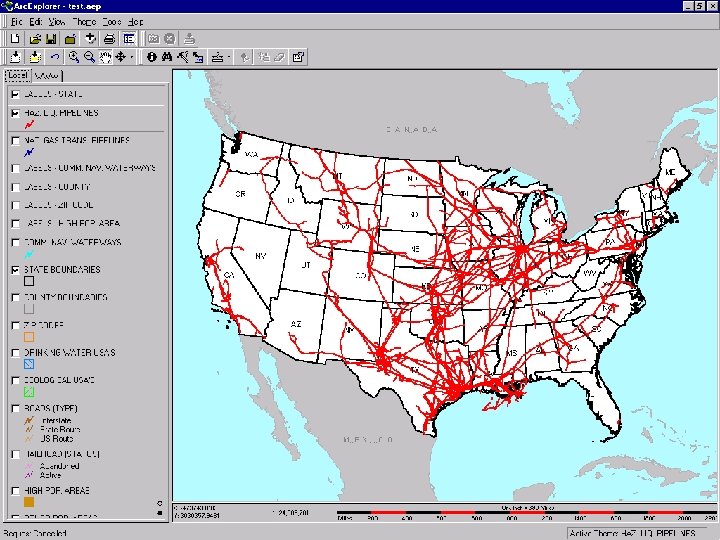
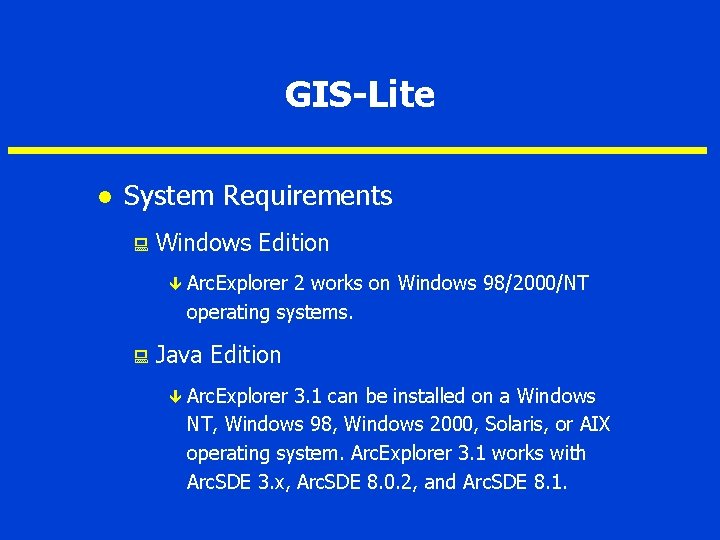
GIS-Lite l System Requirements : Windows Edition ê Arc. Explorer 2 works on Windows 98/2000/NT operating systems. : Java Edition ê Arc. Explorer 3. 1 can be installed on a Windows NT, Windows 98, Windows 2000, Solaris, or AIX operating system. Arc. Explorer 3. 1 works with Arc. SDE 3. x, Arc. SDE 8. 0. 2, and Arc. SDE 8. 1.
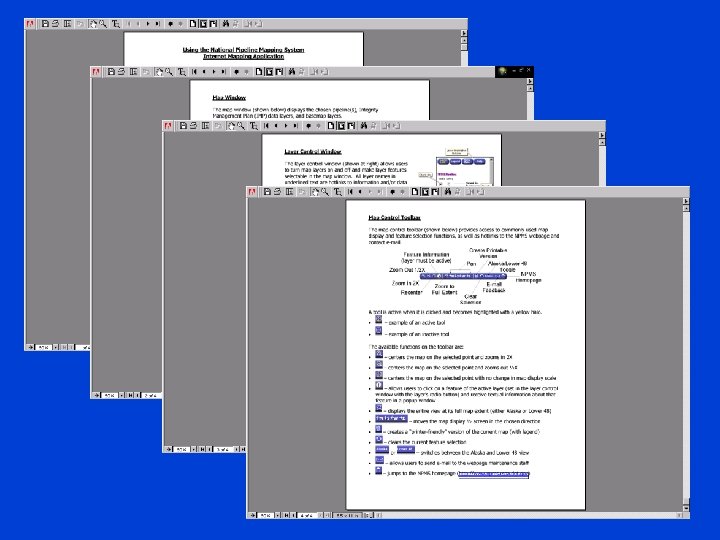
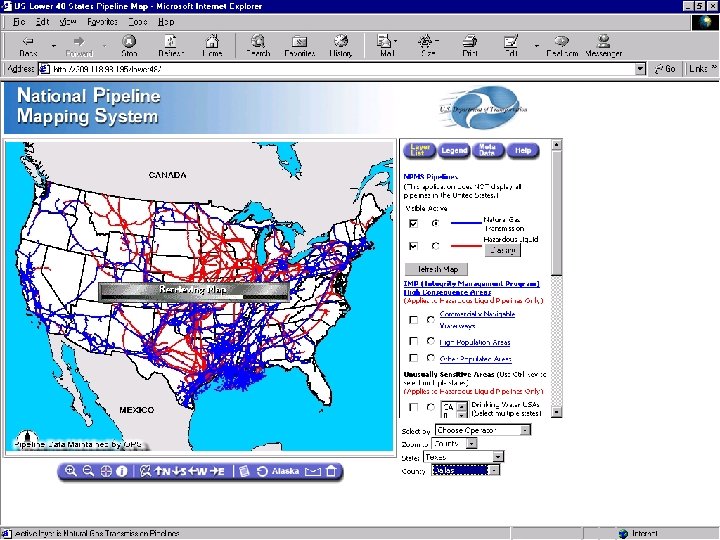
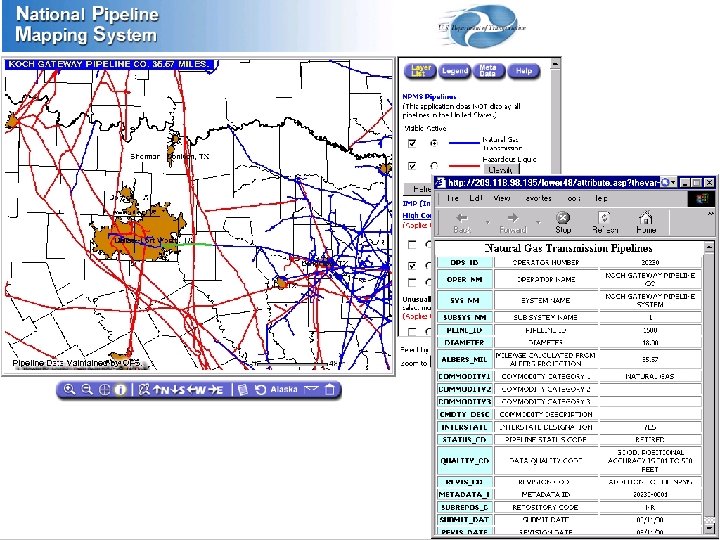
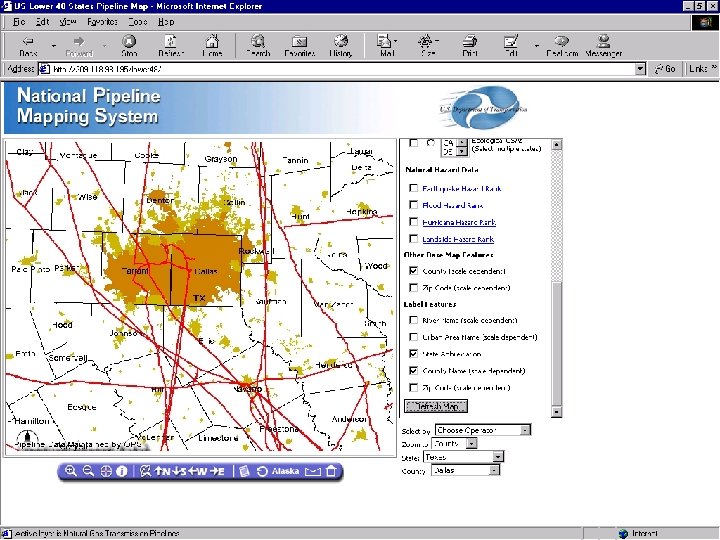
Option 3 - NPMS Internet Mapping Application
Questions