
The National Emergency Laparotomy Audit Dave Murray National
- Slides: 25
The National Emergency Laparotomy Audit Dave Murray National Clinical Lead www. nela. org. uk info@nela. org. uk
Overview • • • Background to the audit Inclusion/Exclusion Criteria Audit Dataset Process and Outcome measures Patient data collection Quality Improvement
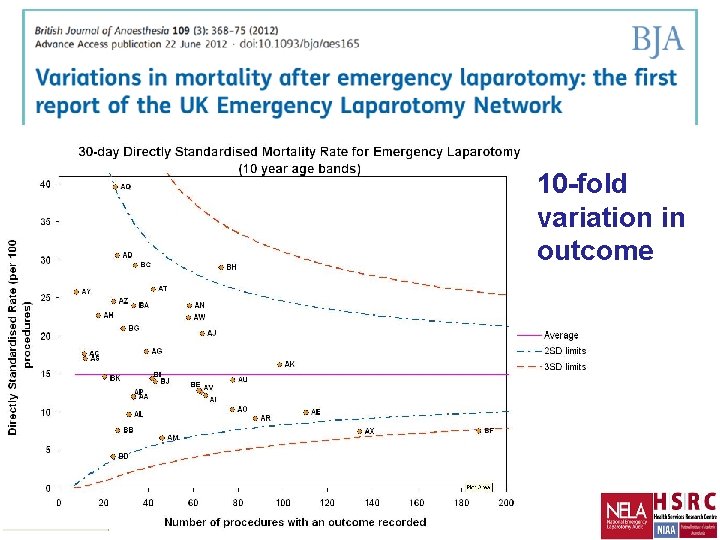
10 -fold variation in outcome
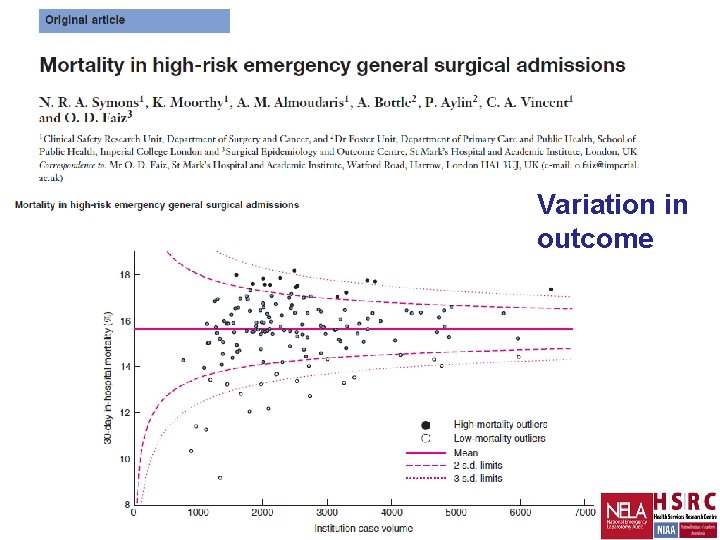
Variation in outcome
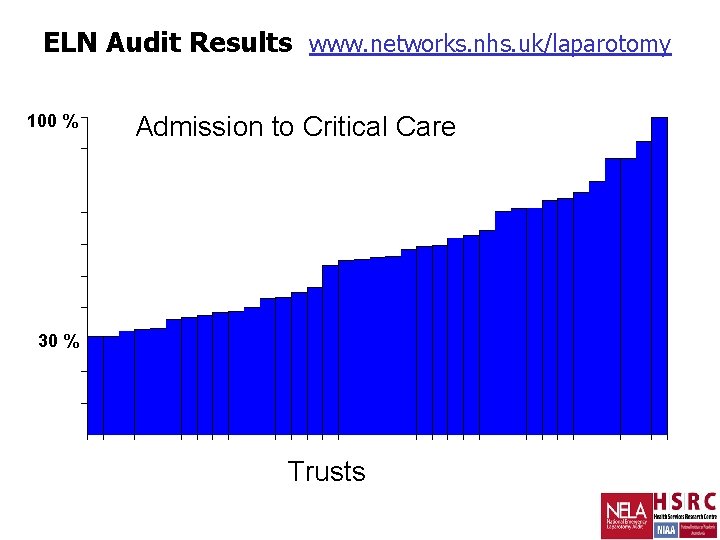
ELN Audit Results www. networks. nhs. uk/laparotomy 100 % Admission to Critical Care 30 % Trusts
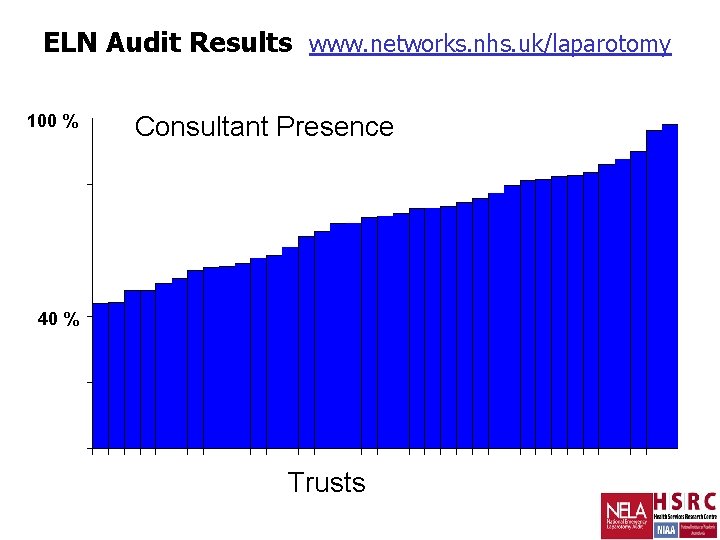
ELN Audit Results www. networks. nhs. uk/laparotomy 100 % Consultant Presence 40 % Trusts
National Emergency Laparotomy Audit “To enable the improvement of the quality of care …through the provision of high quality comparative data from all providers of emergency laparotomy. ” Mandatory National Audit Section 251 approval – patient consent NOT required Yearly reporting at hospital level
Phase 1: Organisational Audit Complete Report published May 2014 Phase 2: Patient audit starts 1 st Dec 2013
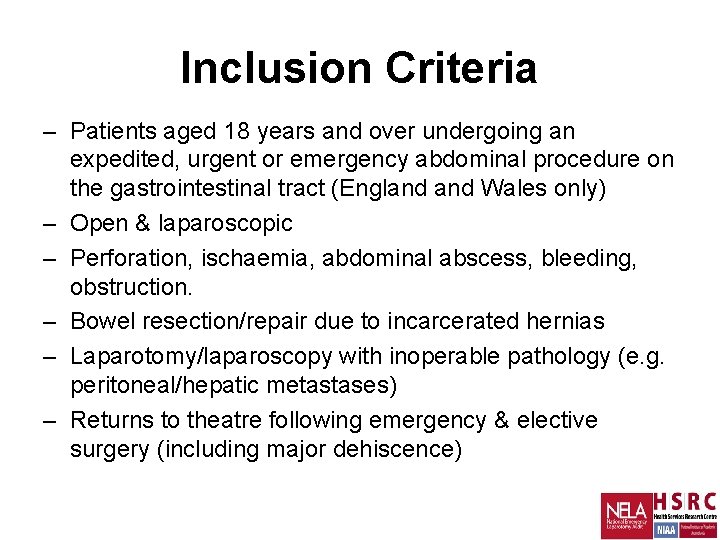
Inclusion Criteria – Patients aged 18 years and over undergoing an expedited, urgent or emergency abdominal procedure on the gastrointestinal tract (England Wales only) – Open & laparoscopic – Perforation, ischaemia, abdominal abscess, bleeding, obstruction. – Bowel resection/repair due to incarcerated hernias – Laparotomy/laparoscopy with inoperable pathology (e. g. peritoneal/hepatic metastases) – Returns to theatre following emergency & elective surgery (including major dehiscence)
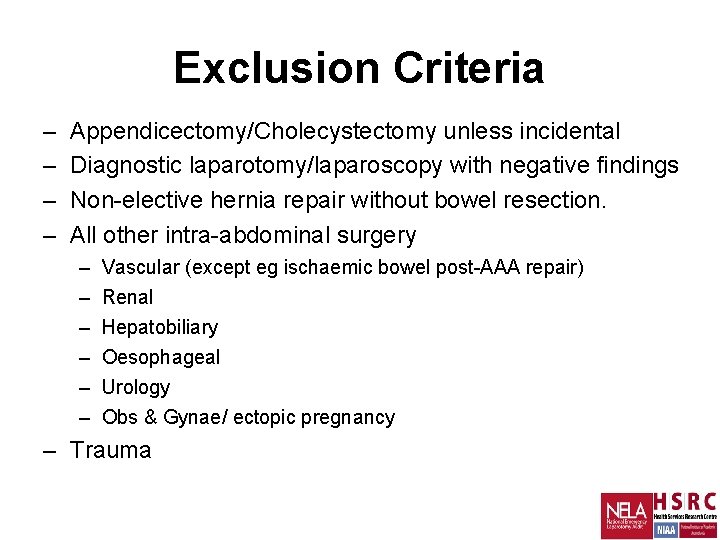
Exclusion Criteria – – Appendicectomy/Cholecystectomy unless incidental Diagnostic laparotomy/laparoscopy with negative findings Non-elective hernia repair without bowel resection. All other intra-abdominal surgery – – – Vascular (except eg ischaemic bowel post-AAA repair) Renal Hepatobiliary Oesophageal Urology Obs & Gynae/ ectopic pregnancy – Trauma
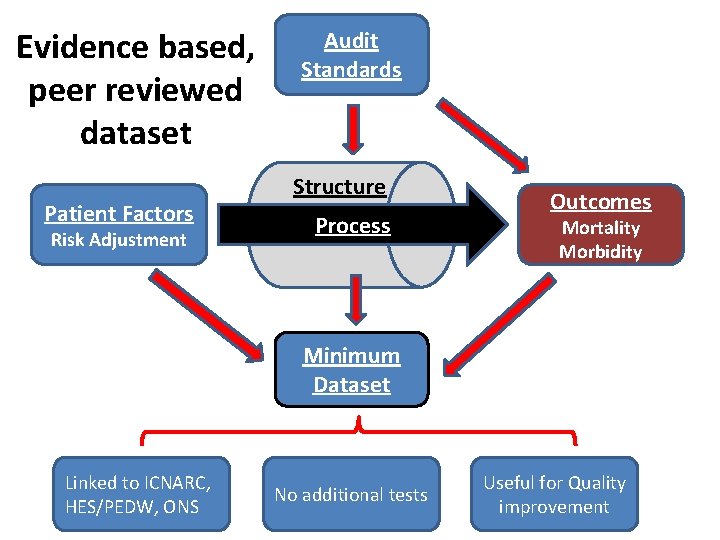
Evidence based, peer reviewed dataset Patient Factors Risk Adjustment Audit Standards Structure Process Outcomes Mortality Morbidity Minimum Dataset Linked to ICNARC, HES/PEDW, ONS No additional tests Useful for Quality improvement
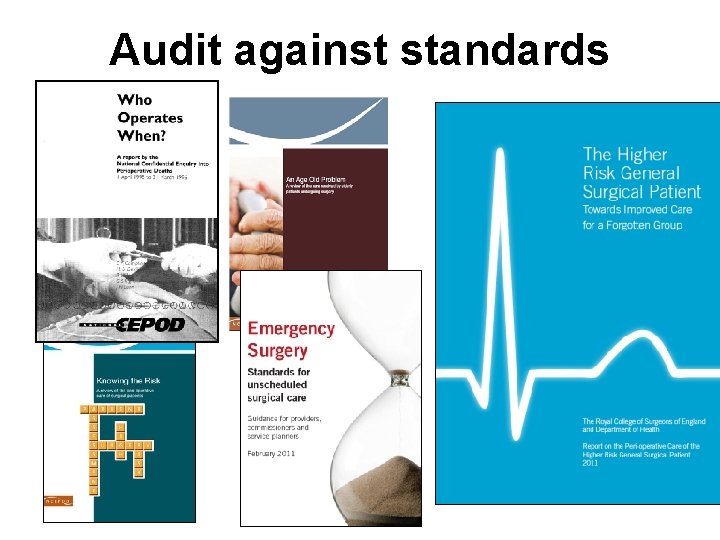
Audit against standards
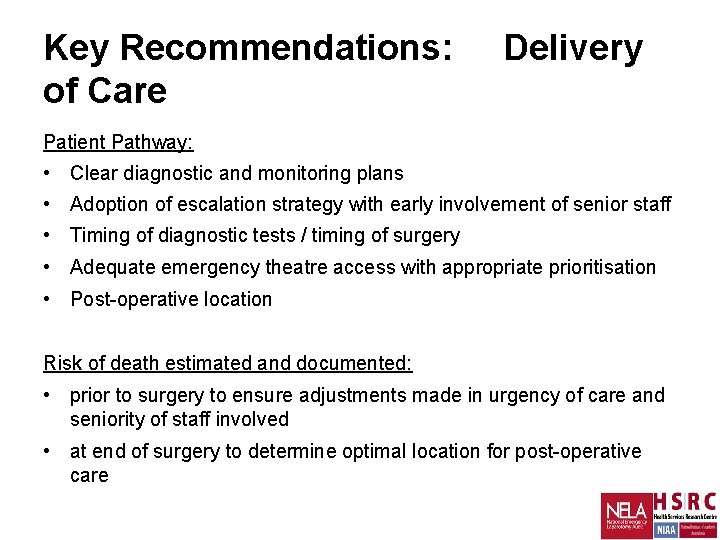
Key Recommendations: of Care Delivery Patient Pathway: • Clear diagnostic and monitoring plans • Adoption of escalation strategy with early involvement of senior staff • Timing of diagnostic tests / timing of surgery • Adequate emergency theatre access with appropriate prioritisation • Post-operative location Risk of death estimated and documented: • prior to surgery to ensure adjustments made in urgency of care and seniority of staff involved • at end of surgery to determine optimal location for post-operative care
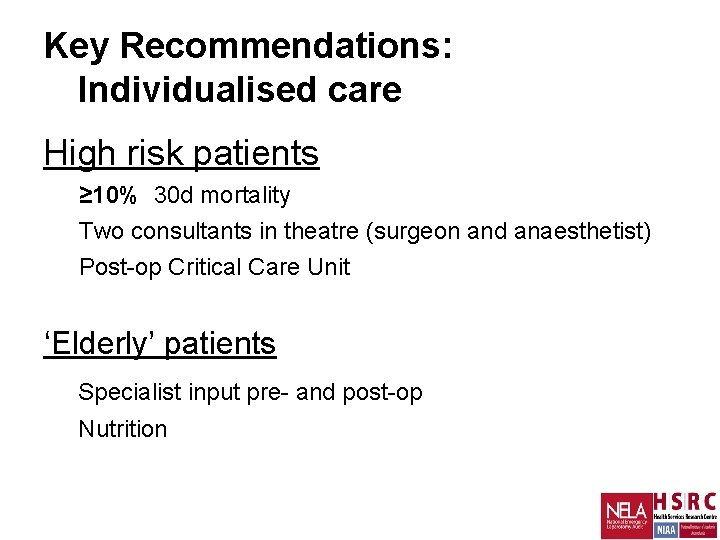
Key Recommendations: Individualised care High risk patients ≥ 10% 30 d mortality Two consultants in theatre (surgeon and anaesthetist) Post-op Critical Care Unit ‘Elderly’ patients Specialist input pre- and post-op Nutrition
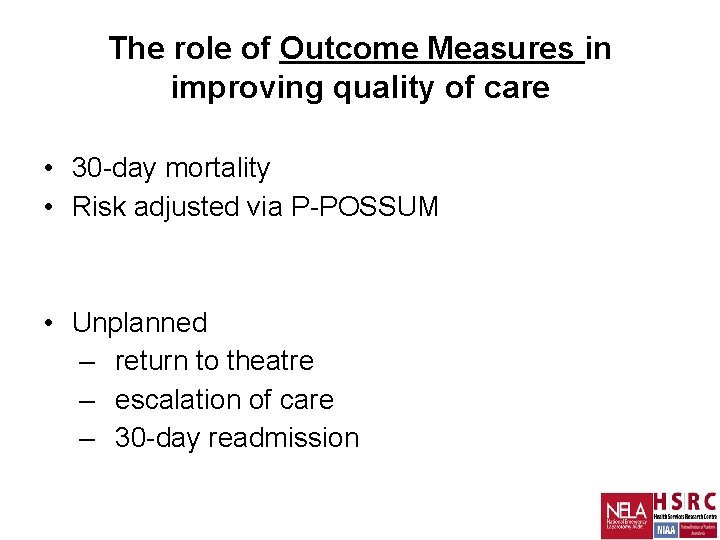
The role of Outcome Measures in improving quality of care • 30 -day mortality • Risk adjusted via P-POSSUM • Unplanned ‒ return to theatre ‒ escalation of care ‒ 30 -day readmission
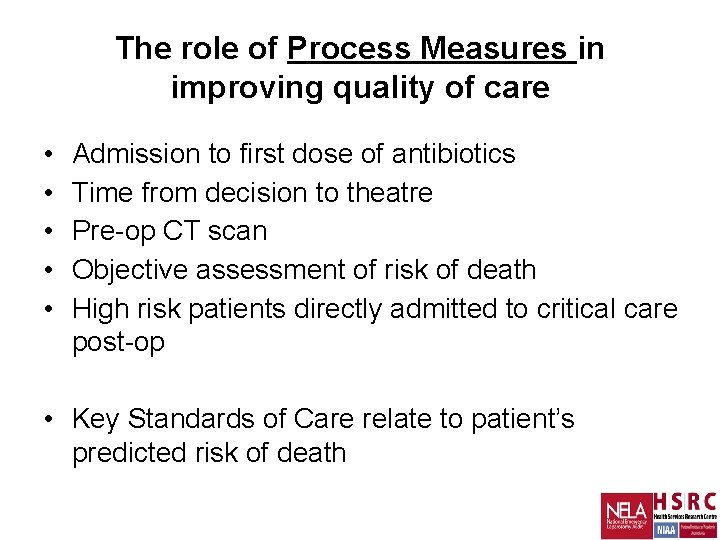
The role of Process Measures in improving quality of care • • • Admission to first dose of antibiotics Time from decision to theatre Pre-op CT scan Objective assessment of risk of death High risk patients directly admitted to critical care post-op • Key Standards of Care relate to patient’s predicted risk of death
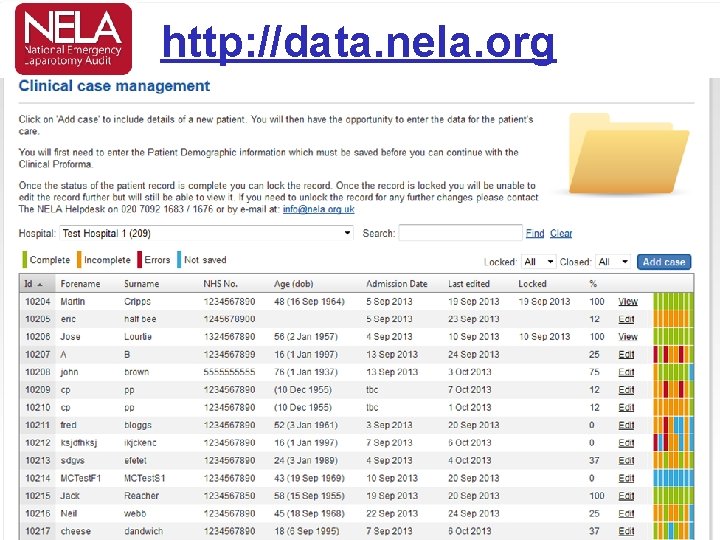
http: //data. nela. org
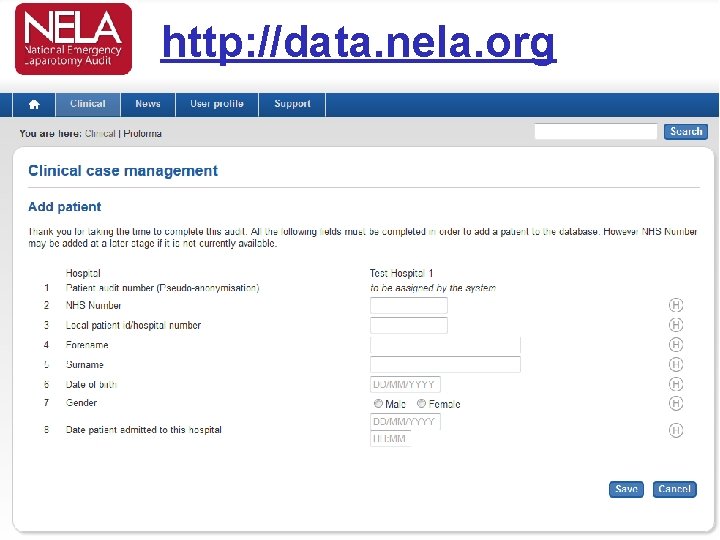
http: //data. nela. org
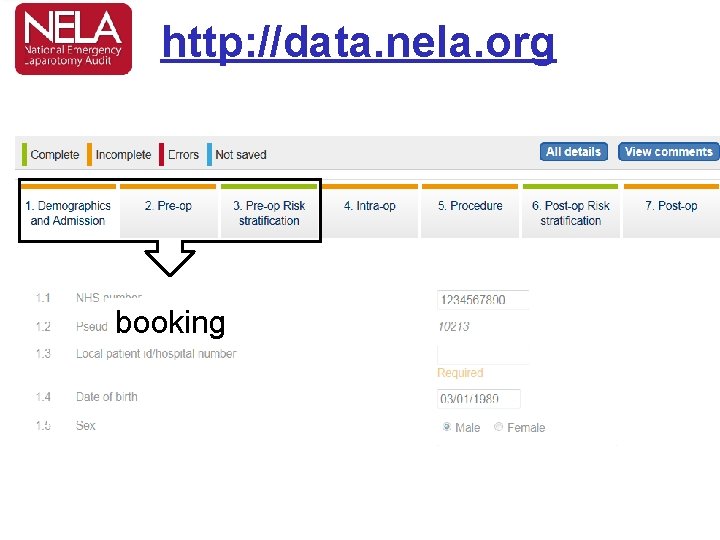
http: //data. nela. org booking
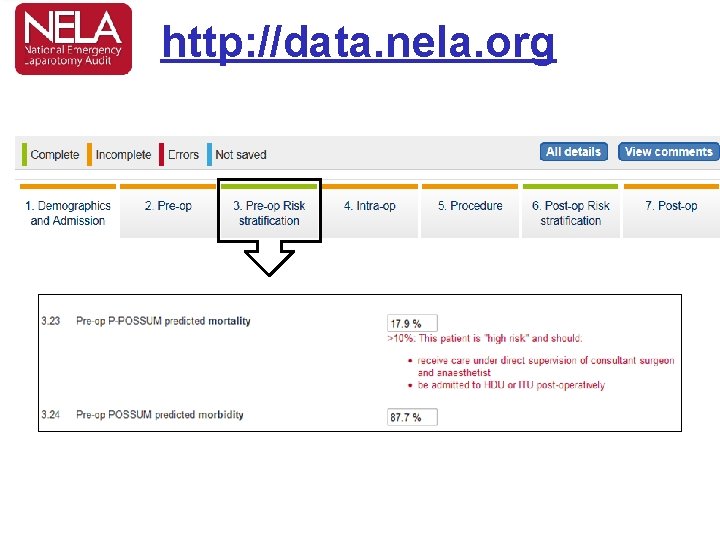
http: //data. nela. org
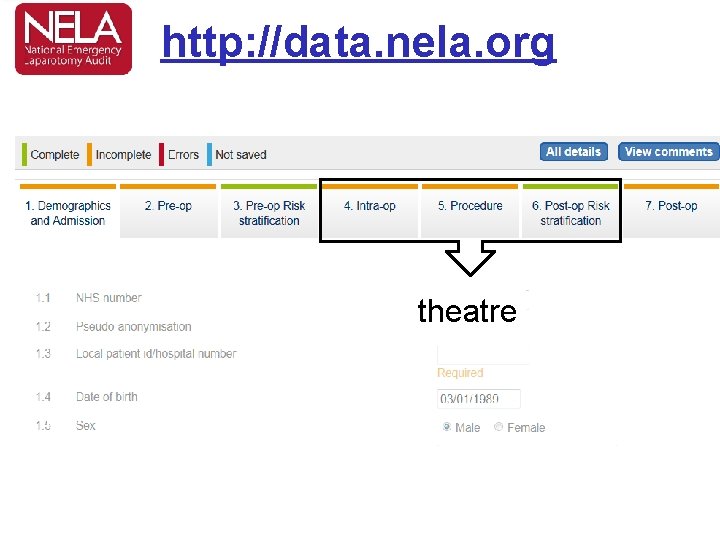
http: //data. nela. org theatre
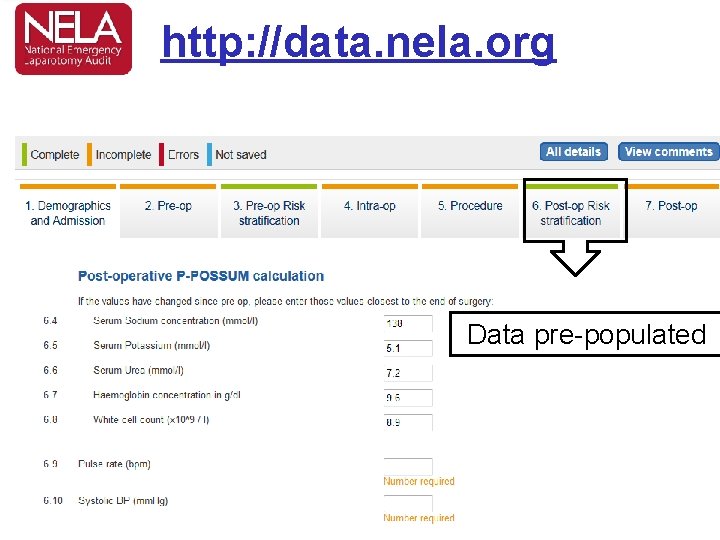
http: //data. nela. org Data pre-populated
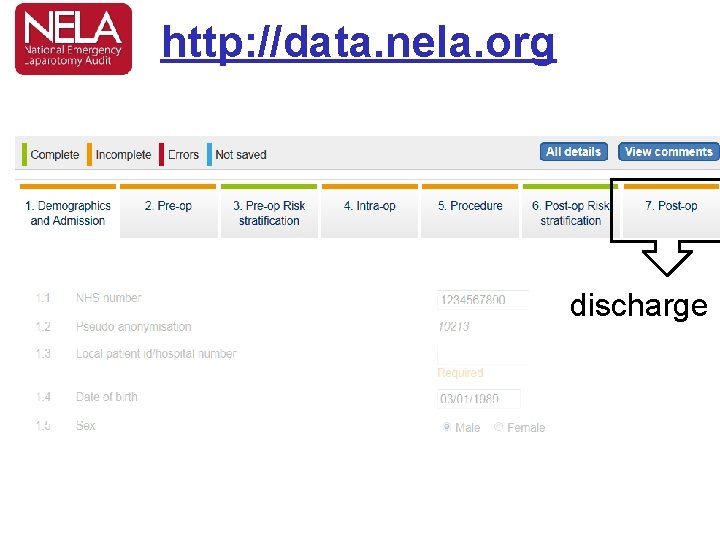
http: //data. nela. org discharge
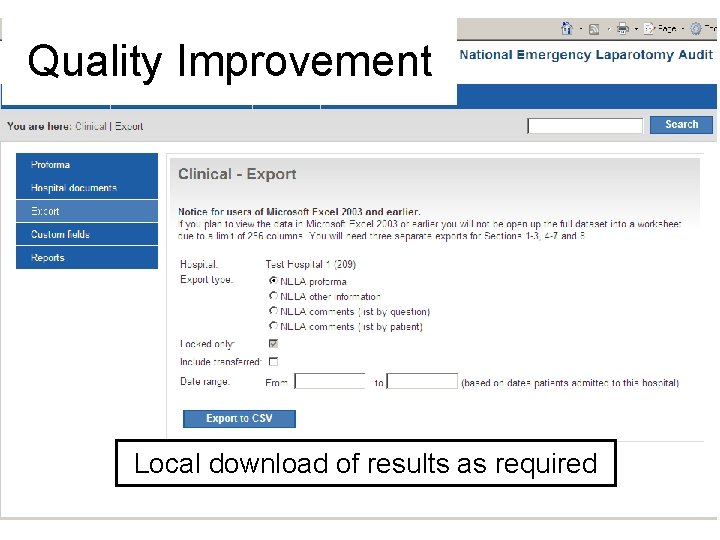
Quality Improvement Local download of results as required
Summary • This is a multidisciplinary problem • Will rely on your help and drive • 7500 patients die each year following emergency laparotomy • Measurement leads to improvement • It starts December 2013