
The Nation Grows and Prospers U S History

- Slides: 60
The Nation Grows and Prospers U. S. History Chapter 11
Industrial Revolution Begins ► Industrial Revolution was a long, slow process that completely changed the way in which goods were produced. ► Began in Britain in mid-1700 s
Industrial Revolution Begins ►This industrialism depended on the development of the factory system
Factory System ►System brought workers and machinery together to produce goods ►Lowell, Mass. : model factory town, workers lived in clean, decent housing
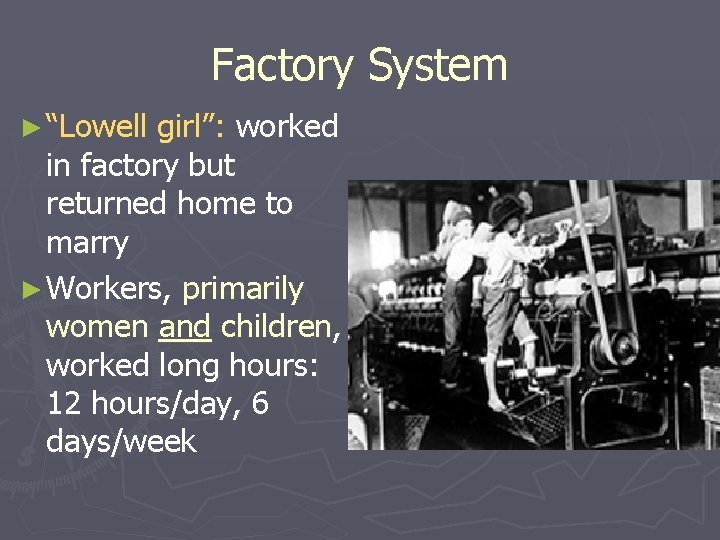
Factory System ► “Lowell girl”: worked in factory but returned home to marry ► Workers, primarily women and children, worked long hours: 12 hours/day, 6 days/week
American Industry ► Congress helped industry after the War of 1812 by establishing the second Bank of the United States ► Congress also protected manufacturers by raising tariffs on imported goods
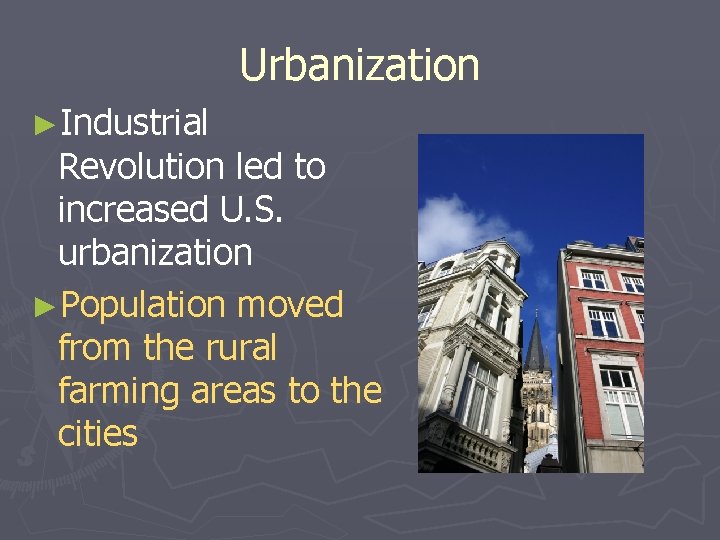
Urbanization ►Industrial Revolution led to increased U. S. urbanization ►Population moved from the rural farming areas to the cities
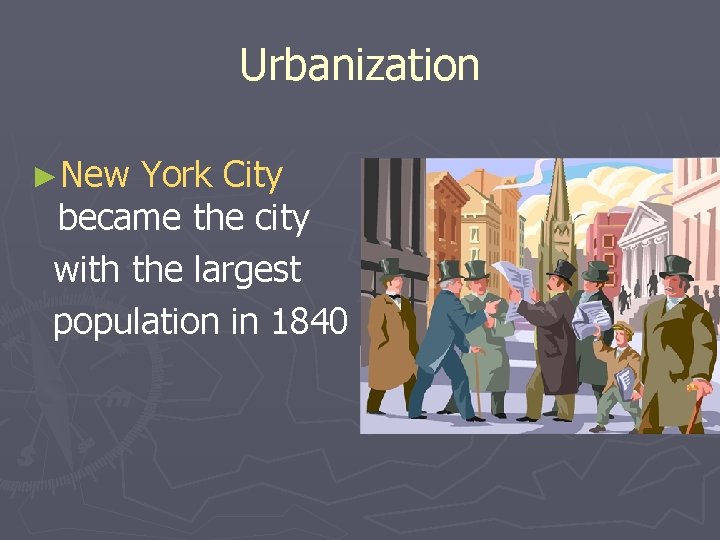
Urbanization ►New York City became the city with the largest population in 1840
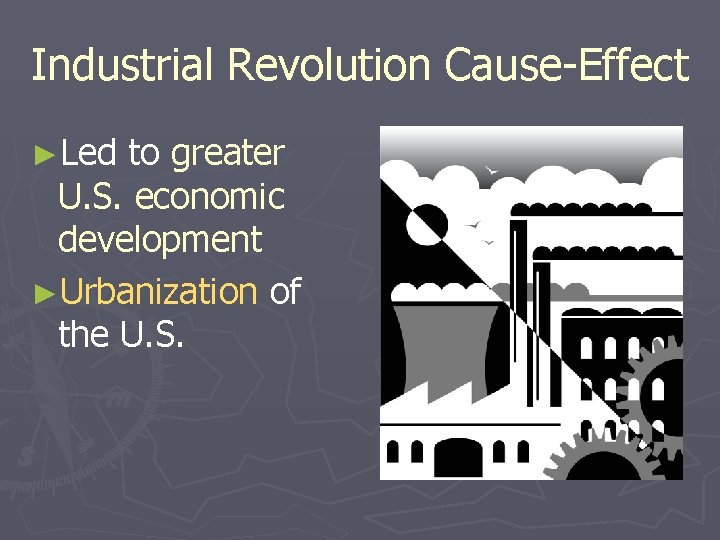
Industrial Revolution Cause-Effect ►Led to greater U. S. economic development ►Urbanization of the U. S.
Traveling West ► Private companies built turnpikes to improve America’s roads in early 1800 s ► Tolls collected from travelers on the turnpikes ► Improved roads were set on a bed of gravel
Traveling West ► Mohawk Road followed Erie Canal ► National Road extended from Maryland into Illinois ► Wilderness Road, established by Daniel Boone, reached the Ohio River
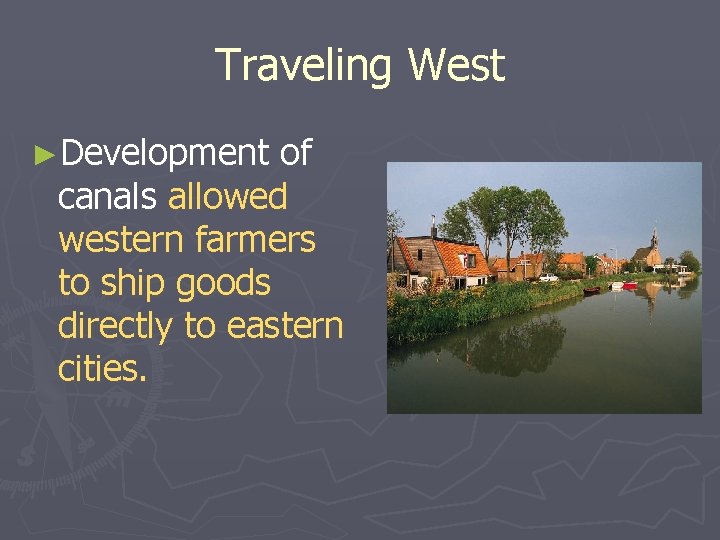
Traveling West ►Development of canals allowed western farmers to ship goods directly to eastern cities.
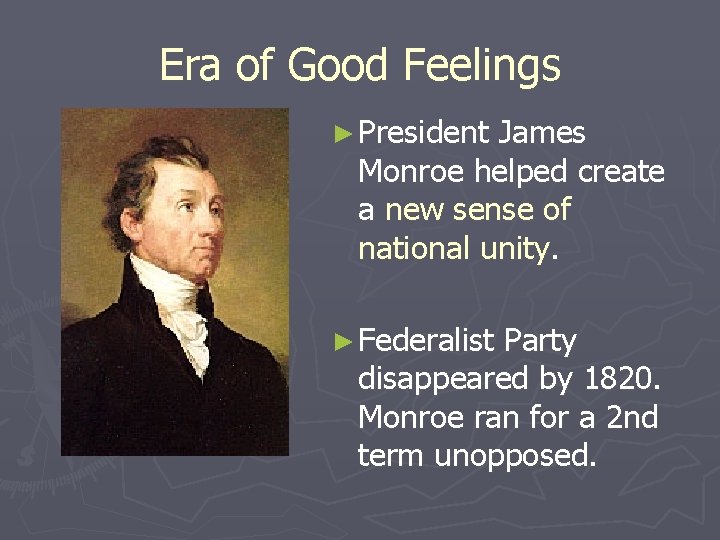
Era of Good Feelings ► President James Monroe helped create a new sense of national unity. ► Federalist Party disappeared by 1820. Monroe ran for a 2 nd term unopposed.
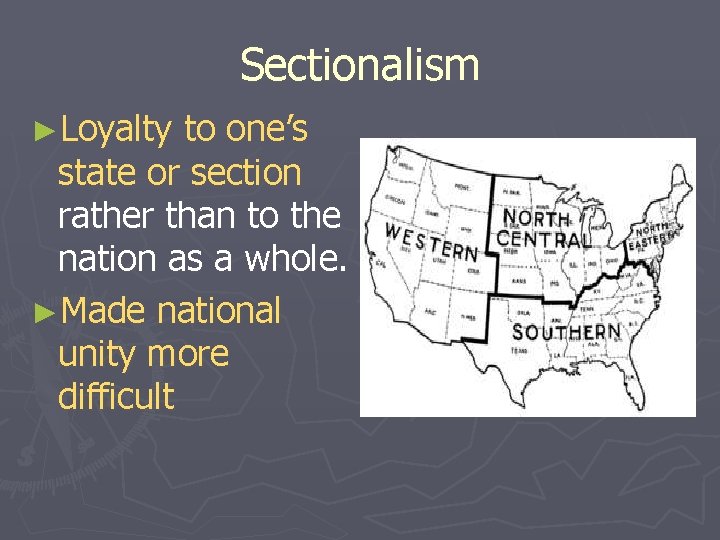
Sectionalism ►Loyalty to one’s state or section rather than to the nation as a whole. ►Made national unity more difficult
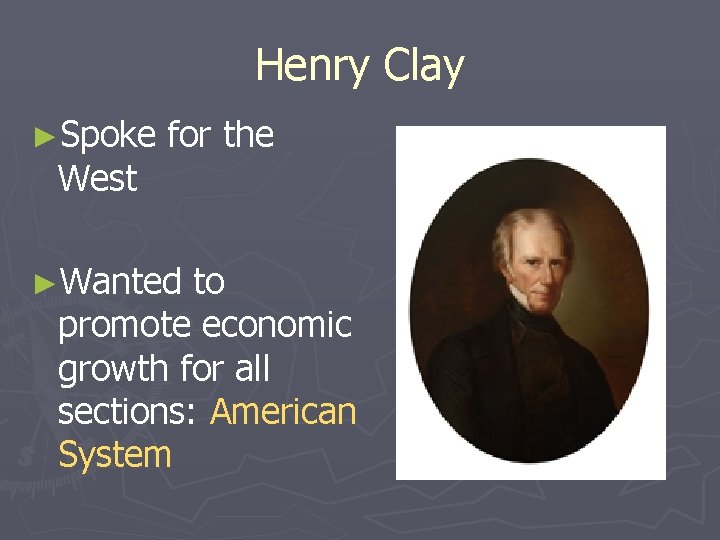
Henry Clay ►Spoke West for the ►Wanted to promote economic growth for all sections: American System
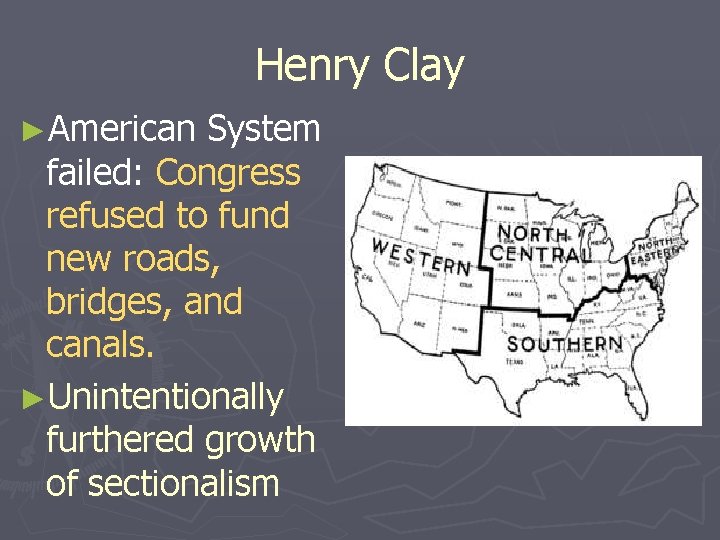
Henry Clay ►American System failed: Congress refused to fund new roads, bridges, and canals. ►Unintentionally furthered growth of sectionalism
John C. Calhoun ►Spoke for the South ►As a southerner, he supported slavery
Industrial Revolution Cause-Effect ►Improved roads leading to western growth of the nation ►Sectionalism beginning to threaten national unity
Supreme Court Expands ► Mc. Culloch v. Maryland (1819) ► Court ruled that states had no power to control federal institutions within their borders. ► Strengthened federal power
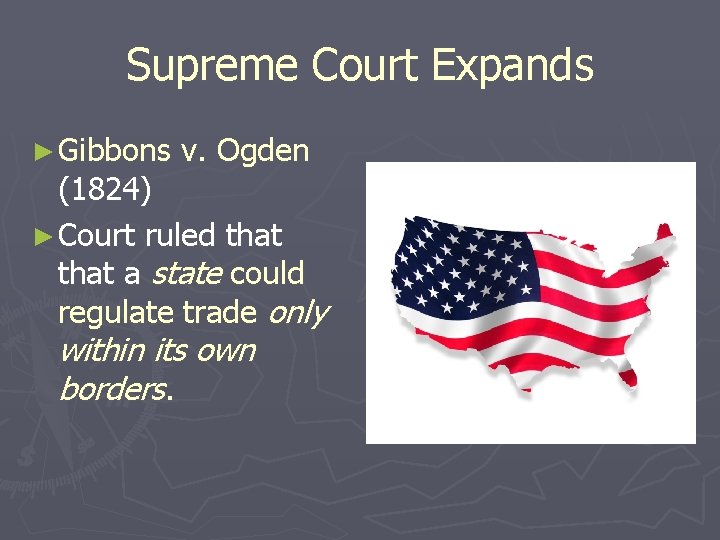
Supreme Court Expands ► Gibbons v. Ogden (1824) ► Only federal government has the power to regulate interstate commerce, or trade between states
Supreme Court Expands ► Gibbons v. Ogden (1824) ► Court ruled that a state could regulate trade only within its own borders.
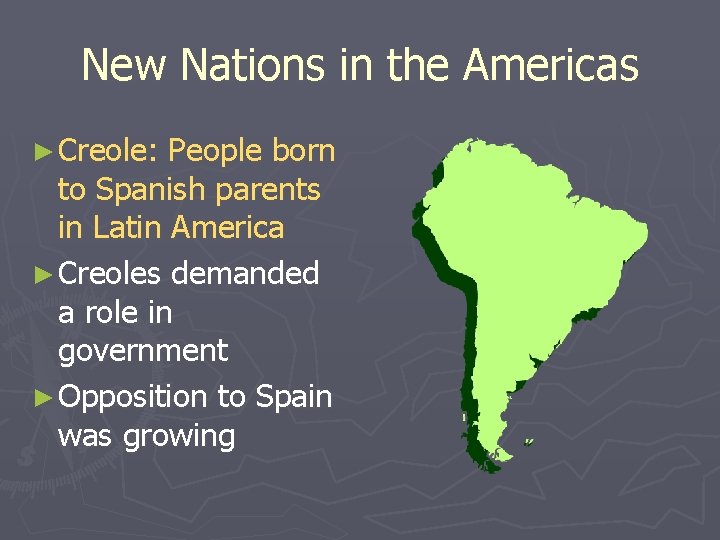
New Nations in the Americas ► Creole: People born to Spanish parents in Latin America ► Creoles demanded a role in government ► Opposition to Spain was growing
Revolution in Latin America ►Spanish colonies had to win independence through revolution ►Led to rise of Latin American nations
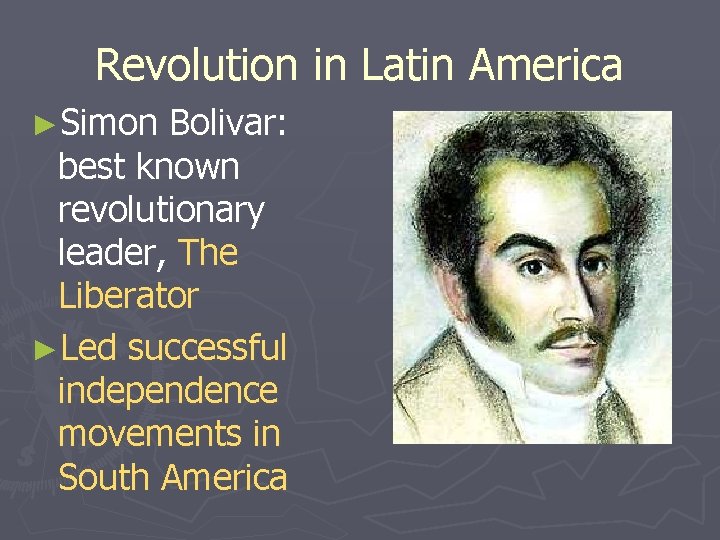
Revolution in Latin America ►Simon Bolivar: best known revolutionary leader, The Liberator ►Led successful independence movements in South America
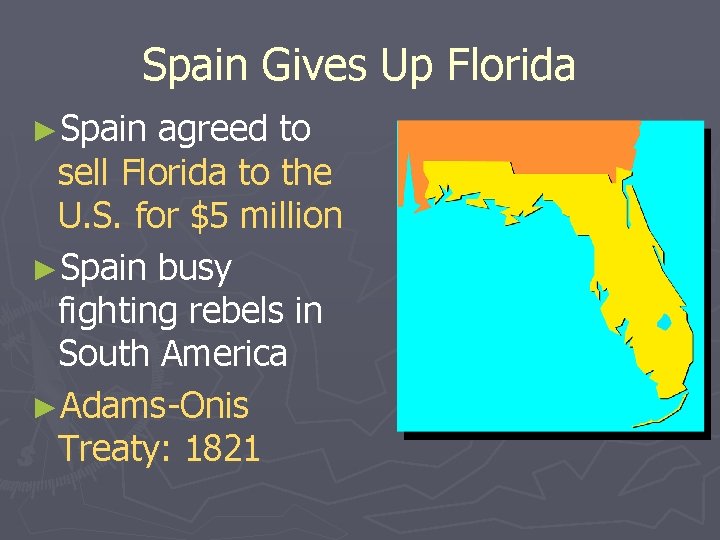
Spain Gives Up Florida ►Spain agreed to sell Florida to the U. S. for $5 million ►Spain busy fighting rebels in South America ►Adams-Onis Treaty: 1821
Monroe Doctrine ►Americans feared that Spain would try to regain its colonies in Latin America
Monroe Doctrine ►President Monroe’s foreign policy statement to protect Latin American republics from European attack
Monroe Doctrine ►Declared that the U. S. would not interfere in the affairs of European nations or existing colonies of European nations
Monroe Doctrine ►Warned European nations not to attempt to regain control of the newly independent nations of Latin America
Monroe Doctrine ►United States was determined to keep European powers out of the Western Hemisphere.
Monroe Doctrine ►U. S. successfully challenged European intervention, or direct involvement, in Latin America.
Can you answer these questions? ►If not, look back over this review!
Review ►Who is someone born in Latin America to Spanish parents? ►Lowell girl ►Capitalist ►creole
Review ►What is direct ►Urbanization involvement by ►Sectionalism one nation in the ►Intervention affairs of another?
Review ►What was an ►Much money was unintended result spent on of Henry Clay’s transportation American system? ►Further growth of sectionalism ►High tariffs
Review ►Who was ►Capitalist someone who ►Lowell girl worked in the ►Creole mills and returned home to marry?
Review ►What is loyalty to one’s state or region? ►Urbanization ►Sectionalism ►Intervention
Review ►How did Congress help American industry after the War of 1812? ► It closed the first Bank of the United States ► It established the second Bank of the United States ► It lowered tariffs
Review ►How did the United States gain Florida from Spain? ► U. S. bought Florida for $5 million ► U. S. won Florida after a lengthy battle with Spain ► Spain gave up Florida as a result of the Monroe Doctrine
Review ►Why was Lowell, Mass. Called a model factory town? ► Factory owners shortened the employees’ work day ► Factories employed young children ► Workers lived in clean, decent housing
Review ► What is one way ► Private companies Americans improved built turnpikes their roads in the ► Private companies early 1800 s? put up funds for the National Road ► During the War of 1812, the army built the National Road
Review ►Why was Simon Bolivar known as “The Liberator? ” ► He led independence movements in South America ► He led a revolt freeing Texas from Mexican rule ► He persuaded Spain to free its Latin American colonies
Review ►Which of the following describes the Industrial Revolution? ► Depended on the development of the factory system ► Occurred after years of planning in U. S. in 1700 s ► Was quick, violent and produced few results
Review ►How did private companies finance turnpikes? ► Campaigned for donations from people ► Borrowed money from states where turnpikes crossed ► Collected tolls from travelers
Review ►Which of the following led to the creation of the Monroe Doctrine? ► U. S. wanted to control Latin America ► U. S. feared Spain would try to regain its colonies in Latin America ► U. S. feared Britain would try to take over its original colonies.
Review ►Which is the ► Federal govt. cannot tax state institutions BEST interpretation of ► States can nullify federal laws they think Supreme Court are unconstitutional decision, ► States have no power Mc. Cullough v. to control federal Maryland? institutions within their borders
Review ►What BEST describes daily life in a factory in the early 1800 s? ► Employees, mostly women & children, worked long hours ► Factory owners more took interest in workers’ welfare ► Laws were enacted to prevent child labor
Review ►What effect did sectionalism have on the Era of Good Feelings? ► It made national unity more difficult ► It divided the nation into East and West ► It weakened political parties
Review ►What ► Spain gave up control generalization can of its colonies be made about ► Colonies had to win independence the rise of Latin through revolution American nations? ► New republics easily achieved democratic rule.
Review ► Canals allowed ►What was a western farmers to result of the ship goods directly to development of eastern cities canals in the early ► Few farmers could 1800 s? afford to ship goods through canals ► The National Road fell into disuse
Review ►Which of the following statements about John C. Calhoun is TRUE? ►He supported slavery ►He was a close ally of Daniel Webster ►He supported strong central government
Review ► Congress would not ►Why did Henry fund new roads, Clay’s American bridges and canals System fail? ► Congress lowered tariffs ► Supreme Court ruled that the American System was unconstitutional.
Review ►What agreement resulted in the U. S. taking possession of Florida? ► Adams-Onis Treaty ► Mc. Cullough v. Maryland ► Monroe Doctrine
Review ►What ► Coating surfaces with mud improvements did ► Charging travelers Americans make to use them on roads in the ► Setting them on a early 1800 s? bed of gravel
Review ► Only federal govt. has ►What is the best power to regulate interpretation of interstate commerce the Supreme ► U. S. Constitution Court decision, prohibits commerce Gibbons v. between states Ogden? ► Only states have the power to regulate interstate commerce
Review ►What was daily life like in a factory in the early 1800 s? ► All employees, including children, worked 12 hour days, 6 days/week ► Adults worked 12 hour days; children worked shorter hours ► Children worked 6 hour days with frequent rest breaks
Review ►How did Congress protect American manufacturers after the War of 1812? ► Lowering tariffs on imported goods ► Eliminating tariffs on imported goods ► Raising tariffs on imported goods
Review ►Which was a reason why President Monroe announced the Monroe Doctrine? ► To protect Latin American republics from European attack ► To provoke a war with Great Britain ► To protect American industry from European imports
Review ►What happened to the U. S. population during the Industrial Revolution? ► Urbanization increased in the United States ► Many Americans moved from cities to farms ► Philadelphia became the largest city in the United States
Good Luck on your test!