
THE NATION AT WAR A New World Power


- Slides: 39
THE NATION AT WAR
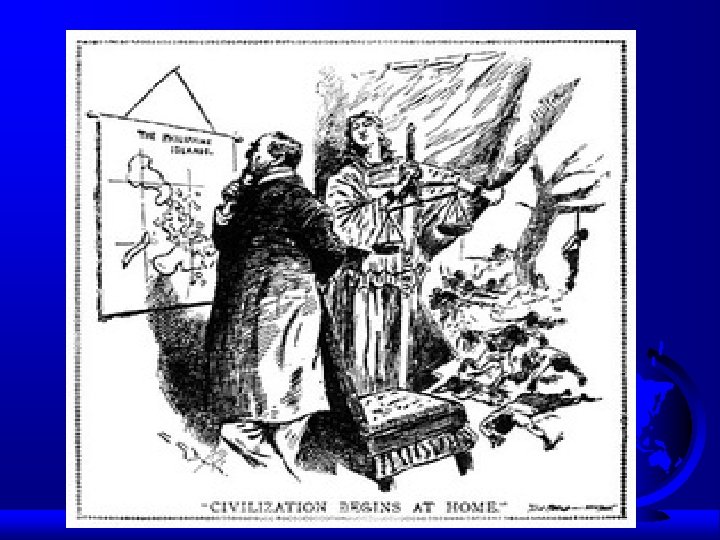
A New World Power F American foreign policy aggressive, nationalistic since late 19 th century F Colonialism drew U. S. into international affairs
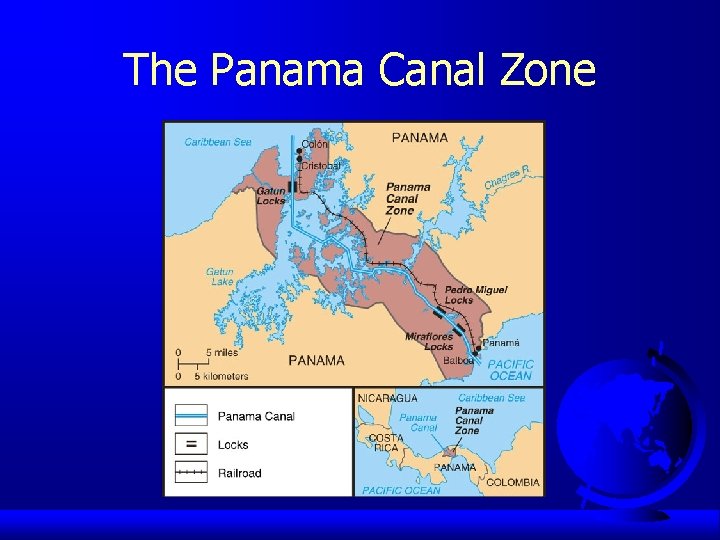
"I Took the Canal Zone" F 1903: Colombian senate refused to allow U. S. to build Panama Canal F Roosevelt abetted revolution to separate Panama from Colombia F Independent Panama permitted construction F 1914: Panama Canal opened
The Panama Canal Zone
The Roosevelt Corollary F U. S. treated Latin America as a protectorate F “Roosevelt Corollary”: U. S. would ensure stability of Latin American finance F Roosevelt Corollary spurred intervention in – – – Dominican Republic Panama Cuba
Ventures in the Far East 1905: Roosevelt mediated the Russo. Japanese War F Taft-Katsura Agreement F – – Korea under Japanese influence Japan to respect U. S. control of Philippines 1907: ”Gentleman’s Agreement” Japan promises to stop immigration F 1908: Root-Takahira Agreement F – Maintain status quo in Far East – Accept Open Door and Chinese independence F 1915: Japan seized German colonies in China and claimed authority over China
Taft and Dollar Diplomacy F Taft substituted economic force for military F American bankers replaced Europeans in Caribbean F Taft's support for U. S. economic influence in Manchuria alienated China, Japan, Russia
Foreign Policy Under Wilson F Wilson inexperienced in diplomacy F Tried to base foreign policy on moral force
Conducting Moral Diplomacy F Wilson negotiated “cooling-off” treaties to try and settle disputes without war F Resorted to military force in Latin America – Intervened there more than Roosevelt or Taft
Troubles Across the Border F 1913: Huerta led coup in Mexico F Wilson denied Huerta recognition – Revolutionary regimes must reflect “a just government based upon law” F Wilson blocked arms shipments to Mexico F 1914: U. S. seized Vera Cruz F 1916: U. S. Army pursued “Pancho” Villa across U. S. , Mexican border
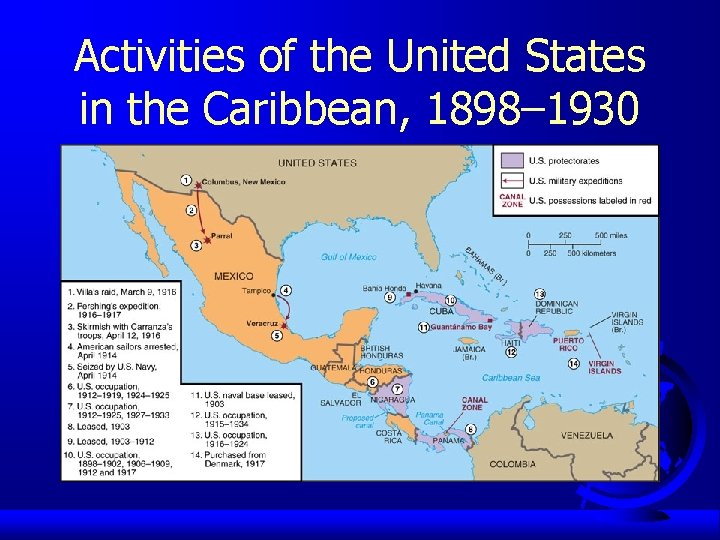
Activities of the United States in the Caribbean, 1898– 1930
Toward War F 1914: – – War in Europe Central Powers headed by Germany Allied Powers headed by England, France F Wilson sympathized with England, sought U. S. neutrality
The Neutrality Policy F Progressives saw war as wasteful, irrational F Suspicion that business sought war for profit F Immigrants prefered U. S. neutrality F A long tradition of U. S. neutrality F Americans saw little national stake in war
Freedom of the Seas F England blockade of Germany F U. S. ships to Germany seized F Wilson accepted English promise of reimbursement at war’s end F Germans used U-boats to interrupt trade with Allies F U. S. trade with Allies boomed, but was increasingly financed by loans from American banks F Allies owed U. S. banks $2 billion by 1917
The U-Boat Threat German submarines violated international law by shooting without warning F Bryan advised Wilson to ban travel, Wilson refused F 1915: Lusitania sunk by U-Boat F – Wilson demanded Germans protect passenger ships and pay for losses – Bryan resigned, replaced by Robert Lansing, who favored Allies April, 1916: Wilson issued ultimatum: call off attacks on cargo and passenger ships or U. S. German relations would be severed F May, 1916: Sussex Pledge—Germany pledges to honor U. S. neutrality F
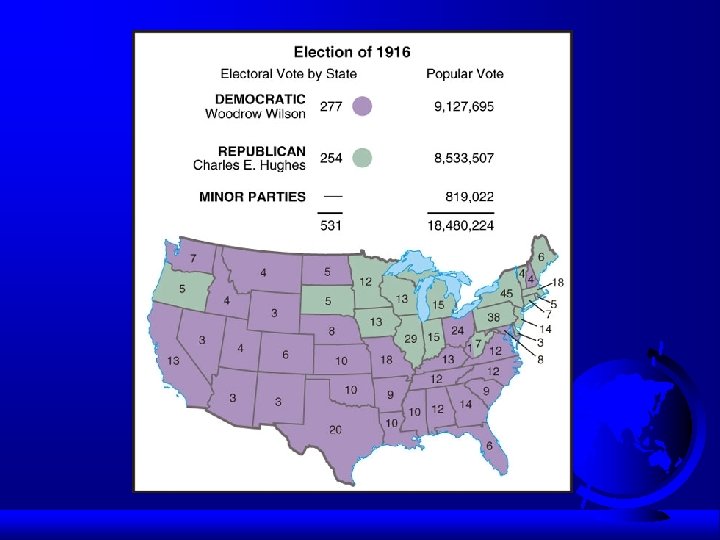
"He Kept Us Out of War" F 1916: Wilson campaigned on record of neutrality F Republican Charles Evans Hughes campaigned on tougher line against Germany F Wilson won close election – – Won large labor, progressive vote Won majority of women’s vote
The Final Months of Peace F Feb. , 1917: Germany renewed U-Boat attacks F Zimmerman Telegram F Wilson’s response – – Ordered U. S. merchant vessels armed Ordered U. S. Navy to fire on German UBoats F April 6, 1917: War declared on Germany
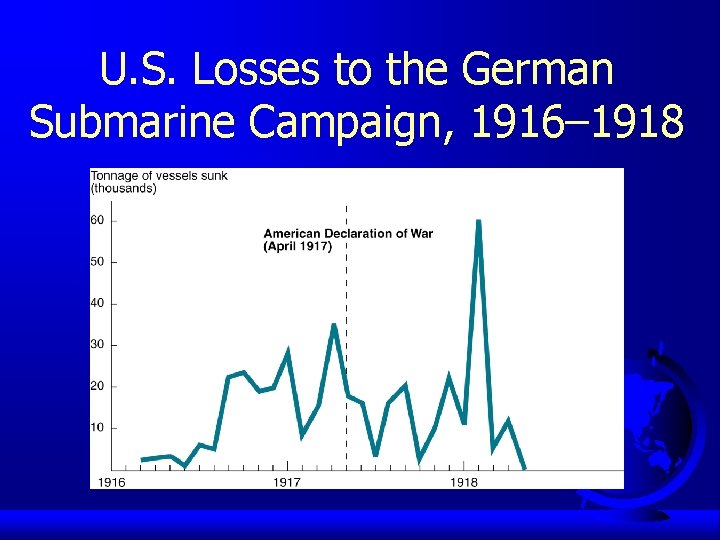
Over There F U. S. allies were in danger of losing war – Germans sunk 881, 000 tons of Allied shipping during April, 1917 – Mutinies in French army – British drive in Flanders stalled – Bolsheviks signed separate peace with Germany; German troops to West – Italian army routed F Allies braced for spring, 1918 offensive
U. S. Losses to the German Submarine Campaign, 1916– 1918
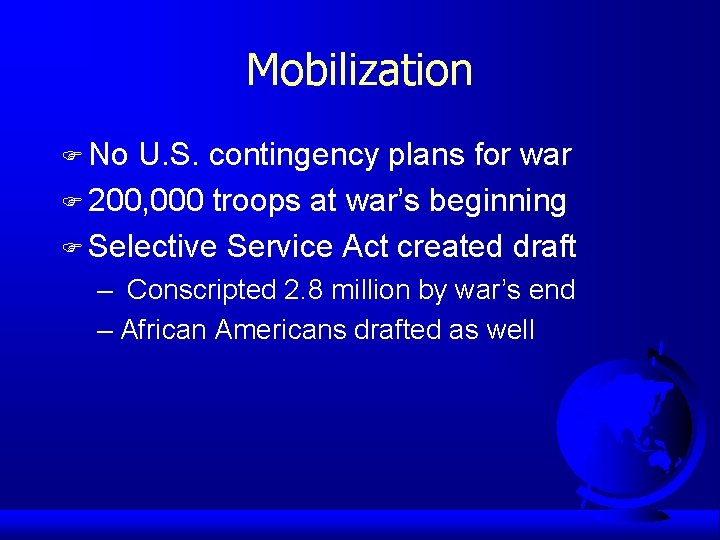
Mobilization F No U. S. contingency plans for war F 200, 000 troops at war’s beginning F Selective Service Act created draft – Conscripted 2. 8 million by war’s end – African Americans drafted as well
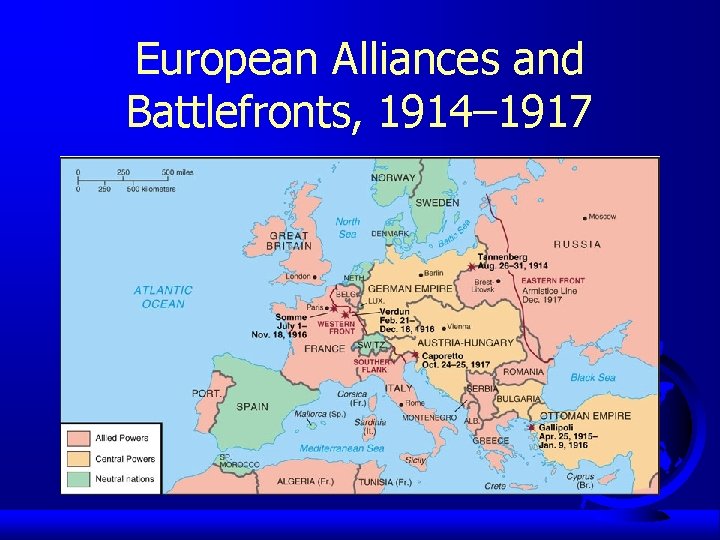
European Alliances and Battlefronts, 1914– 1917
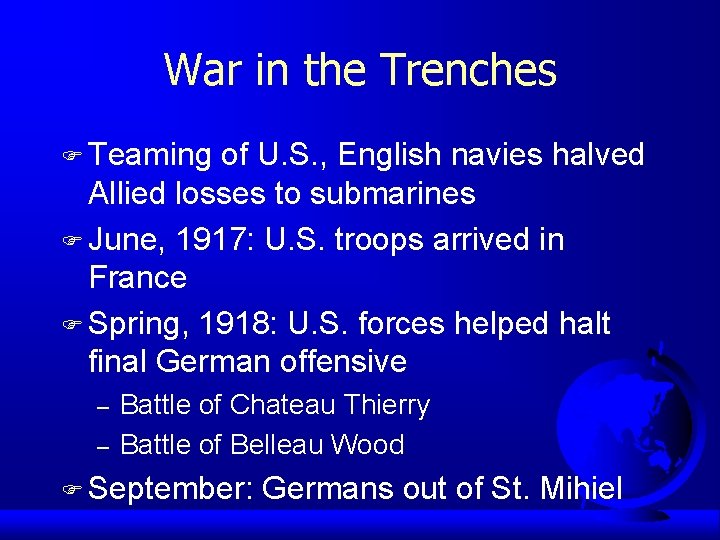
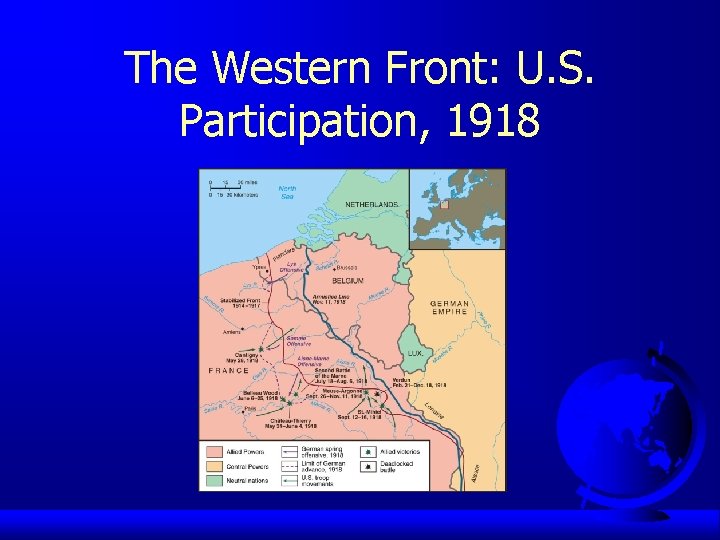
War in the Trenches F Teaming of U. S. , English navies halved Allied losses to submarines F June, 1917: U. S. troops arrived in France F Spring, 1918: U. S. forces helped halt final German offensive – – Battle of Chateau Thierry Battle of Belleau Wood F September: Germans out of St. Mihiel
The Western Front: U. S. Participation, 1918
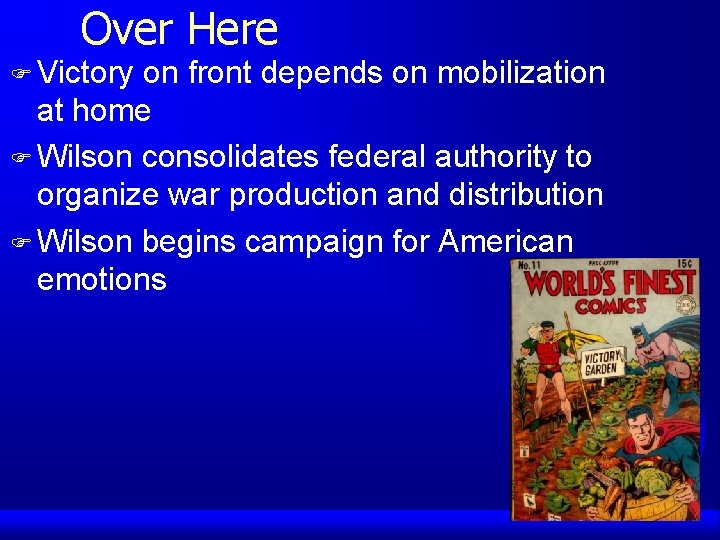
Over Here F Victory on front depends on mobilization at home F Wilson consolidates federal authority to organize war production and distribution F Wilson begins campaign for American emotions
The Conquest of Convictions F Wartime laws to repress dissent – – Espionage Act: Outlawed acts to aid the enemy, even encouraging disloyalty Trading with the Enemy Act: Government can censor foreign language press Sedition Act: Criticism of the war made a crime 1500 dissenters imprisoned, including Eugene Debs Summer, 1918: Anticommunism prompts deployment of U. S. troops to Russia F 1918– 1919: “Red Scare” resulted in domestic suppression of “radicals” F
A Bureaucratic War F War Industries Board and other agencies supervised production, distribution to maximize war effort F Government seized some businesses to keep them running F Cooperation between government and business the norm F Business profits from wartime industry
Labor in the War F Union membership swells F Labor shortage prompts – – Wage increase Entry of Mexican Americans, women, African Americans to war-related industrial work force
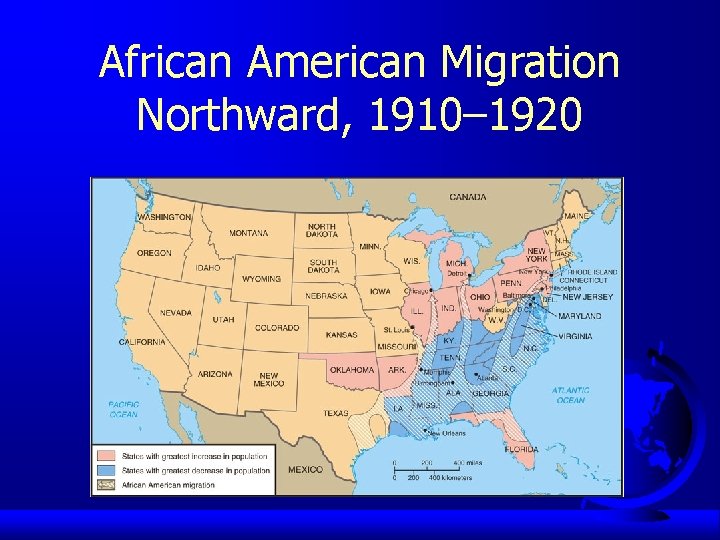
African American Migration Northward, 1910– 1920
Labor in the War F 200, 000 – 42, 000 combat troops F Great – – blacks served in France Migration to northern factories Blacks must adjust industrial work pace Encounter Northern racism F 1917– 1919: Race riots in urban North F Wartime experience prompted new surge of black resistance
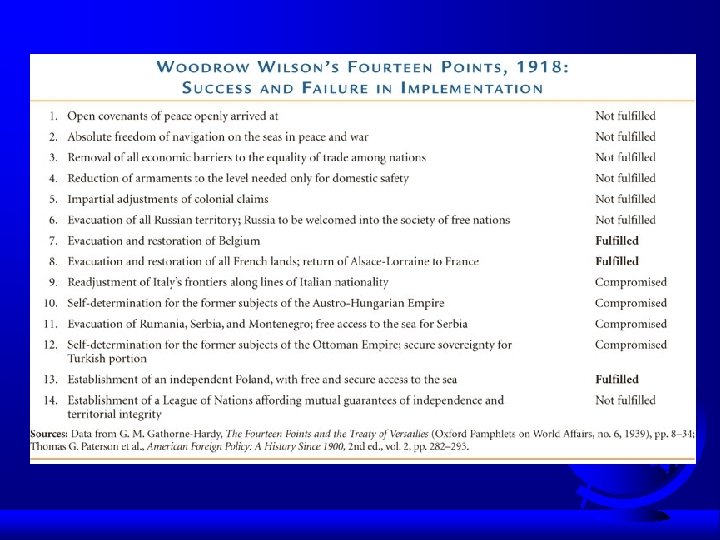
The Treaty of Versailles F Common concern about Bolshevik revolution F Wilson’s Fourteen Points call for nonpunitive settlement F England France balk at Fourteen Points – Want Germany disarmed and crippled – Want Germany’s colonies – Skeptical of principle of self-determination
A Peace at Paris F Wilson failed to deflect Allied punishment of Germany in treaty F Treaty created Wilson’s League of Nations – Article X of League charter required members to protect each others’ territorial integrity F League's jurisdiction excluded member nations’ domestic affairs
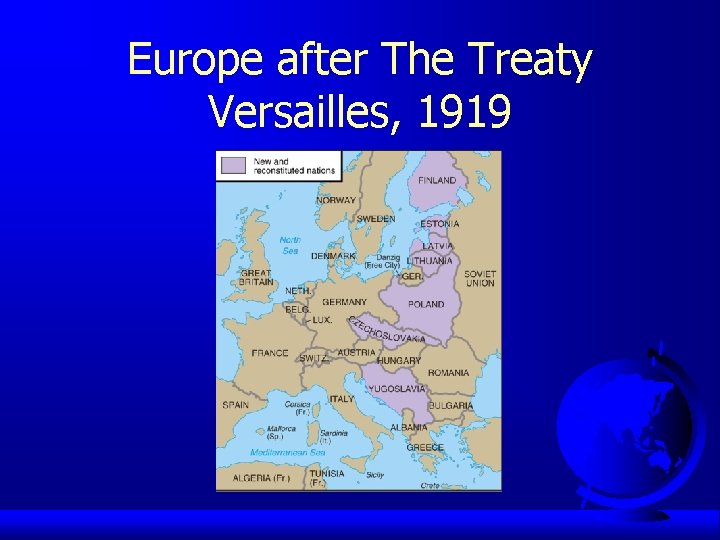
Europe after The Treaty Versailles, 1919
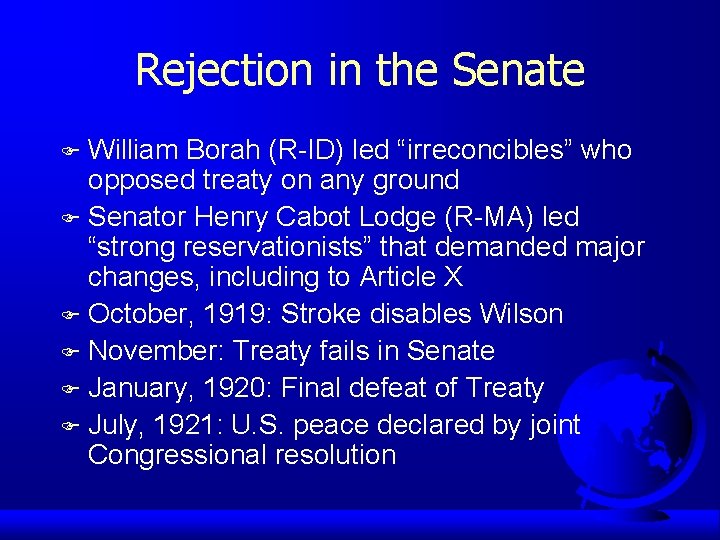
Rejection in the Senate William Borah (R-ID) led “irreconcibles” who opposed treaty on any ground F Senator Henry Cabot Lodge (R-MA) led “strong reservationists” that demanded major changes, including to Article X F October, 1919: Stroke disables Wilson F November: Treaty fails in Senate F January, 1920: Final defeat of Treaty F July, 1921: U. S. peace declared by joint Congressional resolution F
Rejection in the Senate F Wilson hopes democratic victory in 1920 election would provide mandate for League of Nations F Landslide for Republican Warren Harding F Defeat of League of Nations brought defeat of Progressive spirit
The Election of 1920
Postwar Disillusionment F To the next generation the war seemed futile, wasteful F The progressive spirit survived but without enthusiasm or broad based support F Americans welcomed Harding’s return to “normalcy”