
The n reaction cross section measurement for light
- Slides: 27
The (n, α) reaction cross section measurement for light isotopes V. Khryachkov, I. Bondarenko, A. A. Goverdovsky, O. T. Grudzevich, T. Khromyleva, V. Ketlerov, P. Prusachenko, A. Sergachev, N. Semenova IPPE, Obninsk, Russia 27 -29 November 2013, Bolonia, Italy 1
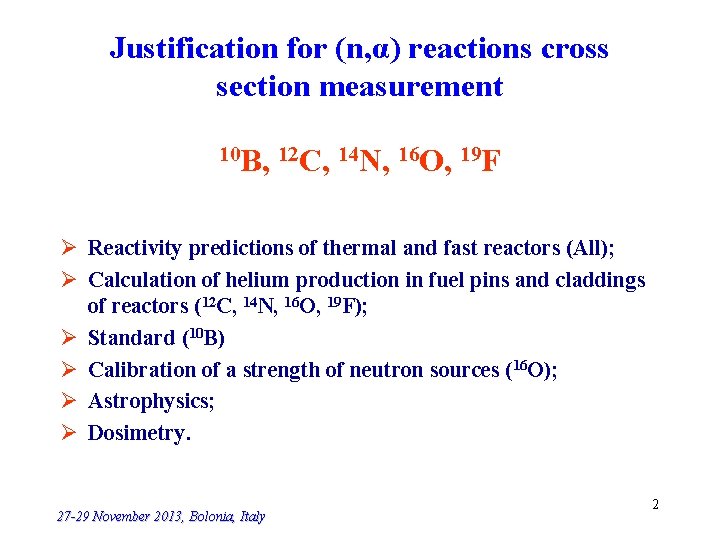
Justification for (n, α) reactions cross section measurement 10 B, 12 C, 14 N, 16 O, 19 F Ø Reactivity predictions of thermal and fast reactors (All); Ø Calculation of helium production in fuel pins and claddings of reactors (12 C, 14 N, 16 O, 19 F); Ø Standard (10 B) Ø Calibration of a strength of neutron sources (16 O); Ø Astrophysics; Ø Dosimetry. 27 -29 November 2013, Bolonia, Italy 2
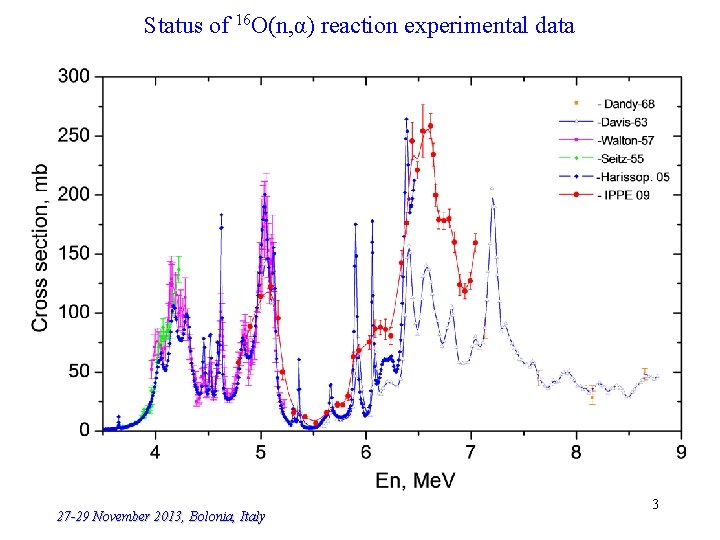
Status of 16 O(n, α) reaction experimental data 27 -29 November 2013, Bolonia, Italy 3
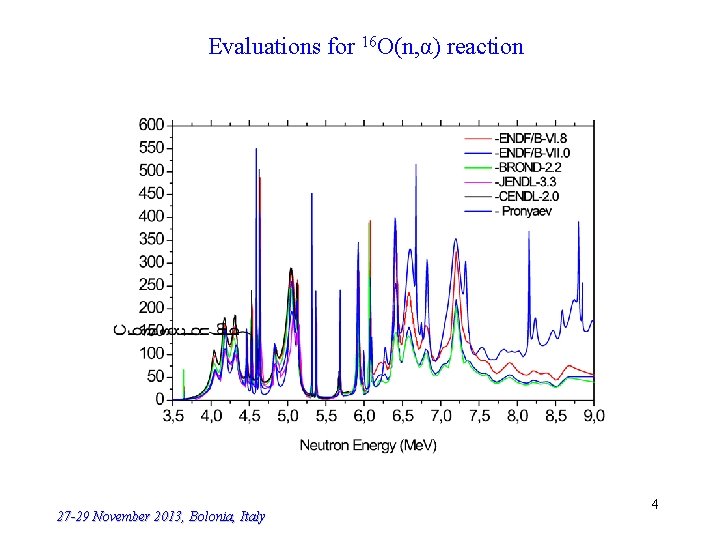
Evaluations for 16 O(n, α) reaction 27 -29 November 2013, Bolonia, Italy 4
Problems: Ø Detector Ø Samples Ø Neutron source 27 -29 November 2013, Bolonia, Italy 5
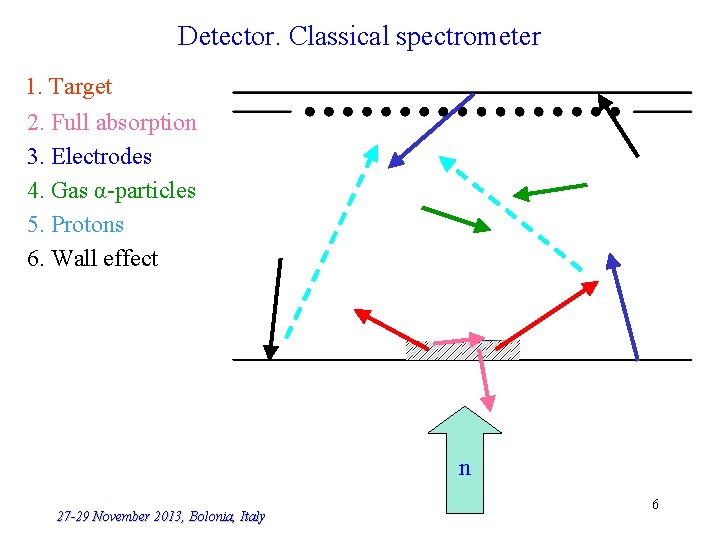
Detector. Classical spectrometer 1. Target 2. Full absorption 3. Electrodes 4. Gas α-particles 5. Protons 6. Wall effect n 27 -29 November 2013, Bolonia, Italy 6
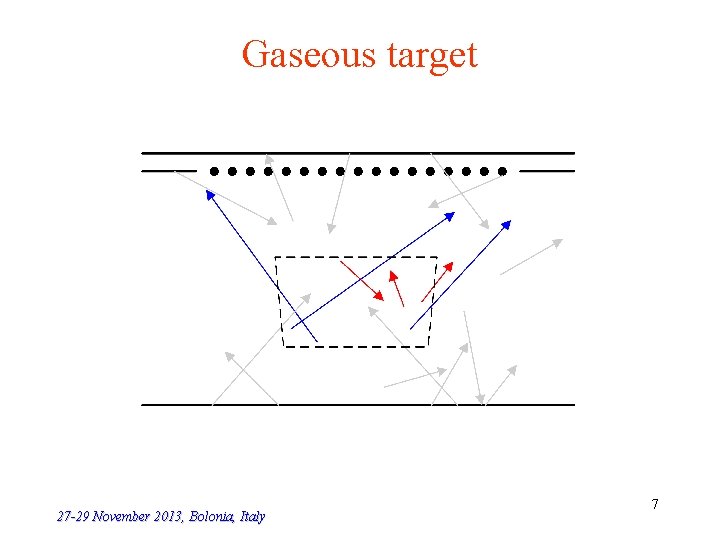
Gaseous target 27 -29 November 2013, Bolonia, Italy 7
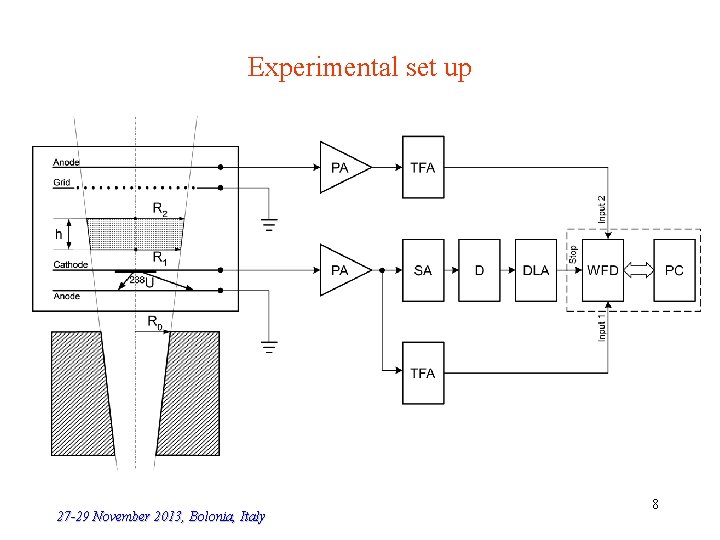
Experimental set up 27 -29 November 2013, Bolonia, Italy 8
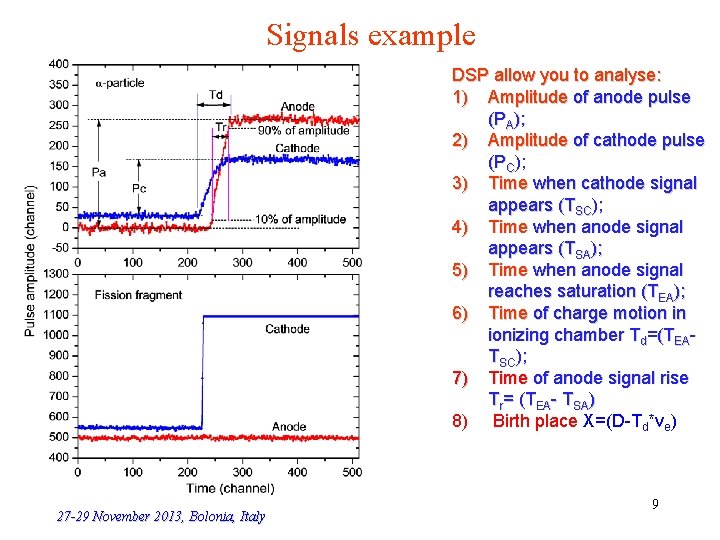
Signals example DSP allow you to analyse: 1) Amplitude of anode pulse (PA); 2) Amplitude of cathode pulse (PC); 3) Time when cathode signal appears (TSC); 4) Time when anode signal appears (TSA); 5) Time when anode signal reaches saturation (TEA); 6) Time of charge motion in ionizing chamber Td=(TEATSC); 7) Time of anode signal rise Tr= (TEA- TSA) 8) Birth place X=(D-Td*ve) 27 -29 November 2013, Bolonia, Italy 9
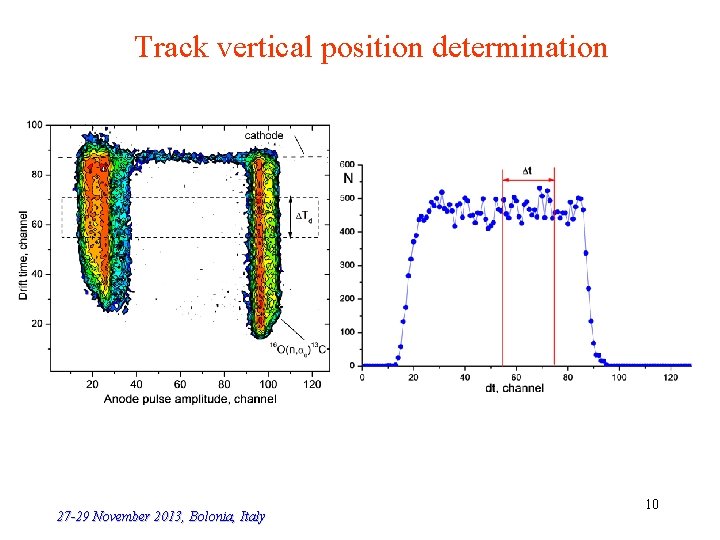
Track vertical position determination 27 -29 November 2013, Bolonia, Italy 10
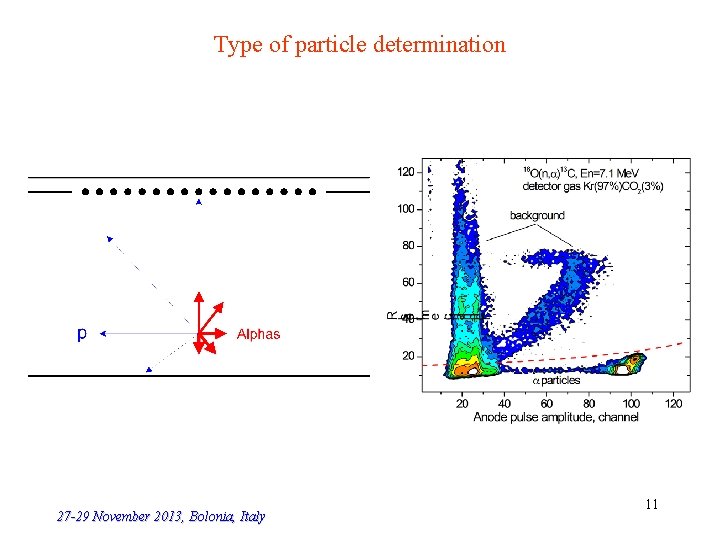
Type of particle determination 27 -29 November 2013, Bolonia, Italy 11
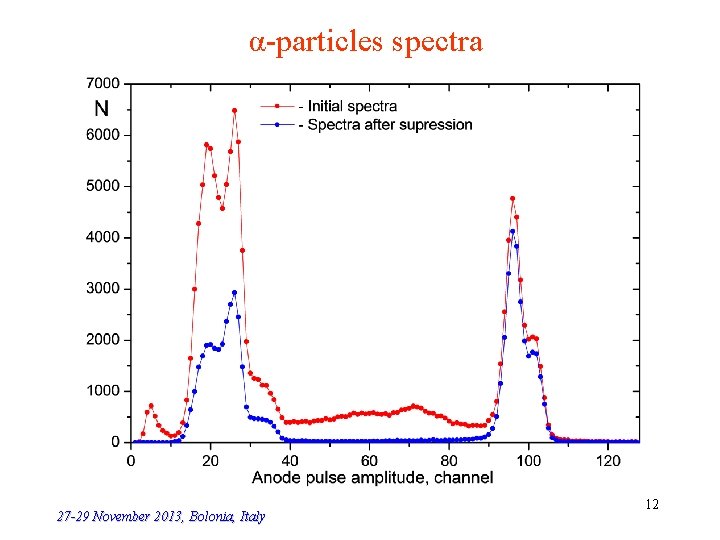
α-particles spectra 27 -29 November 2013, Bolonia, Italy 12
IPPE result 27 -29 November 2013, Bolonia, Italy 13
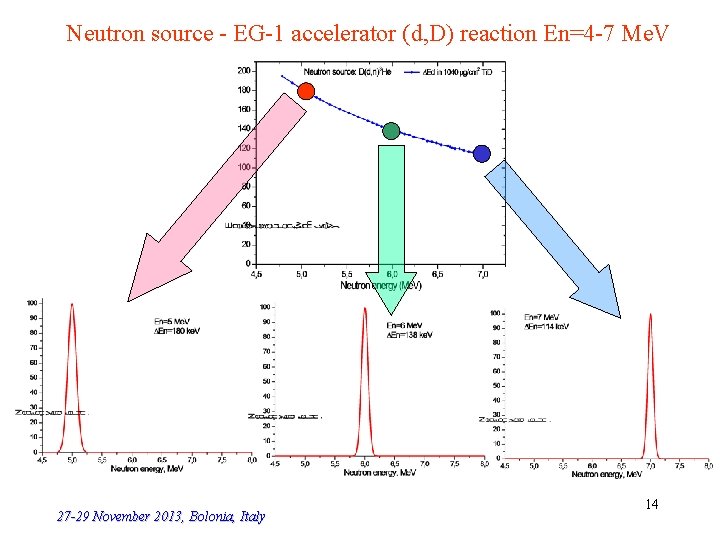
Neutron source - EG-1 accelerator (d, D) reaction En=4 -7 Me. V 27 -29 November 2013, Bolonia, Italy 14
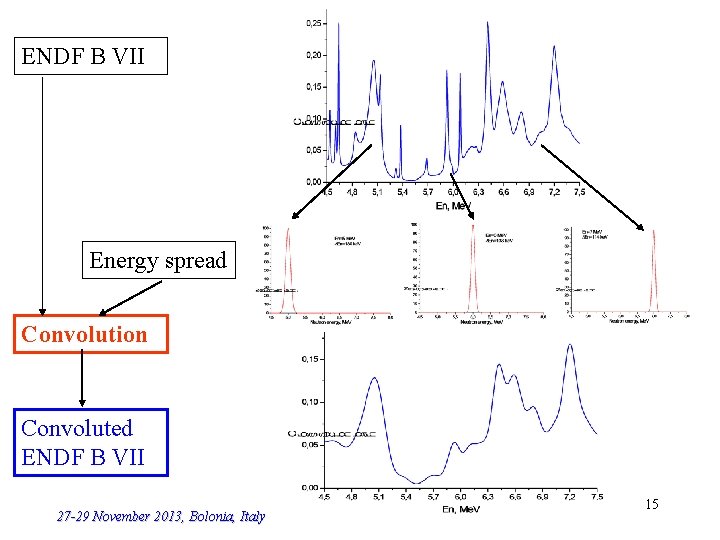
ENDF B VII Energy spread Convolution Convoluted ENDF B VII 27 -29 November 2013, Bolonia, Italy 15
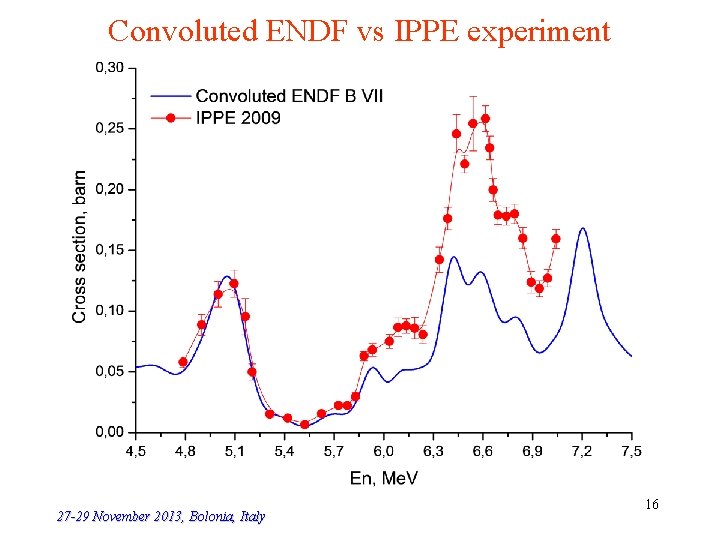
Convoluted ENDF vs IPPE experiment 27 -29 November 2013, Bolonia, Italy 16
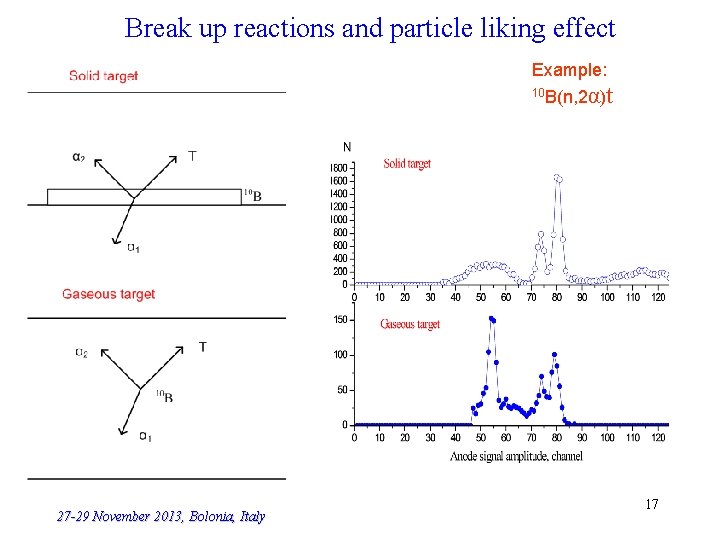
Break up reactions and particle liking effect Example: 10 B(n, 2 27 -29 November 2013, Bolonia, Italy α )t 17
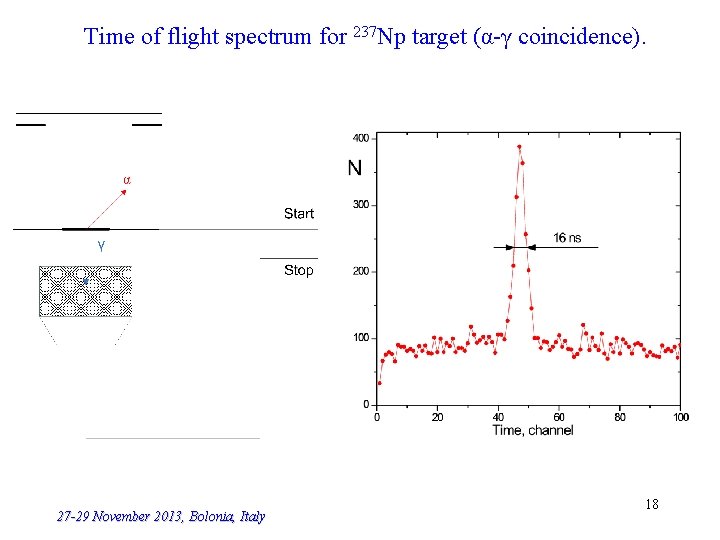
Time of flight spectrum for 237 Np target (α-γ coincidence). 27 -29 November 2013, Bolonia, Italy 18
Time of flight, 186 m 27 -29 November 2013, Bolonia, Italy 19
Timing resolution 27 -29 November 2013, Bolonia, Italy 20
Energy resolution 27 -29 November 2013, Bolonia, Italy 21
Energy resolution 27 -29 November 2013, Bolonia, Italy 22
Count rate. 0, 2 g oxygen target. 27 -29 November 2013, Bolonia, Italy 23
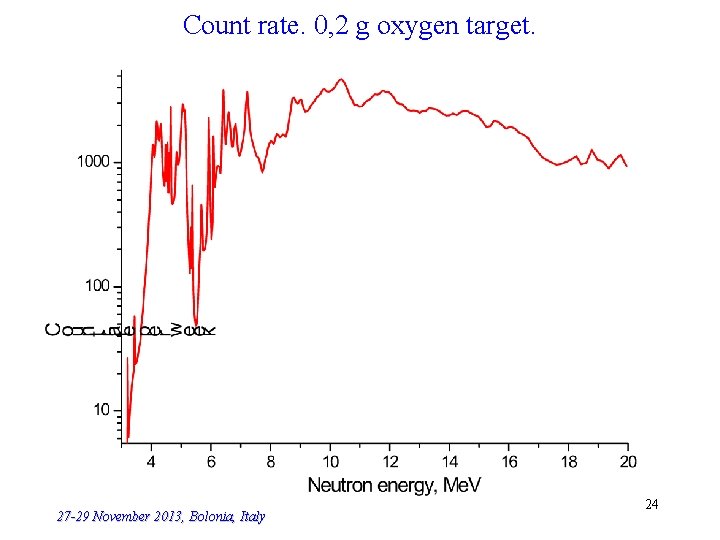
Count rate. 0, 2 g oxygen target. 27 -29 November 2013, Bolonia, Italy 24
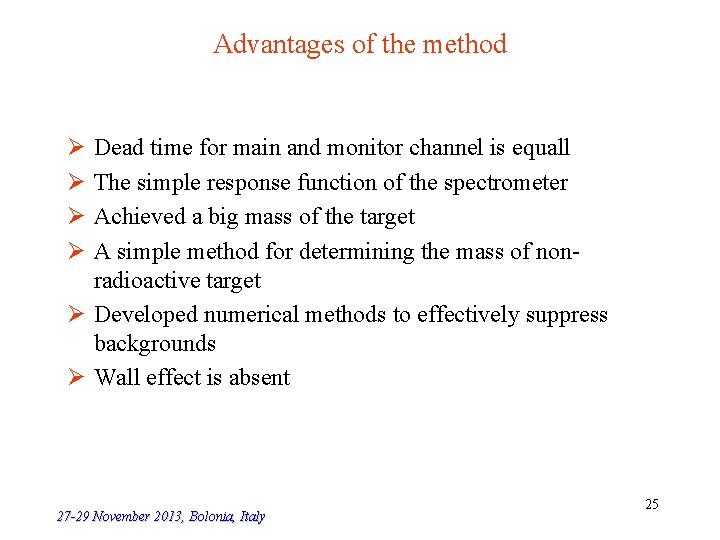
Advantages of the method Ø Ø Dead time for main and monitor channel is equall The simple response function of the spectrometer Achieved a big mass of the target A simple method for determining the mass of nonradioactive target Ø Developed numerical methods to effectively suppress backgrounds Ø Wall effect is absent 27 -29 November 2013, Bolonia, Italy 25
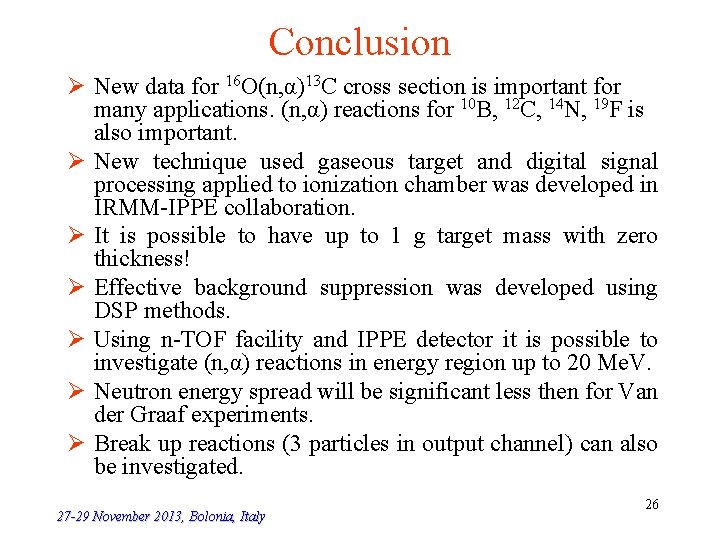
Conclusion Ø New data for 16 O(n, α)13 C cross section is important for many applications. (n, α) reactions for 10 B, 12 C, 14 N, 19 F is also important. Ø New technique used gaseous target and digital signal processing applied to ionization chamber was developed in IRMM-IPPE collaboration. Ø It is possible to have up to 1 g target mass with zero thickness! Ø Effective background suppression was developed using DSP methods. Ø Using n-TOF facility and IPPE detector it is possible to investigate (n, α) reactions in energy region up to 20 Me. V. Ø Neutron energy spread will be significant less then for Van der Graaf experiments. Ø Break up reactions (3 particles in output channel) can also be investigated. 27 -29 November 2013, Bolonia, Italy 26
Thank you for your attention! 27 -29 November 2013, Bolonia, Italy 27