
The Mystery Disease Structured Inquiry Version Patient Description
- Slides: 11
“The Mystery Disease” Structured Inquiry Version
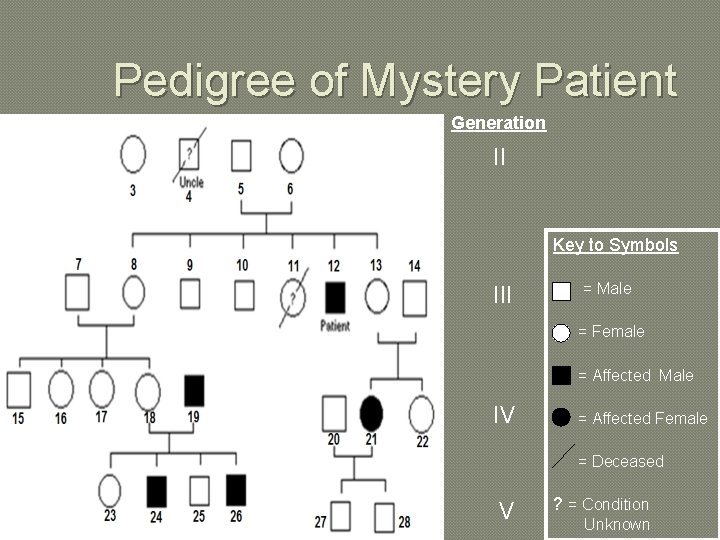
Patient Description - 1904 � In 1904, a student from the West Indies came to a Chicago physician, Dr. James Herrick, with a puzzling condition. Below is a summary of some of the observations Dr. Herrick made. Your job is to learn more about this condition and to find out how the disease affects the body. • The patient reports feeling well most of the time. But he also reports odd, reoccurring events. For instance, one day after a short swim, he became so tired that he could hardly move. He became short of breath and complained of pain in his joints and muscles, especially in his arms and legs. He felt unusually weak and required bed rest lasting a few weeks. These symptoms occurred repeatedly during his youth. He also had frequent fevers and infections. • The patient complained of fatigue and soreness in the joints. Upon inspection, the whites of his eyes had a yellowish tint. He complained of pain in the left abdominal area, which was tender to the touch. • A family history reveals that he has two brothers and three sisters. None of them have this condition. His uncle and his grandmother often had similar symptoms. His grandmother died a young woman. His parents do not have this condition. � � � ` James Herrick, M. D.
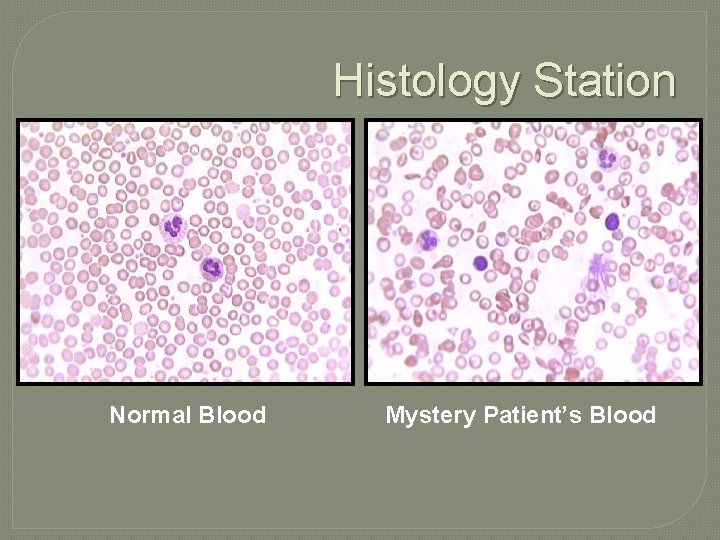
Histology Station Normal Blood Mystery Patient’s Blood
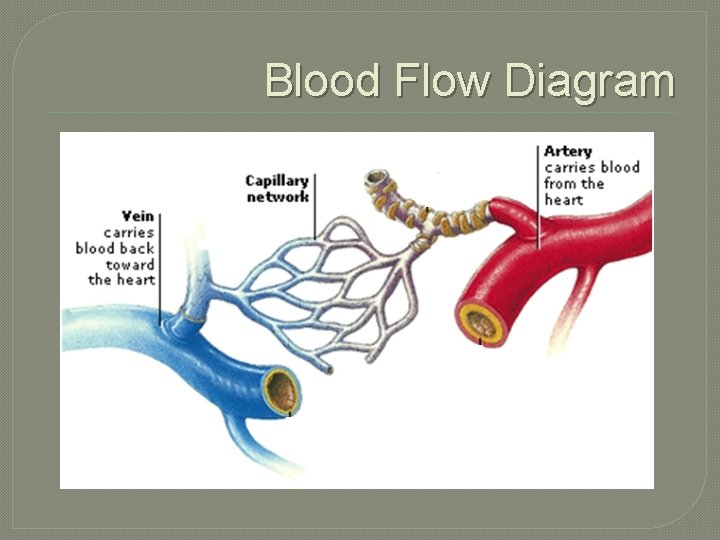
Blood Flow Diagram
Pedigree of Mystery Patient Generation II Key to Symbols III = Male = Female = Affected Male IV = Affected Female = Deceased V ? = Condition Unknown
Differential Diagnosis (DDx) �A differential diagnosis in medicine is a systematic diagnostic method used to narrow down the possibilities when attempting to identify a disease or condition presented by a patient.
Electrophoresis Role-Play � Imagine the classroom is an electrical field with the positive pole at the back of the room and the negative pole at the front of the room. � Toward which pole would the negativelycharged hemoglobin molecules move? Why? � Will one group move more quickly than the other? Explain. � The electricity is now on – let’s move!
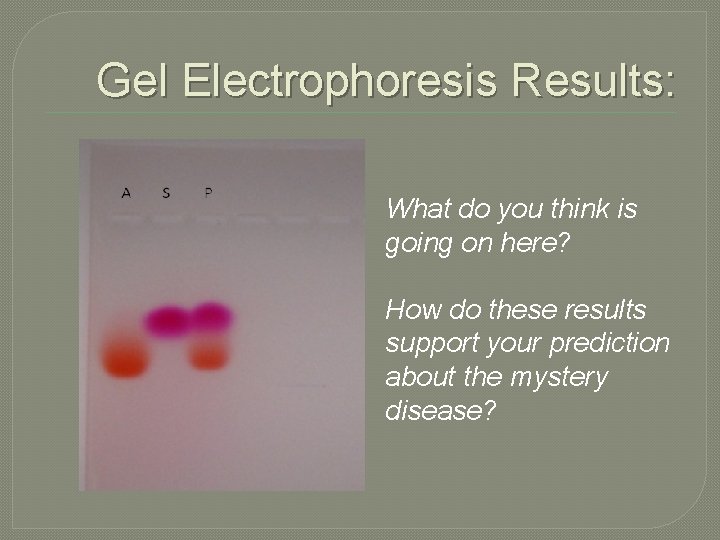
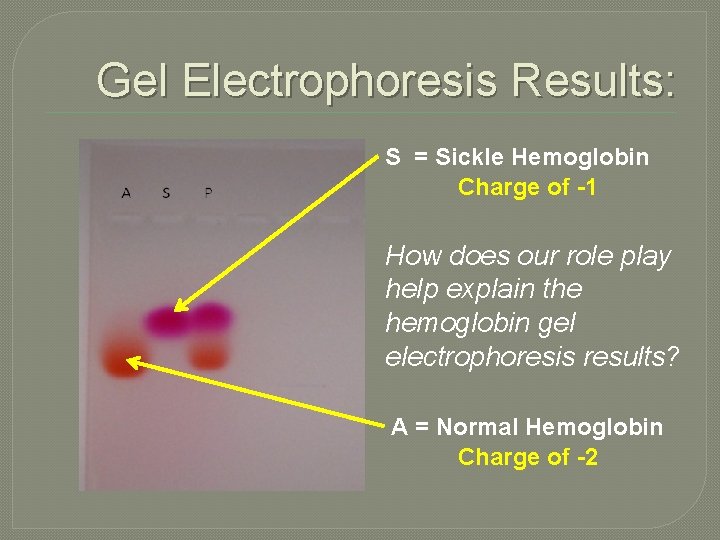
Gel Electrophoresis Results: What do you think is going on here? How do these results support your prediction about the mystery disease?
Gel Electrophoresis Results: S = Sickle Hemoglobin Charge of -1 How does our role play help explain the hemoglobin gel electrophoresis results? A = Normal Hemoglobin Charge of -2
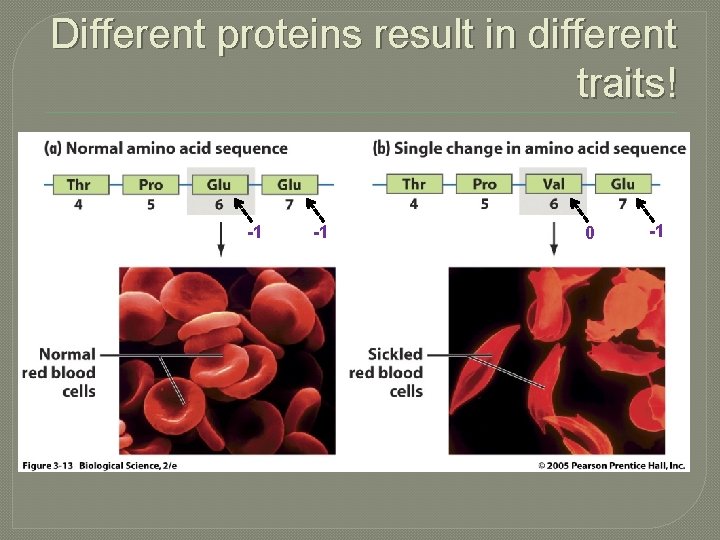
Different proteins result in different traits! -1 -1 0 -1
Putting it all together! �Explain how each type of evidence contributes to diagnosing sickle cell anemia. • Blood smear or blood cell activity (histology) • Family history chart (pedigree) • Gel electrophoresis results (molecular biology)