
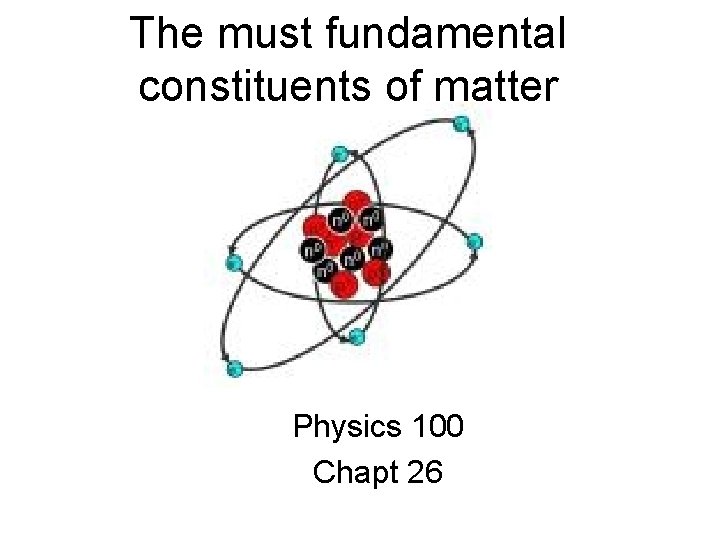
The must fundamental constituents of matter Physics 100

- Slides: 51
The must fundamental constituents of matter Physics 100 Chapt 26
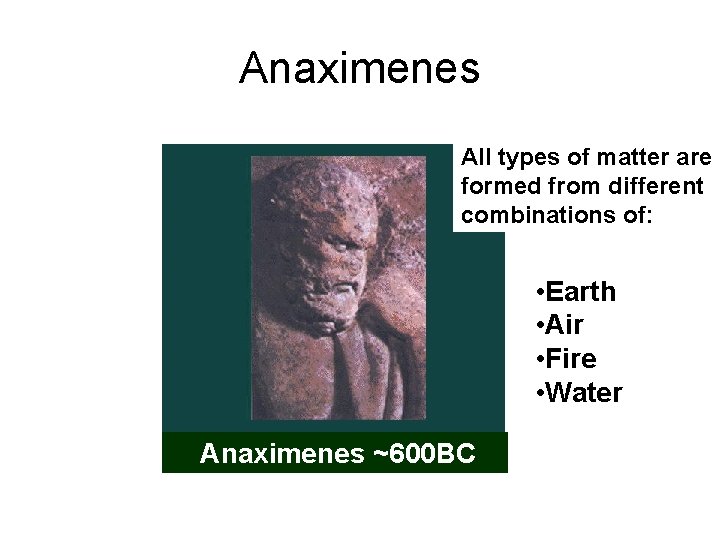
Anaximenes All types of matter are formed from different combinations of: • Earth • Air • Fire • Water Anaximenes ~600 BC
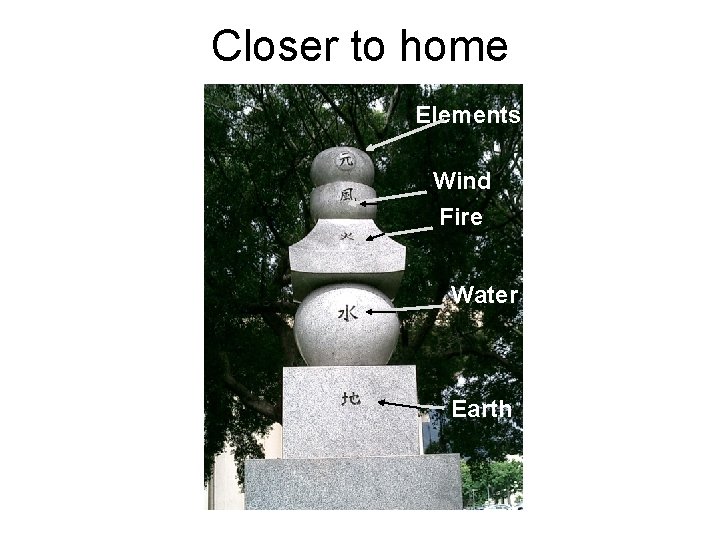
Closer to home Elements Wind Fire Water Earth
Anaximenes idea • Good point: Economical – All of matter reduced to 4 easy-to-remember components • Bad point: Wrong – Alchemists (including Isaac Newton) tried for centuries to changing one chemical element into another with no success
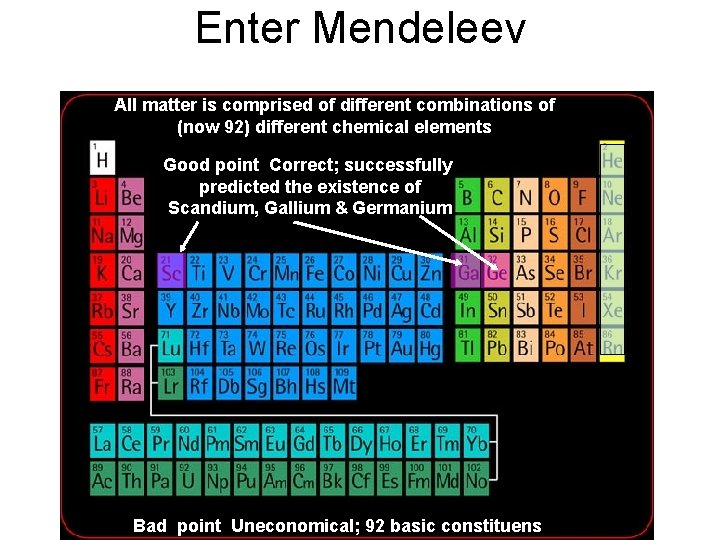
Enter Mendeleev All matter is comprised of different combinations of (now 92) different chemical elements Good point Correct; successfully predicted the existence of Scandium, Gallium & Germanium Bad point Uneconomical; 92 basic constituens
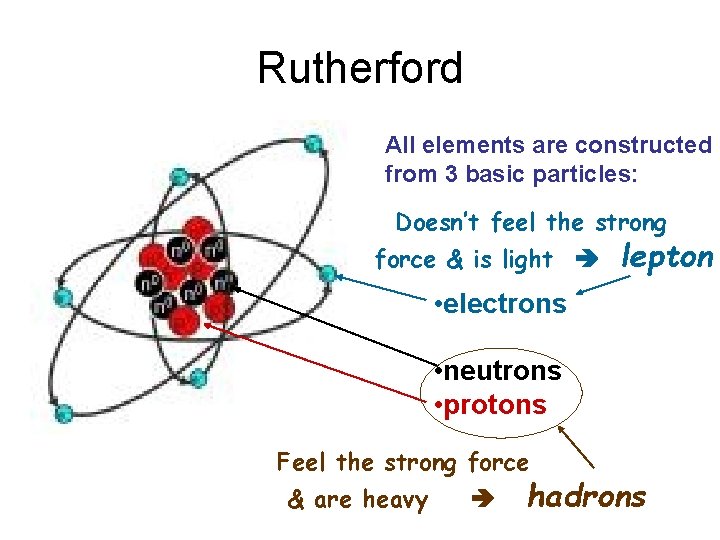
Rutherford All elements are constructed from 3 basic particles: Doesn’t feel the strong force & is light lepton • electrons • neutrons • protons Feel the strong force & are heavy hadrons
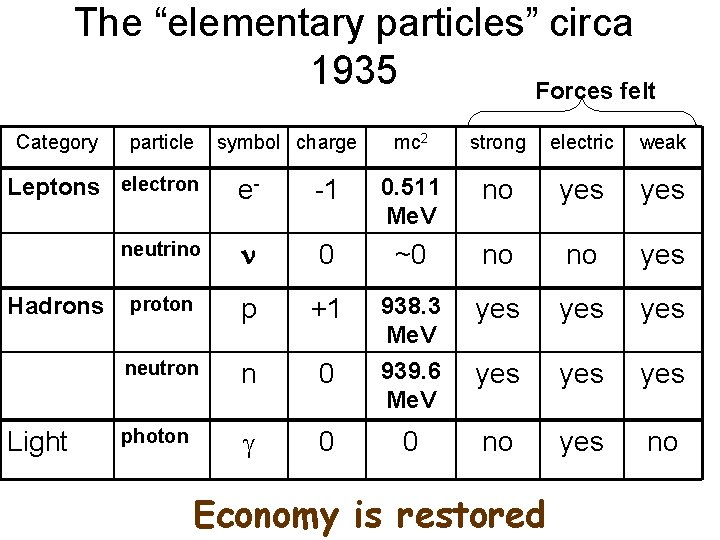
The “elementary particles” circa 1935 Forces felt Category particle symbol charge mc 2 strong electric weak Leptons electron e- -1 0. 511 Me. V no yes neutrino n 0 ~0 no no yes proton p +1 yes yes neutron n 0 938. 3 Me. V 939. 6 Me. V yes yes photon g 0 0 no yes no Hadrons Light Economy is restored
These “good” times didn’t last long
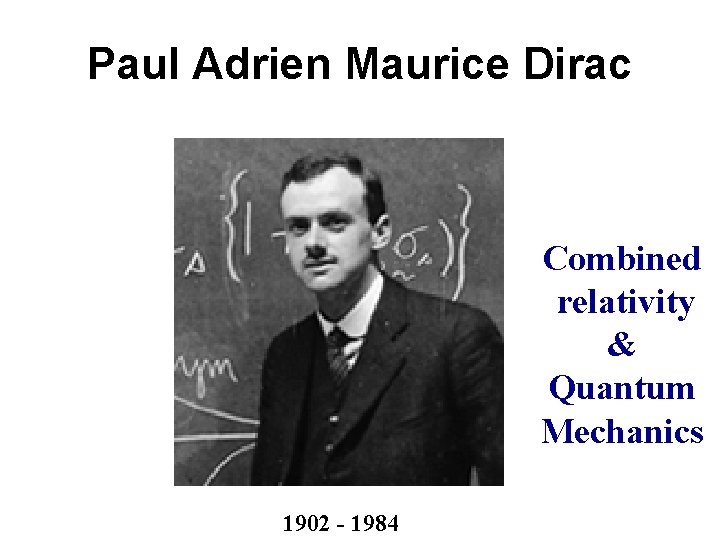
Paul Adrien Maurice Dirac Combined relativity & Quantum Mechanics 1902 - 1984
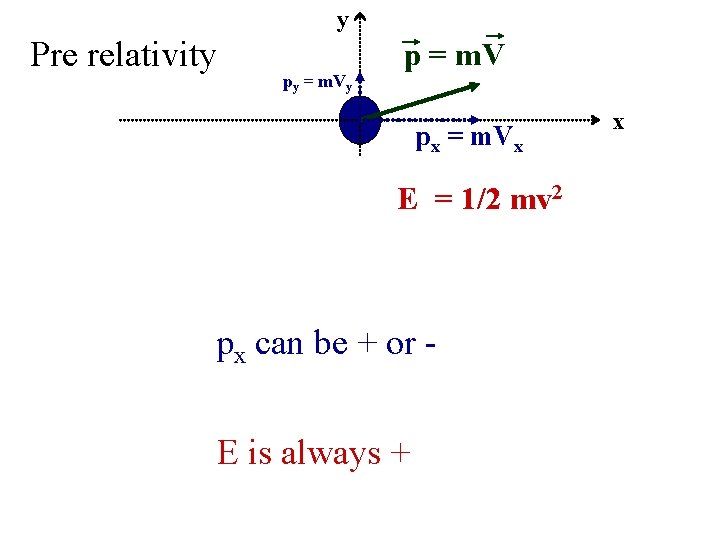
y Pre relativity py = m. Vy p = m. V px = m. Vx E = 1/2 mv 2 px can be + or E is always + x
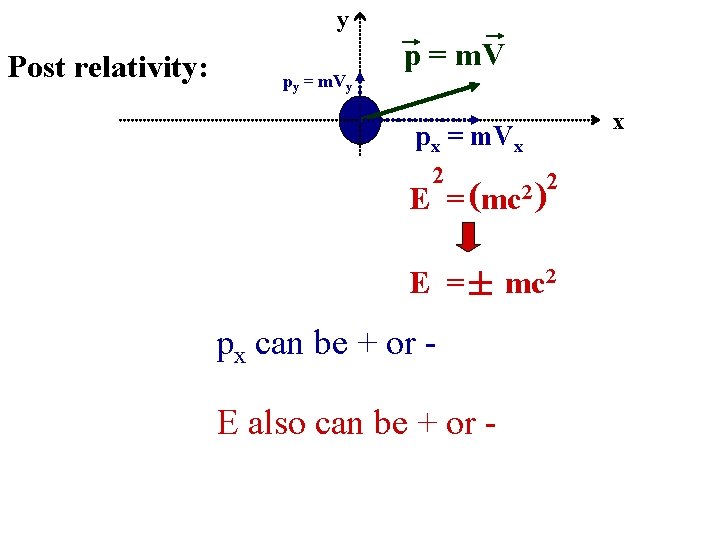
y Post relativity: py = m. Vy p = m. V x px = m. Vx 2 2 2 mc E =( ) E = ± mc 2 px can be + or E also can be + or -
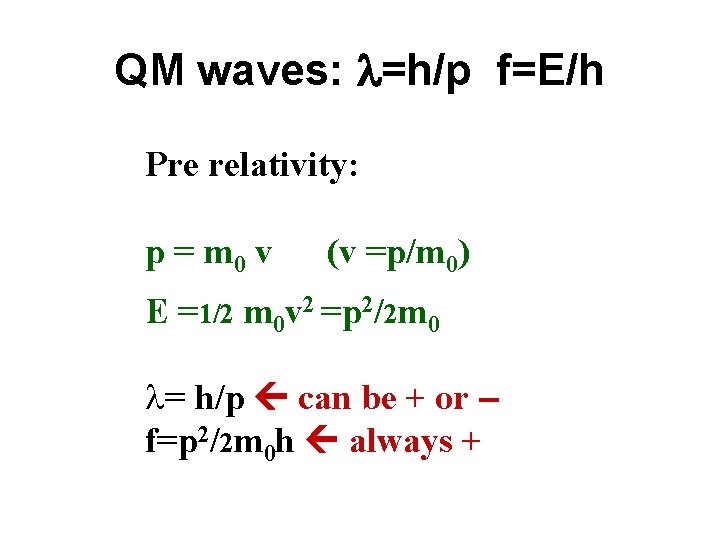
QM waves: l=h/p f=E/h Pre relativity: p = m 0 v (v =p/m 0) E =1/2 m 0 v 2 =p 2/2 m 0 l= h/p can be + or f=p 2/2 m 0 h always +
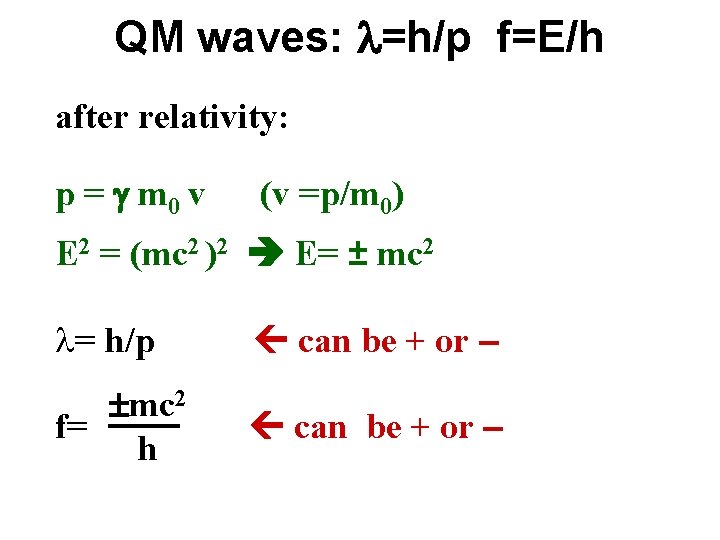
QM waves: l=h/p f=E/h after relativity: p = g m 0 v (v =p/m 0) E 2 = (mc 2 )2 E= ± mc 2 l= h/p can be + or - mc 2 f= h can be + or -
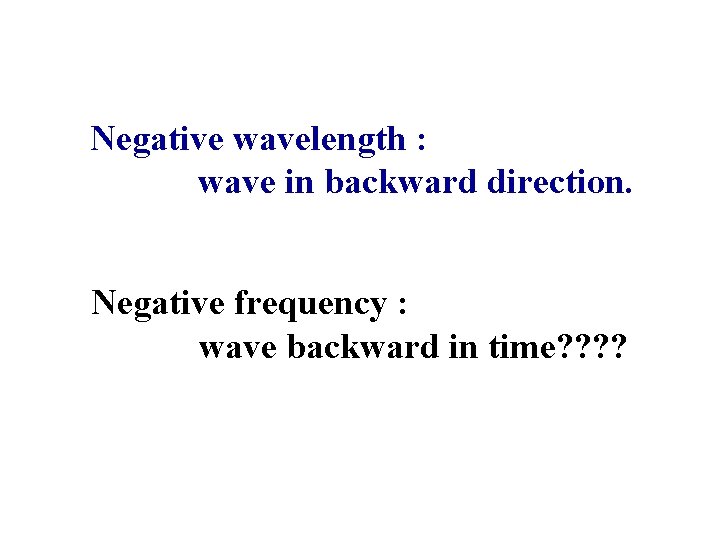
Negative wavelength : wave in backward direction. Negative frequency : wave backward in time? ?
What does it mean to move backwards in time?
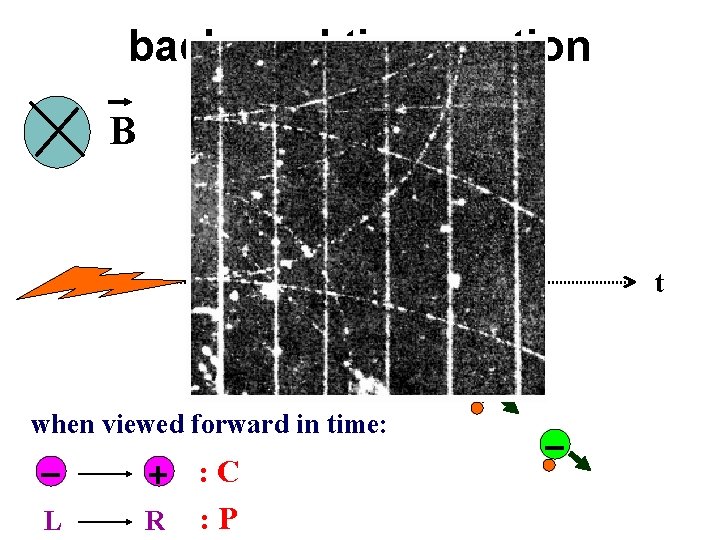
backward time motion - B - - t - when viewed forward in time: L + : C R : P -
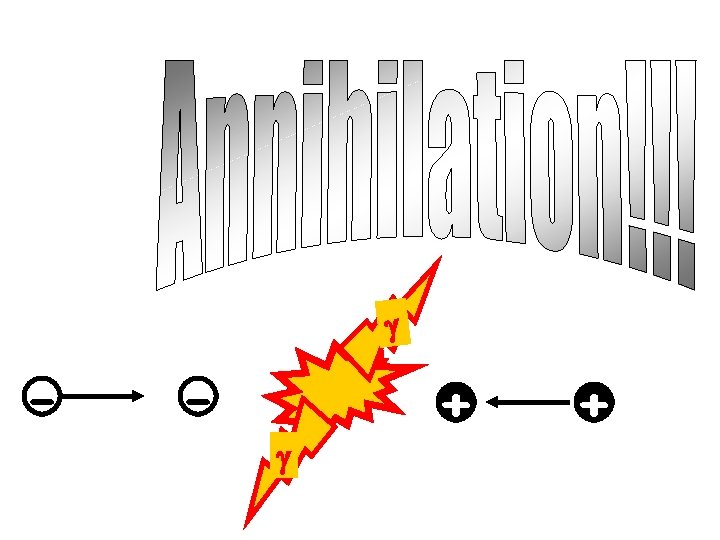
When antimatter comes in contact with matter, what happens?
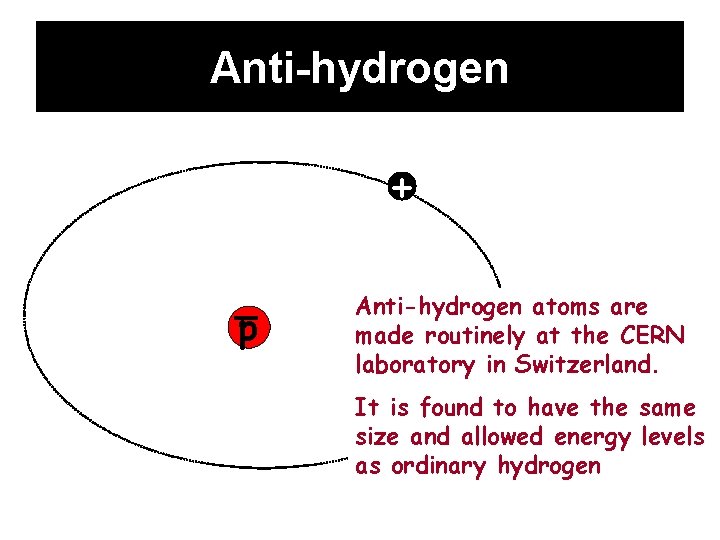
Anti-hydrogen + p Anti-hydrogen atoms are made routinely at the CERN laboratory in Switzerland. It is found to have the same size and allowed energy levels as ordinary hydrogen
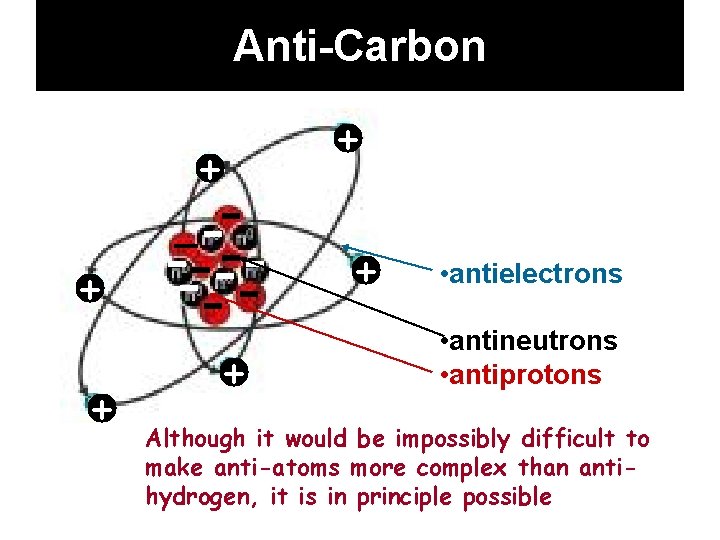
Anti-Carbon + + + • antielectrons • antineutrons • antiprotons Although it would be impossibly difficult to make anti-atoms more complex than antihydrogen, it is in principle possible
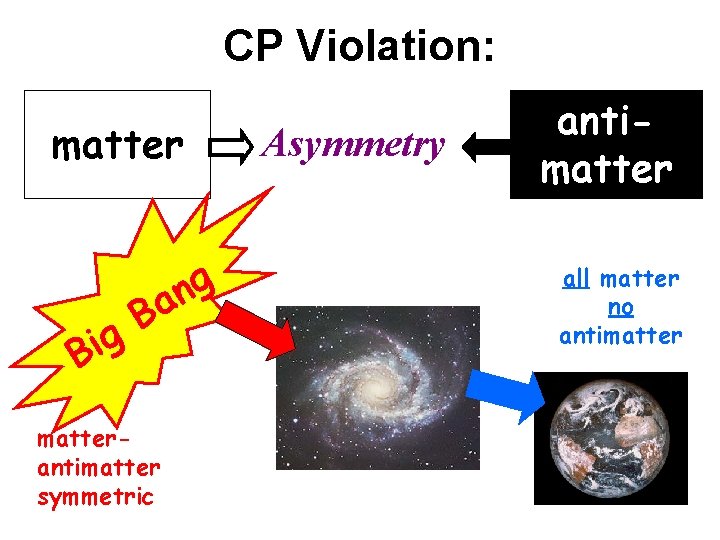
CP Violation: matter g i B Ba ng matterantimatter symmetric Asymmetry antimatter all matter no antimatter
Our research Where did all the anti-people go? ? ?
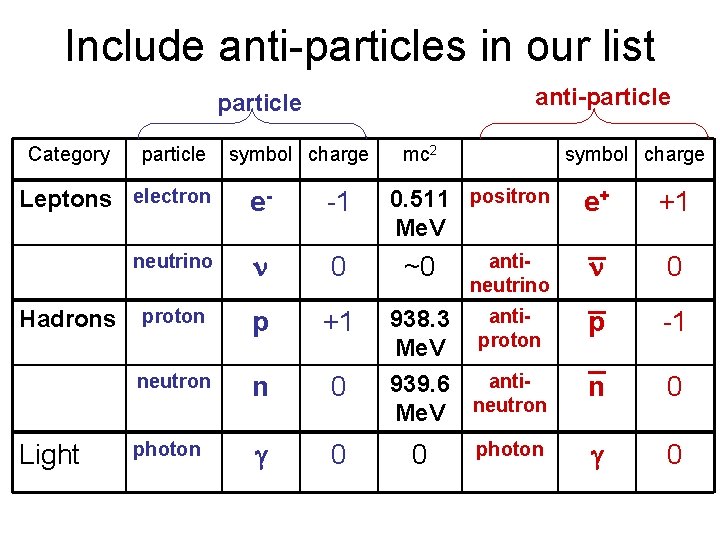
Include anti-particles in our list anti-particle Category particle symbol charge Leptons electron e- -1 neutrino n 0 proton p +1 neutron n 0 photon g 0 Hadrons Light mc 2 symbol charge 0. 511 positron Me. V e+ +1 antineutrino n 0 anti 938. 3 Me. V proton anti 939. 6 Me. V neutron p -1 n 0 photon g 0 ~0 0
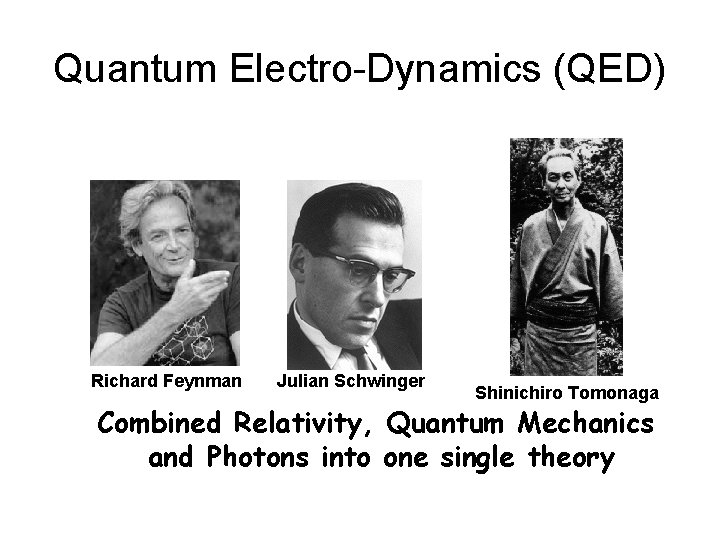
Quantum Electro-Dynamics (QED) Richard Feynman Julian Schwinger Shinichiro Tomonaga Combined Relativity, Quantum Mechanics and Photons into one single theory
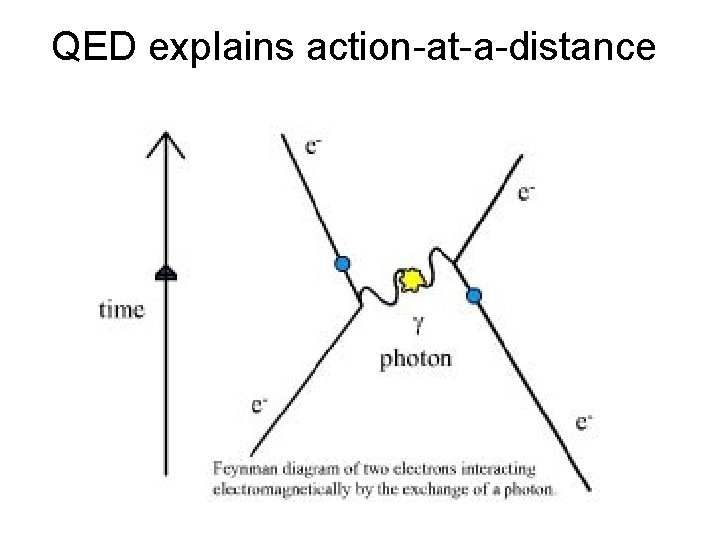
QED explains action-at-a-distance
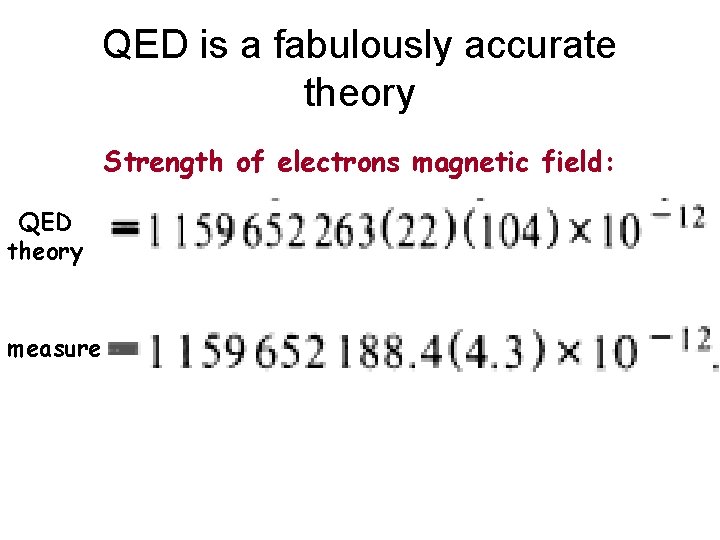
QED is a fabulously accurate theory Strength of electrons magnetic field: QED theory measure
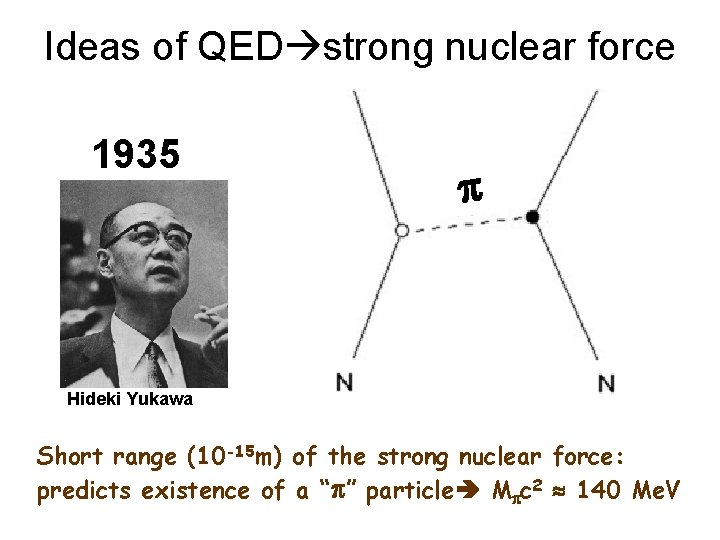
Ideas of QED strong nuclear force 1935 p Hideki Yukawa Short range (10 -15 m) of the strong nuclear force: predicts existence of a “p” particle Mpc 2 140 Me. V
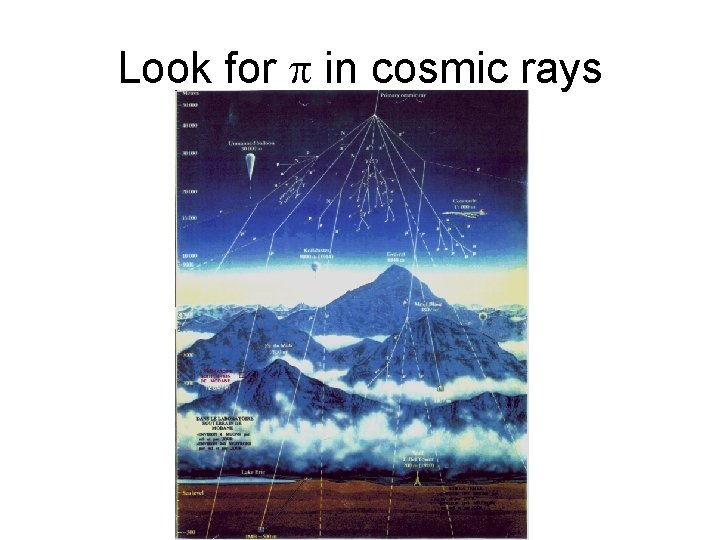
Look for p in cosmic rays
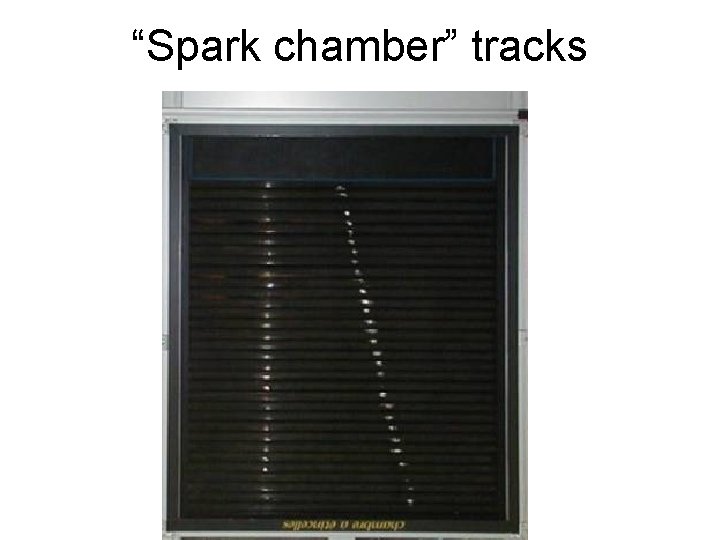
“Spark chamber” tracks
m+ and m– particle discovered in cosmic rays Near expectations mm+c 2 = mm-c 2 = 106 Me. V for Yukawa’s p Experiments show that the m+ & m- do not feel the Strong Nuclear Force and, therefore, cannot be Yukawa’s p the m+ & m- are additional leptons (i. e. like the e+ & e- but with larger mass)
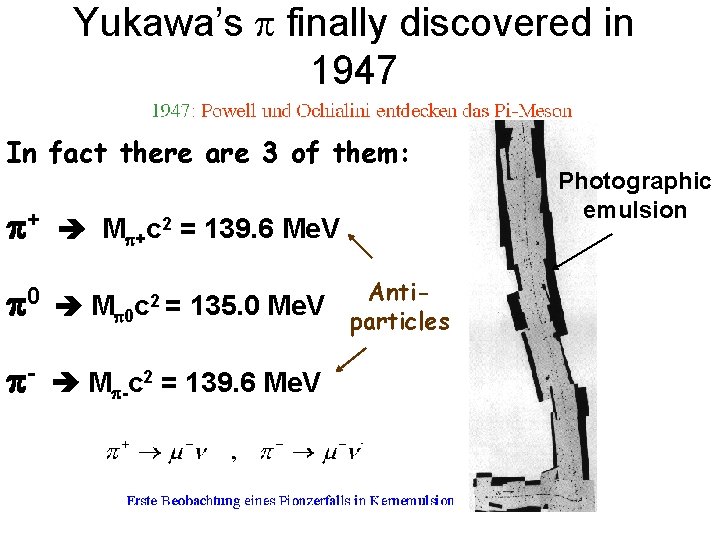
Yukawa’s p finally discovered in 1947 In fact there are 3 of them: p+ Mp+c 2 = 139. 6 Me. V p 0 Mp 0 c 2 = 135. 0 Me. V particles p- Mp-c 2 = 139. 6 Me. V Anti- Photographic emulsion
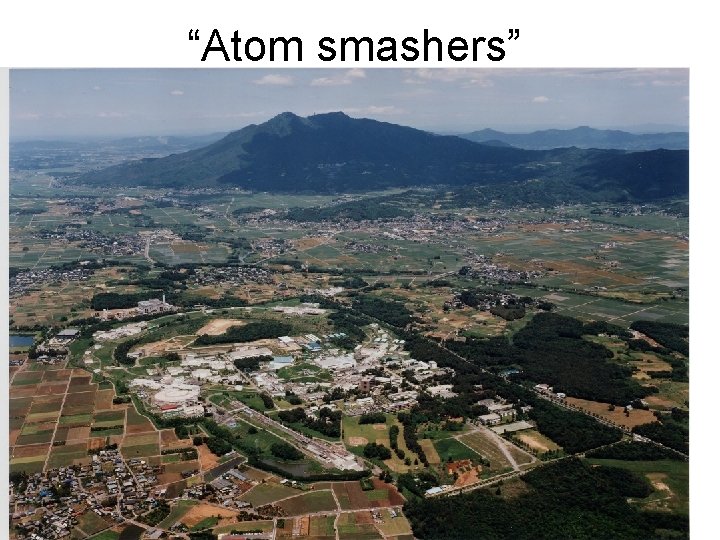
“Atom smashers”
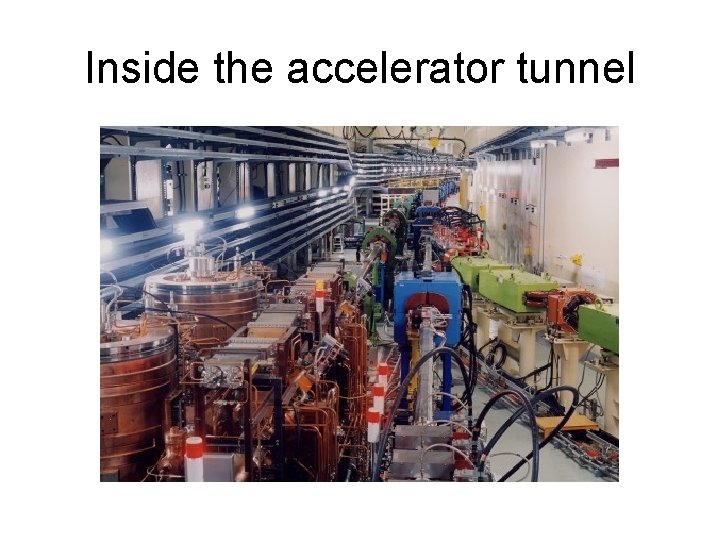
Inside the accelerator tunnel
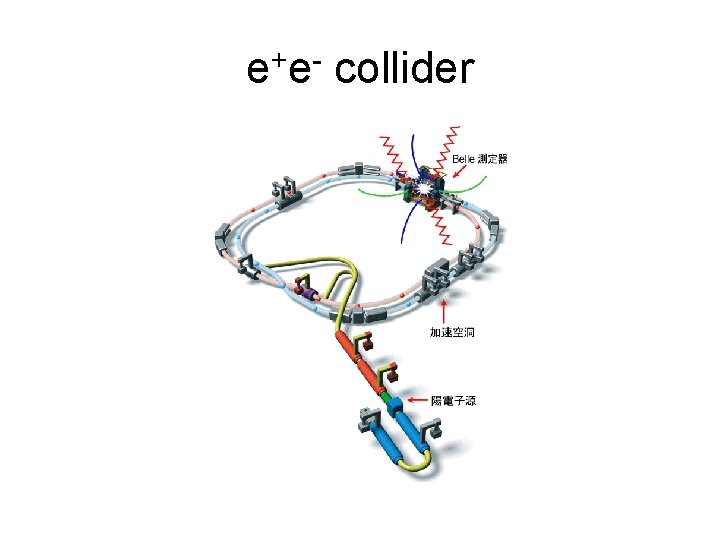
e+e- collider
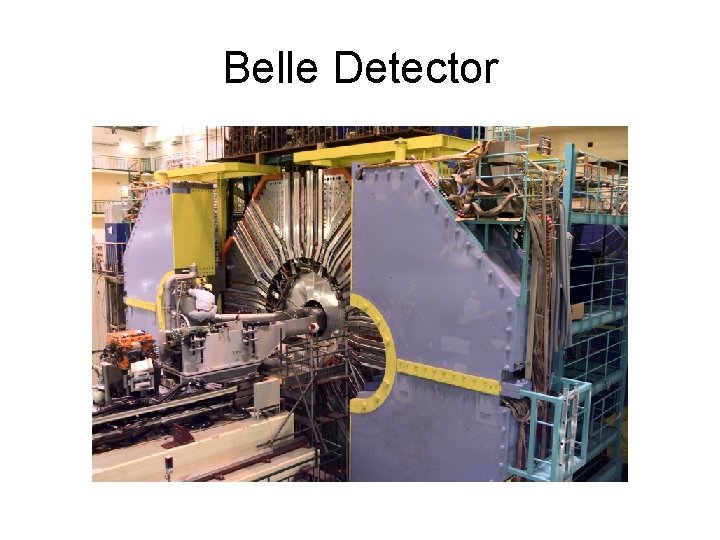
Belle Detector
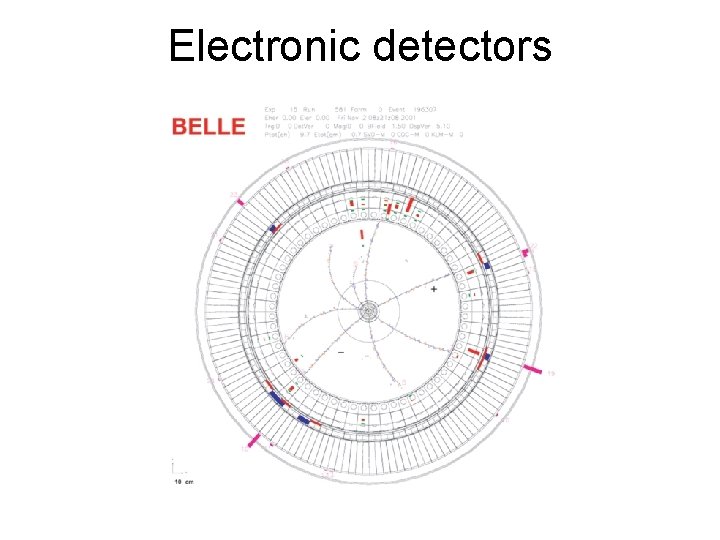
Electronic detectors
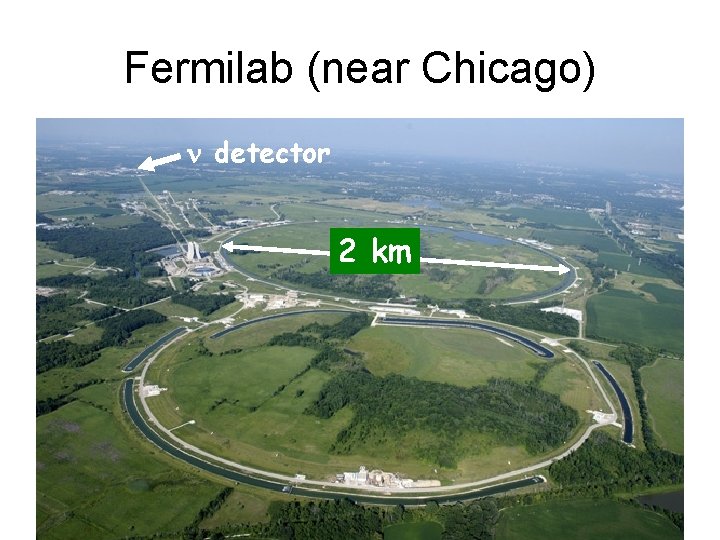
Fermilab (near Chicago) n detector 2 km
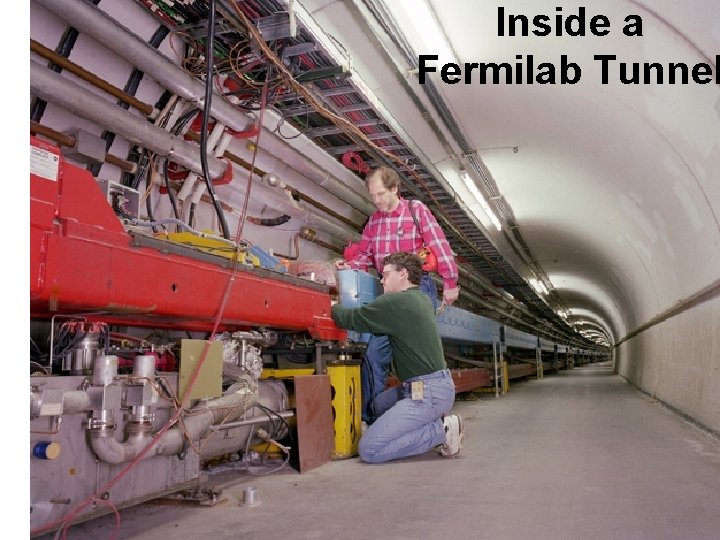
Inside a Fermilab Tunnel
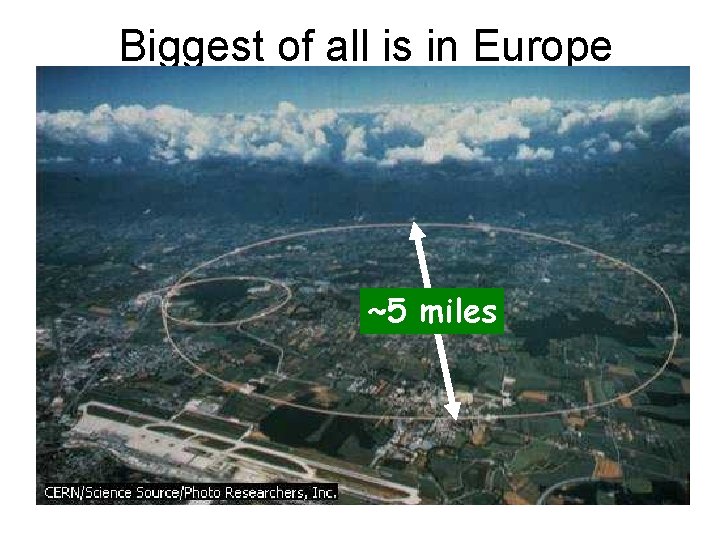
Biggest of all is in Europe ~5 miles
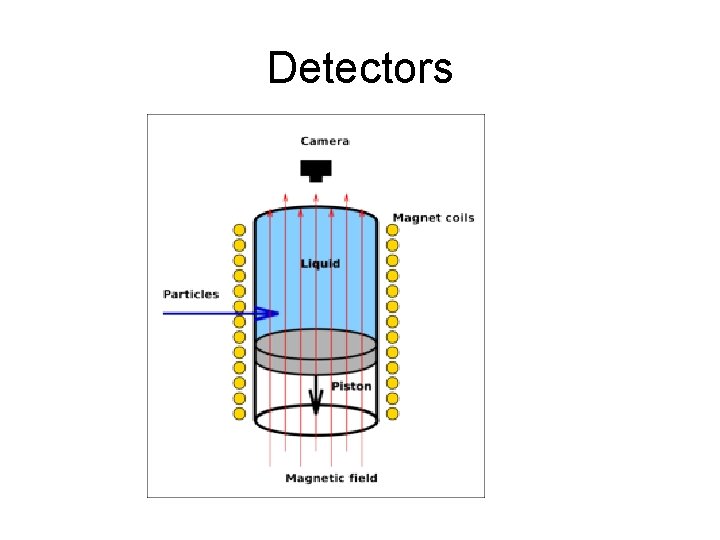
Detectors
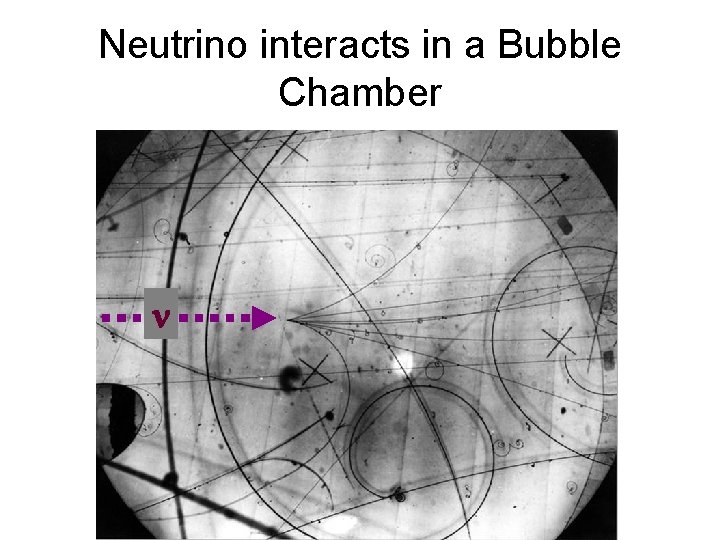
Neutrino interacts in a Bubble Chamber n
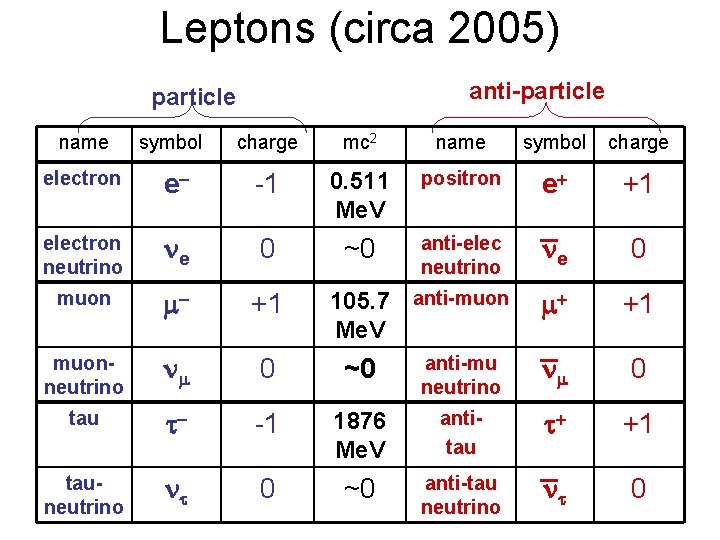
Leptons (circa 2005) anti-particle name symbol charge mc 2 name symbol charge electron e- -1 0. 511 Me. V positron e+ +1 electron neutrino ne 0 ~0 anti-elec neutrino ne 0 muon m- +1 m+ +1 muonneutrino nm 0 ~0 anti-mu neutrino nm 0 tau t- -1 1876 Me. V antitau t+ +1 tauneutrino nt 0 ~0 anti-tau neutrino nt 0 105. 7 anti-muon Me. V
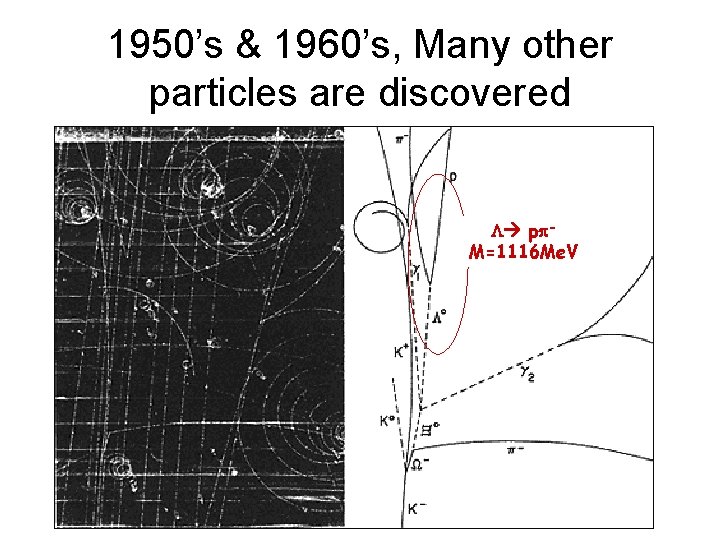
1950’s & 1960’s, Many other particles are discovered L pp. M=1116 Me. V
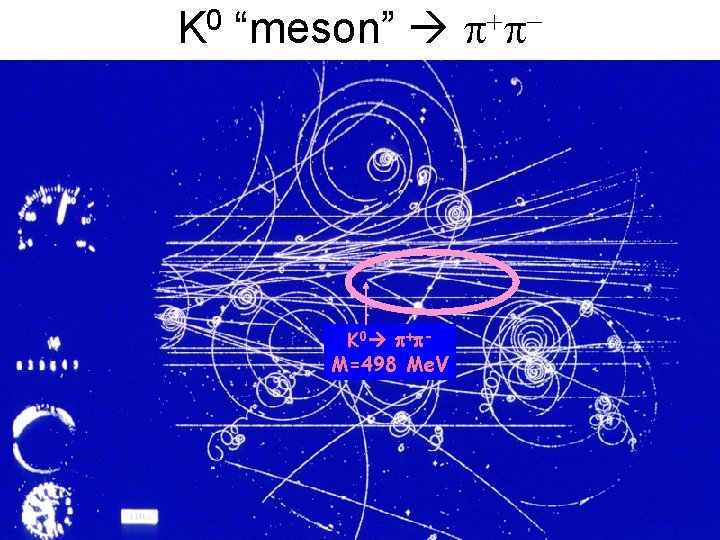
K 0 “meson” p+p- K 0 p+p. M=498 Me. V
Two classes of hadrons Baryons (p, n, L, …. . ) ultimate decay products include a proton Mesons (p, K, …) ultimate decay products e’s, g’s & n’s Both baryons & mesons feel the Strong Nuclear Force
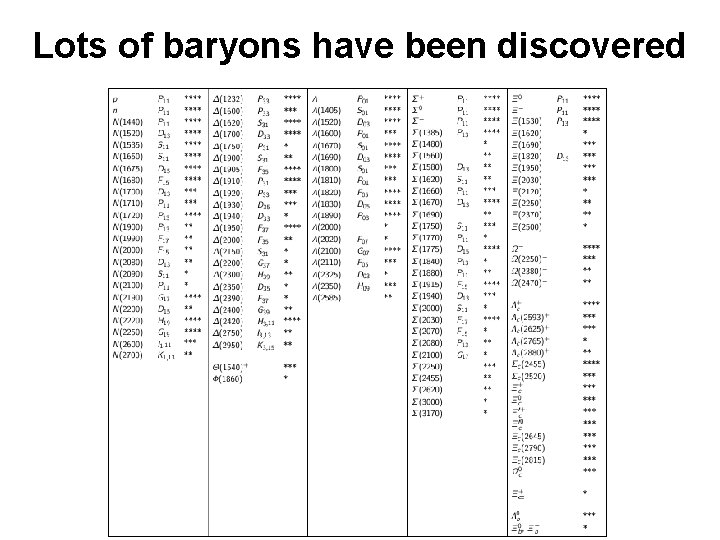
Lots of baryons have been discovered
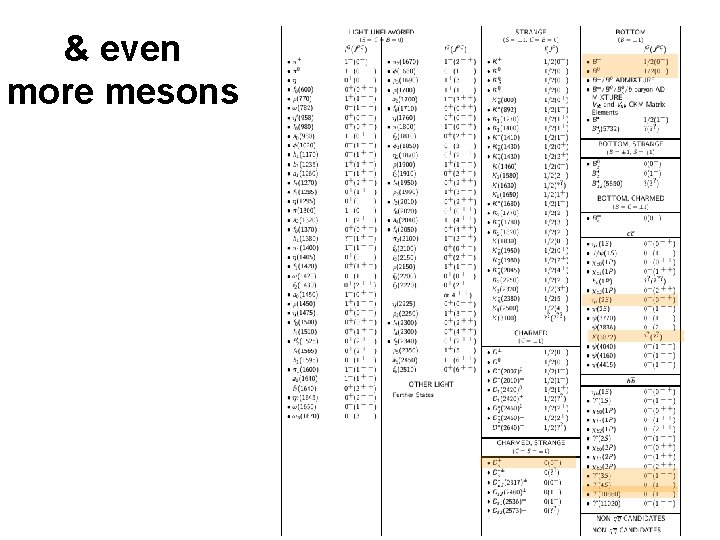
& even more mesons
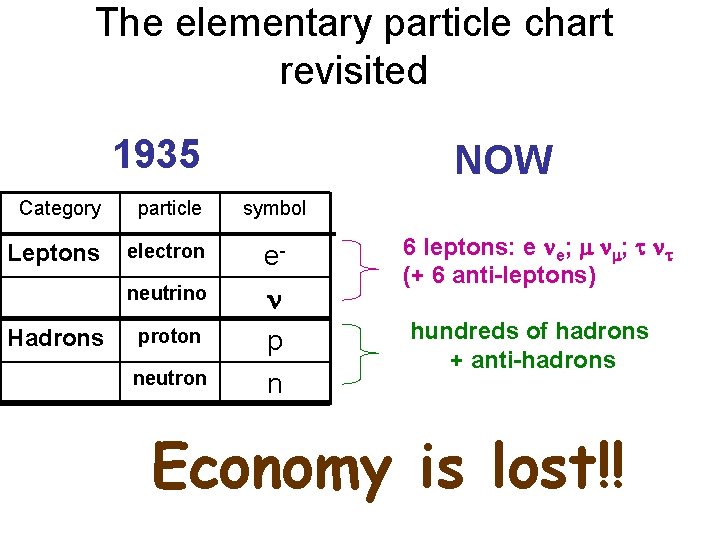
The elementary particle chart revisited 1935 NOW Category particle symbol Leptons electron e- neutrino n proton p neutron n Hadrons 6 leptons: e ne; m nm; t nt (+ 6 anti-leptons) hundreds of hadrons + anti-hadrons Economy is lost!!
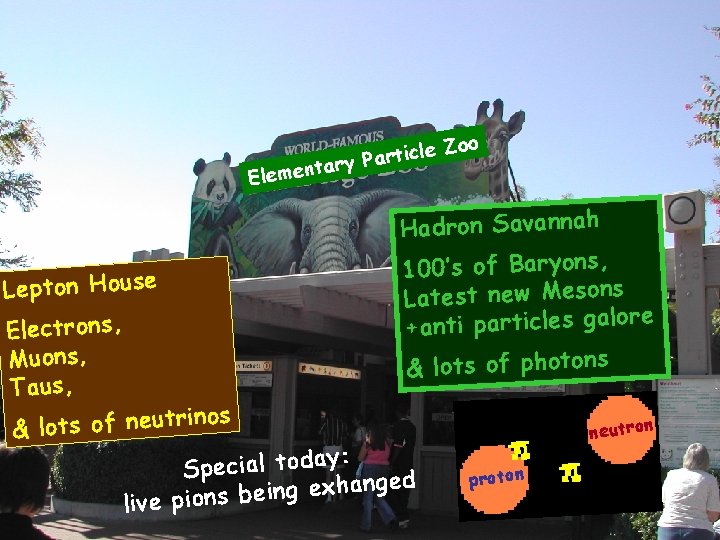
Zoo e l c i t r y Pa r a t n e Elem Lepton House Electrons, Muons, Taus, inos r t u e n f o s t lo & Hadron Savannah 100’s of Baryons, Latest new Mesons e +anti particles galor & lots of photons y: Special toda d e g n a h x e g n i live pions be neutron proton