
The Muslim Empires Chapter 13 Ottoman Turks and
- Slides: 32
The Muslim Empires Chapter 13 Ottoman Turks and Safavid Empire
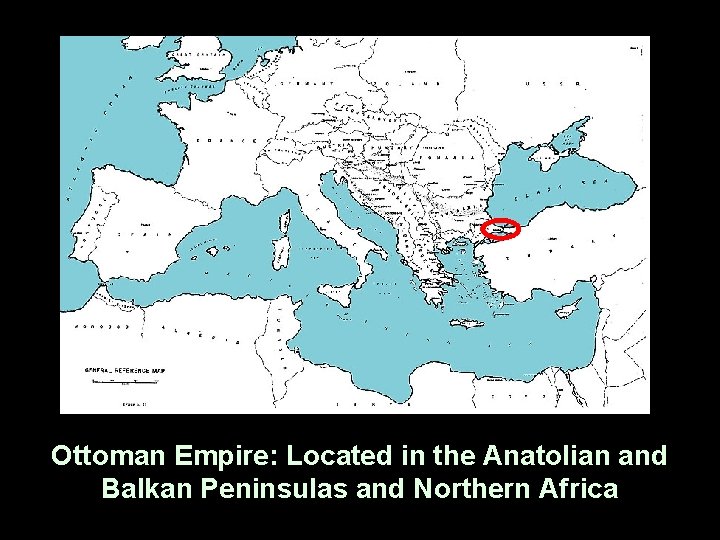
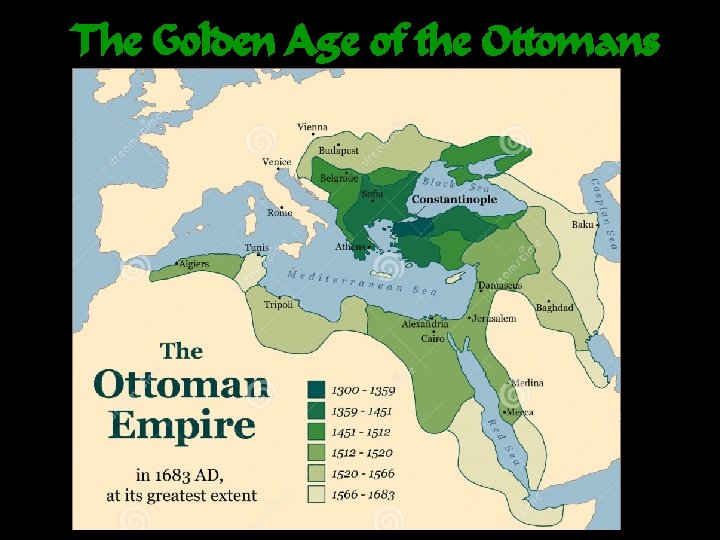
Ottoman Empire: Located in the Anatolian and Balkan Peninsulas and Northern Africa
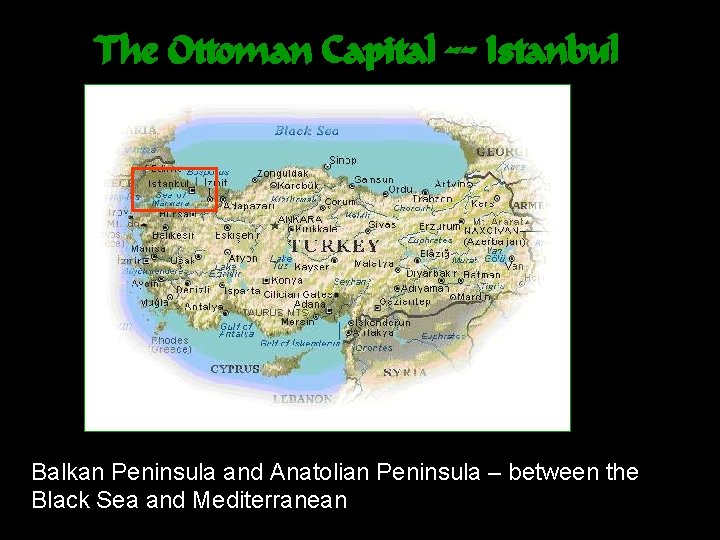
The Ottoman Capital -- Istanbul Balkan Peninsula and Anatolian Peninsula – between the Black Sea and Mediterranean
Gunpowder Empires • Ottomans, Safavid, and Mughal Empires • 16 th & early 17 th c. the greatest gunpowder states were Islamic. • Ottomans- Based in Istanbul • Safavid – Based in Iran • Mogul – Base in India • Stable boundaries (not nomadic)
The Ottomans • One of the first “gunpowder empires. ” • Gunpowder Empire: an empire formed by mastery of firearms
• Ottoman Turks establish Ottoman Empire in 1200 s • Build a strong military guard: Janissaries • In 1453, they captured Constantinople and ended the Byzantine Empire • Constantinople becomes Istanbul
What major historical CITY existed between the Balkan and Anatolian Peninsula? a. b. c. d. Turkey Balkan Peninsula Istanbul Ottoman Empire
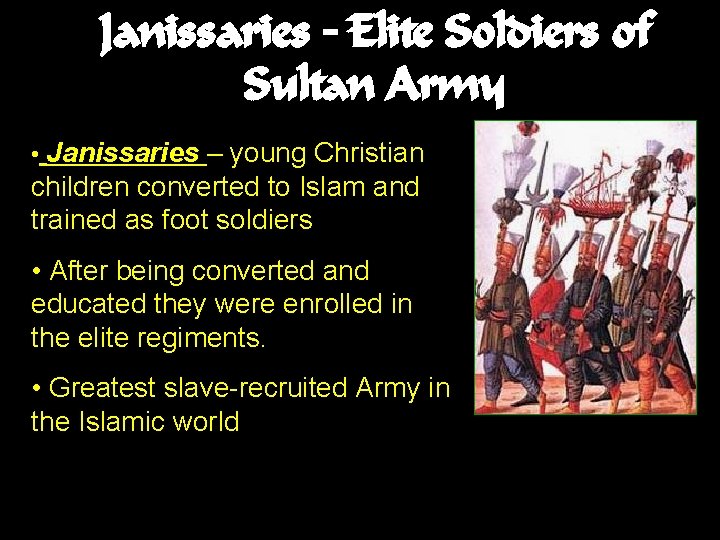
Janissaries – Elite Soldiers of Sultan Army • Janissaries – young Christian children converted to Islam and trained as foot soldiers • After being converted and educated they were enrolled in the elite regiments. • Greatest slave-recruited Army in the Islamic world
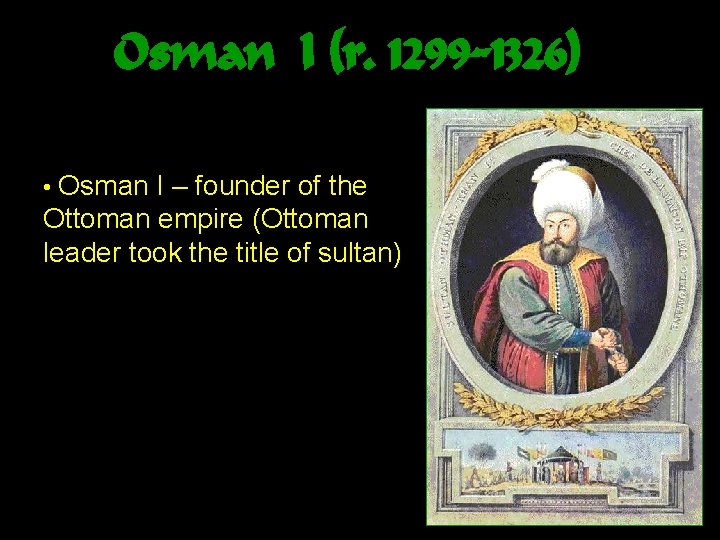
Osman I (r. 1299 -1326) • Osman I – founder of the Ottoman empire (Ottoman leader took the title of sultan)
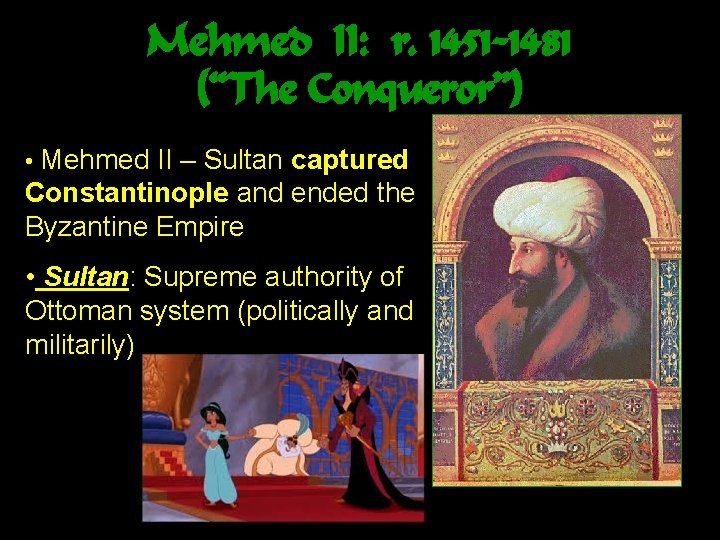
Mehmed II: r. 1451 -1481 (“The Conqueror”) • Mehmed II – Sultan captured Constantinople and ended the Byzantine Empire • Sultan: Supreme authority of Ottoman system (politically and militarily)
Expansion of the Ottomans • New capital= Istanbul • Controlled the Balkans and Anatolian Peninsula • Conquered Mesopotamia, Egypt, Arabia, Jerusalem, Mecca, and Medina
What two territories were conquered by the Ottoman Empire? a. b. c. d. Jerusalem and Mecca Arabia and Cuba Mesopotamia and Aruba Egypt and Parts of Russia
The Golden Age of the Ottomans
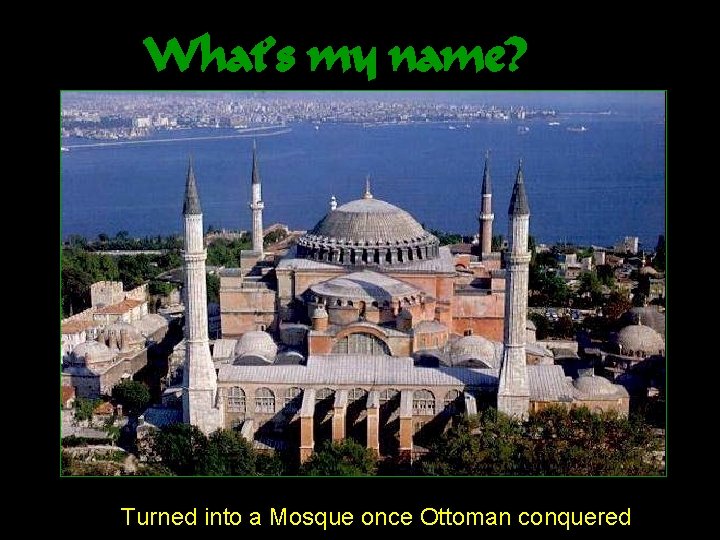
What’s my name? Turned into a Mosque once Ottoman conquered
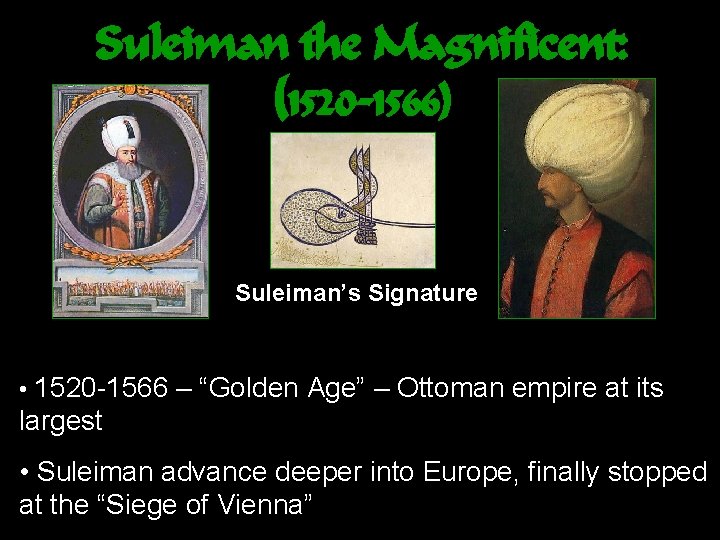
Suleiman the Magnificent: (1520 -1566) Suleiman’s Signature • 1520 -1566 – “Golden Age” – Ottoman empire at its largest • Suleiman advance deeper into Europe, finally stopped at the “Siege of Vienna”
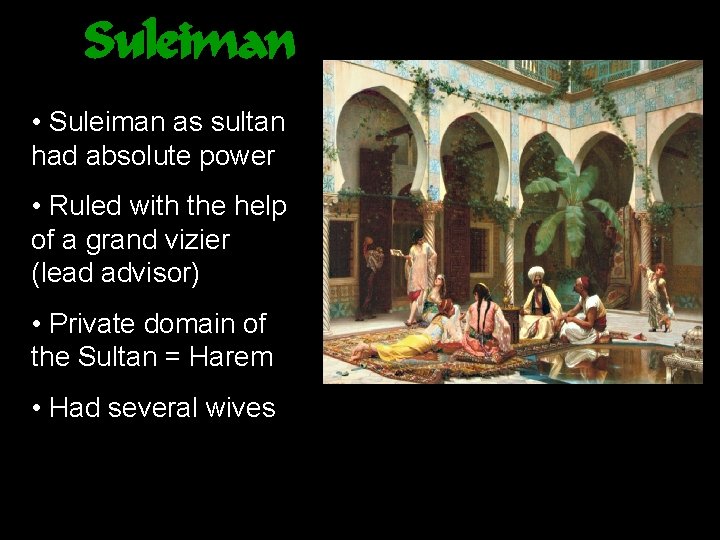
Suleiman • Suleiman as sultan had absolute power • Ruled with the help of a grand vizier (lead advisor) • Private domain of the Sultan = Harem • Had several wives
Women • Women allowed to own property and could not be forced into marriage • Allowed to divorce and had power within the palace • Served as gov’t officials
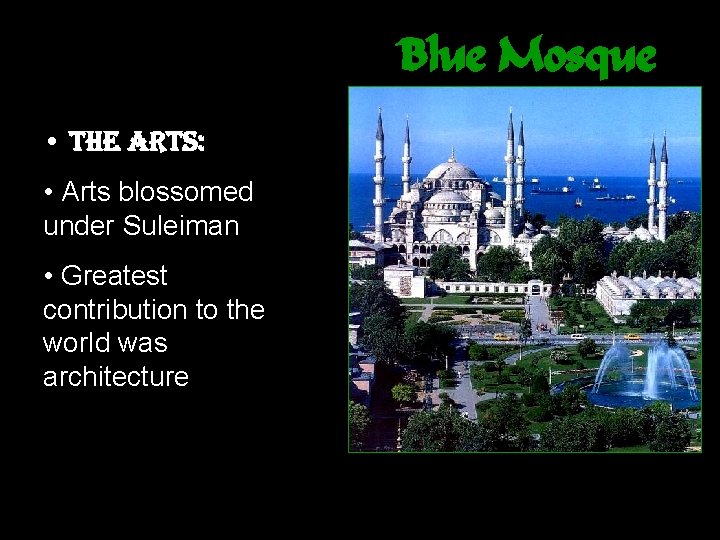
Blue Mosque • the Arts: • Arts blossomed under Suleiman • Greatest contribution to the world was architecture
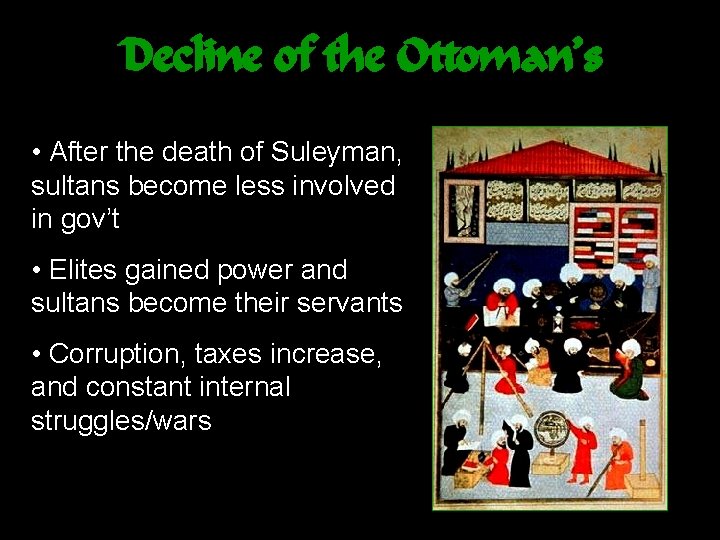
Decline of the Ottoman’s • After the death of Suleyman, sultans become less involved in gov’t • Elites gained power and sultans become their servants • Corruption, taxes increase, and constant internal struggles/wars
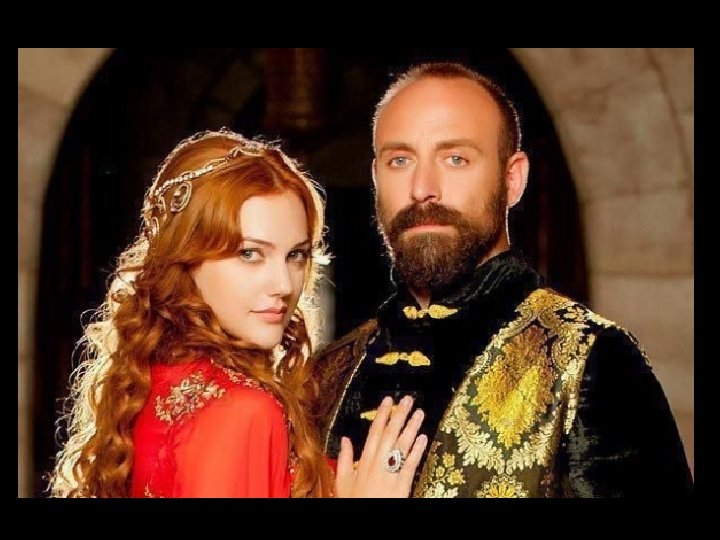
According to the slide explaining the roles of women in the Ottoman Empire, who's likeness was used to represent the equality of women during the time period? a. b. c. d. Suleiman Osman Beyonce Jasmine
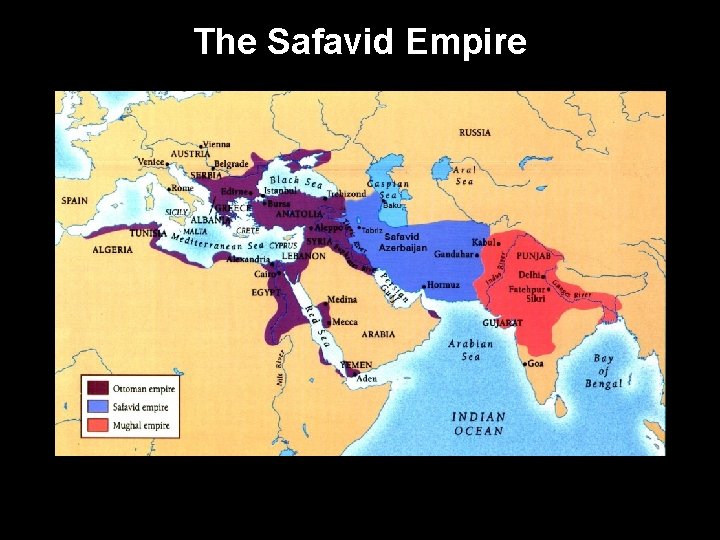
The Safavid Empire
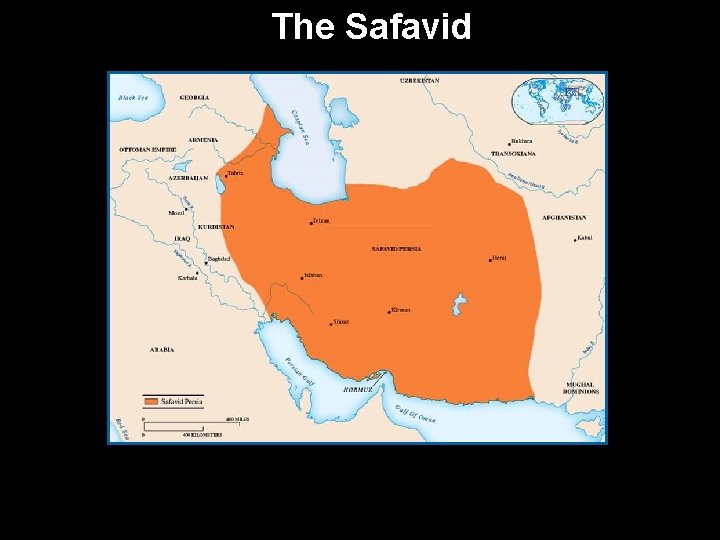
The Safavid
Safavid Empire in Persia • Ismail = Shah (king) of New Persia • Ismail killed Sunni’s who did not convert to Shiites • Considered themselves to be the spiritual leaders of Islam • Ottomans = Sunni • Safavid= Shiites • Safavid Empire located in modern-day Iran & Iraq, still predominantly Shiite Muslim. • Today conflicts with the Sunni Muslims of the region exist (Example: Syria today!)
The leader of the Safavid Empire was know as? a. The Shah b. The Sultan c. President Trump
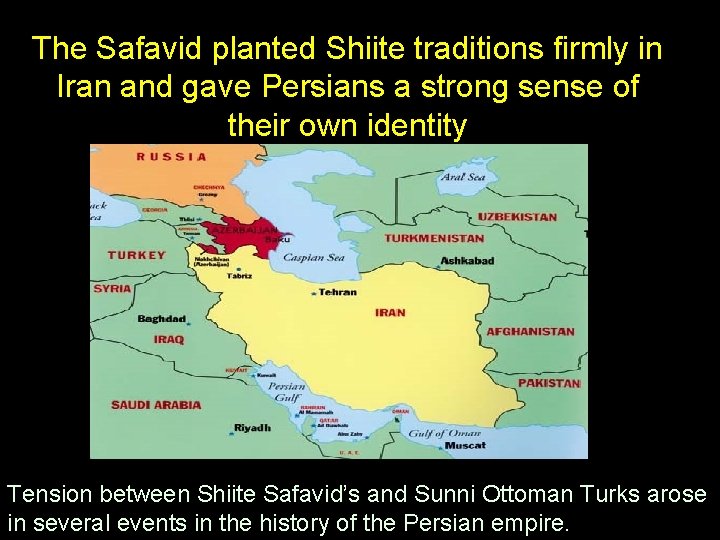
The Safavid planted Shiite traditions firmly in Iran and gave Persians a strong sense of their own identity Tension between Shiite Safavid’s and Sunni Ottoman Turks arose in several events in the history of the Persian empire.
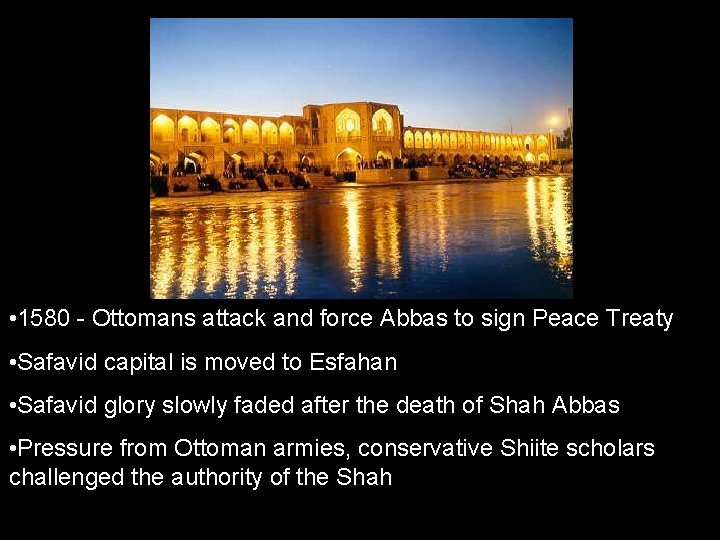
• 1580 - Ottomans attack and force Abbas to sign Peace Treaty • Safavid capital is moved to Esfahan • Safavid glory slowly faded after the death of Shah Abbas • Pressure from Ottoman armies, conservative Shiite scholars challenged the authority of the Shah
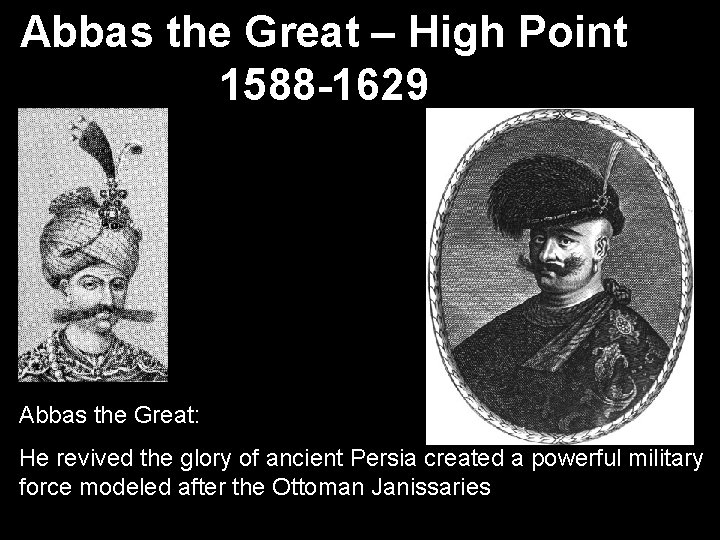
Abbas the Great – High Point 1588 -1629 Abbas the Great: He revived the glory of ancient Persia created a powerful military force modeled after the Ottoman Janissaries
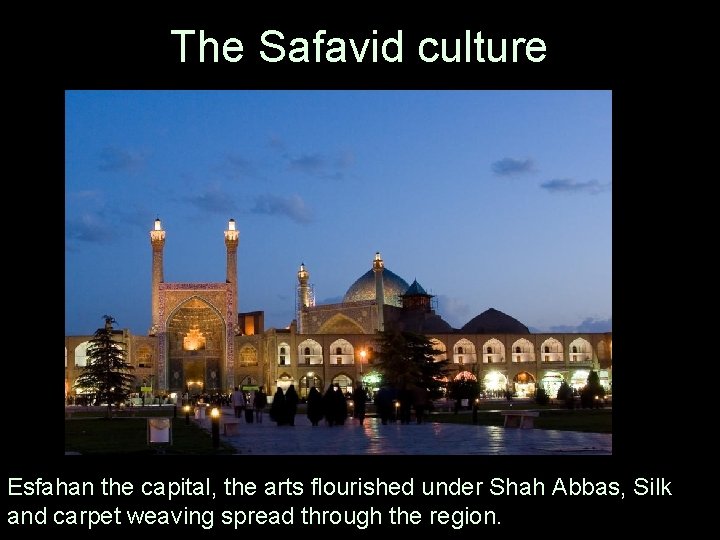
The Safavid culture Esfahan the capital, the arts flourished under Shah Abbas, Silk and carpet weaving spread through the region.
The Quick Decline of the Safavid’s • Shah Abbas’ death (power void) • Bordering nations seized territory: – Afghans invaded from the East – Ottoman Turks from the West = Persia fell into a state of political chaos and anarchy.
Women in Persia • After the death of Abbas in 1629, pressure to conform to religious traditional beliefs leads to… • Persian women who had freedom, now forced into seclusion and required to wear a veil.
What was one major change women now faced under Safavid rule? a. They had to cook b. They had to wear a veil.