
The Musculoskeletal System Link with the Nervous System

- Slides: 22
The Musculoskeletal System
Link with the Nervous System • The nervous system controls and coordinates movements within our bodies. • It collects sensory information that is relayed to the brain, causing our bodies to react. • The musculoskeletal system is what makes those movements possible. • Without our muscles and our bones, we would not be able to stand, write, or even open our eyes.
The Skeletal System
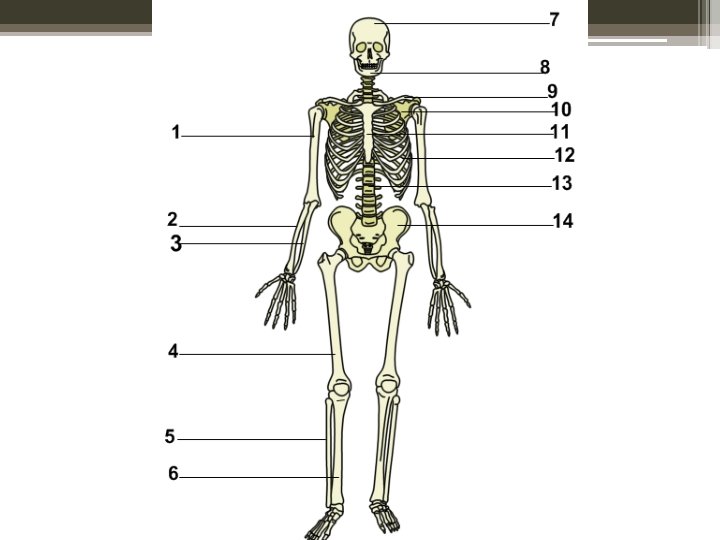
Basic Information • The human skeleton is made up of 206 bones. Around 80% of these bones are found in our hands and feet. • At birth, humans have 270 bones. As we grow, our bones fuse together until adulthood. • The bones of the body can be divided into three anatomical regions: ▫ The head – cranium, mandible, maxilla, etc. ▫ The trunk – sternum, clavicle, scapula, ribs, etc. ▫ The limbs – humerus, femur, tibia, carpals, etc.
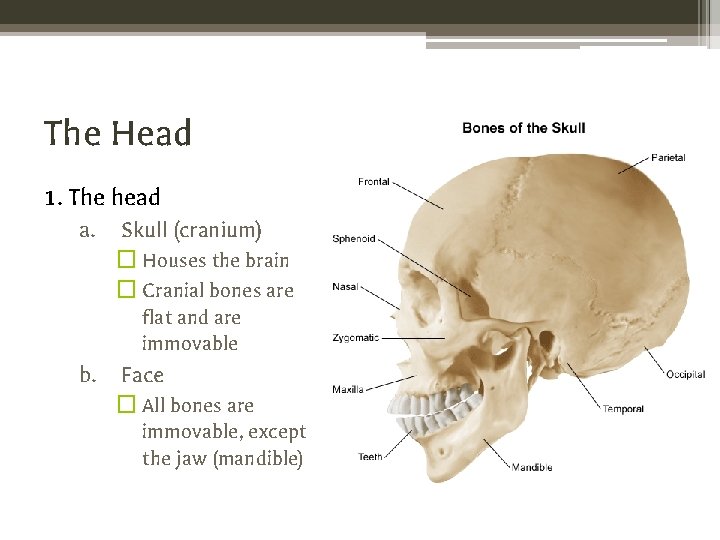
The Head 1. The head a. Skull (cranium) � Houses the brain � Cranial bones are flat and are immovable b. Face � All bones are immovable, except the jaw (mandible)
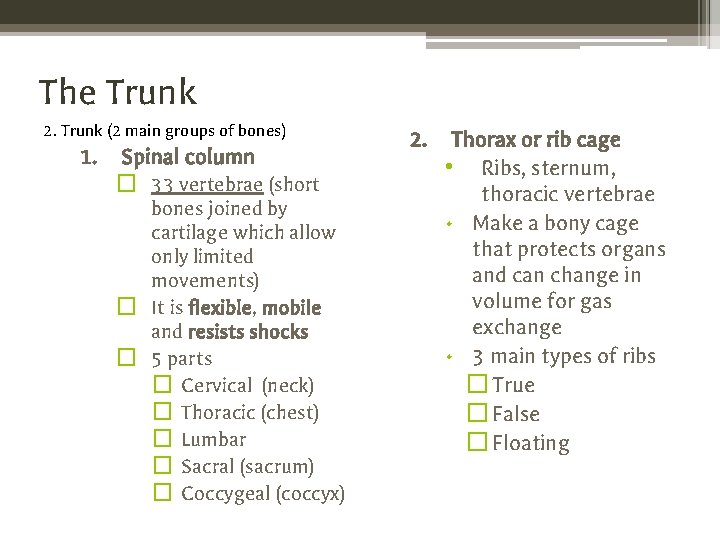
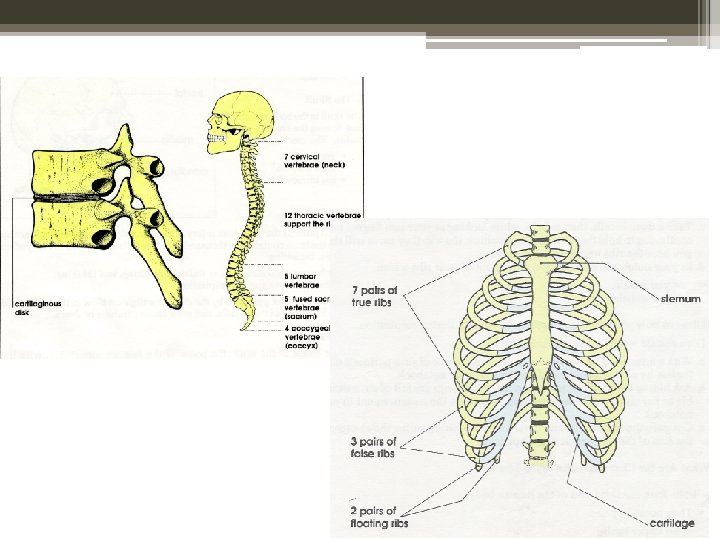
The Trunk 2. Trunk (2 main groups of bones) 1. Spinal column � 33 vertebrae (short bones joined by cartilage which allow only limited movements) � It is flexible, mobile and resists shocks � 5 parts � Cervical (neck) � Thoracic (chest) � Lumbar � Sacral (sacrum) � Coccygeal (coccyx) 2. Thorax or rib cage • Ribs, sternum, thoracic vertebrae • Make a bony cage that protects organs and can change in volume for gas exchange • 3 main types of ribs � True � False � Floating
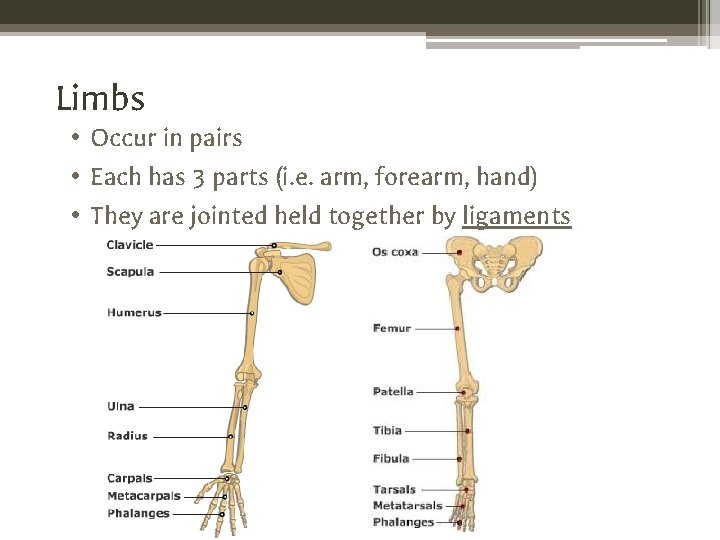
Limbs • Occur in pairs • Each has 3 parts (i. e. arm, forearm, hand) • They are jointed held together by ligaments
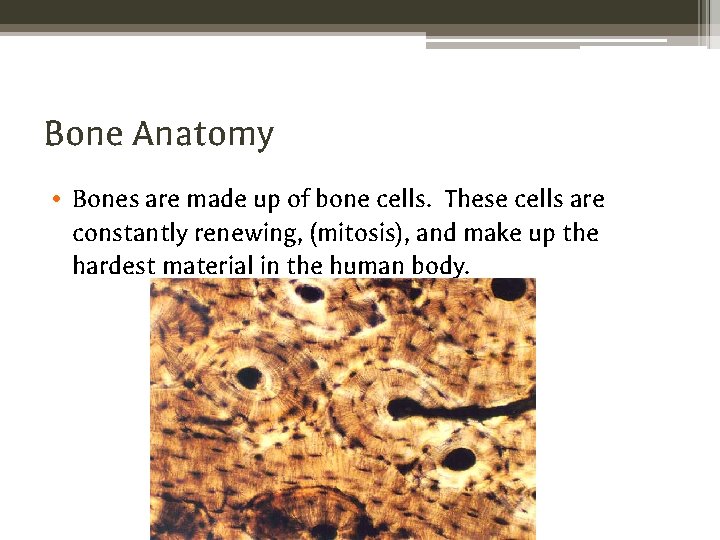
Bone Anatomy • Bones are made up of bone cells. These cells are constantly renewing, (mitosis), and make up the hardest material in the human body.
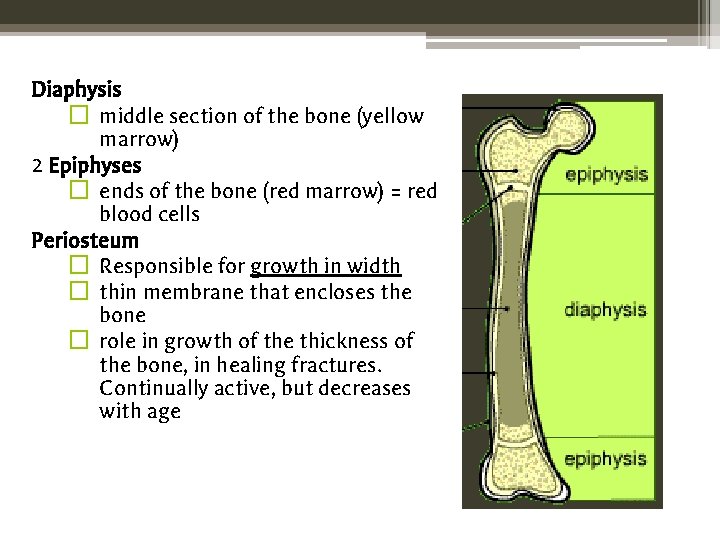
Diaphysis � middle section of the bone (yellow marrow) 2 Epiphyses � ends of the bone (red marrow) = red blood cells Periosteum � Responsible for growth in width � thin membrane that encloses the bone � role in growth of the thickness of the bone, in healing fractures. Continually active, but decreases with age
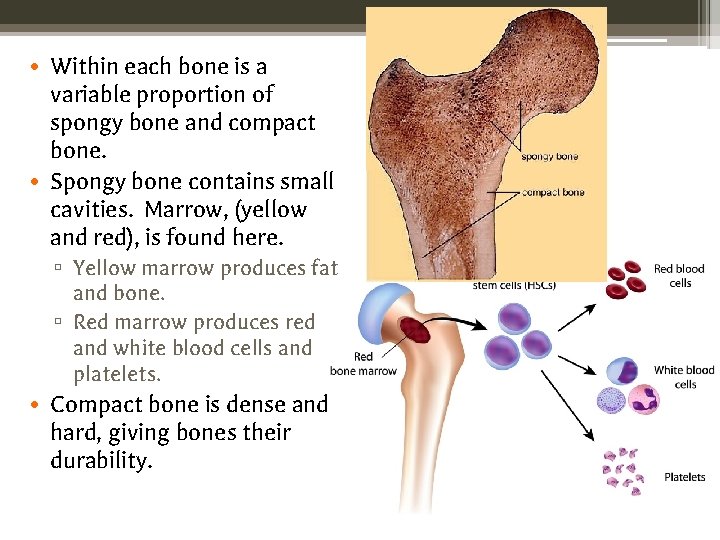
• Within each bone is a variable proportion of spongy bone and compact bone. • Spongy bone contains small cavities. Marrow, (yellow and red), is found here. ▫ Yellow marrow produces fat and bone. ▫ Red marrow produces red and white blood cells and platelets. • Compact bone is dense and hard, giving bones their durability.
Bone Classification • Bones come in a variety of shapes and sizes. • The longest bone in the body is the femur, at around 60 cm long. The smallest bones are the ossicles in the ear, which are around the size of a pea. • Bones are classified into four types: ▫ ▫ Long bones Short bones Irregular bones Flat bones
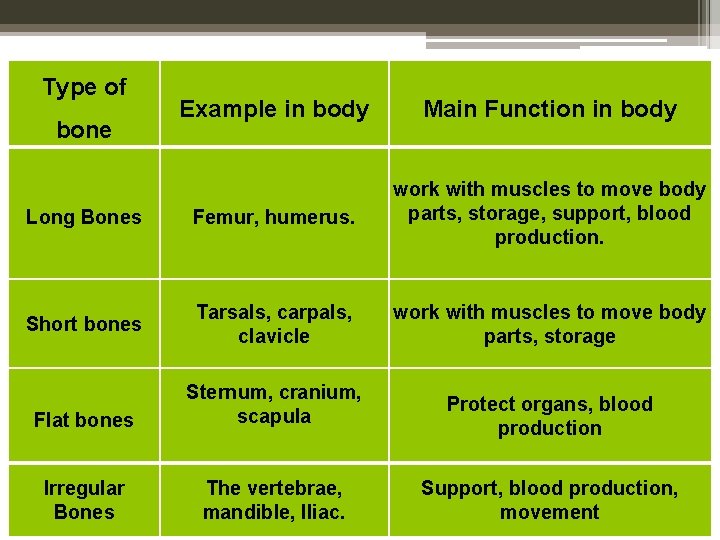
Type of Example in body Main Function in body Long Bones Femur, humerus. work with muscles to move body parts, storage, support, blood production. Short bones Tarsals, carpals, clavicle work with muscles to move body parts, storage bone Flat bones Sternum, cranium, scapula Irregular Bones The vertebrae, mandible, Iliac. Protect organs, blood production Support, blood production, movement
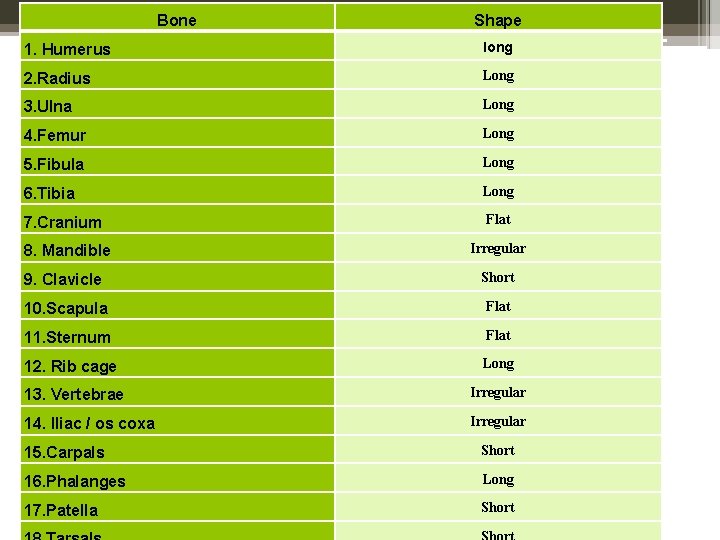
Bone Shape 1. Humerus long 2. Radius Long 3. Ulna Long 4. Femur Long 5. Fibula Long 6. Tibia Long 7. Cranium Flat 8. Mandible Irregular 9. Clavicle Short 10. Scapula Flat 11. Sternum Flat 12. Rib cage Long 13. Vertebrae Irregular 14. Iliac / os coxa Irregular 15. Carpals Short 16. Phalanges Long 17. Patella Short
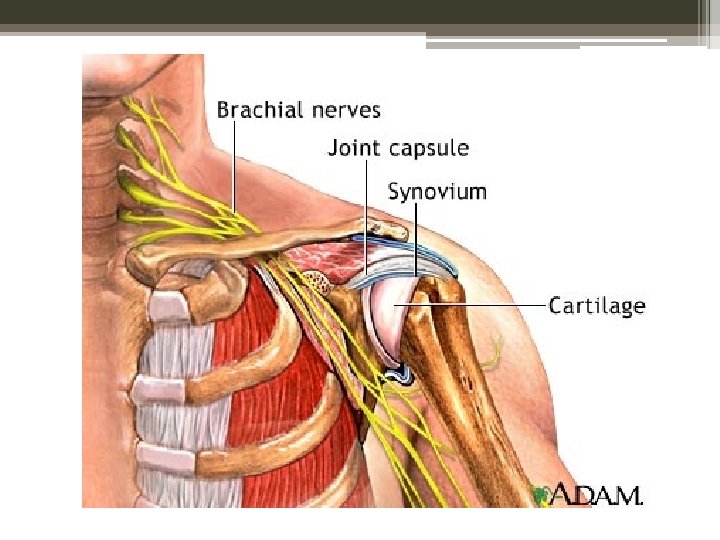
Joints • Any place where two bones meet. • Because of their rigidity, bones are held together by cartilage. Cartilage is more elastic and flexible, allowing movement between bones. It also acts as a shock absorber. • Ligaments are tissues that hold bones in their place.
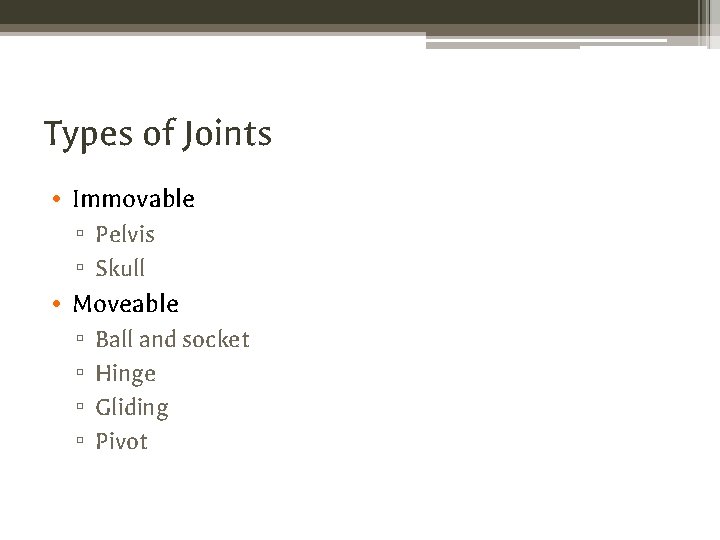
Types of Joints • Immovable ▫ Pelvis ▫ Skull • Moveable ▫ ▫ Ball and socket Hinge Gliding Pivot
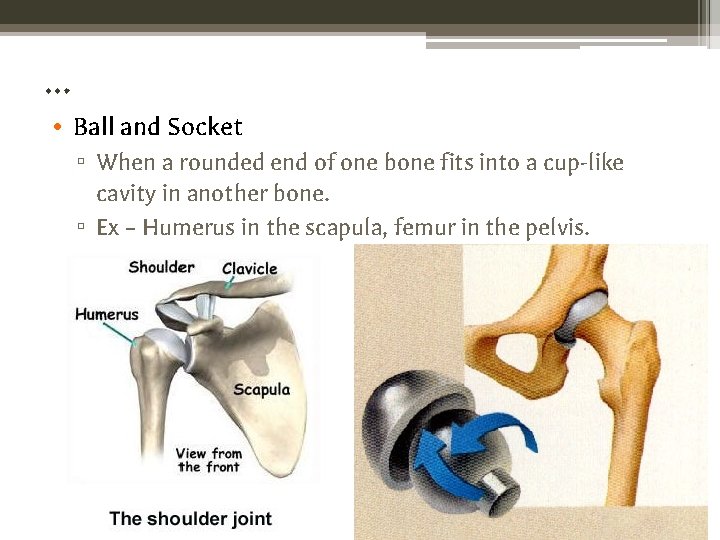
… • Ball and Socket ▫ When a rounded end of one bone fits into a cup-like cavity in another bone. ▫ Ex – Humerus in the scapula, femur in the pelvis.
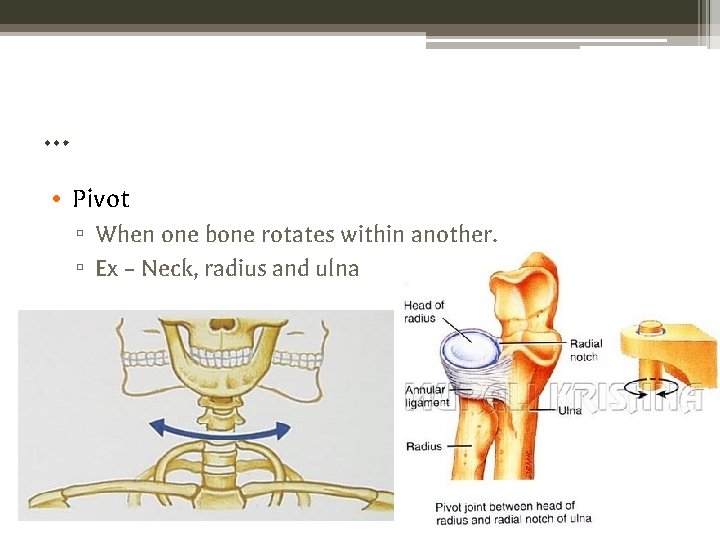
… • Pivot ▫ When one bone rotates within another. ▫ Ex – Neck, radius and ulna
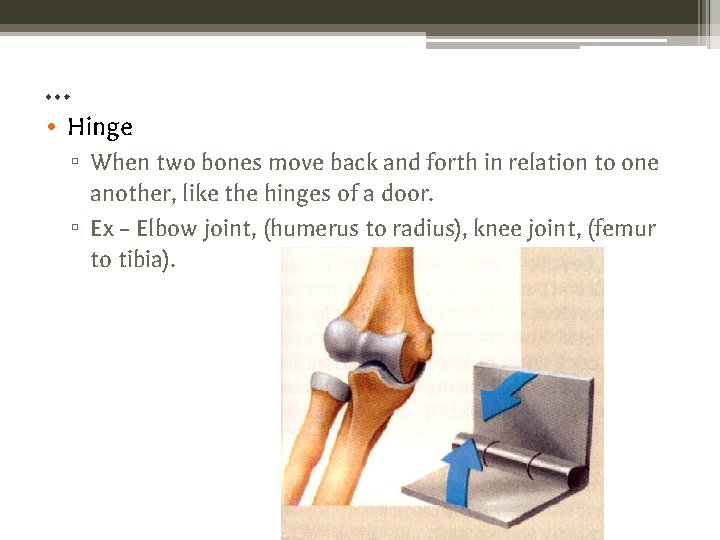
… • Hinge ▫ When two bones move back and forth in relation to one another, like the hinges of a door. ▫ Ex – Elbow joint, (humerus to radius), knee joint, (femur to tibia).
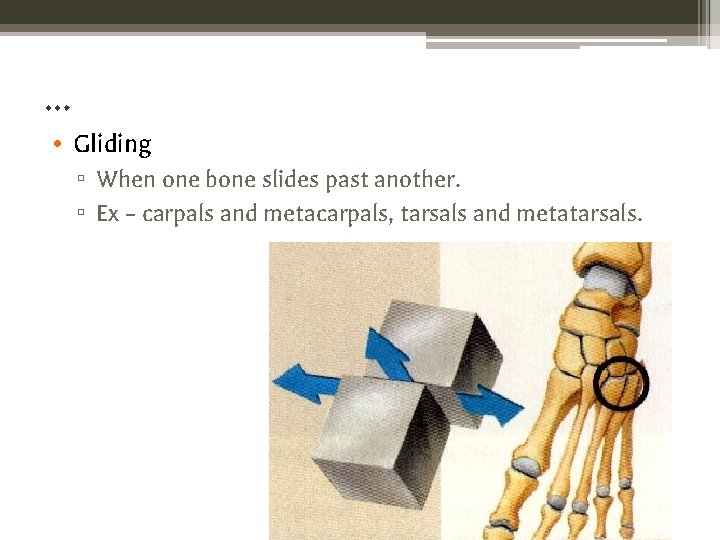
… • Gliding ▫ When one bone slides past another. ▫ Ex – carpals and metacarpals, tarsals and metatarsals.