
The Muscular System Support Systems Unit 2 Functions
- Slides: 15
The Muscular System Support Systems Unit 2
Functions of the Muscular System • Heat Production (thermogenesis) – Heat is a byproduct of muscle contraction • Movement Facilitation – Muscles shorten and pull on bones which produces movement • Structure (postural support) – Contraction of muscles keeps us upright and maintains posture
Functions cont. • Protection of Internal Organs – Contraction of abdominal muscles causes them to become hard and offers protection to the underlying organs – Other muscles contract prior to receiving a blow thus protection bones and soft tissue. • Controls the volume of hollow organs – Smooth muscle surrounds our hollow organs and contractions propel the substances through them, aid in their emptying, or helps control their volume • Stomach and small intestines • The bladder • Blood vessels
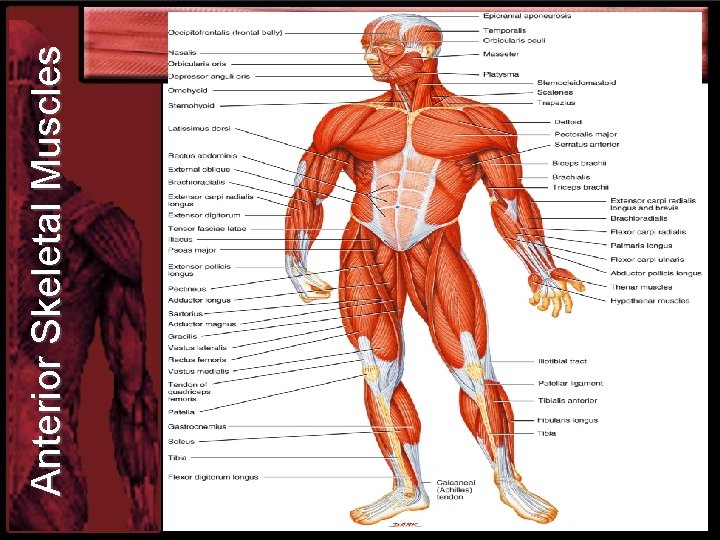
Anterior Skeletal Muscles
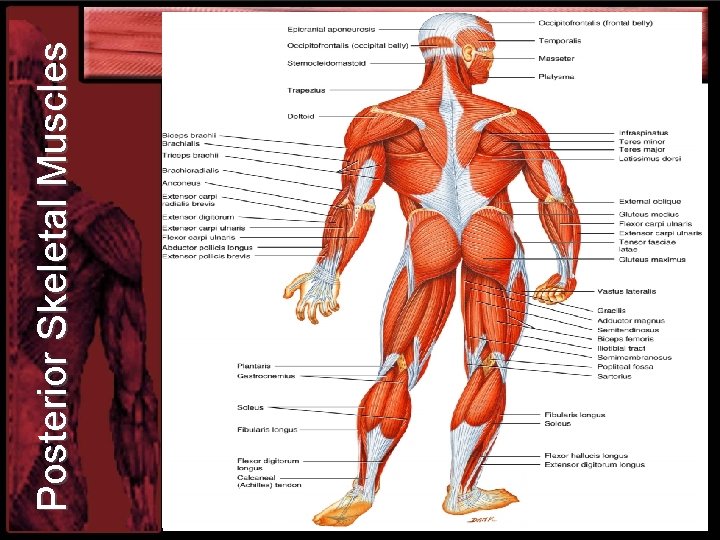
Posterior Skeletal Muscles
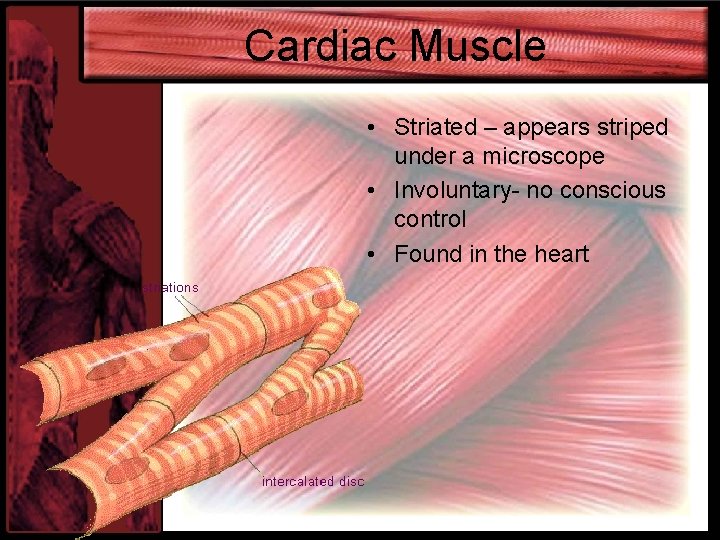
Cardiac Muscle • Striated – appears striped under a microscope • Involuntary- no conscious control • Found in the heart
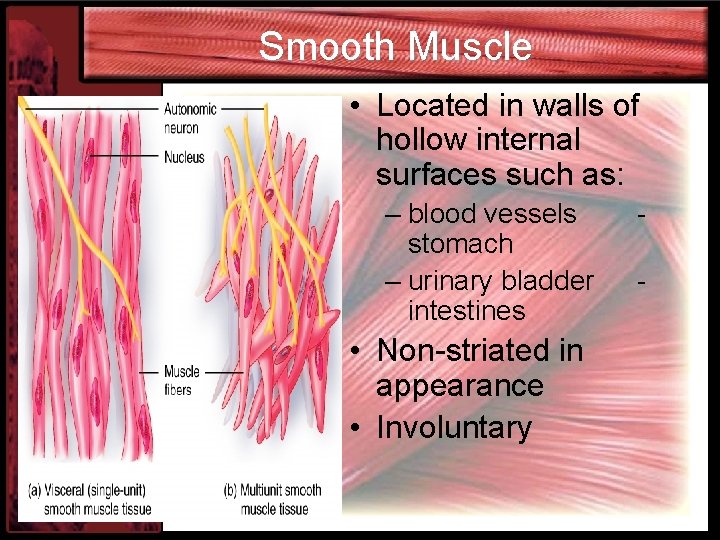
Smooth Muscle • Located in walls of hollow internal surfaces such as: – blood vessels stomach – urinary bladder intestines • Non-striated in appearance • Involuntary -
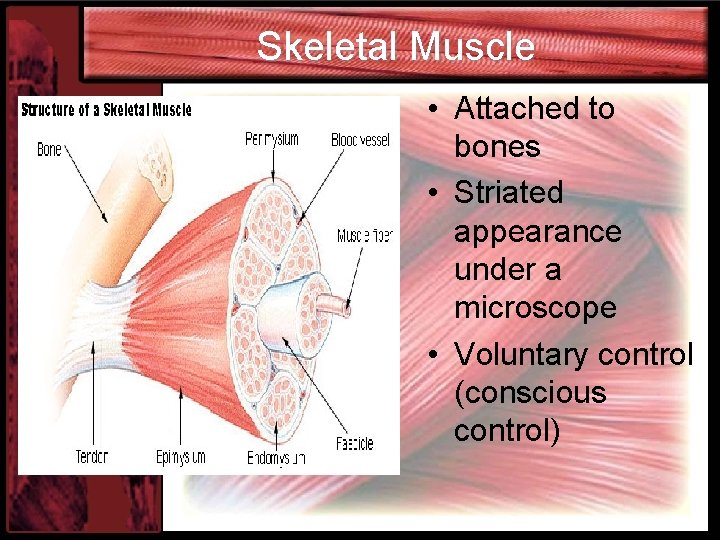
Skeletal Muscle • Attached to bones • Striated appearance under a microscope • Voluntary control (conscious control)
Diseases and Disorders of the Muscular System
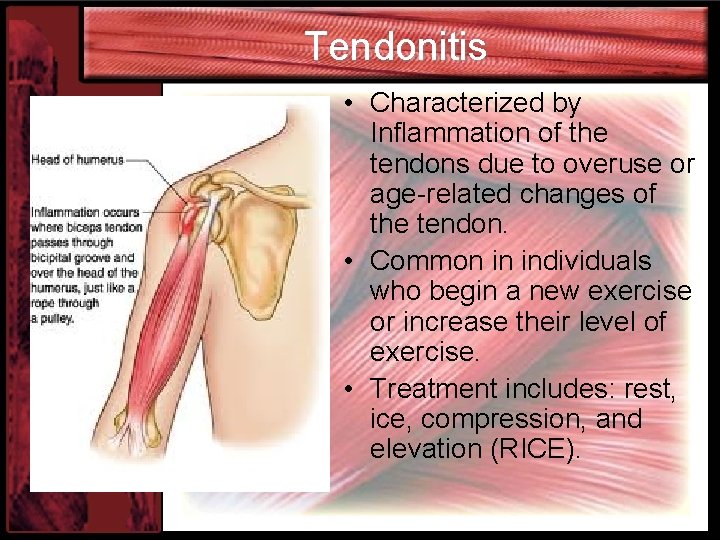
Tendonitis • Characterized by Inflammation of the tendons due to overuse or age-related changes of the tendon. • Common in individuals who begin a new exercise or increase their level of exercise. • Treatment includes: rest, ice, compression, and elevation (RICE).
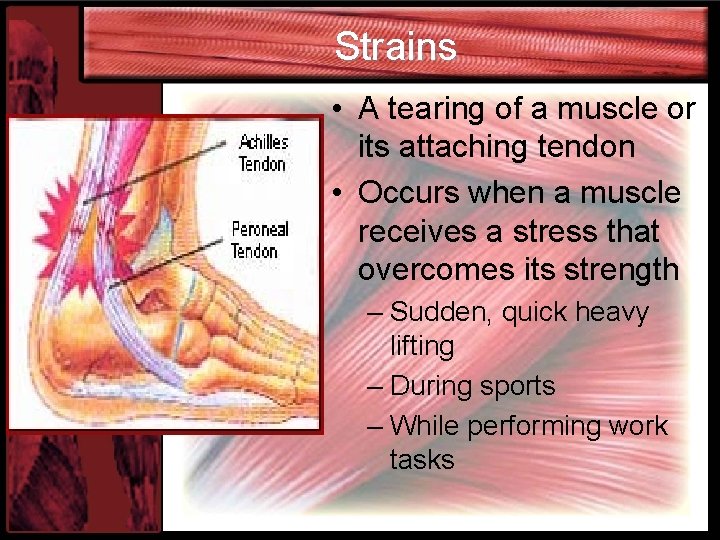
Strains • A tearing of a muscle or its attaching tendon • Occurs when a muscle receives a stress that overcomes its strength – Sudden, quick heavy lifting – During sports – While performing work tasks
Strains cont. • 3 types of strains – A 1 st degree occurs when the muscle is stretched causing micro-tears in the muscle fibers – A 2 nd degree sprain occurs when the muscle or tendon is partially torn – A 3 rd degree sprain occurs when the muscle is completely ruptured • Signs & symptoms include: – Pain, especially when the muscle is contractiong which limits function – Swelling – Bruising • Treatment includes Rest, Ice, Compression, Elevation
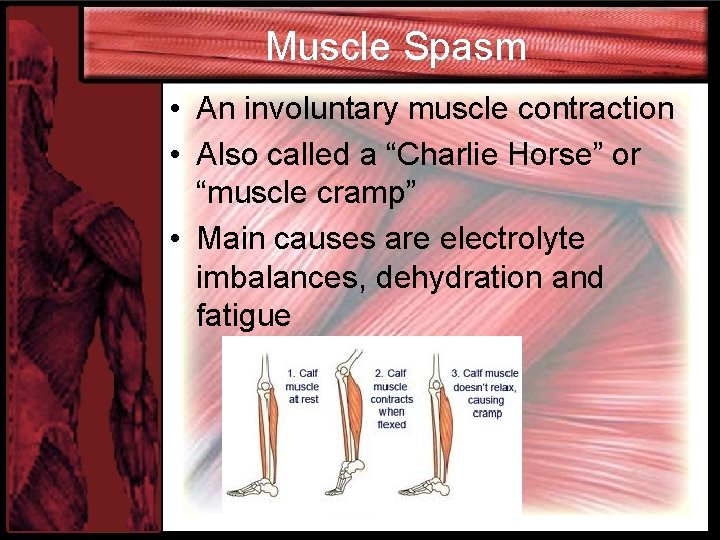
Muscle Spasm • An involuntary muscle contraction • Also called a “Charlie Horse” or “muscle cramp” • Main causes are electrolyte imbalances, dehydration and fatigue
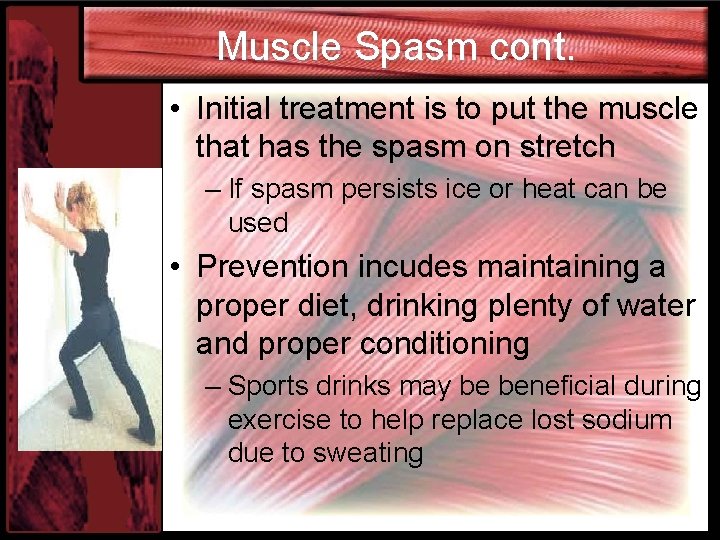
Muscle Spasm cont. • Initial treatment is to put the muscle that has the spasm on stretch – If spasm persists ice or heat can be used • Prevention incudes maintaining a proper diet, drinking plenty of water and proper conditioning – Sports drinks may be beneficial during exercise to help replace lost sodium due to sweating
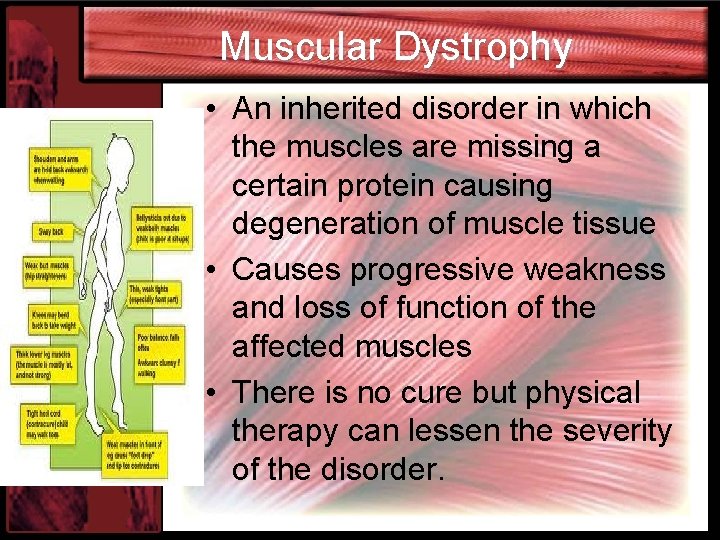
Muscular Dystrophy • An inherited disorder in which the muscles are missing a certain protein causing degeneration of muscle tissue • Causes progressive weakness and loss of function of the affected muscles • There is no cure but physical therapy can lessen the severity of the disorder.