
The Muscular System Structure and Function Part 2

- Slides: 18
The Muscular System Structure and Function (Part 2)
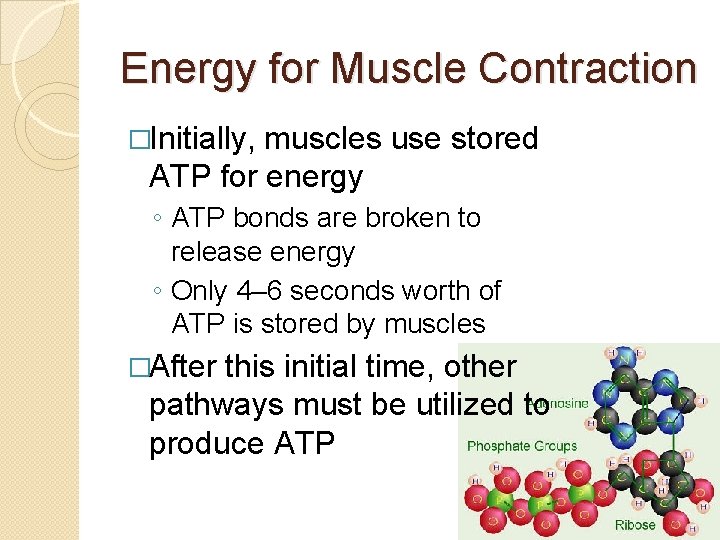
Energy for Muscle Contraction �Initially, muscles use stored ATP for energy ◦ ATP bonds are broken to release energy ◦ Only 4– 6 seconds worth of ATP is stored by muscles �After this initial time, other pathways must be utilized to produce ATP
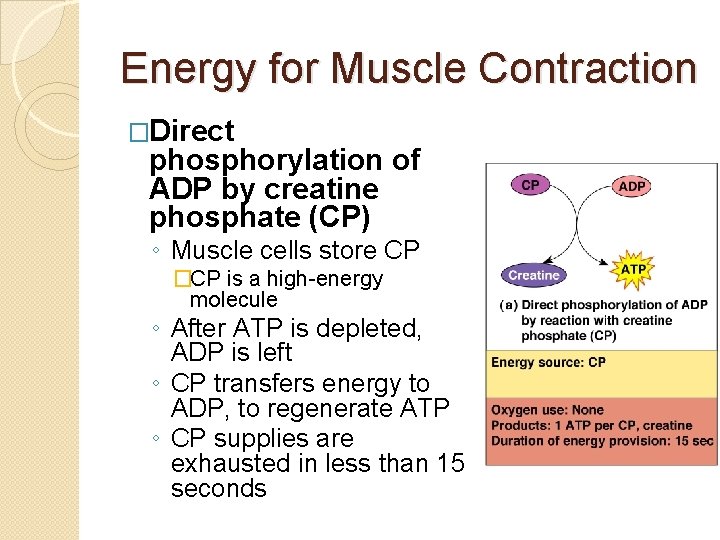
Energy for Muscle Contraction �Direct phosphorylation of ADP by creatine phosphate (CP) ◦ Muscle cells store CP �CP is a high-energy molecule ◦ After ATP is depleted, ADP is left ◦ CP transfers energy to ADP, to regenerate ATP ◦ CP supplies are exhausted in less than 15 seconds
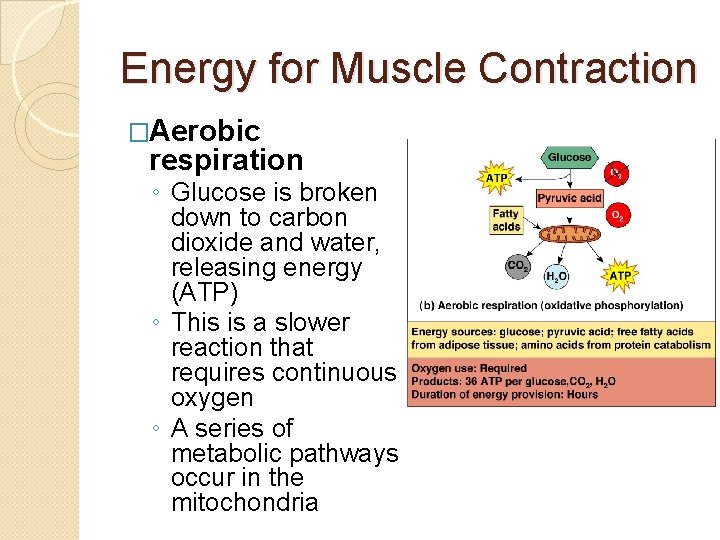
Energy for Muscle Contraction �Aerobic respiration ◦ Glucose is broken down to carbon dioxide and water, releasing energy (ATP) ◦ This is a slower reaction that requires continuous oxygen ◦ A series of metabolic pathways occur in the mitochondria
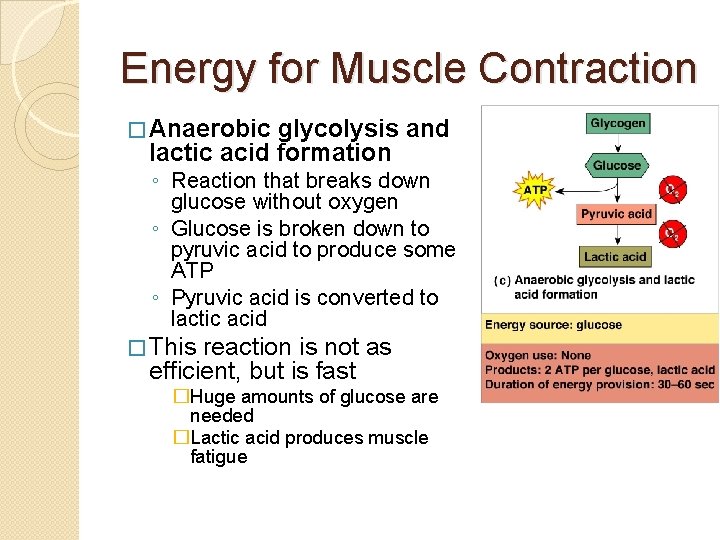
Energy for Muscle Contraction � Anaerobic glycolysis and lactic acid formation ◦ Reaction that breaks down glucose without oxygen ◦ Glucose is broken down to pyruvic acid to produce some ATP ◦ Pyruvic acid is converted to lactic acid � This reaction is not as efficient, but is fast �Huge amounts of glucose are needed �Lactic acid produces muscle fatigue
Muscle Fatigue and Oxygen Deficit �When a muscle is fatigued, it is unable to contract even with a stimulus �Common cause for muscle fatigue is oxygen debt ◦ Oxygen must be “repaid” to tissue to remove oxygen deficit ◦ Oxygen is required to get rid of accumulated lactic acid �Increasing acidity (from lactic acid) and lack of ATP causes the muscle to contract less
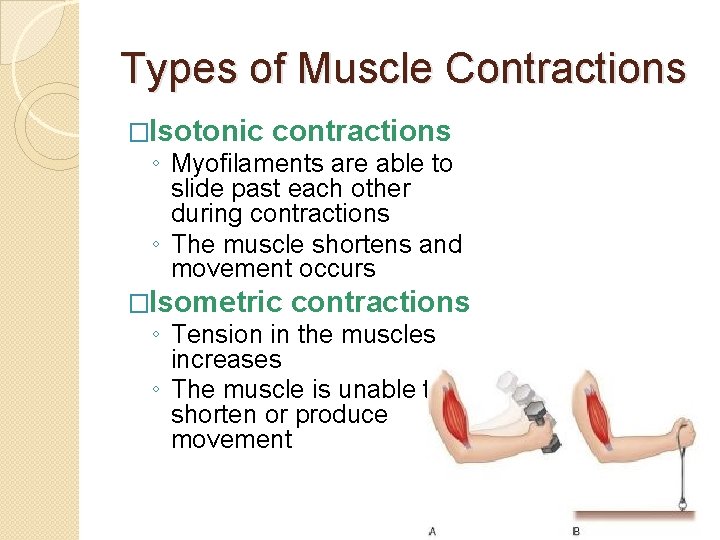
Types of Muscle Contractions �Isotonic contractions ◦ Myofilaments are able to slide past each other during contractions ◦ The muscle shortens and movement occurs �Isometric contractions ◦ Tension in the muscles increases ◦ The muscle is unable to shorten or produce movement
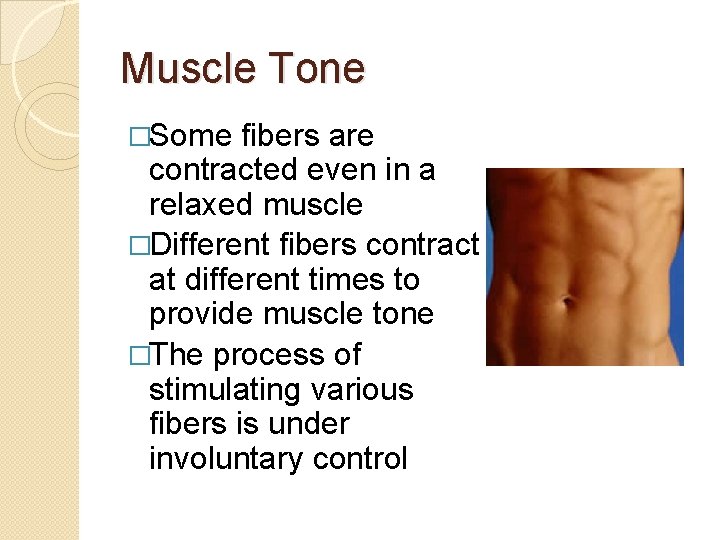
Muscle Tone �Some fibers are contracted even in a relaxed muscle �Different fibers contract at different times to provide muscle tone �The process of stimulating various fibers is under involuntary control
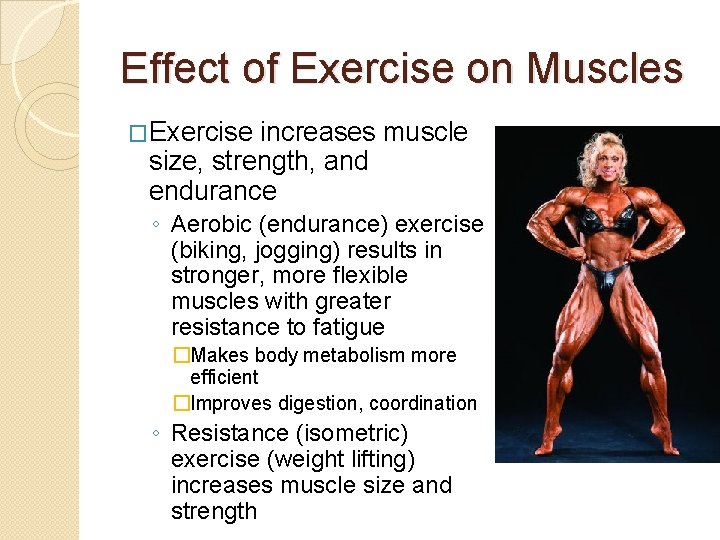
Effect of Exercise on Muscles �Exercise increases muscle size, strength, and endurance ◦ Aerobic (endurance) exercise (biking, jogging) results in stronger, more flexible muscles with greater resistance to fatigue �Makes body metabolism more efficient �Improves digestion, coordination ◦ Resistance (isometric) exercise (weight lifting) increases muscle size and strength
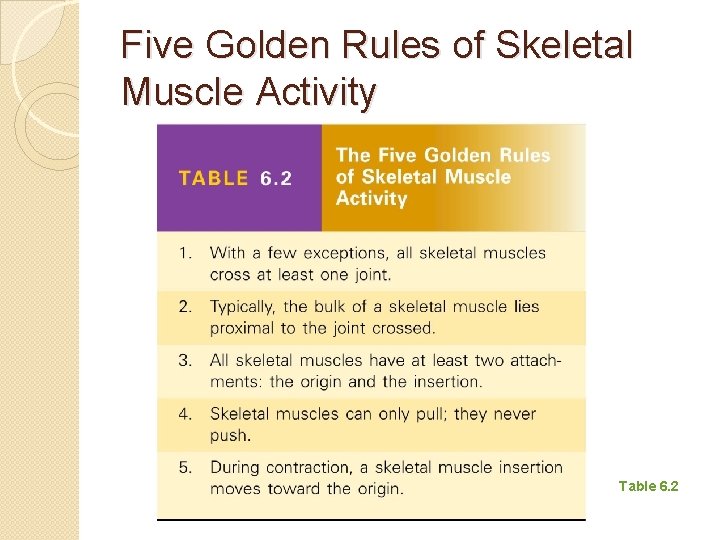
Five Golden Rules of Skeletal Muscle Activity Table 6. 2
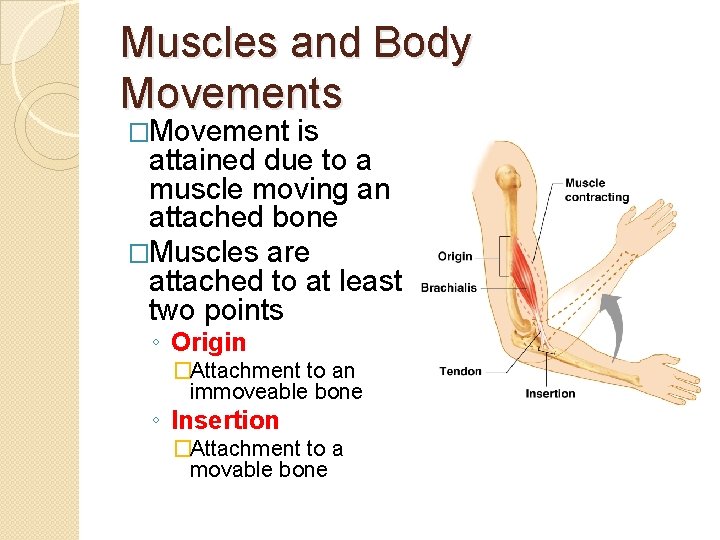
Muscles and Body Movements �Movement is attained due to a muscle moving an attached bone �Muscles are attached to at least two points ◦ Origin �Attachment to an immoveable bone ◦ Insertion �Attachment to a movable bone
Types of Muscles �Prime mover — muscle with the major responsibility for a certain movement �Antagonist — muscle that opposes or reverses a prime mover �Synergist — muscle that aids a prime mover in a movement and helps prevent rotation �Fixator — stabilizes the origin of a prime mover
Naming Skeletal Muscles �By direction of muscle fibers ◦ Example: Rectus (straight) �By relative size of the muscle ◦ Example: Maximus (largest)
Naming Skeletal Muscles �By location of the muscle ◦ Example: Temporalis (temporal bone) �By number of origins ◦ Example: Triceps (three heads)
Naming Skeletal Muscles �By location of the muscle’s origin and insertion ◦ Example: Sterno (on the sternum) �By shape of the muscle ◦ Example: Deltoid (triangular) �By action of the muscle ◦ Example: Flexor and extensor (flexes or extends a bone)
Naming Skeletal Muscles �LAD ◦ ◦ ◦ ◦ SNOR L – Location A – Action D – Direction of fibers S – Shape N – Number of origins O – Location of Origin and insertion R – Relative Size
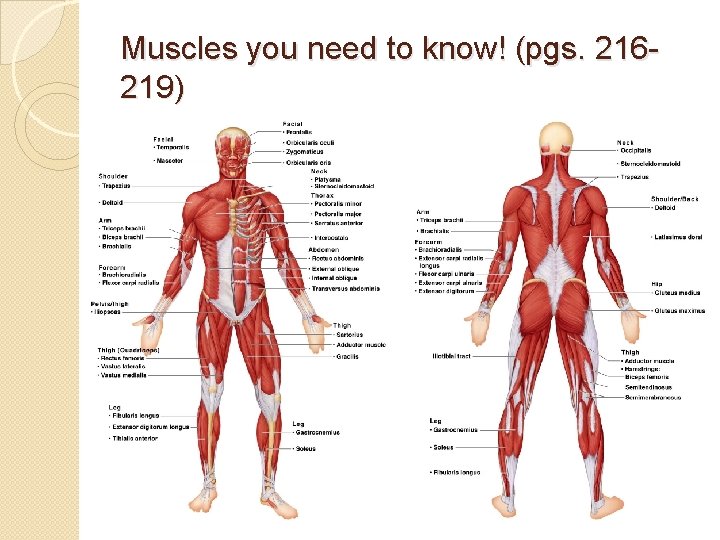
Muscles you need to know! (pgs. 216219)
Polio Video