
THE MUSCULAR SYSTEM Section 2 WARMUP Complete the
- Slides: 15
THE MUSCULAR SYSTEM (Section 2)
WARM-UP Complete the BONES QUIZ BONUS QUESTION! (WORTH ONE POINT) NAME ONE TYPE OF MOVABLE JOINT
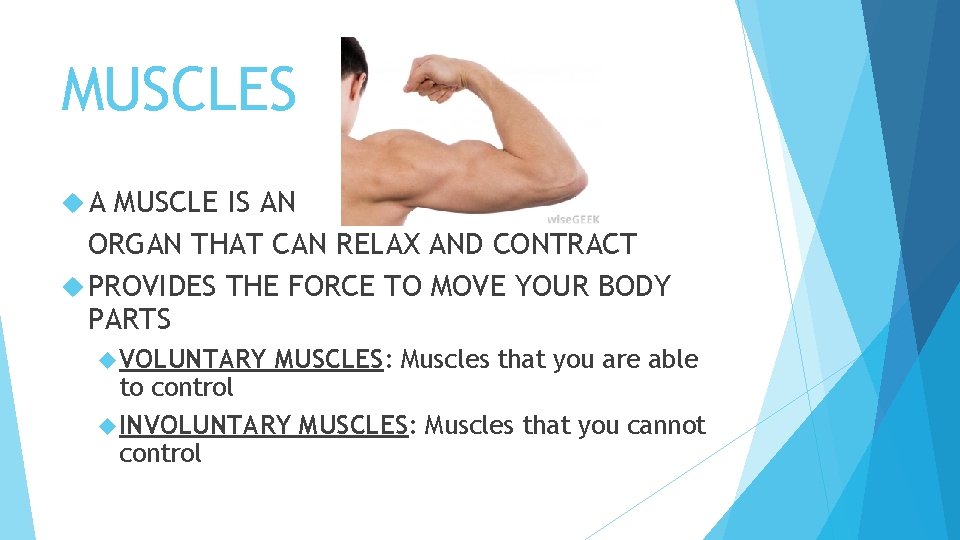
MUSCLES A MUSCLE IS AN ORGAN THAT CAN RELAX AND CONTRACT PROVIDES THE FORCE TO MOVE YOUR BODY PARTS VOLUNTARY MUSCLES: Muscles that you are able to control INVOLUNTARY MUSCLES: Muscles that you cannot control
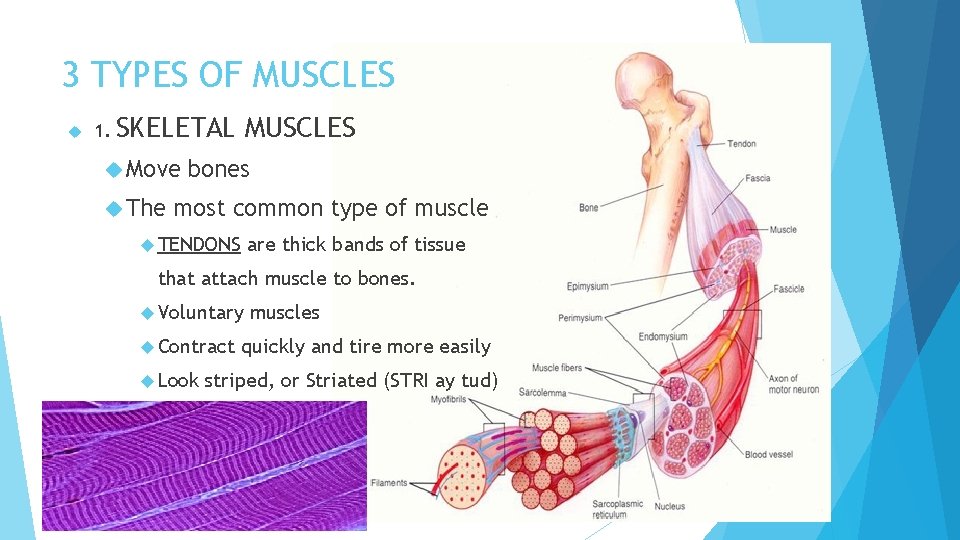
3 TYPES OF MUSCLES 1. SKELETAL MUSCLES Move The bones most common type of muscle TENDONS are thick bands of tissue that attach muscle to bones. Voluntary Contract Look muscles quickly and tire more easily striped, or Striated (STRI ay tud)
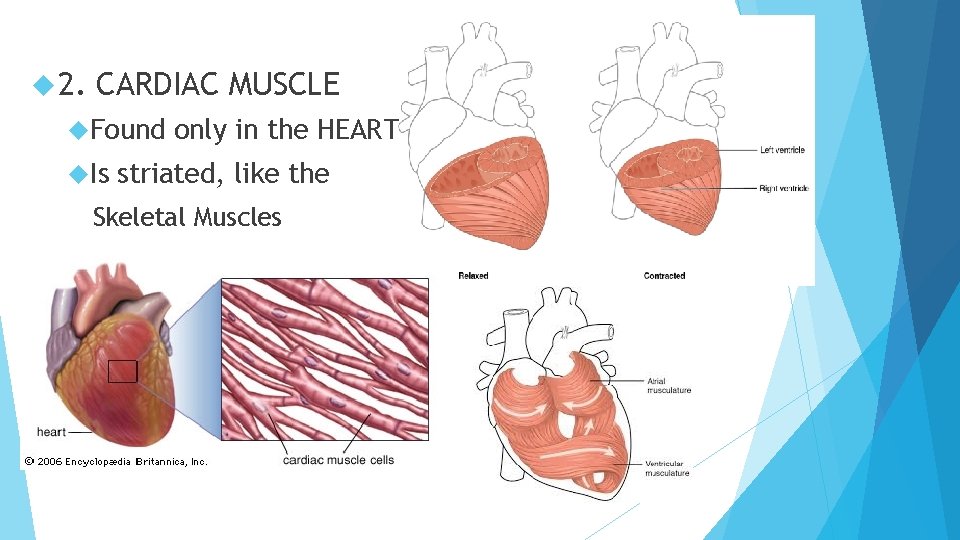
2. CARDIAC MUSCLE Found Is only in the HEART striated, like the Skeletal Muscles
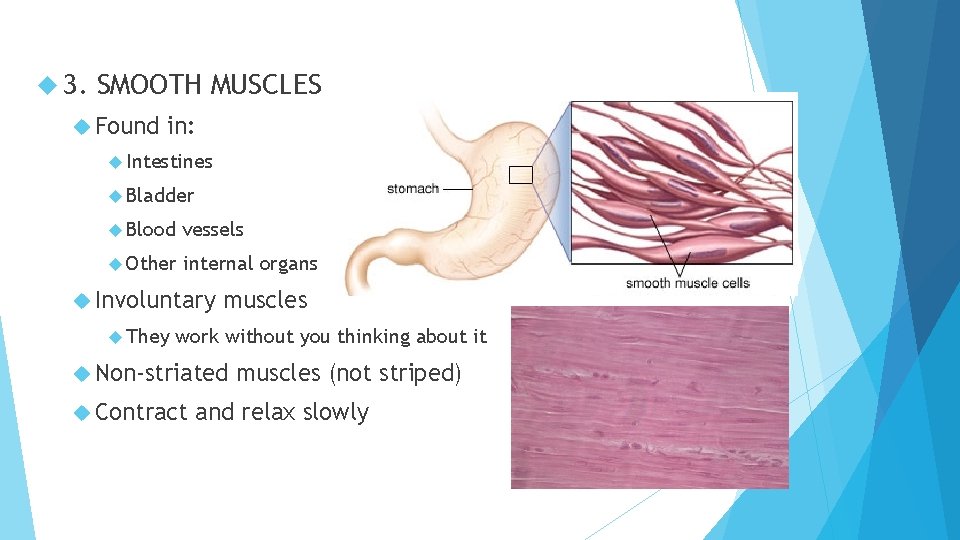
3. SMOOTH MUSCLES Found in: Intestines Bladder Blood vessels Other internal organs Involuntary They muscles work without you thinking about it Non-striated Contract muscles (not striped) and relax slowly
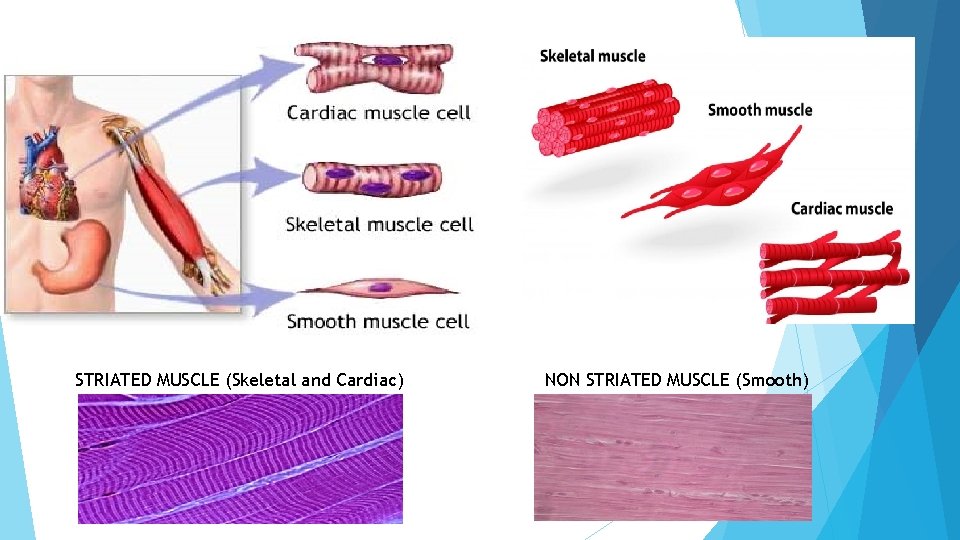
STRIATED MUSCLE (Skeletal and Cardiac) NON STRIATED MUSCLE (Smooth)
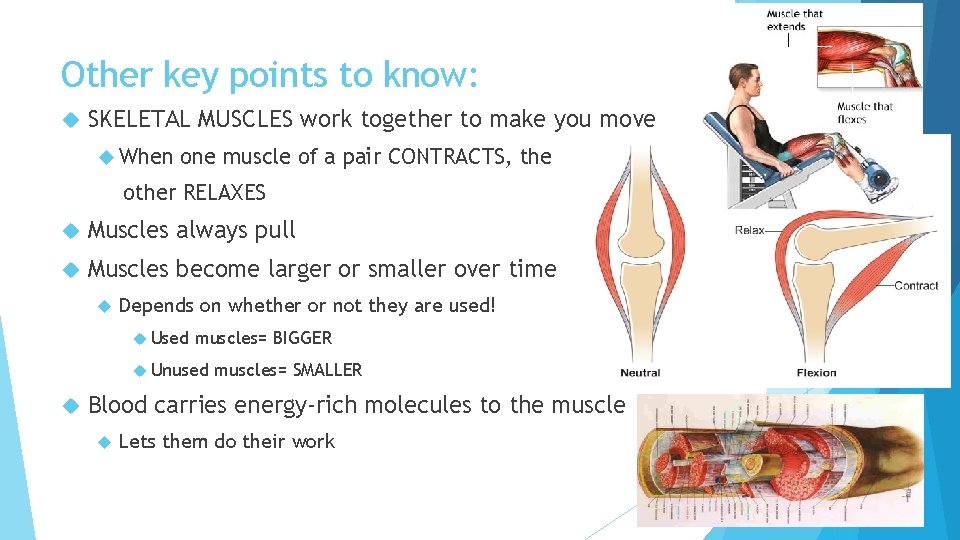
Other key points to know: SKELETAL MUSCLES work together to make you move When one muscle of a pair CONTRACTS, the other RELAXES Muscles always pull Muscles become larger or smaller over time Depends on whether or not they are used! Used muscles= BIGGER Unused muscles= SMALLER Blood carries energy-rich molecules to the muscle Lets them do their work
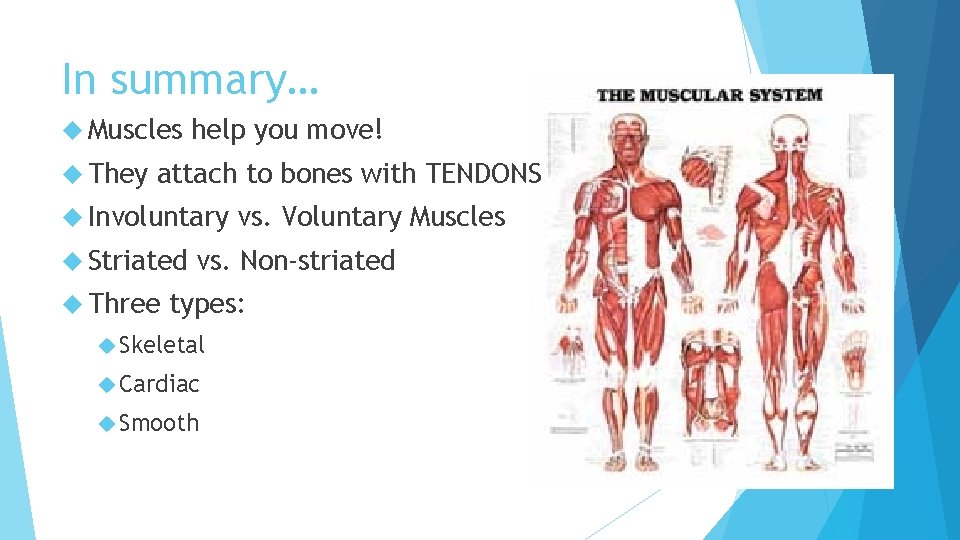
In summary… Muscles They help you move! attach to bones with TENDONS Involuntary Striated Three vs. Voluntary Muscles vs. Non-striated types: Skeletal Cardiac Smooth
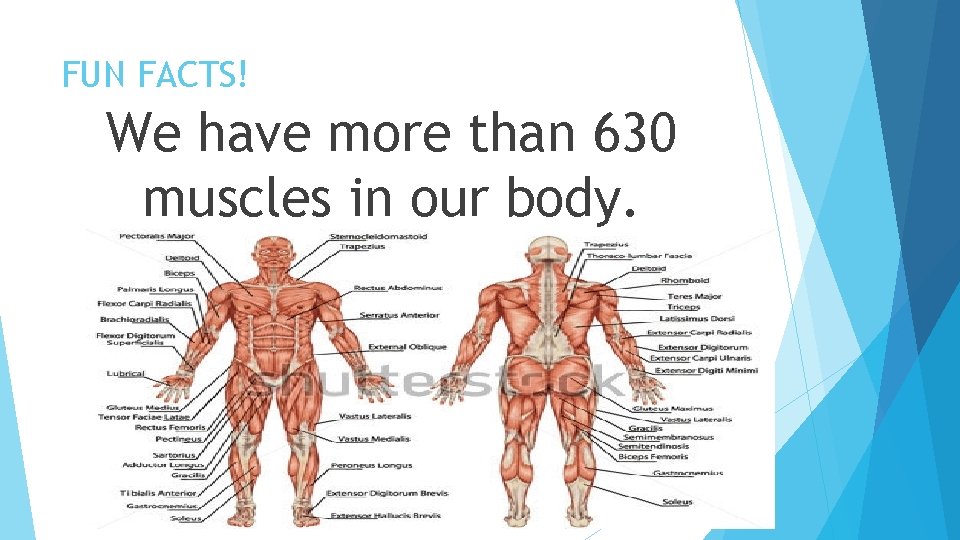
FUN FACTS! We have more than 630 muscles in our body.
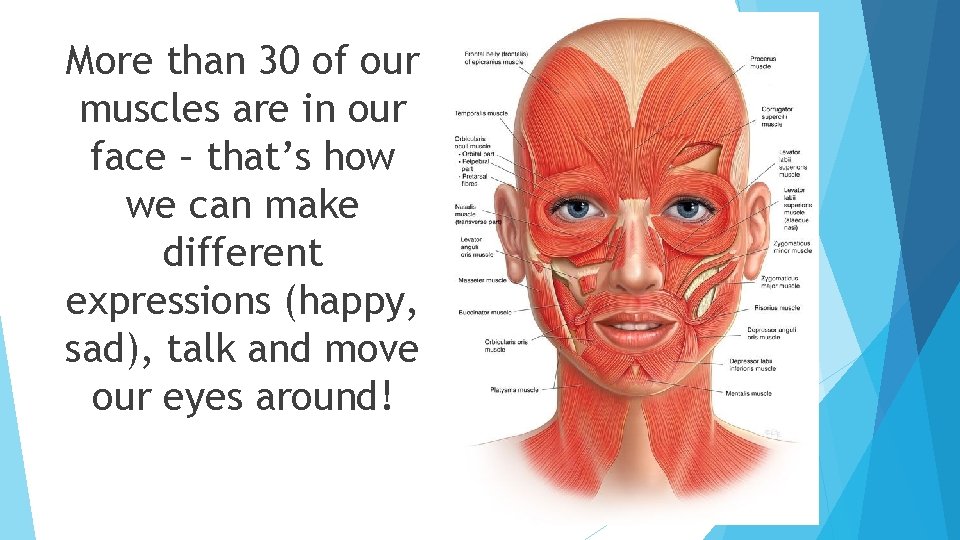
More than 30 of our muscles are in our face – that’s how we can make different expressions (happy, sad), talk and move our eyes around!
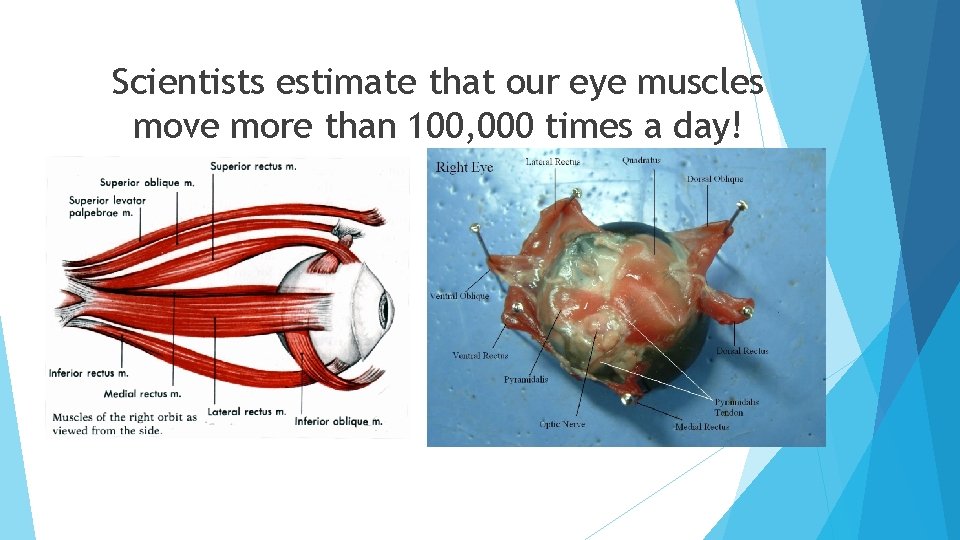
Scientists estimate that our eye muscles move more than 100, 000 times a day!
STREET GYMNAST WHAT MUSCLES LOOK LIKE
Your muscles need Glycogen (muscle sugar) in order to function. When the glycogen is broken down into energy for the muscles a waste product called lactic acid is produced. A buildup of lactic acid decreases the muscles’ ability to contract and Muscle Fatigue sets in. DO THIS: Hold a book in each hand. Raise one arm straight out parallel to the ground and the other arm down at your side. Compare the feeling in each arm. . . **keep track of how long you can hold the books for and which arm gets tired faster!
How long did you hold the book before fatigue got the better of you? ____ minutes ____ seconds Which arm felt the fatigue the most? The straight arm or the arm by your side? Which muscles experienced the most fatigue? Biceps triceps deltoids pectoralis major