
The Muscular System Muscles in the Body There
The Muscular System
Muscles in the Body There are over 650 muscles in the human body. n They are named due to many factors. n
Naming Skeletal Muscles (1) n Location of muscle ¨ Bone or body region associated with the muscle n Shape of muscle ¨ Ex: n deltoid (triangular) Relative size ¨ Ex: maximus (large), minimus (small), longus (long) n Direction of fibers ¨ Ex: rectus (fibers run straight), transversus, oblique (fibers run at angles to an imaginary defined axis.
Naming Skeletal Muscles (2) n Number of origins ¨ Ex: biceps (2 origins) and triceps (3 origins) n Location of attachments ¨ Named according to point of origin or insertion. n Action ¨ Ex: flexor or extensor, as in the names of muscles that flex or extend.

Muscles of the Scalp n Epicranius 2 part muscle consisting of the following: ¨ Frontalis n Primary function is to raise the eyebrows. ¨ Occipitalis n Works with the frontalis

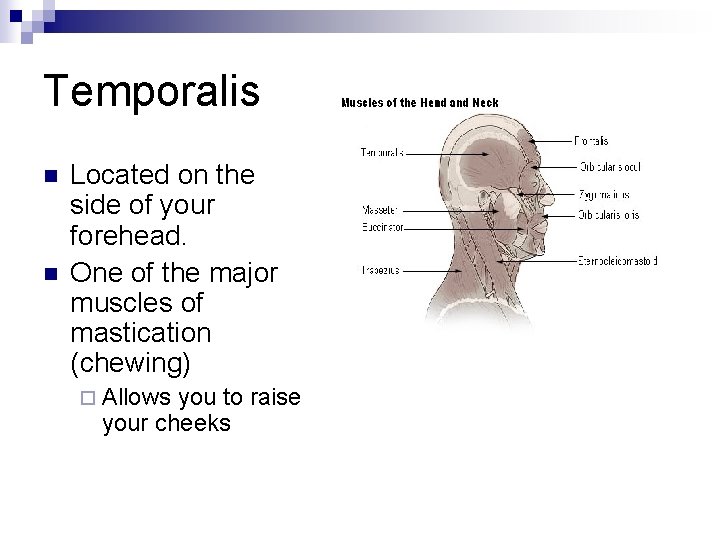
Temporalis n n Located on the side of your forehead. One of the major muscles of mastication (chewing) ¨ Allows you to raise your cheeks

Sternocleidomastoid Muscles n Anterior muscles of the neck that act to flex and rotate the head.
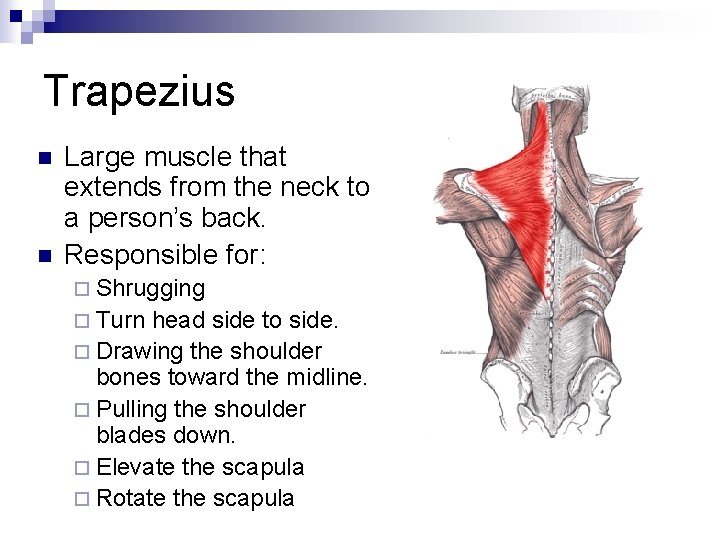
Trapezius n n Large muscle that extends from the neck to a person’s back. Responsible for: ¨ Shrugging ¨ Turn head side to side. ¨ Drawing the shoulder bones toward the midline. ¨ Pulling the shoulder blades down. ¨ Elevate the scapula ¨ Rotate the scapula
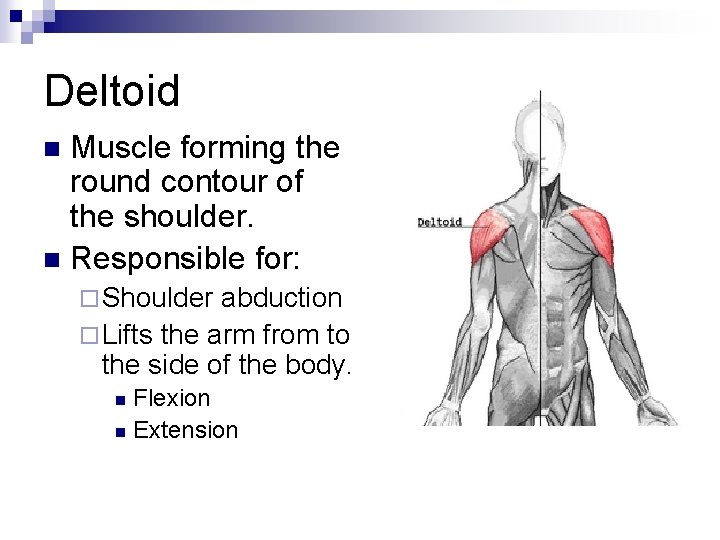
Deltoid Muscle forming the round contour of the shoulder. n Responsible for: n ¨ Shoulder abduction ¨ Lifts the arm from to the side of the body. Flexion n Extension n
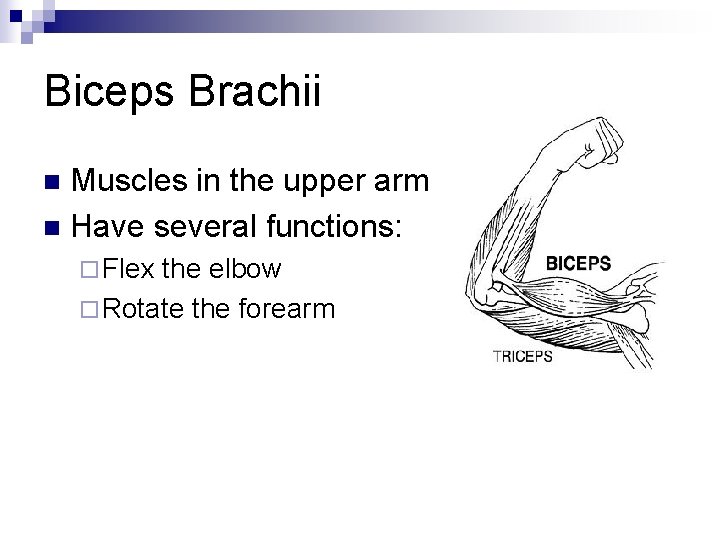
Biceps Brachii Muscles in the upper arm n Have several functions: n ¨ Flex the elbow ¨ Rotate the forearm
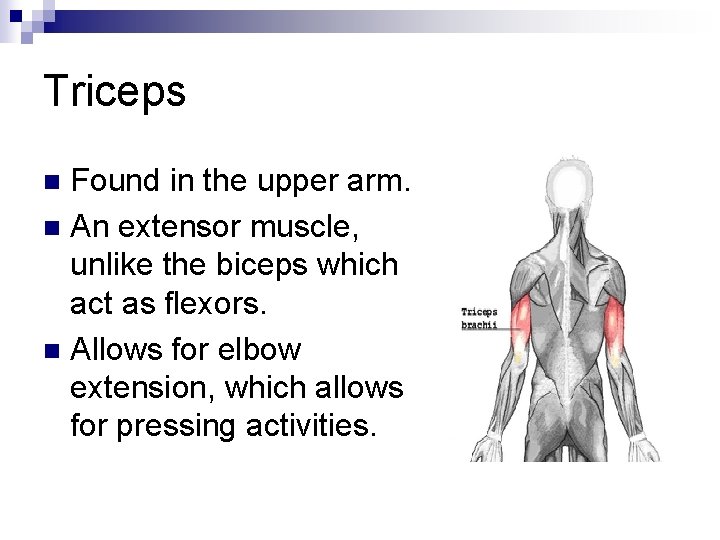
Triceps Found in the upper arm. n An extensor muscle, unlike the biceps which act as flexors. n Allows for elbow extension, which allows for pressing activities. n
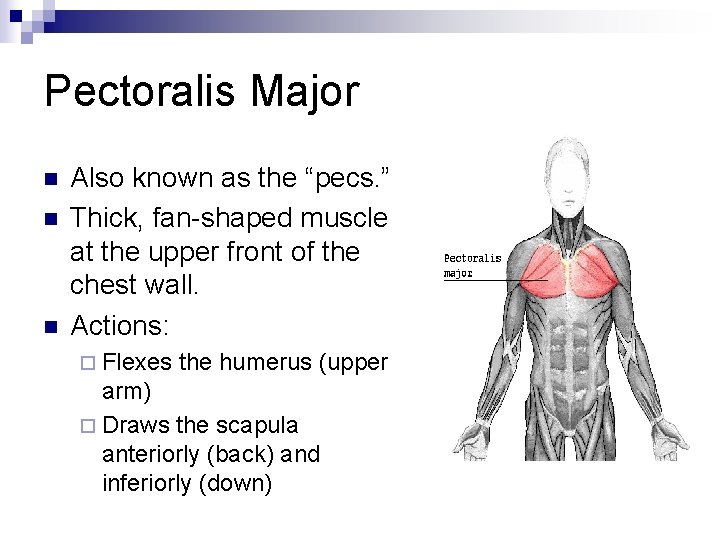
Pectoralis Major n n n Also known as the “pecs. ” Thick, fan-shaped muscle at the upper front of the chest wall. Actions: ¨ Flexes the humerus (upper arm) ¨ Draws the scapula anteriorly (back) and inferiorly (down)
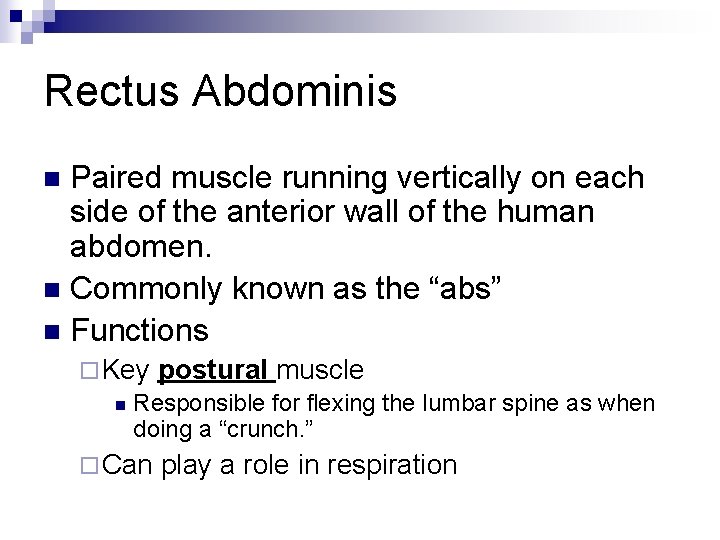
Rectus Abdominis Paired muscle running vertically on each side of the anterior wall of the human abdomen. n Commonly known as the “abs” n Functions n ¨ Key postural muscle n Responsible for flexing the lumbar spine as when doing a “crunch. ” ¨ Can play a role in respiration
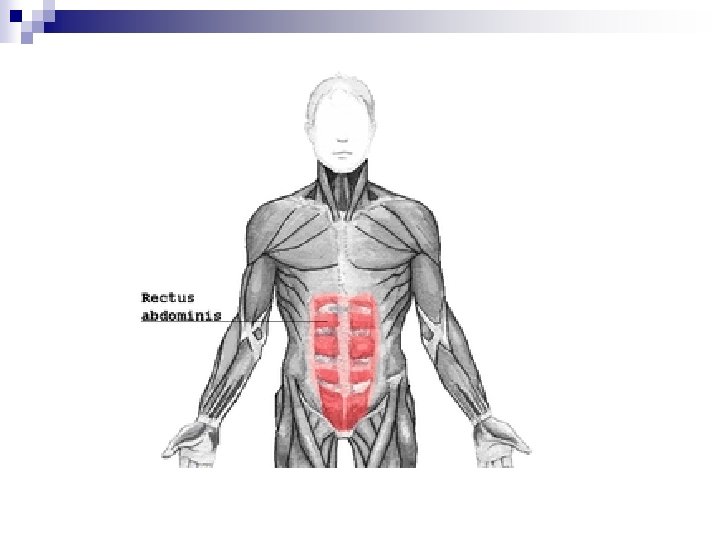
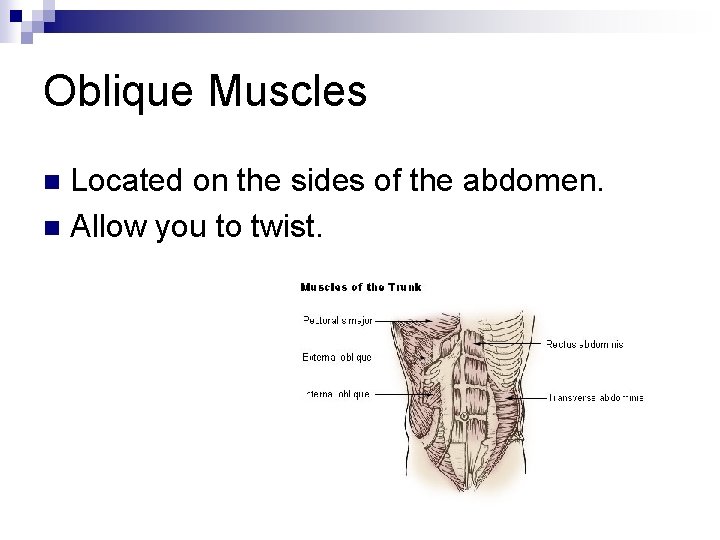
Oblique Muscles Located on the sides of the abdomen. n Allow you to twist. n
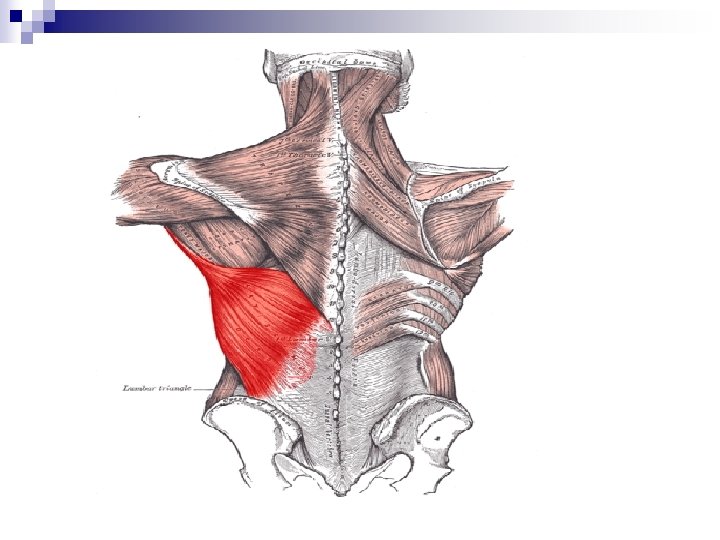
Latissimus Large flat dorso-lateral muscle of the trunk. n Also known as the “lat. ” n Responsible for: n ¨ Extension, adduction, transverse extension, and internal rotation of the shoulder joint. ¨ It also has a synergistic role in extension and lateral flexion of the lumbar spine.
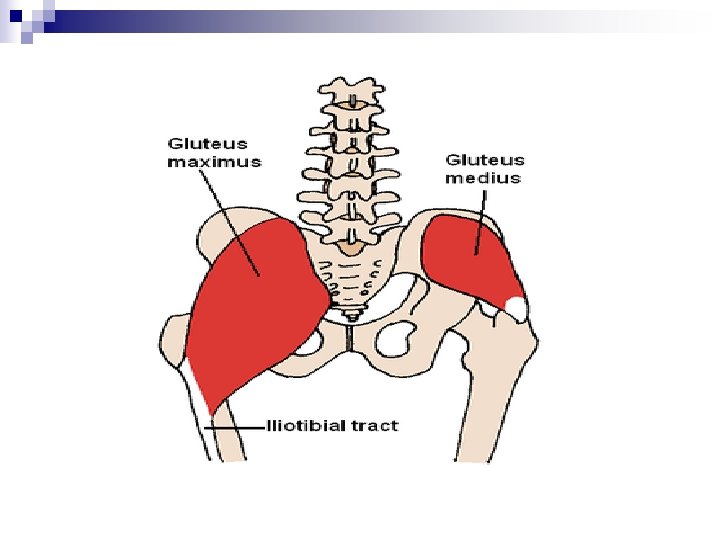
Gluteus Maximus It is a large muscle in the butt. n One of the strongest muscles in your body. n Responsible for: n ¨ Extends the femur ¨ Keeps body upright when motion is occurring and when motion stops.
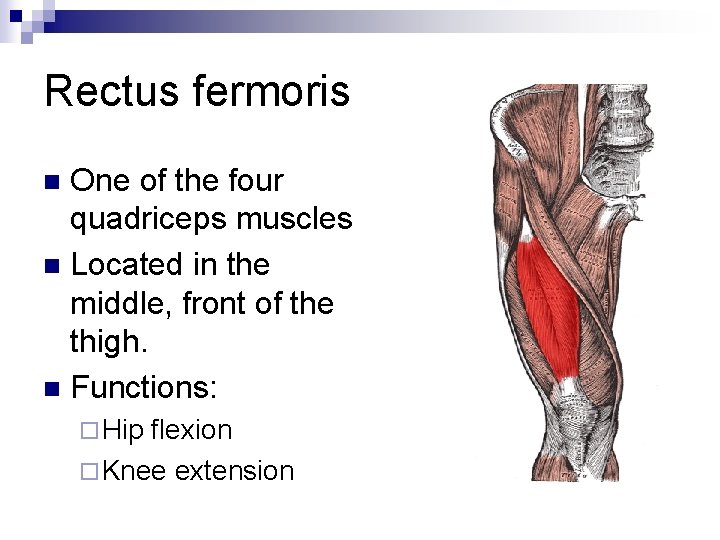
Rectus fermoris One of the four quadriceps muscles n Located in the middle, front of the thigh. n Functions: n ¨ Hip flexion ¨ Knee extension
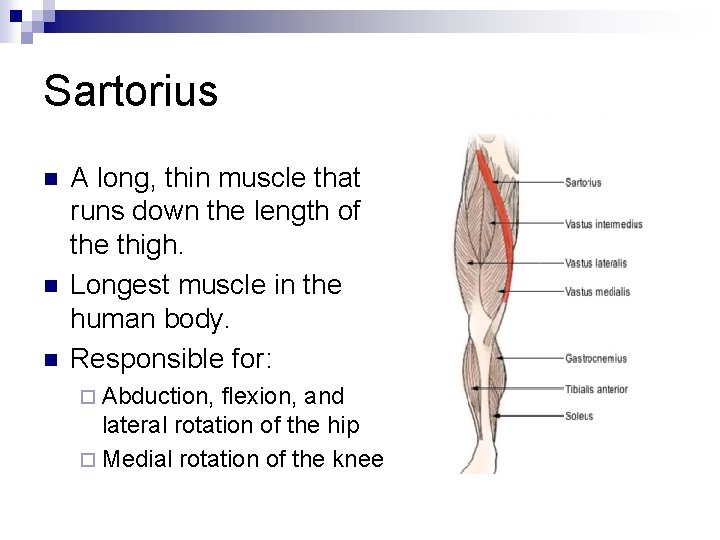
Sartorius n n n A long, thin muscle that runs down the length of the thigh. Longest muscle in the human body. Responsible for: ¨ Abduction, flexion, and lateral rotation of the hip ¨ Medial rotation of the knee
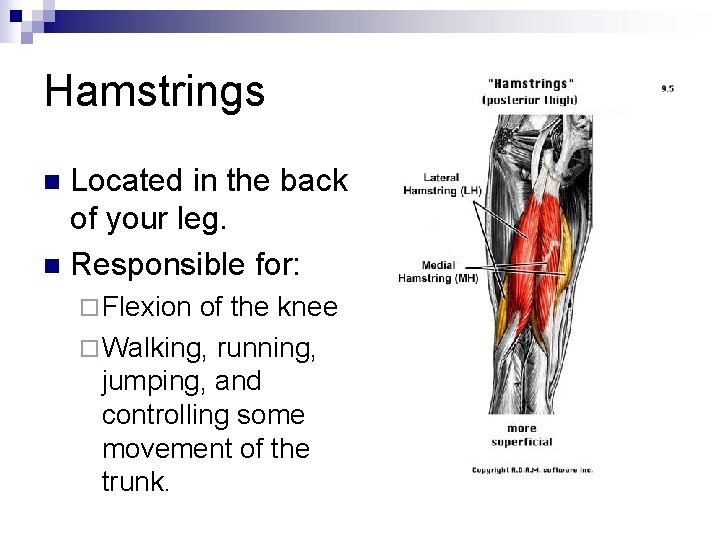
Hamstrings Located in the back of your leg. n Responsible for: n ¨ Flexion of the knee ¨ Walking, running, jumping, and controlling some movement of the trunk.
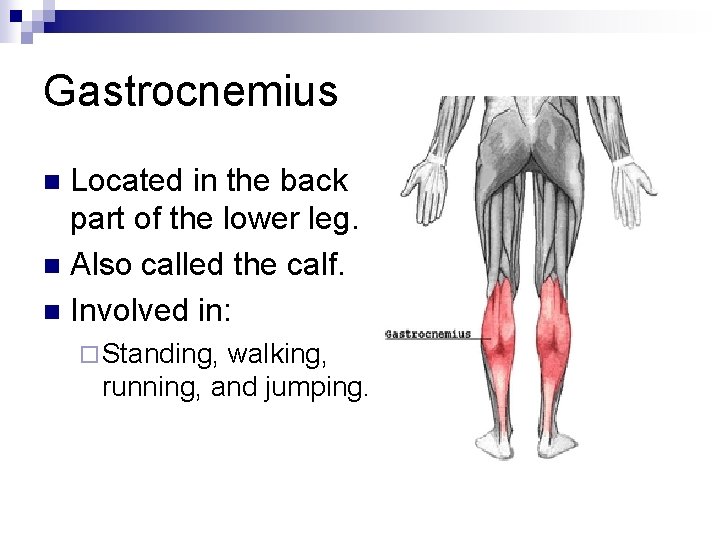
Gastrocnemius Located in the back part of the lower leg. n Also called the calf. n Involved in: n ¨ Standing, walking, running, and jumping.
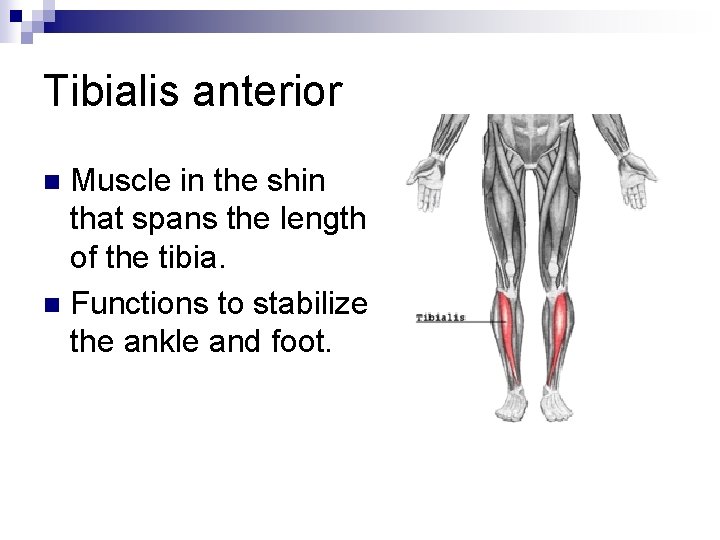
Tibialis anterior Muscle in the shin that spans the length of the tibia. n Functions to stabilize the ankle and foot. n
- Slides: 25