
The Muscular System Muscle Tissue One of the
- Slides: 29
The Muscular System
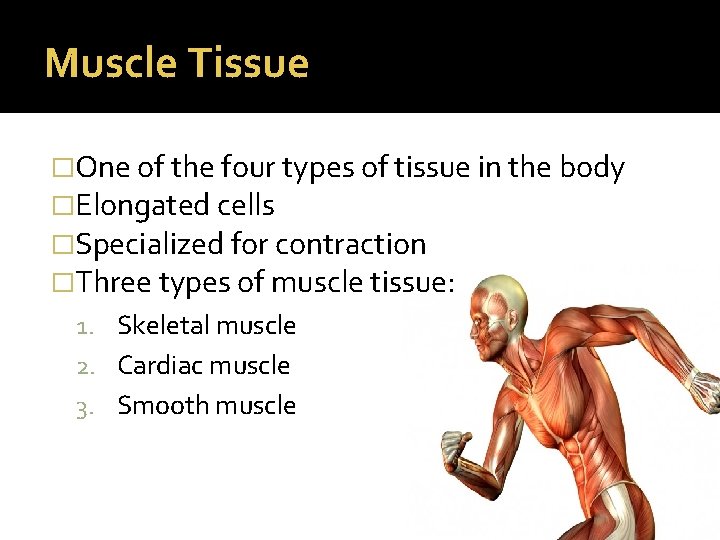
Muscle Tissue �One of the four types of tissue in the body �Elongated cells �Specialized for contraction �Three types of muscle tissue: 1. Skeletal muscle 2. Cardiac muscle 3. Smooth muscle
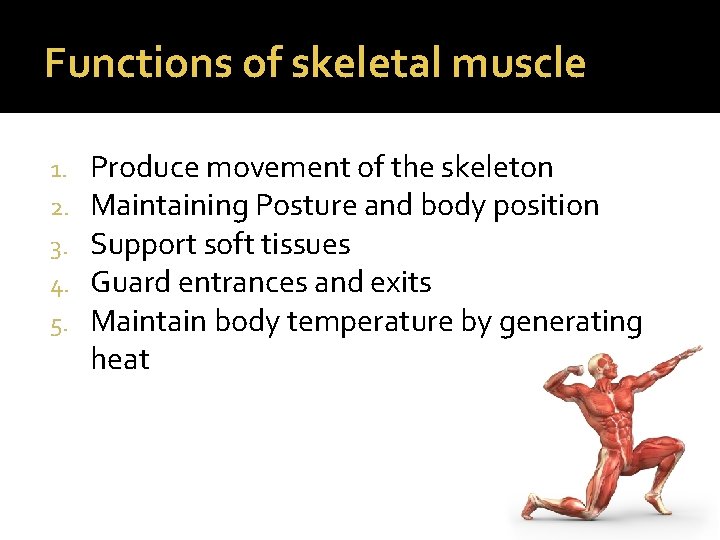
Functions of skeletal muscle 1. 2. 3. 4. 5. Produce movement of the skeleton Maintaining Posture and body position Support soft tissues Guard entrances and exits Maintain body temperature by generating heat
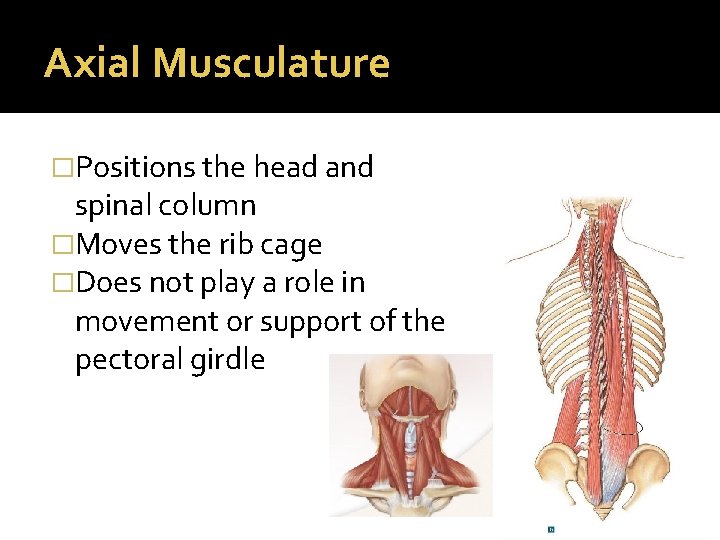
Axial Musculature �Positions the head and spinal column �Moves the rib cage �Does not play a role in movement or support of the pectoral girdle
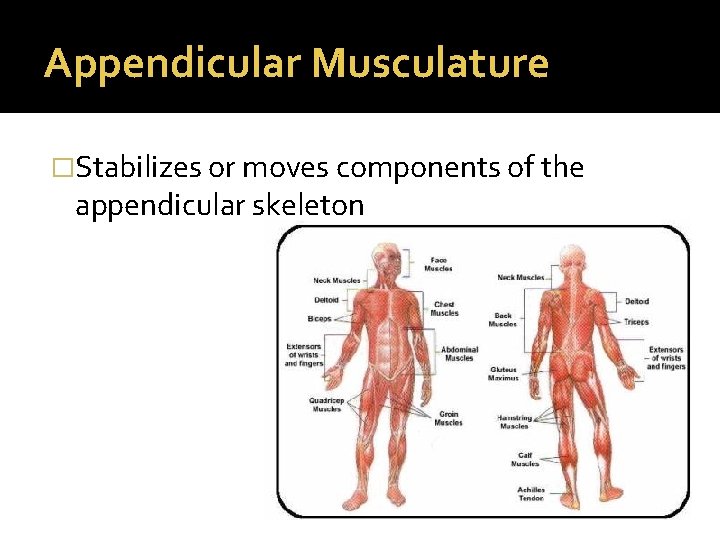
Appendicular Musculature �Stabilizes or moves components of the appendicular skeleton
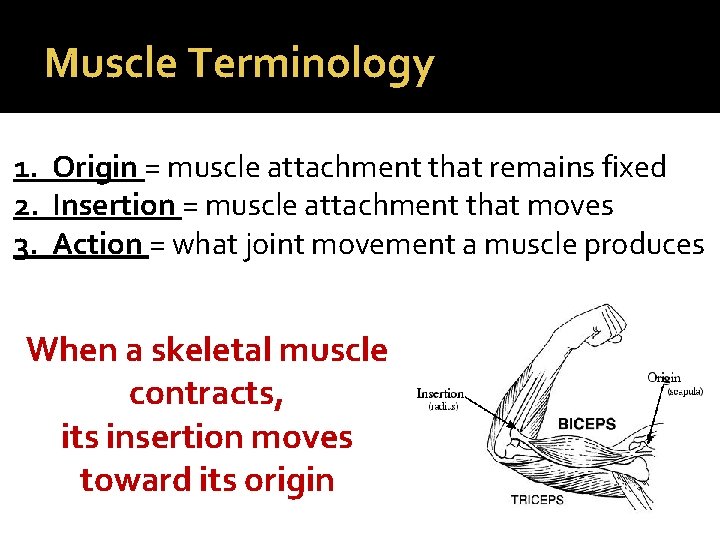
Muscle Terminology 1. Origin = muscle attachment that remains fixed 2. Insertion = muscle attachment that moves 3. Action = what joint movement a muscle produces When a skeletal muscle contracts, its insertion moves toward its origin
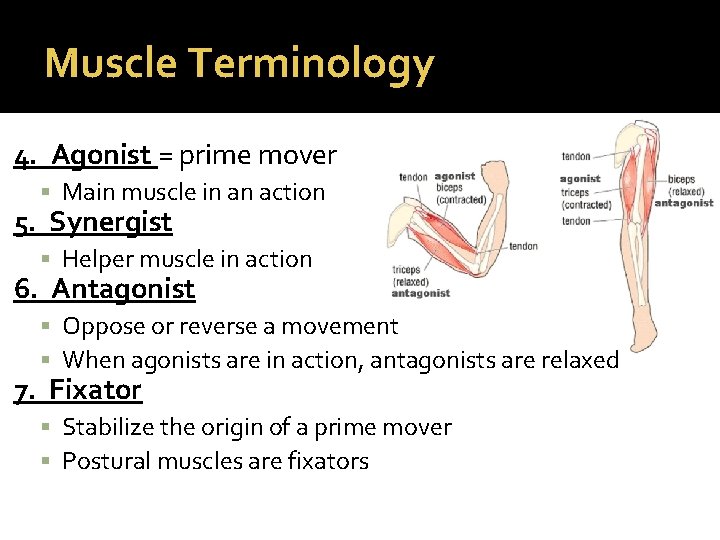
Muscle Terminology 4. Agonist = prime mover Main muscle in an action 5. Synergist Helper muscle in action 6. Antagonist Oppose or reverse a movement When agonists are in action, antagonists are relaxed 7. Fixator Stabilize the origin of a prime mover Postural muscles are fixators
Types of Movements
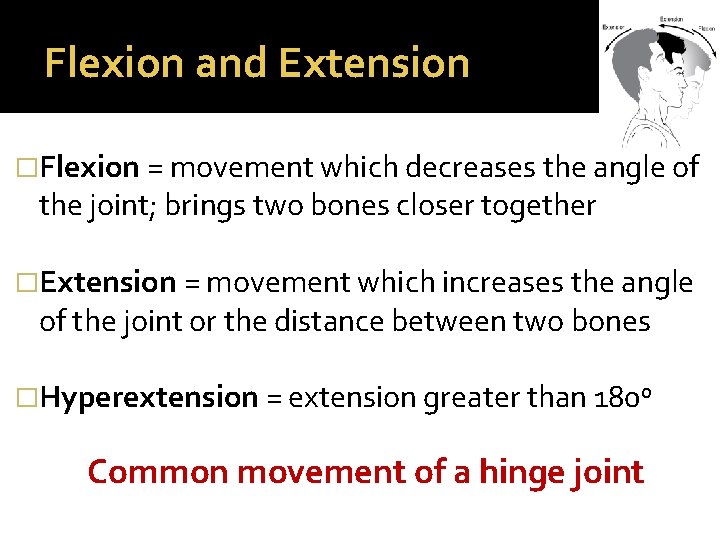
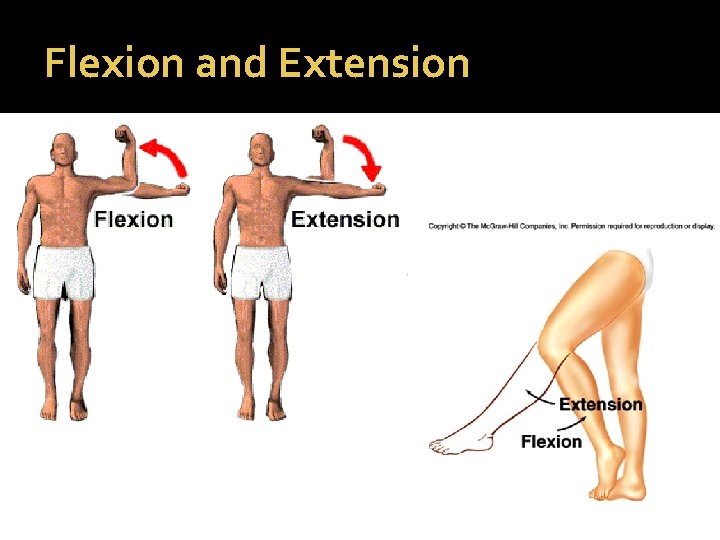
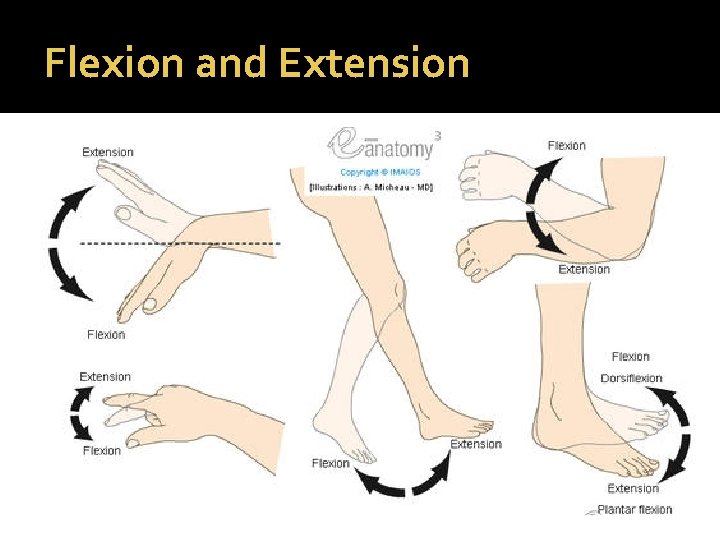
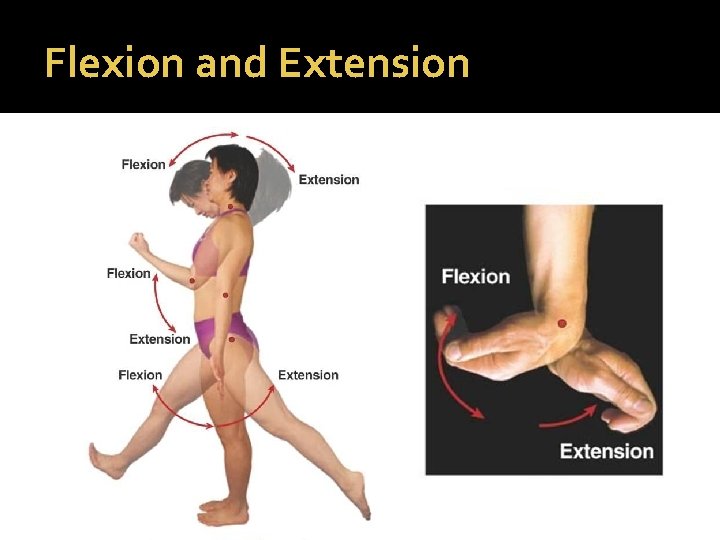
Flexion and Extension �Flexion = movement which decreases the angle of the joint; brings two bones closer together �Extension = movement which increases the angle of the joint or the distance between two bones �Hyperextension = extension greater than 180 o Common movement of a hinge joint
Flexion and Extension
Flexion and Extension
Flexion and Extension
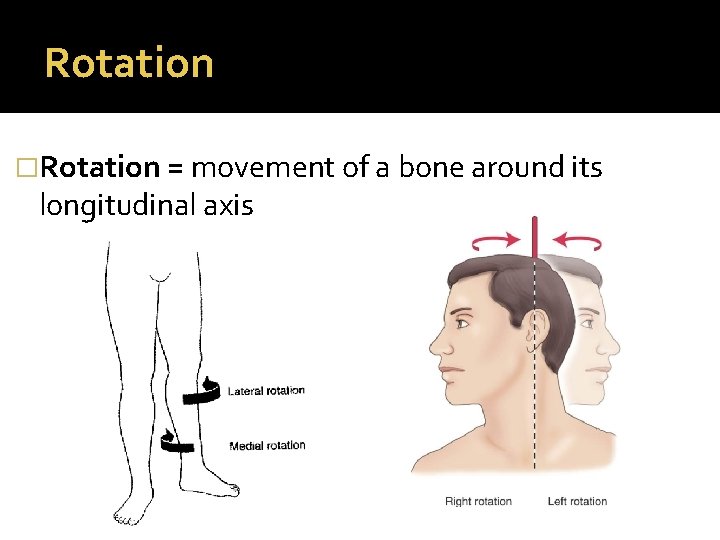
Rotation �Rotation = movement of a bone around its longitudinal axis
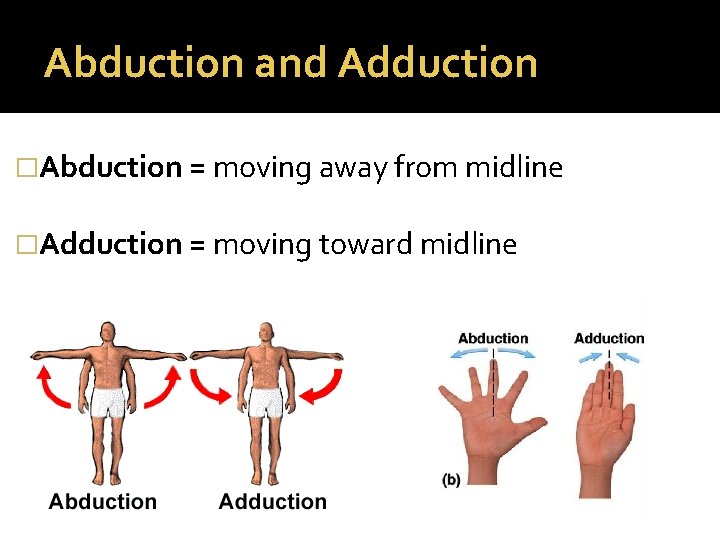
Abduction and Adduction �Abduction = moving away from midline �Adduction = moving toward midline
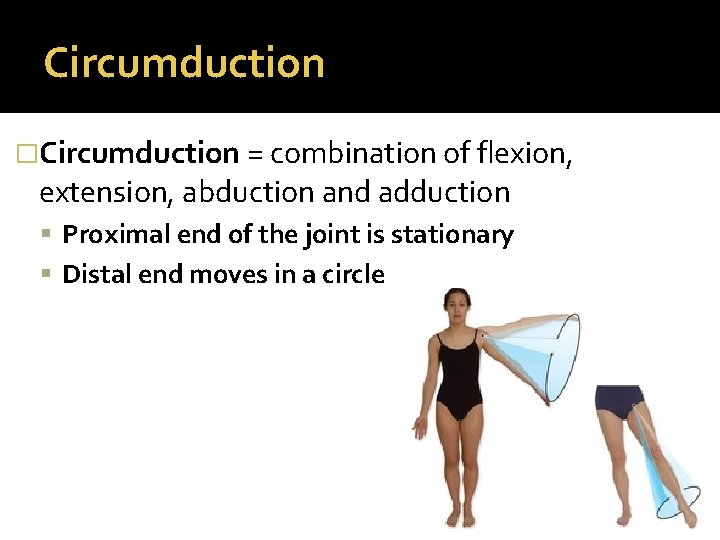
Circumduction �Circumduction = combination of flexion, extension, abduction and adduction Proximal end of the joint is stationary Distal end moves in a circle
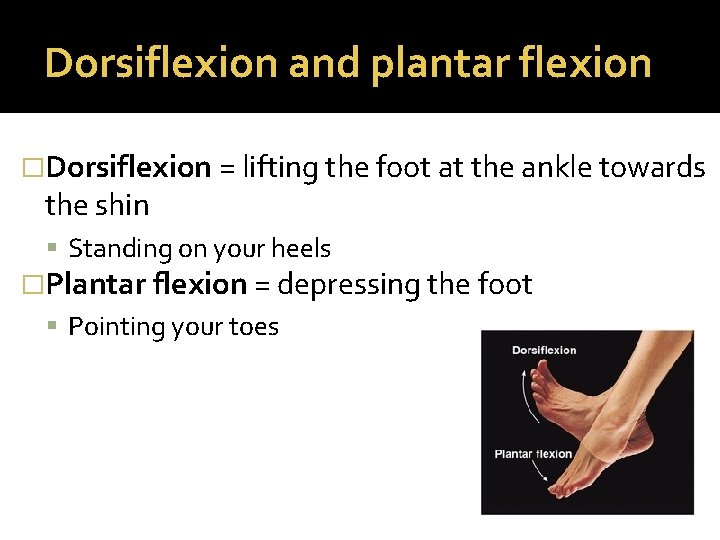
Dorsiflexion and plantar flexion �Dorsiflexion = lifting the foot at the ankle towards the shin Standing on your heels �Plantar flexion = depressing the foot Pointing your toes
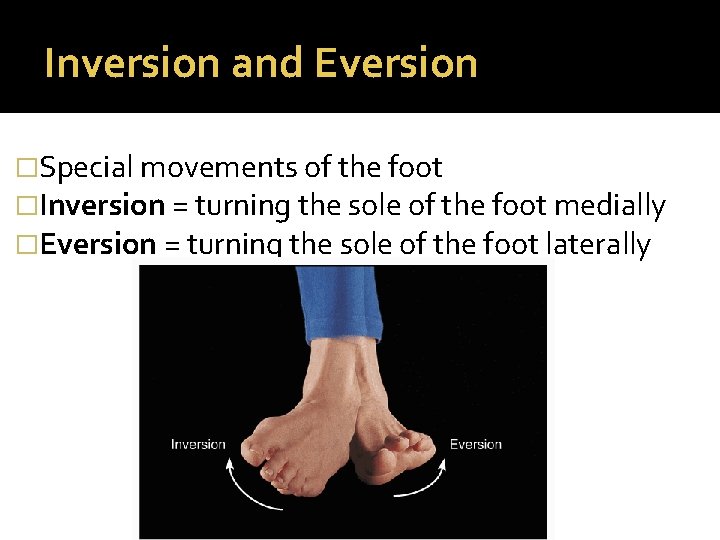
Inversion and Eversion �Special movements of the foot �Inversion = turning the sole of the foot medially �Eversion = turning the sole of the foot laterally
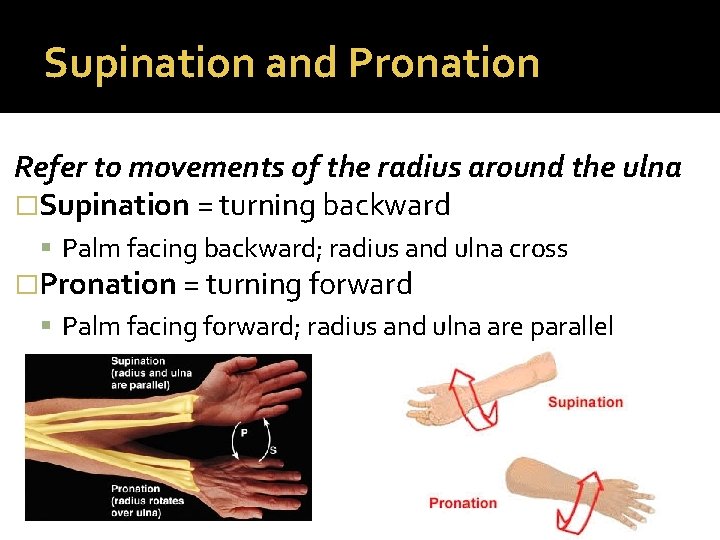
Supination and Pronation Refer to movements of the radius around the ulna �Supination = turning backward Palm facing backward; radius and ulna cross �Pronation = turning forward Palm facing forward; radius and ulna are parallel
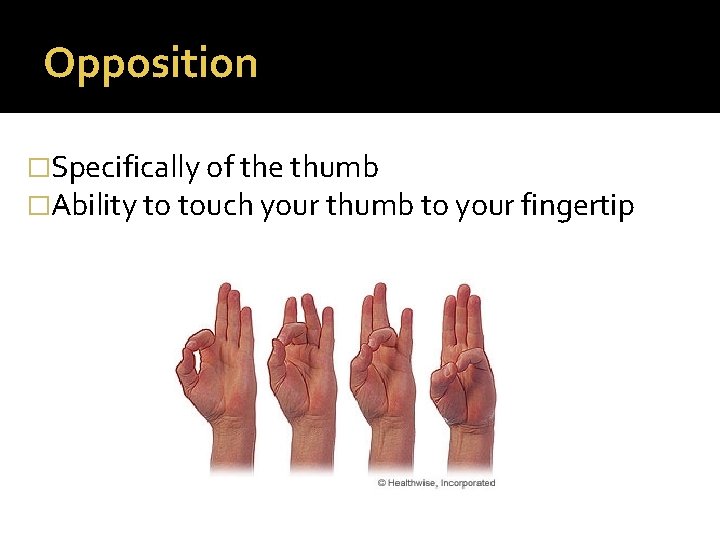
Opposition �Specifically of the thumb �Ability to touch your thumb to your fingertip
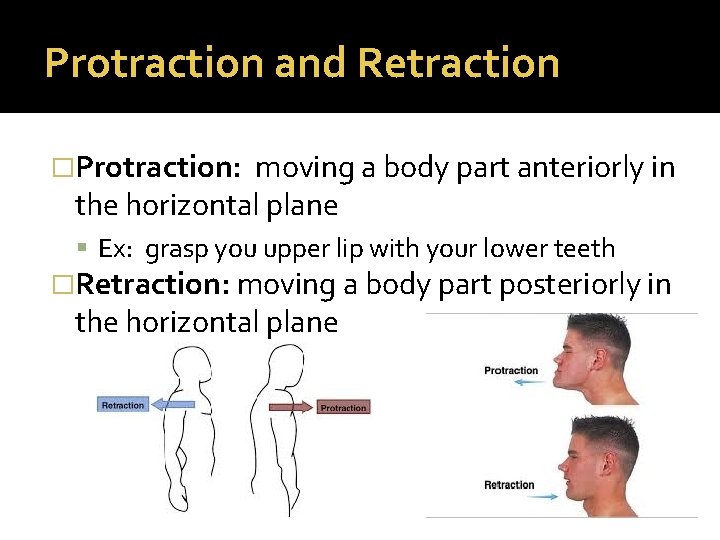
Protraction and Retraction �Protraction: moving a body part anteriorly in the horizontal plane Ex: grasp you upper lip with your lower teeth �Retraction: moving a body part posteriorly in the horizontal plane
Naming Skeletal Muscles
Direction of muscle fibers �Rectus = straight; fibers run parallel to an imaginary line, usually midline Ex: rectus femoris = straight muscle of the thigh �Oblique = muscle fibers run at a slant to an imaginary line
Terms related to size �Maximus = large Ex: gluteus maximus = largest muscle of the gluteus group �Minimus = small �Longus = long
Terms related to location �Some muscles are named for the bone with which they are associated Ex: temporalis overlays the temporal bone
Terms related to number of origins �Biceps = two origins �Tripceps = three origins �Quadriceps = 4 origins
Terms related to location of origin and insertion �Ex: sternocleidomastoid muscle has its origin on the sternum (sterno) and clicel (cleido) and inserts on the mastoid process of the remporal bone
Terms related to shape of muscle fibers �Deltoid = triangular �Orbicularis �Pectinate �Piriformis �Platy �Pyramidal �Rhomboid �Serratus �Splenius �Teres �Trapezius �Pennate �Digastric �Fusiform
Other muscle terminology �Alba �Brevis �Gracilis �Lata �Latissimus �Longus �Magnus �Minor �Vastus �Tendinosus �longissimus
Terms related to muscle action �Flexor, extensor, adductor Ex: extensor muscles of the wrist extend the wrist.