
The Muscular System Dr M Diamond Muscle Types
- Slides: 21
The Muscular System Dr. M. Diamond
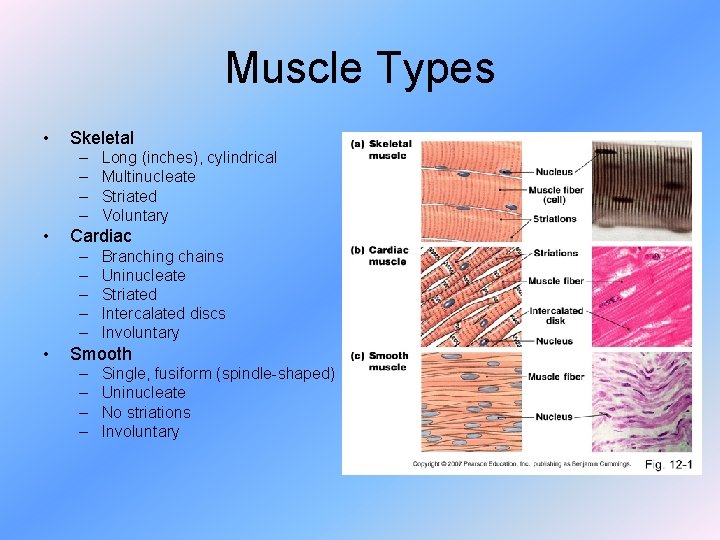
Muscle Types • Skeletal – – • Cardiac – – – • Long (inches), cylindrical Multinucleate Striated Voluntary Branching chains Uninucleate Striated Intercalated discs Involuntary Smooth – – Single, fusiform (spindle-shaped) Uninucleate No striations Involuntary
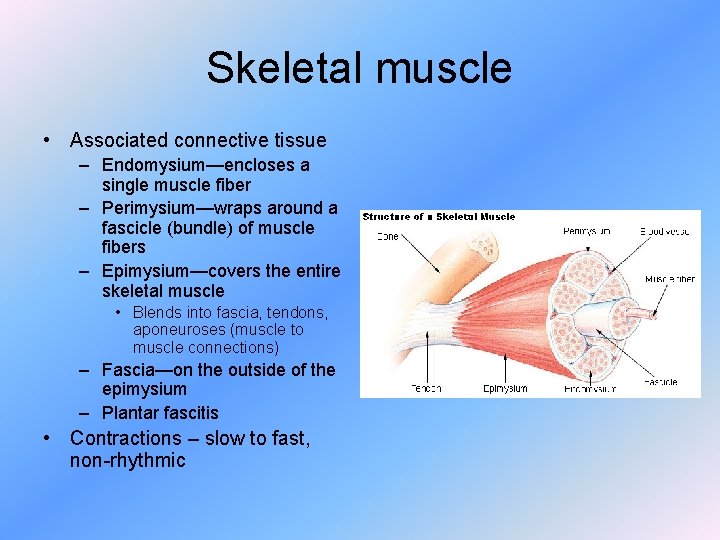
Skeletal muscle • Associated connective tissue – Endomysium—encloses a single muscle fiber – Perimysium—wraps around a fascicle (bundle) of muscle fibers – Epimysium—covers the entire skeletal muscle • Blends into fascia, tendons, aponeuroses (muscle to muscle connections) – Fascia—on the outside of the epimysium – Plantar fascitis • Contractions – slow to fast, non-rhythmic
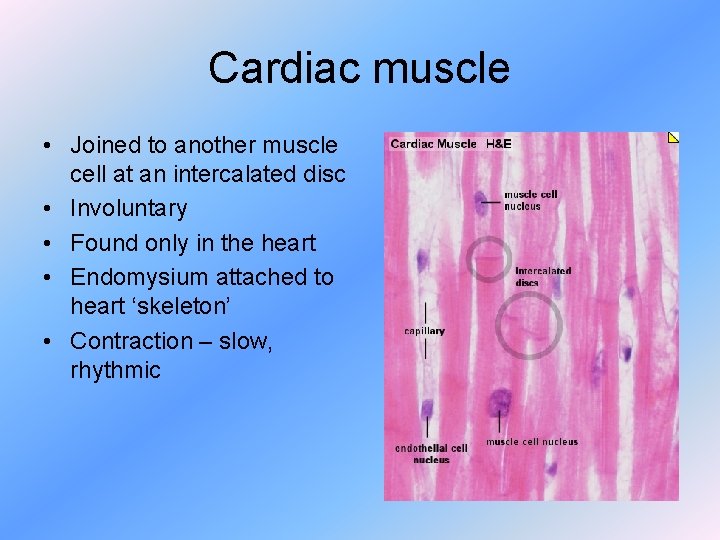
Cardiac muscle • Joined to another muscle cell at an intercalated disc • Involuntary • Found only in the heart • Endomysium attached to heart ‘skeleton’ • Contraction – slow, rhythmic
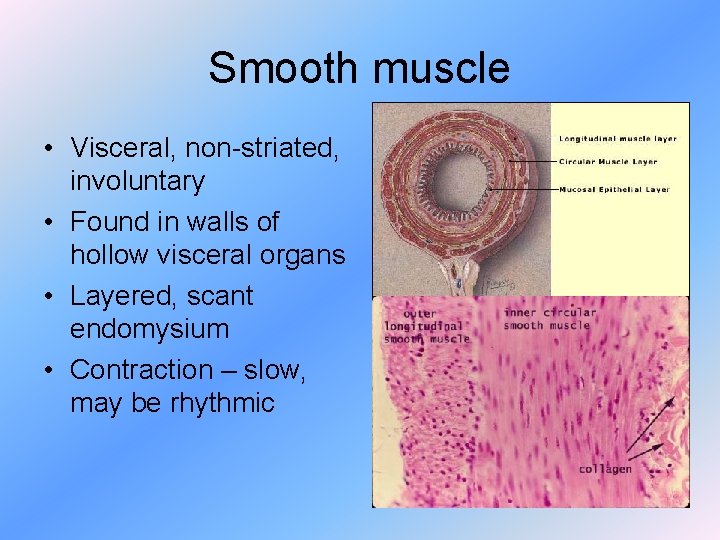
Smooth muscle • Visceral, non-striated, involuntary • Found in walls of hollow visceral organs • Layered, scant endomysium • Contraction – slow, may be rhythmic
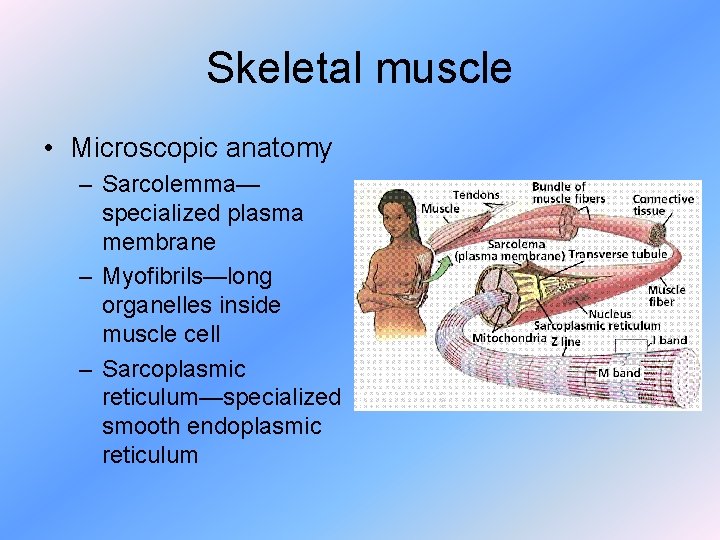
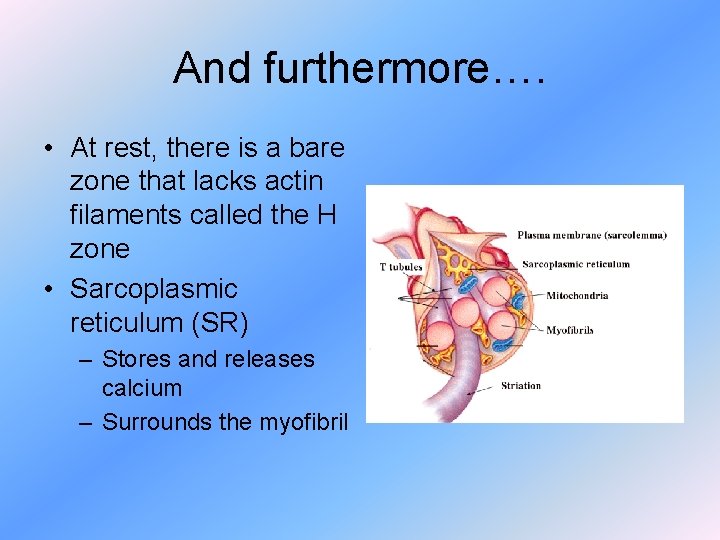
Skeletal muscle • Microscopic anatomy – Sarcolemma— specialized plasma membrane – Myofibrils—long organelles inside muscle cell – Sarcoplasmic reticulum—specialized smooth endoplasmic reticulum
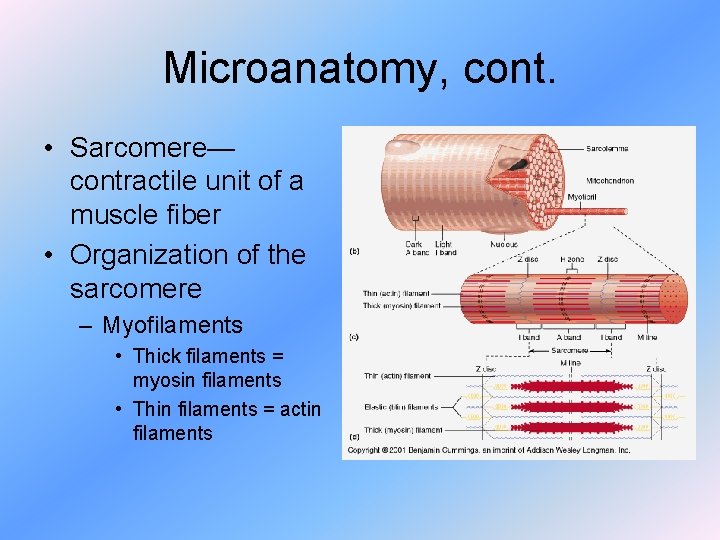
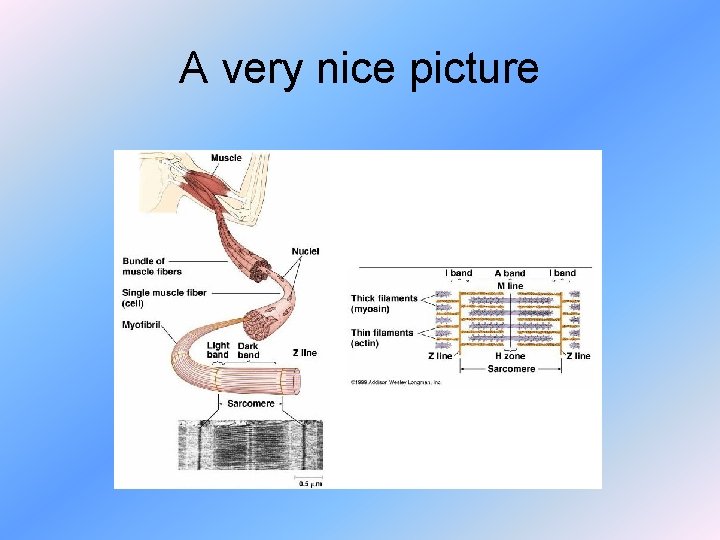
Microanatomy, cont. • Sarcomere— contractile unit of a muscle fiber • Organization of the sarcomere – Myofilaments • Thick filaments = myosin filaments • Thin filaments = actin filaments
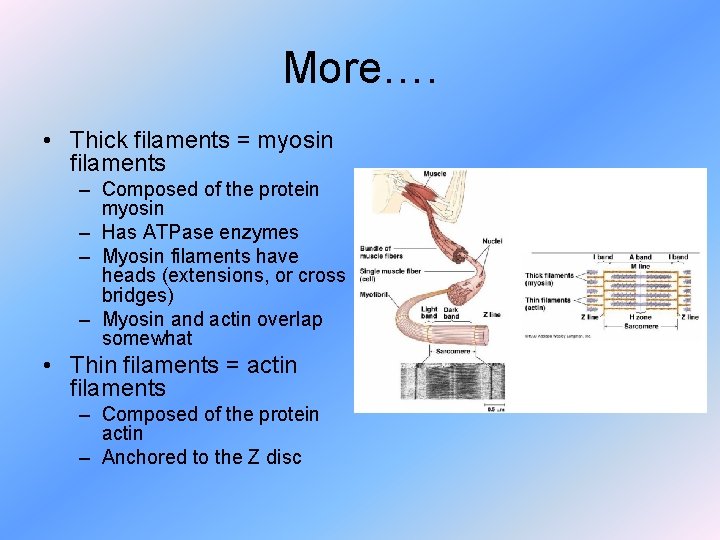
More…. • Thick filaments = myosin filaments – Composed of the protein myosin – Has ATPase enzymes – Myosin filaments have heads (extensions, or cross bridges) – Myosin and actin overlap somewhat • Thin filaments = actin filaments – Composed of the protein actin – Anchored to the Z disc
And furthermore…. • At rest, there is a bare zone that lacks actin filaments called the H zone • Sarcoplasmic reticulum (SR) – Stores and releases calcium – Surrounds the myofibril
A very nice picture
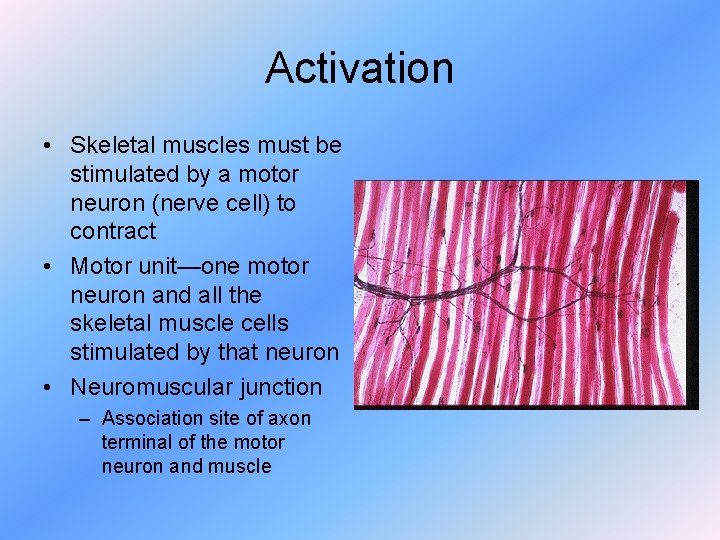
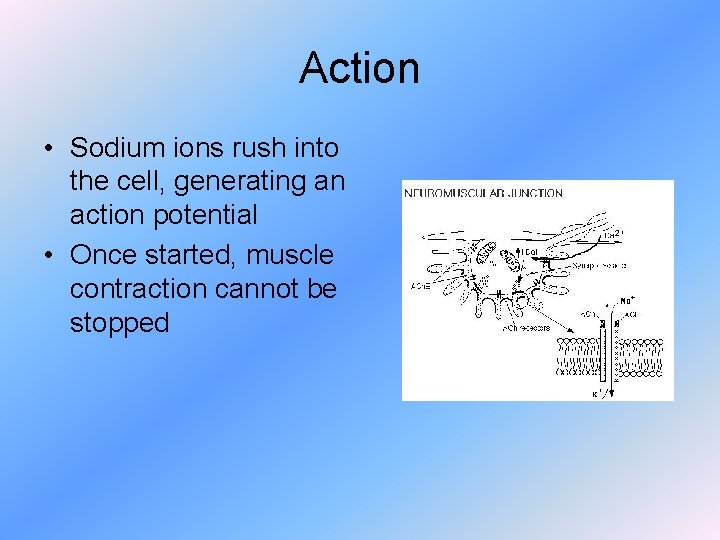
Activation • Skeletal muscles must be stimulated by a motor neuron (nerve cell) to contract • Motor unit—one motor neuron and all the skeletal muscle cells stimulated by that neuron • Neuromuscular junction – Association site of axon terminal of the motor neuron and muscle
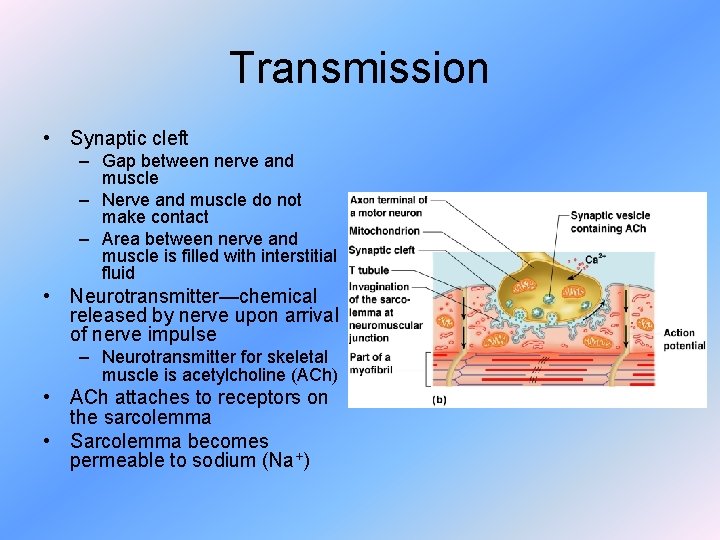
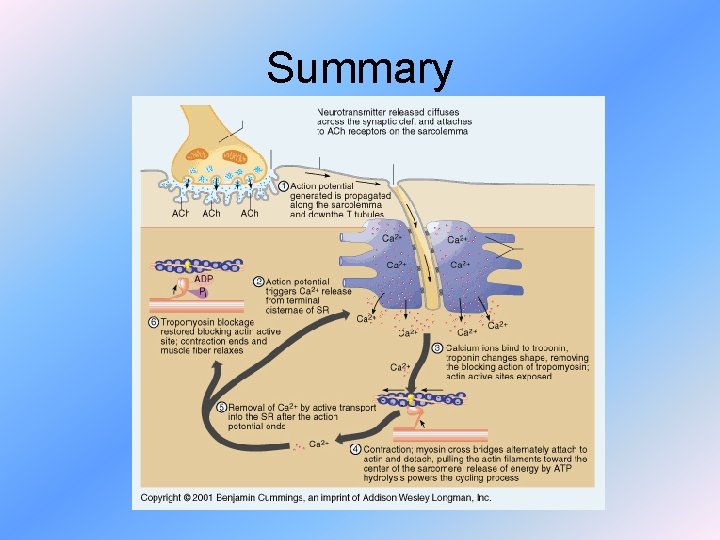
Transmission • Synaptic cleft – Gap between nerve and muscle – Nerve and muscle do not make contact – Area between nerve and muscle is filled with interstitial fluid • Neurotransmitter—chemical released by nerve upon arrival of nerve impulse – Neurotransmitter for skeletal muscle is acetylcholine (ACh) • ACh attaches to receptors on the sarcolemma • Sarcolemma becomes permeable to sodium (Na+)
Action • Sodium ions rush into the cell, generating an action potential • Once started, muscle contraction cannot be stopped
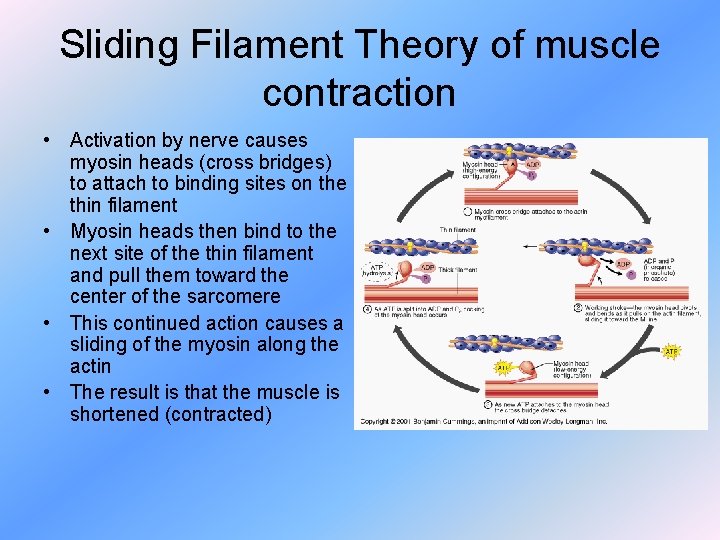
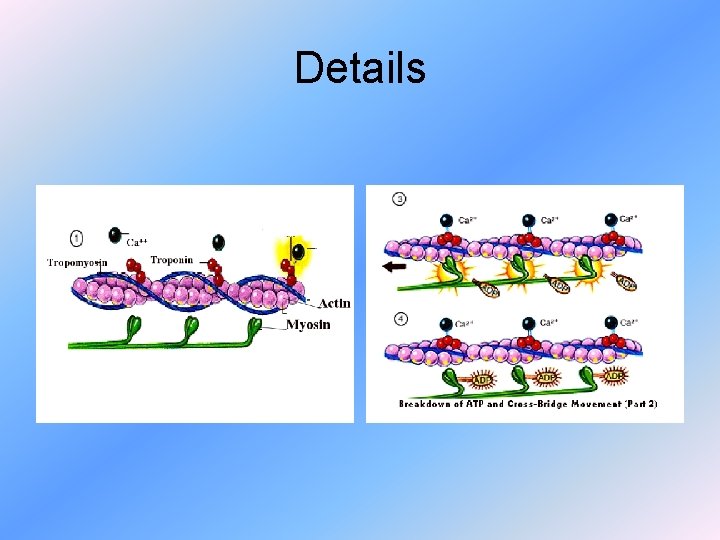
Sliding Filament Theory of muscle contraction • Activation by nerve causes myosin heads (cross bridges) to attach to binding sites on the thin filament • Myosin heads then bind to the next site of the thin filament and pull them toward the center of the sarcomere • This continued action causes a sliding of the myosin along the actin • The result is that the muscle is shortened (contracted)
Details
Summary
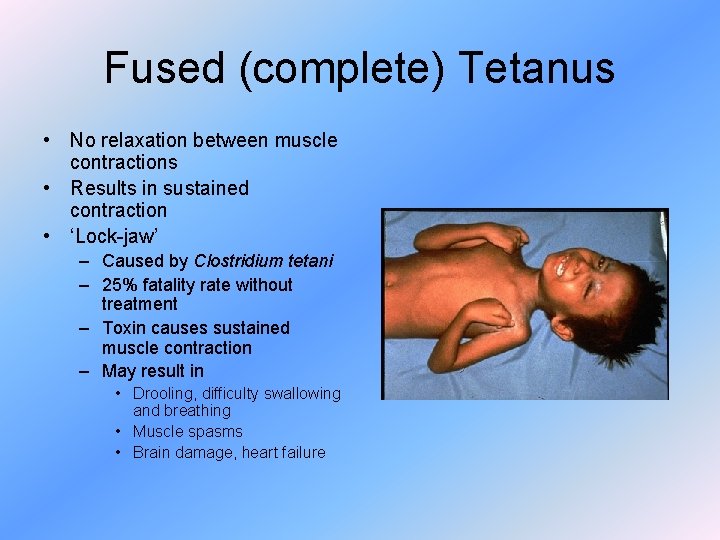
Fused (complete) Tetanus • No relaxation between muscle contractions • Results in sustained contraction • ‘Lock-jaw’ – Caused by Clostridium tetani – 25% fatality rate without treatment – Toxin causes sustained muscle contraction – May result in • Drooling, difficulty swallowing and breathing • Muscle spasms • Brain damage, heart failure
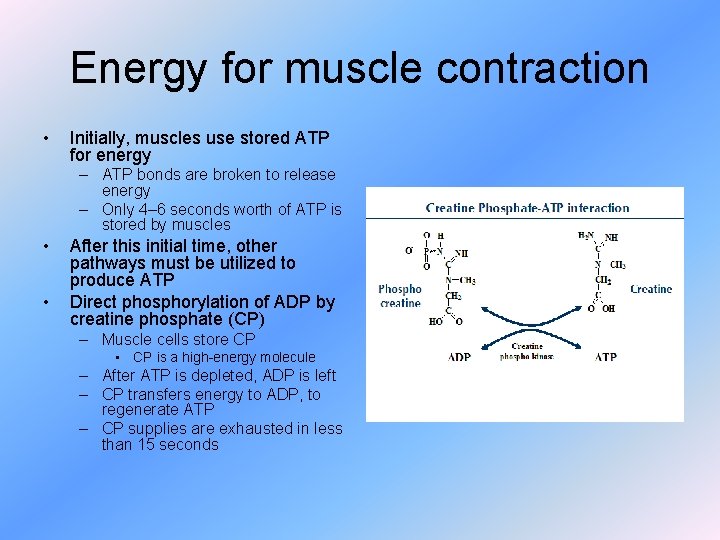
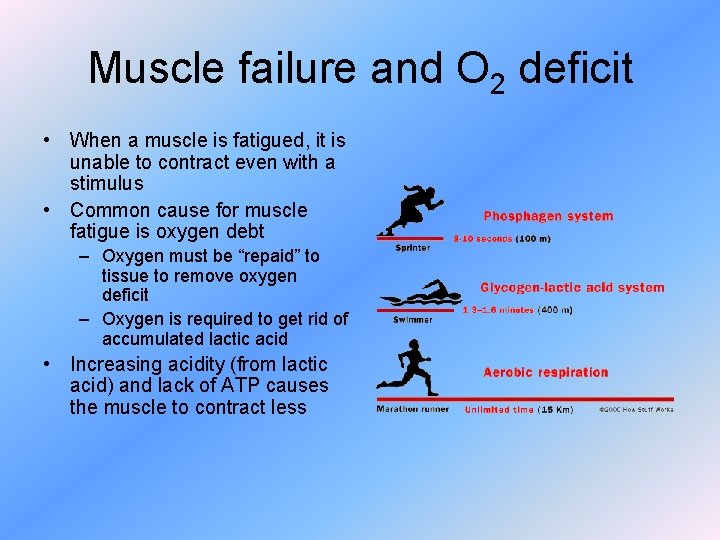
Energy for muscle contraction • Initially, muscles use stored ATP for energy – ATP bonds are broken to release energy – Only 4– 6 seconds worth of ATP is stored by muscles • • After this initial time, other pathways must be utilized to produce ATP Direct phosphorylation of ADP by creatine phosphate (CP) – Muscle cells store CP • CP is a high-energy molecule – After ATP is depleted, ADP is left – CP transfers energy to ADP, to regenerate ATP – CP supplies are exhausted in less than 15 seconds
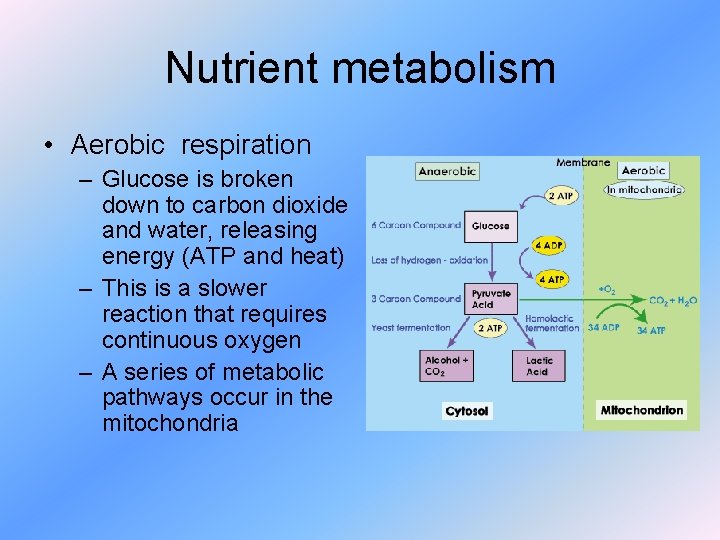
Nutrient metabolism • Aerobic respiration – Glucose is broken down to carbon dioxide and water, releasing energy (ATP and heat) – This is a slower reaction that requires continuous oxygen – A series of metabolic pathways occur in the mitochondria
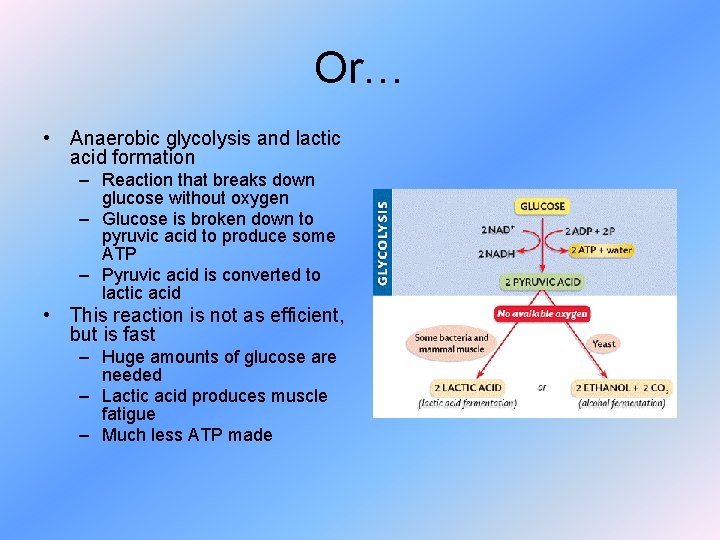
Or… • Anaerobic glycolysis and lactic acid formation – Reaction that breaks down glucose without oxygen – Glucose is broken down to pyruvic acid to produce some ATP – Pyruvic acid is converted to lactic acid • This reaction is not as efficient, but is fast – Huge amounts of glucose are needed – Lactic acid produces muscle fatigue – Much less ATP made
Muscle failure and O 2 deficit • When a muscle is fatigued, it is unable to contract even with a stimulus • Common cause for muscle fatigue is oxygen debt – Oxygen must be “repaid” to tissue to remove oxygen deficit – Oxygen is required to get rid of accumulated lactic acid • Increasing acidity (from lactic acid) and lack of ATP causes the muscle to contract less