
The Muscular System Chapter 6 1 Did you
- Slides: 12
The Muscular System Chapter 6. 1
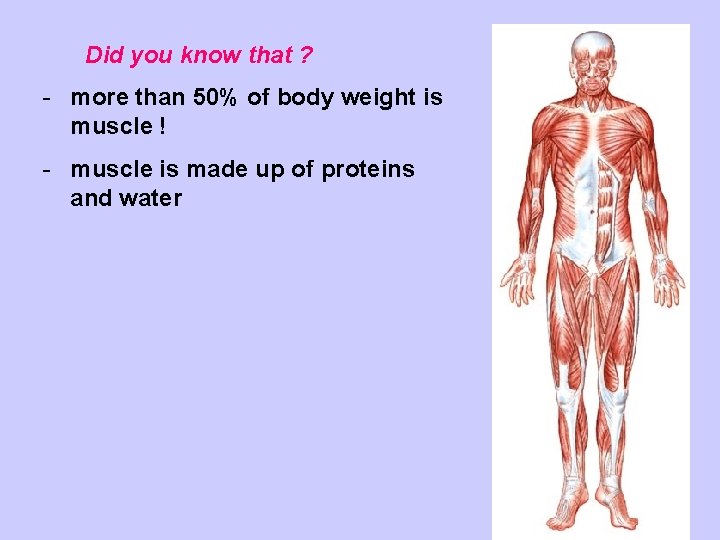
Did you know that ? - more than 50% of body weight is muscle ! - muscle is made up of proteins and water
Fun Facts Question 1: How many muscles does it take to smile? A: 17 B: 21 C: 32 D: 49
Fun Facts Question 2: How many muscles does it take to frown? A: 13 B: 21 C: 29 D: 42
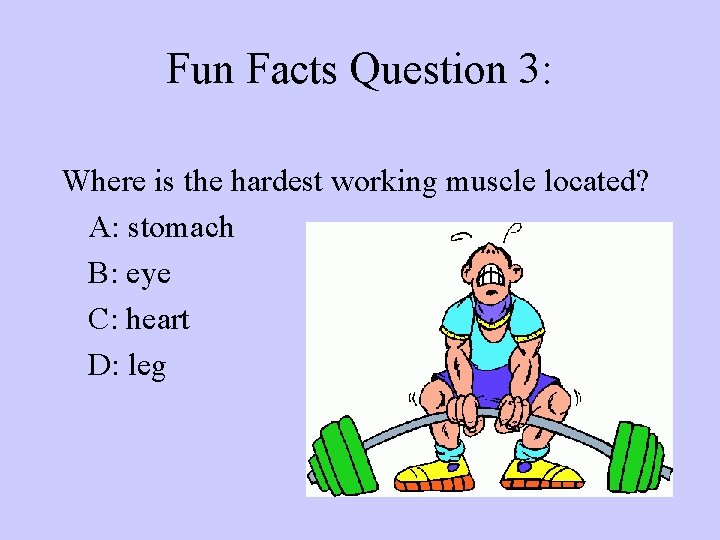
Fun Facts Question 3: Where is the hardest working muscle located? A: stomach B: eye C: heart D: leg
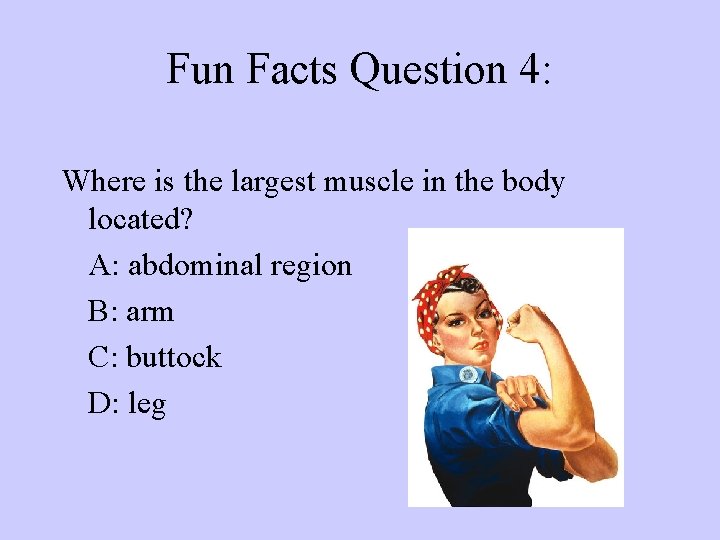
Fun Facts Question 4: Where is the largest muscle in the body located? A: abdominal region B: arm C: buttock D: leg
Info About Muscles • Only tissue able to contract • create movement by flexing and extending joints • Contain many mitochondria to create energy (ATP) from sugar during Cellular respiration – When a muscle is fatigued (tired) it is unable to contract because of a lack of oxygen
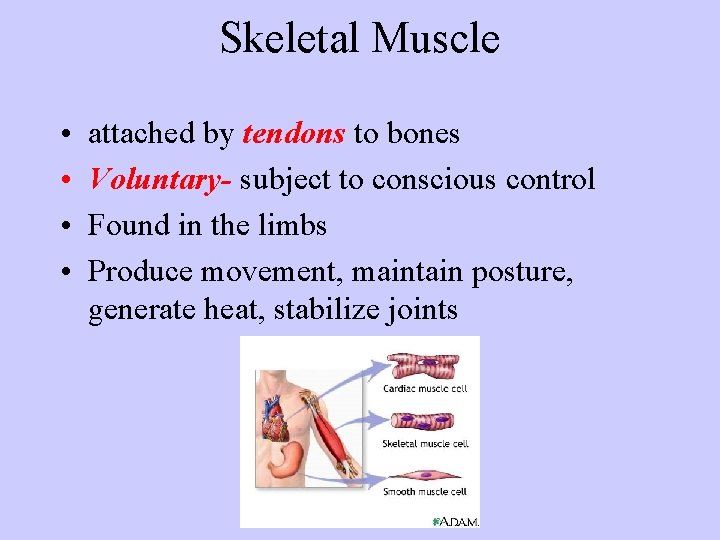
The Muscular System • responsible for all movement • three basic types of muscle – Skeletal – Cardiac – Smooth
Skeletal Muscle • • attached by tendons to bones Voluntary- subject to conscious control Found in the limbs Produce movement, maintain posture, generate heat, stabilize joints
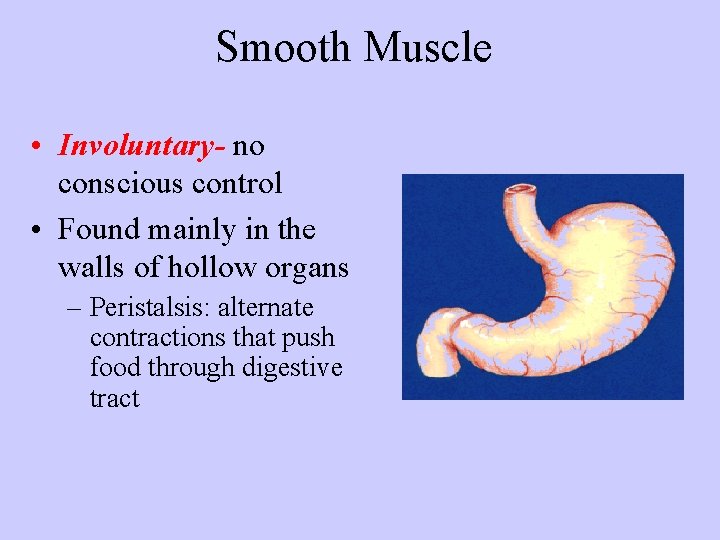
Smooth Muscle • Involuntary- no conscious control • Found mainly in the walls of hollow organs – Peristalsis: alternate contractions that push food through digestive tract
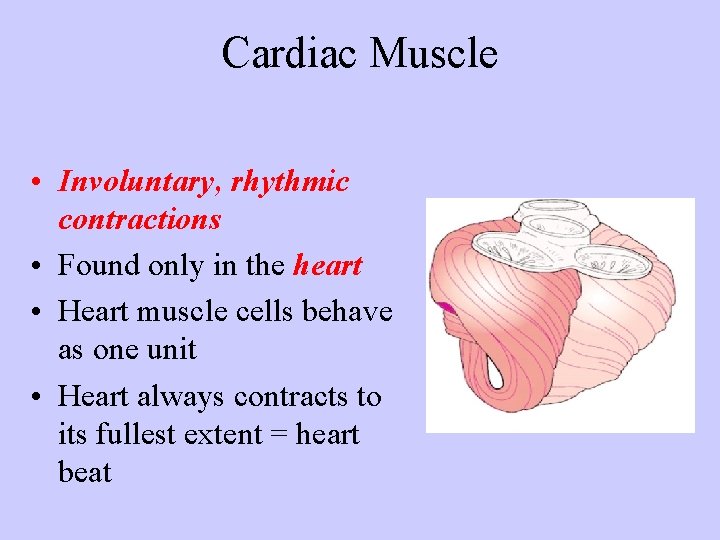
Cardiac Muscle • Involuntary, rhythmic contractions • Found only in the heart • Heart muscle cells behave as one unit • Heart always contracts to its fullest extent = heart beat
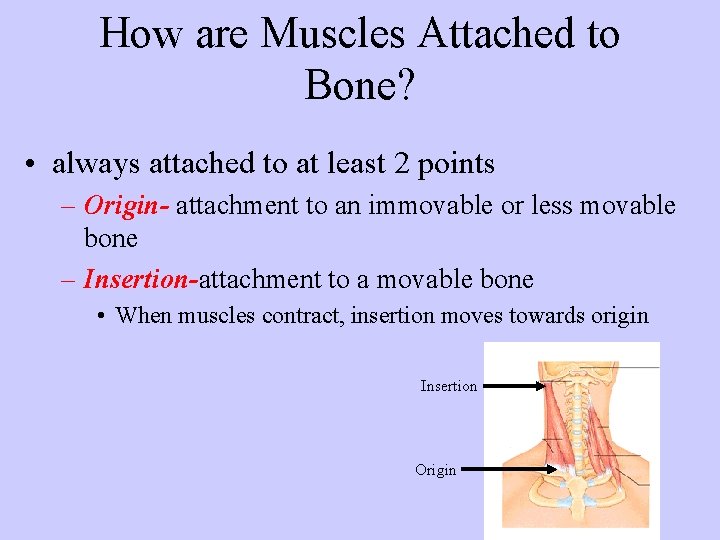
How are Muscles Attached to Bone? • always attached to at least 2 points – Origin- attachment to an immovable or less movable bone – Insertion-attachment to a movable bone • When muscles contract, insertion moves towards origin Insertion Origin