
The Muscular System Anatomy of Skeletal Muscle Part

- Slides: 20
The Muscular System Anatomy of Skeletal Muscle
Part I: Macroscopic v In order to generate power, the muscle fibers must be tightly bound by connective tissue
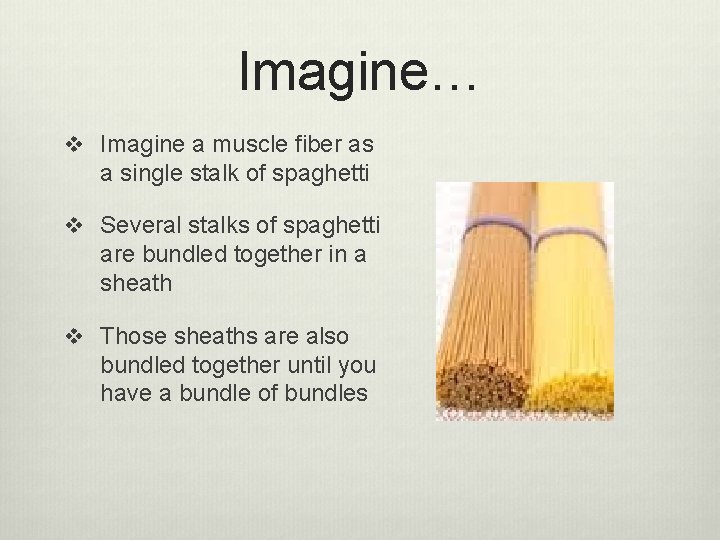
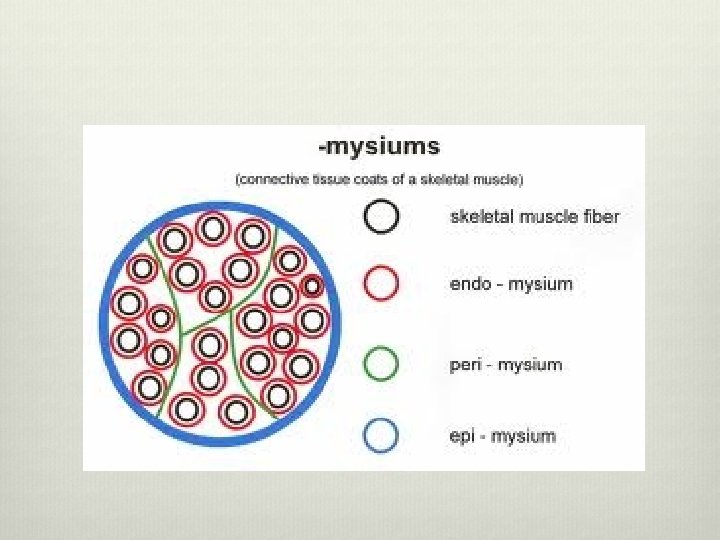
Imagine… v Imagine a muscle fiber as a single stalk of spaghetti v Several stalks of spaghetti are bundled together in a sheath v Those sheaths are also bundled together until you have a bundle of bundles
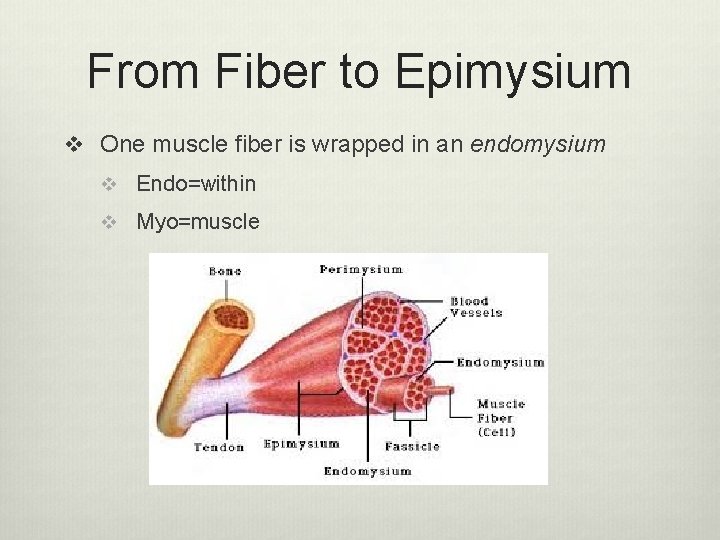
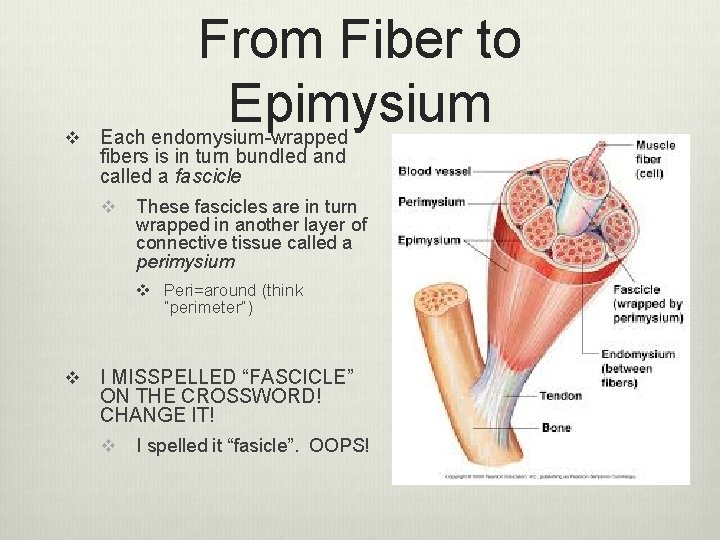
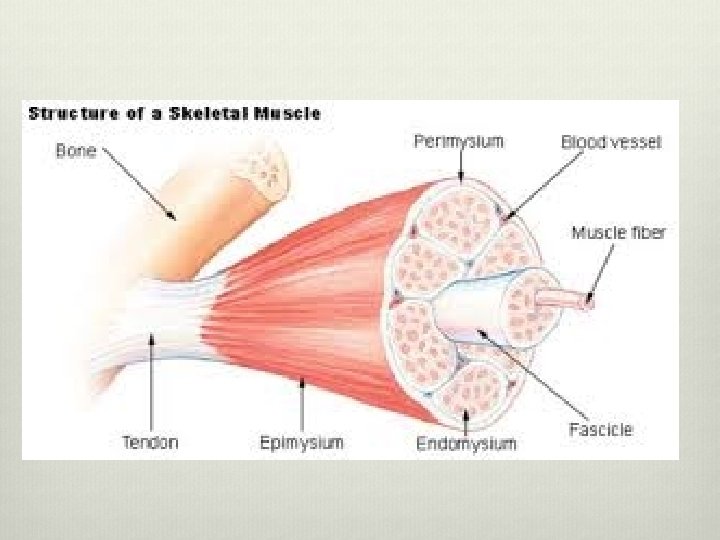
From Fiber to Epimysium v One muscle fiber is wrapped in an endomysium v Endo=within v Myo=muscle
v From Fiber to Epimysium Each endomysium-wrapped fibers is in turn bundled and called a fascicle v These fascicles are in turn wrapped in another layer of connective tissue called a perimysium v Peri=around (think “perimeter”) v I MISSPELLED “FASCICLE” ON THE CROSSWORD! CHANGE IT! v I spelled it “fasicle”. OOPS!
From Fiber to Epimysium v These perimysium-wrapped fascicles are bundled together and receive yet one more connective tissue covering: the epimysium v Epi=on top of v The epimysium blends together into a tendon, which in turn connects it to the bone v Question: You had an example of a muscle that was NOT attached to a bone. Which ones did this include? v The facial muscles!
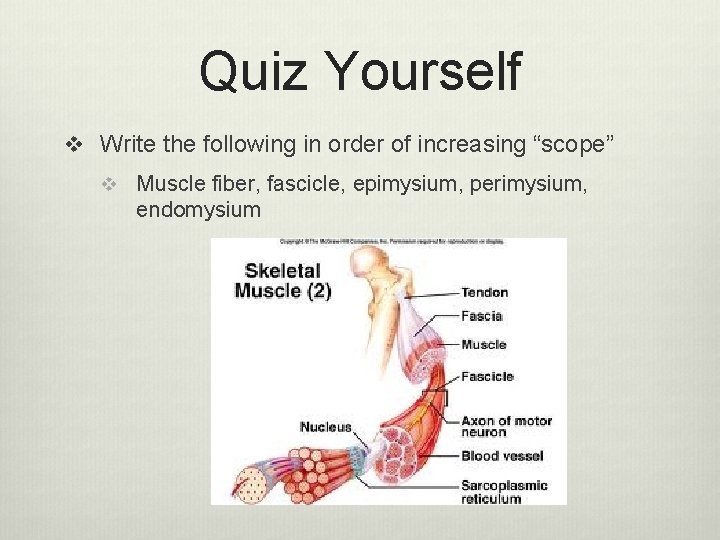
Quiz Yourself v Write the following in order of increasing “scope” v Muscle fiber, fascicle, epimysium, perimysium, endomysium
Let’s Make a Model v Get in groups of 4! v Green paper = endomysium v Pink paper = perimysium v Yellow paper = epimysium
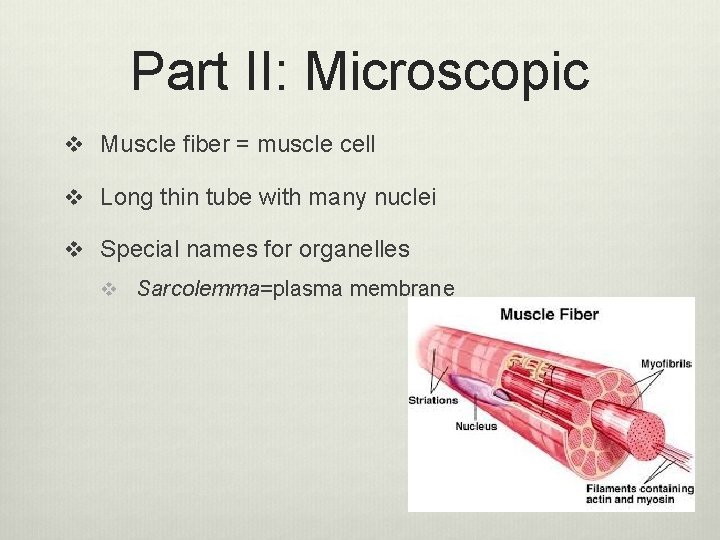
Part II: Microscopic v Muscle fiber = muscle cell v Long thin tube with many nuclei v Special names for organelles v Sarcolemma=plasma membrane
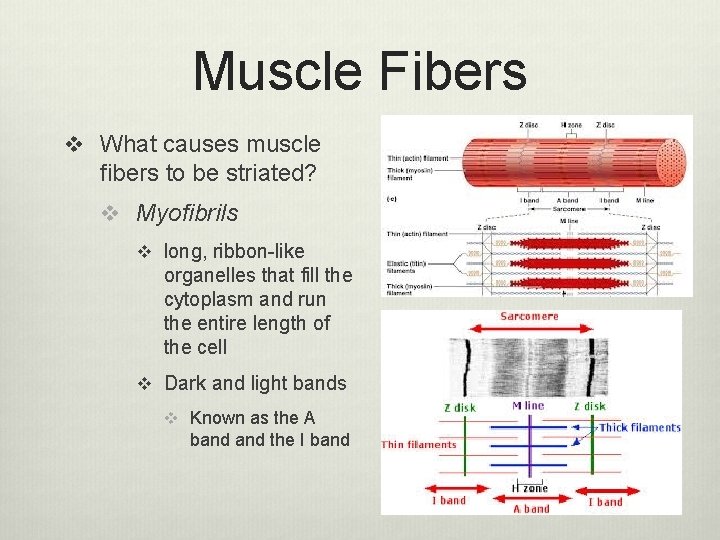
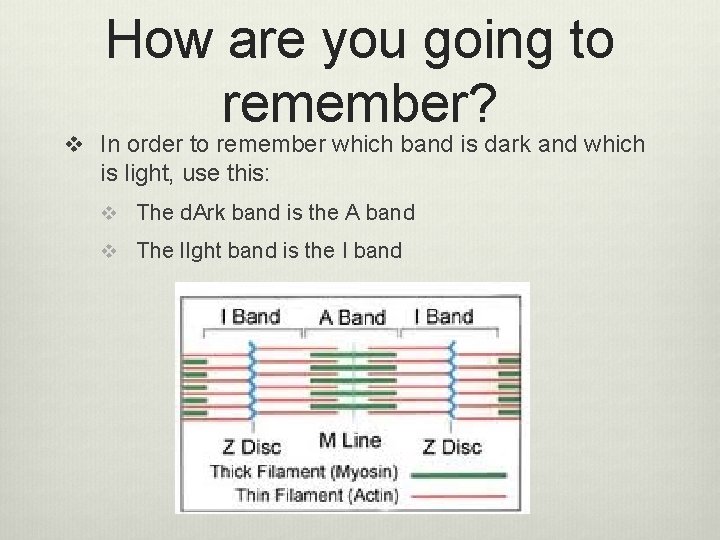
Muscle Fibers v What causes muscle fibers to be striated? v Myofibrils v long, ribbon-like organelles that fill the cytoplasm and run the entire length of the cell v Dark and light bands v Known as the A band the I band
How are you going to remember? v In order to remember which band is dark and which is light, use this: v The d. Ark band is the A band v The l. Ight band is the I band
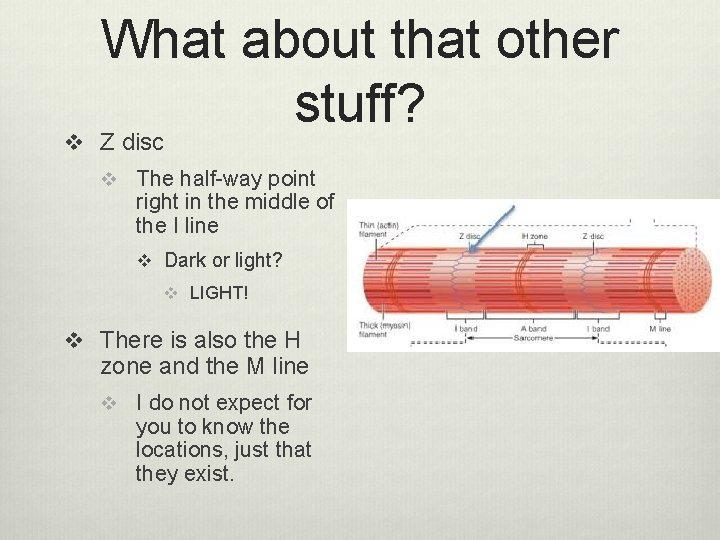
What about that other stuff? v Z disc v The half-way point right in the middle of the I line v Dark or light? v LIGHT! v There is also the H zone and the M line v I do not expect for you to know the locations, just that they exist.
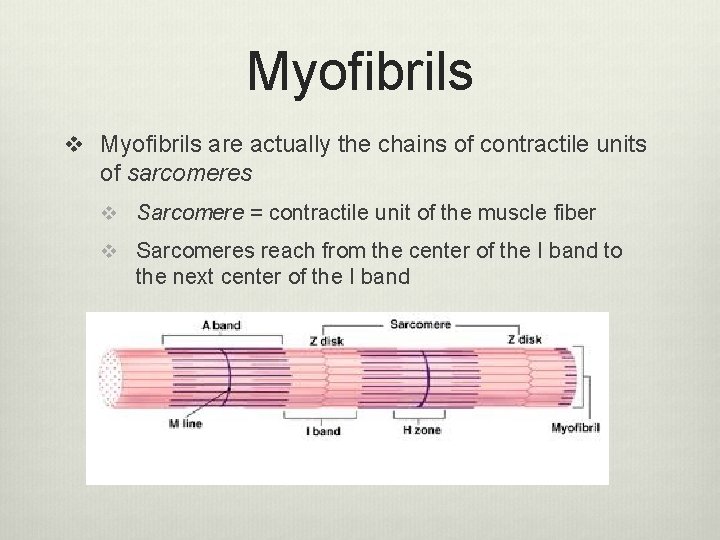
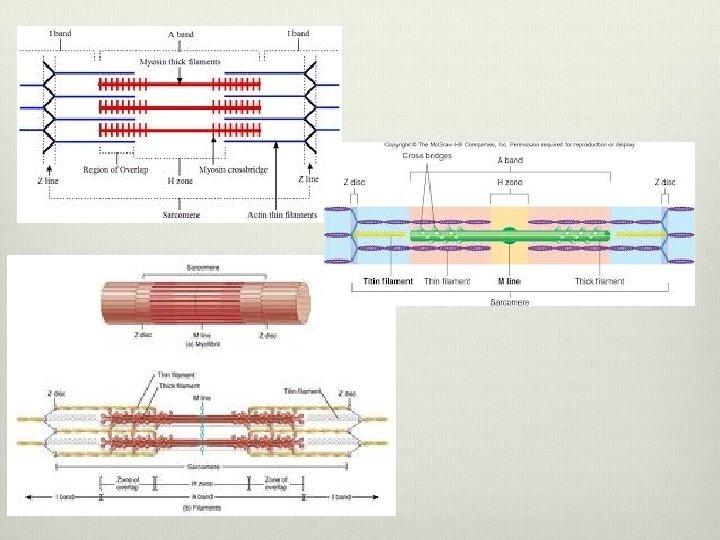
Myofibrils v Myofibrils are actually the chains of contractile units of sarcomeres v Sarcomere = contractile unit of the muscle fiber v Sarcomeres reach from the center of the I band to the next center of the I band
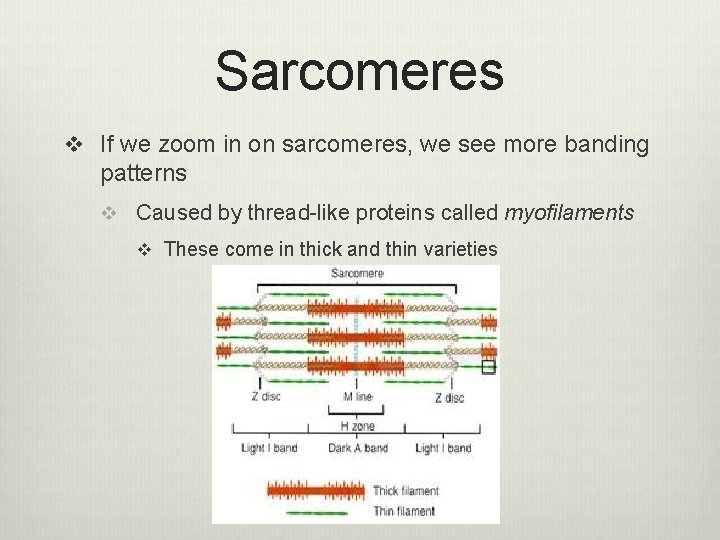
Sarcomeres v If we zoom in on sarcomeres, we see more banding patterns v Caused by thread-like proteins called myofilaments v These come in thick and thin varieties
Myofilaments v The thick filaments are composed of a protein called myosin v These are classified as an ATPase v means it is an enzyme that generates energy through breaking down ATP v The thin filaments are composed of a protein called actin v These anchor to the Z disc (the center of the I band) v This is why the I band is lighter-it only contains thin filaments! v The thick and the thin filaments overlap and are anchored to each other
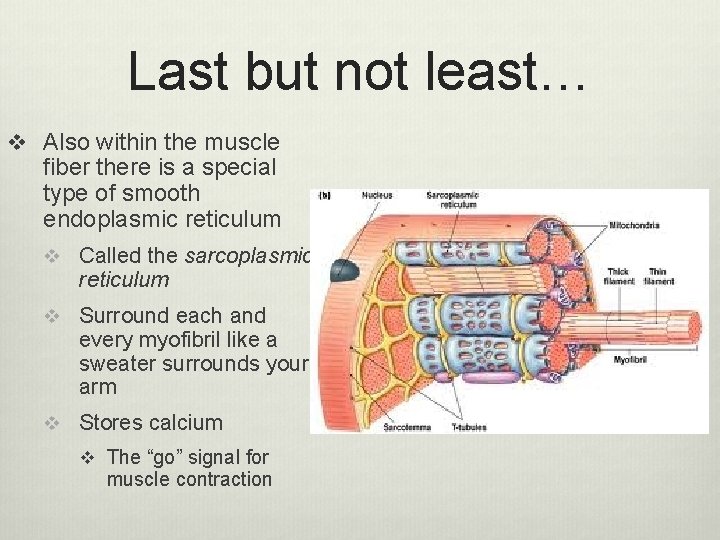
Last but not least… v Also within the muscle fiber there is a special type of smooth endoplasmic reticulum v Called the sarcoplasmic reticulum v Surround each and every myofibril like a sweater surrounds your arm v Stores calcium v The “go” signal for muscle contraction
Worksheet #2!