
The Muscular System An Overview of Unit 7

- Slides: 16
The Muscular System An Overview of Unit 7
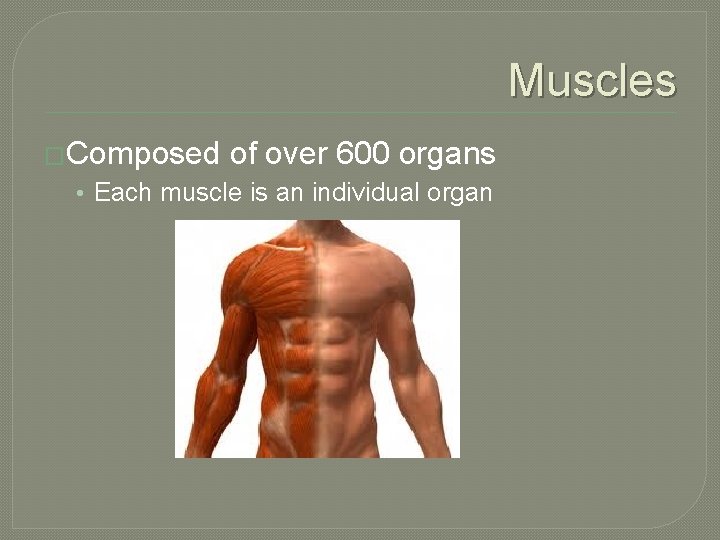
Muscles �Composed of over 600 organs • Each muscle is an individual organ
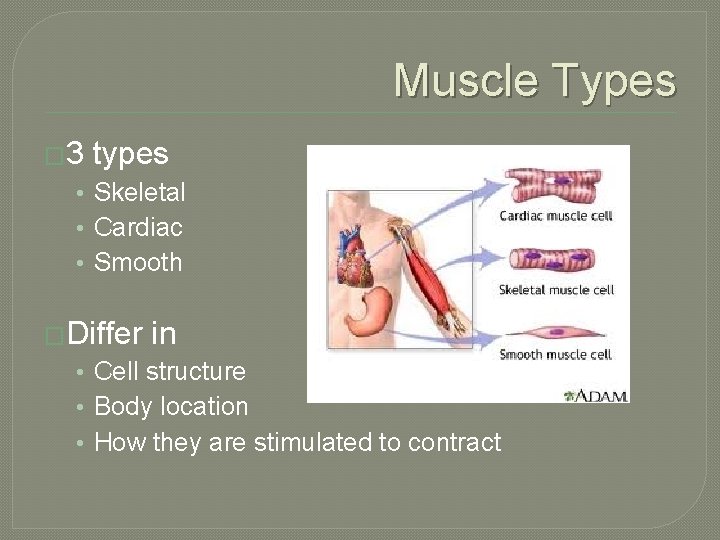
Muscle Types � 3 types • Skeletal • Cardiac • Smooth �Differ in • Cell structure • Body location • How they are stimulated to contract
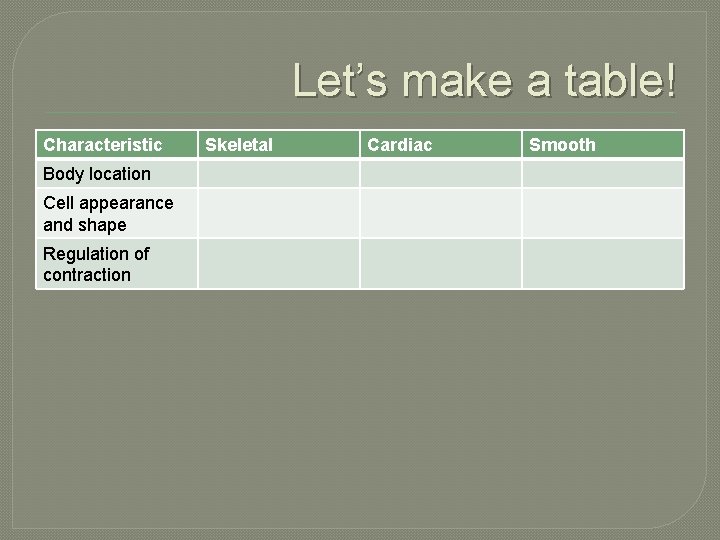
Let’s make a table! Characteristic Body location Cell appearance and shape Regulation of contraction Skeletal Cardiac Smooth
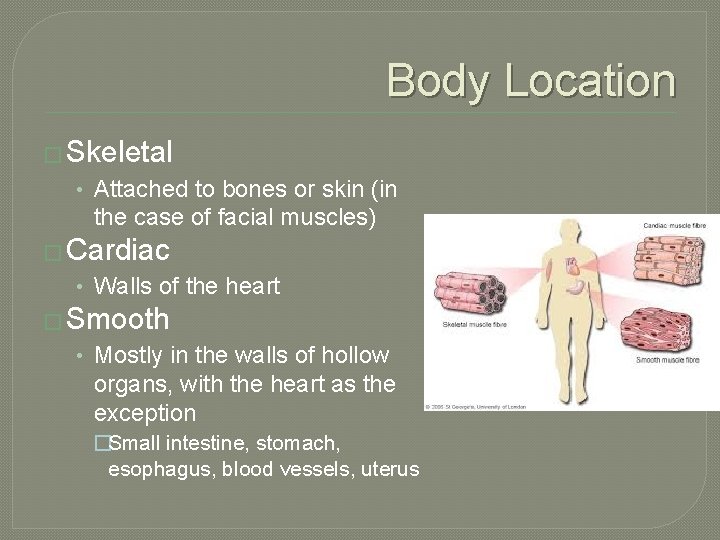
Body Location � Skeletal • Attached to bones or skin (in the case of facial muscles) � Cardiac • Walls of the heart � Smooth • Mostly in the walls of hollow organs, with the heart as the exception �Small intestine, stomach, esophagus, blood vessels, uterus
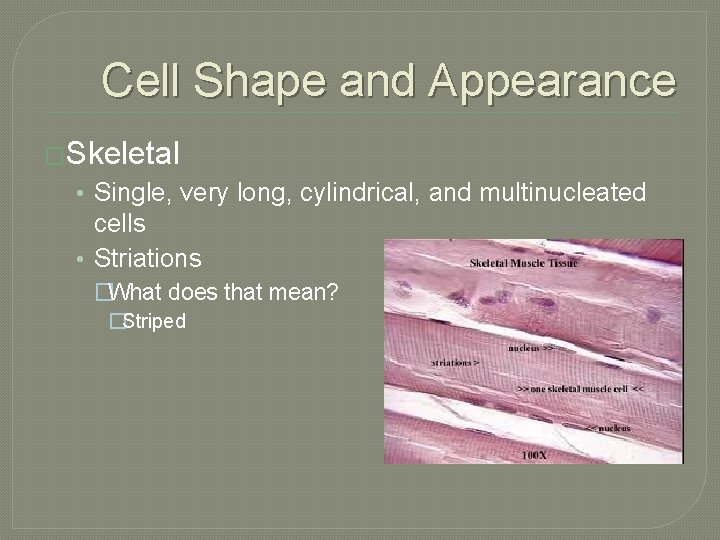
Cell Shape and Appearance �Skeletal • Single, very long, cylindrical, and multinucleated cells • Striations �What does that mean? �Striped
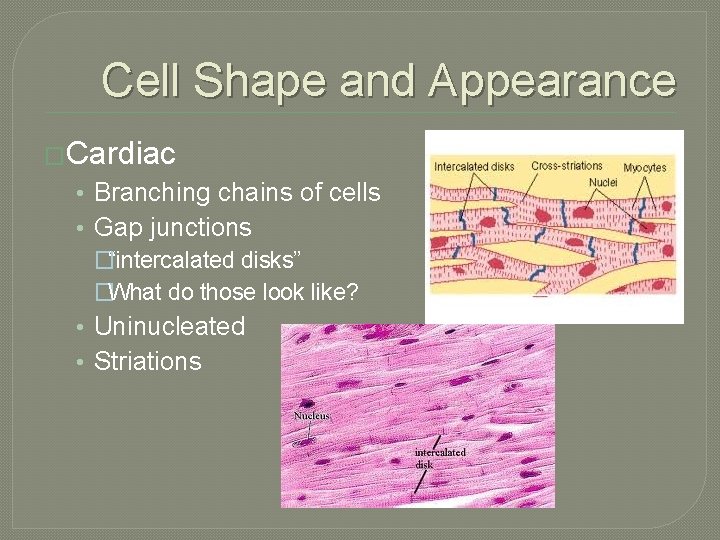
Cell Shape and Appearance �Cardiac • Branching chains of cells • Gap junctions �“intercalated disks” �What do those look like? • Uninucleated • Striations
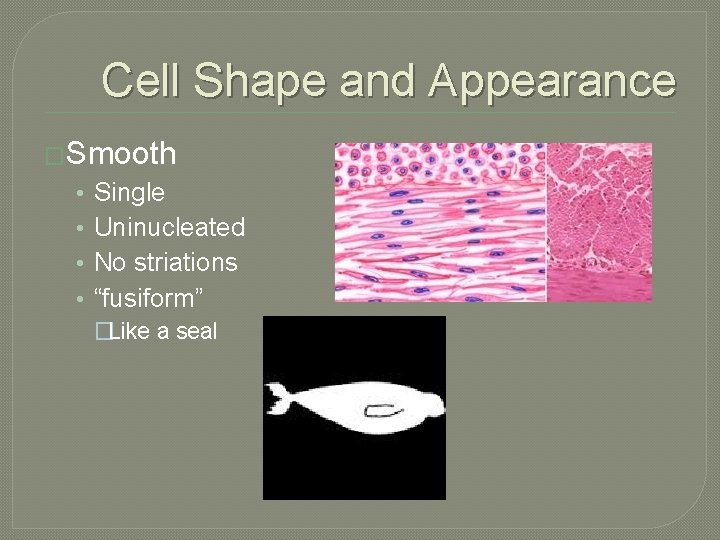
Cell Shape and Appearance �Smooth • • Single Uninucleated No striations “fusiform” �Like a seal
Voluntary vs Involuntary �What does that mean?
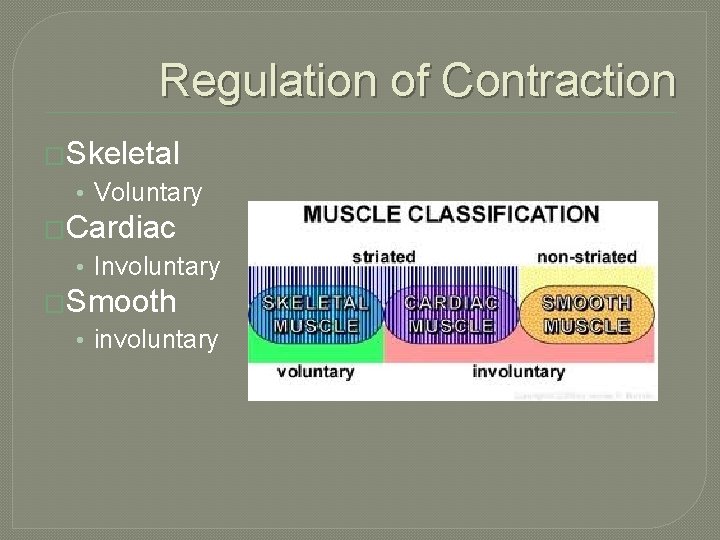
Regulation of Contraction �Skeletal • Voluntary �Cardiac • Involuntary �Smooth • involuntary
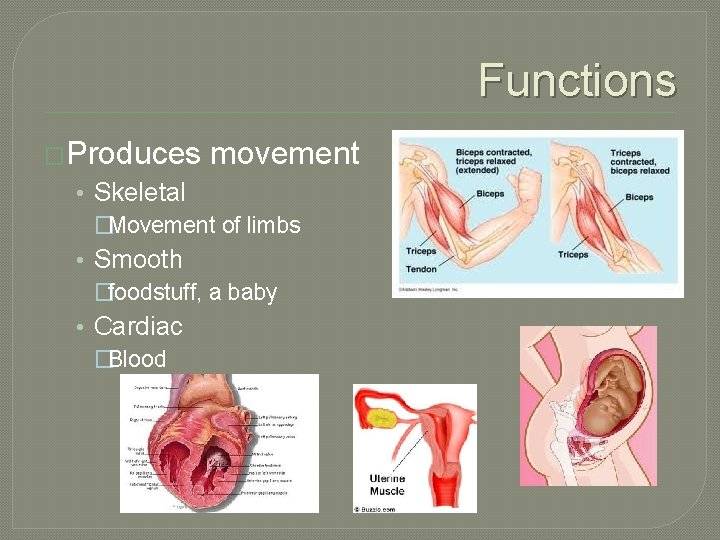
Functions �Produces movement • Skeletal �Movement of limbs • Smooth �foodstuff, a baby • Cardiac �Blood
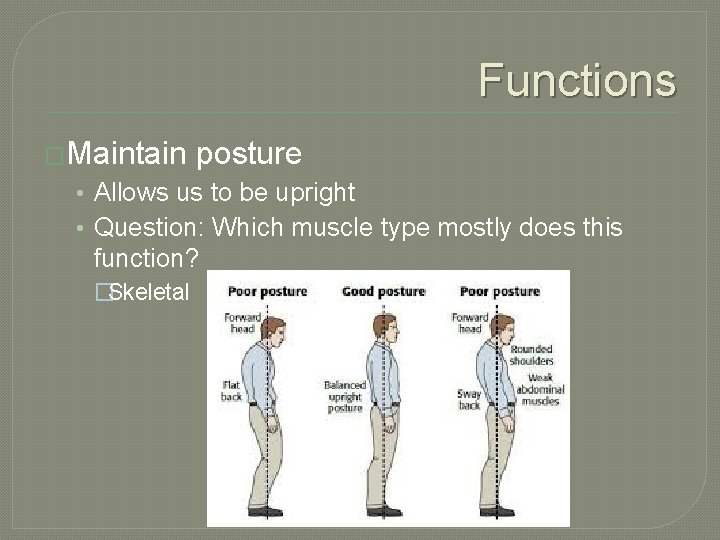
Functions �Maintain posture • Allows us to be upright • Question: Which muscle type mostly does this function? �Skeletal
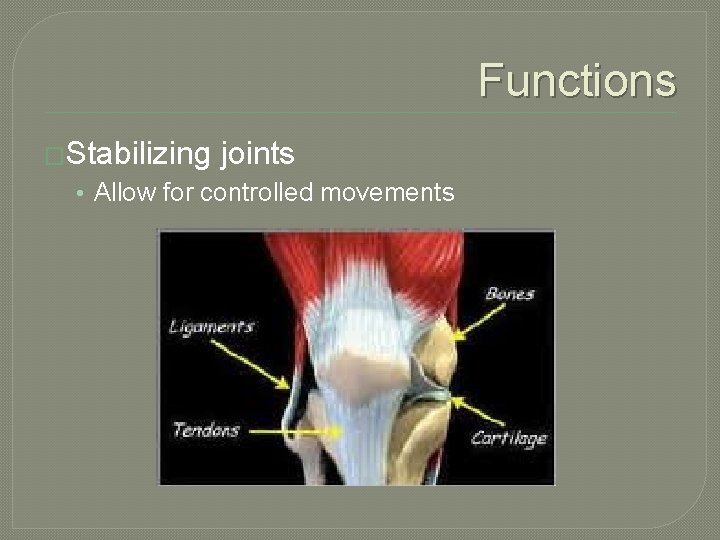
Functions �Stabilizing joints • Allow for controlled movements
Functions �Generating heat • By-product of muscular activity �Question: Why do we shiver? • When our body senses that we are decreasing in body temperature, a signal is sent to our skeletal muscles �They begin to rapidly contract and relax �This is muscular activity so heat is generated!
Worksheet #1!