
The Muscular System 1 2 3 Unit Objectives
The Muscular System 1. 2. 3. Unit Objectives: Be able to explain the differences between the 3 types of muscles in the human body Be able to describe common muscle actions and how muscle contractions are initiated Be able to name the major skeletal muscles of the body
The Muscular System • Muscles are responsible for all types of body movement • Muscle Functions: – – Movement Maintain posture Stabilize joints Heat • Three basic muscle types found in the body: – – – Smooth muscle Cardiac muscle Skeletal muscle
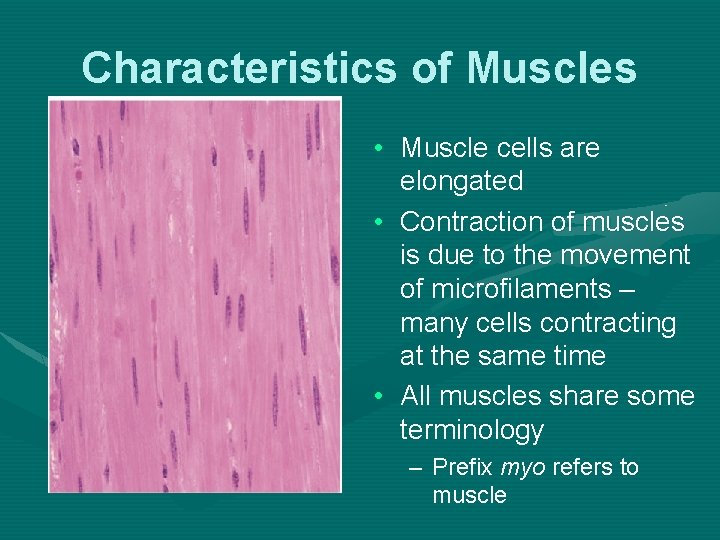
Characteristics of Muscles • Muscle cells are elongated • Contraction of muscles is due to the movement of microfilaments – many cells contracting at the same time • All muscles share some terminology – Prefix myo refers to muscle
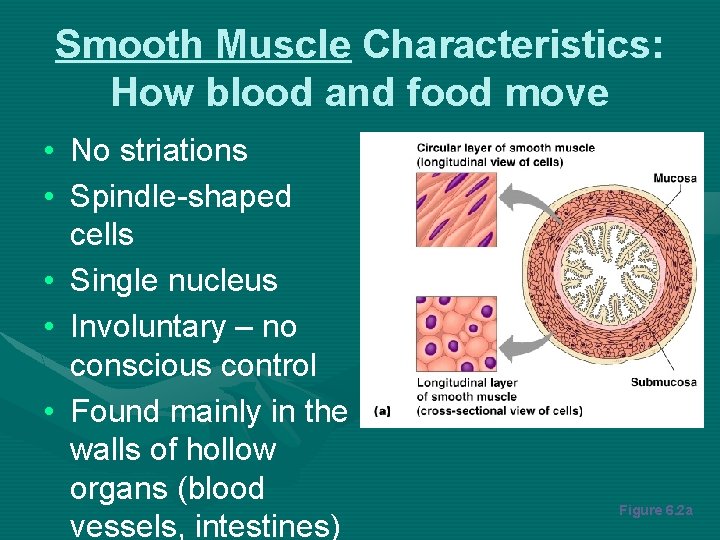
Smooth Muscle Characteristics: How blood and food move • No striations • Spindle-shaped cells • Single nucleus • Involuntary – no conscious control • Found mainly in the walls of hollow organs (blood vessels, intestines) Figure 6. 2 a
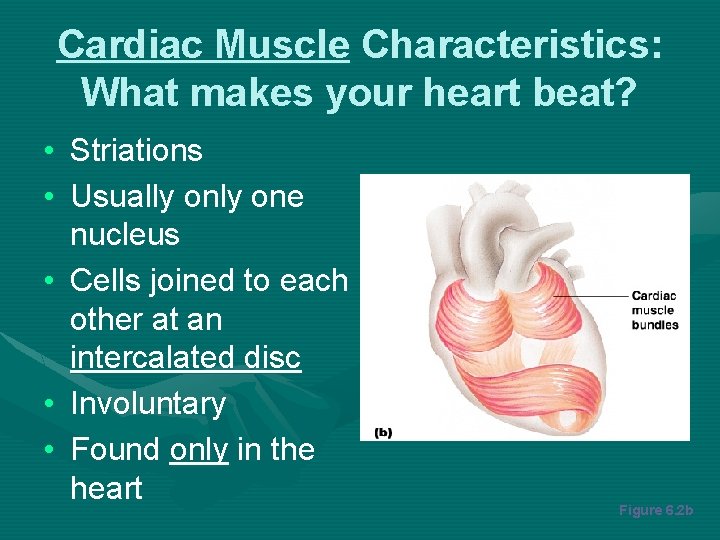
Cardiac Muscle Characteristics: What makes your heart beat? • Striations • Usually one nucleus • Cells joined to each other at an intercalated disc • Involuntary • Found only in the heart Figure 6. 2 b
Skeletal Muscle Characteristics: Moving your bones! • Most are attached by tendons to bones – Remember “tendons tug” • • Cells have more than one nucleus Striated – have visible banding Voluntary – subject to conscious control Cells are surrounded and bundled by connective tissue
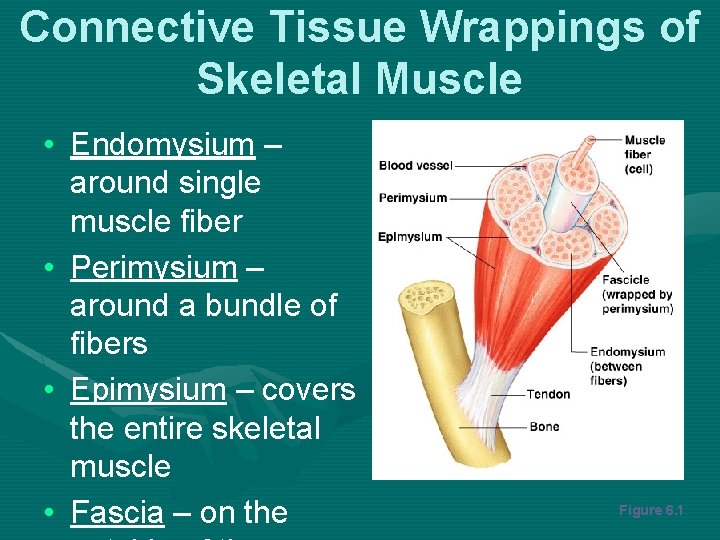
Connective Tissue Wrappings of Skeletal Muscle • Endomysium – around single muscle fiber • Perimysium – around a bundle of fibers • Epimysium – covers the entire skeletal muscle • Fascia – on the Figure 6. 1
Skeletal Muscle Attachments • Epimysium blends into a connective tissue attachment; the tendon – a cord-like structure • Sites of muscle attachment – Bones – Cartilages – Connective tissue coverings Animation: http: //www. wisconline. com/objects/index_tj. asp? obj. ID=AP 13904
Muscle Fibres • Activated through impulses via motor end plate • Group of fibres activated via same nerve: motor unit • Each fibre has capillaries that supply nutrients and eliminate waste • Two Types of Fibers – Type I- Slow Twitch – Type II- Fast Twitch • Type IIa- Moderately Fast Twitch • Type IIb- True Fast Twitch
Muscle Teamwork • Agonist (prime mover): - the muscle or group of muscles producing a desired effect • Antagonist: - the muscle or group of muscles opposing the action
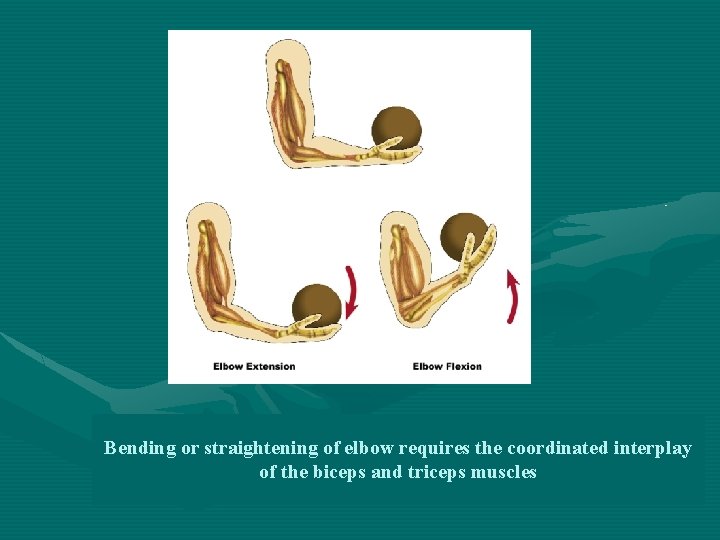
Bending or straightening of elbow requires the coordinated interplay of the biceps and triceps muscles
Contraction of a Skeletal Muscle • Muscle fiber contraction is “all or none” • Within a skeletal muscle, not all fibers may be stimulated during the same interval • Must have ATP in order to contract
Muscle Response to Strong Stimuli • Muscle force depends upon the number of fibers stimulated • More fibers contracting results in greater muscle tension • Muscles can continue to contract unless they run out of energy (ATP)
Energy for Muscle Contraction • Initially, muscles used stored ATP for energy – aerobic activities – Bonds of ATP are broken to release energy – Only 4 -6 seconds worth of ATP is stored by muscles • After this initial time, other pathways must be utilized to produce ATP – anaerobic activities and lactic acid build-up
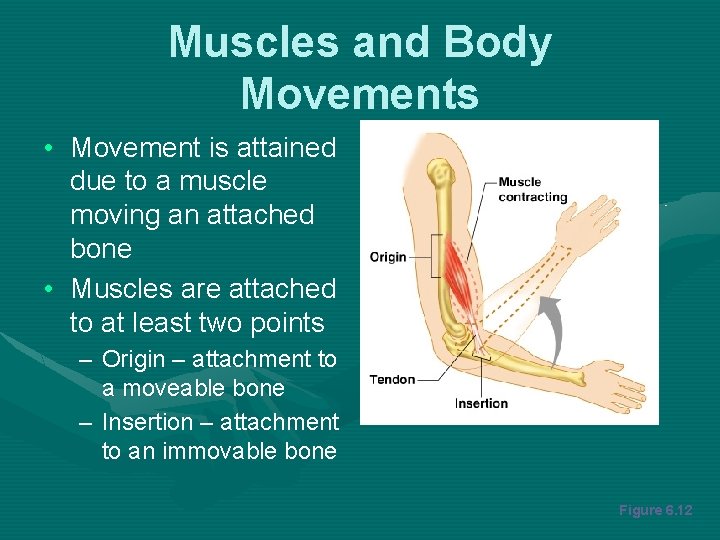
Muscles and Body Movements • Movement is attained due to a muscle moving an attached bone • Muscles are attached to at least two points – Origin – attachment to a moveable bone – Insertion – attachment to an immovable bone Figure 6. 12
Ordinary Body Movements • Flexion – decreases the angle between two adjacent body segments • Extension – increases the angle between two adjacent body segments • Rotation – the bone distal to the joint is moved either toward (medial) or away from (lateral) the midline • Abduction – movement of a body part away from the midline • Adduction – movement of a body part back toward the midline • Circumduction – a combination of flexion, abduction, extension, and adduction http: //www. med. umich. edu/lrc/hypermuscle/hyper. html
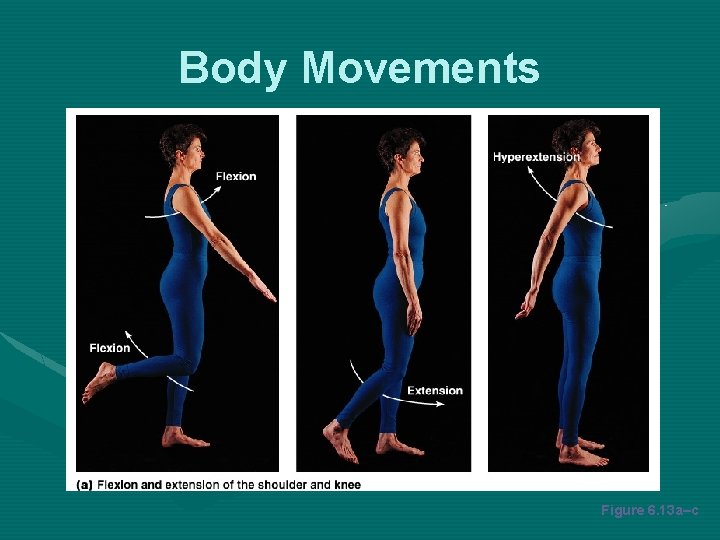
Body Movements Figure 6. 13 a–c
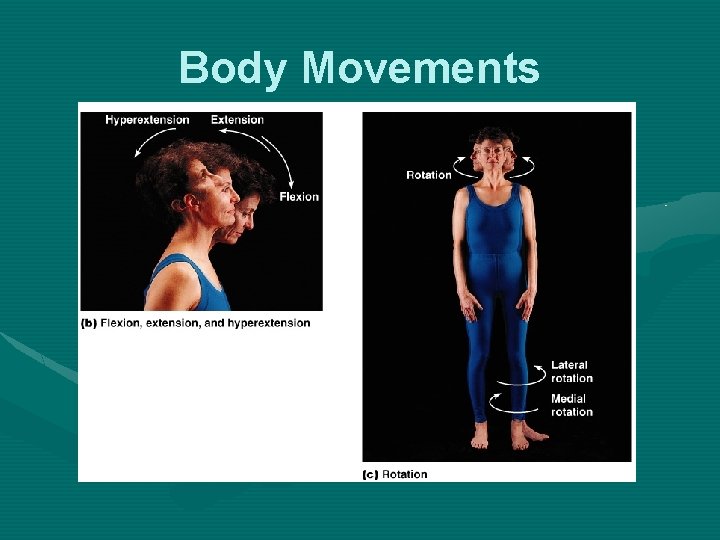
Body Movements
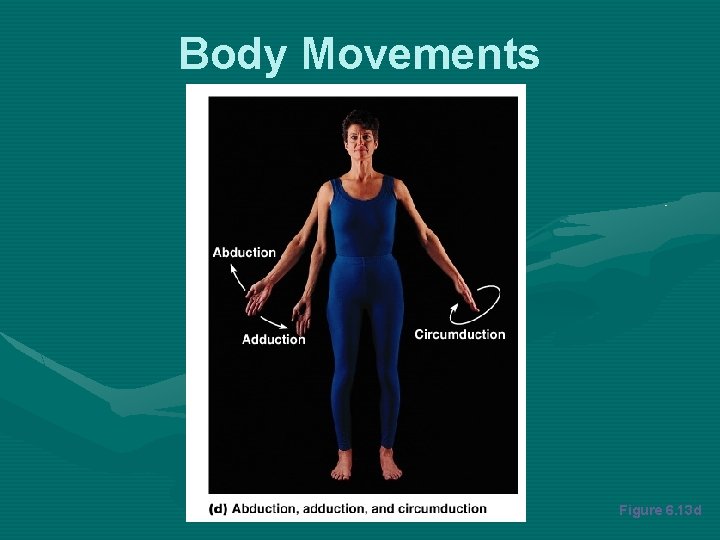
Body Movements Figure 6. 13 d
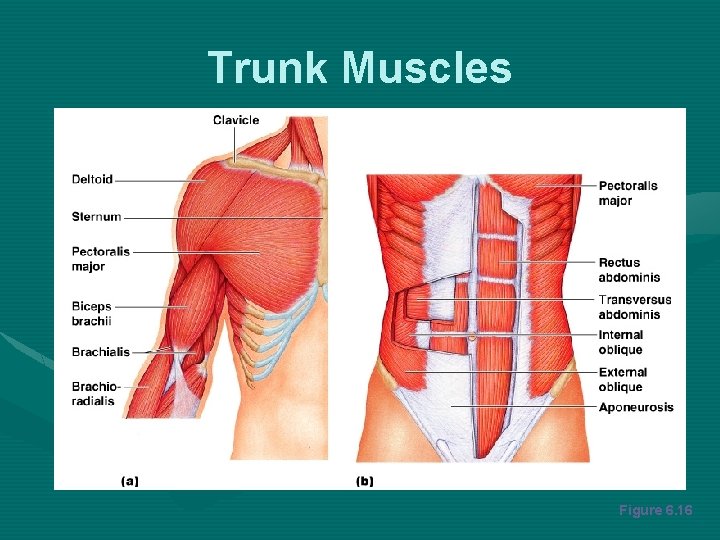
Trunk Muscles Figure 6. 16
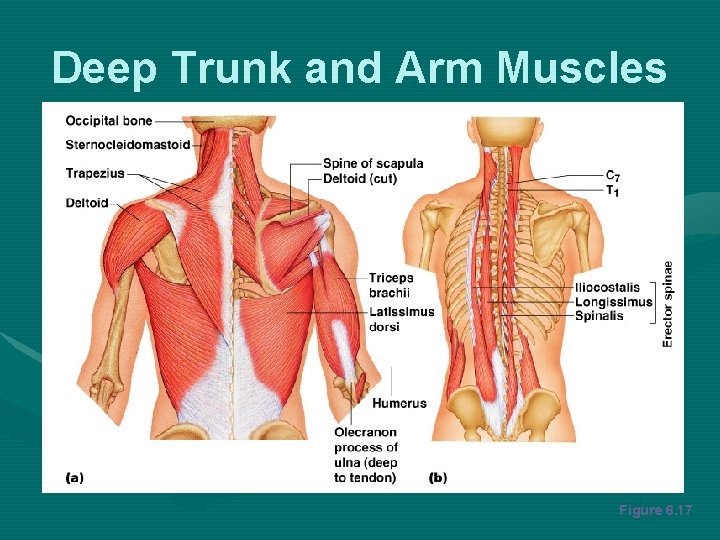
Deep Trunk and Arm Muscles Figure 6. 17
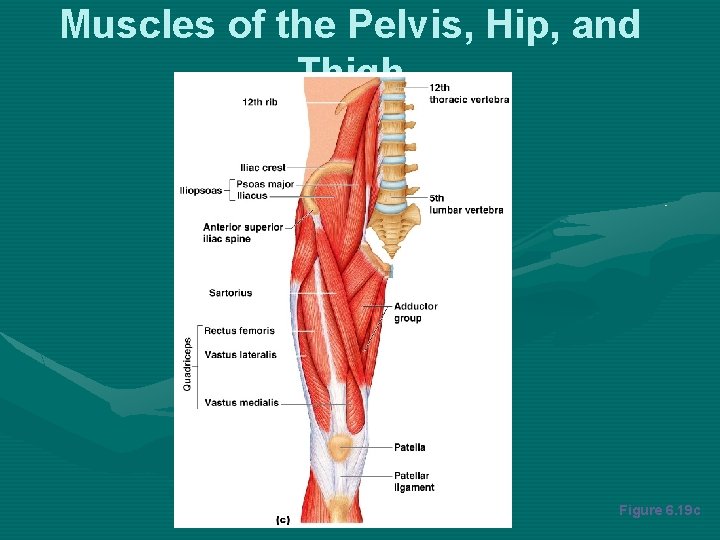
Muscles of the Pelvis, Hip, and Thigh Figure 6. 19 c
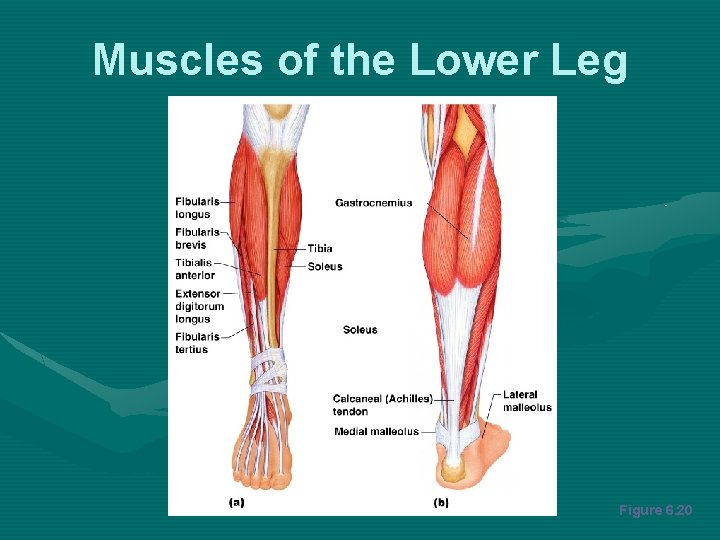
Muscles of the Lower Leg Figure 6. 20
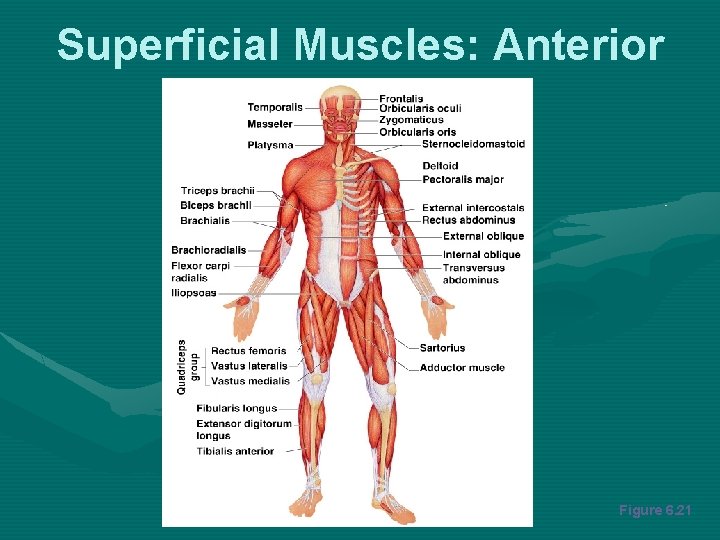
Superficial Muscles: Anterior Figure 6. 21
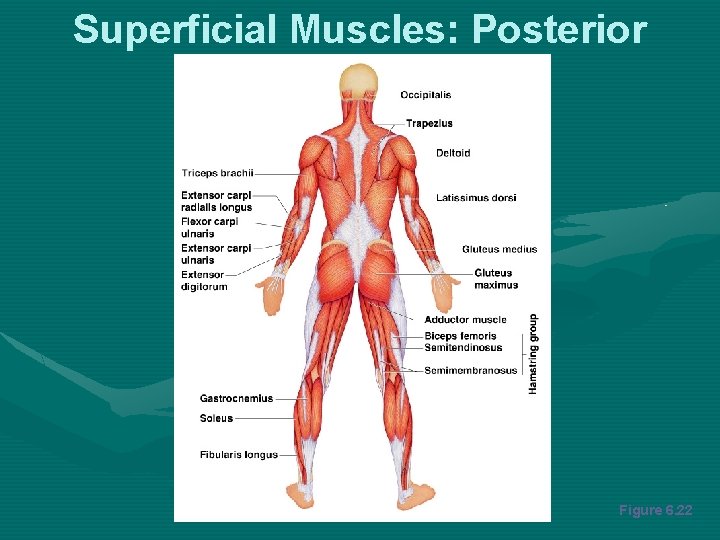
Superficial Muscles: Posterior Figure 6. 22
- Slides: 25