
The motor unit and spinal reflexes Michael Beierlein
The motor unit and spinal reflexes Michael Beierlein, Ph. D Department of Neurobiology and Anatomy, MSE R 442 Mc. Govern Medical School Houston, TX Email: michael. beierlein@uth. tmc. edu
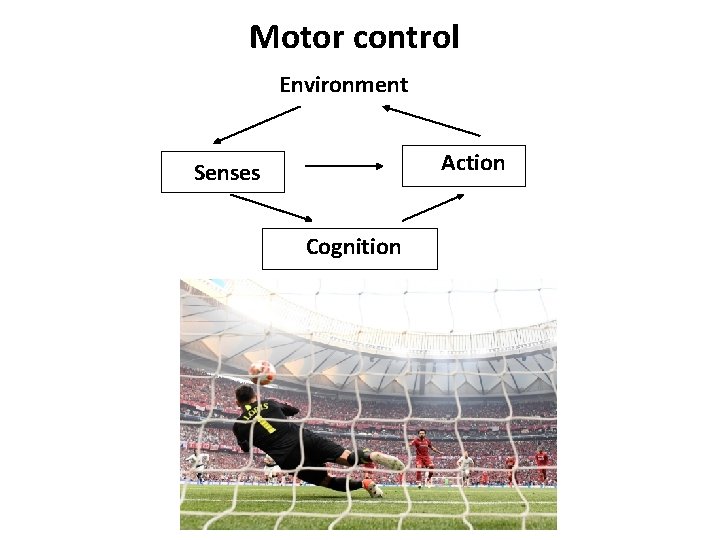
Motor control Environment Action Senses Cognition
Components of Proper Motor Control • Volition transformation of abstract goals into activation of specific set of muscles • Coordination of signals to many muscle groups • Proprioception constant updates about muscle length, force, joint position • Postural adjustments • Sensory feedback • Compensation for body and muscles • Unconscious processing Walking, postural adjustments, etc. • Adaptability acquisition of motor skills
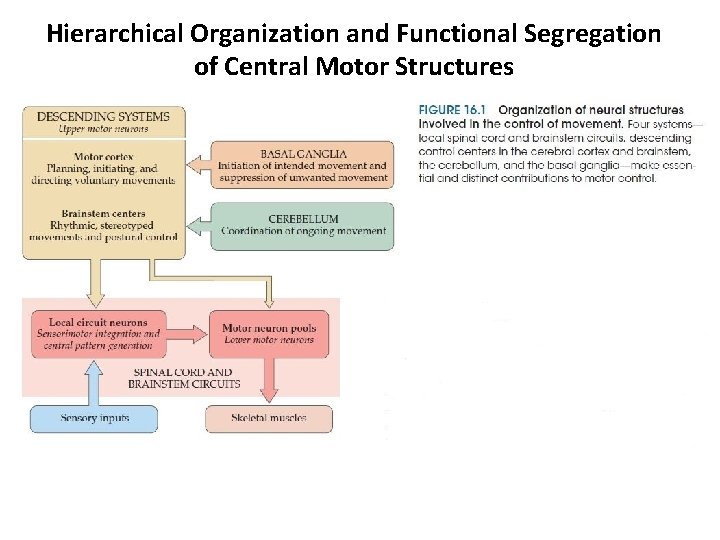
Hierarchical Organization and Functional Segregation of Central Motor Structures
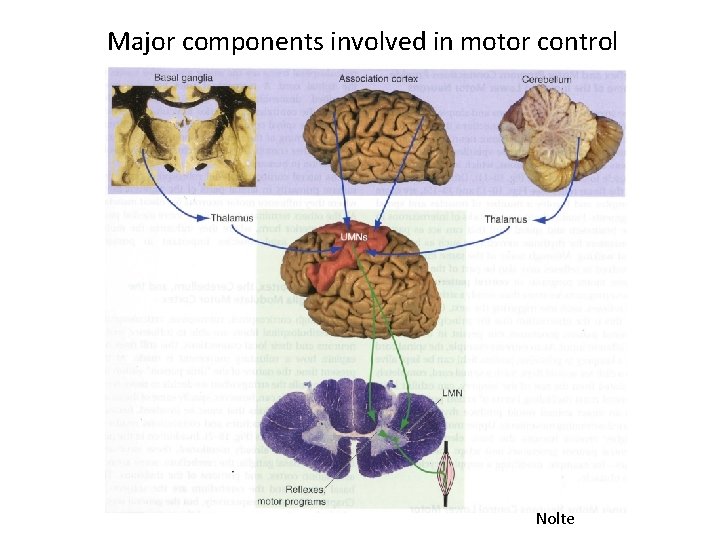
Major components involved in motor control Nolte
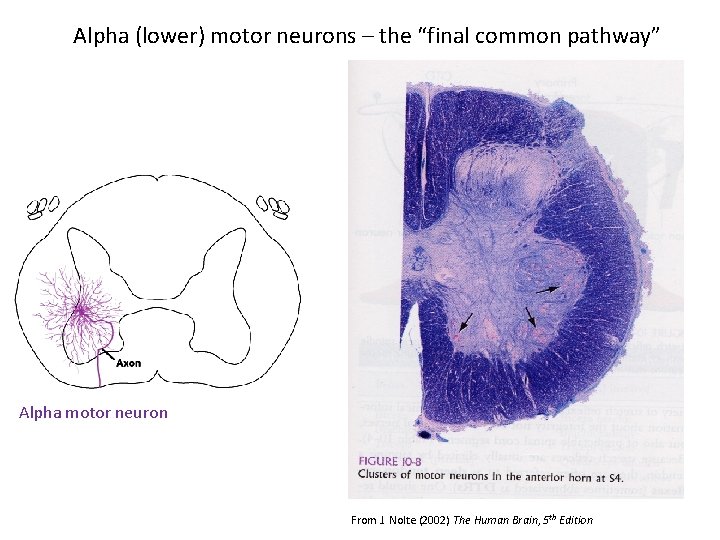
Alpha (lower) motor neurons – the “final common pathway” Alpha motor neuron From J. Nolte (2002) The Human Brain, 5 th Edition
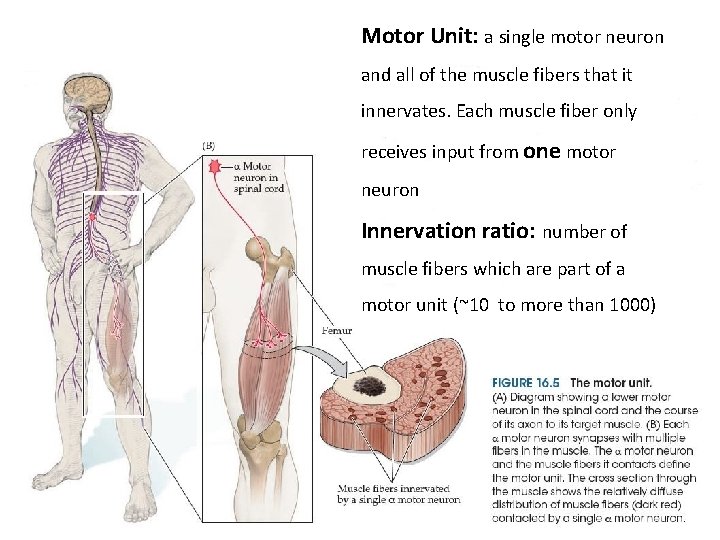
Motor Unit: a single motor neuron and all of the muscle fibers that it innervates. Each muscle fiber only receives input from one motor neuron Innervation ratio: number of muscle fibers which are part of a motor unit (~10 to more than 1000)
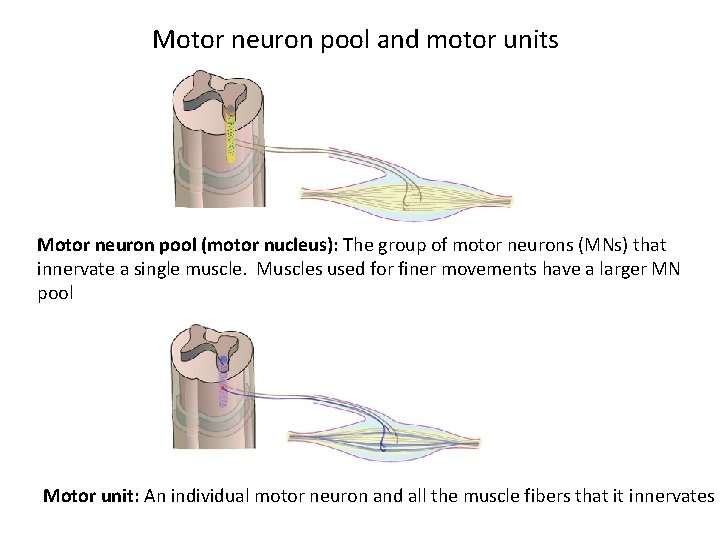
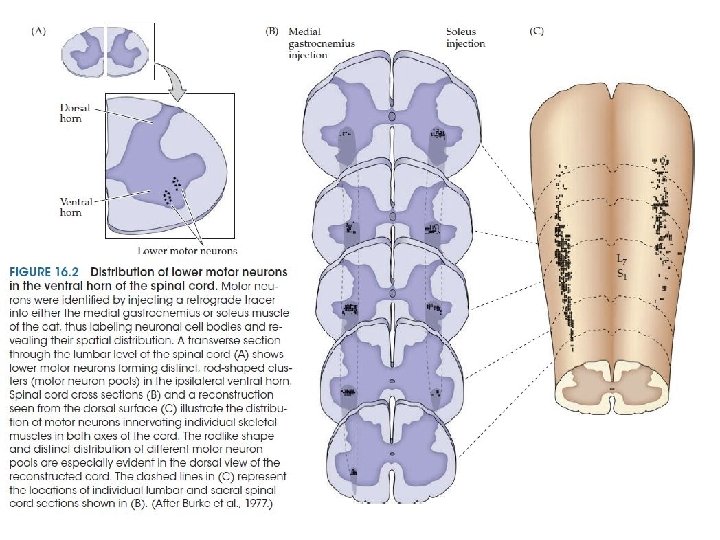
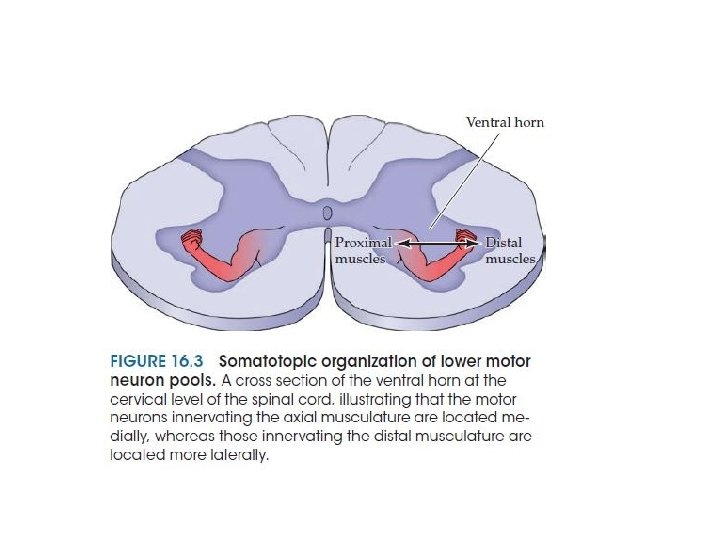
Motor neuron pool and motor units Motor neuron pool (motor nucleus): The group of motor neurons (MNs) that innervate a single muscle. Muscles used for finer movements have a larger MN pool Motor unit: An individual motor neuron and all the muscle fibers that it innervates
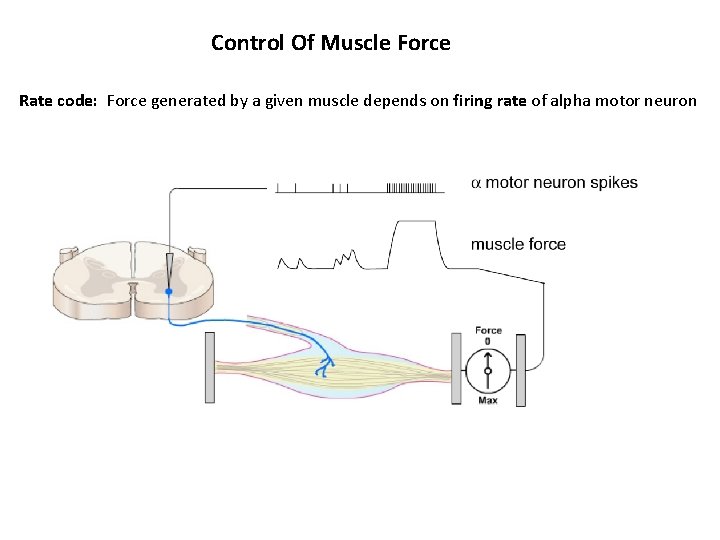
Control Of Muscle Force Rate code: Force generated by a given muscle depends on firing rate of alpha motor neuron
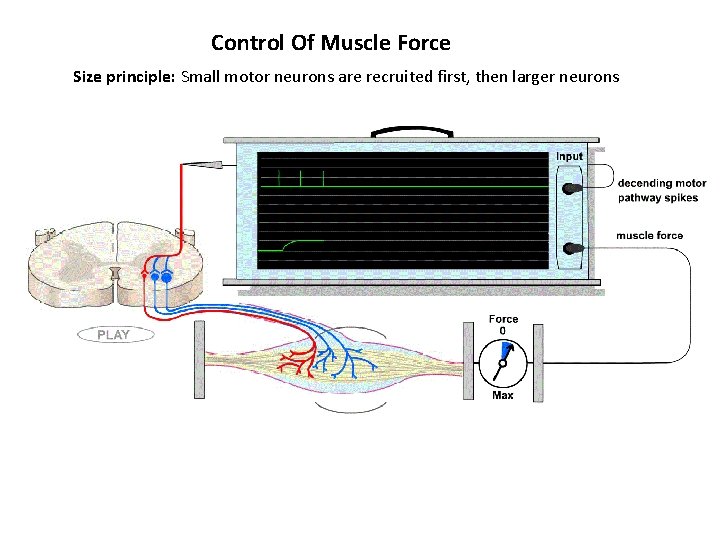
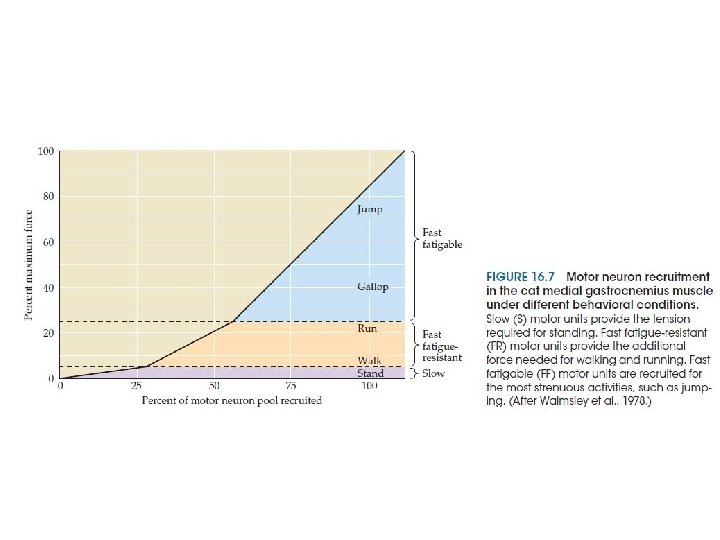
Control Of Muscle Force Size principle: Small motor neurons are recruited first, then larger neurons
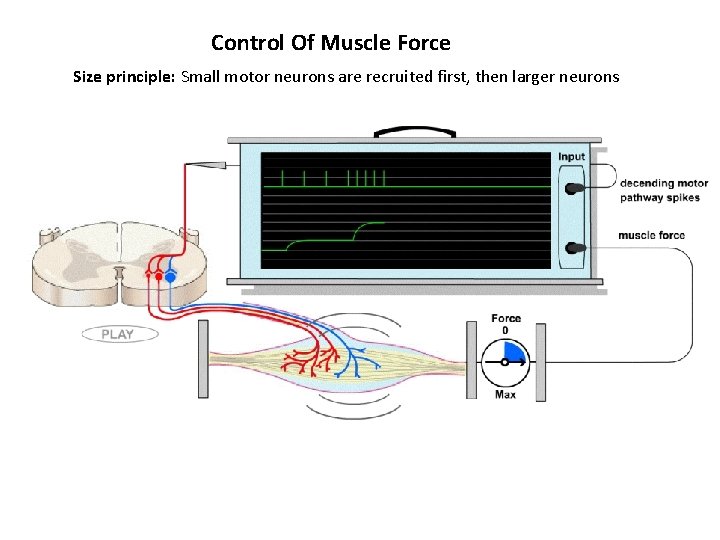
Control Of Muscle Force Size principle: Small motor neurons are recruited first, then larger neurons
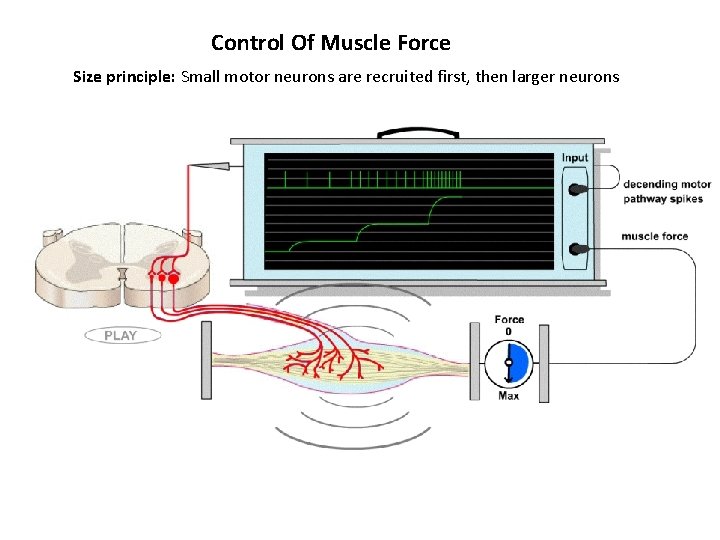
Control Of Muscle Force Size principle: Small motor neurons are recruited first, then larger neurons
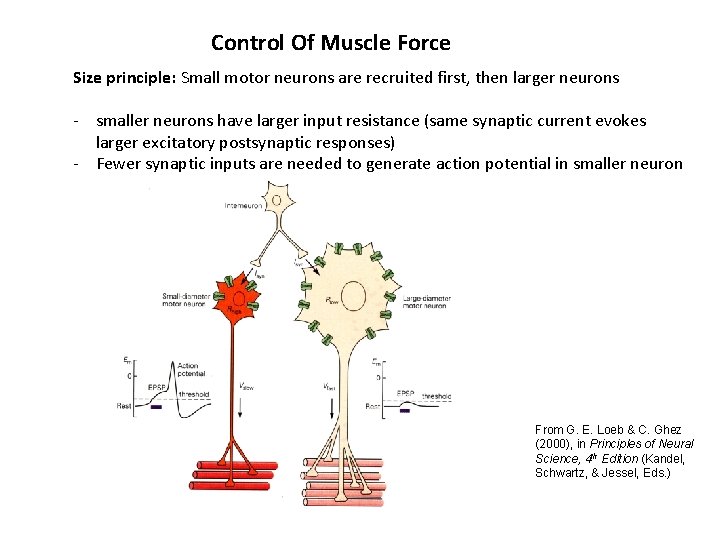
Control Of Muscle Force Size principle: Small motor neurons are recruited first, then larger neurons - smaller neurons have larger input resistance (same synaptic current evokes larger excitatory postsynaptic responses) - Fewer synaptic inputs are needed to generate action potential in smaller neuron From G. E. Loeb & C. Ghez (2000), in Principles of Neural Science, 4 th Edition (Kandel, Schwartz, & Jessel, Eds. )
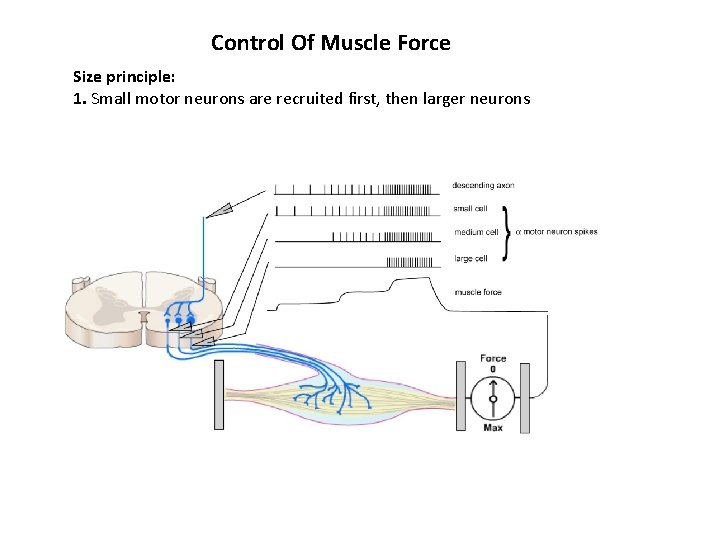
Control Of Muscle Force Size principle: 1. Small motor neurons are recruited first, then larger neurons
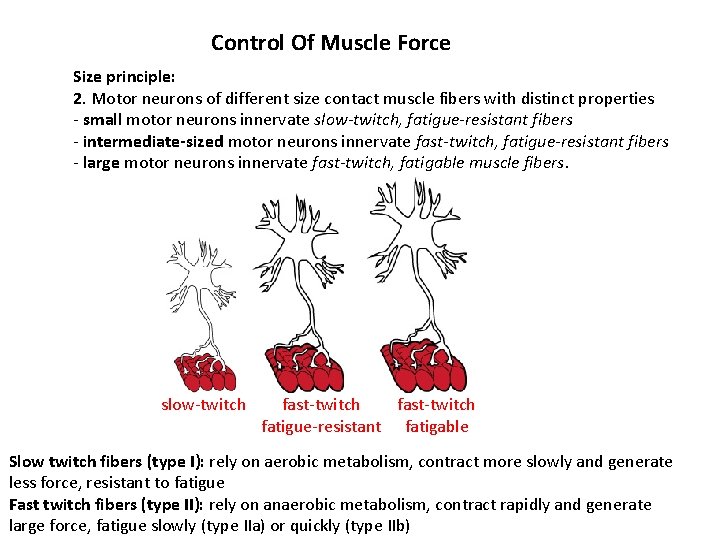
Control Of Muscle Force Size principle: 2. Motor neurons of different size contact muscle fibers with distinct properties - small motor neurons innervate slow-twitch, fatigue-resistant fibers - intermediate-sized motor neurons innervate fast-twitch, fatigue-resistant fibers - large motor neurons innervate fast-twitch, fatigable muscle fibers. slow-twitch fast-twitch fatigue-resistant fatigable Slow twitch fibers (type I): rely on aerobic metabolism, contract more slowly and generate less force, resistant to fatigue Fast twitch fibers (type II): rely on anaerobic metabolism, contract rapidly and generate large force, fatigue slowly (type IIa) or quickly (type IIb)
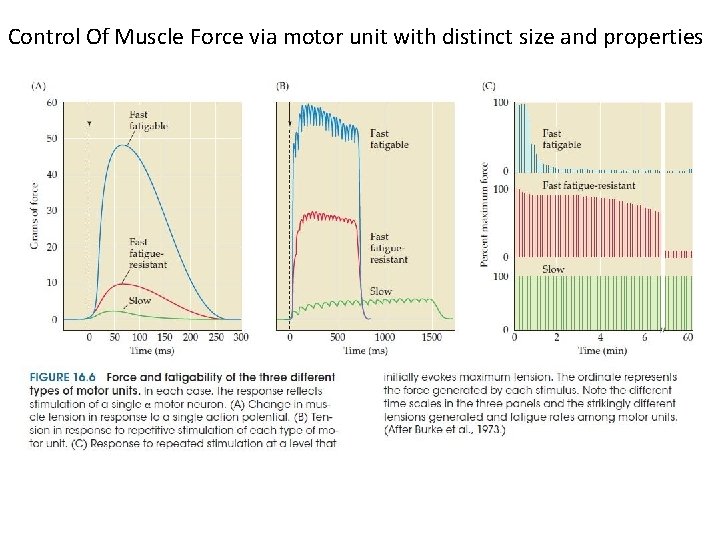
Control Of Muscle Force via motor unit with distinct size and properties
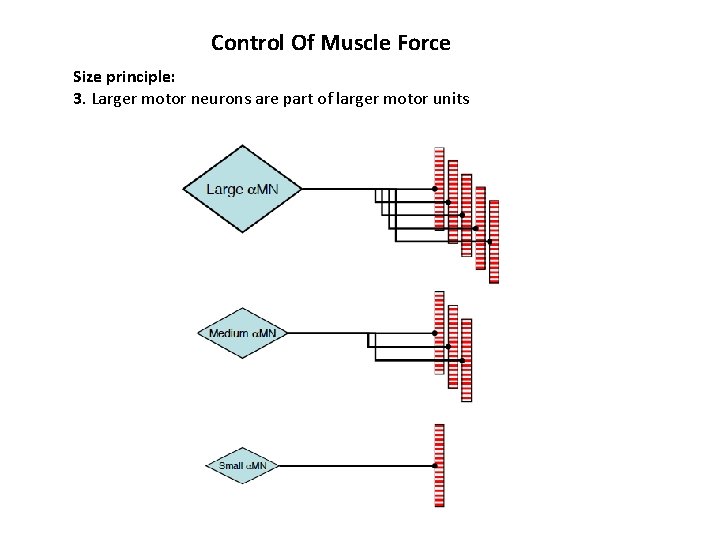
Control Of Muscle Force Size principle: 3. Larger motor neurons are part of larger motor units
Control Of Muscle Force Summary - size principle: 1. orderly recruitment of motor neurons (according to their size) with increases in afferent activity 2. slow-twitch, fatigue-resistant muscle fibers are recruited first, then fast-twitch, fatigue-resistant fibers, then fast-twitch fatigable fibers 3. Average size of motor unit increases with increases in muscle force production Physiological Functions: • Minimizes amount of muscle fatigue • Precise control of muscle force at all levels of muscle output
Proprioception Specialized receptors provide information about muscle: • Length • velocity (change in length) • load (force) Receptors involved in proprioception • muscle spindles • golgi tendon organs
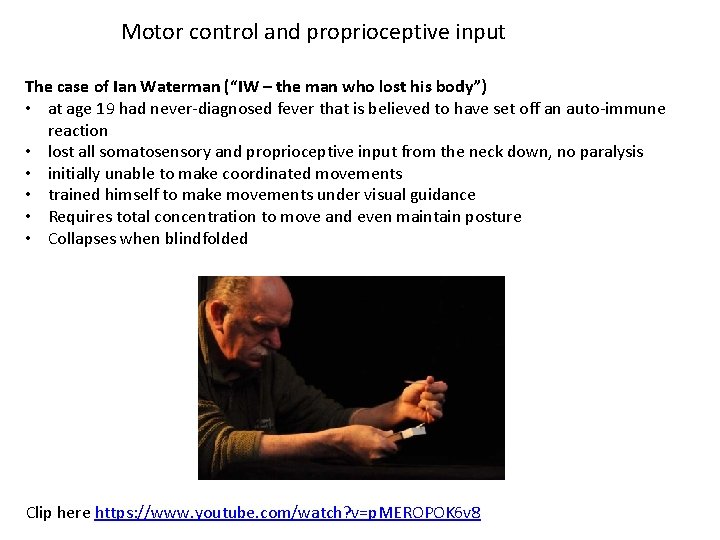
Motor control and proprioceptive input The case of Ian Waterman (“IW – the man who lost his body”) • at age 19 had never-diagnosed fever that is believed to have set off an auto-immune reaction • lost all somatosensory and proprioceptive input from the neck down, no paralysis • initially unable to make coordinated movements • trained himself to make movements under visual guidance • Requires total concentration to move and even maintain posture • Collapses when blindfolded Clip here https: //www. youtube. com/watch? v=p. MEROPOK 6 v 8
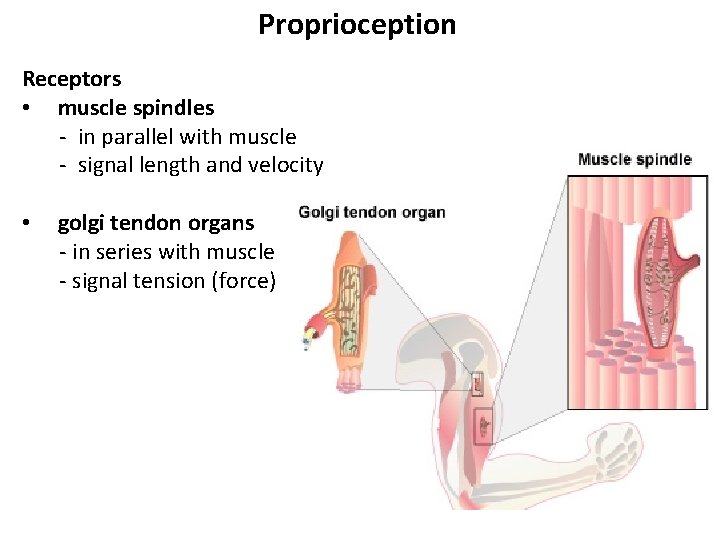
Proprioception Receptors • muscle spindles - in parallel with muscle - signal length and velocity • golgi tendon organs - in series with muscle - signal tension (force)
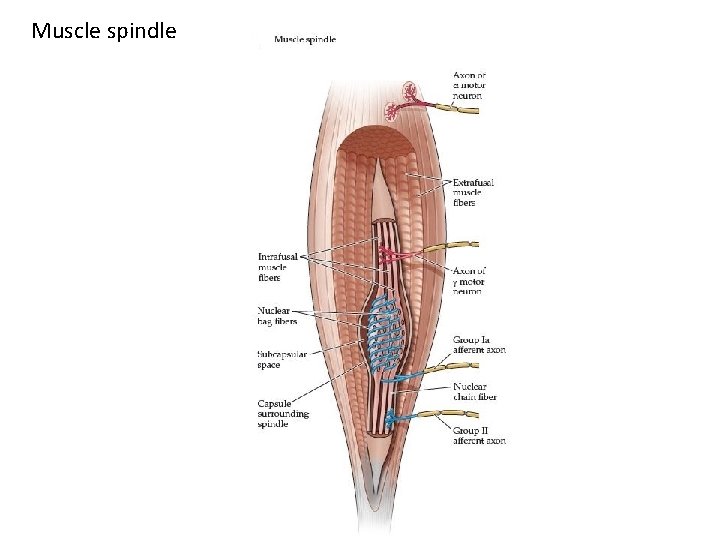
Muscle spindle
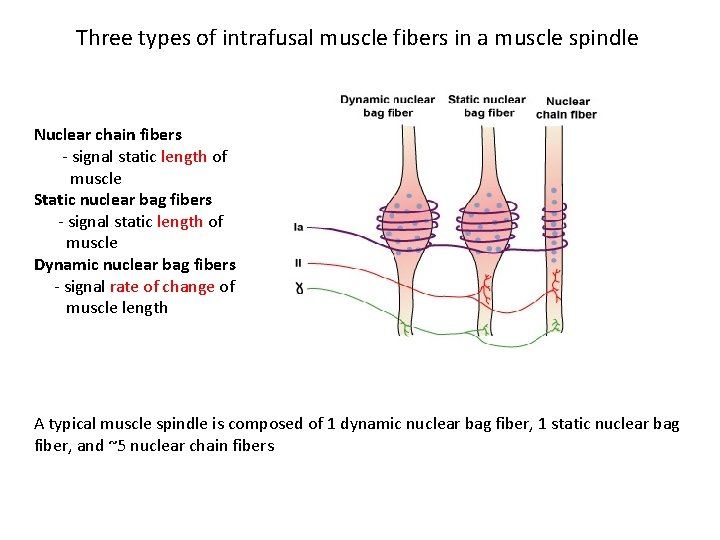
Three types of intrafusal muscle fibers in a muscle spindle Nuclear chain fibers - signal static length of muscle Static nuclear bag fibers - signal static length of muscle Dynamic nuclear bag fibers - signal rate of change of muscle length A typical muscle spindle is composed of 1 dynamic nuclear bag fiber, 1 static nuclear bag fiber, and ~5 nuclear chain fibers
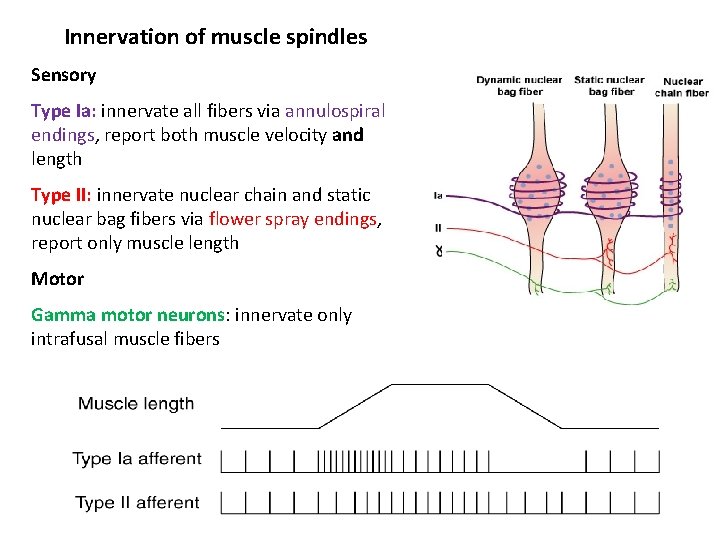
Innervation of muscle spindles Sensory Type Ia: innervate all fibers via annulospiral endings, report both muscle velocity and length Type II: innervate nuclear chain and static nuclear bag fibers via flower spray endings, report only muscle length Motor Gamma motor neurons: innervate only intrafusal muscle fibers
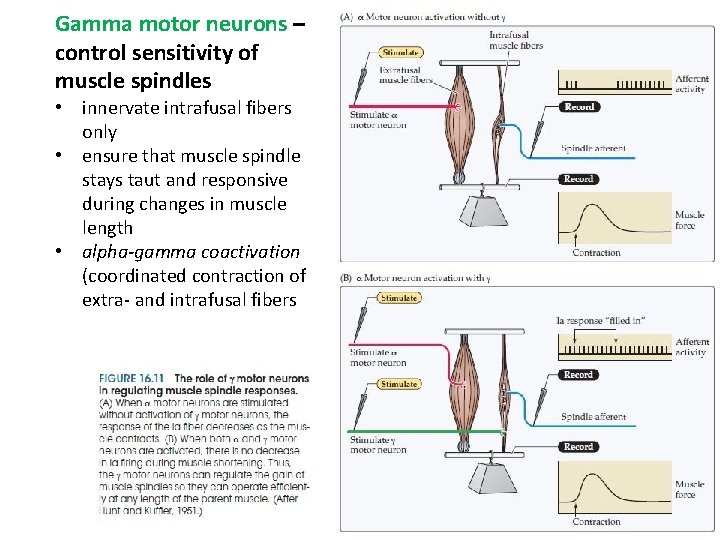
Gamma motor neurons – control sensitivity of muscle spindles • innervate intrafusal fibers only • ensure that muscle spindle stays taut and responsive during changes in muscle length • alpha-gamma coactivation (coordinated contraction of extra- and intrafusal fibers
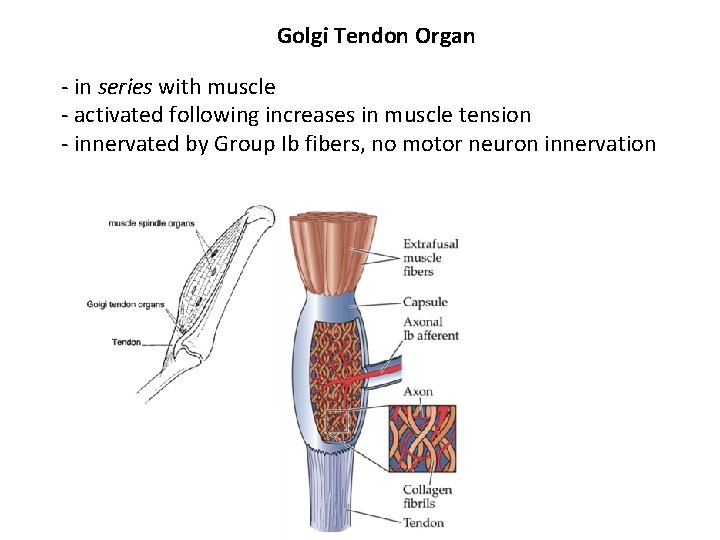
Golgi Tendon Organ - in series with muscle - activated following increases in muscle tension - innervated by Group Ib fibers, no motor neuron innervation
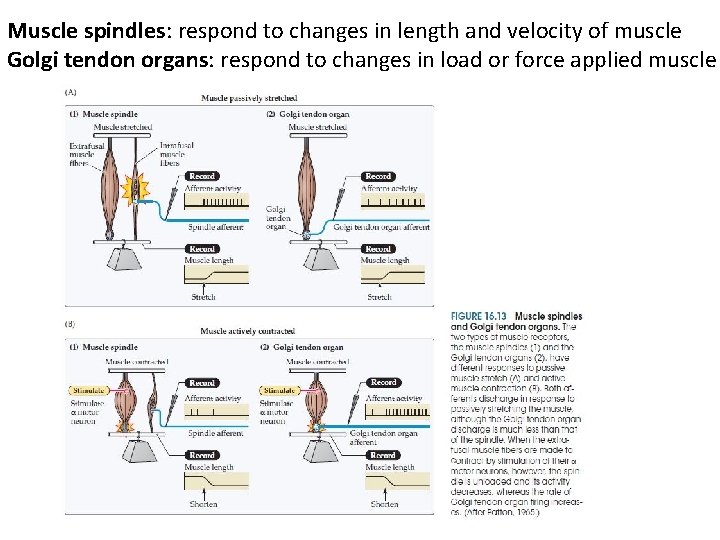
Muscle spindles: respond to changes in length and velocity of muscle Golgi tendon organs: respond to changes in load or force applied muscle
Spinal cord circuits • Motor control of limbs and body • Rhythmic Movements (e. g. walking) • Reflexes
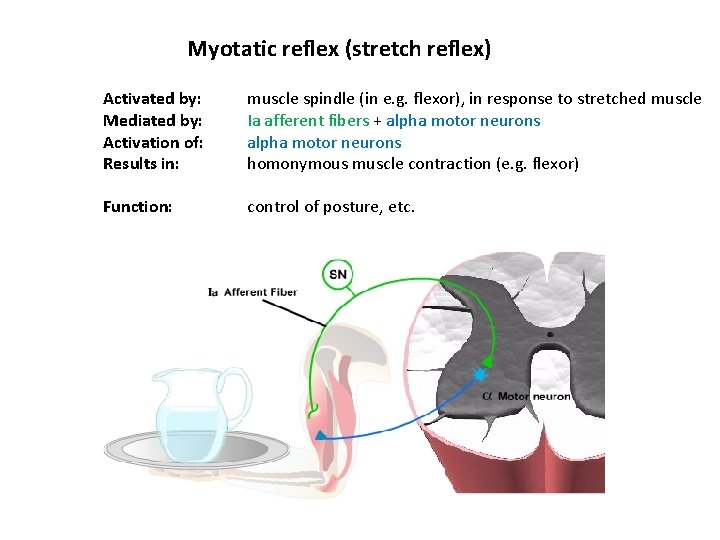
Myotatic reflex (stretch reflex) Activated by: Mediated by: Activation of: Results in: muscle spindle (in e. g. flexor), in response to stretched muscle Ia afferent fibers + alpha motor neurons homonymous muscle contraction (e. g. flexor) Function: control of posture, etc.
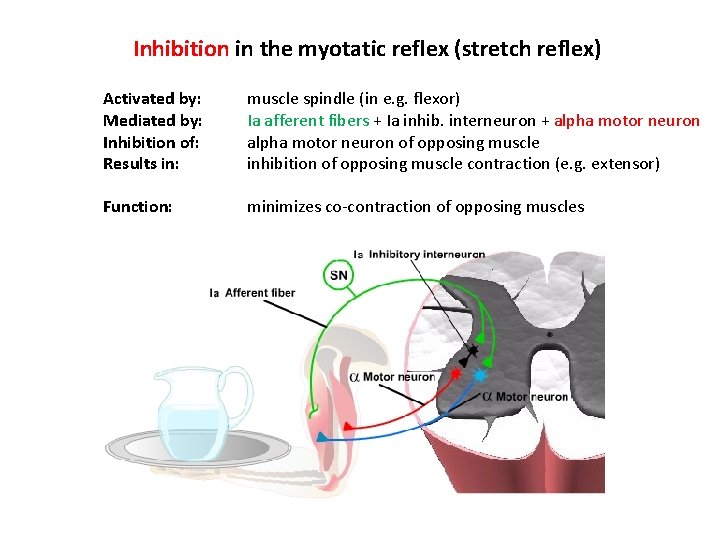
Inhibition in the myotatic reflex (stretch reflex) Activated by: Mediated by: Inhibition of: Results in: muscle spindle (in e. g. flexor) Ia afferent fibers + Ia inhib. interneuron + alpha motor neuron of opposing muscle inhibition of opposing muscle contraction (e. g. extensor) Function: minimizes co-contraction of opposing muscles
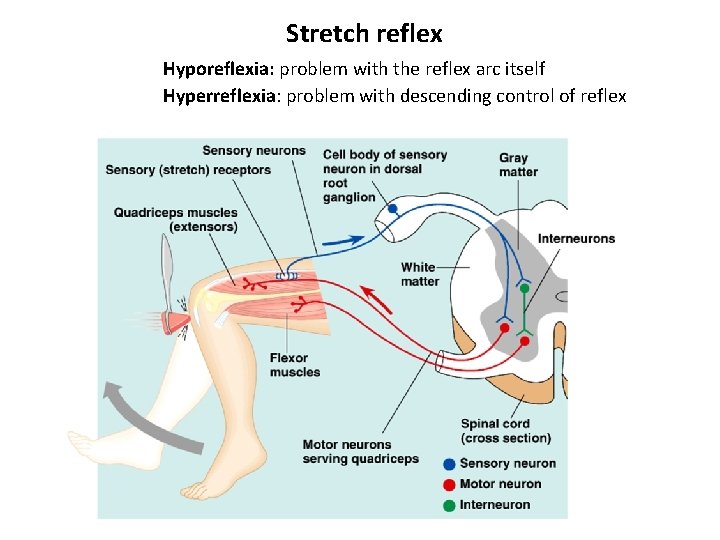
Stretch reflex Hyporeflexia: problem with the reflex arc itself Hyperreflexia: problem with descending control of reflex
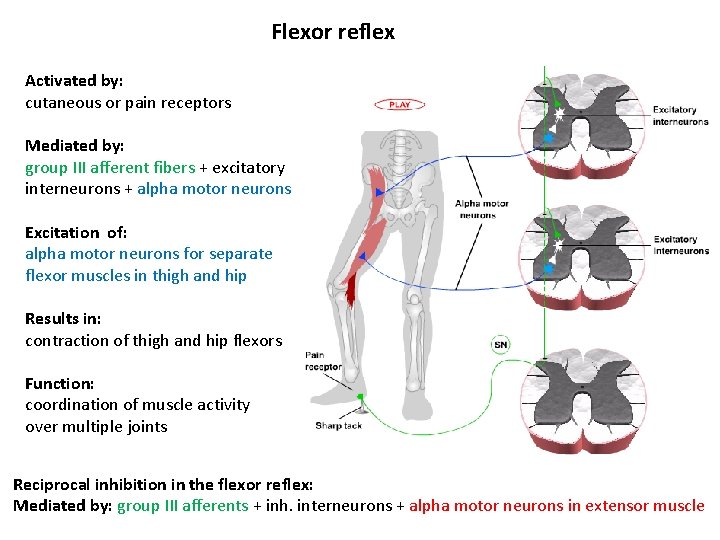
Flexor reflex Activated by: cutaneous or pain receptors Mediated by: group III afferent fibers + excitatory interneurons + alpha motor neurons Excitation of: alpha motor neurons for separate flexor muscles in thigh and hip Results in: contraction of thigh and hip flexors Function: coordination of muscle activity over multiple joints Reciprocal inhibition in the flexor reflex: Mediated by: group III afferents + inh. interneurons + alpha motor neurons in extensor muscle
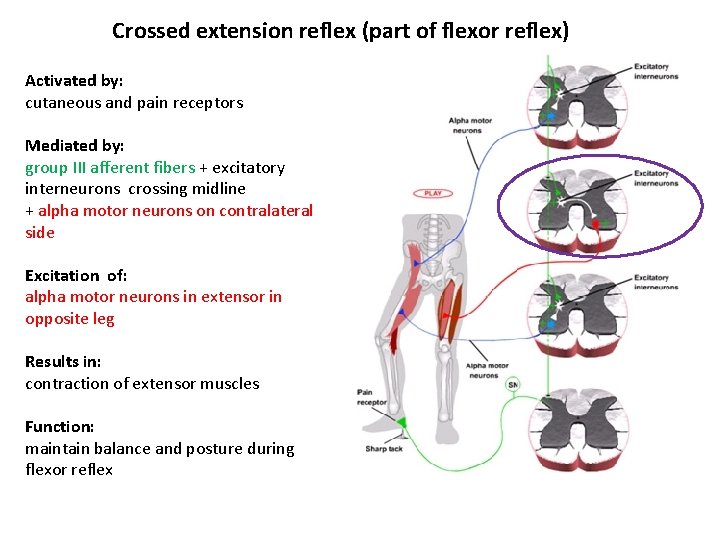
Crossed extension reflex (part of flexor reflex) Activated by: cutaneous and pain receptors Mediated by: group III afferent fibers + excitatory interneurons crossing midline + alpha motor neurons on contralateral side Excitation of: alpha motor neurons in extensor in opposite leg Results in: contraction of extensor muscles Function: maintain balance and posture during flexor reflex
- Slides: 36