
The most important formula in finance Most payments


- Slides: 15
The most important formula in finance
Most payments are periodical • Most of income and expense are periodical. • We receive salary every month. We receive pension payments every month. • We pay rent every month. We pay back mortgage loans every month. • Companies distribute bond coupons every six months. Banks receive mortgage payments every month.
• Even when incomes and expenses are not strictly periodical, a periodical payments are good first approximations. • Business incomes may not be constant every year. But as planners, we often assume they are constant or change by certain percentage every year. • This will greatly simplify our planning.
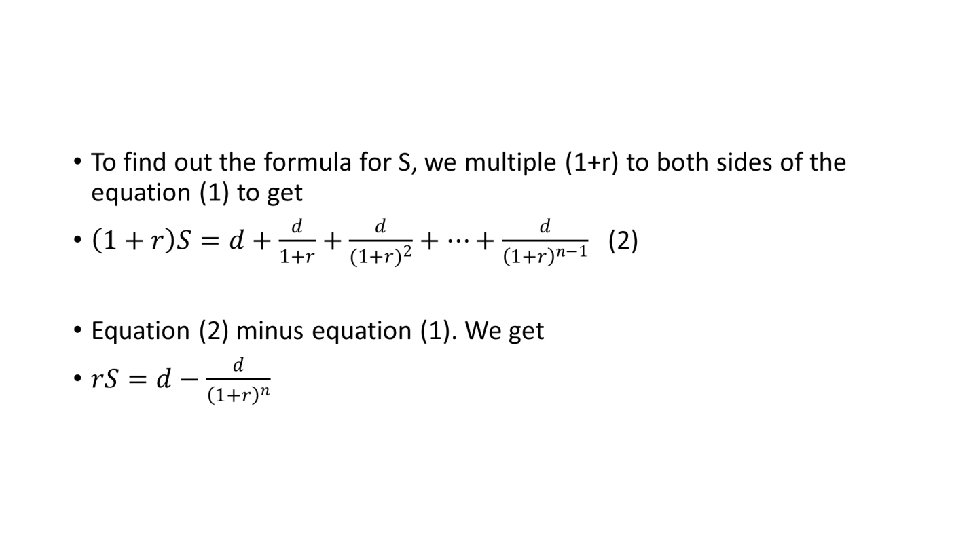
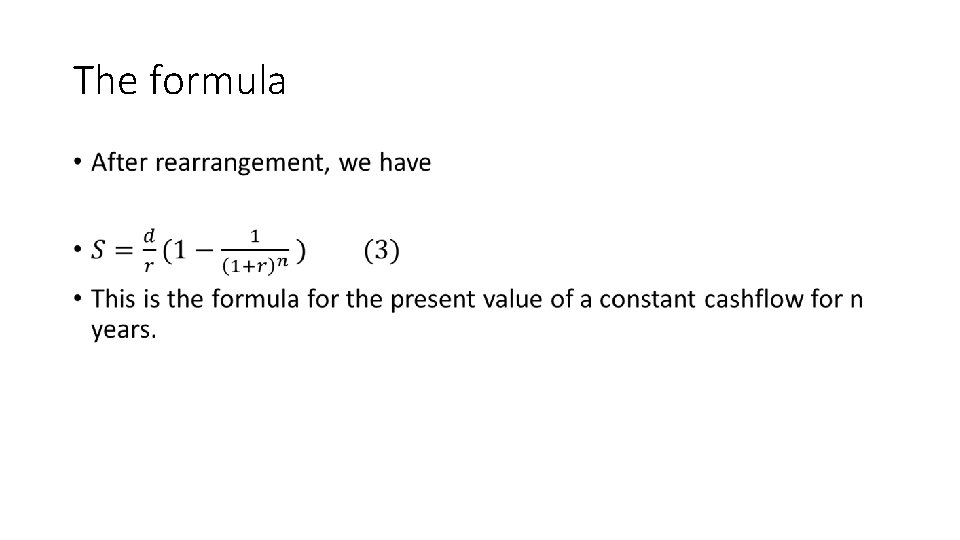
• It is very important to measure the value of such periodical payments. • We will derive this formula and apply it to many different situations. • We have learned this formula before. • But many of us don’t feel comfortable using this formula. • We will derive the formula together. This will make us more confident about it. • More exercises will help us gain greater proficiency. We will apply the formula to many different problems.
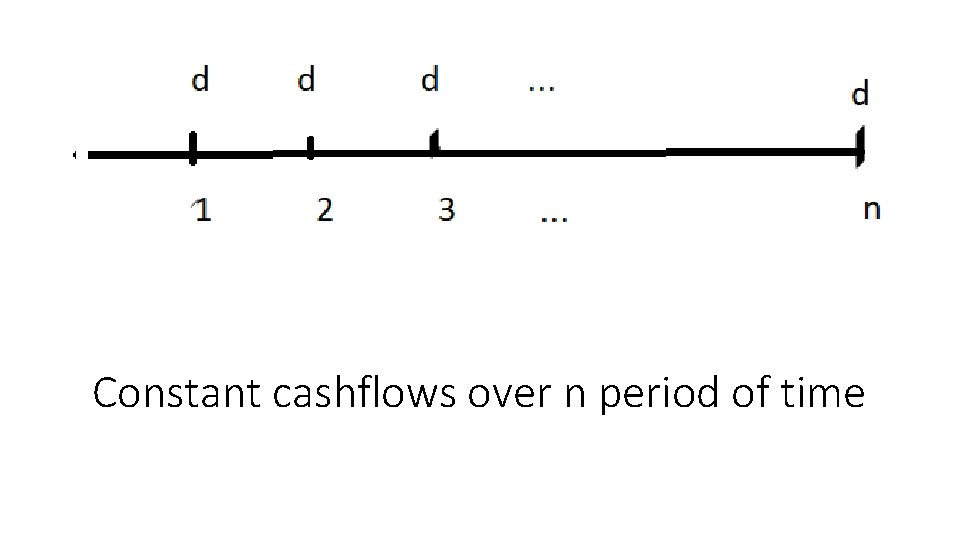
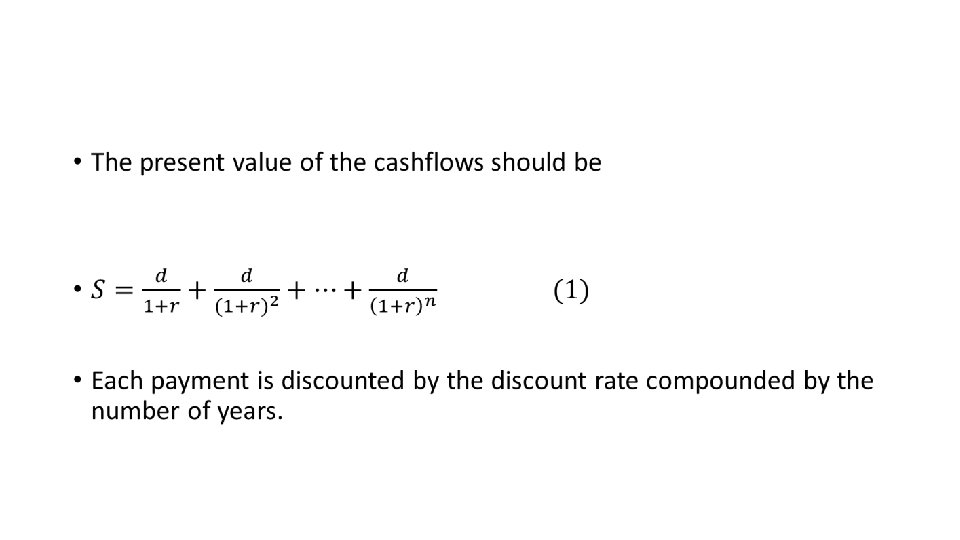
The simple case of constant cashflows • First, we will look at the simple case of constant cashflows. • Suppose there is a constant cashflow distributed at the end of each time period. This time period can be daily, weekly, monthly, quarterly, yearly or and other time interval. The distribution lasts for n periods. Suppose the discount rate is r. What is the present value of this cashflow?
Constant cashflows over n period of time
The formula •
When n approaches infinity •
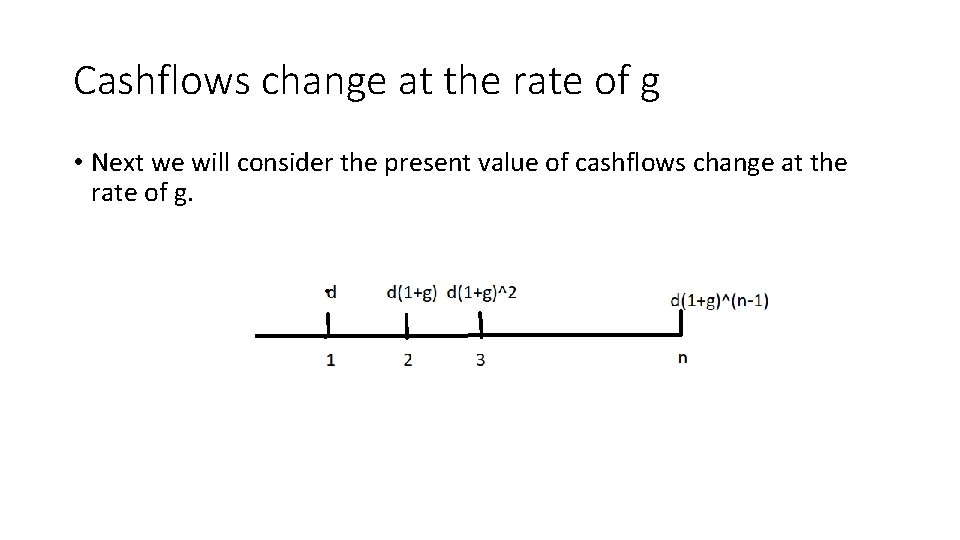
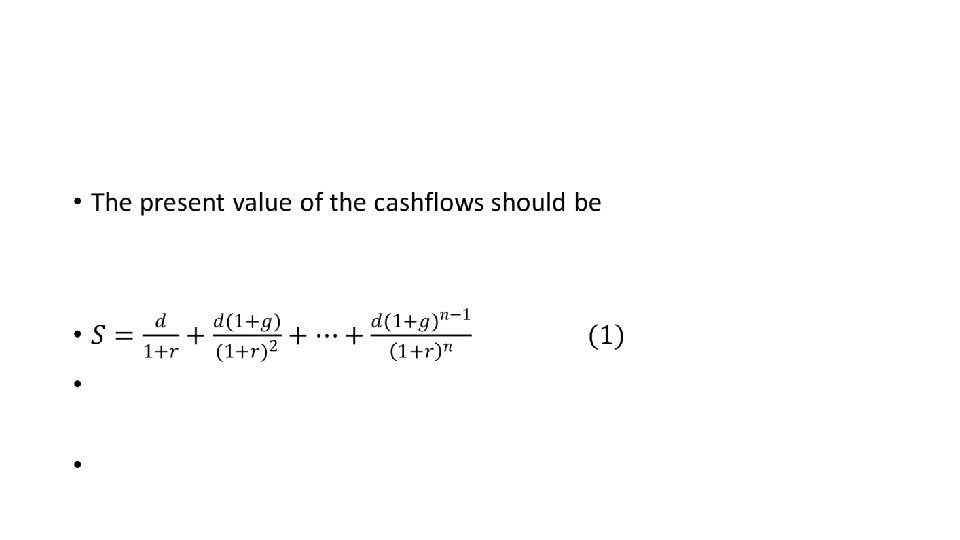
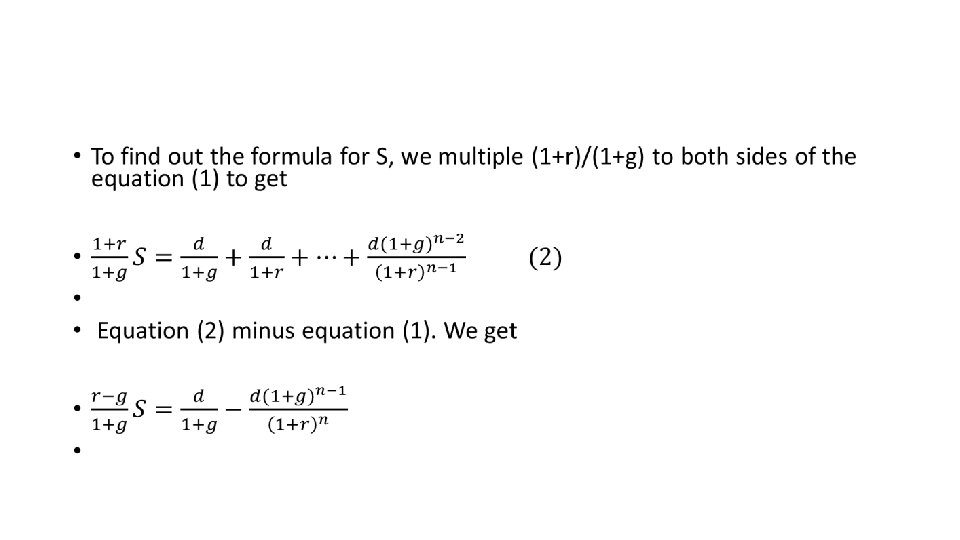
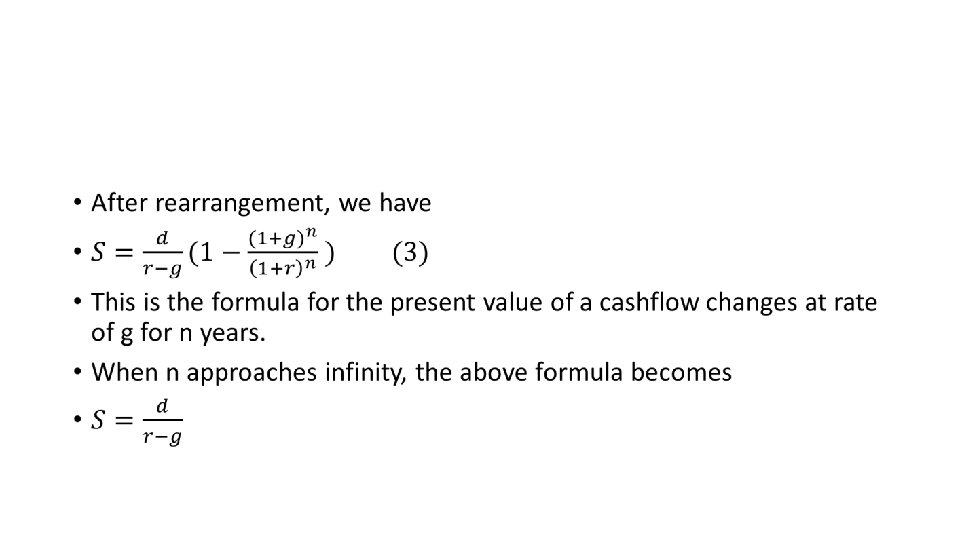
Cashflows change at the rate of g • Next we will consider the present value of cashflows change at the rate of g.
Applications • These formulas have many applications. • We will give some examples.