
THE MOON The Earth and Moon photographed by
THE MOON
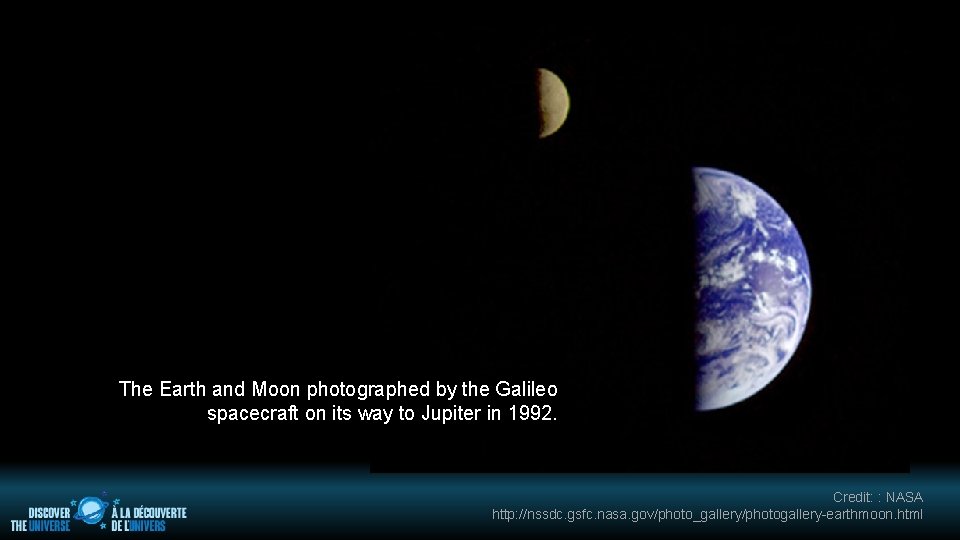
The Earth and Moon photographed by the Galileo spacecraft on its way to Jupiter in 1992. Credit: : NASA http: //nssdc. gsfc. nasa. gov/photo_gallery/photogallery-earthmoon. html
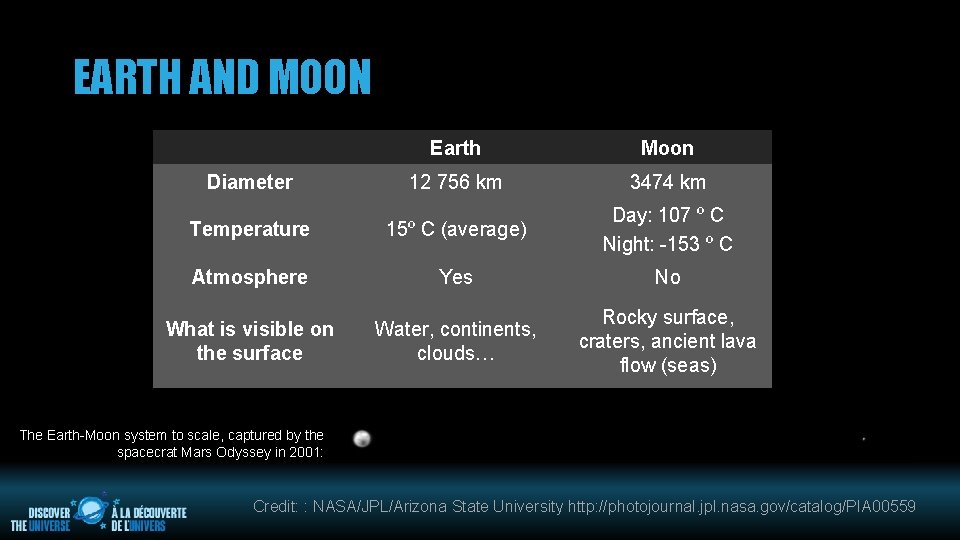
EARTH AND MOON Earth Moon 12 756 km 3474 km Temperature 15º C (average) Day: 107 º C Night: -153 º C Atmosphere Yes No What is visible on the surface Water, continents, clouds… Rocky surface, craters, ancient lava flow (seas) Diameter The Earth-Moon system to scale, captured by the spacecrat Mars Odyssey in 2001: Credit: : NASA/JPL/Arizona State University http: //photojournal. jpl. nasa. gov/catalog/PIA 00559
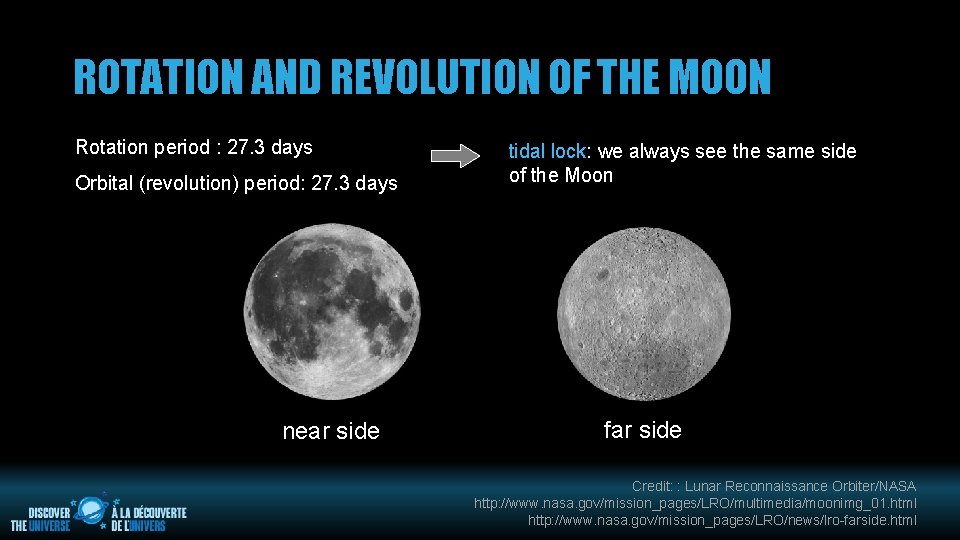
ROTATION AND REVOLUTION OF THE MOON Rotation period : 27. 3 days Orbital (revolution) period: 27. 3 days near side tidal lock: we always see the same side of the Moon far side Credit: : Lunar Reconnaissance Orbiter/NASA http: //www. nasa. gov/mission_pages/LRO/multimedia/moonimg_01. html http: //www. nasa. gov/mission_pages/LRO/news/lro-farside. html
PHASES OF THE MOON
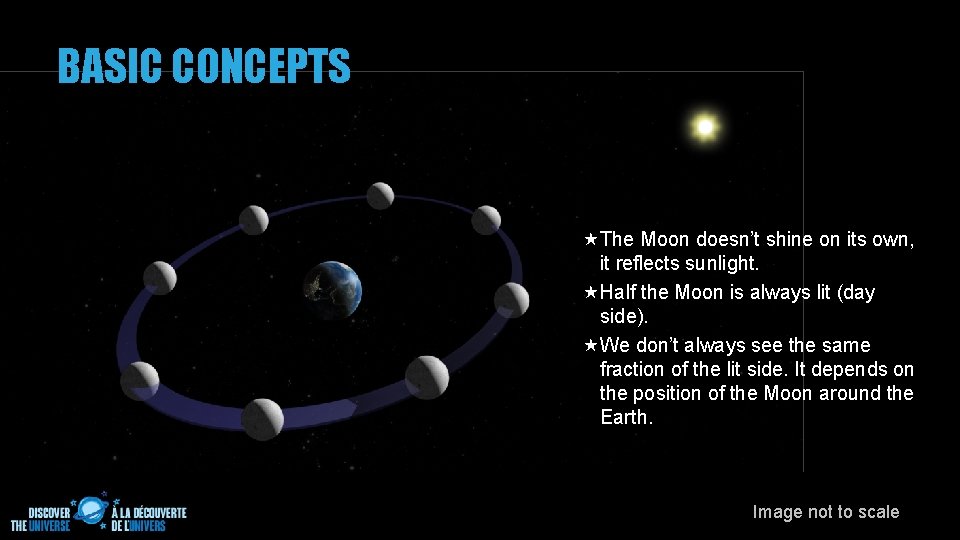
BASIC CONCEPTS The Moon doesn’t shine on its own, it reflects sunlight. Half the Moon is always lit (day side). We don’t always see the same fraction of the lit side. It depends on the position of the Moon around the Earth. Image not to scale
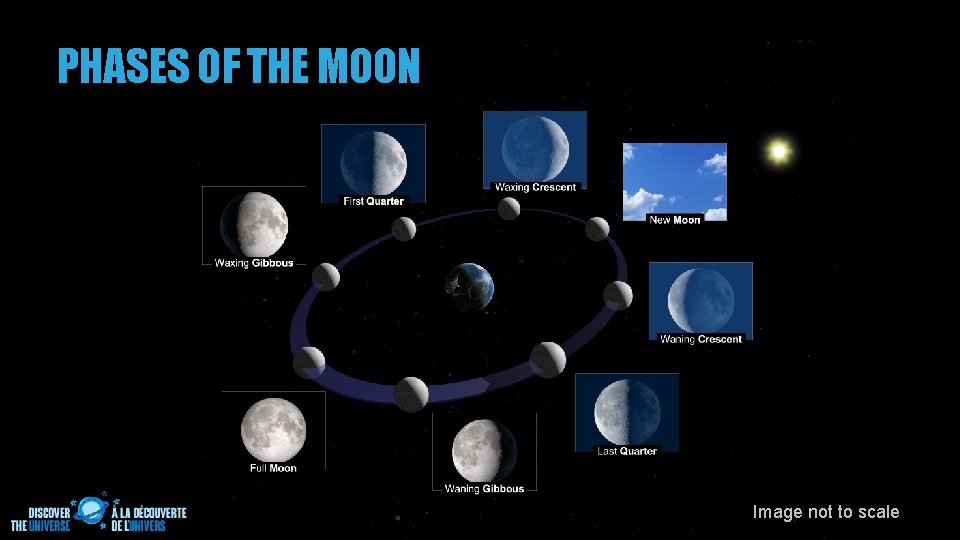
PHASES OF THE MOON Image not to scale
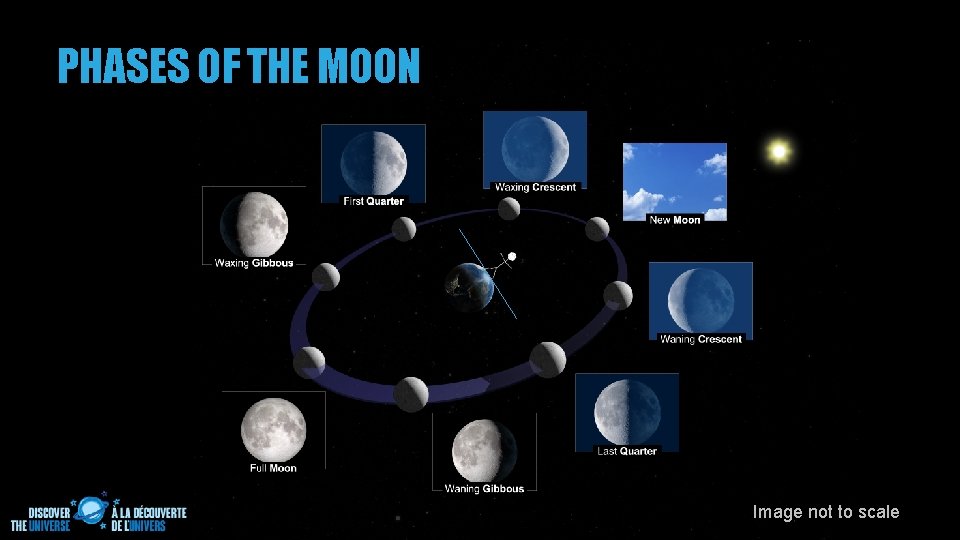
PHASES OF THE MOON Image not to scale
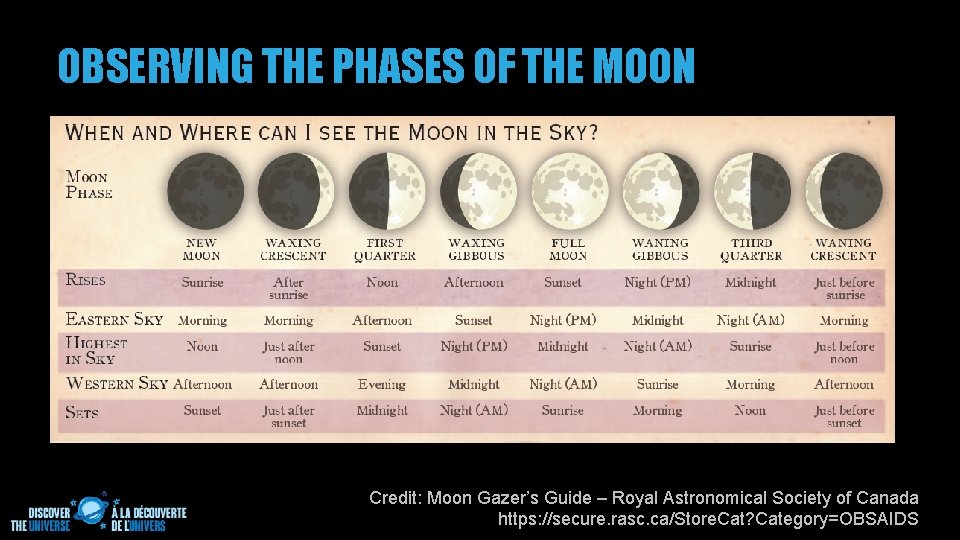
OBSERVING THE PHASES OF THE MOON Credit: Moon Gazer’s Guide – Royal Astronomical Society of Canada https: //secure. rasc. ca/Store. Cat? Category=OBSAIDS
ECLIPSES
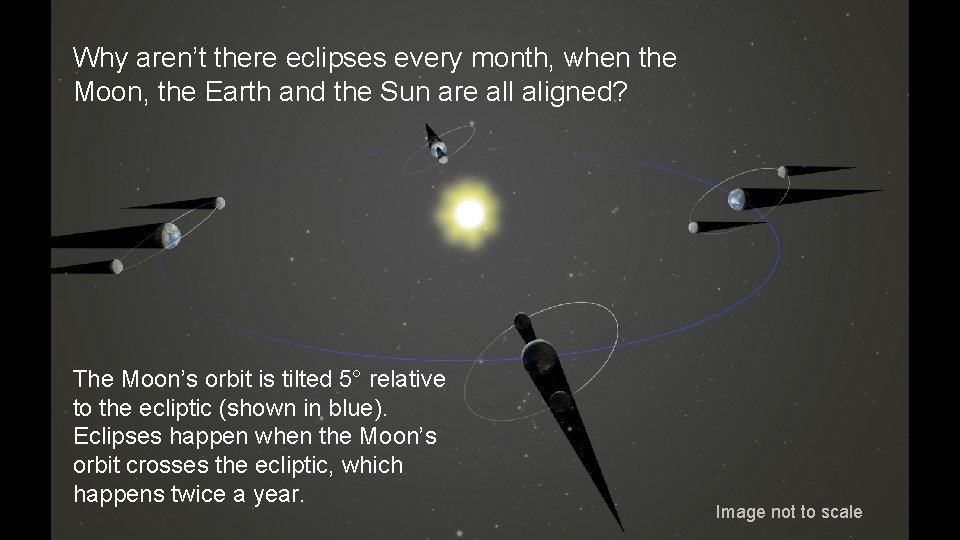
Why aren’t there eclipses every month, when the Moon, the Earth and the Sun are all aligned? The Moon’s orbit is tilted 5° relative to the ecliptic (shown in blue). Eclipses happen when the Moon’s orbit crosses the ecliptic, which happens twice a year. Image not to scale
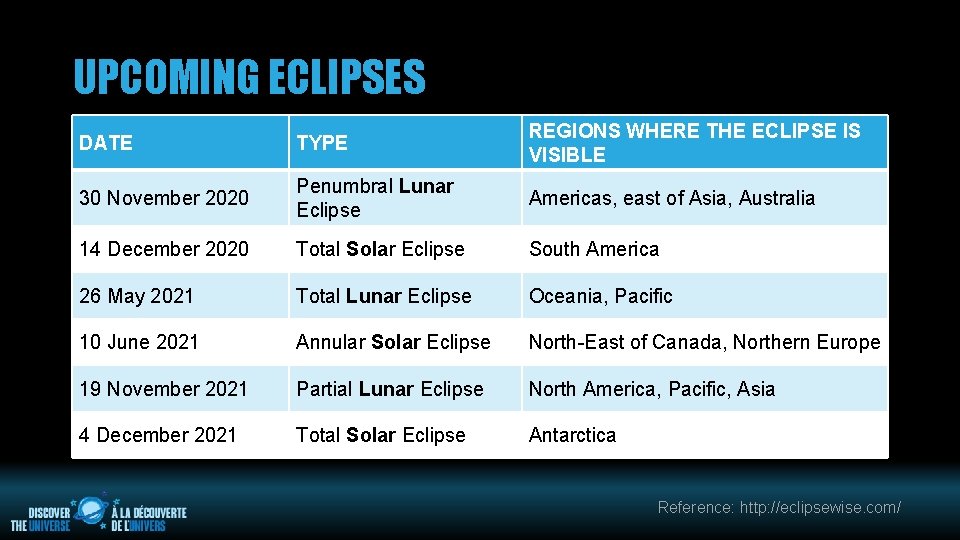
UPCOMING ECLIPSES DATE TYPE REGIONS WHERE THE ECLIPSE IS VISIBLE 30 November 2020 Penumbral Lunar Eclipse Americas, east of Asia, Australia 14 December 2020 Total Solar Eclipse South America 26 May 2021 Total Lunar Eclipse Oceania, Pacific 10 June 2021 Annular Solar Eclipse North-East of Canada, Northern Europe 19 November 2021 Partial Lunar Eclipse North America, Pacific, Asia 4 December 2021 Total Solar Eclipse Antarctica Reference: http: //eclipsewise. com/
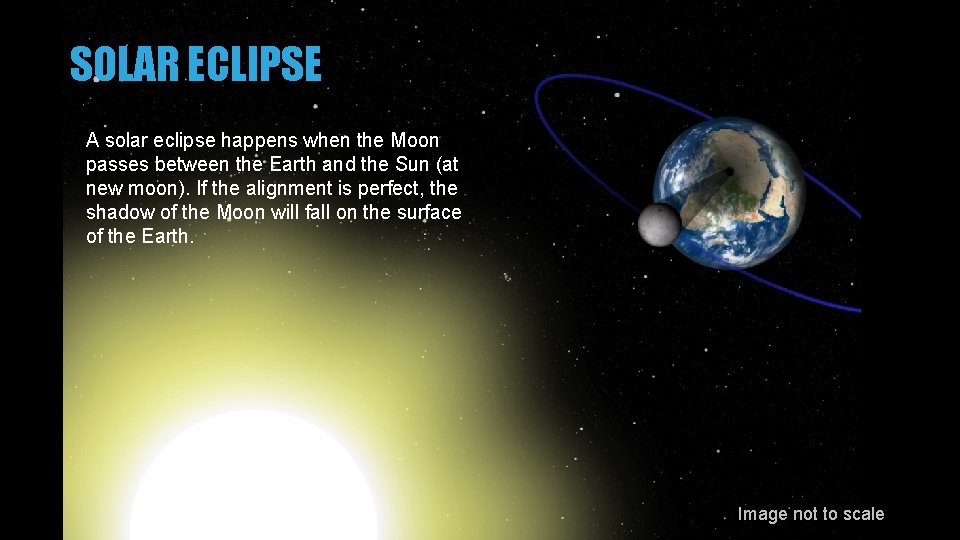
SOLAR ECLIPSE A solar eclipse happens when the Moon passes between the Earth and the Sun (at new moon). If the alignment is perfect, the shadow of the Moon will fall on the surface of the Earth. Image not to scale
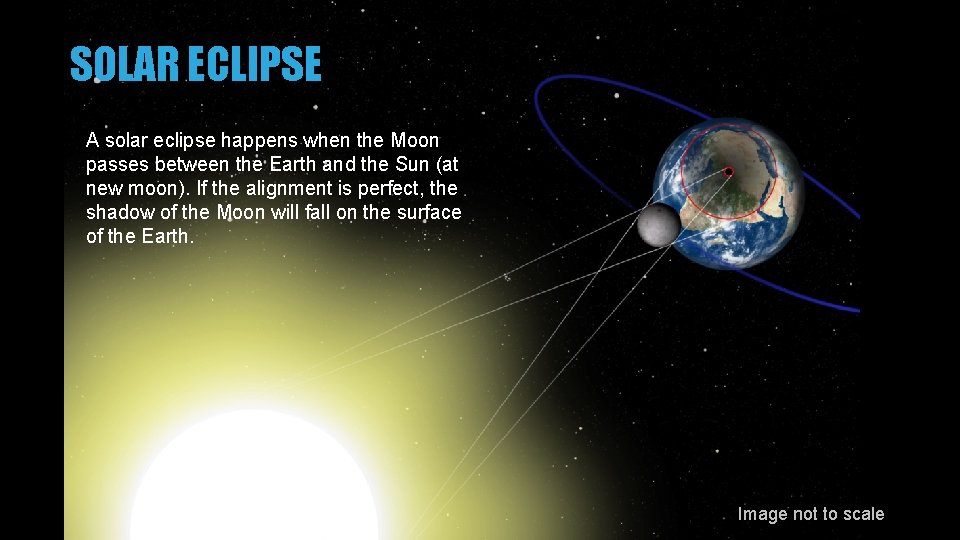
SOLAR ECLIPSE A solar eclipse happens when the Moon passes between the Earth and the Sun (at new moon). If the alignment is perfect, the shadow of the Moon will fall on the surface of the Earth. Image not to scale
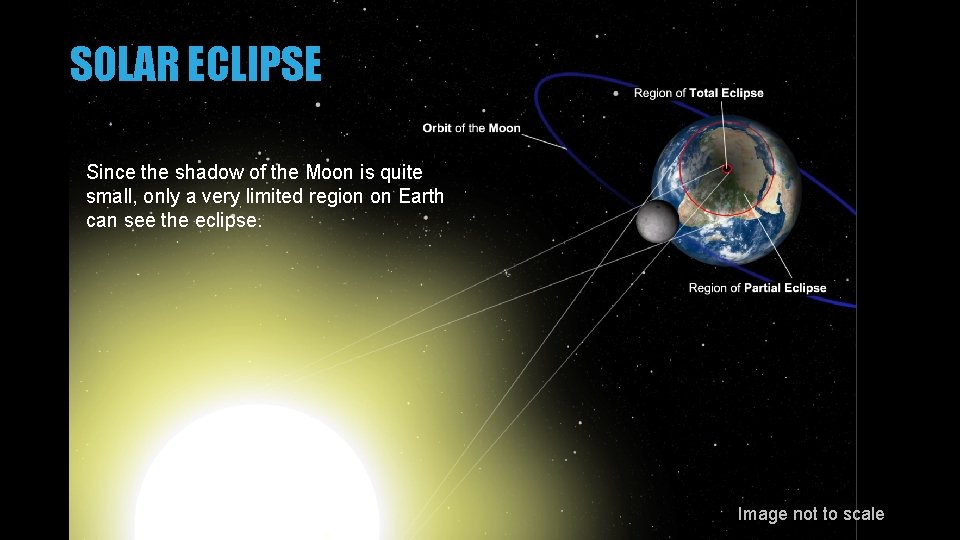
SOLAR ECLIPSE Since the shadow of the Moon is quite small, only a very limited region on Earth can see the eclipse. Image not to scale
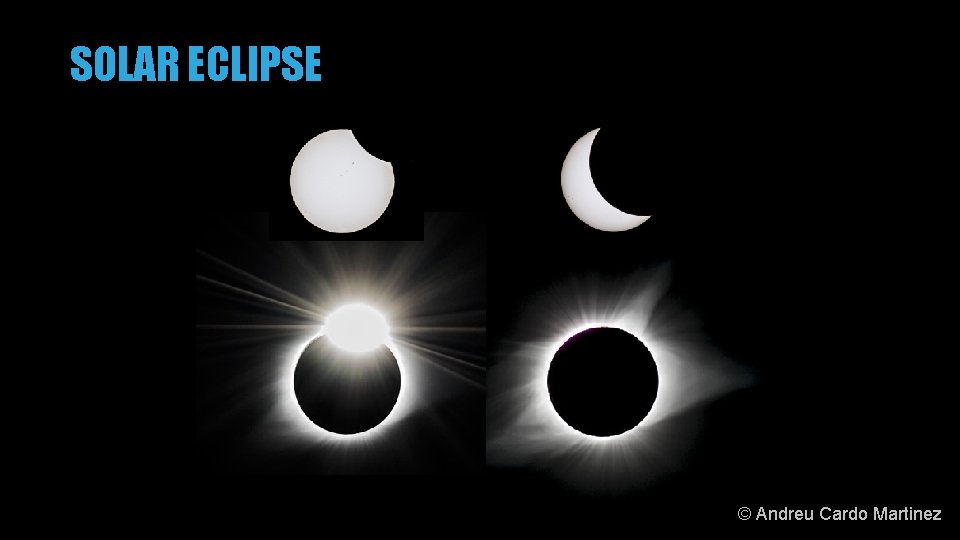
SOLAR ECLIPSE © Andreu Cardo Martinez
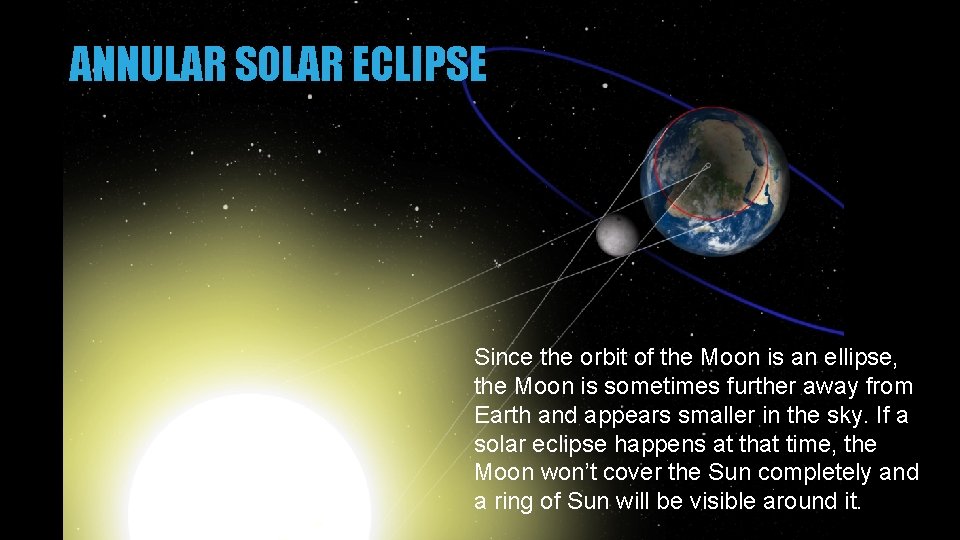
ANNULAR SOLAR ECLIPSE Since the orbit of the Moon is an ellipse, the Moon is sometimes further away from Earth and appears smaller in the sky. If a solar eclipse happens at that time, the Moon won’t cover the Sun completely and a ring of Sun will be visible around it.
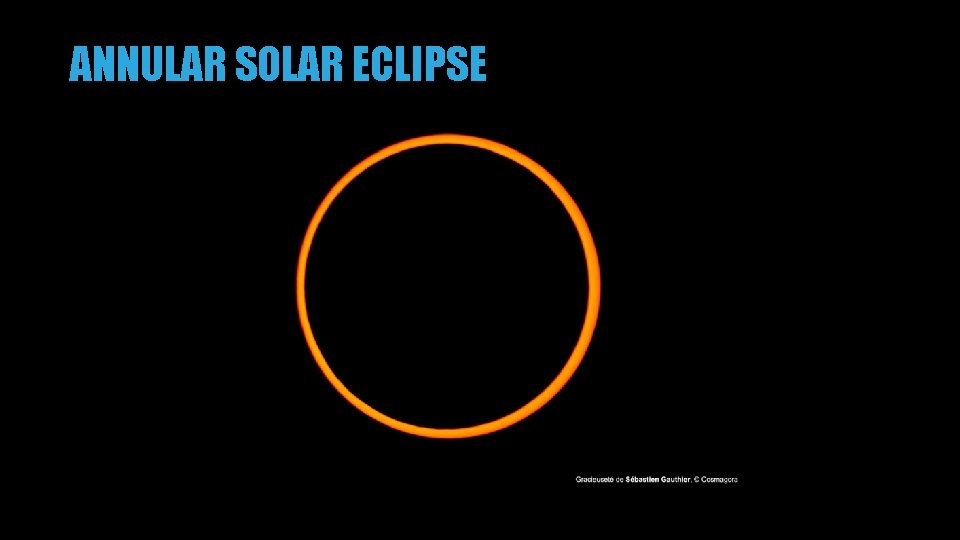
ANNULAR SOLAR ECLIPSE
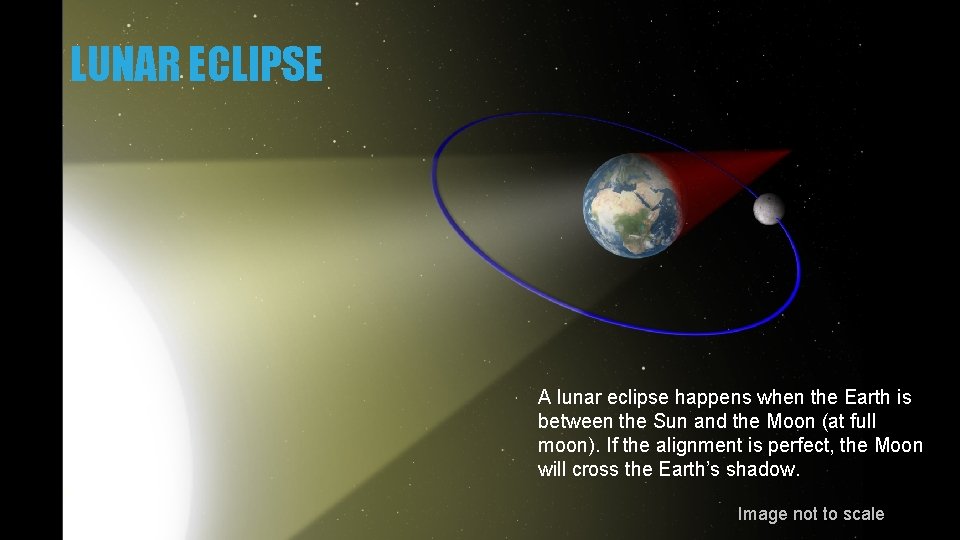
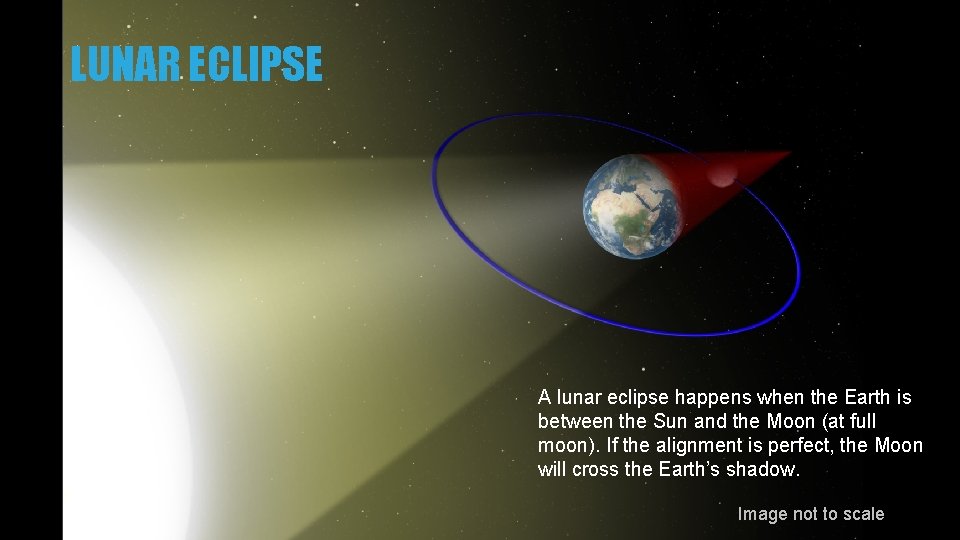
LUNAR ECLIPSE A lunar eclipse happens when the Earth is between the Sun and the Moon (at full moon). If the alignment is perfect, the Moon will cross the Earth’s shadow. Image not to scale
LUNAR ECLIPSE A lunar eclipse happens when the Earth is between the Sun and the Moon (at full moon). If the alignment is perfect, the Moon will cross the Earth’s shadow. Image not to scale
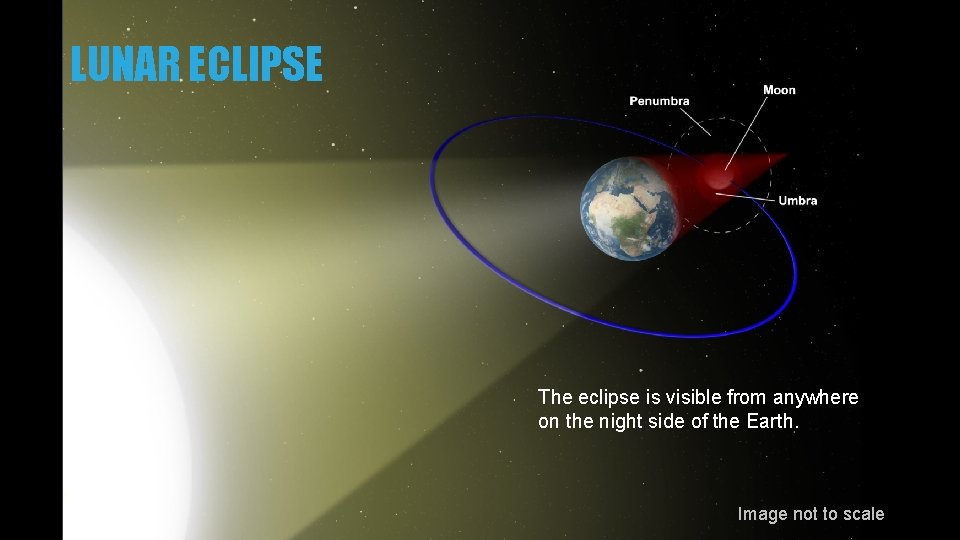
LUNAR ECLIPSE The eclipse is visible from anywhere on the night side of the Earth. Image not to scale
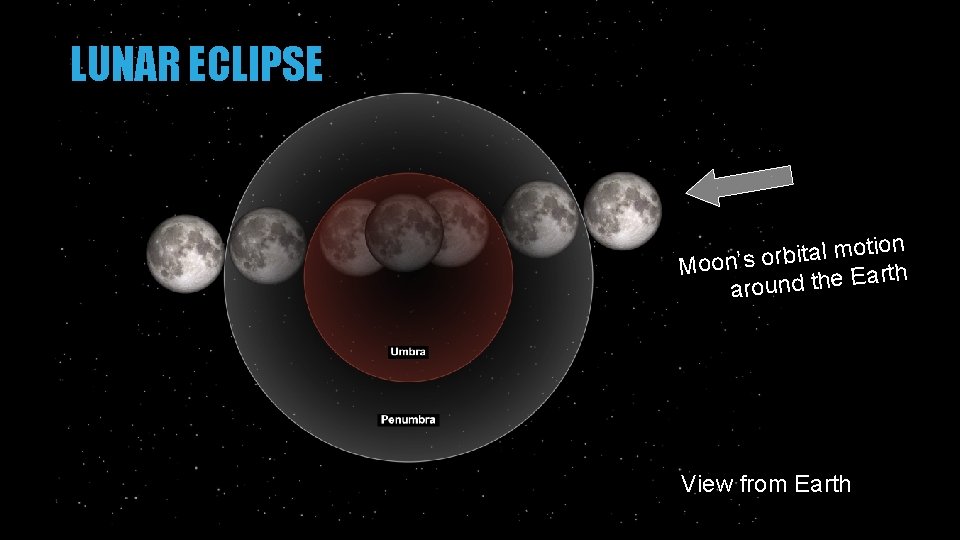
LUNAR ECLIPSE otion m l a t i b r o s Moon’ arth E e h t d n u o ar View from Earth
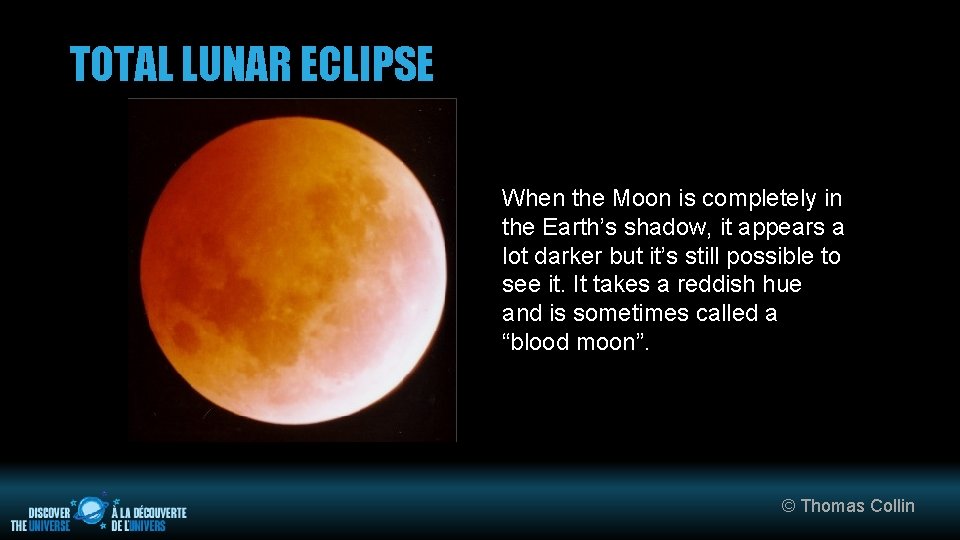
TOTAL LUNAR ECLIPSE When the Moon is completely in the Earth’s shadow, it appears a lot darker but it’s still possible to see it. It takes a reddish hue and is sometimes called a “blood moon”. © Thomas Collin
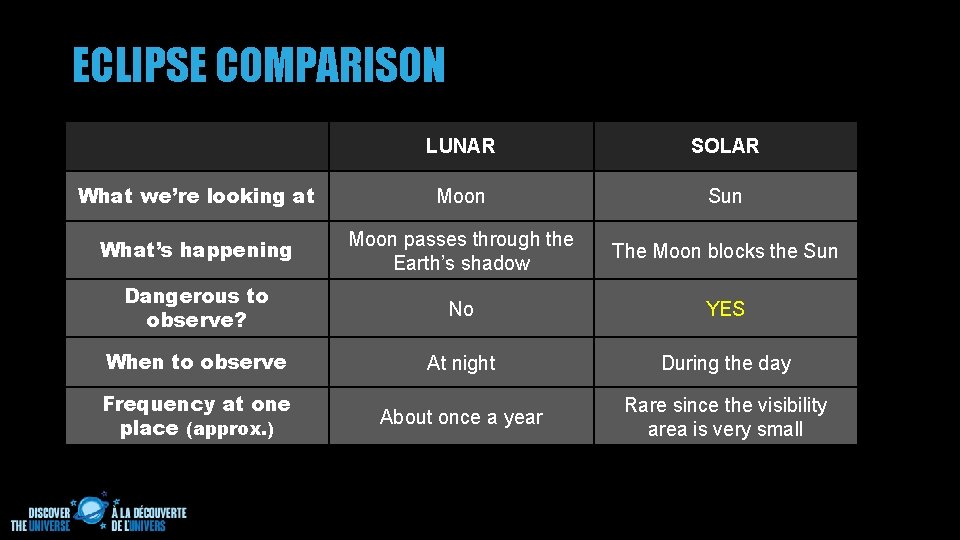
ECLIPSE COMPARISON LUNAR SOLAR What we’re looking at Moon Sun What’s happening Moon passes through the Earth’s shadow The Moon blocks the Sun Dangerous to observe? No YES When to observe At night During the day Frequency at one place (approx. ) About once a year Rare since the visibility area is very small
- Slides: 24