
The Moon Earths first satellite The Moon Since
- Slides: 24
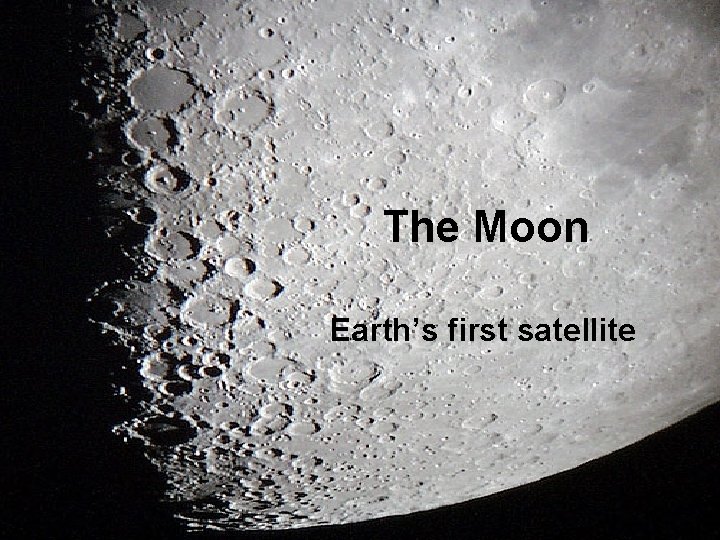
The Moon Earth’s first satellite
The Moon • Since the moon is not a star, it can’t produce its own light • Instead, moon is a satellite (orbits Earth) • Light we see is reflected sunlight
The Moon Did you know… • The moon is ‘egg-shaped’? • The moon moves 3. 8 cm away from us each year? • Earth’s gravity causes ‘moonquakes’? • More than 400 trees are planted in the U. S that were germinated on the moon
The Moon Did you know… • The moon was created when a rock the size of Mars struck Earth as the solar system formed – about 4. 5 billion ya. • We see the same side of the moon all the time…here’s why…
Lunar Orbit • The moon rotates once on its axis every 29. 5 days • The moon takes the same 29. 5 days to circle the Earth (its orbital period) • Since the two times are the same, it means we see the same face of the Moon all the time
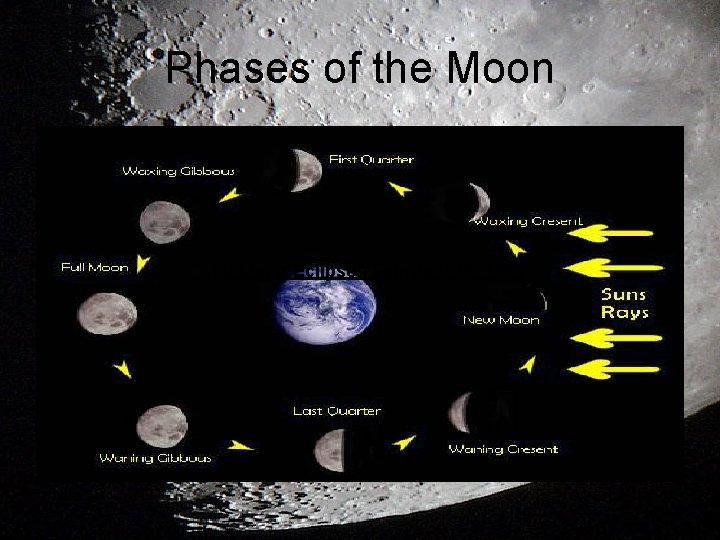
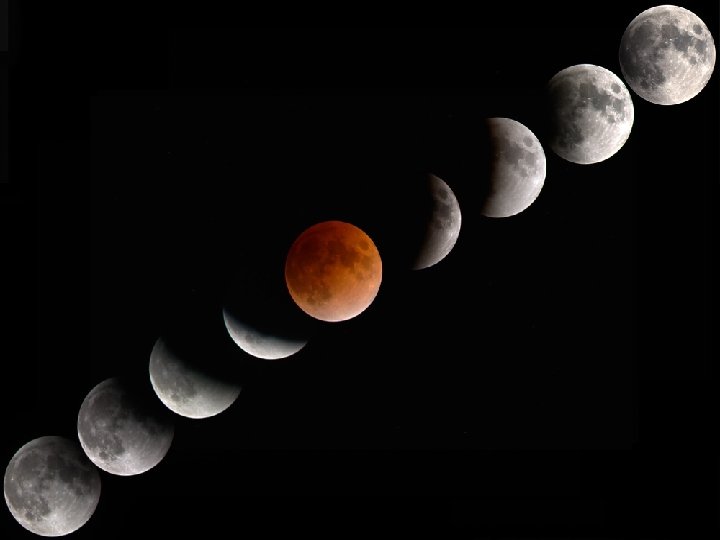
Phases of the Moon Total Lunar Eclipse - February 20, 2008
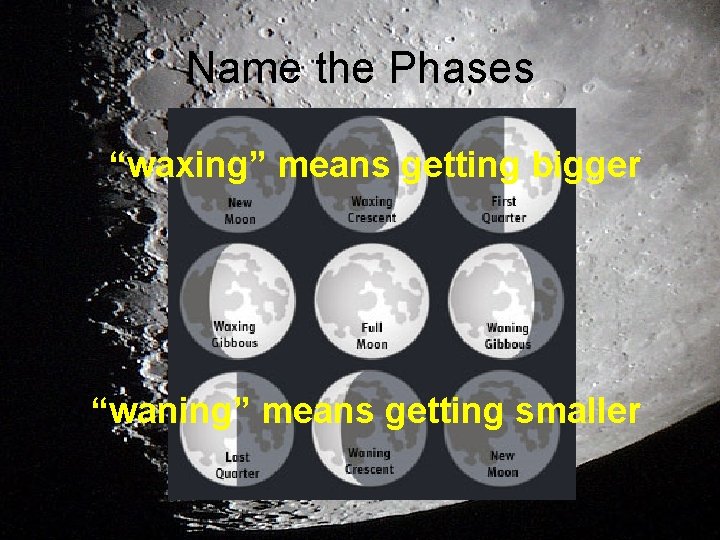
Name the Phases “waxing” means getting bigger “waning” means getting smaller
Phases of the Moon • Teacher’s Domain “Phases of the Moon” • You. Tube “Phases of the Moon 3 D animation” and Bill Nye
Tides • The moon’s gravity exerts a pull on Earth • The ocean directly in line with the moon is pulled slightly toward it – a high tide • The opposite side of the Earth also gets a high tide because the planet is being pulled toward the moon, as well.
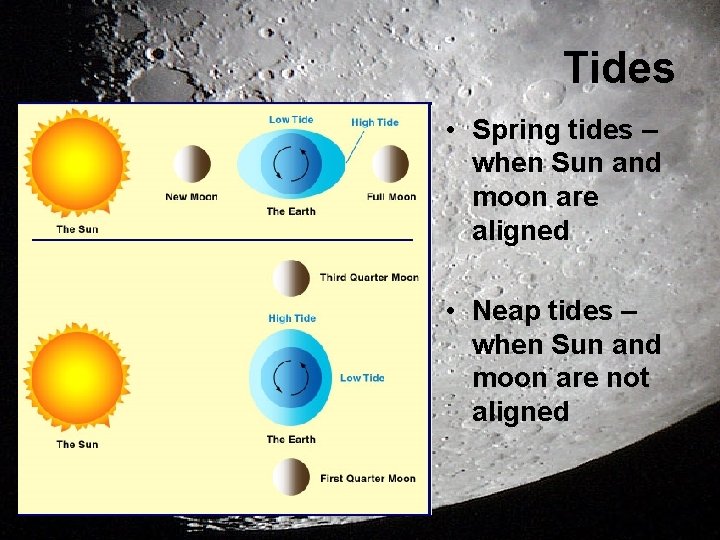
Tides • Spring tides – when Sun and moon are aligned • Neap tides – when Sun and moon are not aligned
Tides • What do tides look like on Earth?
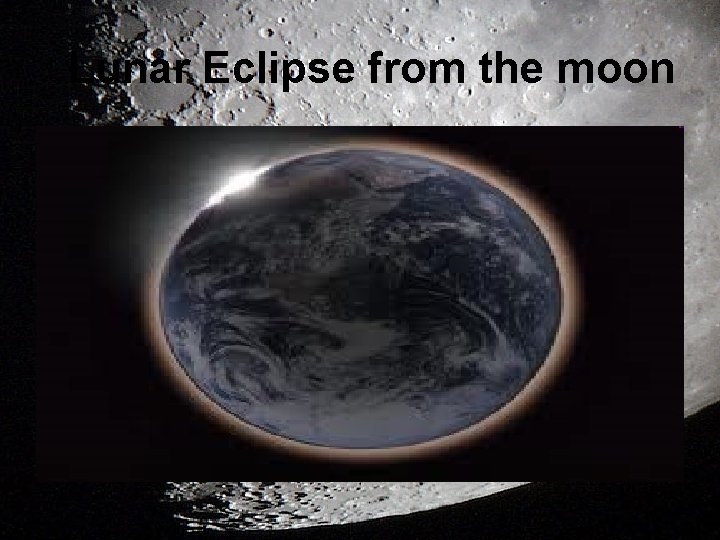
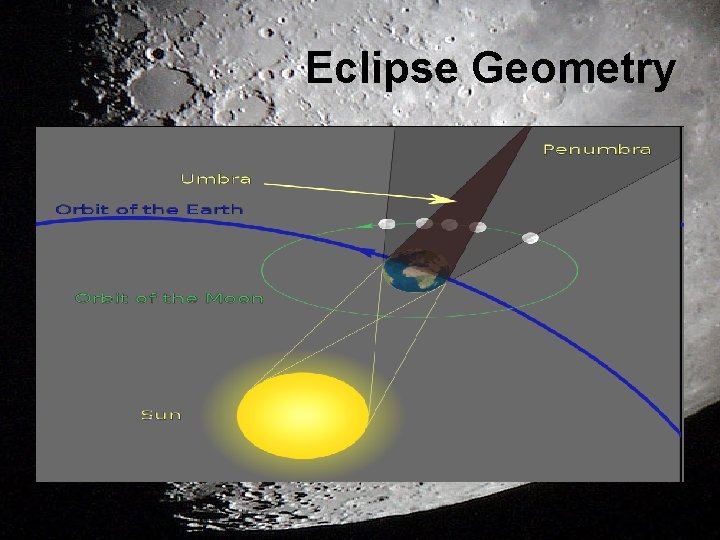
Eclipses Lunar Eclipses • When moon moves into Earth’s shadow (Full Moon) • Not every month – orbital planes have to line up • Happen 2 - 4 times per year • Everyone on night side of Earth can see it
Eclipses Lunar Eclipses • Moon glows red because indirect sunlight is filtered by our atmosphere (filters out blue light)
Lunar Eclipse from the moon
Eclipse Geometry
You. Tube videos • “What causes an Eclipse of the moon” • “Total Lunar Eclipse - February 20, 2008”
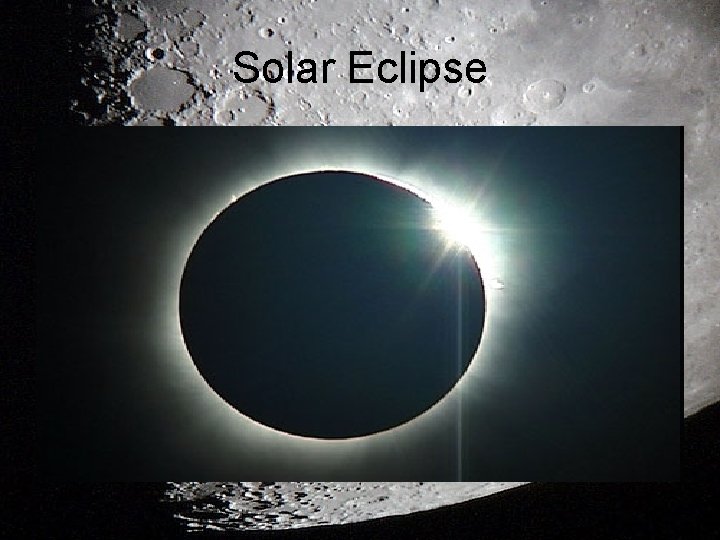
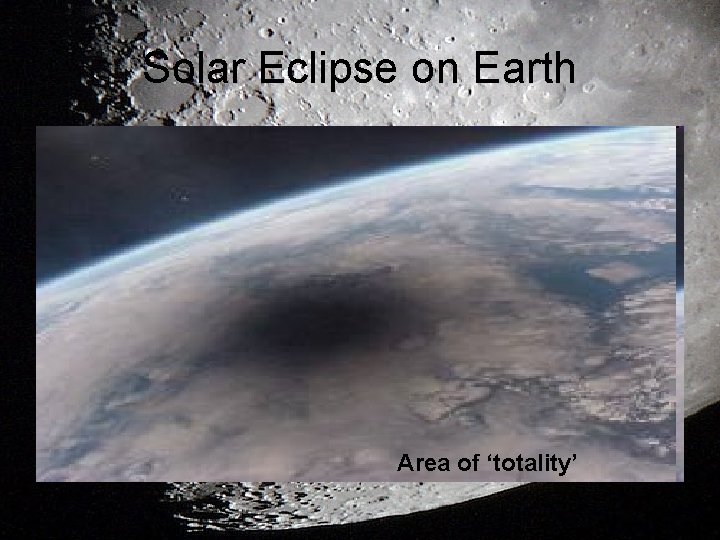
Eclipses Solar Eclipses • When moon moves between the Sun and Earth’s (New Moon) • Moon blocks out some or all of the Sun’s light • Happens rarely • Very small area affected
Solar Eclipse
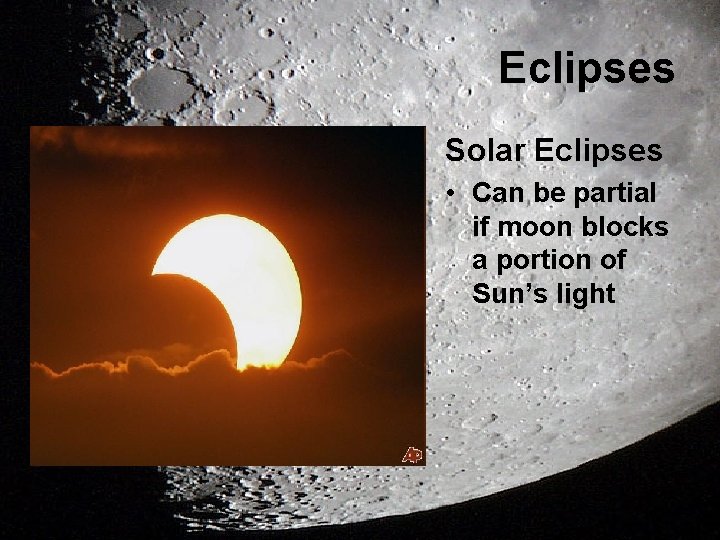
Eclipses Solar Eclipses • Can be partial if moon blocks a portion of Sun’s light
Solar Eclipse on Earth Area of ‘totality’