
The Montgomery Bus Boycott In 1955 Rosa Parks
The Montgomery Bus Boycott
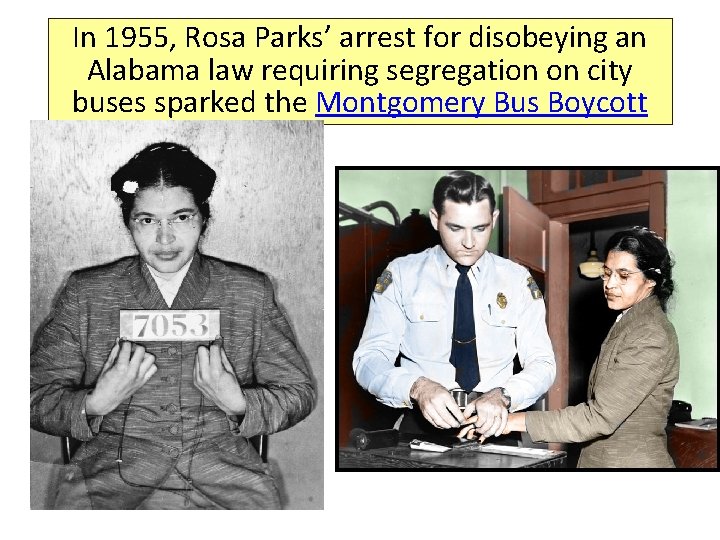
In 1955, Rosa Parks’ arrest for disobeying an Alabama law requiring segregation on city buses sparked the Montgomery Bus Boycott
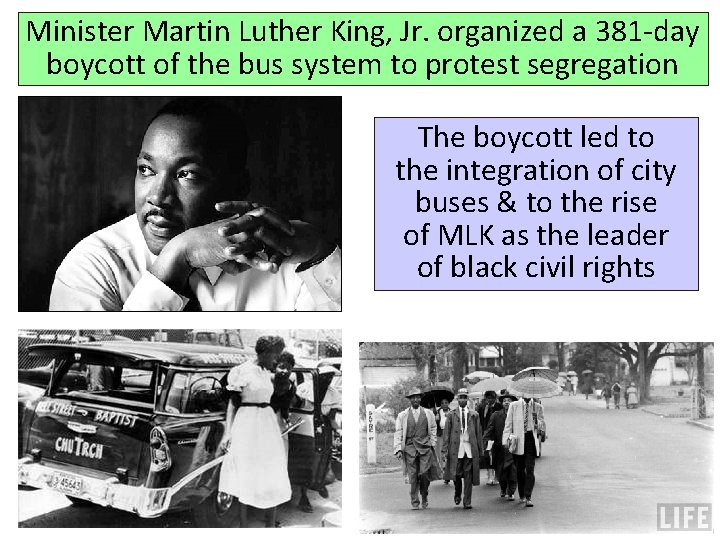
Minister Martin Luther King, Jr. organized a 381 -day boycott of the bus system to protest segregation The boycott led to the integration of city buses & to the rise of MLK as the leader of black civil rights
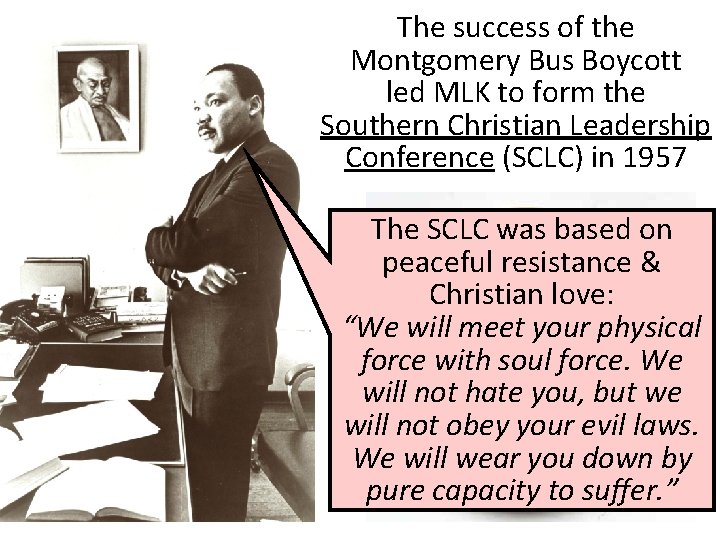
The success of the Montgomery Bus Boycott led MLK to form the Southern Christian Leadership Conference (SCLC) in 1957 The to The SCLC was formed based on usepeaceful activismresistance & non-violent & protest to bringlove: an end to Christian “We willsegregation meet your physical force with soul force. We will. SCLC not hate but we The soon you, overtook the will not obey evil laws. NAACP as theyour leading civil We will group wear you down by rights in America pure capacity to suffer. ”
Activism Through Non-Violent Protest
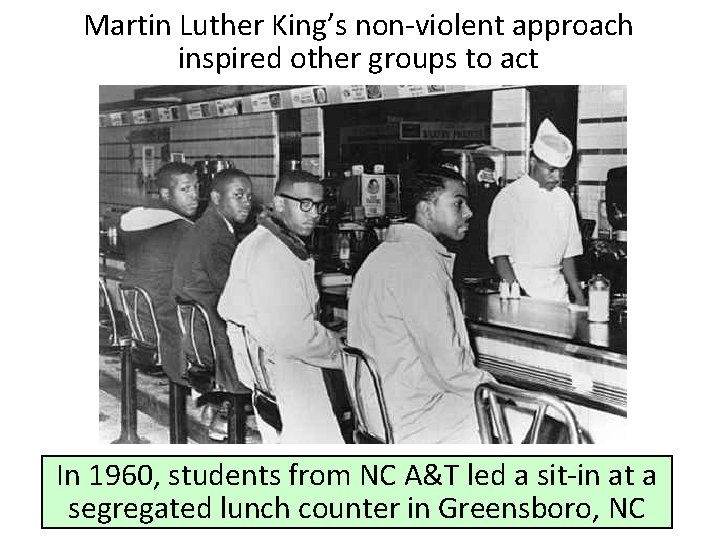
Martin Luther King’s non-violent approach inspired other groups to act In 1960, students from NC A&T led a sit-in at a segregated lunch counter in Greensboro, NC
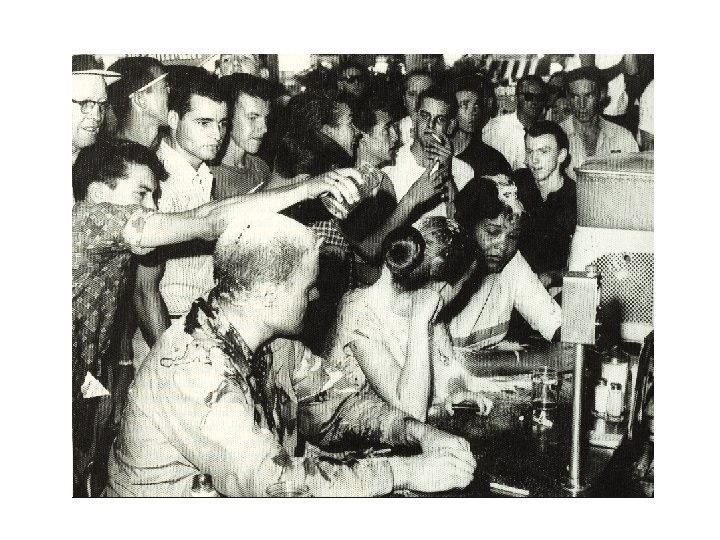

The “sit-in” movement led to the Student Nonviolent Coordinating Committee (SNCC) Non-violent resistance training, Atlanta 1960
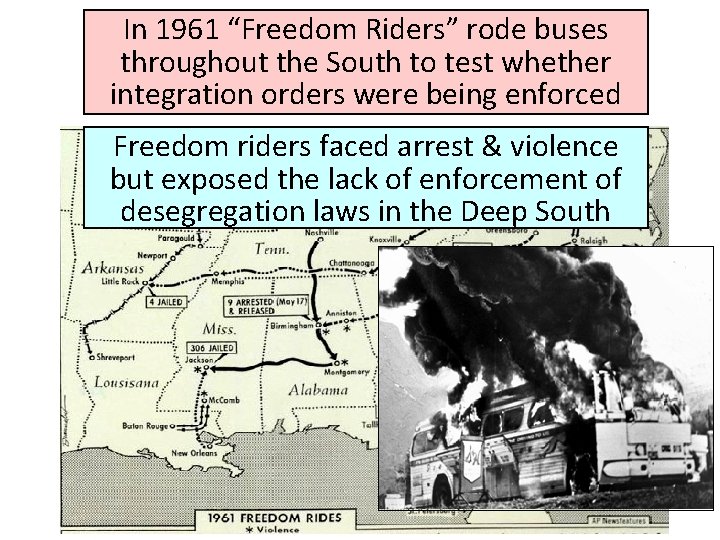
In 1961 “Freedom Riders” rode buses throughout the South to test whether integration orders were being enforced Freedom riders faced arrest & violence but exposed the lack of enforcement of desegregation laws in the Deep South
“The Most Segregated City in America”
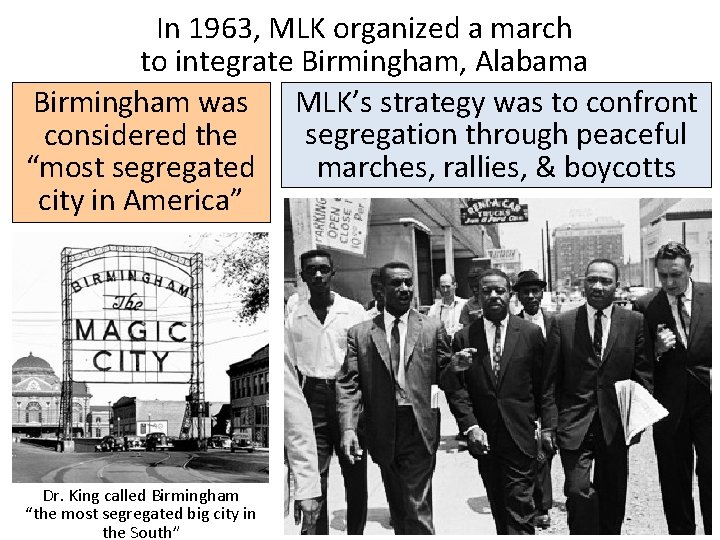
In 1963, MLK organized a march to integrate Birmingham, Alabama Birmingham was MLK’s strategy was to confront segregation through peaceful considered the marches, rallies, & boycotts “most segregated city in America” Dr. King called Birmingham “the most segregated big city in the South”
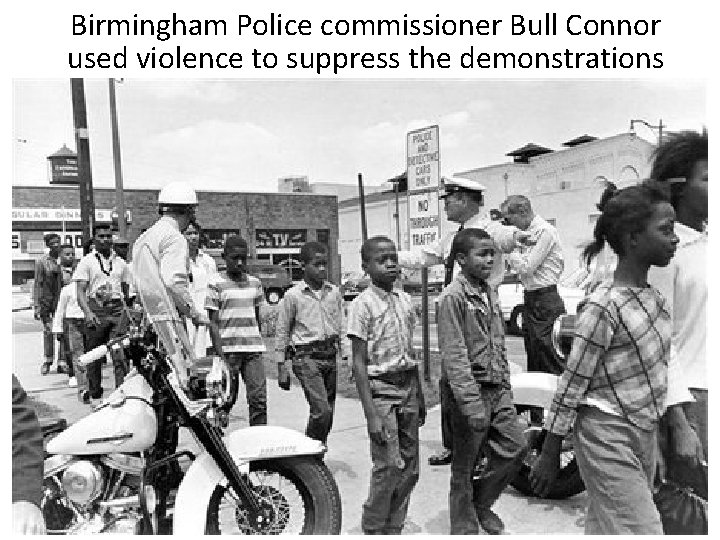
Birmingham Police commissioner Bull Connor used violence to suppress the demonstrations
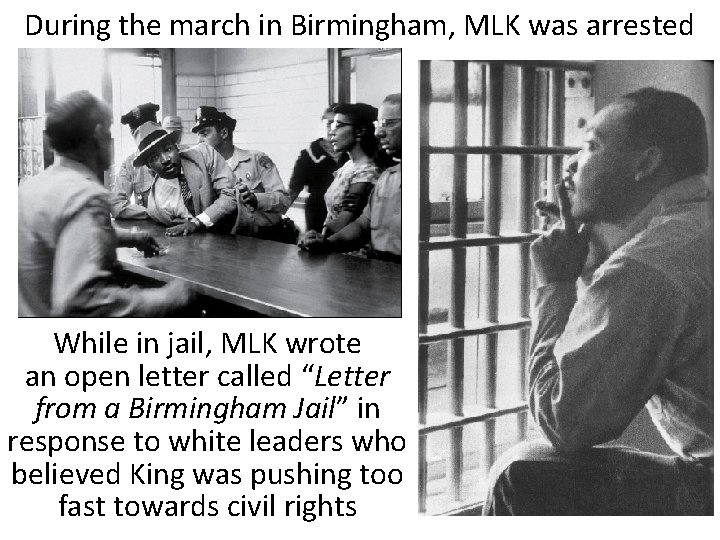
During the march in Birmingham, MLK was arrested While in jail, MLK wrote an open letter called “Letter from a Birmingham Jail” in response to white leaders who believed King was pushing too fast towards civil rights
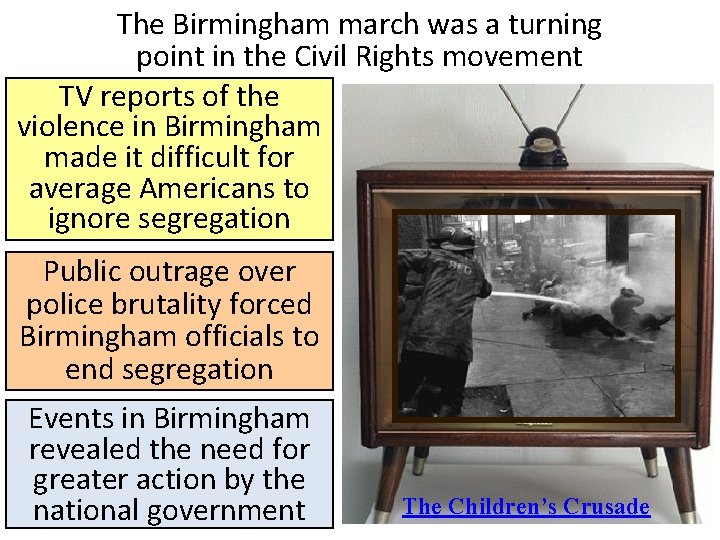
The Birmingham march was a turning point in the Civil Rights movement TV reports of the violence in Birmingham made it difficult for average Americans to ignore segregation Public outrage over police brutality forced Birmingham officials to end segregation Events in Birmingham revealed the need for greater action by the national government The Children’s Crusade
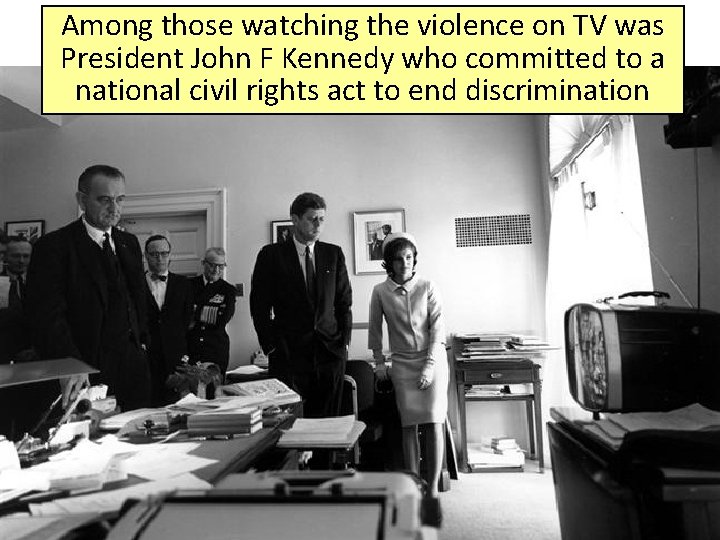
Among those watching the violence on TV was President John F Kennedy who committed to a national civil rights act to end discrimination
- Slides: 15