
The Mongols Background Steppedry grassland trade route connecting
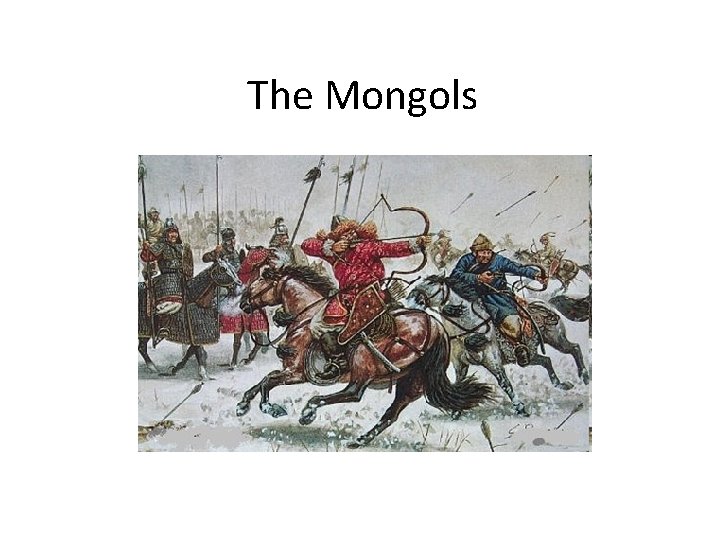
The Mongols
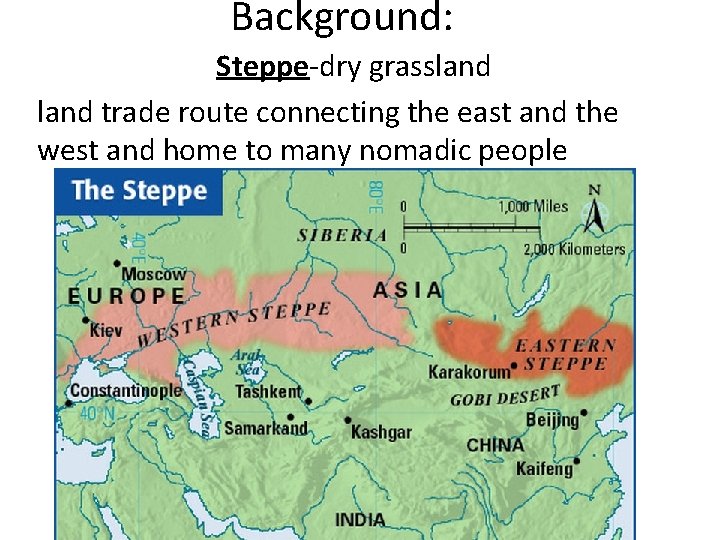
Background: Steppe-dry grassland trade route connecting the east and the west and home to many nomadic people
Other Vocab: • Nomad-a person who roams from place to place. • Pastorialists-people who herded domesticated animals/nomads/on the move searching for pasture. • Clans-groups of nomads who traveled together. • Khan-Clan leader

The Mongols Nomadic Tribe from Central Asia. 1200 -Temujin (a Mongol clan leader) unified his clans and became known as Genghis Khan“universal leader. ” Genghis Khan led the Mongols in conquest for 21 years helping to build the largest empire in history.
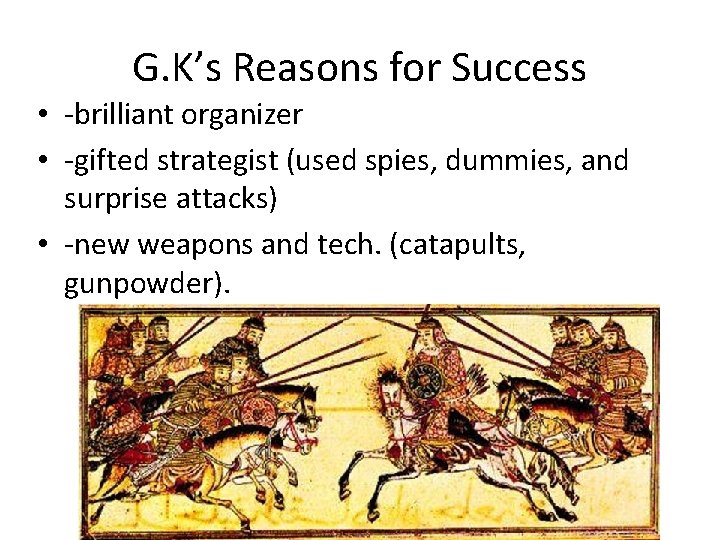
G. K’s Reasons for Success • -brilliant organizer • -gifted strategist (used spies, dummies, and surprise attacks) • -new weapons and tech. (catapults, gunpowder).
The Mongols • Genghis died in 1227 (of illness) • In less than 50 years the Mongols conquered from China to Poland creating the largest unified empire in history. • By 1260 the Mongol Empire was divided into 4 Khanates, each ruled by a descendant of Genghis.
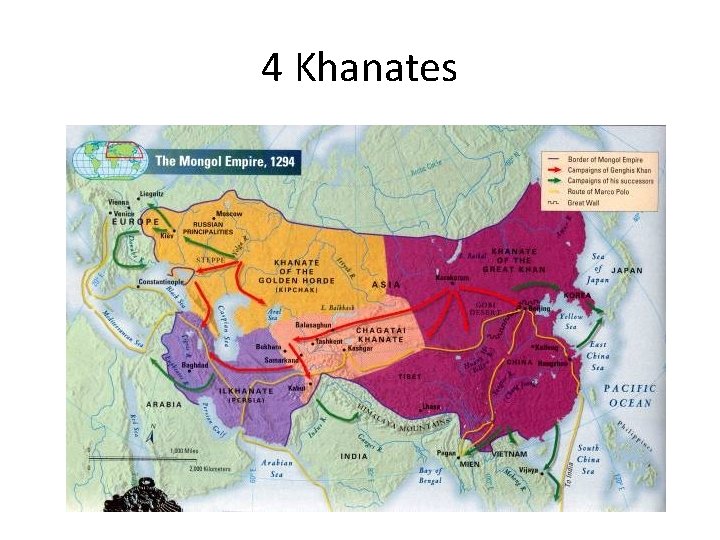
4 Khanates
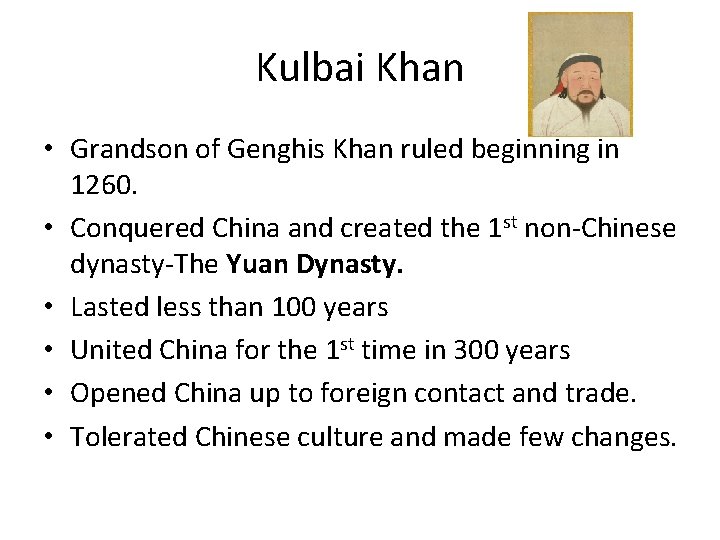
Kulbai Khan • Grandson of Genghis Khan ruled beginning in 1260. • Conquered China and created the 1 st non-Chinese dynasty-The Yuan Dynasty. • Lasted less than 100 years • United China for the 1 st time in 300 years • Opened China up to foreign contact and trade. • Tolerated Chinese culture and made few changes.
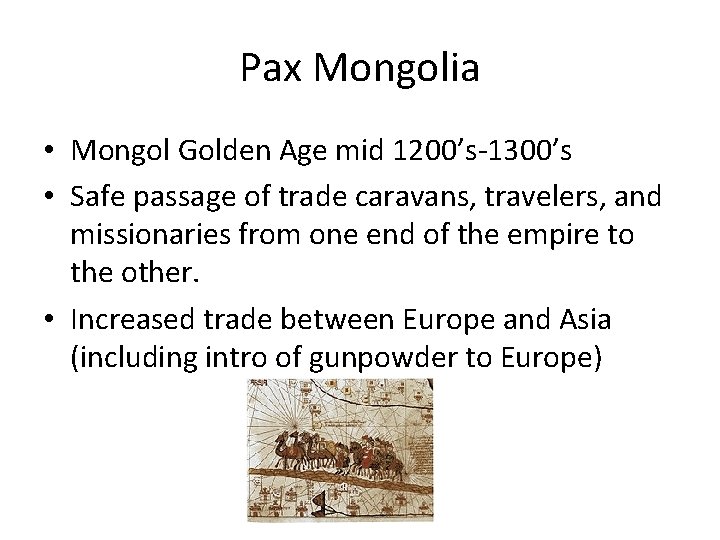
Pax Mongolia • Mongol Golden Age mid 1200’s-1300’s • Safe passage of trade caravans, travelers, and missionaries from one end of the empire to the other. • Increased trade between Europe and Asia (including intro of gunpowder to Europe)
Decline of Mongol Rule • Kublai Khan died in 1294 • Mongol rule weakened after his death • Within 74 years the Yuan Dynasty ended and Chinese rule was restored with the Ming Dynasty • Empire became too big to control
- Slides: 10