
The Mongol Empire Under GenghisChinggis Kahn When Cultures
- Slides: 9
The Mongol Empire Under Genghis/Chinggis Kahn When Cultures Meet: Conflict and Cooperation; Divergence and Diffusion
Geographic/Historical Background • Nomadic peoples of the Asian steppe. • Landmass of Eurasia that stretches from Manchuria to Hungary; dry grassland • Steppe environment is significant: – Connects east and west. – Extreme temperature changes. – Allowed Mongols to become adept horseman because they were constantly on the move, searching for good pasture. • Traveled together in clans - each clan descends from a common ancestor.
Geographic/Historical Background • Nomadic life meant… – Keeping claim to land was difficult. – Constant interaction between nomadic and settled peoples. – Dependence upon settled peoples for goods and services (or tributes).
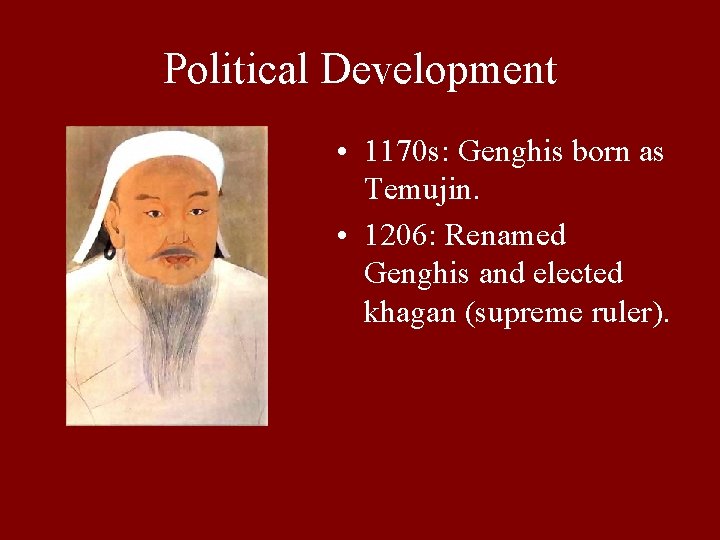
Political Development • 1170 s: Genghis born as Temujin. • 1206: Renamed Genghis and elected khagan (supreme ruler).
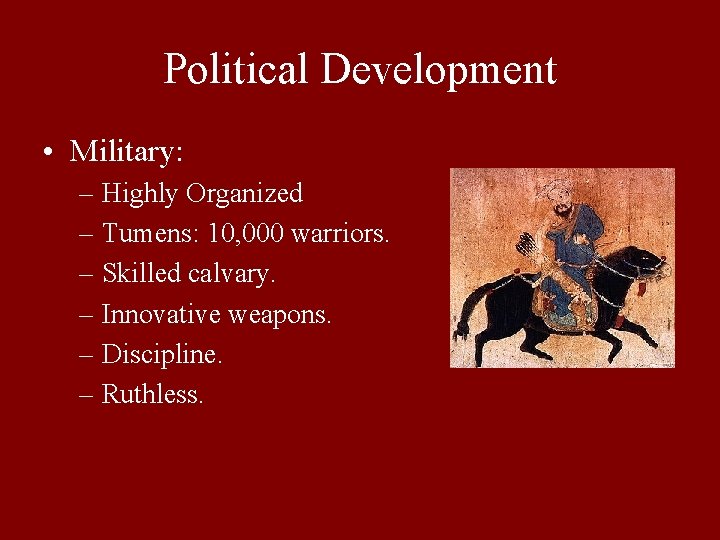
Political Development • Military: – Highly Organized – Tumens: 10, 000 warriors. – Skilled calvary. – Innovative weapons. – Discipline. – Ruthless.
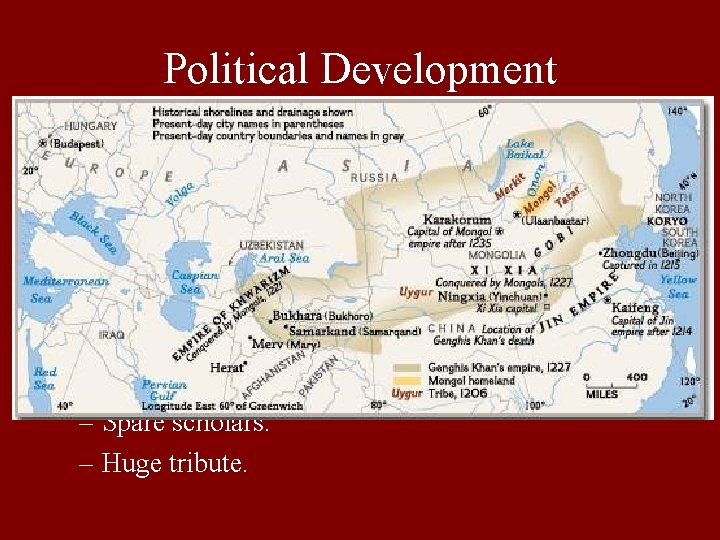
Political Development • Conquest: – 1207: Tangut (Northwest China). – 1219: Kara Khitai Empire – 1226: Khwarazm Empire. – 1227: Xi Xia Empire. • Strategies: – Surrender outsied of cities. – Spare scholars. – Huge tribute.
Social Development • Cultural autonomy. • Preservation of learning. • Peace and security.
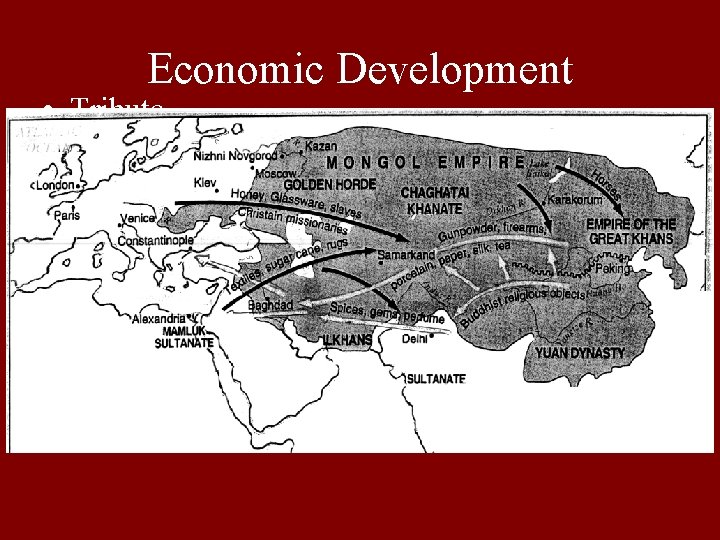
Economic Development • Tribute. • Trade routes. • Artisanship
How does the Mongol Empire Represent When Cultures Meet? • • Cooperation: Conflict: Diffusion: Divergence: