
The Mongol Conquests The Mongols a nomadic people

- Slides: 16
The Mongol Conquests The Mongols, a nomadic people from the steppe, conquered settled societies across much of Asia.
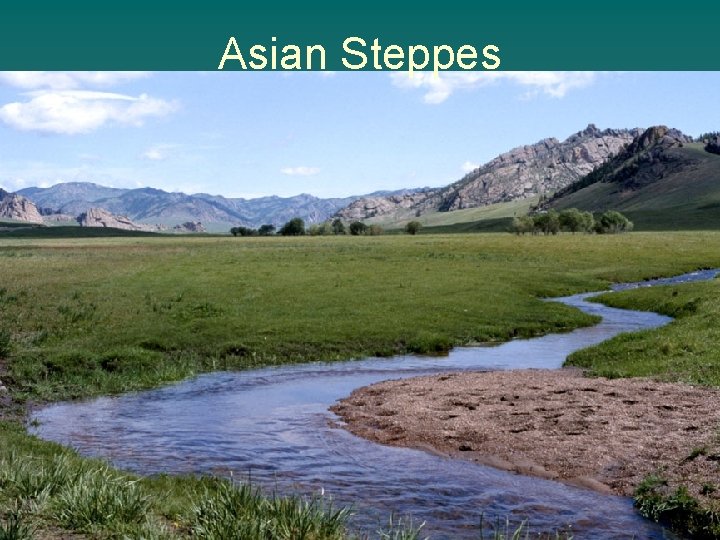
Nomads of the Asian Steppe ◆ Geography of the Steppe – Steppe—dry grassland of Eurasia— provides home for nomads. – Two main expanses: Central Asia to eastern Europe, and Mongolia. – Steppe has little rain, dramatic seasonal temperature differences.
Asian Steppes
◆ The Nomadic Way of Life – Steppe nomads are pastoralists—herd domesticated animals. – Way of life teaches Asian nomads to be skilled horse riders. – Nomads travel in clans—kin groups are linked by a common ancestor.
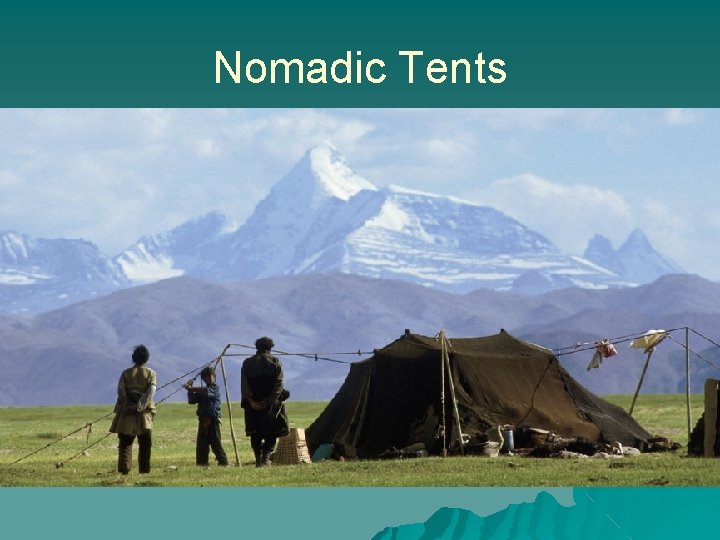
Nomadic Tents
◆ Steppe Nomads and Settled Societies – Nomads and people living in settled communities often interact. – Some interactions are peaceful, as in trade. – Sometimes nomads raid towns and cities to seize wealth and goods. – Strong states or empires could protect its lands from these invasions.
The Rise of the Mongols ◆ Genghis Khan United the Mongols – Around 1200, Genghis Khan—a title that means ”universal ruler”—unites Mongols. – In early 1200 s, he begins a campaign of conquest. – By 1225, Genghis Khan controls central Asia.
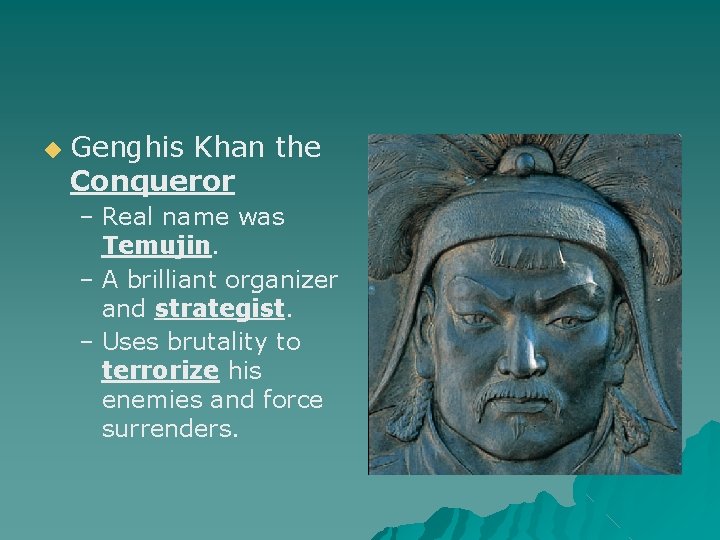
◆ Genghis Khan the Conqueror – Real name was Temujin. – A brilliant organizer and strategist. – Uses brutality to terrorize his enemies and force surrenders.
The Mongol Empire ◆ Death and Succession – Genghis Khan died in 1227. – Successors continue conquests for over 50 years. – The Mongols conquer territory from China to Poland.
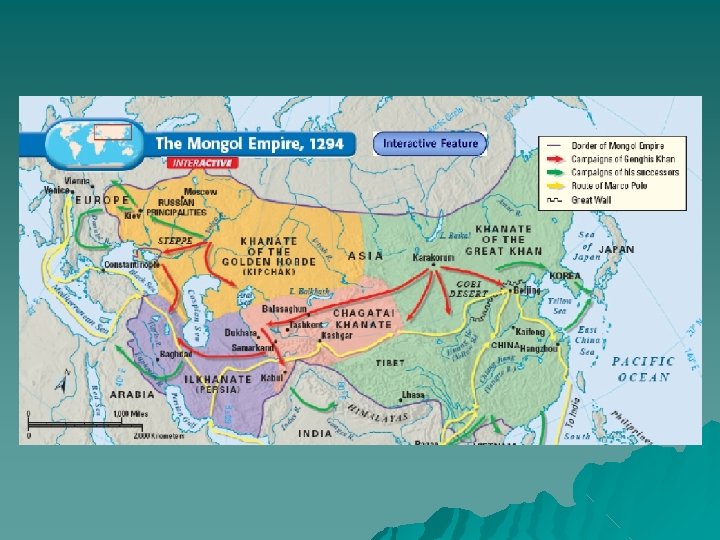
◆ The Khanates – In the East, Mongols conquered northern China and invade Korea. – In the West, Mongols take Ukraine and threaten Vienna and Venice. – In 1250 s, Mongols turn their attention to Persia. – By 1260, The Mongols had the largest territory ever, so broke it into four parts called Khanates.
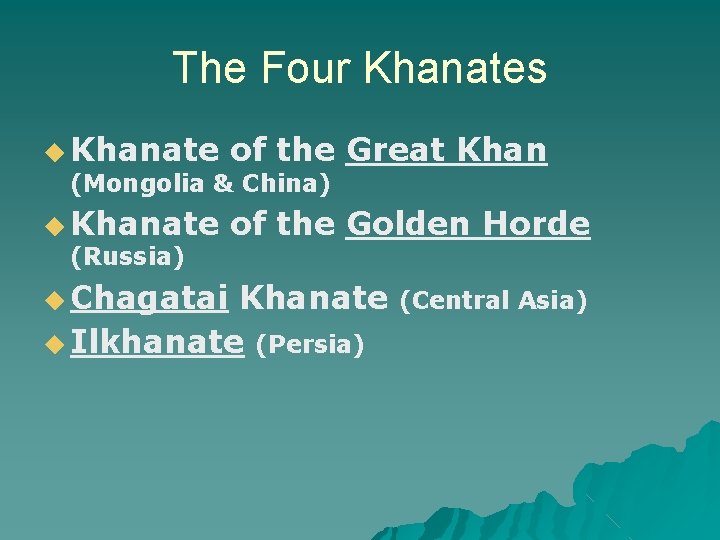
The Four Khanates ◆ Khanate of the (Mongolia & China) ◆ Khanate (Russia) ◆ Chagatai Great Khan of the Golden Horde Khanate ◆ Ilkhanate (Persia) (Central Asia)
◆ Kublai Khan – Kublai Khan was Genghis Khan’s grandson, and ruled the Khanate of the Great Khan from 1279 to 1294. – He was the first person to control all of China in 300 years. – Opened China to the outside world, and promoted trade on the Silk Roads – Met famous foreigners, including explorer Marco Polo, who stayed in China for 17 years.
◆ The Mongols as Rulers – Mongol rulers were tolerant of other peoples and cultures. – Some Mongols adopted local ways, leading to a split among khanates. ◆ The Mongol Peace – Peaceful period from mid-1200 s to mid -1300 s was very calm and productive because of the Mongols. – There was much East-West trade and exchange of ideas during this period.
◆ The Decline of the Mongols in China – Kublai Khan died in 1294, and was the last strong leader of the Mongols in China. – Within 50 years of Kublai Khan’s death, the Mongols were chased out of China, and China was once again ruled by the Chinese.