
The Molecules of Life Part 1 carbohydrates The
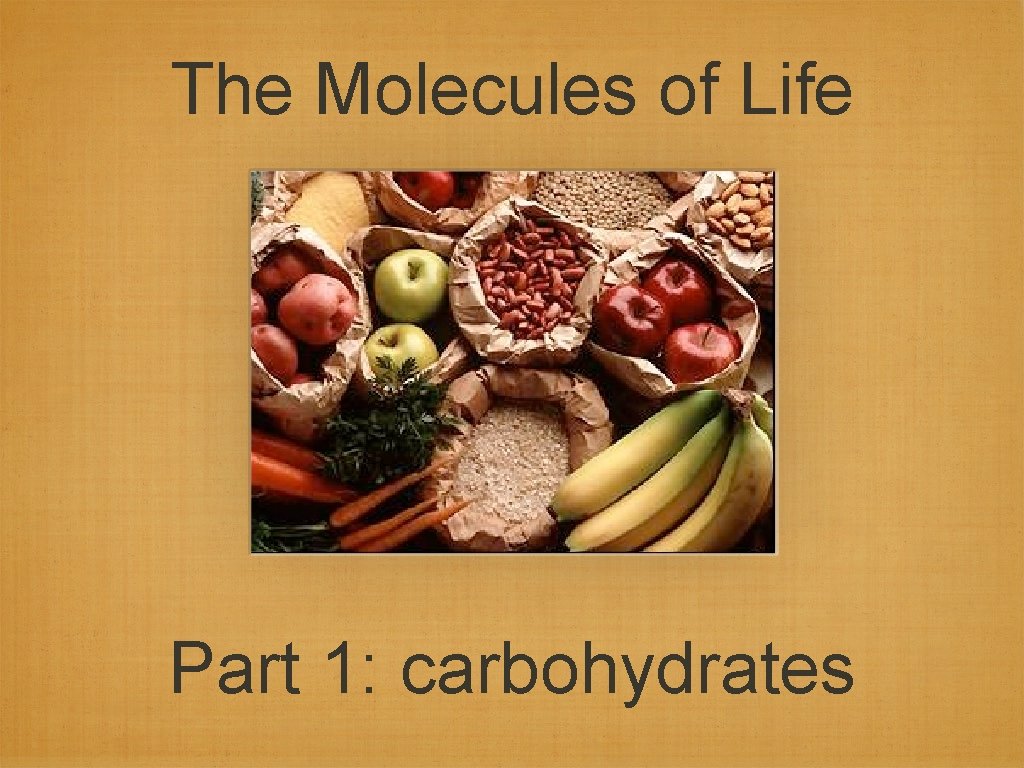
The Molecules of Life Part 1: carbohydrates

The Molecules of Life Part 1 The molecules associated with living things are grouped into four major categories: Carbohydrates Lipids (Fats) Proteins Nucleic Acids
Carbohydrates contain carbon, hydrogen and oxygen in a 1: 2: 1 ratio. The basic building blocks of carbohydrates are monosaccharides (simple sugars). Each monosaccharide has at least 2 hydroxyl groups and an aldehyde or ketone group.
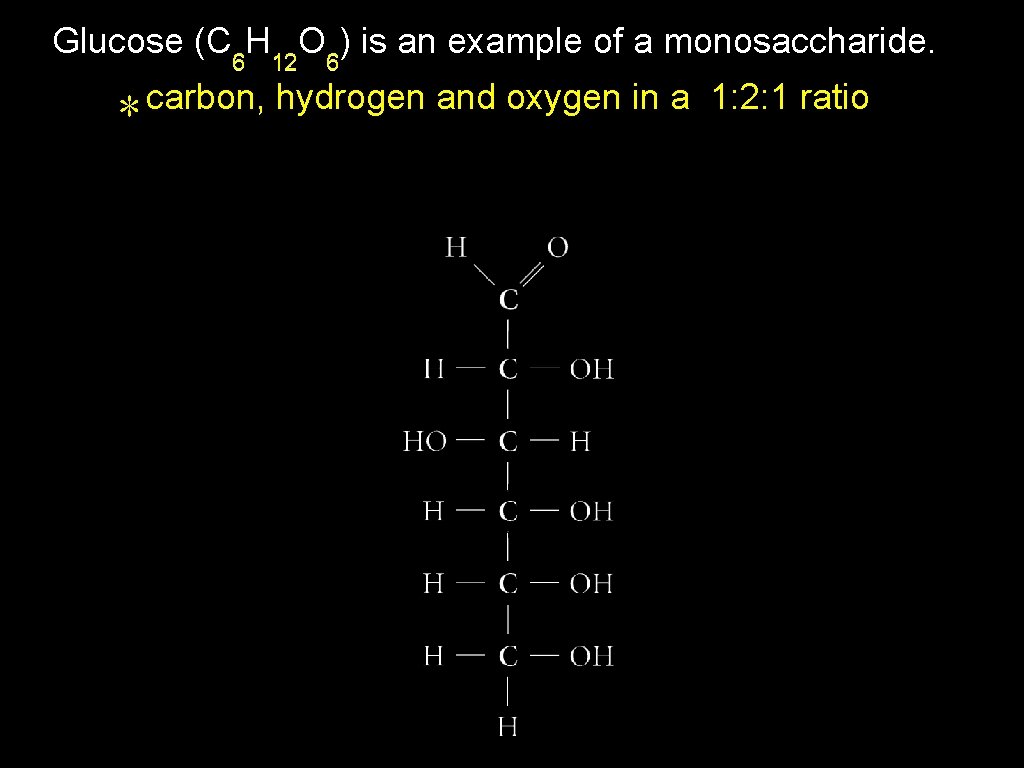
Glucose (C 6 H 12 O 6) is an example of a monosaccharide. ∗ carbon, hydrogen and oxygen in a 1: 2: 1 ratio
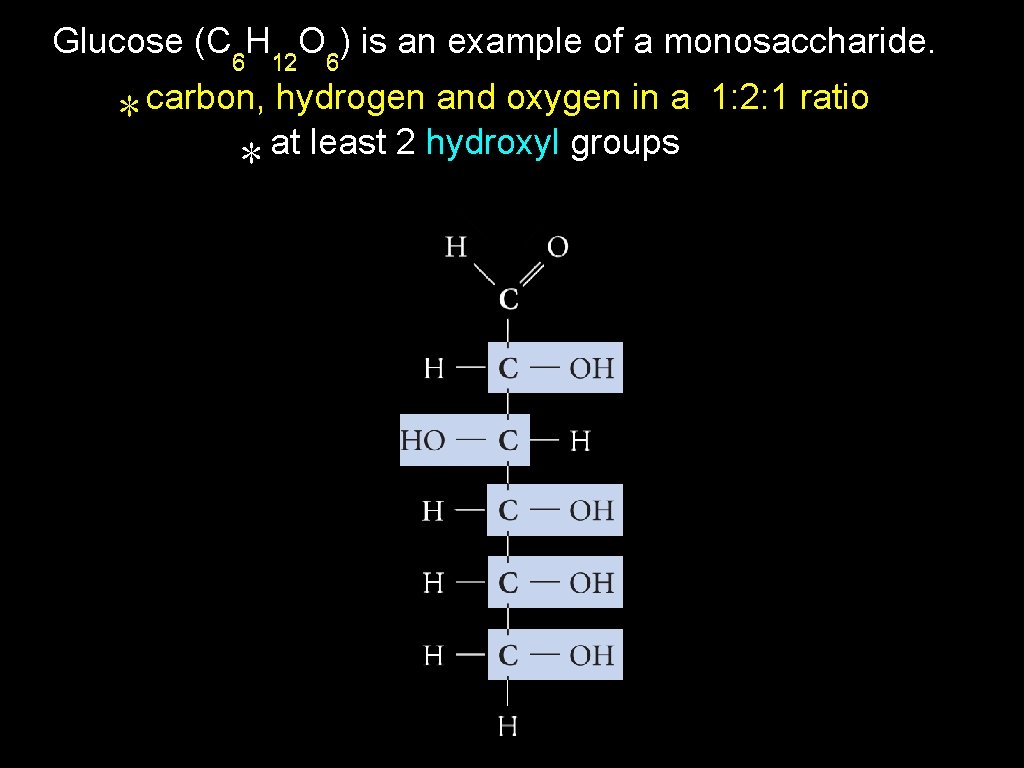
Glucose (C 6 H 12 O 6) is an example of a monosaccharide. ∗ carbon, hydrogen and oxygen in a 1: 2: 1 ratio at least 2 hydroxyl groups ∗
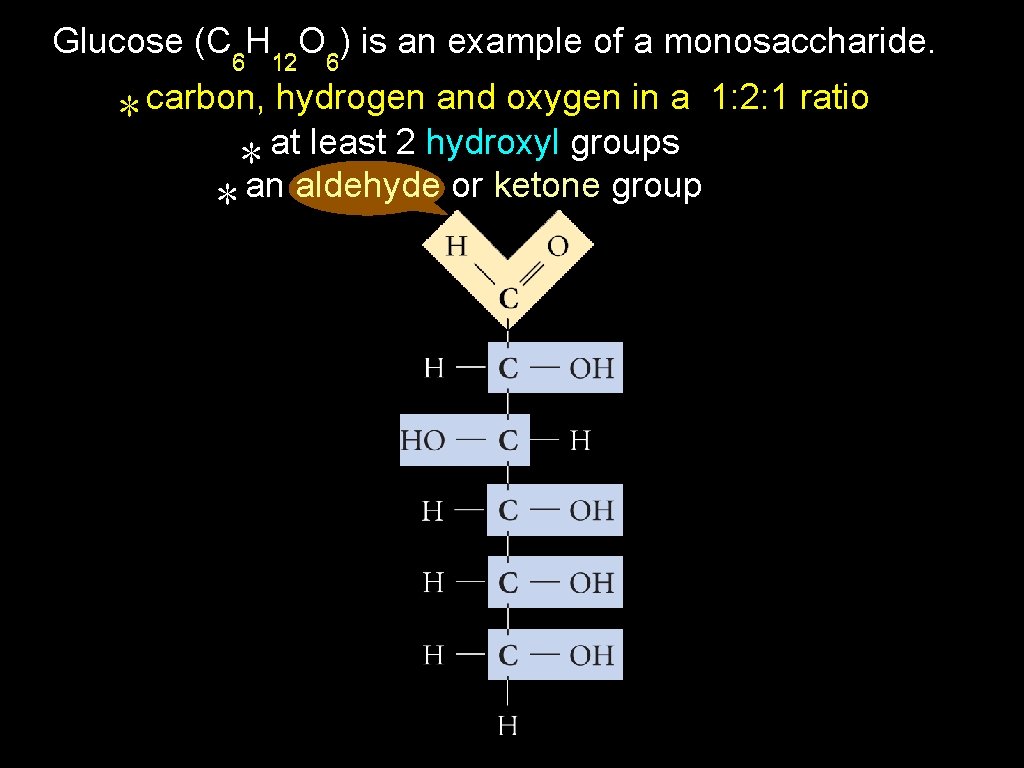
Glucose (C 6 H 12 O 6) is an example of a monosaccharide. ∗ carbon, hydrogen and oxygen in a 1: 2: 1 ratio at least 2 groups hydroxyl ∗ ∗ an aldehyde or ketone group
Carbohydrates contain carbon, hydrogen and oxygen in a 1: 2: 1 ratio. The basic building blocks of carbohydrates are monosaccharides (simple sugars). Each monosaccharide has at least 2 hydroxyl groups and an aldehyde or ketone group. Glucose is an example of a monosaccharide. Oligosaccharides are sugars that contain a few simple sugar units linked together by covalent bonds. These bonds are formed when hydroxyl groups on adjacent sugars react to produce a molecule of water and link the sugars through a shared oxygen atom. Reactions that build larger molecules from smaller units, while producing water are called condensation synthesis reactions.
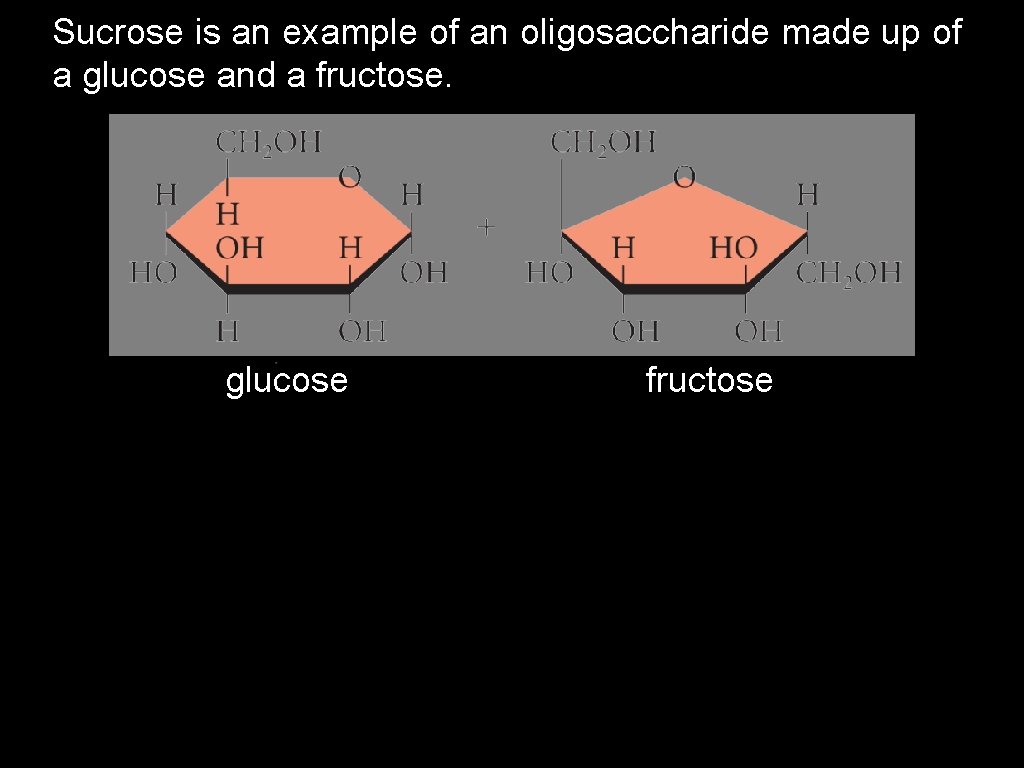
Sucrose is an example of an oligosaccharide made up of a glucose and a fructose. glucose fructose
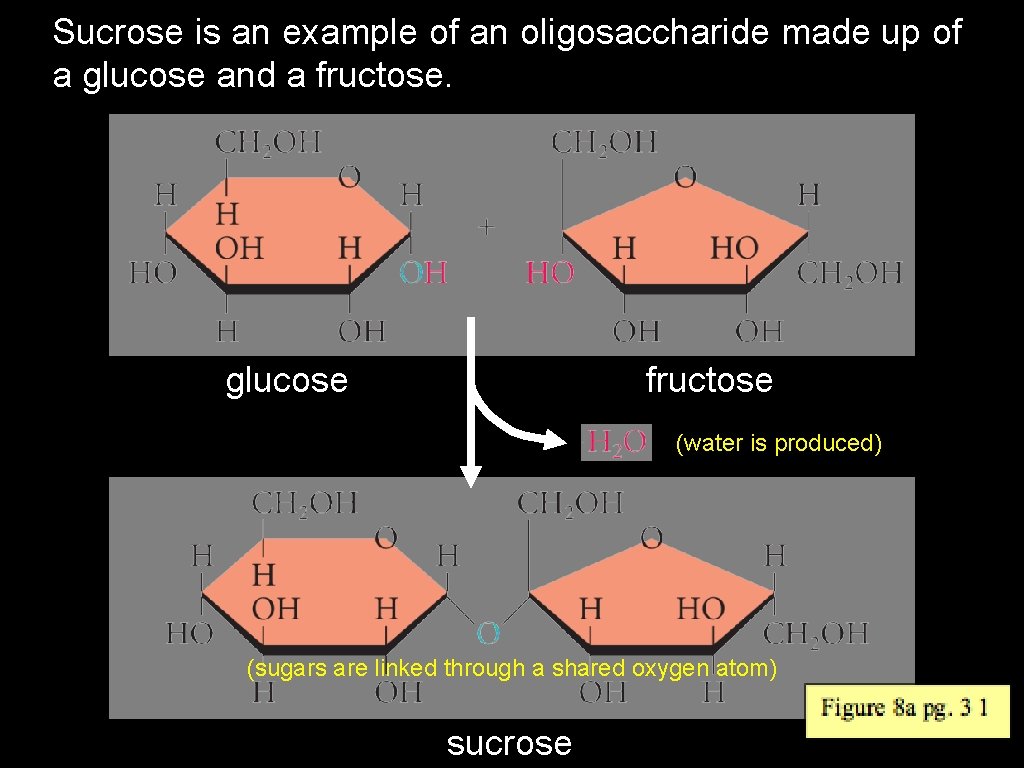
Sucrose is an example of an oligosaccharide made up of a glucose and a fructose. glucose fructose (water is produced) (sugars are linked through a shared oxygen atom) sucrose
Sucrose is an example of an oligosaccharide made up of a glucose and a fructose. Let’s see that again (Nelson Biology 12 animation)
Carbohydrates contain carbon, hydrogen and oxygen in a 1: 2: 1 ratio. The basic building blocks of carbohydrates are monosaccharides (simple sugars). Each monosaccharide has at least 2 hydroxyl groups and an aldehyde or ketone group. Glucose is an example of a monosaccharide. Oligosaccharides are sugars that contain a few simple sugar units linked together by covalent bonds. These bonds are formed when hydroxyl groups on adjacent sugars react to produce a molecule of water and link the sugars through a shared oxygen atom. Reactions that build larger molecules from smaller units, units while producing water are called condensation synthesis reactions.
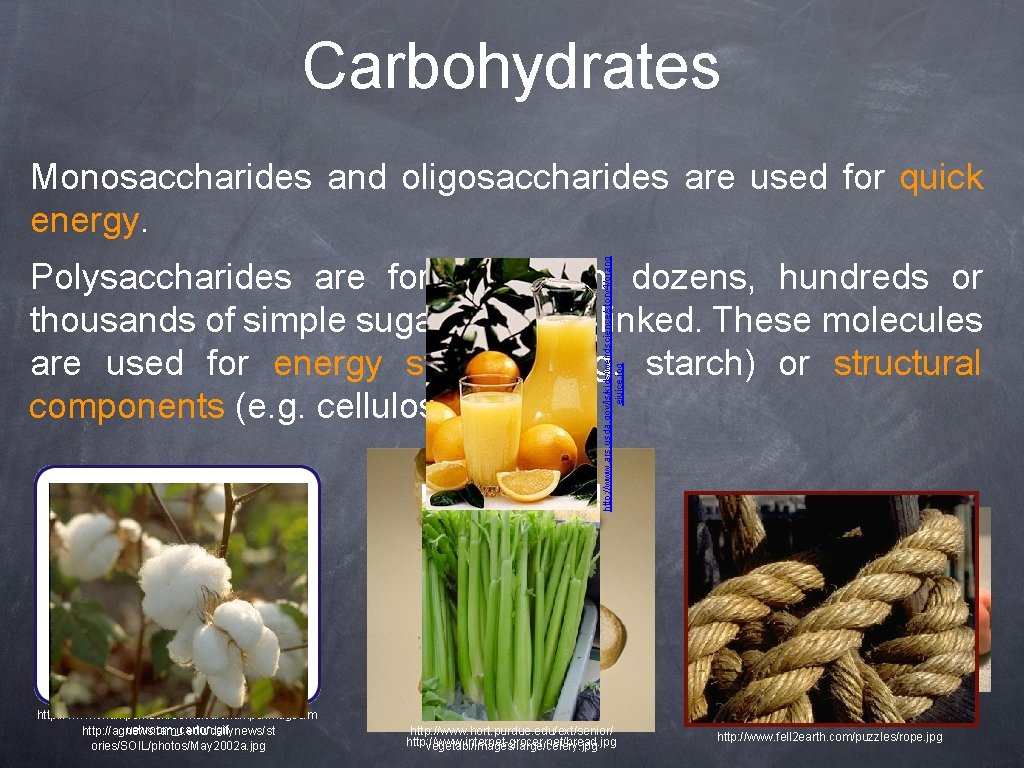
Carbohydrates http: //www. ars. usda. gov/is/kids/weirdscience/story 4/orang ejuice. jpg Monosaccharides and oligosaccharides are used for quick energy. Polysaccharides are formed when dozens, hundreds or thousands of simple sugar units are linked. These molecules are used for energy storage (e. g. starch) or structural components (e. g. cellulose). http: //www. champsmushrooms. ca/champs/images/m ushroom_carton. gif http: //agnews. tamu. edu/dailynews/st ories/SOIL/photos/May 2002 a. jpg http: //www. kohlmaierfarm. com/potatoes. jpg http: //www. hort. purdue. edu/ext/senior/ http: //www. internet-grocer. net/bread. jpg vegetabl/images/large/celery. jpg http: //www. fell 2 earth. com/puzzles/rope. jpg
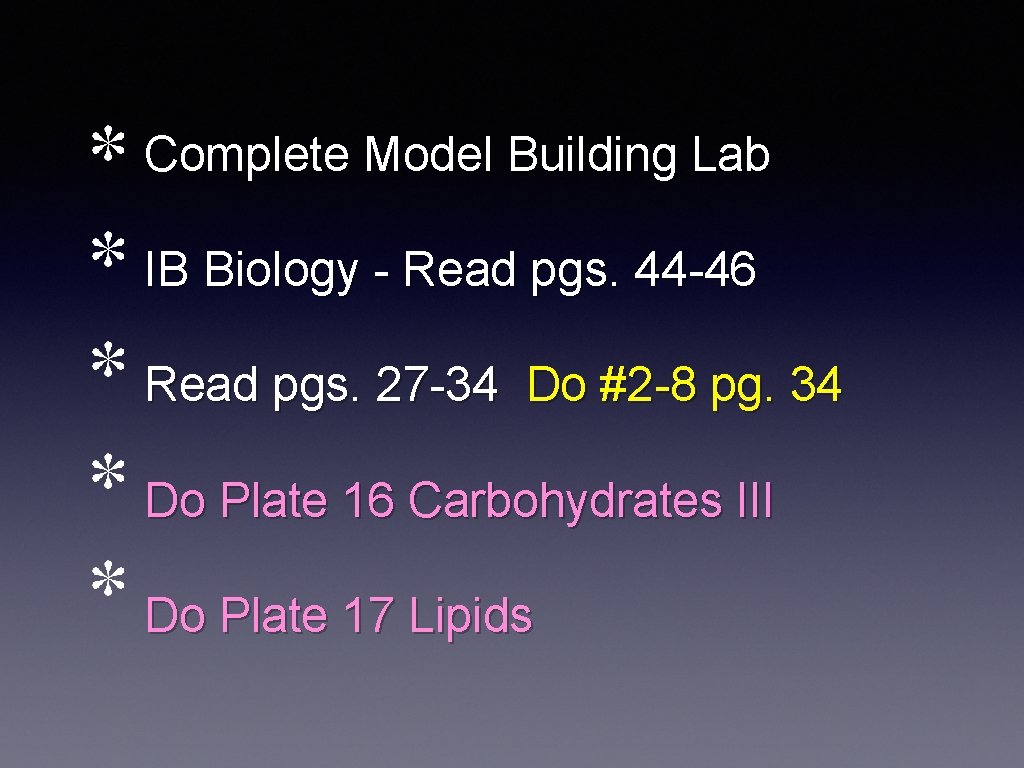
Complete Model Building Lab Read pgs. 27 -34 Do #2 -8 pg. 34 Do Plate 16 Carbohydrates III Do Plate 17 Lipids
Grade 12 Biology - SB 14 U 1 University Preparation Mr. Manbodh

Complete Model Building Lab IB Biology - Read pgs. 44 -46 Read pgs. 27 -34 Do #2 -8 pg. 34 Do Plate 16 Carbohydrates III Do Plate 17 Lipids
IB Biology Standard Level Mr. Manbodh

- Slides: 18