
The Molecules of Life BIO 100 Biology Concepts
The Molecules of Life BIO 100 Biology Concepts Fall 2007
TRACING LIFE DOWN TO THE CHEMICAL LEVEL n Biology includes the study of life at many levels n In order to understand life, we will start at the macroscopic level, the ecosystem, and work our way down to the microscopic level of cells Cells consist of enormous numbers of chemicals that give the cell the properties we recognize as life n
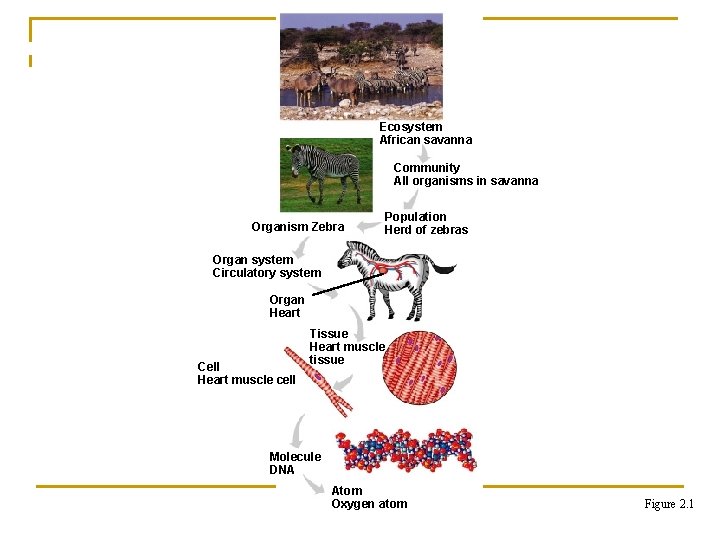
Ecosystem African savanna Community All organisms in savanna Organism Zebra Population Herd of zebras Organ system Circulatory system Organ Heart Cell Heart muscle cell Tissue Heart muscle tissue Molecule DNA Atom Oxygen atom Figure 2. 1
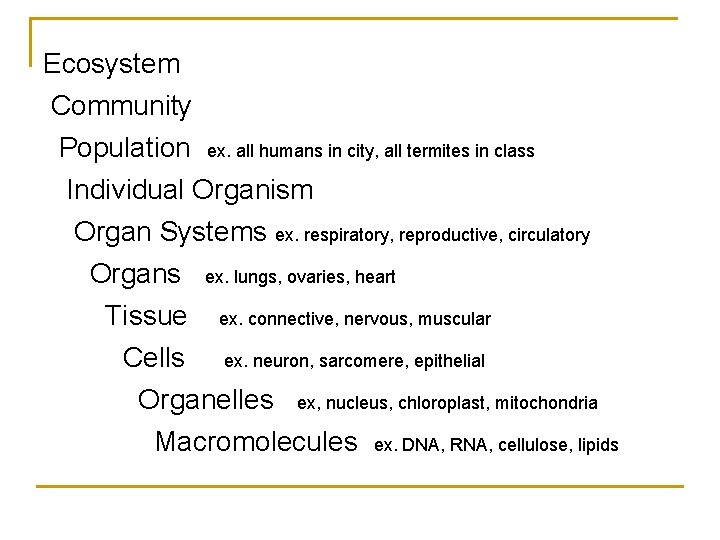
Ecosystem Community Population ex. all humans in city, all termites in class Individual Organism Organ Systems ex. respiratory, reproductive, circulatory Organs ex. lungs, ovaries, heart Tissue ex. connective, nervous, muscular Cells ex. neuron, sarcomere, epithelial Organelles ex, nucleus, chloroplast, mitochondria Macromolecules ex. DNA, RNA, cellulose, lipids
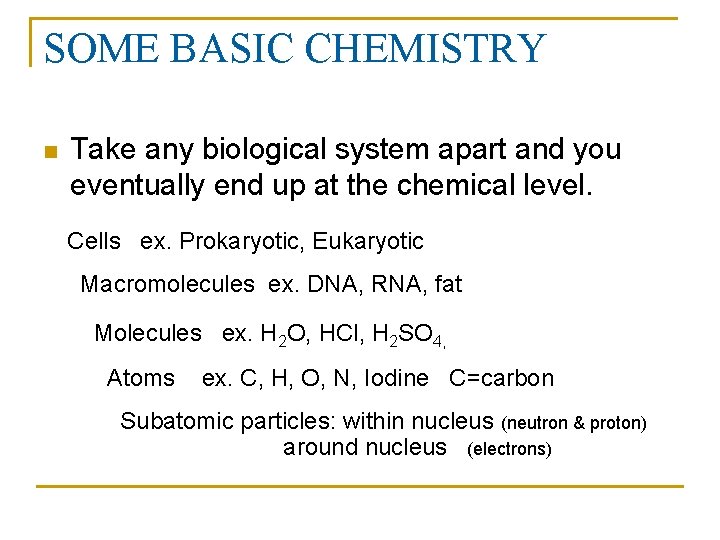
SOME BASIC CHEMISTRY n Take any biological system apart and you eventually end up at the chemical level. Cells ex. Prokaryotic, Eukaryotic Macromolecules ex. DNA, RNA, fat Molecules ex. H 2 O, HCl, H 2 SO 4, Atoms ex. C, H, O, N, Iodine C=carbon Subatomic particles: within nucleus (neutron & proton) around nucleus (electrons)
Matter: Elements and Compounds n n Matter is anything that occupies space and has mass Matter is found on the Earth in “ 3” physical states. q q q Solid Liquid Gas
n Matter is composed of chemical elements. q q Elements are substances that cannot be broken down into other substances There are 92 naturally occurring elements on Earth
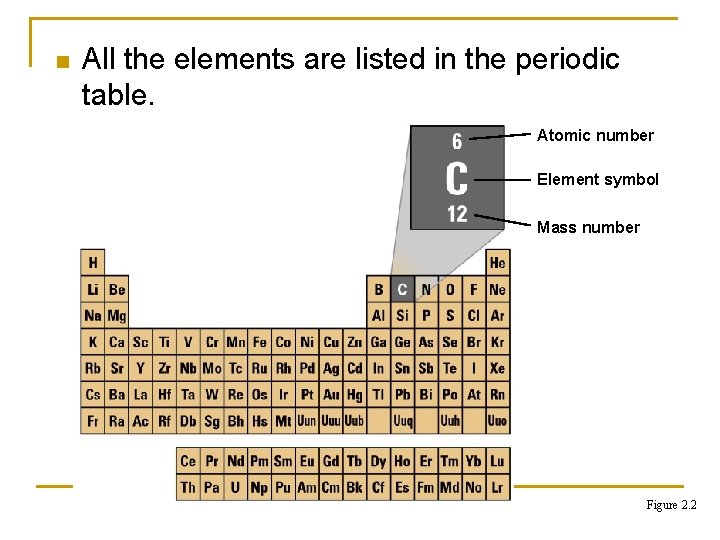
n All the elements are listed in the periodic table. Atomic number Element symbol Mass number Figure 2. 2
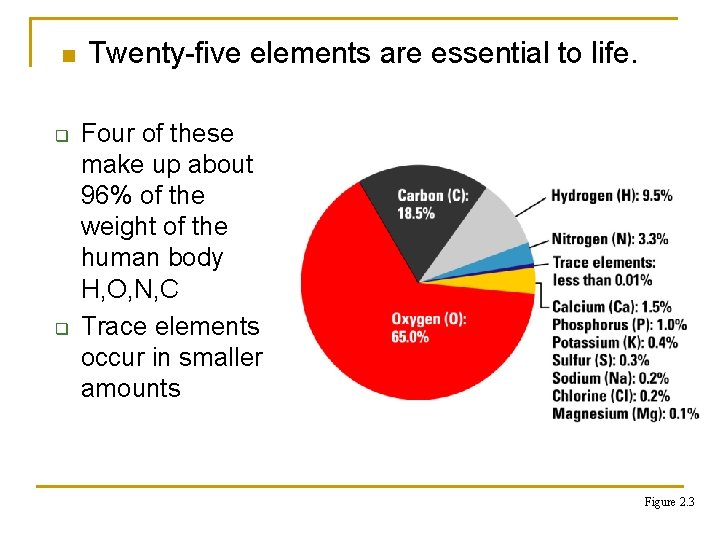
n q q Twenty-five elements are essential to life. Four of these make up about 96% of the weight of the human body H, O, N, C Trace elements occur in smaller amounts Figure 2. 3
n q q q Elements differ in the number of subatomic particles in their atoms The number of protons, the atomic number, determines which element it is An atom’s mass number is the sum of the number of protons and neutrons Mass is a measure of the amount of matter in an object; protons and neutrons each have an atomic mass unit of 1
Water’s Life-Supporting Properties n q q The polarity of water molecules and the hydrogen bonding that results explain most of water’s life-supporting properties Water’s cohesive nature Water’s ability to moderate temperature Floating ice D=M/V, see p. 30 Versatility of water as a solvent.
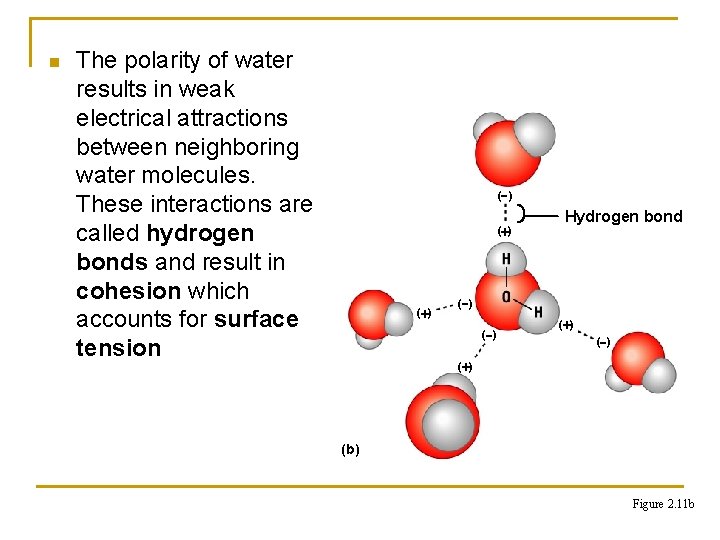
n The polarity of water results in weak electrical attractions between neighboring water molecules. These interactions are called hydrogen bonds and result in cohesion which accounts for surface tension ( ) ( ) Hydrogen bond ( ) ( ) ( ) (b) Figure 2. 11 b
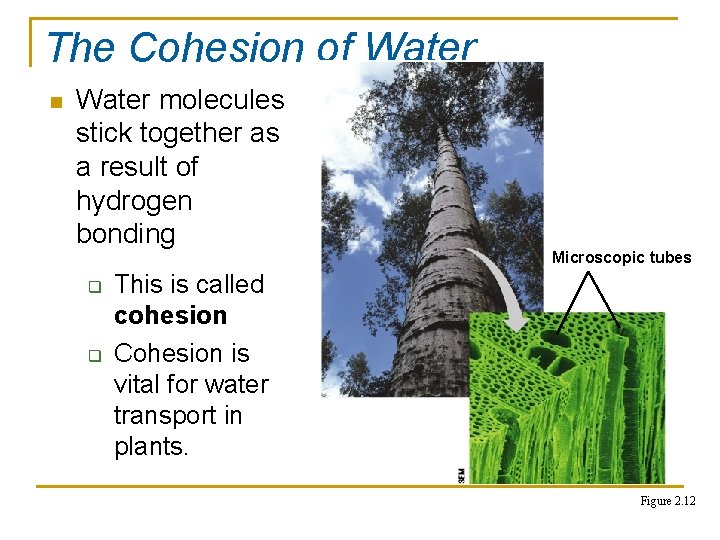
The Cohesion of Water n Water molecules stick together as a result of hydrogen bonding q q Microscopic tubes This is called cohesion Cohesion is vital for water transport in plants. Figure 2. 12
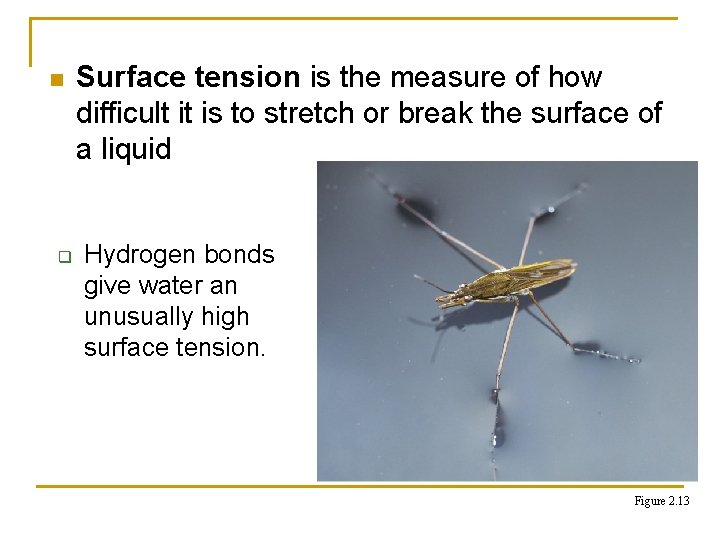
n q Surface tension is the measure of how difficult it is to stretch or break the surface of a liquid Hydrogen bonds give water an unusually high surface tension. Figure 2. 13
How Water Moderates Temperature n Because of hydrogen bonding, water has a strong resistance to temperature change.
n Heat and temperature are related, but different q q n Heat is the amount of energy associated with the movement of the atoms and molecules in a body of matter Temperature measures the intensity of heat Water can absorb and store large amounts of heat while only changing a few degrees in temperature.
The Biological Significance of Ice Floating n When water molecules get cold, they move apart, forming ice q A chunk of ice has fewer molecules than an equal volume of liquid water, p. 30
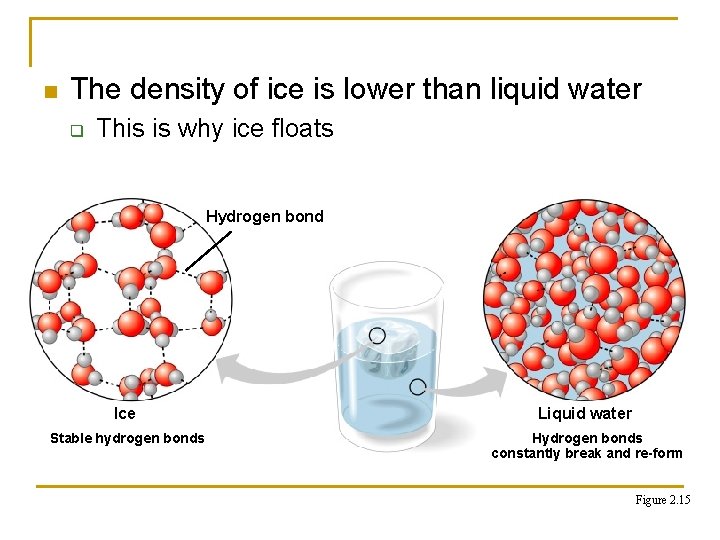
n The density of ice is lower than liquid water q This is why ice floats Hydrogen bond Ice Liquid water Stable hydrogen bonds Hydrogen bonds constantly break and re-form Figure 2. 15
n Since ice floats, ponds, lakes, and even the oceans do not freeze solid q Marine life could not survive if bodies of water froze solid
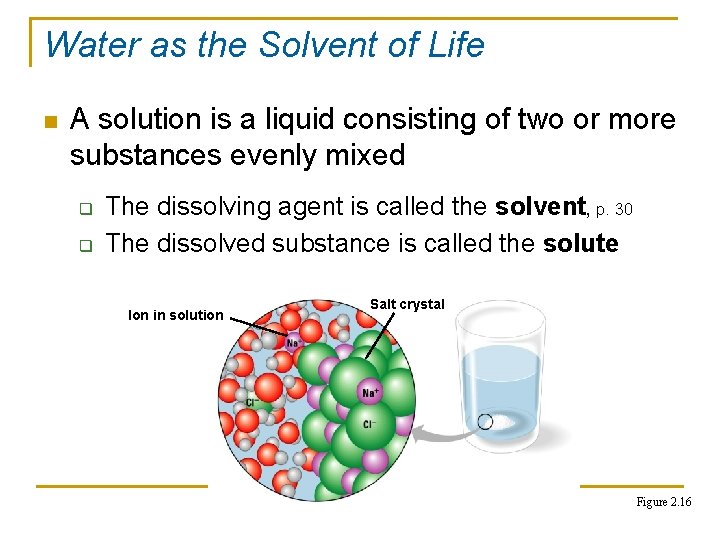
Water as the Solvent of Life n A solution is a liquid consisting of two or more substances evenly mixed q q The dissolving agent is called the solvent, p. 30 The dissolved substance is called the solute Ion in solution Salt crystal Figure 2. 16
n When water is the solvent, the result is called an aqueous solution. Water is a very common solvent.
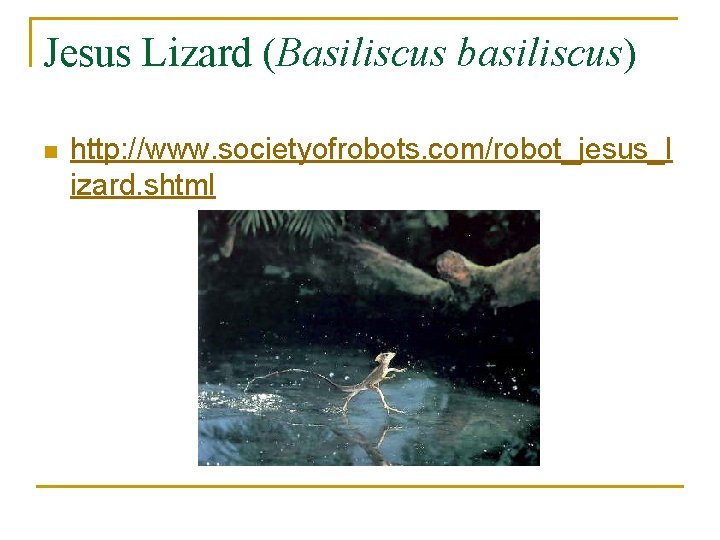
Jesus Lizard (Basiliscus basiliscus) n http: //www. societyofrobots. com/robot_jesus_l izard. shtml
Acids, Bases, and p. H n Acid q n A chemical compound that donates H+ ions to solutions. Acids are strong if p. H near 1 and weak if p. H near to 7. ex. HCl, H 2 SO 4 Base q A compound that accepts H+ ions and removes them from solution. Strong bases have p. H near 14, weak ones near 7.
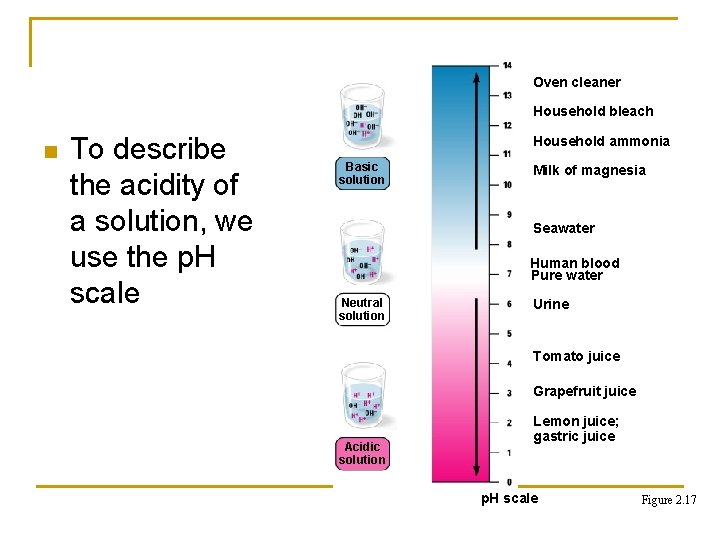
Oven cleaner Household bleach n To describe the acidity of a solution, we use the p. H scale Household ammonia Basic solution Milk of magnesia Seawater Human blood Pure water Neutral solution Urine Tomato juice Grapefruit juice Acidic solution Lemon juice; gastric juice p. H scale Figure 2. 17
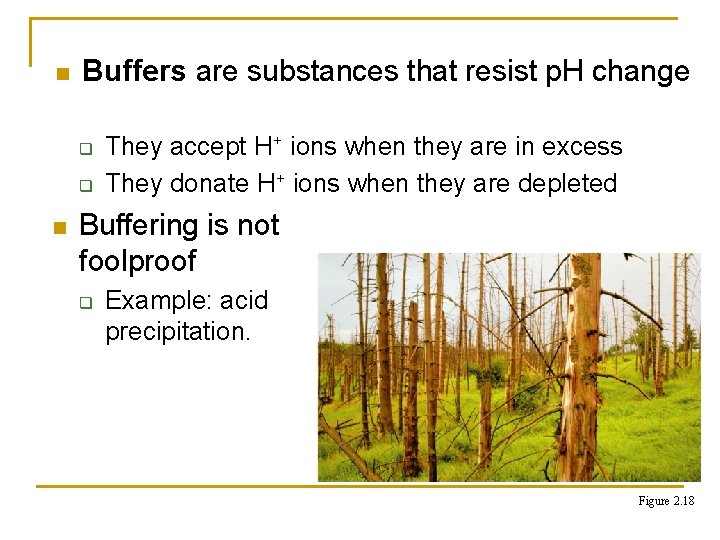
n Buffers are substances that resist p. H change q q n They accept H+ ions when they are in excess They donate H+ ions when they are depleted Buffering is not foolproof q Example: acid precipitation. Figure 2. 18
Polymers (macromolecules) n Macromolecules are large organic molecules. n Most macromolecules are polymers n Polymer : Large molecules containing many repeating subunits covalently linked together. n Monomer : Subunits (building blocks) of a polymer. FYI: Poly = many , Di = two, Mono = one, meros = parts
Construction & Deconstruction of Polymers n Construction (anabolic): joining subunits is via condensation (dehydration) reactions. n Deconstruction (catabolic): breaking subunits from each other is via hydrolysis reactions.
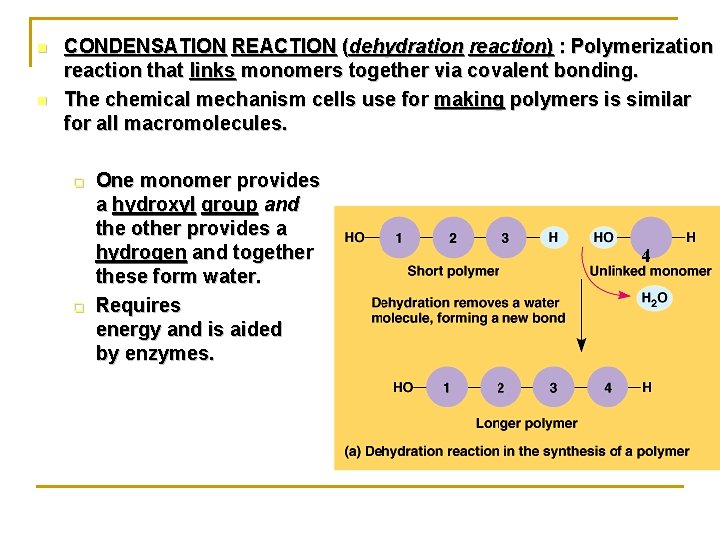
n n CONDENSATION REACTION (dehydration reaction) : Polymerization reaction that links monomers together via covalent bonding. The chemical mechanism cells use for making polymers is similar for all macromolecules. q q One monomer provides a hydroxyl group and the other provides a hydrogen and together these form water. Requires energy and is aided by enzymes. 4
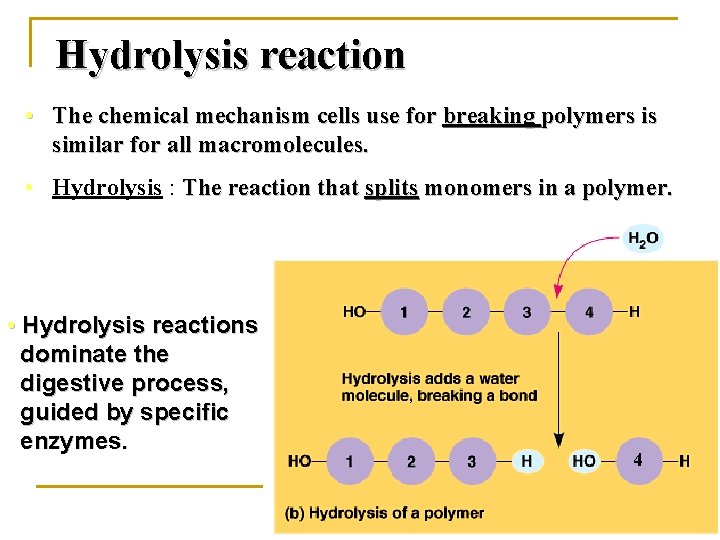
Hydrolysis reaction • The chemical mechanism cells use for breaking polymers is similar for all macromolecules. • Hydrolysis : The reaction that splits monomers in a polymer. • Hydrolysis reactions dominate the digestive process, guided by specific enzymes. 4
Polymers (macromolecules) There are four categories of macromolecules: • Carbohydrates • Lipids • Proteins • Nucleic Acids
Carbohydrates n Organic molecules made up of sugars and their polymers (serve as fuel and a carbon source). n Monomers are simple sugars called monosaccharides. Also known as simple carbohydrates. Examples: fructose, glucose, galactose n Sugar Polymers are joined together by condensation reactions. Also known as complex carbohydrates. Examples: starches and fibers Carbohydrates are classified based on the number and type of simple sugars they contain
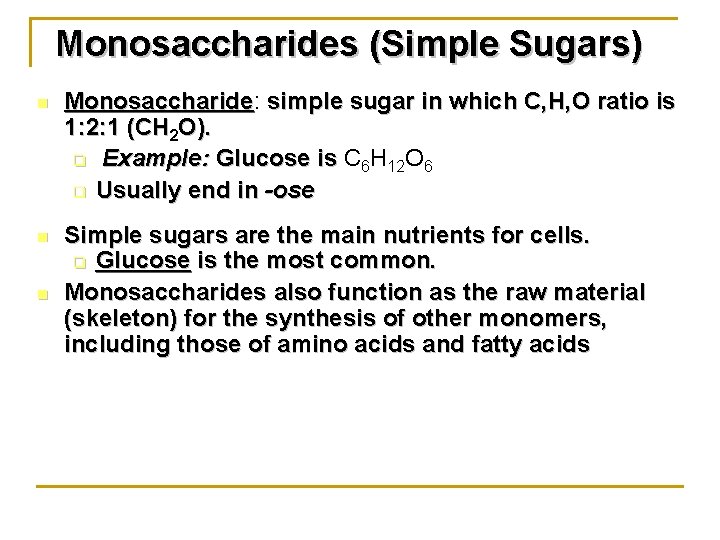
Monosaccharides (Simple Sugars) n Monosaccharide: Monosaccharide simple sugar in which C, H, O ratio is 1: 2: 1 (CH 2 O). q Example: Glucose is C 6 H 12 O 6 q Usually end in -ose n Simple sugars are the main nutrients for cells. q Glucose is the most common. Monosaccharides also function as the raw material (skeleton) for the synthesis of other monomers, including those of amino acids and fatty acids n
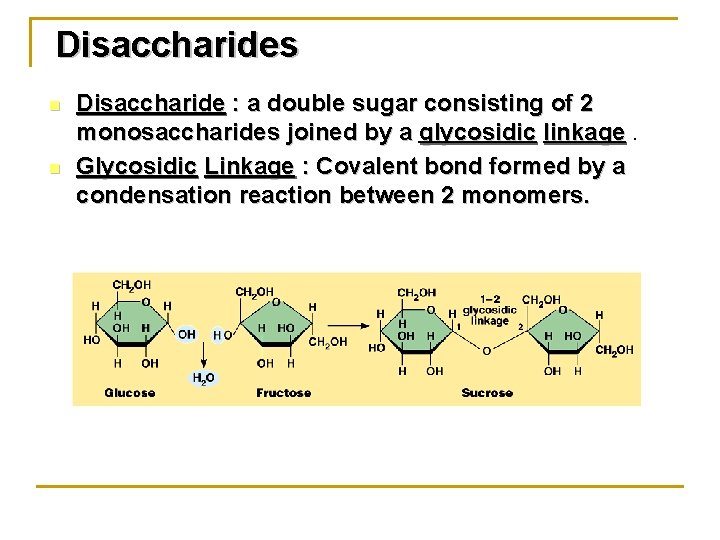
Disaccharides n n Disaccharide : a double sugar consisting of 2 monosaccharides joined by a glycosidic linkage. Glycosidic Linkage : Covalent bond formed by a condensation reaction between 2 monomers.
Polysaccharides n n Polysaccharides : macromolecules that are polymers of monosaccharides Formed by condensation reactions (mediated by enzymes) between lots of monomers. Two very important biological functions: functions • Energy Storage (starch and glycogen) • Structural Support (cellulose and chitin)
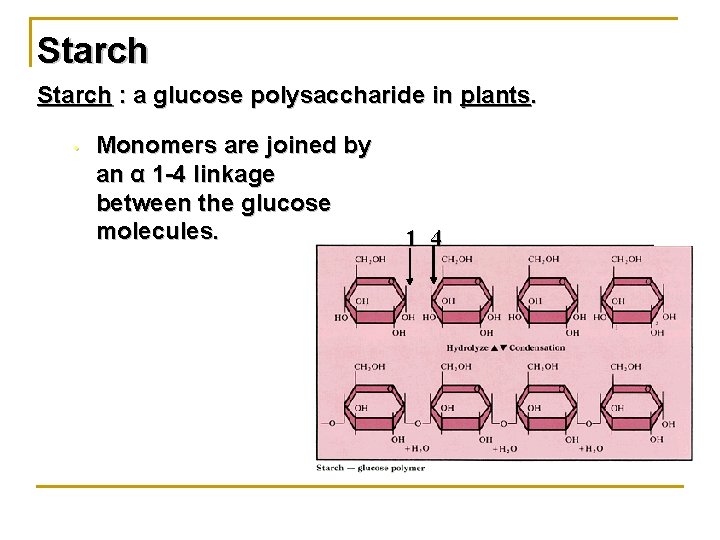
Starch : a glucose polysaccharide in plants. • Monomers are joined by an α 1 -4 linkage between the glucose molecules. 1 4
Starch n n n Plants store starch within plastids, including chloroplasts. Plants can store surplus glucose in starch and withdraw it when needed for energy or carbon. Animals that feed on plants can also access this starch and break it down into glucose.
Glycogen : a glucose polysaccharide in animals. n n Highly branched with α 1 -4 and α 1 -6 linkages between the glucose molecules. ~1 day supply stored in muscle and liver cells.
Cellulose n Cellulose is a major component of the tough wall of plant cells. • alpha 1 -4 linkages between glucose that forms helical structures: starch • beta 1 -4 linkages between glucose forms straight structures: cellulose • This allows hydrogen bonding between strands.
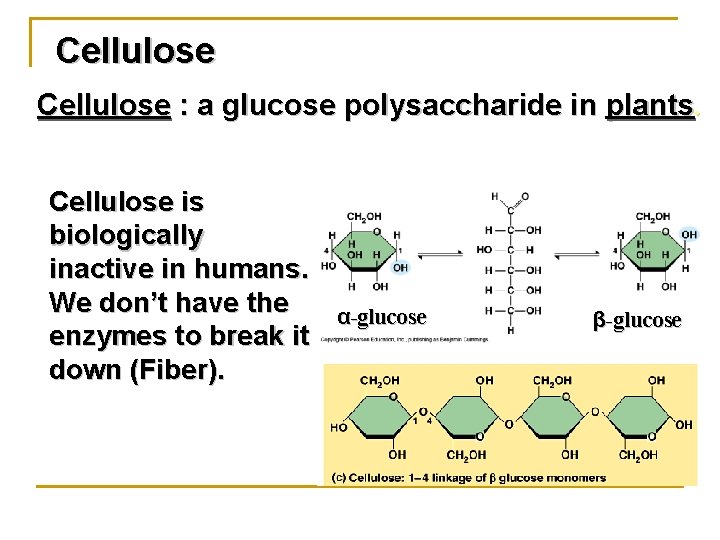
Cellulose : a glucose polysaccharide in plants. Cellulose is biologically inactive in humans. We don’t have the enzymes to break it down (Fiber). α-glucose β-glucose
Summary Ø Ø Ø Polymers and Monomers Construction (dehydration synthesis) and deconstruction (hydrolysis) Carbohydrates q Monosaccharides: define q Disaccharides: define q Polysaccharides: define § § § Starch Glycogen Cellulose
Lipids n Lipids : Macromolecules that are insoluble in water (hydrophobic). q Because their structures are dominated by nonpolar covalent bonds. Three important groups of lipids : • Fats (energy storage molecules) • Phospholipids (cell membranes) • Steroids (Hormones)
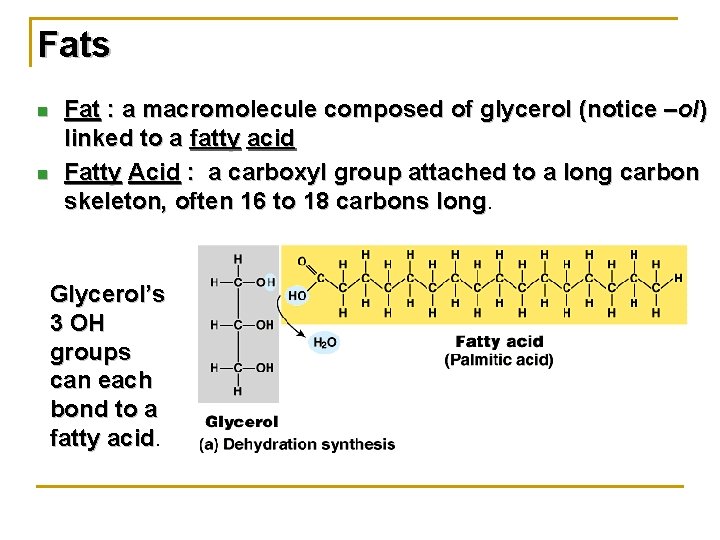
Fats n n Fat : a macromolecule composed of glycerol (notice –ol) linked to a fatty acid Fatty Acid : a carboxyl group attached to a long carbon skeleton, often 16 to 18 carbons long Glycerol’s 3 OH groups can each bond to a fatty acid
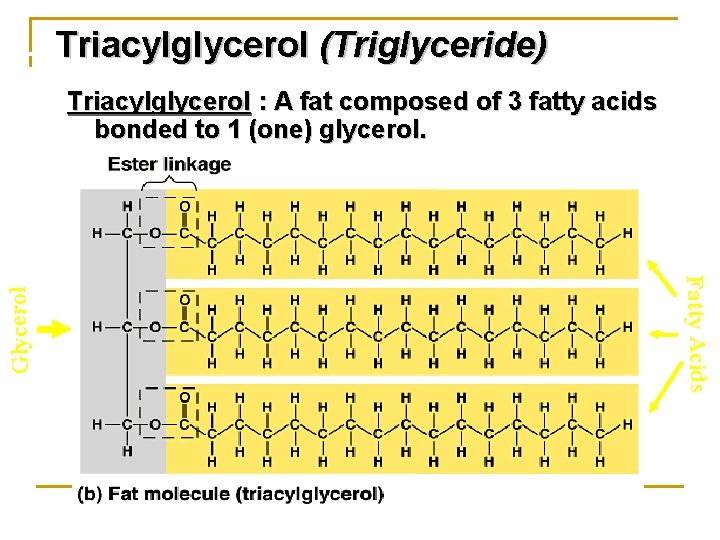
Triacylglycerol (Triglyceride) Fatty Acids Glycerol Triacylglycerol : A fat composed of 3 fatty acids bonded to 1 (one) glycerol.
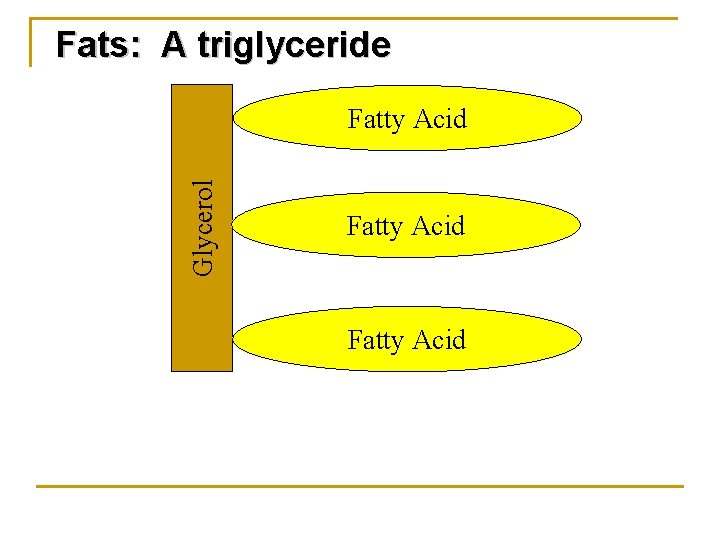
Fats: A triglyceride Glycerol Fatty Acid
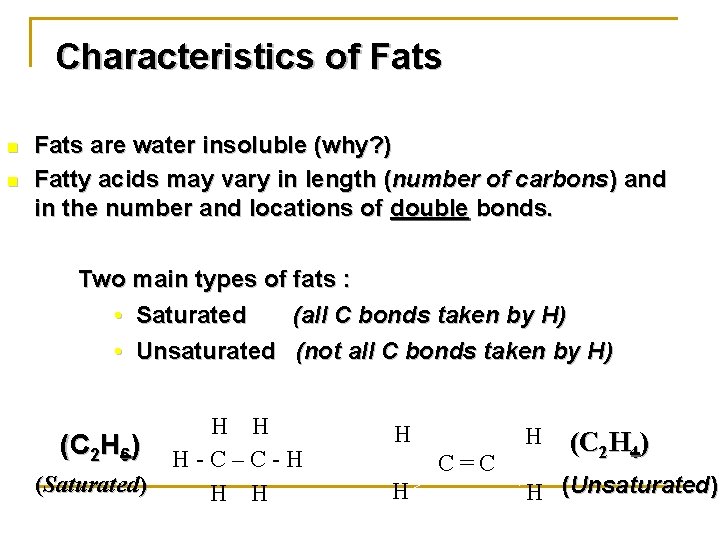
Characteristics of Fats n n Fats are water insoluble (why? ) Fatty acids may vary in length (number of carbons) and in the number and locations of double bonds. Two main types of fats : • Saturated (all C bonds taken by H) • Unsaturated (not all C bonds taken by H) (C 2 H 6) (Saturated) H H H-C–C-H H H C=C H (C 2 H 4) H (Unsaturated)
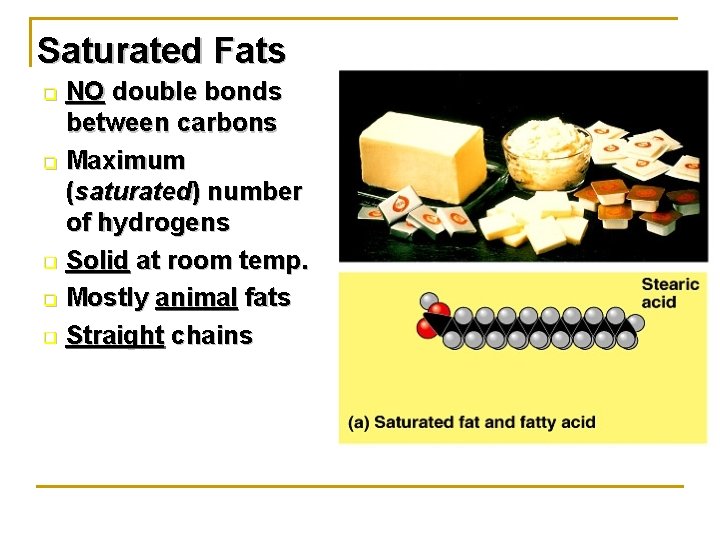
Saturated Fats NO double bonds between carbons q Maximum (saturated) number of hydrogens q Solid at room temp. q Mostly animal fats q Straight chains q
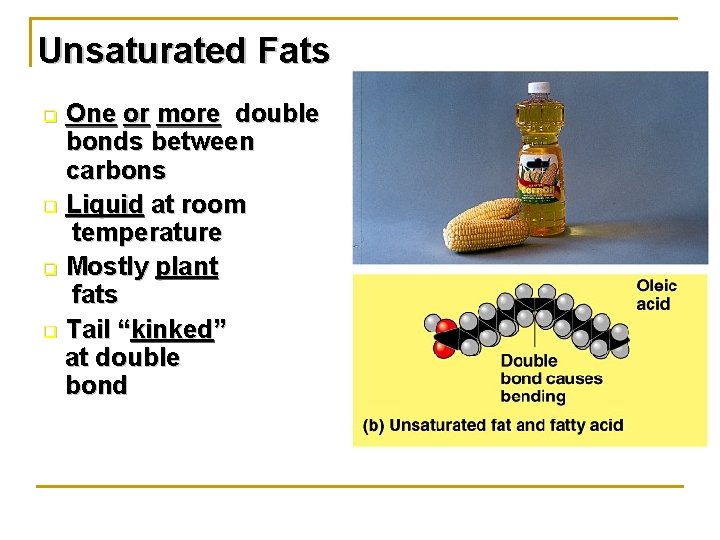
Unsaturated Fats One or more double bonds between carbons q Liquid at room temperature q Mostly plant fats q Tail “kinked” at double bond q
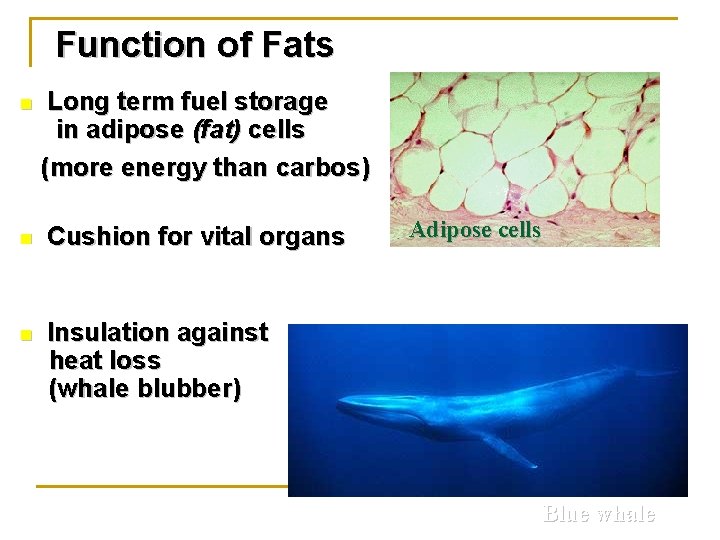
Function of Fats n Long term fuel storage in adipose (fat) cells (more energy than carbos) n Cushion for vital organs n Insulation against heat loss (whale blubber) Adipose cells Blue whale
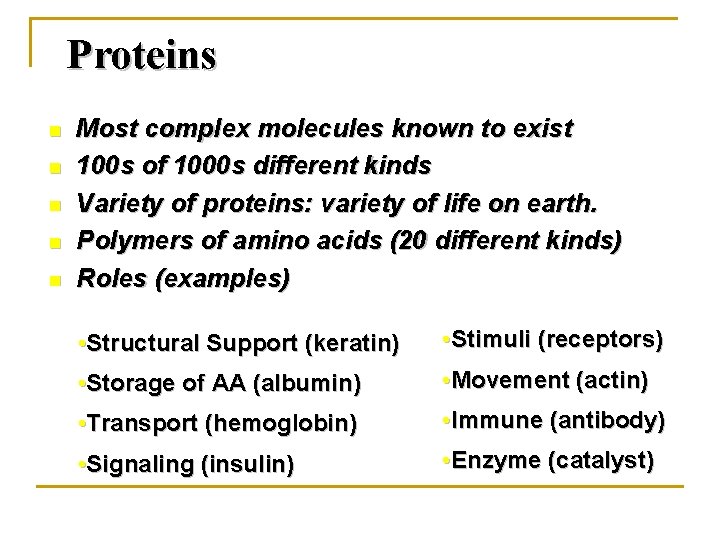
Proteins n n n Most complex molecules known to exist 100 s of 1000 s different kinds Variety of proteins: variety of life on earth. Polymers of amino acids (20 different kinds) Roles (examples) • Structural Support (keratin) • Stimuli (receptors) • Storage of AA (albumin) • Movement (actin) • Transport (hemoglobin) • Immune (antibody) • Signaling (insulin) • Enzyme (catalyst)
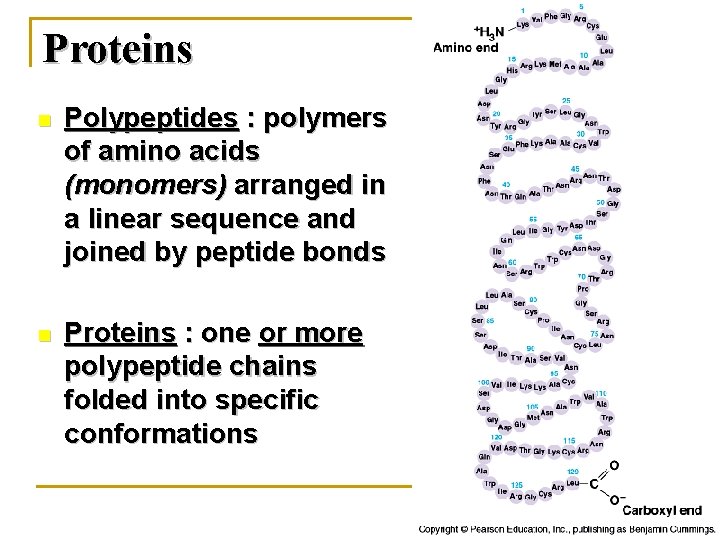
Proteins n Polypeptides : polymers of amino acids (monomers) arranged in a linear sequence and joined by peptide bonds n Proteins : one or more polypeptide chains folded into specific conformations
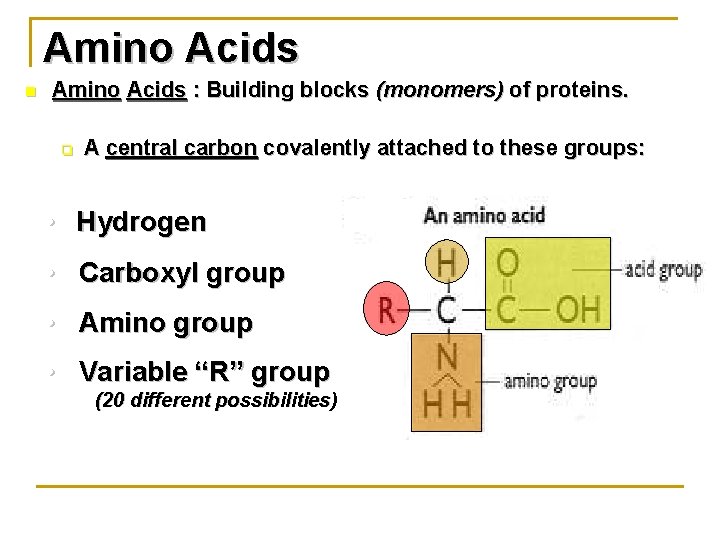
Amino Acids n Amino Acids : Building blocks (monomers) of proteins. q A central carbon covalently attached to these groups: • Hydrogen • Carboxyl group • Amino group • Variable “R” group (20 different possibilities)
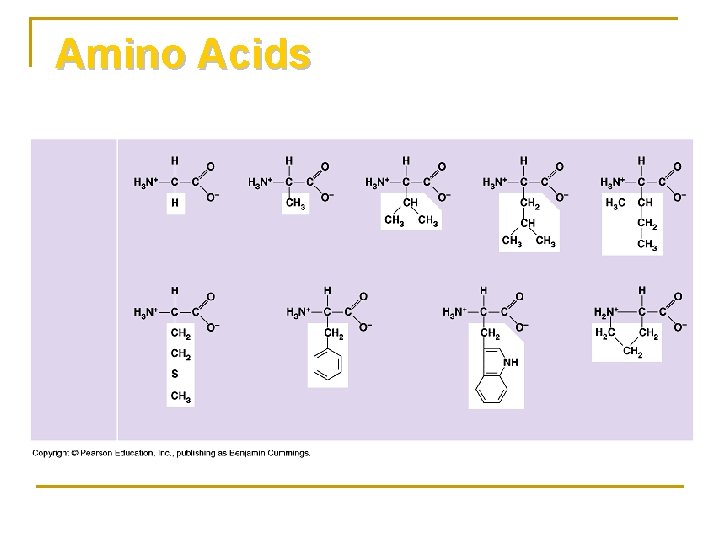
Amino Acids
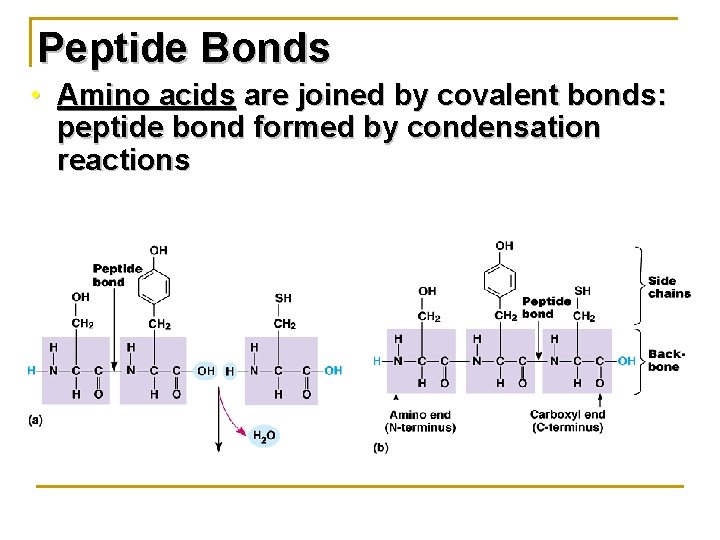
Peptide Bonds • Amino acids are joined by covalent bonds: peptide bond formed by condensation reactions
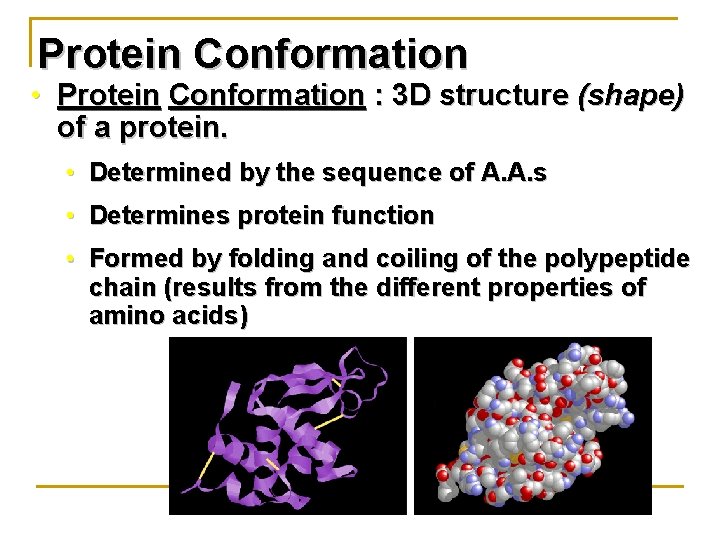
Protein Conformation • Protein Conformation : 3 D structure (shape) of a protein. • Determined by the sequence of A. A. s • Determines protein function • Formed by folding and coiling of the polypeptide chain (results from the different properties of amino acids)
Protein Conformation n Four Different Levels of Organization: Primary n Secondary n Tertiary n Quarternary n
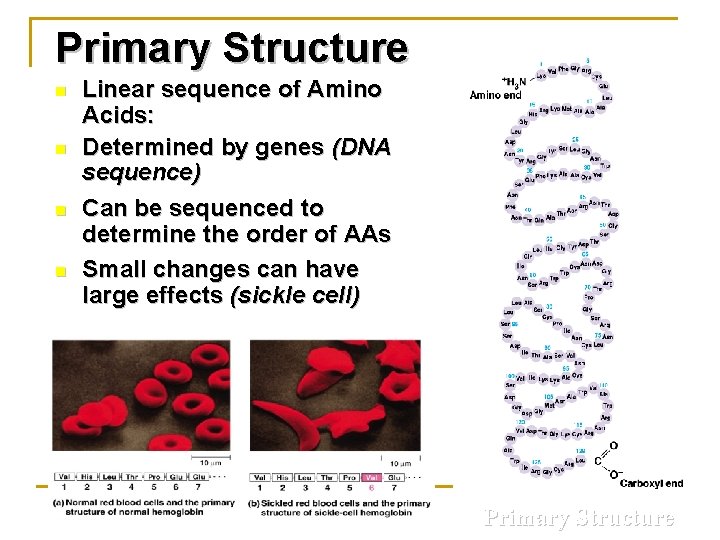
Primary Structure n n Linear sequence of Amino Acids: Determined by genes (DNA sequence) Can be sequenced to determine the order of AAs Small changes can have large effects (sickle cell) Primary Structure
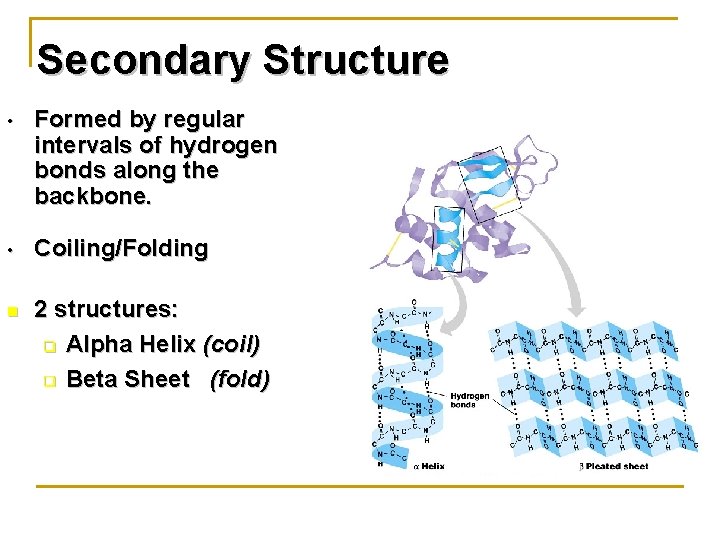
Secondary Structure • Formed by regular intervals of hydrogen bonds along the backbone. • Coiling/Folding n 2 structures: q Alpha Helix (coil) q Beta Sheet (fold)
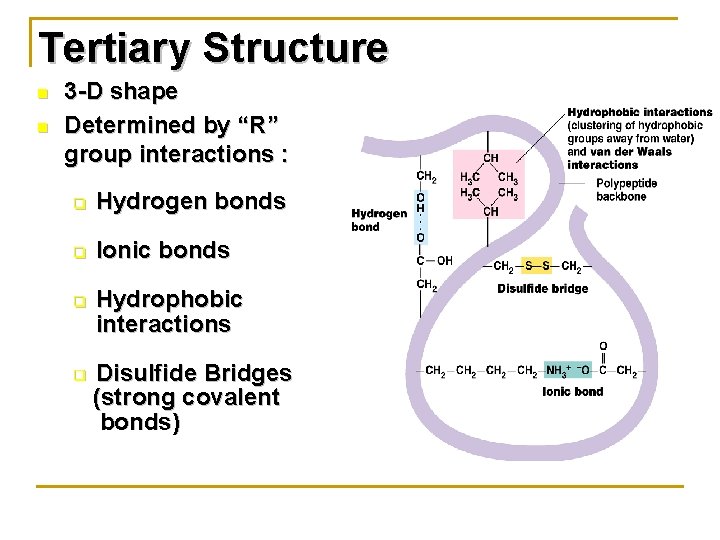
Tertiary Structure n n 3 -D shape Determined by “R” group interactions : q Hydrogen bonds q Ionic bonds q q Hydrophobic interactions Disulfide Bridges (strong covalent bonds)
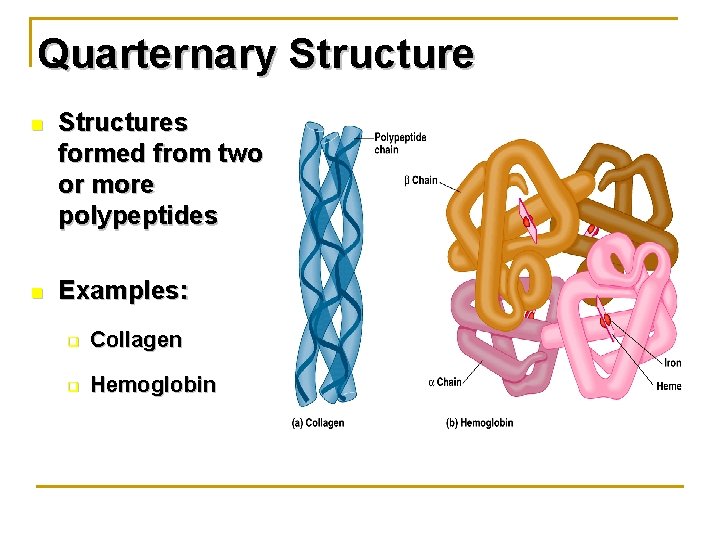
Quarternary Structure n Structures formed from two or more polypeptides n Examples: q Collagen q Hemoglobin
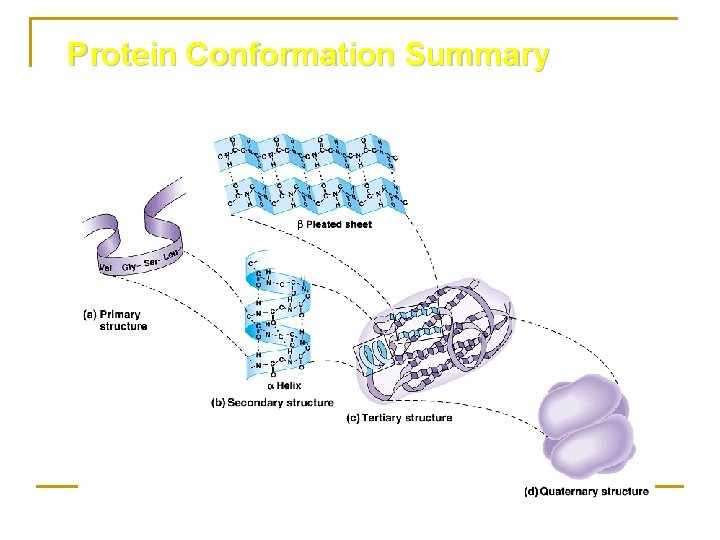
Protein Conformation Summary
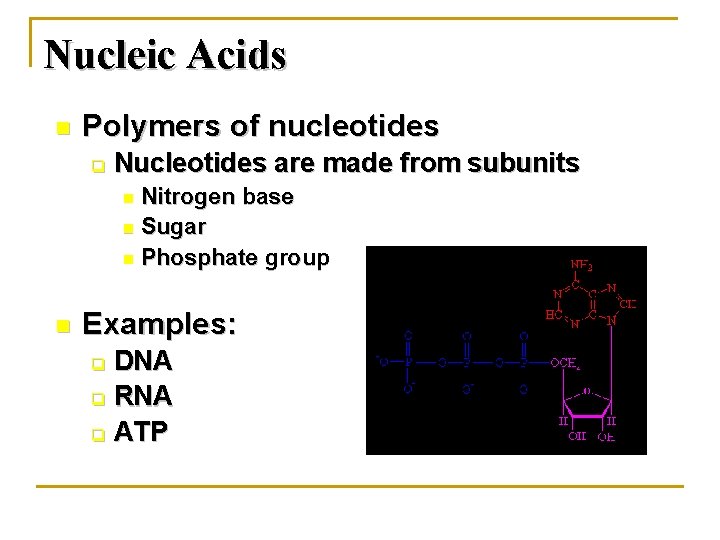
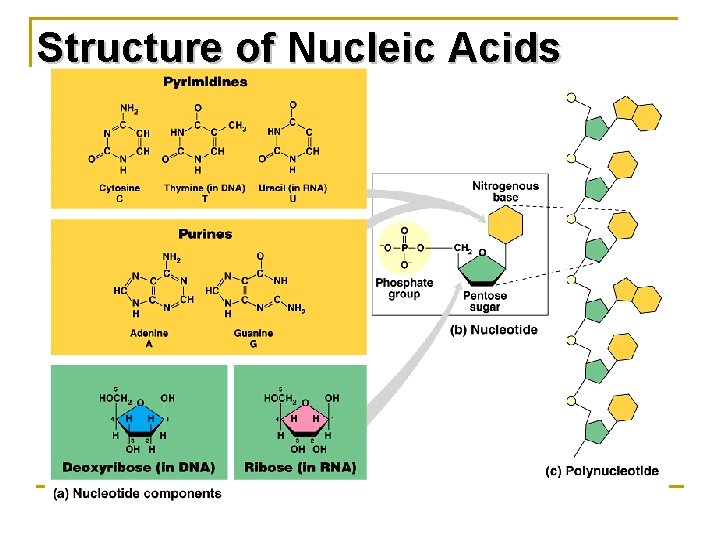
Nucleic Acids n Polymers of nucleotides q Nucleotides are made from subunits Nitrogen base n Sugar n Phosphate group n n Examples: DNA q RNA q ATP q
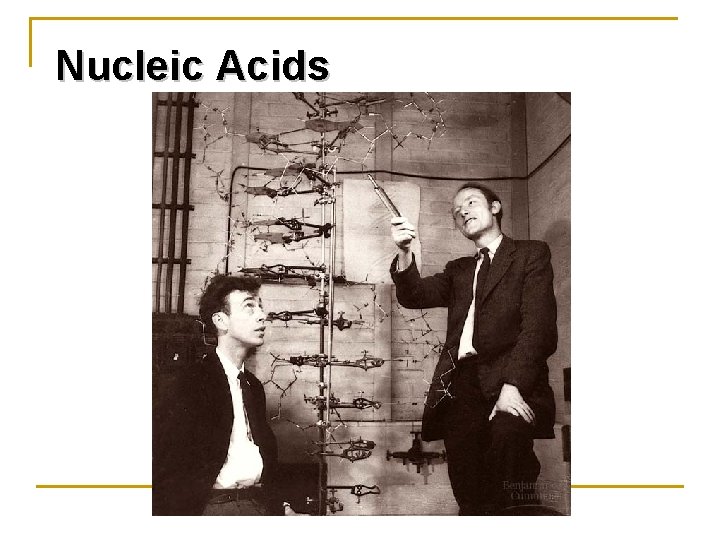
Deoxyribonucleic Acid (DNA) n n DNA is found in the nucleus of most cells and contains coded information (on genes) that programs all cell activity. DNA is not directly involved in the day to day operations of the cell. • Proteins are responsible for implementing the instructions contained in DNA. • Contains the directions for its own replication. • DNA passes an exact copy of itself to each subsequent generation of cells. • All cells in an organism contain the exact same set of instructions.
Ribonucleic Acid (RNA) n Involved in the actual synthesis of proteins encoded in DNA • Three types : • Messenger RNA (m. RNA) • Carries encoded genetic messages (from DNA) • Transfer RNA (t. RNA) • Transfers the Amino Acids to a forming protein • Ribosomal RNA (r. RNA) • Involved in the actual synthesis of proteins (ribosome)
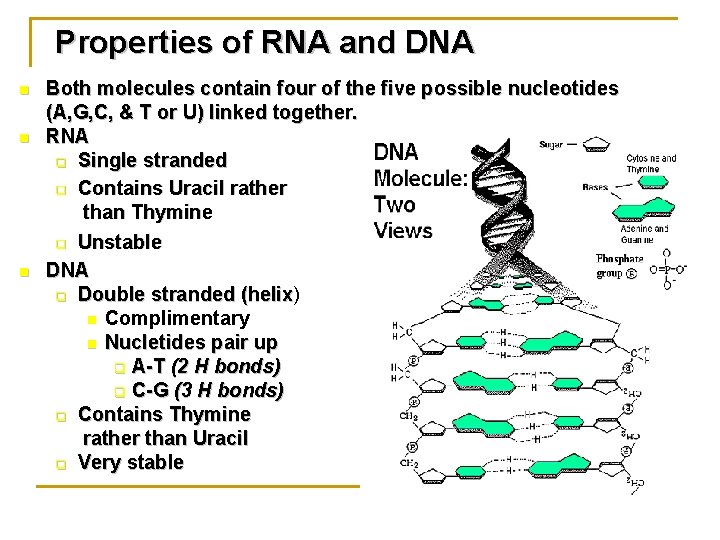
Properties of RNA and DNA n n n Both molecules contain four of the five possible nucleotides (A, G, C, & T or U) linked together. RNA q Single stranded q Contains Uracil rather than Thymine q Unstable DNA q Double stranded (helix) (helix n Complimentary n Nucletides pair up q A-T (2 H bonds) q C-G (3 H bonds) q Contains Thymine rather than Uracil q Very stable
Structure of Nucleic Acids
Nucleic Acids
- Slides: 66