
The Molecule of Life DNA The Molecule of
- Slides: 20
The Molecule of Life: DNA
The Molecule of Life: DNA • The purpose of this laboratory exercise is to extract and visualize DNA from fruit. • The objectives of the laboratory exercise are: To understand where DNA is found To isolate DNA To understand how DNA is extracted To learn about positive and negative controls
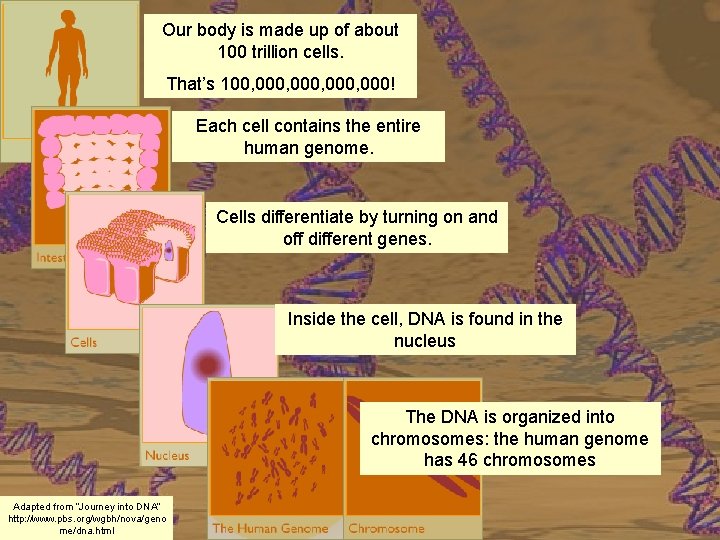
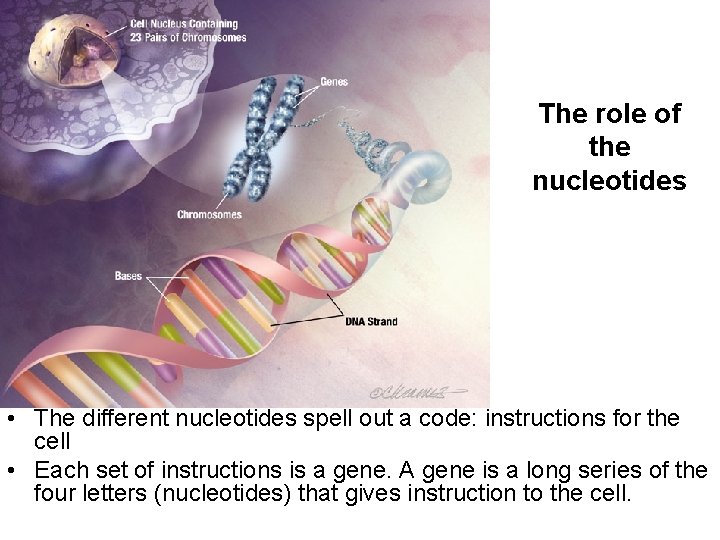
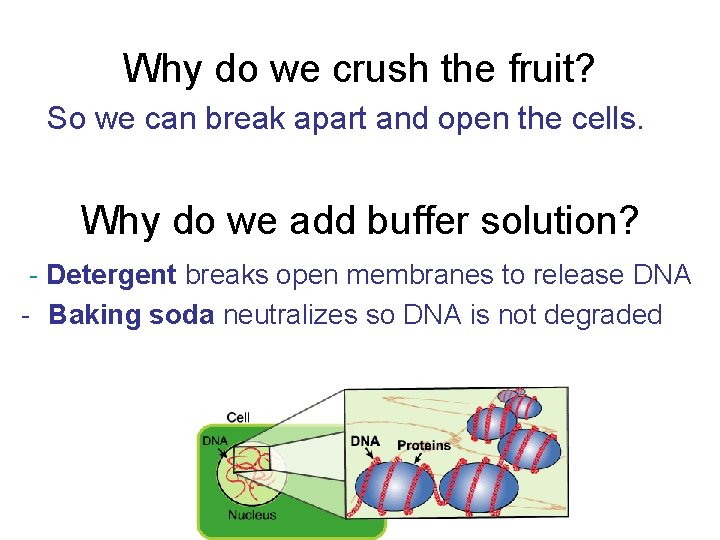
Our body is made up of about 100 trillion cells. That’s 100, 000, 000! Each cell contains the entire human genome. Cells differentiate by turning on and off different genes. Inside the cell, DNA is found in the nucleus The DNA is organized into chromosomes: the human genome has 46 chromosomes Adapted from “Journey into DNA” http: //www. pbs. org/wgbh/nova/geno me/dna. html
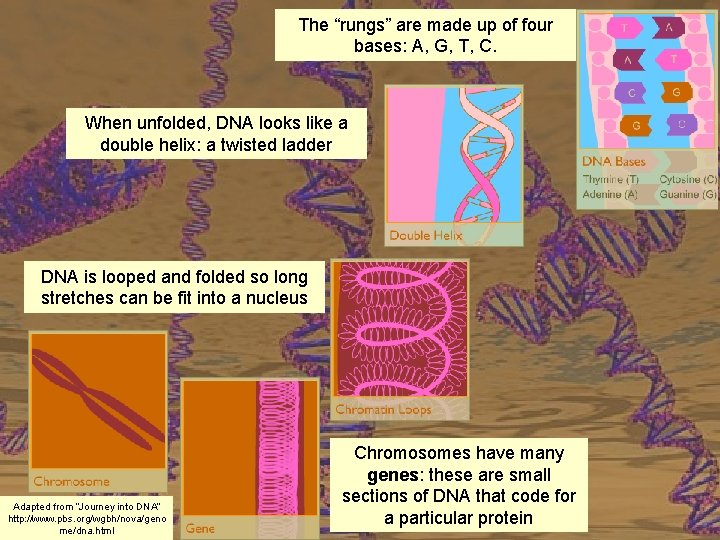
The “rungs” are made up of four bases: A, G, T, C. When unfolded, DNA looks like a double helix: a twisted ladder DNA is looped and folded so long stretches can be fit into a nucleus Adapted from “Journey into DNA” http: //www. pbs. org/wgbh/nova/geno me/dna. html Chromosomes have many genes: these are small sections of DNA that code for a particular protein
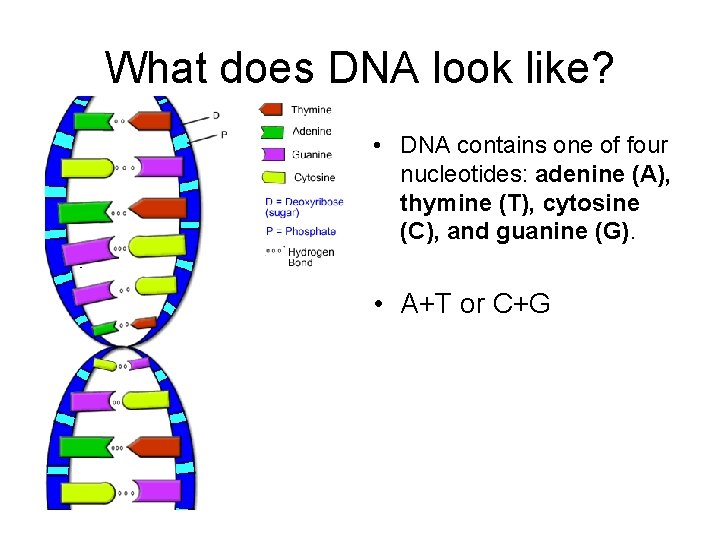
What does DNA look like? • DNA contains one of four nucleotides: adenine (A), thymine (T), cytosine (C), and guanine (G). • A+T or C+G
The role of the nucleotides • The different nucleotides spell out a code: instructions for the cell • Each set of instructions is a gene. A gene is a long series of the four letters (nucleotides) that gives instruction to the cell.
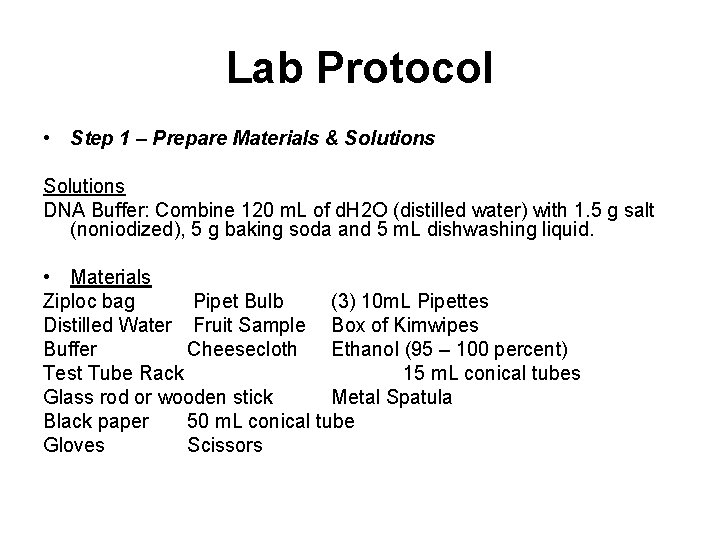
Lab Protocol • Step 1 – Prepare Materials & Solutions DNA Buffer: Combine 120 m. L of d. H 2 O (distilled water) with 1. 5 g salt (noniodized), 5 g baking soda and 5 m. L dishwashing liquid. • Materials Ziploc bag Pipet Bulb (3) 10 m. L Pipettes Distilled Water Fruit Sample Box of Kimwipes Buffer Cheesecloth Ethanol (95 – 100 percent) Test Tube Rack 15 m. L conical tubes Glass rod or wooden stick Metal Spatula Black paper 50 m. L conical tube Gloves Scissors
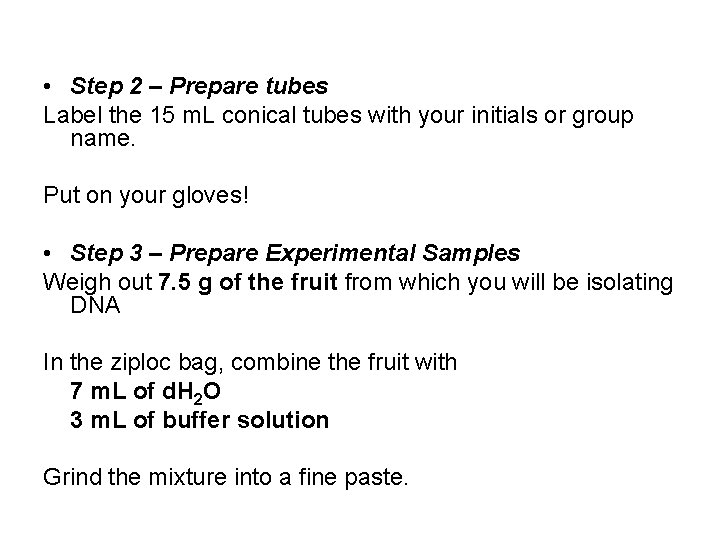
• Step 2 – Prepare tubes Label the 15 m. L conical tubes with your initials or group name. Put on your gloves! • Step 3 – Prepare Experimental Samples Weigh out 7. 5 g of the fruit from which you will be isolating DNA In the ziploc bag, combine the fruit with 7 m. L of d. H 2 O 3 m. L of buffer solution Grind the mixture into a fine paste.
Why do we crush the fruit? So we can break apart and open the cells. Why do we add buffer solution? - Detergent breaks open membranes to release DNA - Baking soda neutralizes so DNA is not degraded
Filter the mixture through at least two layers of cheesecloth into a 50 ml plastic tube. Transfer 2 m. L of the filtered mixture to the 15 ml tube labeled with your initials or group names
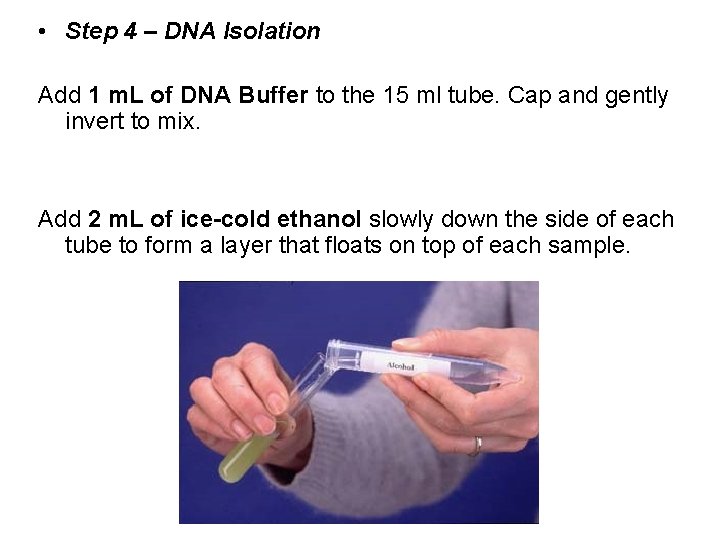
• Step 4 – DNA Isolation Add 1 m. L of DNA Buffer to the 15 ml tube. Cap and gently invert to mix. Add 2 m. L of ice-cold ethanol slowly down the side of each tube to form a layer that floats on top of each sample.
Why add ethanol? Ethanol is less dense than water so it floats on top. All of the proteins we broke up in Step 4 will sink to the bottom; the DNA will float on top.
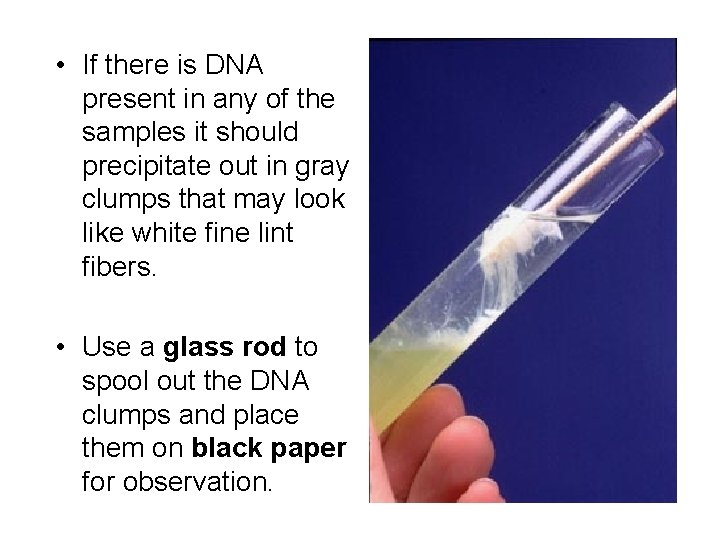
• If there is DNA present in any of the samples it should precipitate out in gray clumps that may look like white fine lint fibers. • Use a glass rod to spool out the DNA clumps and place them on black paper for observation.
What can we do with DNA? What kinds of jobs involve working with DNA?
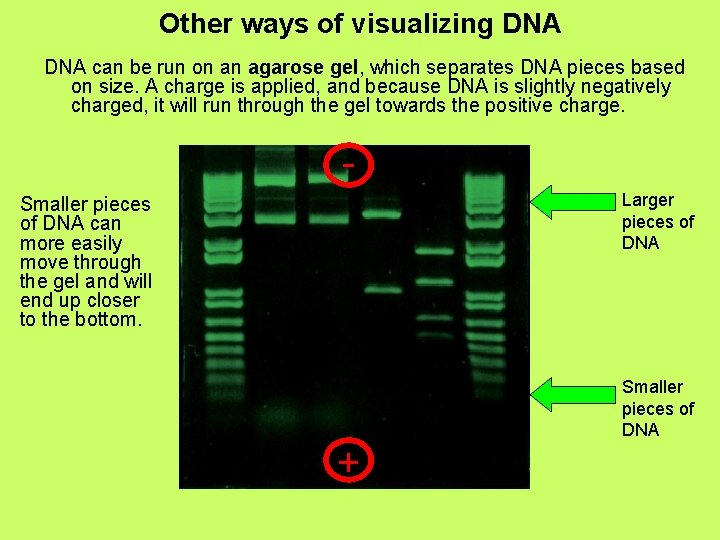
Other ways of visualizing DNA can be run on an agarose gel, which separates DNA pieces based on size. A charge is applied, and because DNA is slightly negatively charged, it will run through the gel towards the positive charge. Larger pieces of DNA Smaller pieces of DNA can more easily move through the gel and will end up closer to the bottom. Smaller pieces of DNA +
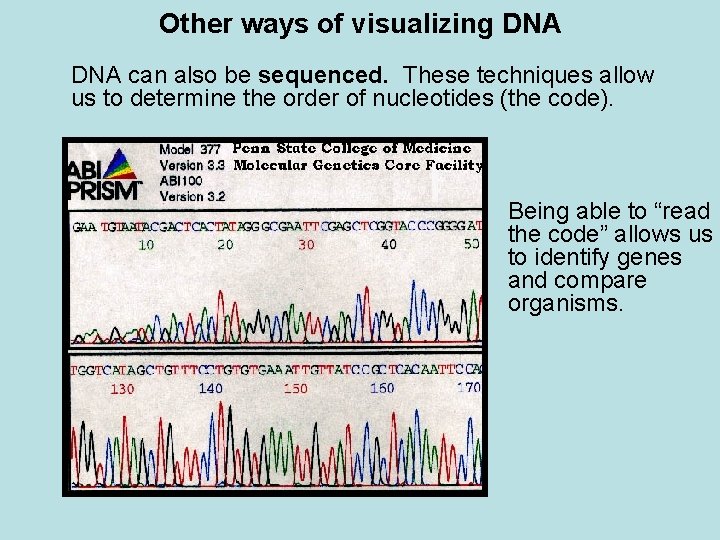
Other ways of visualizing DNA can also be sequenced. These techniques allow us to determine the order of nucleotides (the code). Being able to “read the code” allows us to identify genes and compare organisms.
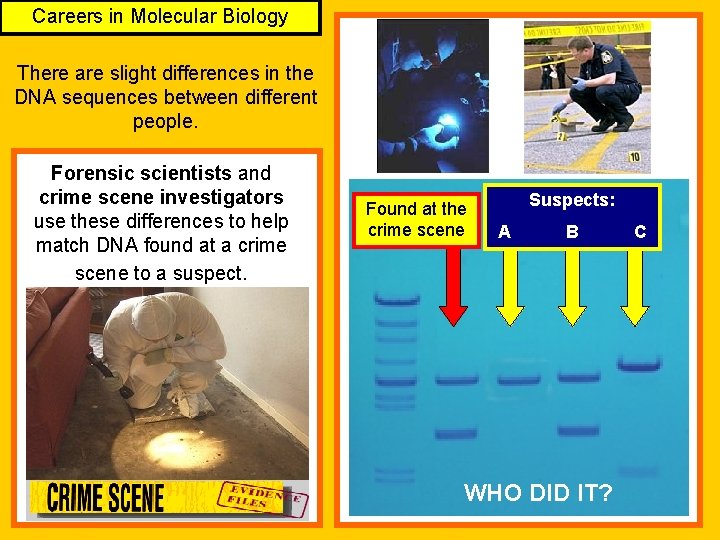
Careers in Molecular Biology There are slight differences in the DNA sequences between different people. Forensic scientists and crime scene investigators use these differences to help match DNA found at a crime scene to a suspect. Found at the crime scene Suspects: A B WHO DID IT? C
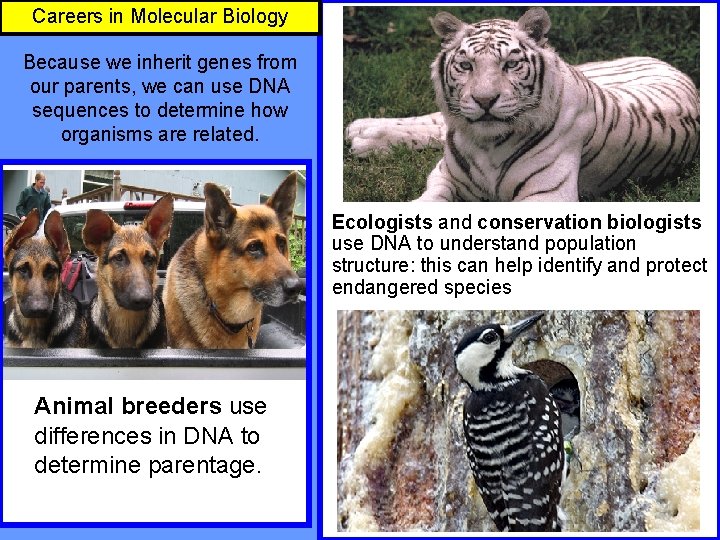
Careers in Molecular Biology Because we inherit genes from our parents, we can use DNA sequences to determine how organisms are related. Ecologists and conservation biologists use DNA to understand population structure: this can help identify and protect endangered species Animal breeders use differences in DNA to determine parentage.
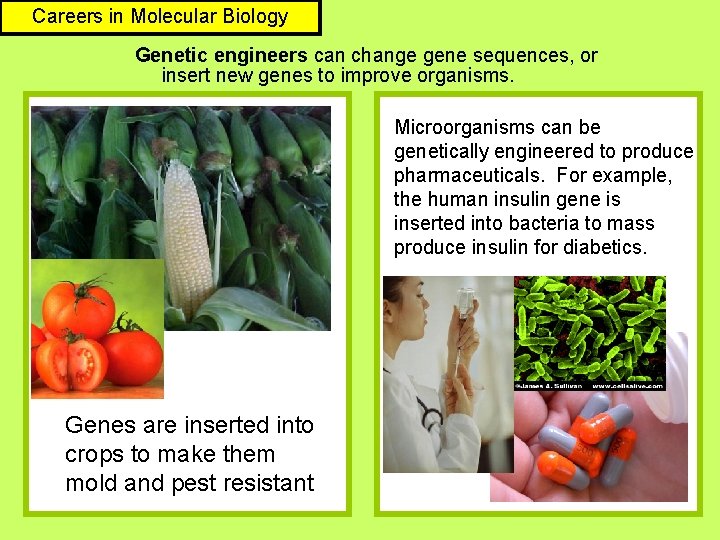
Careers in Molecular Biology Genetic engineers can change gene sequences, or insert new genes to improve organisms. Microorganisms can be genetically engineered to produce pharmaceuticals. For example, the human insulin gene is inserted into bacteria to mass produce insulin for diabetics. Genes are inserted into crops to make them mold and pest resistant
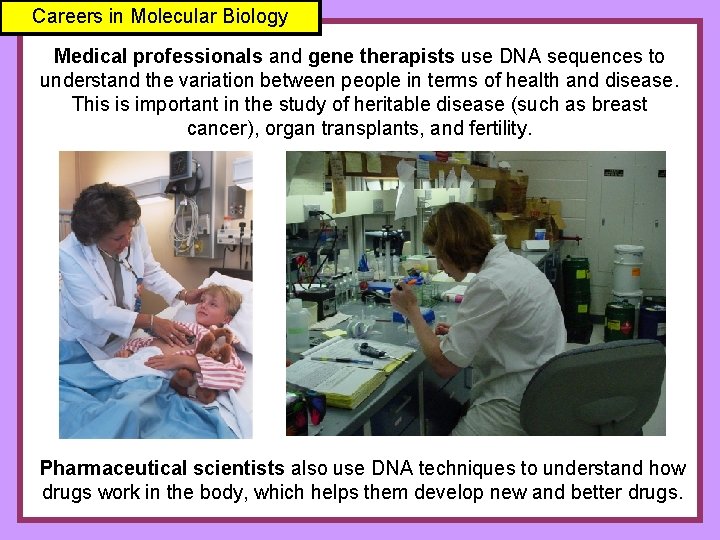
Careers in Molecular Biology Medical professionals and gene therapists use DNA sequences to understand the variation between people in terms of health and disease. This is important in the study of heritable disease (such as breast cancer), organ transplants, and fertility. Pharmaceutical scientists also use DNA techniques to understand how drugs work in the body, which helps them develop new and better drugs.