
THE MOLECULE BASIS OF INHERITANCE Section A DNA
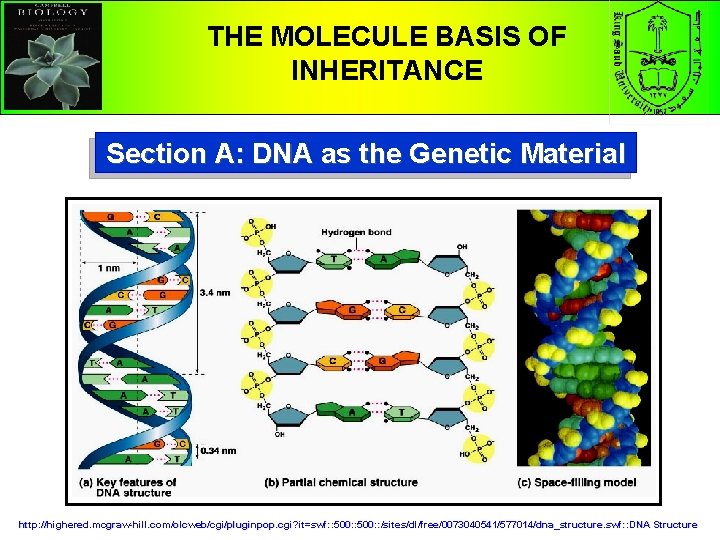
THE MOLECULE BASIS OF INHERITANCE Section A: DNA as the Genetic Material http: //highered. mcgraw-hill. com/olcweb/cgi/pluginpop. cgi? it=swf: : 500: : /sites/dl/free/0073040541/577014/dna_structure. swf: : DNA Structure
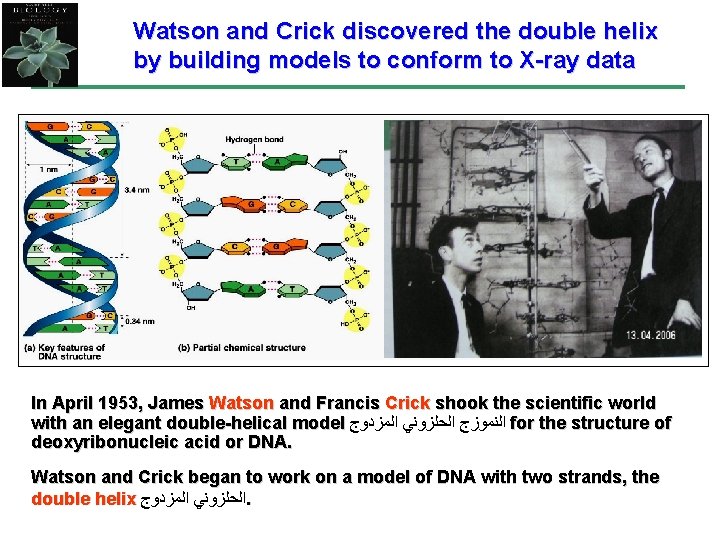
Watson and Crick discovered the double helix by building models to conform to X-ray data In April 1953, James Watson and Francis Crick shook the scientific world with an elegant double-helical model ﺍﻟﻨﻤﻮﺯﺝ ﺍﻟﺤﻠﺰﻭﻧﻲ ﺍﻟﻤﺰﺩﻭﺝ for the structure of deoxyribonucleic acid or DNA. Watson and Crick began to work on a model of DNA with two strands, the double helix ﺍﻟﺤﻠﺰﻭﻧﻲ ﺍﻟﻤﺰﺩﻭﺝ.
DNA : Introduction • The amino acid sequence of a polypeptide is programmed by a gene. • A gene is a small region in the DNA. • Nucleic acids store and transmit hereditary information ﺍﻟﻤﻌﻠﻮﻣﺎﺕ ﺍﻟﻮﺭﺍﺛﻴﺔ. • There are two types of nucleic acids: ribonucleic acid (RNA) and deoxyribonucleic acid (DNA). • DNA also directs m. RNA synthesis, thus, controls protein synthesis. • Organisms inherit ﺗﺘﻮﺍﺭﺙ DNA from their parents. – Each DNA molecule is very long and usually consists of hundreds to thousands of genes. – When a cell divides ﺗﻨﻘﺴﻢ , its DNA is copied and passed to the next generation of cells. • The m. RNA interacts with ribosomes to direct the synthesis of amino acids in a polypeptide (protein)
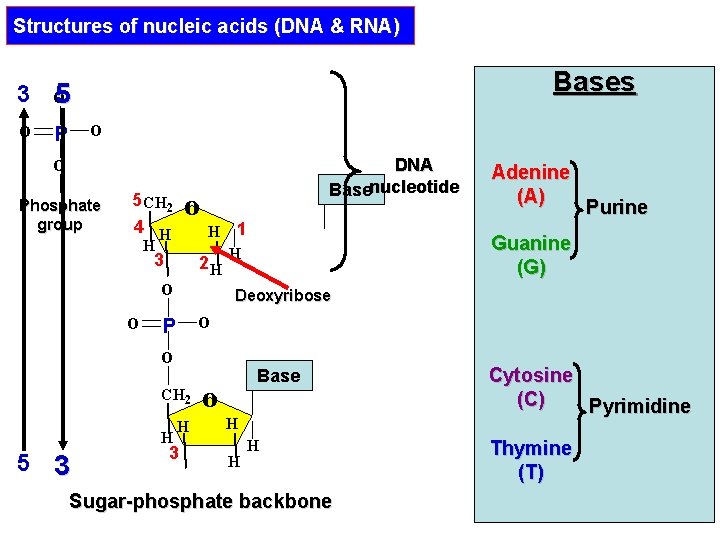
Structures of nucleic acids (DNA & RNA) Bases 3 o 5 o P o o Phosphate group o 5 CH 2 4 H H 3 H 2 H o o DNA Basenucleotide 1 o o CH 2 5 3 Guanine (G) H Deoxyribose P H Adenine (A) Purine H 3 Base o H H H Sugar-phosphate backbone Cytosine (C) Pyrimidine Thymine (T)
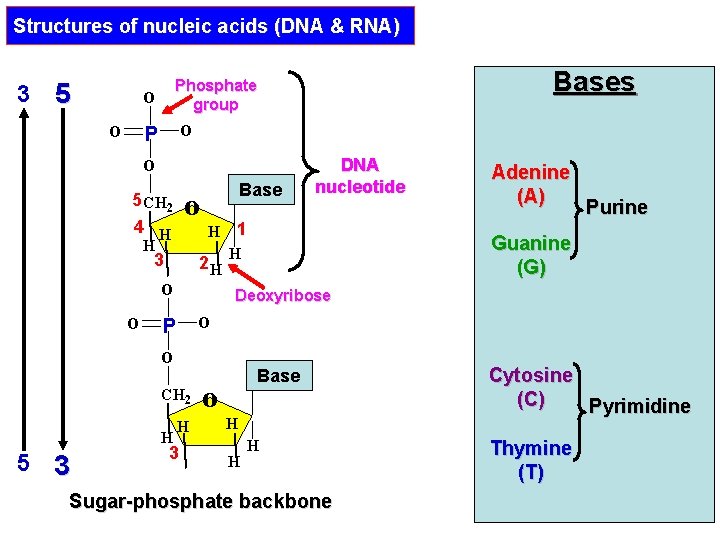
Structures of nucleic acids (DNA & RNA) 3 5 o Bases Phosphate group o o P o 4 H H 3 H 2 H o o Base o 5 CH 2 1 Guanine (G) H o o CH 2 5 3 Adenine (A) Purine Deoxyribose P H DNA nucleotide H 3 Base o H H H Sugar-phosphate backbone Cytosine (C) Pyrimidine Thymine (T)
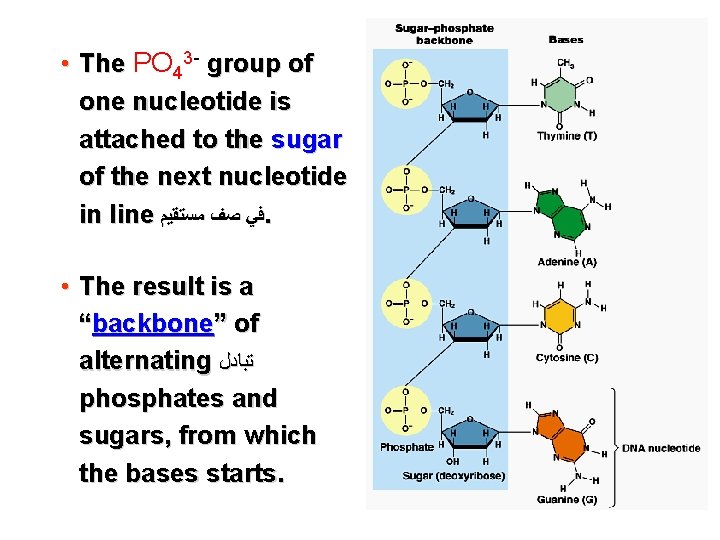
• The PO 43 - group of one nucleotide is attached to the sugar of the next nucleotide in line ﻓﻲ ﺻﻒ ﻣﺴﺘﻘﻴﻢ. • The result is a “backbone” of alternating ﺗﺒﺎﺩﻝ phosphates and sugars, from which the bases starts.

3 5 Nitrogenous bases ﺍﻟﻘﻮﺍﻋﺪ ﺍﻟﻨﻴﺘﺮﻭﺟﻴﻨﻴﺔ Nitrogenous bases Hydrogen bonds 5 3 Sugar-phosphate backbones Cytosine (C) Guanine (G) Thymine (T) Adenine (A) Uracil (U) Pyrimidines Purine
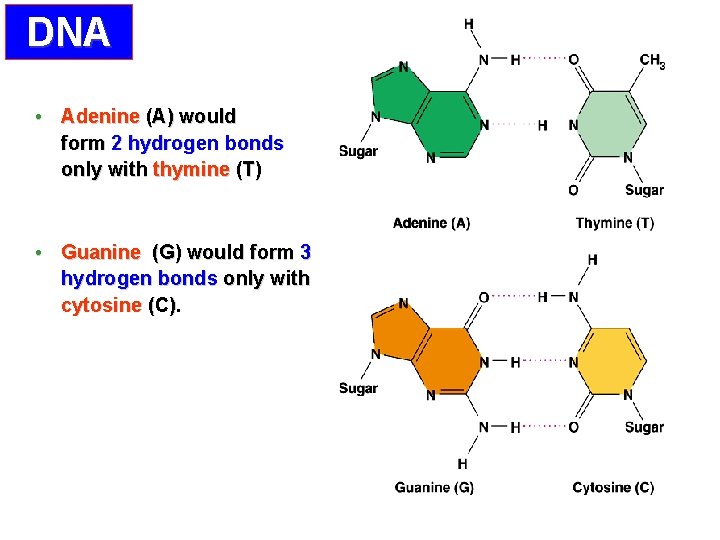
DNA • Adenine (A) would form 2 hydrogen bonds only with thymine (T) • Guanine (G) would form 3 hydrogen bonds only with cytosine (C).
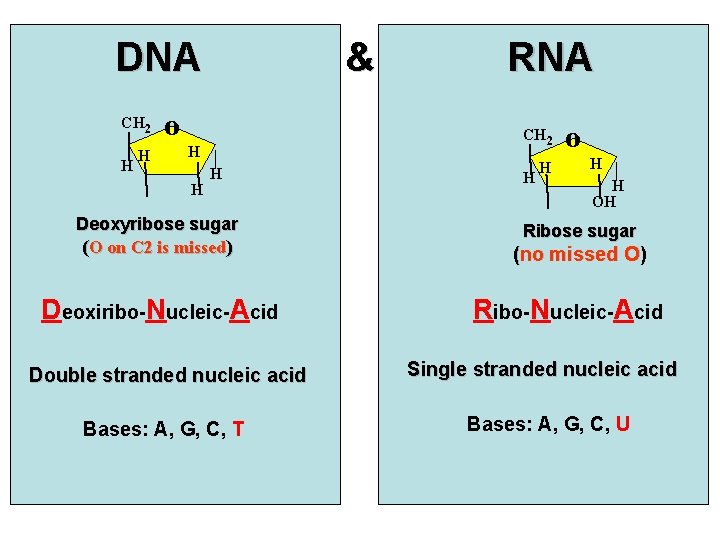
DNA CH 2 H H & o CH 2 H H RNA H Deoxyribose sugar (O on C 2 is missed) Deoxiribo-Nucleic-Acid Double stranded nucleic acid Bases: A, G, C, T H H o H H OH Ribose sugar (no missed O) Ribo-Nucleic-Acid Single stranded nucleic acid Bases: A, G, C, U
The nucleic acid strand is a polymer of nucleotides • Nucleic acids are polymers of monomers called nucleotides. • Each nucleotide consists of three parts: a nitrogen base, a pentose sugar, and a phosphate group. • The nitrogen bases (rings of carbon and nitrogen) come in two types: Purines and Pyrimidines. • The pentose sugar joined to the nitrogen base is ribose in nucleotides of RNA and deoxyribose in DNA. • The only difference between the sugars is the lack ﻧﻘﺺ of an oxygen atom on carbon 2 in deoxyribose.
• Polynucleotides are synthesized by connecting the sugars of one nucleotide to the phosphate of the next with a phosphodiester link. • This creates a repeating backbone of sugar-phosphate units with the nitrogen bases as appendages. • The sequence of nitrogen bases along a DNA or m. RNA polymer is unique for each gene. • Genes are normally hundreds to thousands of nucleotides long. • The linear order ﺍﻟﺘﺮﺗﻴﺐ ﺍﻟﺘﺘﺎﺑﻌﻲ of bases in a gene specifies ﺣﺪﺩ the order of amino acids ( ﺗﺮﺗﻴﺐ ﺍﻷﺤﻤﺎﺽ ﺍﻷﻤﻴﻨﻴﺔ the monomers of a protein).
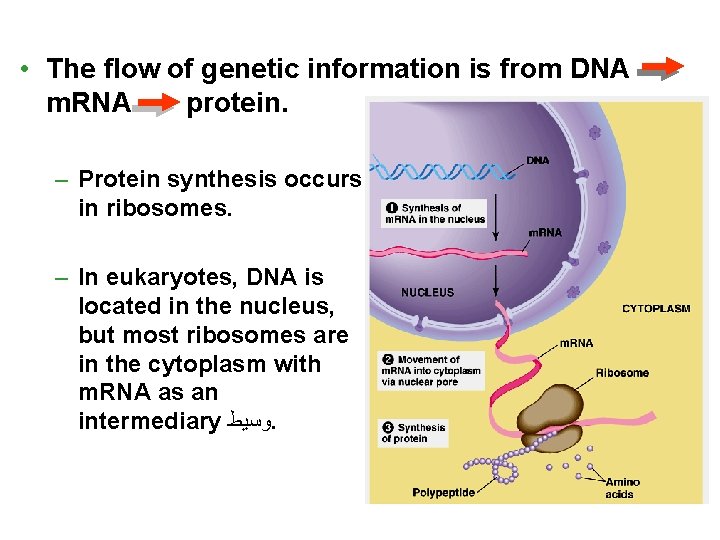
• The flow of genetic information is from DNA m. RNA protein. – Protein synthesis occurs in ribosomes. – In eukaryotes, DNA is located in the nucleus, but most ribosomes are in the cytoplasm with m. RNA as an intermediary ﻭﺳﻴﻂ.
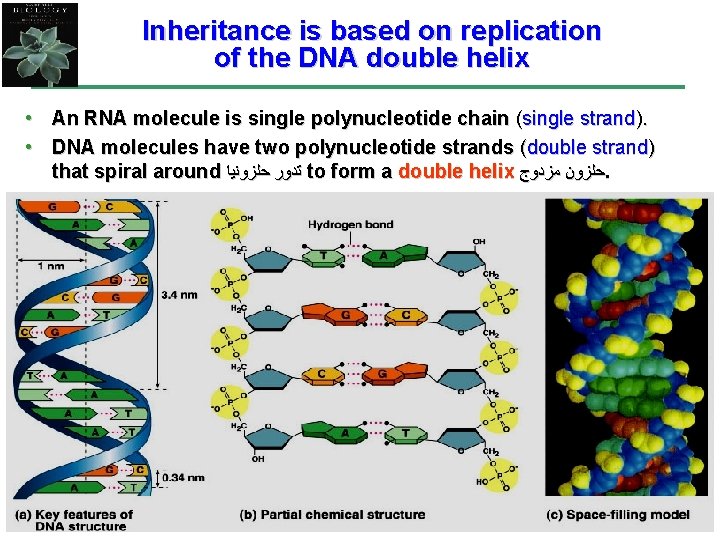
Inheritance is based on replication of the DNA double helix • An RNA molecule is single polynucleotide chain (single strand). • DNA molecules have two polynucleotide strands (double strand) that spiral around ﺗﺪﻭﺭ ﺣﻠﺰﻭﻧﻴﺎ to form a double helix ﺣﻠﺰﻭﻥ ﻣﺰﺩﻭﺝ.
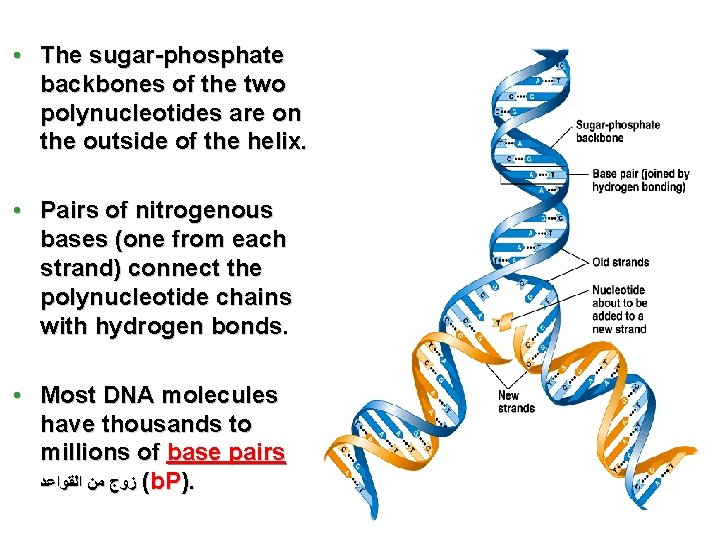
• The sugar-phosphate backbones of the two polynucleotides are on the outside of the helix. • Pairs of nitrogenous bases (one from each strand) connect the polynucleotide chains with hydrogen bonds. • Most DNA molecules have thousands to millions of base pairs ( ﺯﻭﺝ ﻣﻦ ﺍﻟﻘﻮﺍﻋﺪ b. P).
• Because of their shapes, only some bases are compatible ﻣﺘﻮﺍﻓﻘﺔ with each other. – Adenine (A) always pairs with thymine (T) and guanine (G) with cytosine (C). • With these base-pairing rules, if we know the sequence of bases on one strand, we know the sequence on the opposite ﺍﻟﻤﻘﺎﺑﻞ strand. • The two strands are complementary ﻣﻜﻤﻠﻴﻦ ﻟﺒﻌﻀﻬﻤﺎ. • During preparations for cell division each of the strands serves as a template ﻗﺎﻟﺐ ﻧﺴﺦ to order nucleotides into a new complementary strand. • This results in two identical copies ﻧﺴﺨﺘﻴﻦ ﻃﺒﻖ ﺍﻷﺼﻞ of the original double-stranded DNA molecule. – The copies are then distributed ﺗﻮﺯﻉ to the daughter cells. • This mechanism ensures that the genetic information is transmitted to the new cells.
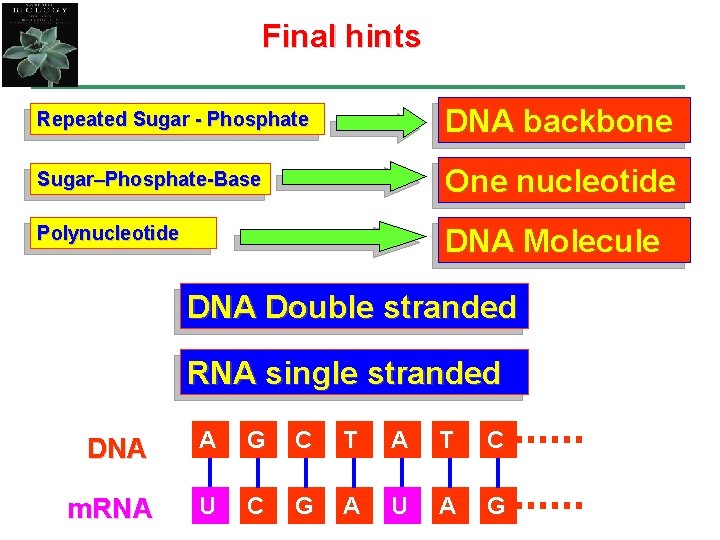
Final hints Repeated Sugar - Phosphate DNA backbone Sugar–Phosphate-Base One nucleotide Polynucleotide DNA Molecule DNA Double stranded RNA single stranded DNA A G C T A T C m. RNA U T C G A U T A G
- Slides: 16