
The Modern Theory of Atomic Structure Atoms can
- Slides: 40
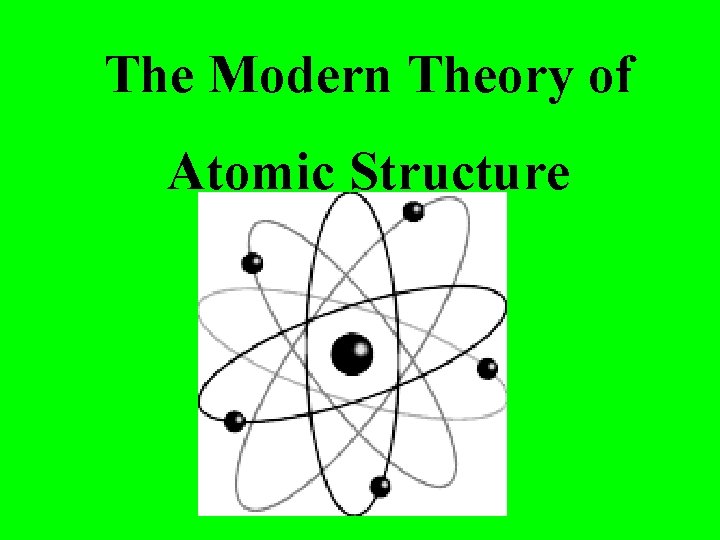
The Modern Theory of Atomic Structure
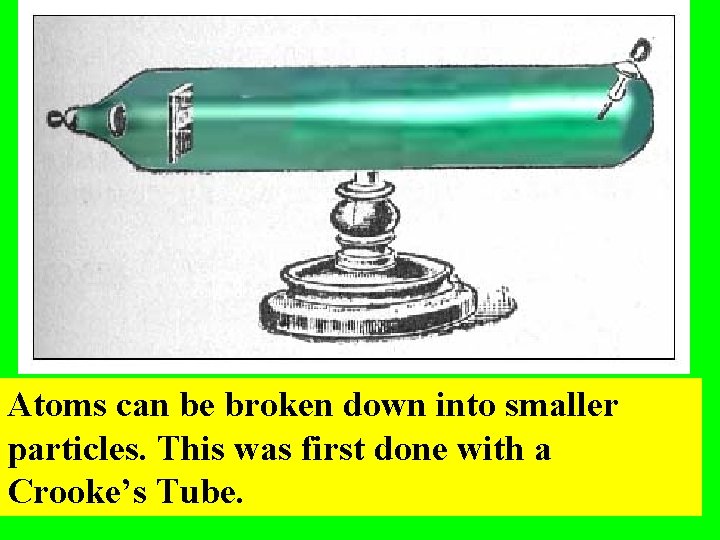
Atoms can be broken down into smaller particles. This was first done with a Crooke’s Tube.
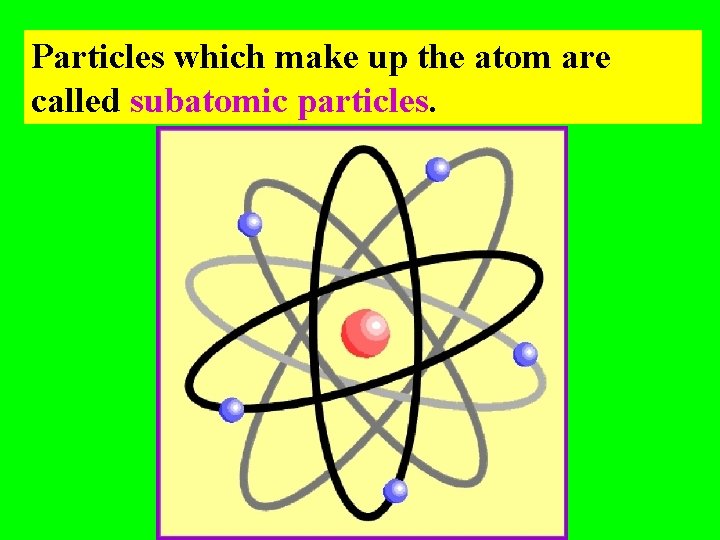
Particles which make up the atom are called subatomic particles.
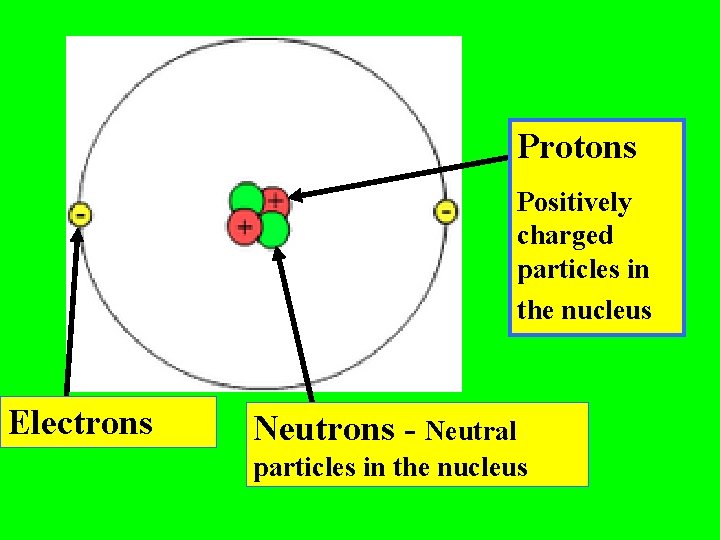
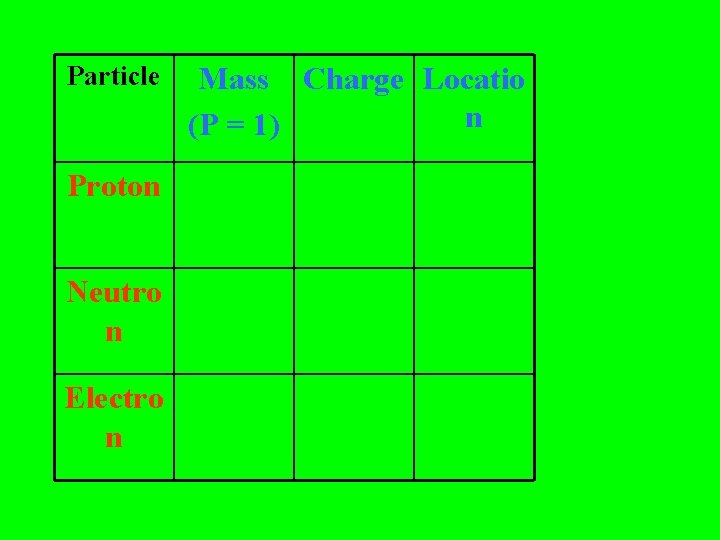
Protons Positively charged particles in the nucleus Electrons Neutrons - Neutral particles in the nucleus
Particle Proton Neutro n Electro n Mass Charge Locatio n (P = 1)
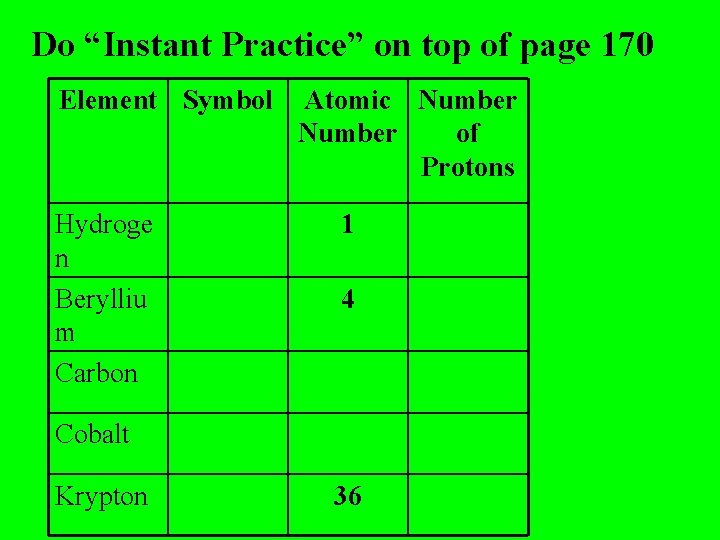
Do “Instant Practice” on top of page 170 Element Symbol Hydroge n Berylliu m Carbon Atomic Number of Protons 1 4 Cobalt Krypton 36
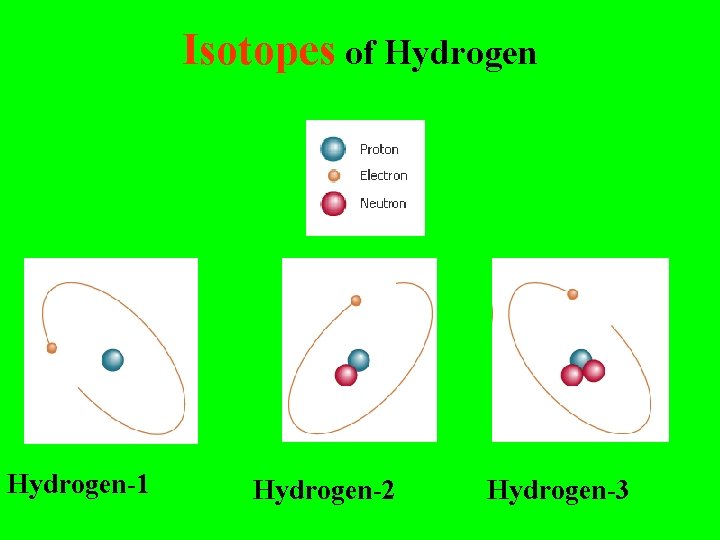
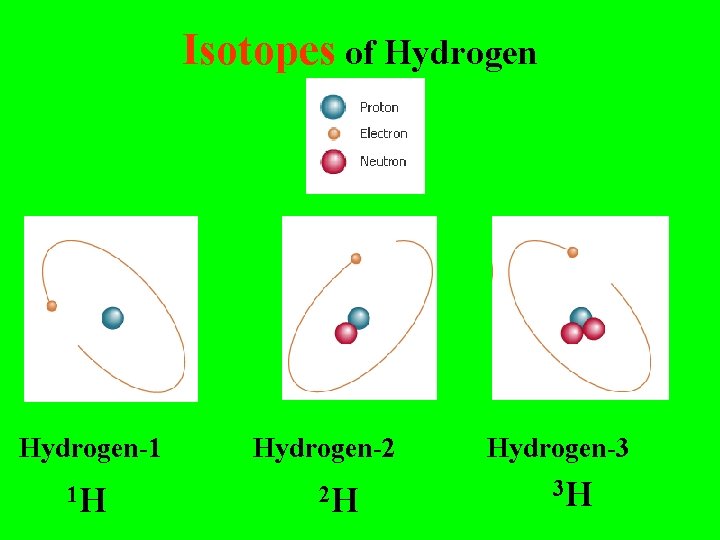
Isotopes of Hydrogen-1 Hydrogen-2 Hydrogen-3
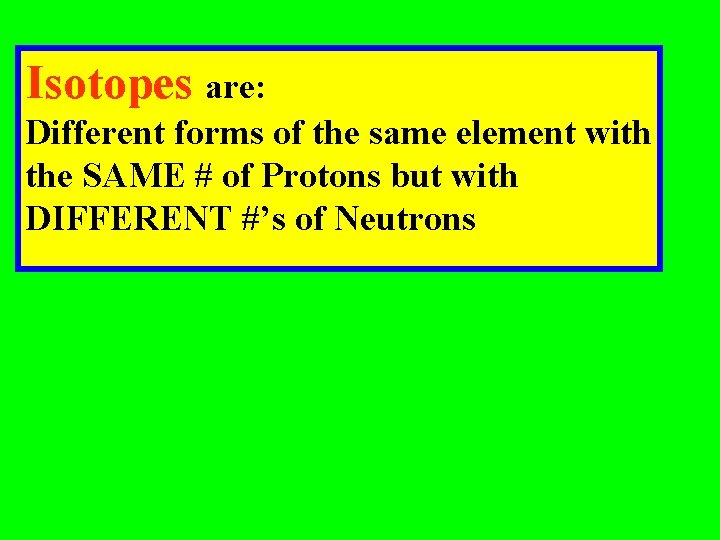
Isotopes are: Different forms of the same element with the SAME # of Protons but with DIFFERENT #’s of Neutrons
Isotopes of Hydrogen-1 1 H Hydrogen-2 2 H Hydrogen-3 3 H
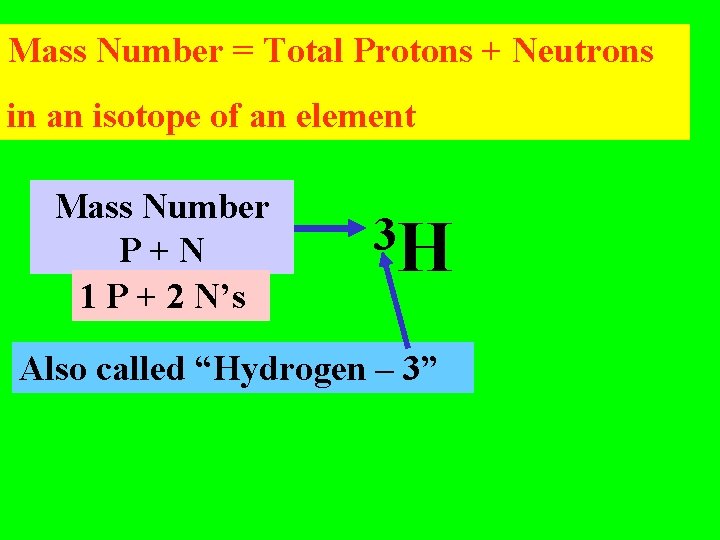
Mass Number = Total Protons + Neutrons in an isotope of an element Mass Number P+N 1 P + 2 N’s 3 H Also called “Hydrogen – 3”
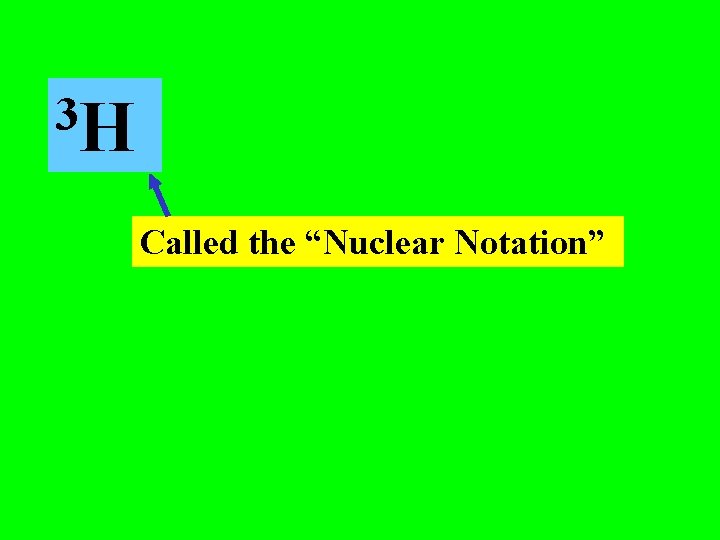
3 H Called the “Nuclear Notation”
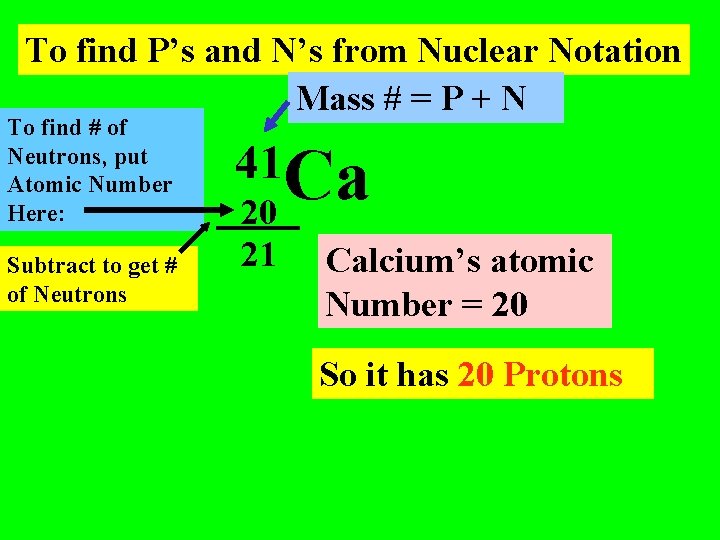
To find P’s and N’s from Nuclear Notation Mass # = P + N To find # of Neutrons, put Atomic Number Here: Subtract to get # of Neutrons 41 Ca 20 21 Calcium’s atomic Number = 20 So it has 20 Protons
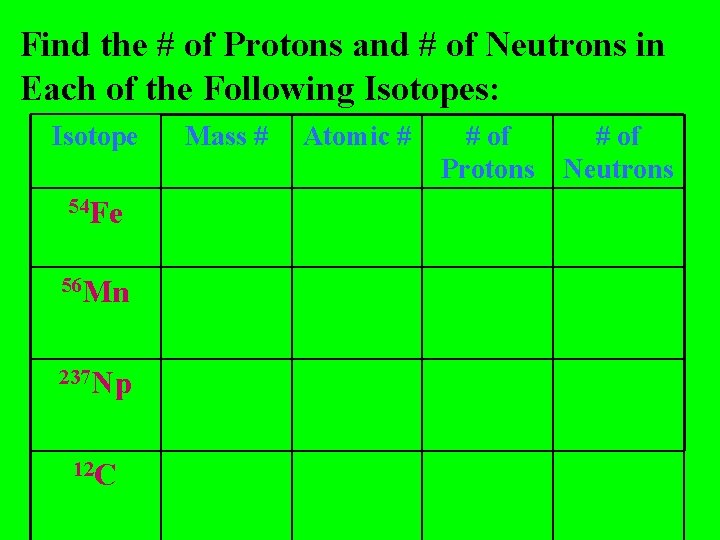
Find the # of Protons and # of Neutrons in Each of the Following Isotopes: Isotope 54 Fe 56 Mn 237 Np 12 C Mass # Atomic # # of Protons # of Neutrons
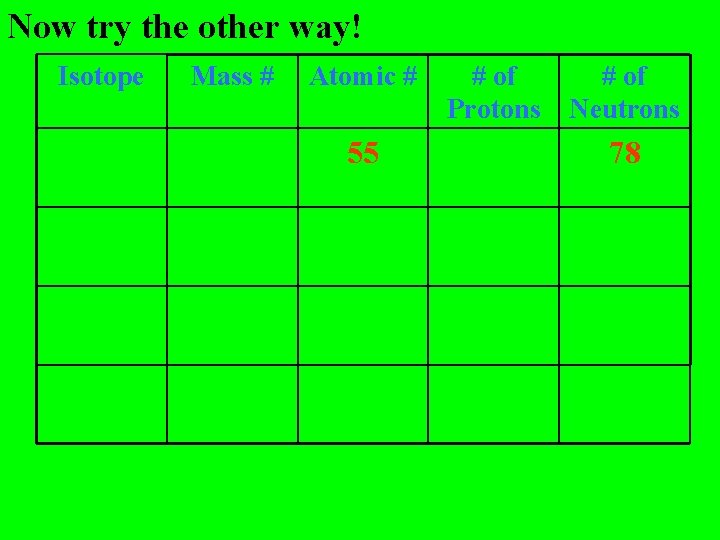
Now try the other way! Isotope Mass # Atomic # 55 # of Protons # of Neutrons 78
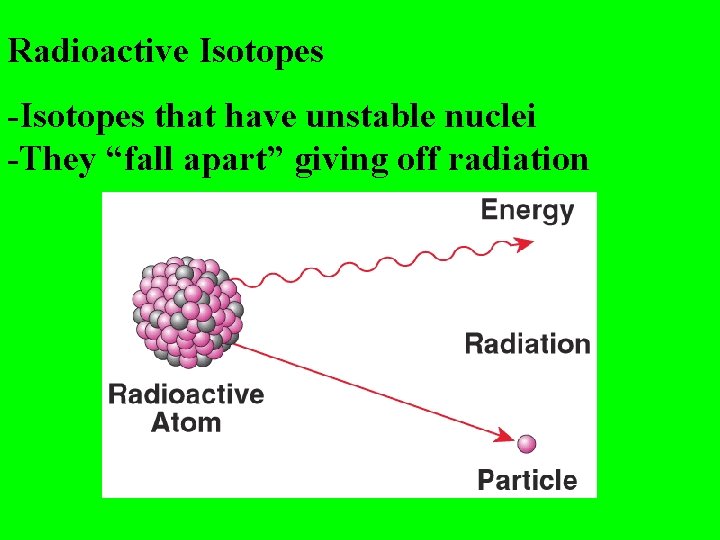
Radioactive Isotopes -Isotopes that have unstable nuclei -They “fall apart” giving off radiation
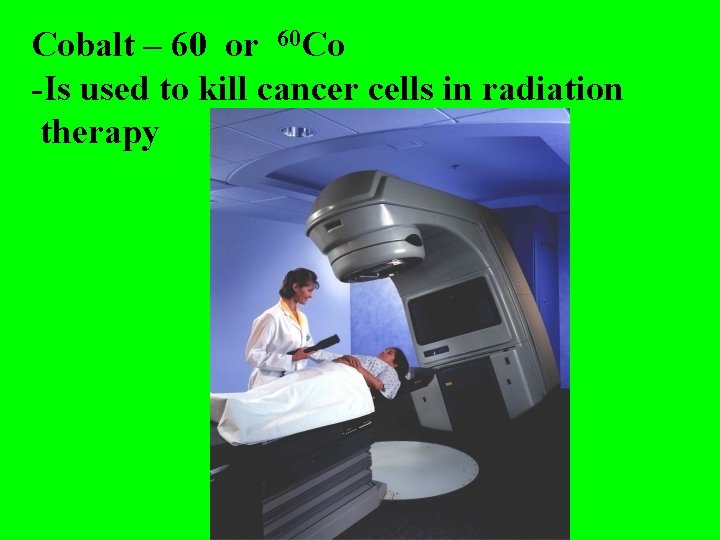
Cobalt – 60 or 60 Co -Is used to kill cancer cells in radiation therapy
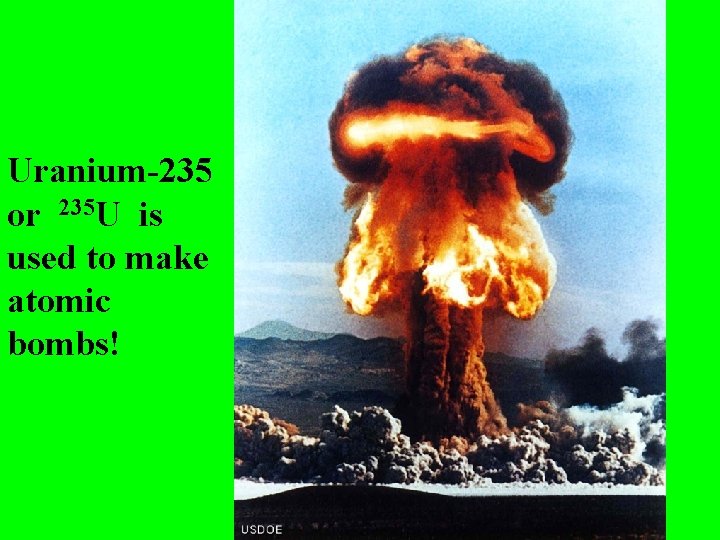
Uranium-235 or 235 U is used to make atomic bombs!
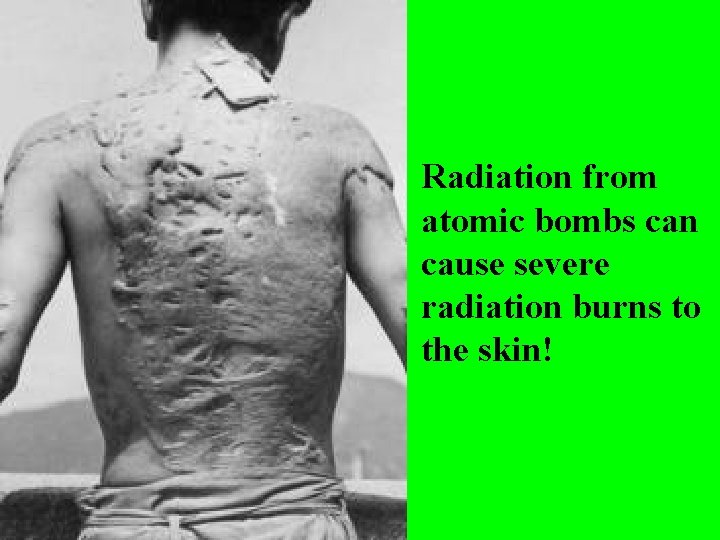
Radiation from atomic bombs can cause severe radiation burns to the skin!
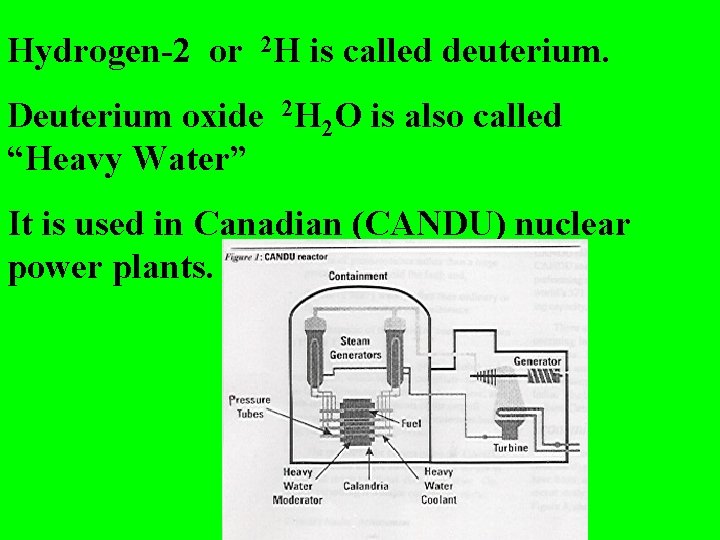
Hydrogen-2 or 2 H is called deuterium. Deuterium oxide 2 H 2 O is also called “Heavy Water” It is used in Canadian (CANDU) nuclear power plants.
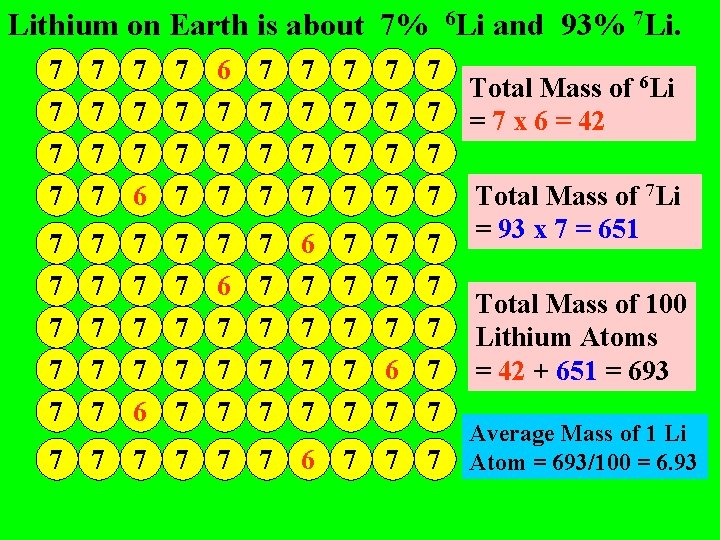
Lithium on Earth is about 7% 6 Li and 93% 7 Li. 7 7 7 7 7 7 7 7 6 7 7 7 7 7 7 7 7 7 7 7 6 7 7 7 6 7 7 7 6 Total Mass of 6 Li = 7 x 6 = 42 Total Mass of 7 Li = 93 x 7 = 651 Total Mass of 100 Lithium Atoms = 42 + 651 = 693 Average Mass of 1 Li Atom = 693/100 = 6. 93
The “weighted average” mass of isotopes of an element is called it’s Atomic Mass
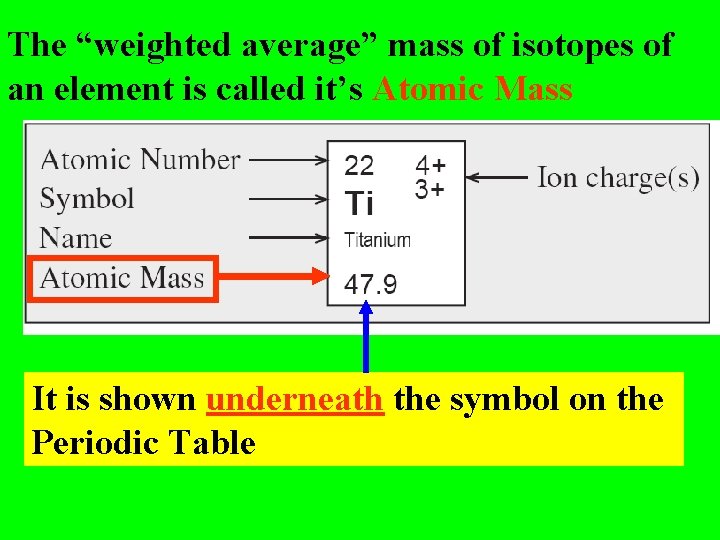
The “weighted average” mass of isotopes of an element is called it’s Atomic Mass It is shown underneath the symbol on the Periodic Table
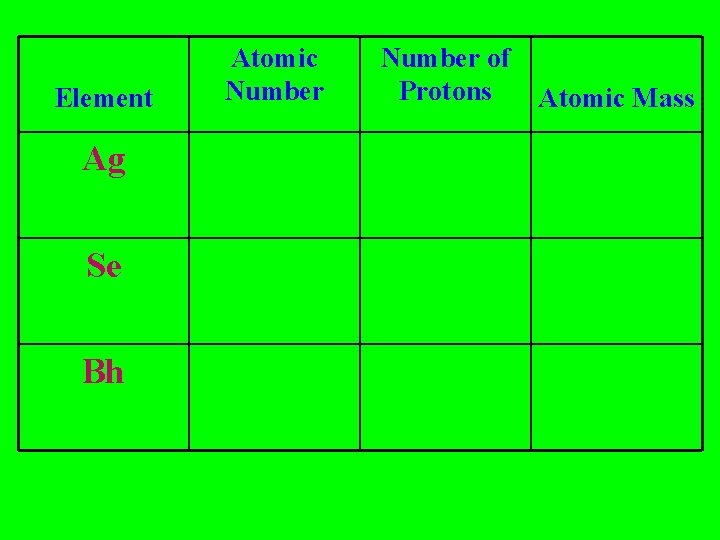
Element Ag Se Bh Atomic Number of Protons Atomic Mass
In a Neutral Atom of an Element: The # of Electrons(-) = The # of Protons(+)
In a Neutral Atom of an Element: The # of Electrons(-) = The # of Protons(+) Neutral Carbon has ____ Protons
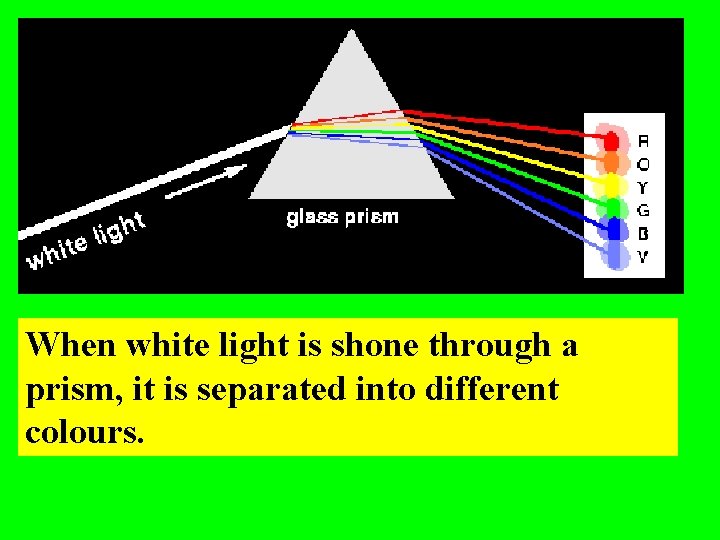
When white light is shone through a prism, it is separated into different colours.
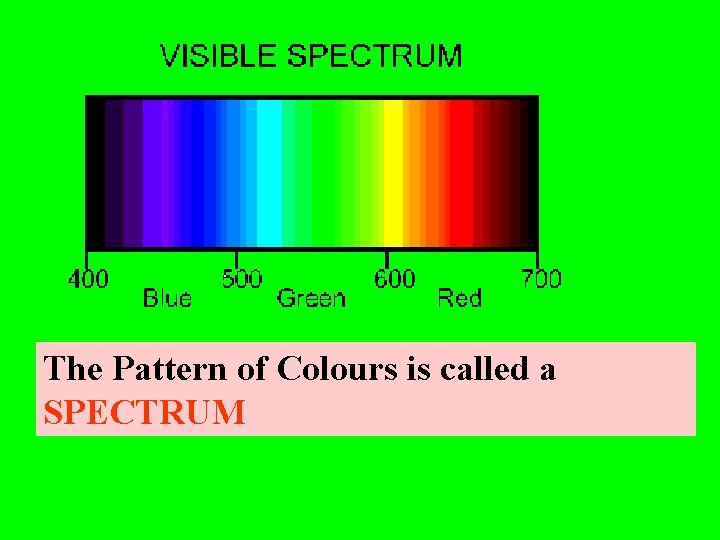
The Pattern of Colours is called a SPECTRUM
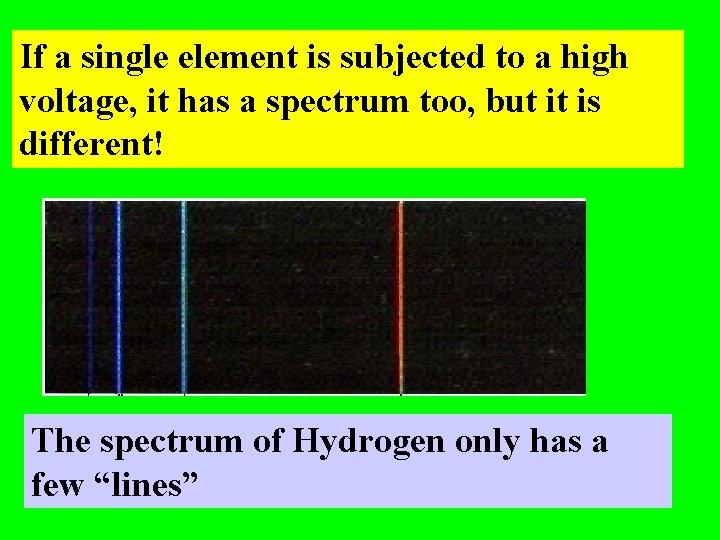
If a single element is subjected to a high voltage, it has a spectrum too, but it is different!
If a single element is subjected to a high voltage, it has a spectrum too, but it is different! The spectrum of Hydrogen only has a few “lines”
Niels Bohr A Danish Physicist
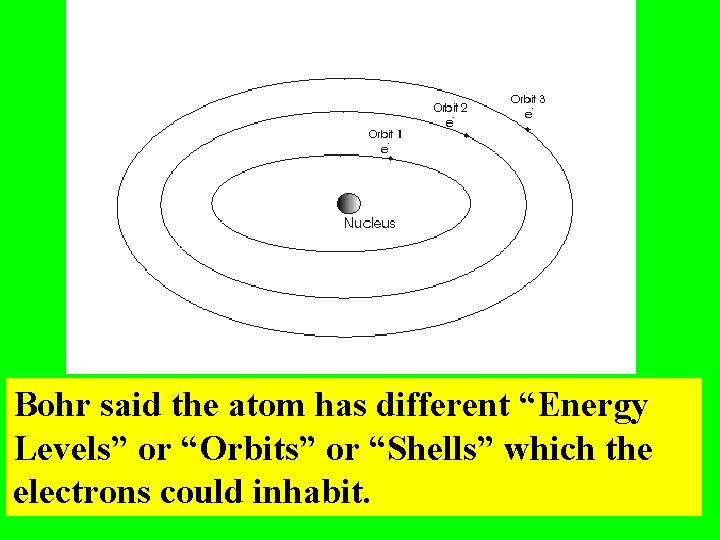
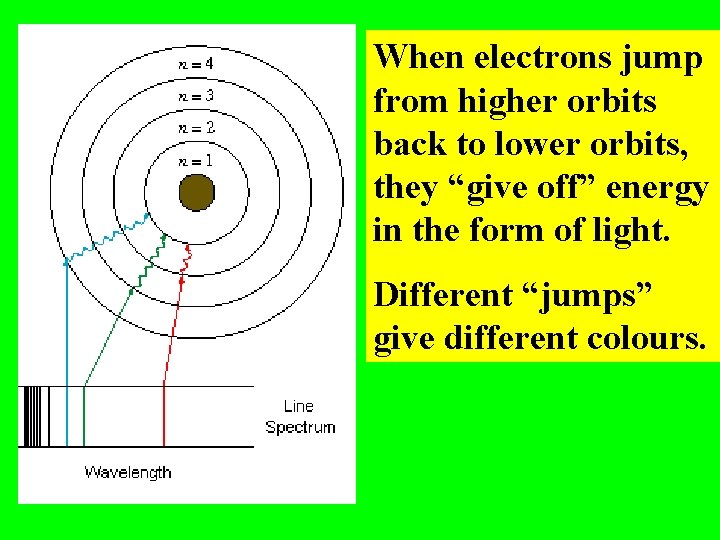
Bohr said the atom has different “Energy Levels” or “Orbits” or “Shells” which the electrons could inhabit.
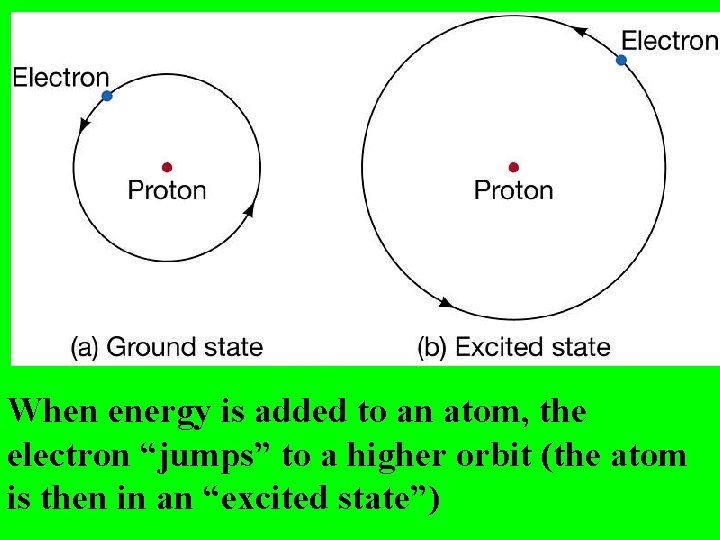
When energy is added to an atom, the electron “jumps” to a higher orbit (the atom is then in an “excited state”)
When electrons jump from higher orbits back to lower orbits, they “give off” energy in the form of light. Different “jumps” give different colours.
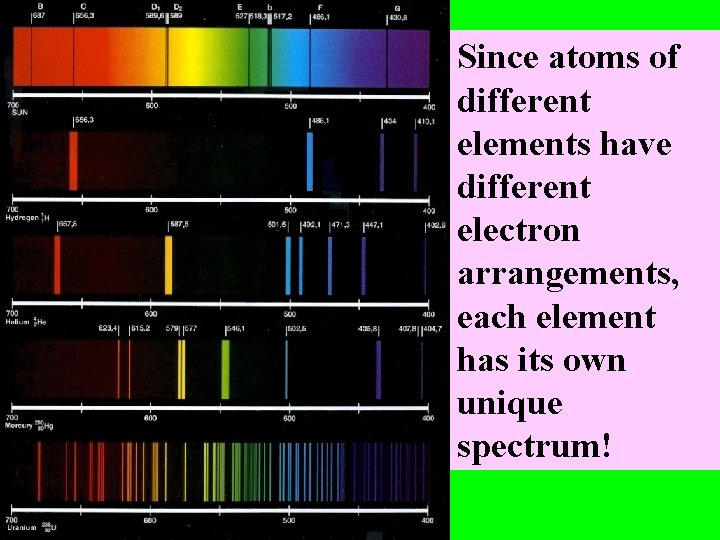
Since atoms of different elements have different electron arrangements, each element has its own unique spectrum!
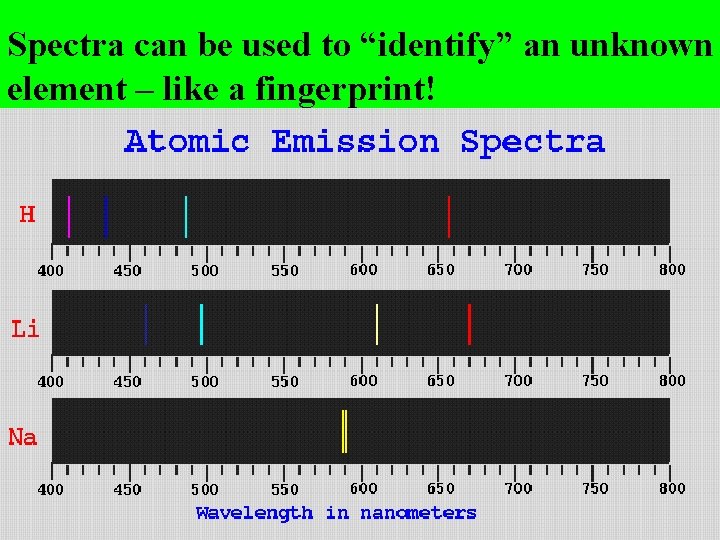
Spectra can be used to “identify” an unknown element – like a fingerprint!
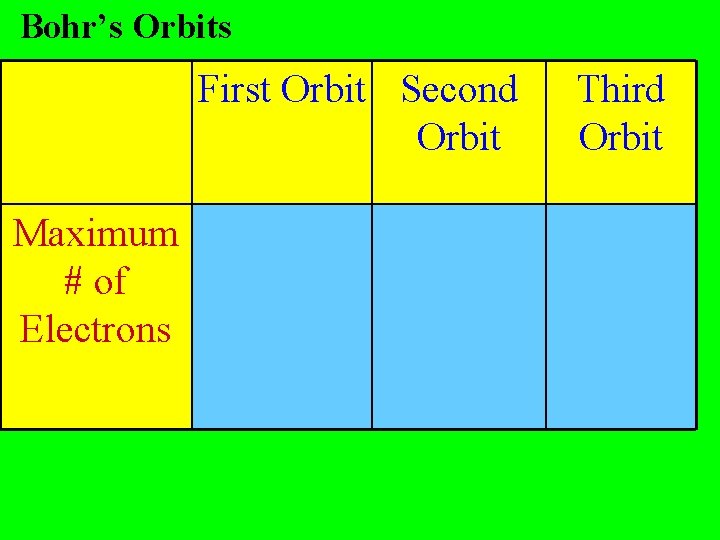
Bohr’s Orbits First Orbit Second Orbit Maximum # of Electrons Third Orbit
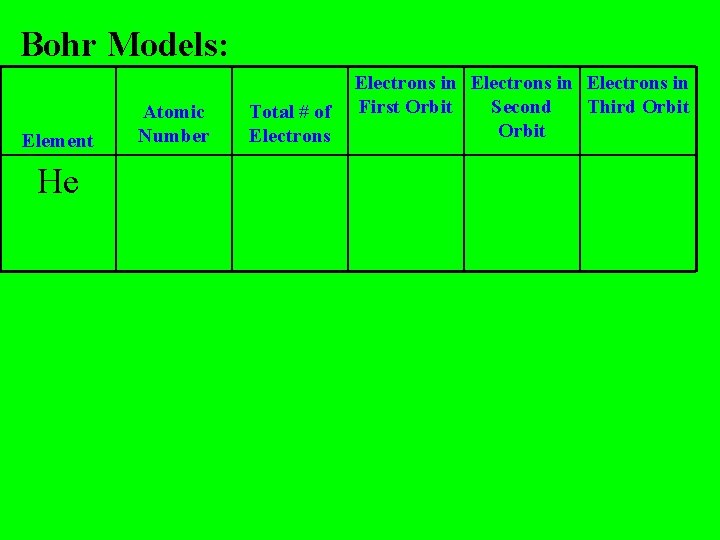
Bohr Models: Element He Atomic Number Total # of Electrons in First Orbit Second Third Orbit
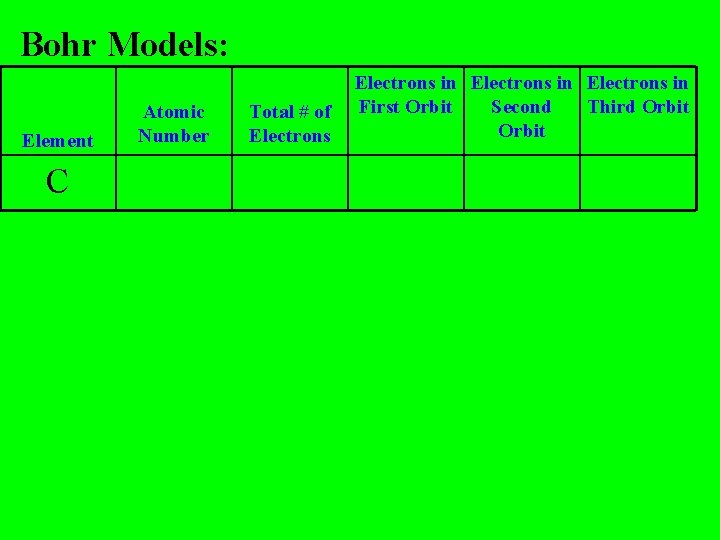
Bohr Models: Element C Atomic Number Total # of Electrons in First Orbit Second Third Orbit
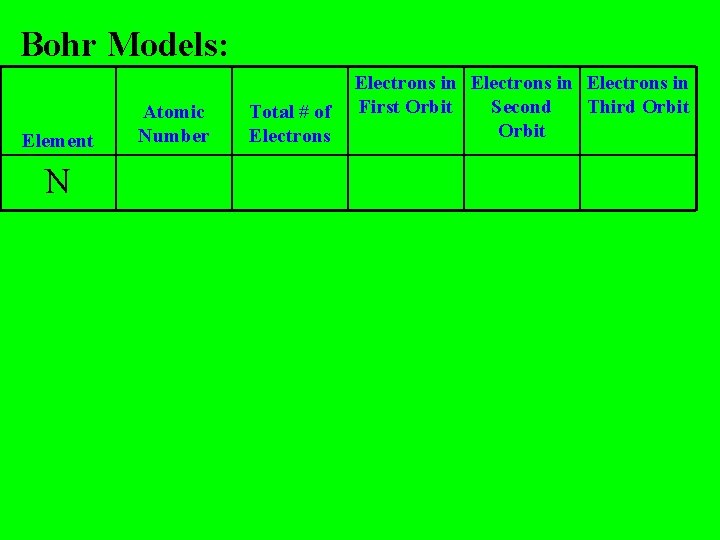
Bohr Models: Element N Atomic Number Total # of Electrons in First Orbit Second Third Orbit
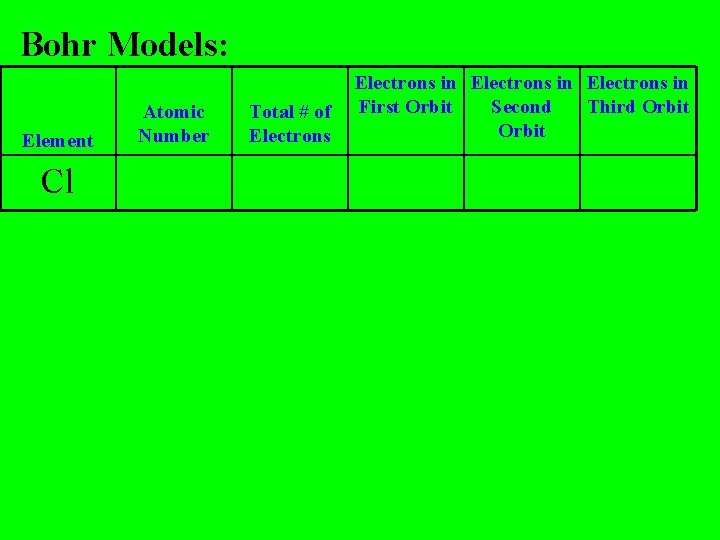
Bohr Models: Element Cl Atomic Number Total # of Electrons in First Orbit Second Third Orbit