
THE MODERN PERIOD CHALLENGING THE AMERICAN DREAM 1914

- Slides: 22
THE MODERN PERIOD CHALLENGING THE AMERICAN DREAM 1914 -1939
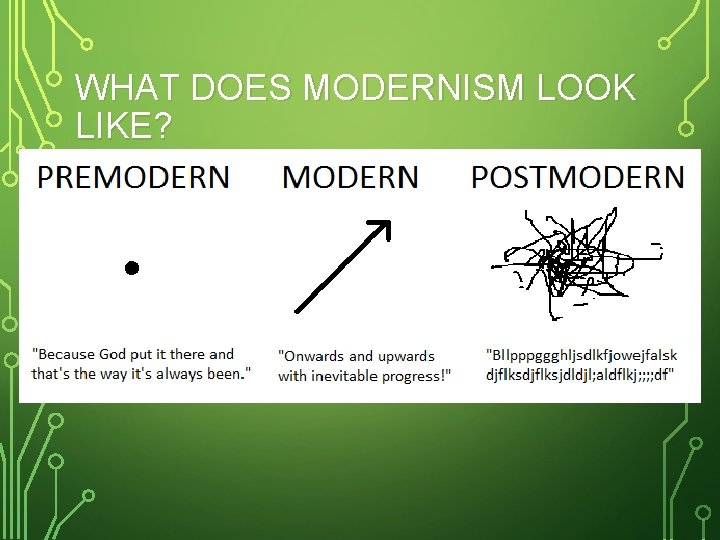
WHAT DOES MODERNISM LOOK LIKE?
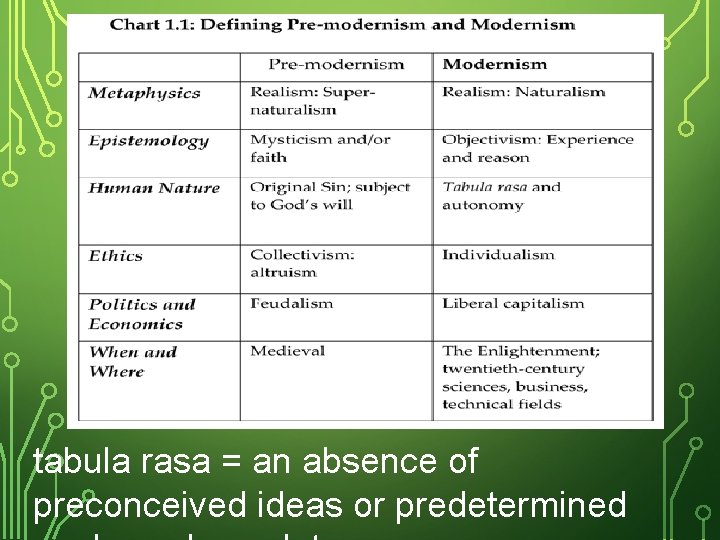
tabula rasa = an absence of preconceived ideas or predetermined
WHAT IS MODERNISM? • Modernism = bold new experimental styles and forms sweep the arts (1914 -1939) – Modernism reflects a loss of faith in traditional values and beliefs, including the American Dream
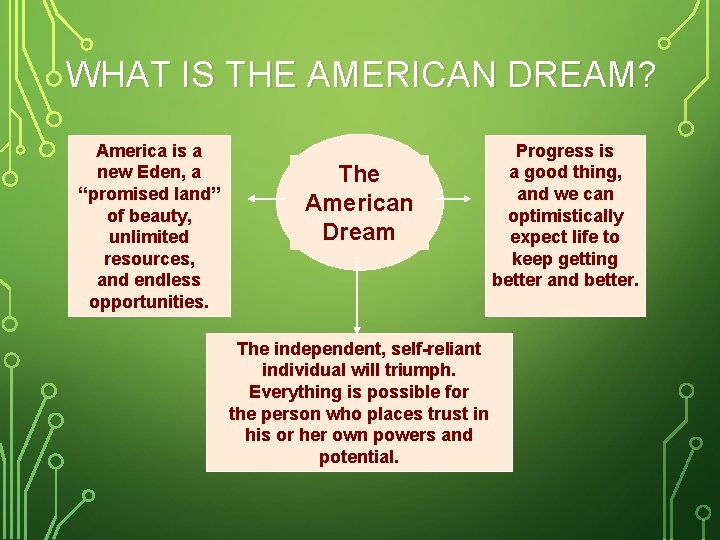
WHAT IS THE AMERICAN DREAM? America is a new Eden, a “promised land” of beauty, unlimited resources, and endless opportunities. The American Dream The independent, self-reliant individual will triumph. Everything is possible for the person who places trust in his or her own powers and potential. Progress is a good thing, and we can optimistically expect life to keep getting better and better.
A HARSH AWAKENING • World War I (1914– 1918): destruction beyond belief -Over 300, 000 die during the Battle at Verdun… -20, 000 in a single day at the River Somme… -over 37 million casualties, including 15 million deaths over the course of the war • The Great Depression follows the 1929 crash of the New York stock market and lasts through the 1930 s
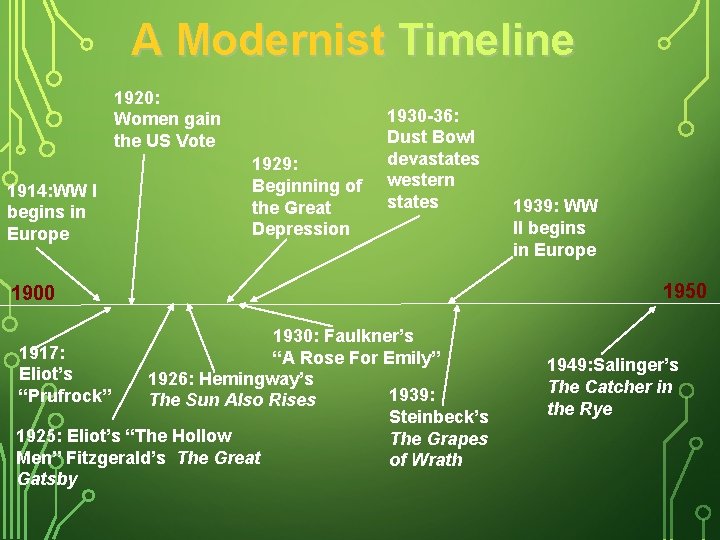
A Modernist Timeline 1920: Women gain the US Vote 1914: WW I begins in Europe 1929: Beginning of the Great Depression 1930 -36: Dust Bowl devastates western states 1900 1930: Faulkner’s 1917: “A Rose For Emily” Eliot’s 1926: Hemingway’s 1939: “Prufrock” The Sun Also Rises Steinbeck’s 1925: Eliot’s “The Hollow The Grapes Men” Fitzgerald’s The Great of Wrath Gatsby 1939: WW II begins in Europe 1950 1949: Salinger’s The Catcher in the Rye
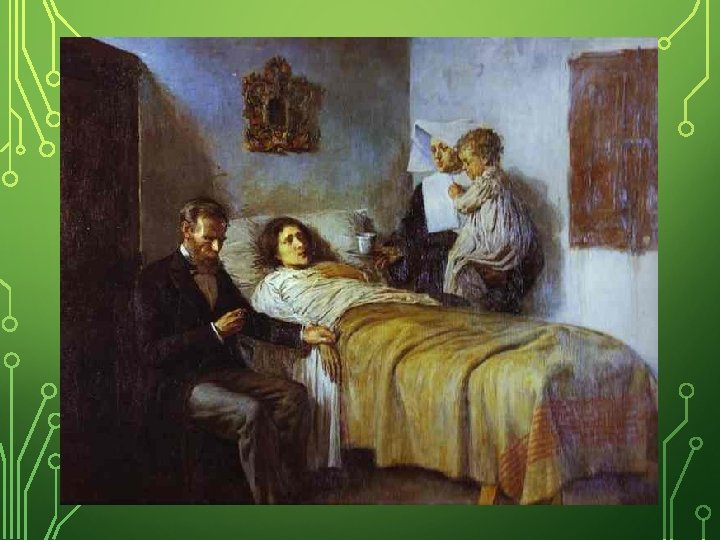
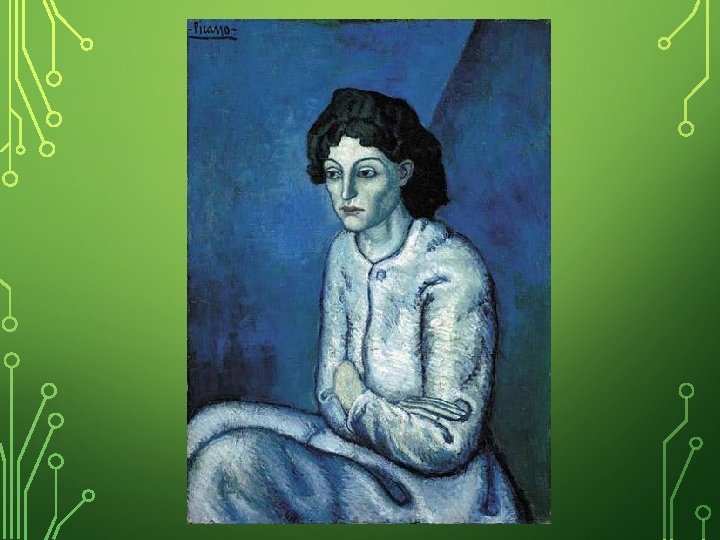
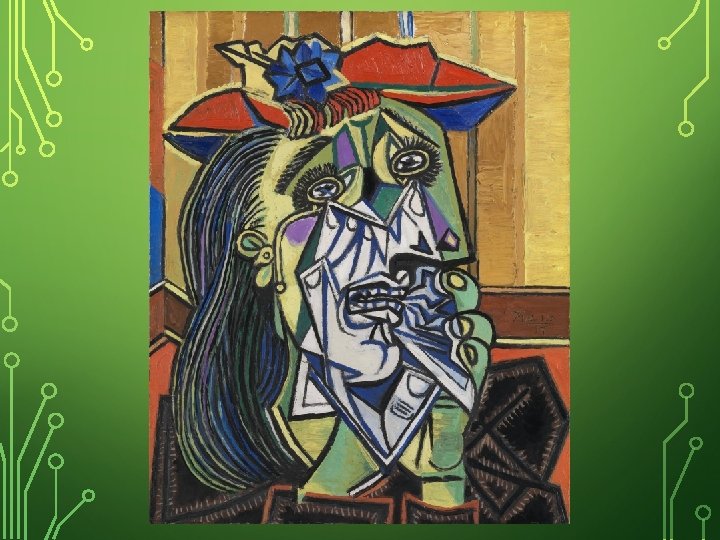
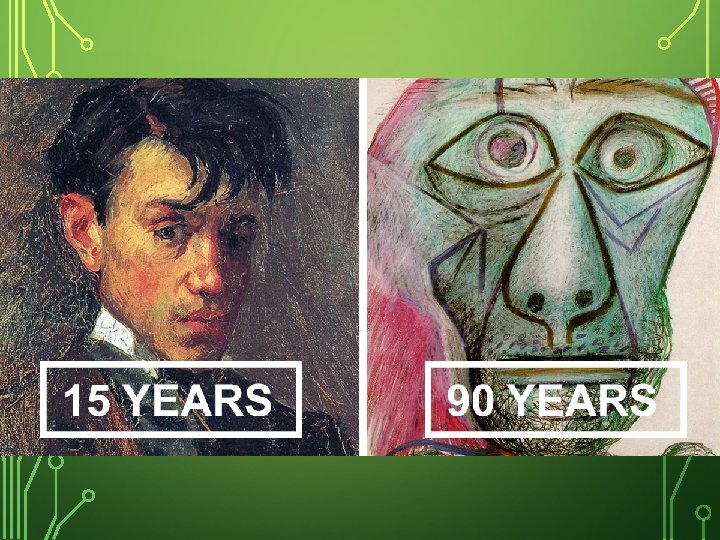
CULTURAL CHANGES – Painters such as Henri Matisse and Pablo Picasso explore new ways to represent reality – The rise of Socialism directly opposes American system of capitalism – Sigmund Freud, founder of psychoanalysis, changes the way we see ourselves
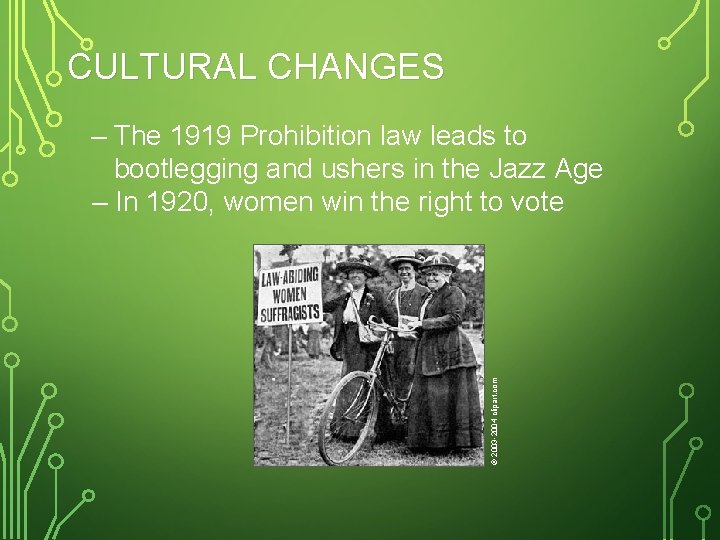
CULTURAL CHANGES © 2003 -2004 clipart. com – The 1919 Prohibition law leads to bootlegging and ushers in the Jazz Age – In 1920, women win the right to vote
MODERN POETRY: THE HARLEM RENAISSANCE • Centered in Harlem, New York during the 1920 s • Flowering of African American art, music and literature • The birth of Jazz music • Poets: Langston Hughes, Countee Cullen, Claude Mc. Kay
MODERN POETRY: EXPERIMENTS WITH FORM – The image = central to poetry • T. S. Eliot’s “Prufrock” • Ezra Pound’s “In the Station of the Metro” • William Carlos Williams “The Red Wheelbarrow” – Poets choose everyday words over flowery, sentimental language. – Fragmentation and re-combination • e. e. cummings, T. S. Eliot
MODERN FICTION: • “The Lost Generation”: shell-shocked souls following World War I • Flawed heroes: honorable yet flawed, courageous yet disillusioned – Hemingway’s Nick Adams – Fitzgerald’s Nick Carraway • Stream of consciousness narration – Faulkner’s “A Rose for Emily”
MORE ON MODERN FICTION: The impact of Ernest Hemingway: ØThe most lasting influence of any 20 th century writer ØJournalistic style: objective, observational ØShort declarative sentences: “Aim to write one true sentence. ” ØThe “iceberg effect”
MODERN POETRY: TRADITIONAL FORMS • Robert Frost writes in traditional rhyme and meter against the modernist trend – “Writing poetry in free verse is like playing tennis without the net. ”
WHAT STILL REMAINS • American Modernists break new ground but keep some traditional ideas • The ideal of self-reliance • (just can’t get away from Emerson…) • Regardless of their experiments with literary form, writers continue to ask fundamental questions about the meaning and purpose of life