
The Modern Leader The impact of modern management






- Slides: 15
The Modern Leader The impact of modern management techniques on job satisfaction and nursing burnout
Rationale • High turnover rates lead to poor patient outcomes • Poor organizational commitment to leadership results in unmet organizational goals • Leaders have the power to influence job satisfaction • Leadership development increases nursing engagement, leading to increased job satisfaction and decreased rate of turnover • Developing leaders creates culture that supports change
Transformational leadership can reduce burnout and help in nurse retention (Wu et al. , 2020) Literature Synthesis Authentic/transformational leadership style helps leaders demonstrate self-awareness and high moral standards, essential in building genuine nurse-leader relationships (Wei et al. , 2020) Leadership approaches such as improving work conditions, facilitating goal attainment and providing autonomy are expected to decrease burnout and contribute to reducing nursing shortage (Mudallal et al. , 2017)
Literature Synthesis cont. • The authentic leader can affect nurses’ intent to leave (Lee et al. , 2018) • Nursing leadership can increase nurses’ intention to stay by meeting their needs for appreciation, a better work environment and professional/personal development (Karlsson et al. , 2019)
Project Stakeholders • Staff nurses • RNs • LVNs • Administration • CEO • COO • CFO • CNO • Patients • Consumers of healthcare
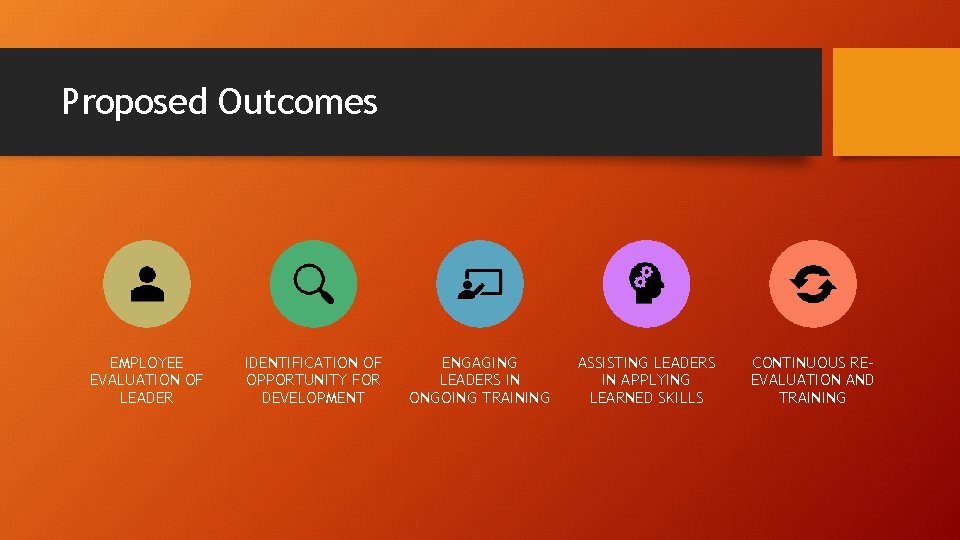
Proposed Outcomes EMPLOYEE EVALUATION OF LEADER IDENTIFICATION OF OPPORTUNITY FOR DEVELOPMENT ENGAGING LEADERS IN ONGOING TRAINING ASSISTING LEADERS IN APPLYING LEARNED SKILLS CONTINUOUS REEVALUATION AND TRAINING
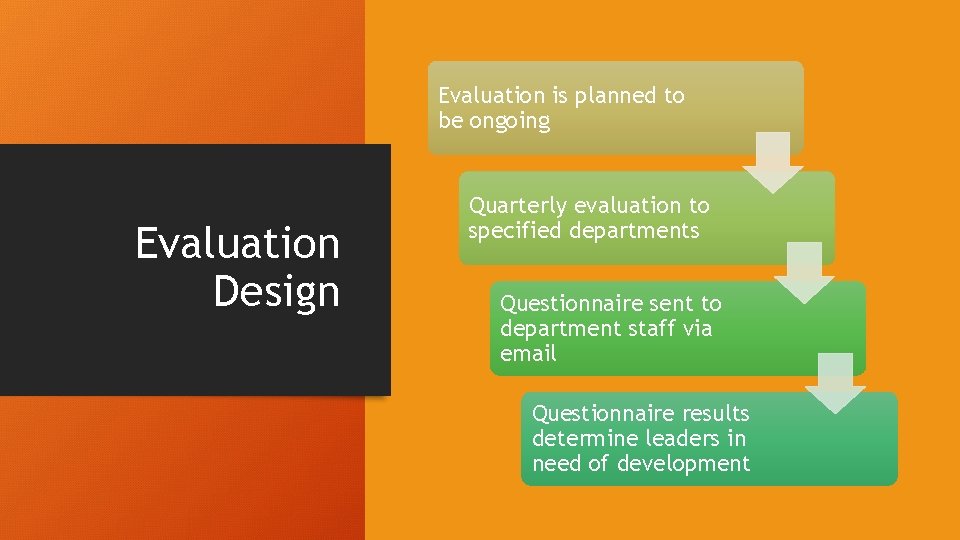
Evaluation is planned to be ongoing Evaluation Design Quarterly evaluation to specified departments Questionnaire sent to department staff via email Questionnaire results determine leaders in need of development
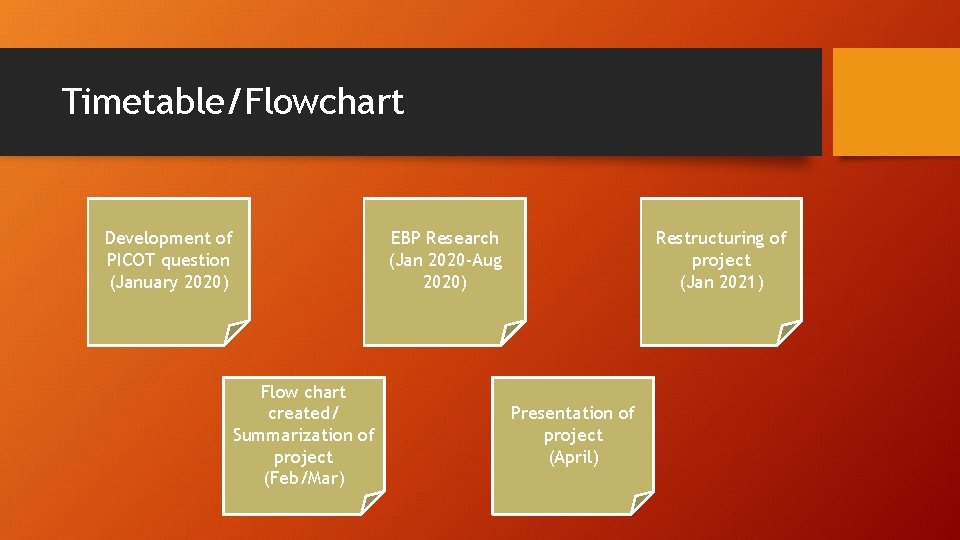
Timetable/Flowchart Development of PICOT question (January 2020) EBP Research (Jan 2020 -Aug 2020) Flow chart created/ Summarization of project (Feb/Mar) Restructuring of project (Jan 2021) Presentation of project (April)
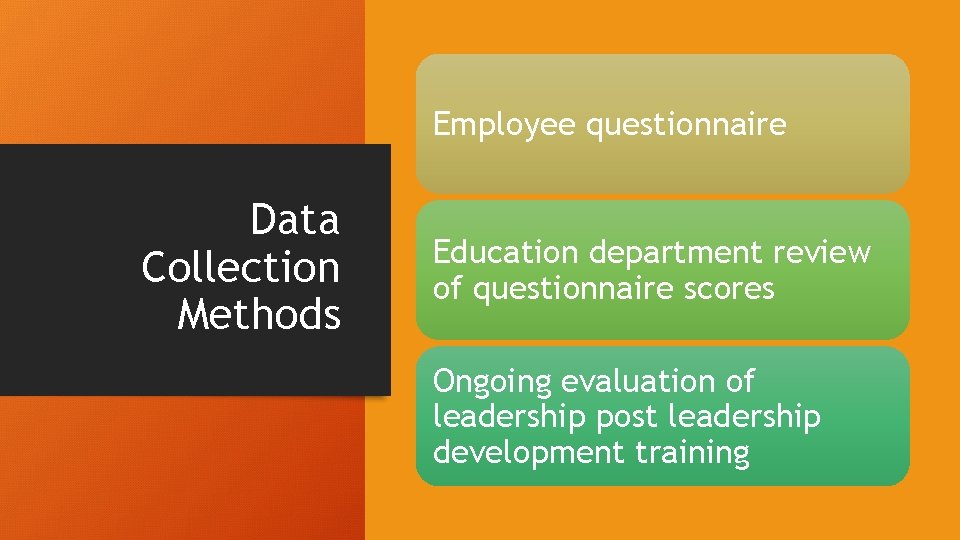
Employee questionnaire Data Collection Methods Education department review of questionnaire scores Ongoing evaluation of leadership post leadership development training
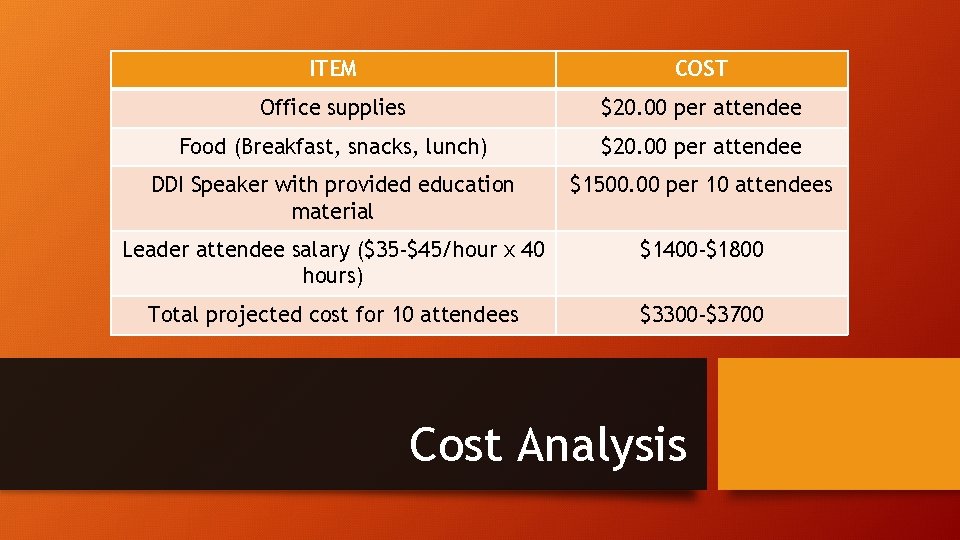
ITEM COST Office supplies $20. 00 per attendee Food (Breakfast, snacks, lunch) $20. 00 per attendee DDI Speaker with provided education material $1500. 00 per 10 attendees Leader attendee salary ($35 -$45/hour x 40 hours) $1400 -$1800 Total projected cost for 10 attendees $3300 -$3700 Cost Analysis
• Feelings of empowerment in nurses can reduce feelings of burnout and nursing leaders play an important role in creating this engaging and empowering nurse work environment (Mudallal et al. , 2017). Fostering education in leaders to enhance their skills and create a strong workforce can increase nursing resilience and engagement leading to increased job satisfaction and decreased burnout and rates of turnover. Ongoing training and evaluation of leadership within the organization will assist with increased organizational success and more positive patient outcomes. Conclusion
Fuentes, R. (2019). Implementing a self-scheduling model to decrease nurse turnover in medical -surgical nursing. Walden University Scholar. Works. Retrieved from https: //scholarworks. waldenu. edu/cgi/viewcontent. cgi? article=8813&context=dissertations Halter, M. , Boiko, O. , Pelone, F. , Beighton, C. , Harris, R. , Gale, J. , Gourlay, S. , & Drennan, V. (2017). The determinants and consequences of adult nursing staff turnover: A systematic review of systematic reviews. BMC Health Serv Res. 2017; 17(1): 824. Published 2017 Dec 15. doi: 10. 1186/s 12913 -017 -2707 -0 References Halter, M. , Pelone, F. , Boiko, O. , Beighton, C. , Harris, R. , Gale, J. , Gourlay, S. , & Drennan, V. (2017). Interventions to reduce adult nursing turnover: A systematic review of systematic reviews. The open nursing journal, 11, 108 -123. https: //doi. org/10. 2174/1874434601711010108 Karlsson, A. C. , Gunningberg, L. , Backstrom, J. , & Poder, U. (2019). Registered nurses’ perspectives of work satisfaction, patient safety and intention to stay – a double-edged sword. Journal of nursing management, 27(7), 1359 -1365. https: //doiorg. ezproxy. uttyler. edu/10. 1111/jonm. 12816 Labrague, L. J. , Mc. Enroe-Petitte, D. M. , Tsaras, K. , Cruz, J. P. , Paolo, C. C. , & Gloe, D. S. (2018). Organizational commitment and turnover intention among rural nurses in the Philippines: Implications for nursing management. International Journal of Nursing Sciences, 5(4), 403 -408. Retrieved from https: //www. sciencedirect. com/science/article/pii/S 2352013217302892#cebib 001
Lee, H. -F. , Chiang, H. -Y. , & Kuo, H. -T. (2018). Relationship between authentic leadership and nurses’ intent to leave: The mediating role of work environment and burnout. Journal of Nursing Management, 27(1), 52 -65. https: //doi. org/10. 1111/jonm. 12648 Moreland, J. J. , Apker, J. (2016). Conflict and stress in hospital nursing: Improving communicative responses to enduring professional challenges. Health communication. 31(7). 815 -823. Doi: 10. 1080/10410236. 2015. 1007548 Rondeau, K. V. , Wagar, T. H. (2016). Human resource management practices and nursing turnover. Journal of Nursing Education and Practice. Retrieved from http: //dx. doi. org/10. 5430/jnep. v 6 n 10 p 101 References Wei, H. , Roberts, P. , Strickler, J. , Corbett, R. W. (2019). Nurse leaders’ strategies to foster nurse resilience. Journal of Nursing Management 27. 681 -687. https: //doiorg. ezproxy. uttyler. edu/10. 1111/jonm. 12736 Wei, H. , King, A. , Jiang, Y. , Sewell, K. , & Lake, D. (2020). The impact of nurse leadership styles on nurse burnout: A systematic literature review. Nurse Leader, 439 -450. https: //doi. org/10. 1016/j. mnl. 2020. 04. 002 Wei, H. , King, A. , Jiang, Y. , Sewell, K. , & Lake, D. (2020). The impact of nurse leadership styles on nurse burnout: A systematic literature review. Nurse Leader, 439450. https: //doi. org/10. 1016/j. mnl. 2020. 04. 002 Wu, X. , Hayter, M. , Lee, A. J. , Yuan, Y. , Li, S. , Bi, Y. , Zhang, L. , Cao, C. , Gong, W. , & Zhang, Y. (2020). Positive spiritual climate supports transformational leadership as means to reduce nursing burnout and intent to leave. Journal of Nursing Management, 28(4), 804813. https: //doi. org/10. 111/jonm. 12994
Appendix
Questions/Comments