
The MJO Cloud Population over the Indian Ocean

- Slides: 16
The MJO Cloud Population over the Indian Ocean H. C. Barnes R. Houze S. Brodzik University of Washington 30 th Conference on Hurricanes and Tropical Meteorology 19 April 2012, Ponte Vedra Beach, Florida
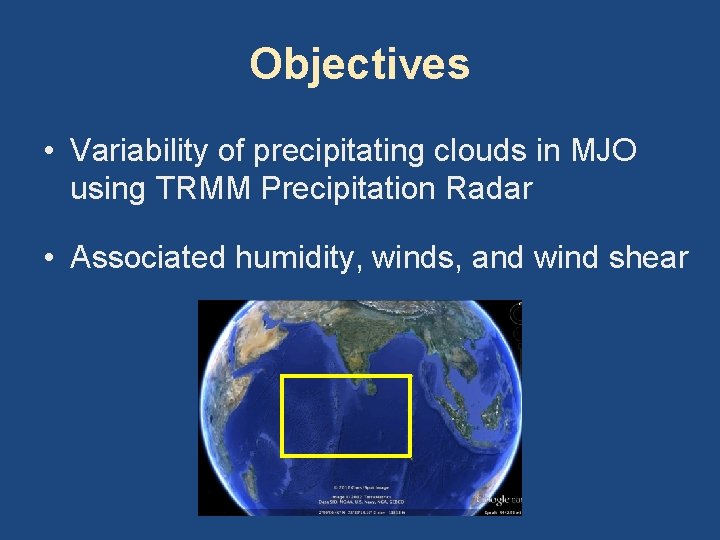
Objectives • Variability of precipitating clouds in MJO using TRMM Precipitation Radar • Associated humidity, winds, and wind shear
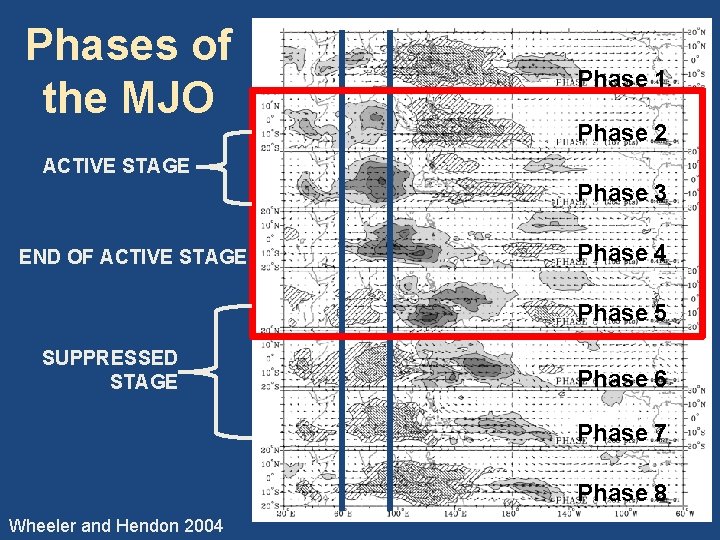
Phases of the MJO ACTIVE STAGE END OF ACTIVE STAGE SUPPRESSED STAGE Wheeler and Hendon 2004 Phase 1 Phase 2 3 Phase 3 4 Phase 4 5 Phase 5 6 Phase 6 7 Phase 7 8 Phase 8
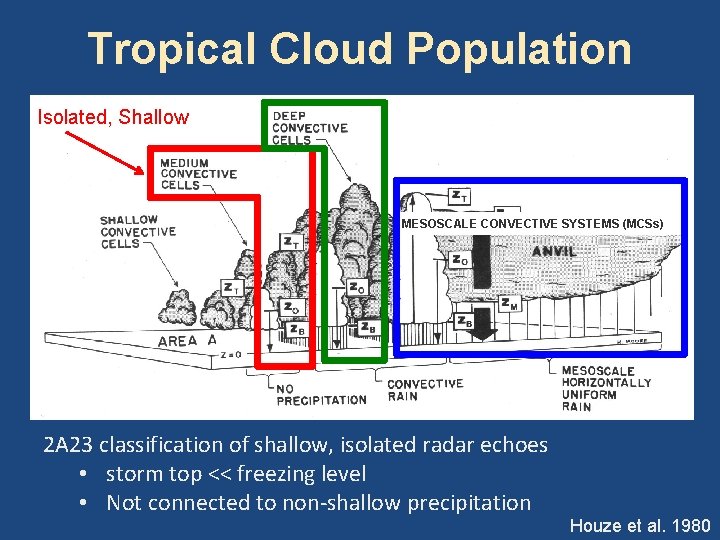
Tropical Cloud Population Isolated, Shallow MESOSCALE CONVECTIVE SYSTEMS (MCSs) 2 A 23 classification of shallow, isolated radar echoes • storm top << freezing level • Not connected to non-shallow precipitation Houze et al. 1980
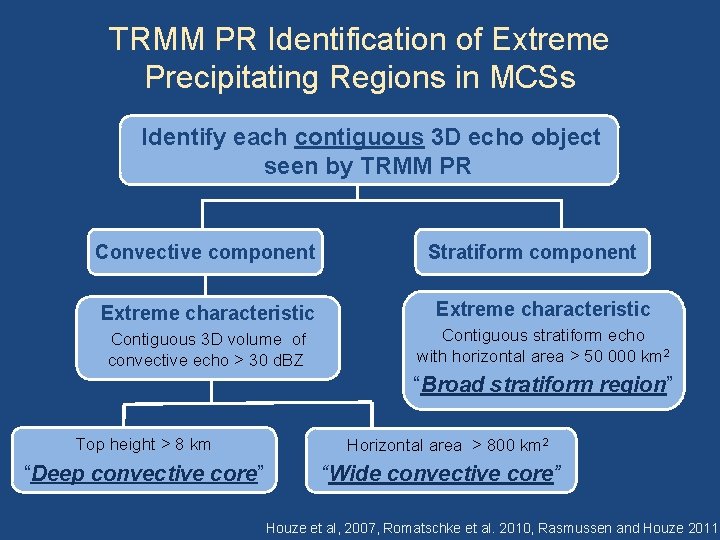
TRMM PR Identification of Extreme Precipitating Regions in MCSs Identify each contiguous 3 D echo object seen by TRMM PR Convective component Stratiform component Extreme characteristic Contiguous 3 D volume of convective echo > 30 d. BZ Contiguous stratiform echo with horizontal area > 50 000 km 2 “Broad stratiform region” Top height > 8 km “Deep convective core” Horizontal area > 800 km 2 “Wide convective core” Houze et al, 2007, Romatschke et al. 2010, Rasmussen and Houze 2011
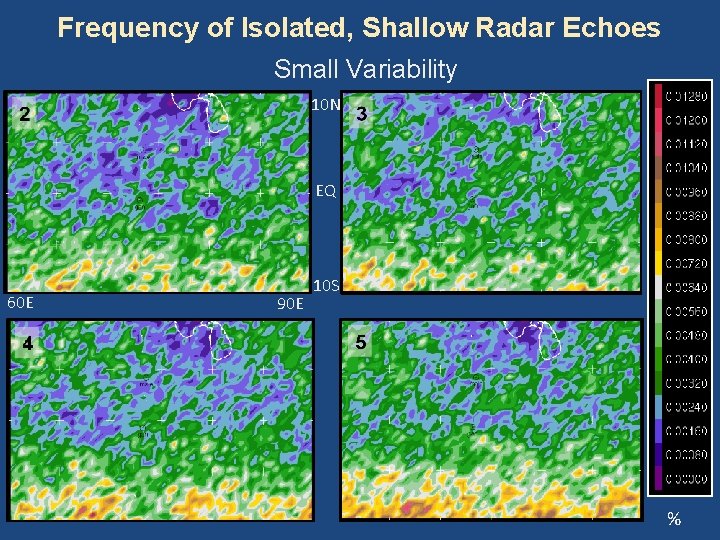
Frequency of Isolated, Shallow Radar Echoes Small Variability 10 N EQ 60 E 90 E 10 S %
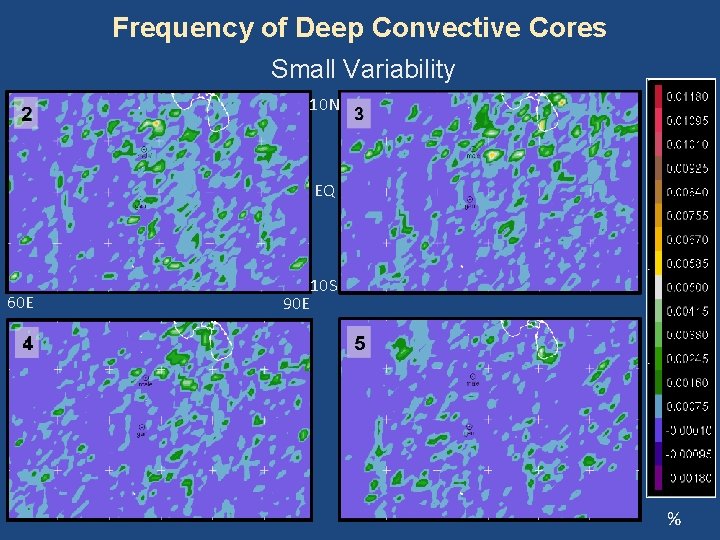
Frequency of Deep Convective Cores Small Variability 10 N EQ 60 E 90 E 10 S %
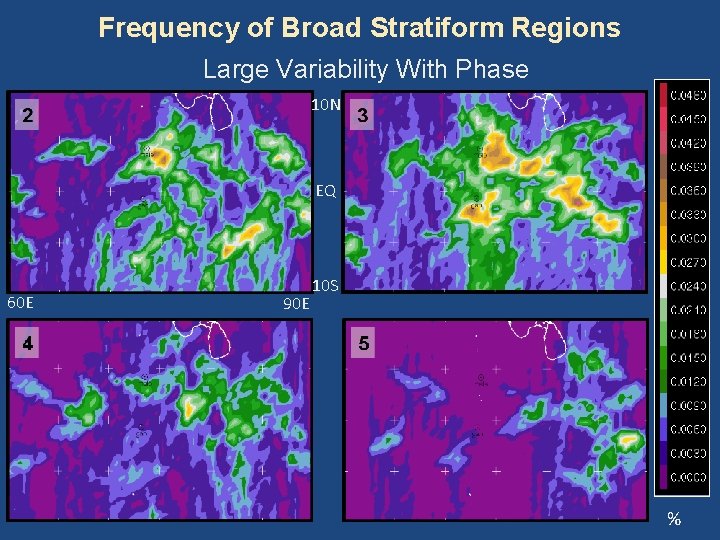
Frequency of Broad Stratiform Regions Large Variability With Phase 10 N EQ 60 E 90 E 10 S %
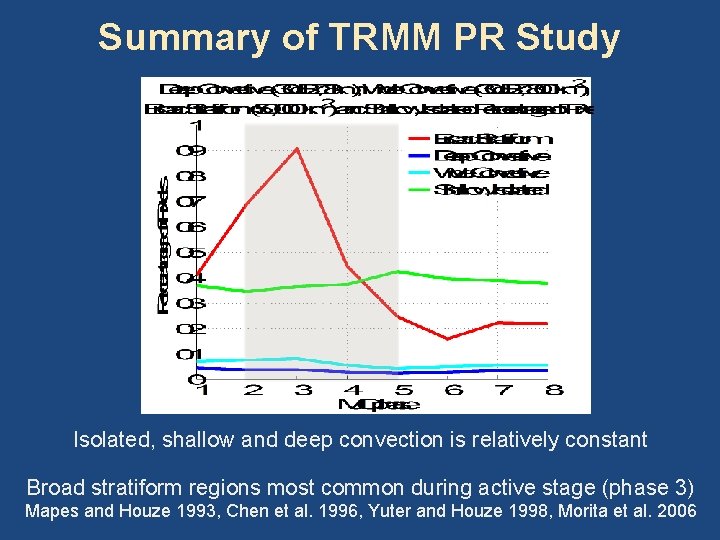
Summary of TRMM PR Study Isolated, shallow and deep convection is relatively constant Broad stratiform regions most common during active stage (phase 3) Mapes and Houze 1993, Chen et al. 1996, Yuter and Houze 1998, Morita et al. 2006
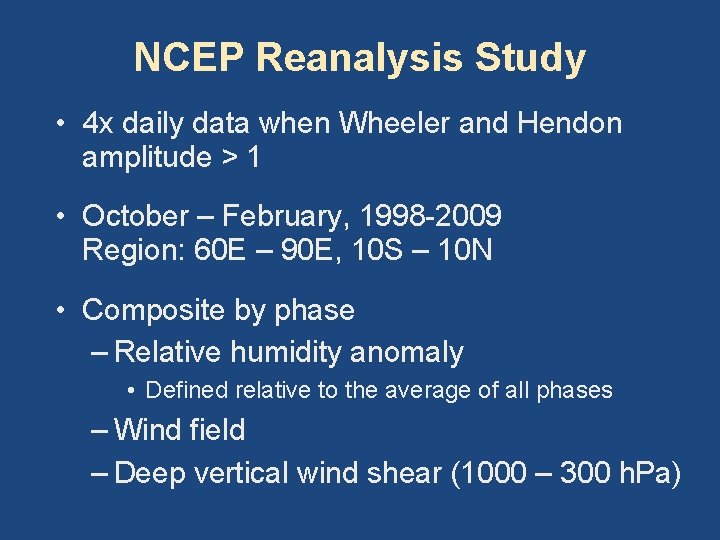
NCEP Reanalysis Study • 4 x daily data when Wheeler and Hendon amplitude > 1 • October – February, 1998 -2009 Region: 60 E – 90 E, 10 S – 10 N • Composite by phase – Relative humidity anomaly • Defined relative to the average of all phases – Wind field – Deep vertical wind shear (1000 – 300 h. Pa)
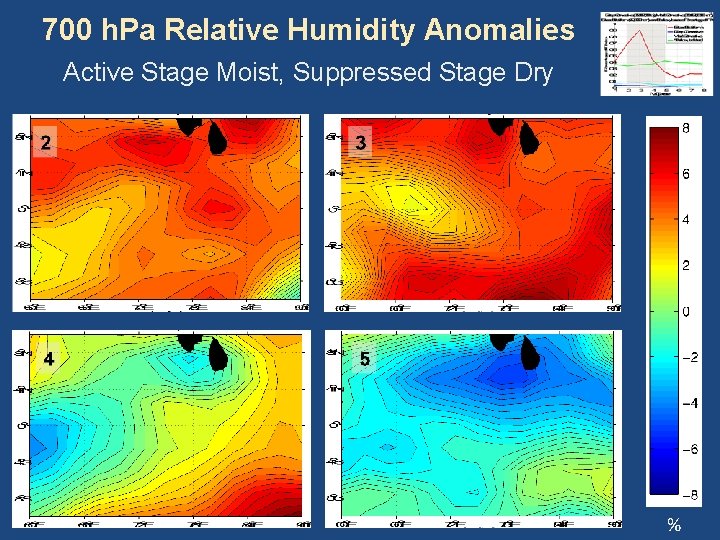
700 h. Pa Relative Humidity Anomalies Active Stage Moist, Suppressed Stage Dry %
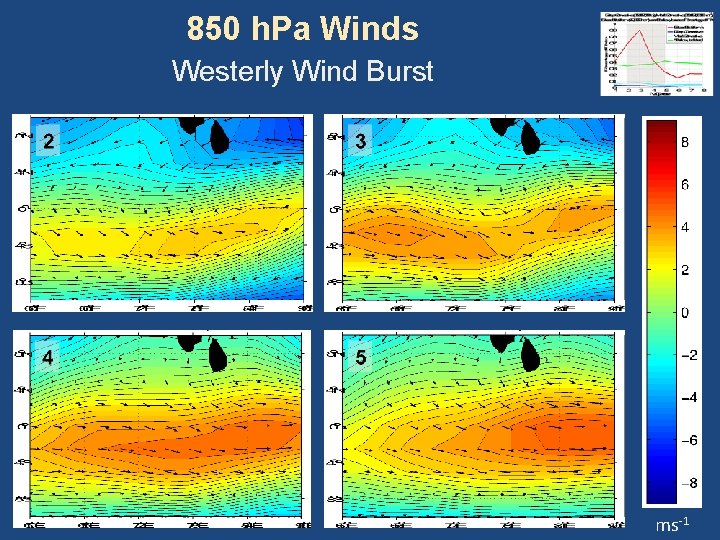
850 h. Pa Winds Westerly Wind Burst ms-1
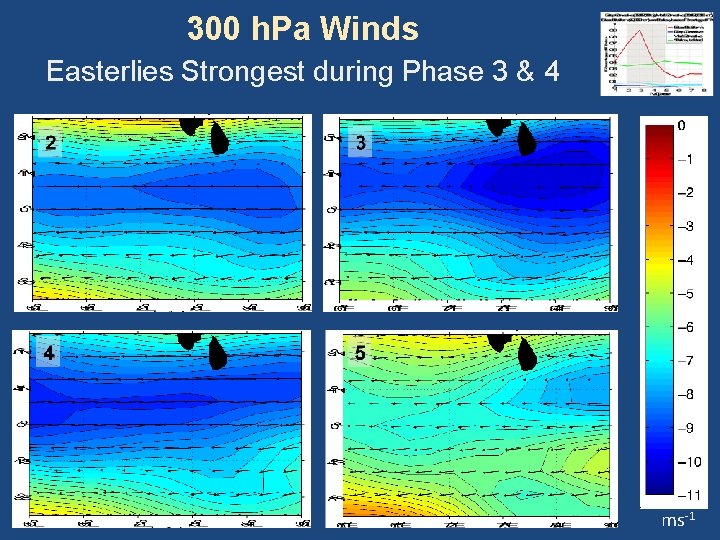
300 h. Pa Winds Easterlies Strongest during Phase 3 & 4 ms-1
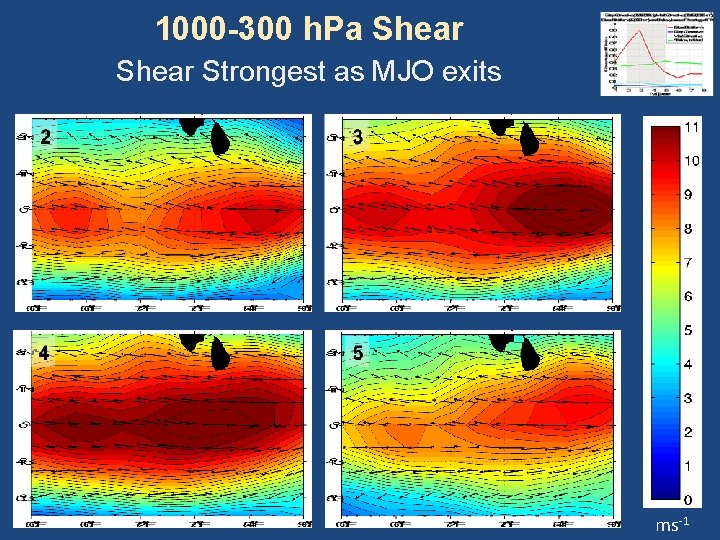
1000 -300 h. Pa Shear Strongest as MJO exits ms-1
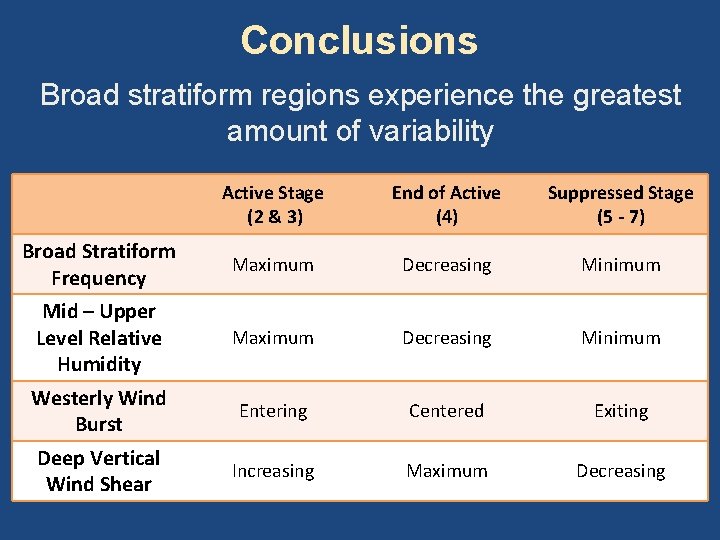
Conclusions Broad stratiform regions experience the greatest amount of variability Active Stage (2 & 3) End of Active (4) Suppressed Stage (5 - 7) Broad Stratiform Frequency Maximum Decreasing Minimum Mid – Upper Level Relative Humidity Maximum Decreasing Minimum Westerly Wind Burst Entering Centered Exiting Deep Vertical Wind Shear Increasing Maximum Decreasing
End This research was supported by NSF grant AGS-1059611 and DOE grant DE-SC 0001164/er-64752