
The Misra Gries Algorithm Motivation Espionage The rest

![Deterministic Streaming Algorithm for Finding Frequent Items The Misra-Gries algorithm [1982] finds these frequent](https://slidetodoc.com/presentation_image/013def6aa68e08fd065e90eafde73b77/image-18.jpg "Deterministic Streaming Algorithm for Finding Frequent Items The Misra-Gries algorithm [1982] finds these frequent")
- Slides: 25
The Misra Gries Algorithm
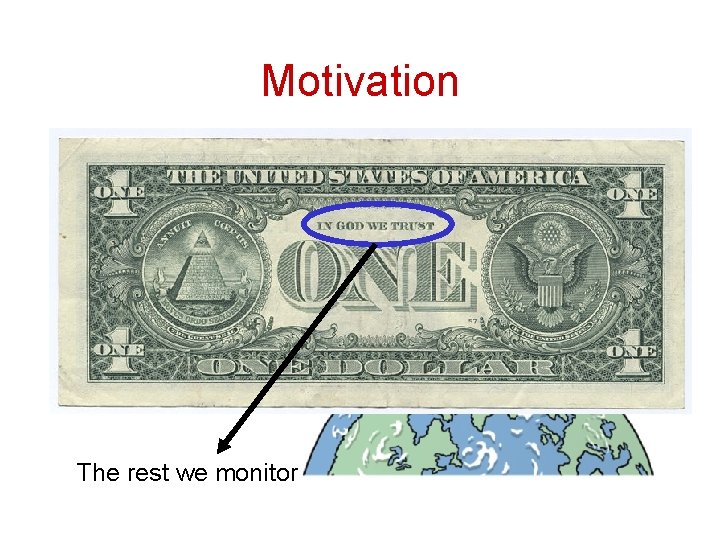
Motivation • Espionage The rest we monitor
Motivation • Viruses and malware
Motivation • Monitoring internet traffic
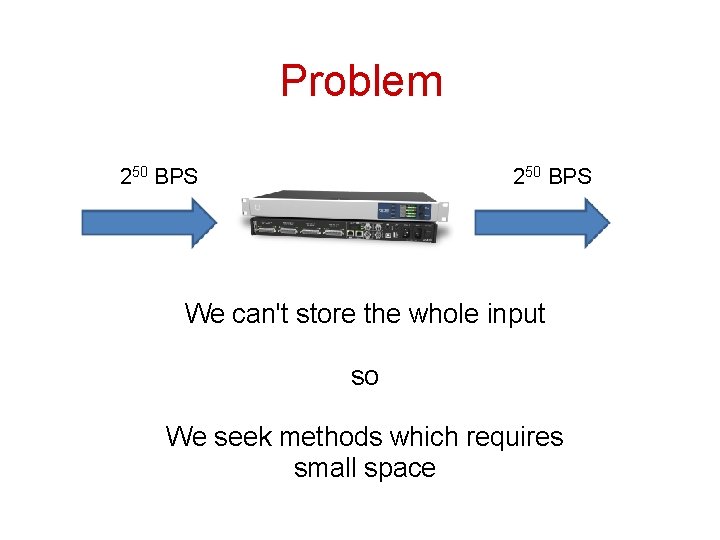
Problem 250 BPS We can't store the whole input so We seek methods which requires small space
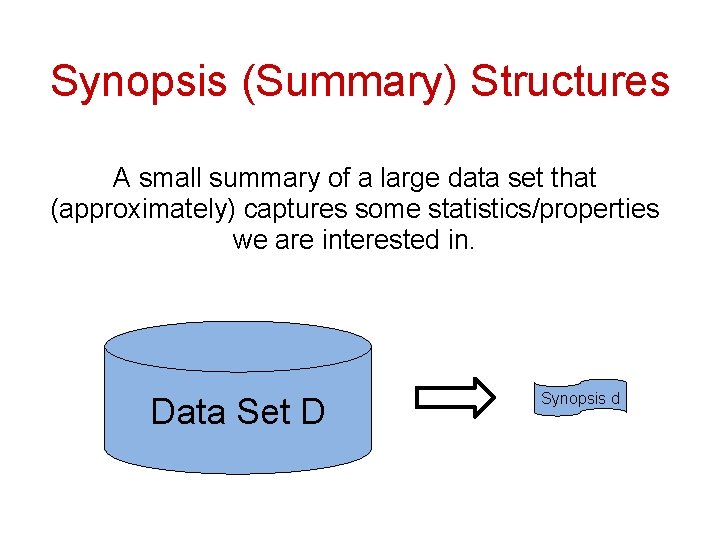
Synopsis (Summary) Structures A small summary of a large data set that (approximately) captures some statistics/properties we are interested in. Data Set D Synopsis d
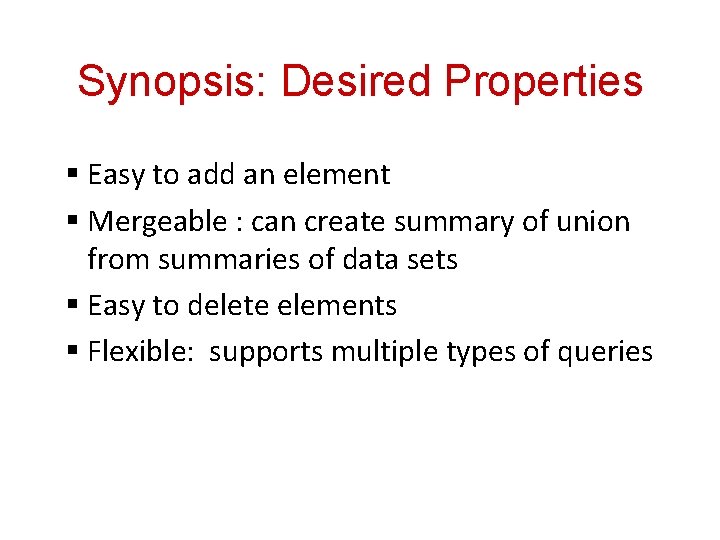
Synopsis: Desired Properties § Easy to add an element § Mergeable : can create summary of union from summaries of data sets § Easy to delete elements § Flexible: supports multiple types of queries
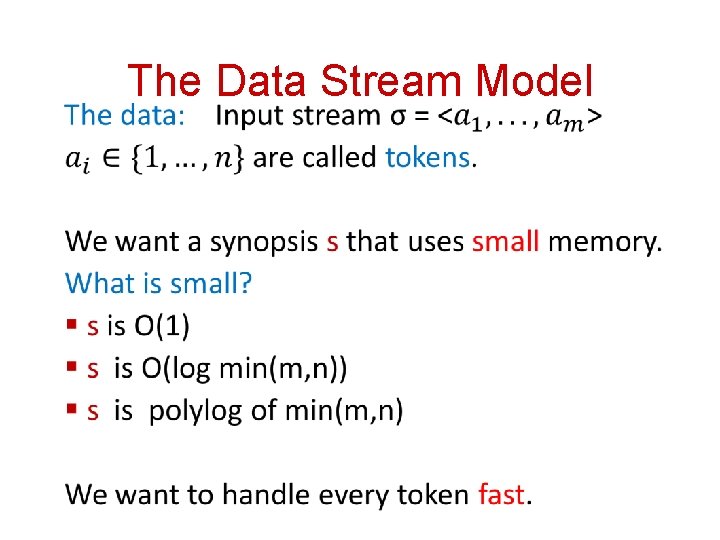
The Data Stream Model
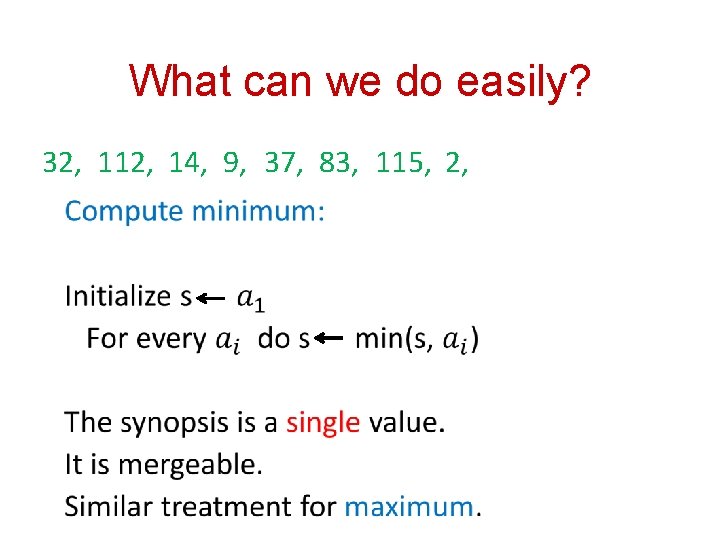
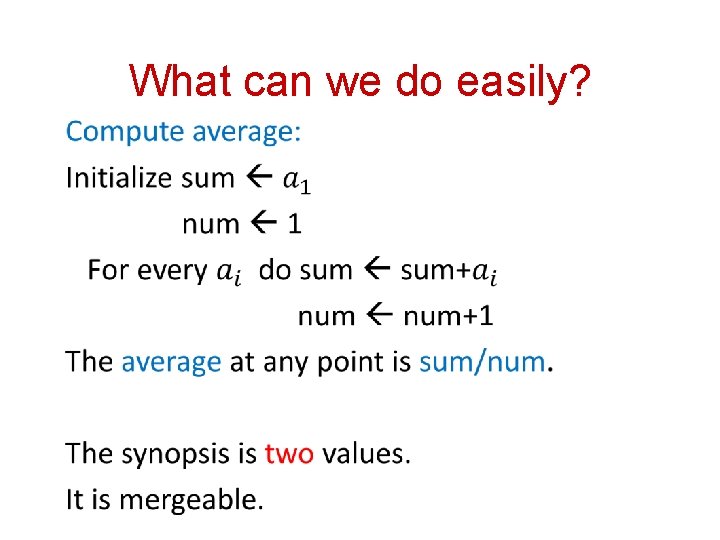
What can we do easily? 32, 112, 14, 9, 37, 83, 115, 2,
What can we do easily?
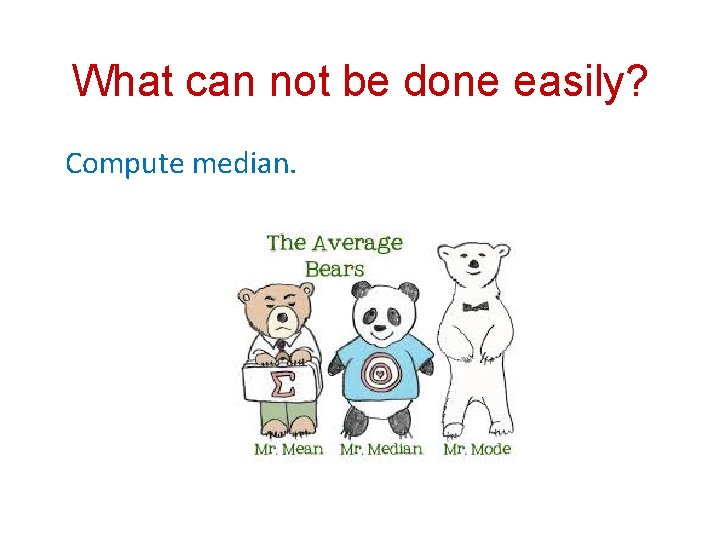
What can not be done easily? Compute median.
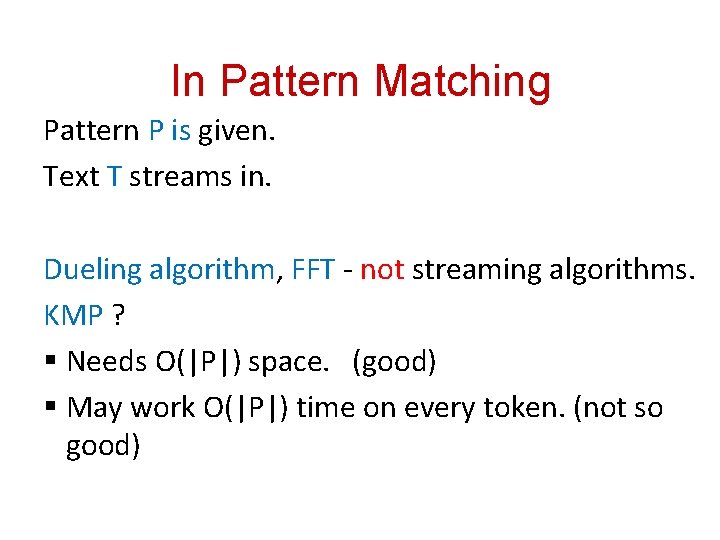
In Pattern Matching Pattern P is given. Text T streams in. Dueling algorithm, FFT - not streaming algorithms. KMP ? § Needs O(|P|) space. (good) § May work O(|P|) time on every token. (not so good)
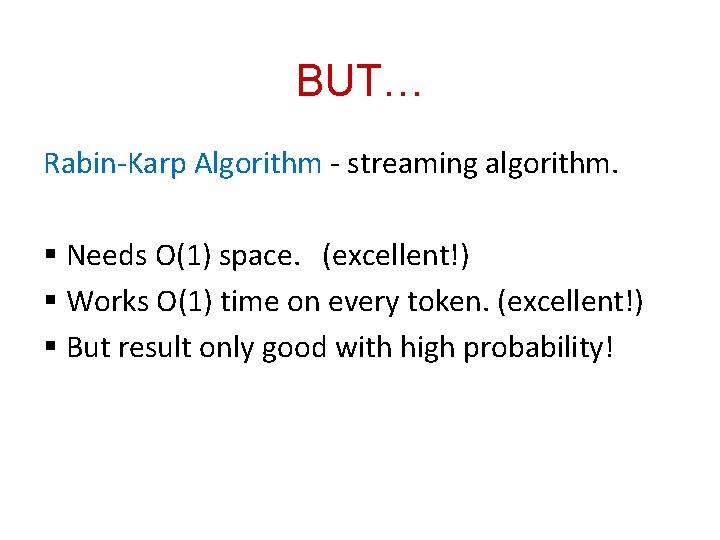
BUT… Rabin-Karp Algorithm - streaming algorithm. § Needs O(1) space. (excellent!) § Works O(1) time on every token. (excellent!) § But result only good with high probability!
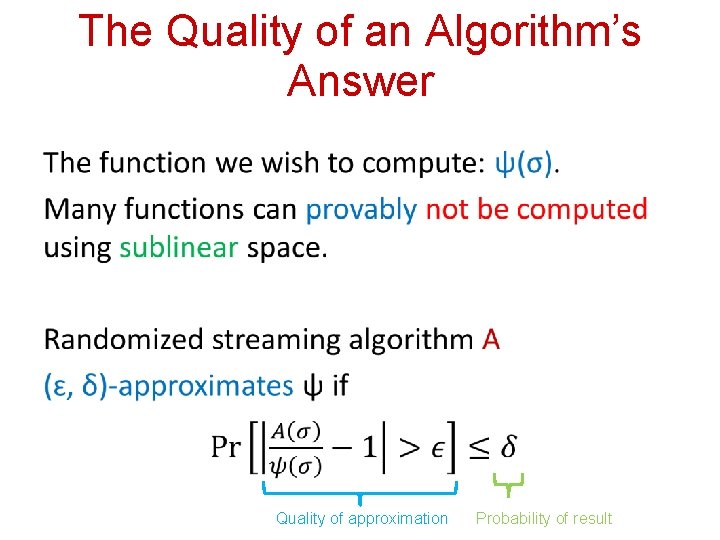
The Quality of an Algorithm’s Answer Quality of approximation Probability of result
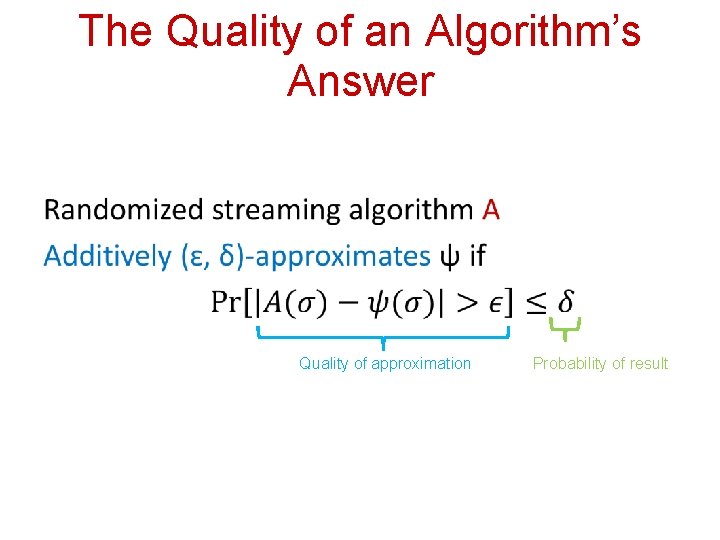
The Quality of an Algorithm’s Answer Quality of approximation Probability of result
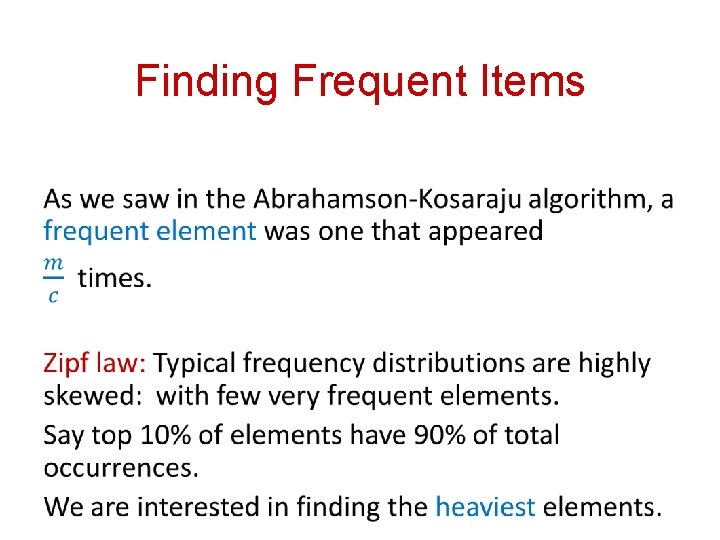
Finding Frequent Items
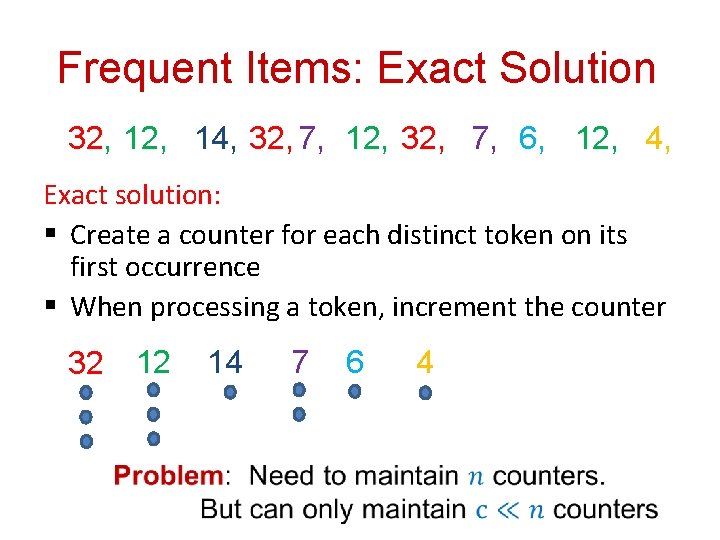
Frequent Items: Exact Solution 32, 14, 32, 7, 12, 32, 7, 6, 12, 4, Exact solution: § Create a counter for each distinct token on its first occurrence § When processing a token, increment the counter 32 12 14 7 6 4
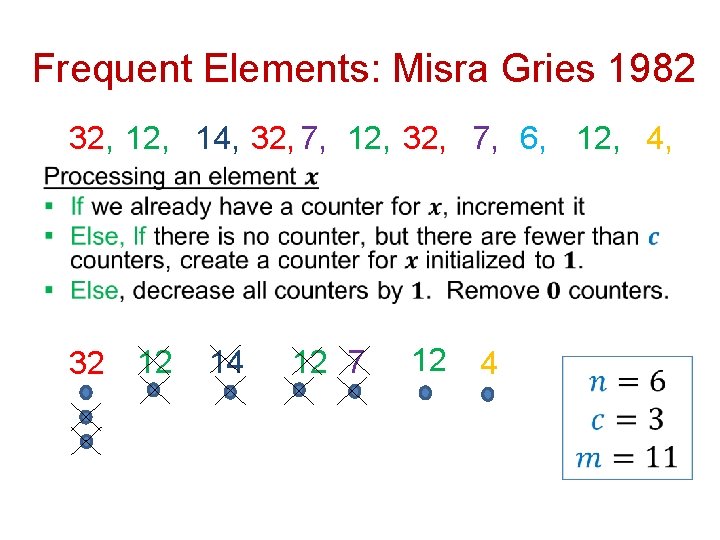
Deterministic Streaming Algorithm for Finding Frequent Items The Misra-Gries algorithm [1982] finds these frequent elements deterministically, using O(c log m) bits, in two passes.
Frequent Elements: Misra Gries 1982 32, 14, 32, 7, 12, 32, 7, 6, 12, 4, • 32 12 14 12 7 12 4
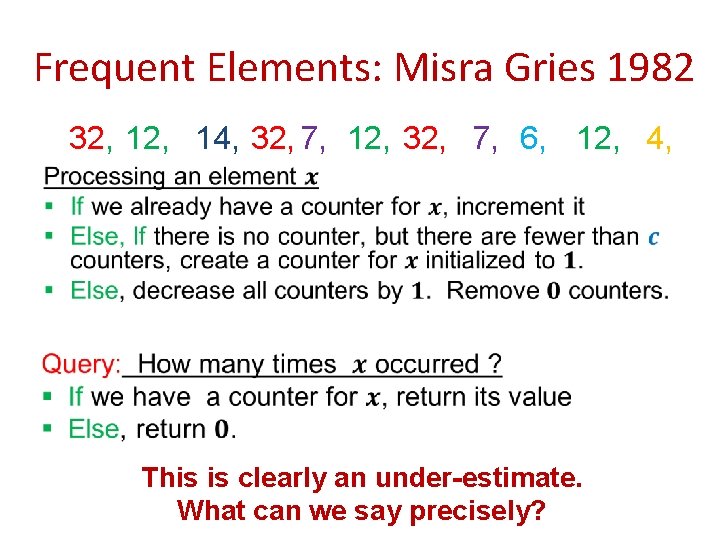
Frequent Elements: Misra Gries 1982 32, 14, 32, 7, 12, 32, 7, 6, 12, 4, • This is clearly an under-estimate. What can we say precisely?
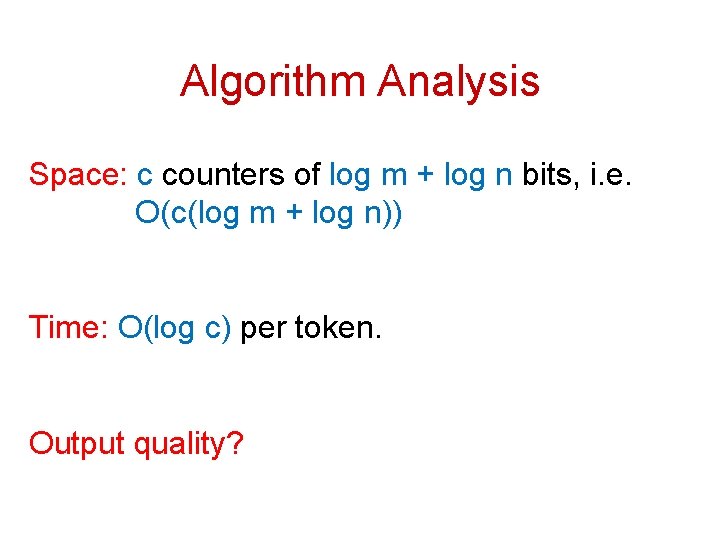
Algorithm Analysis Space: c counters of log m + log n bits, i. e. O(c(log m + log n)) Time: O(log c) per token. Output quality?
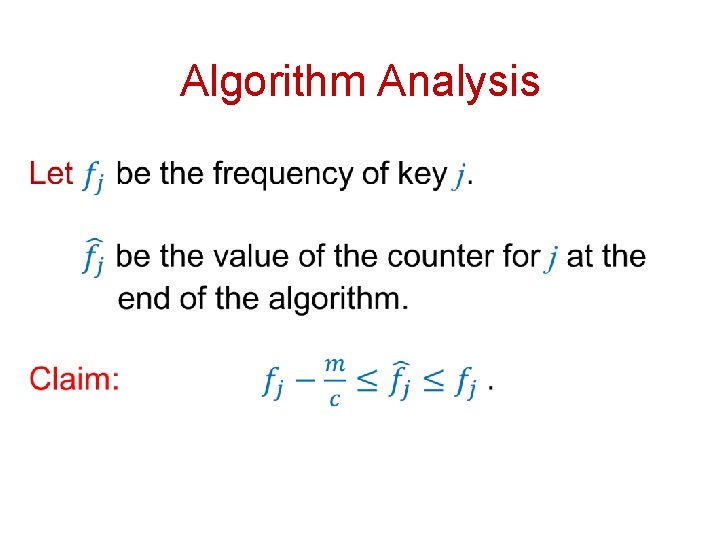
Algorithm Analysis
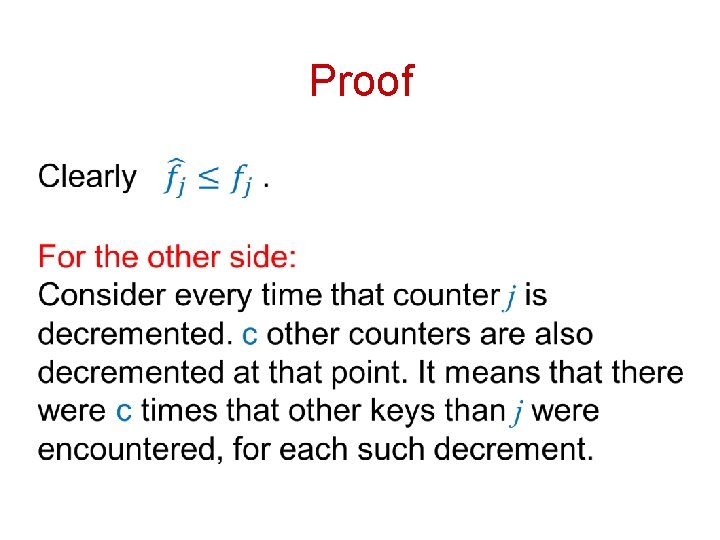
Proof
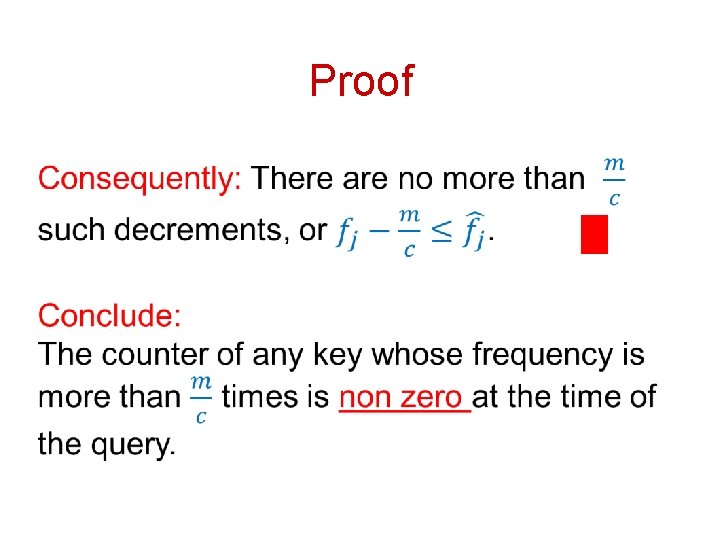
Proof
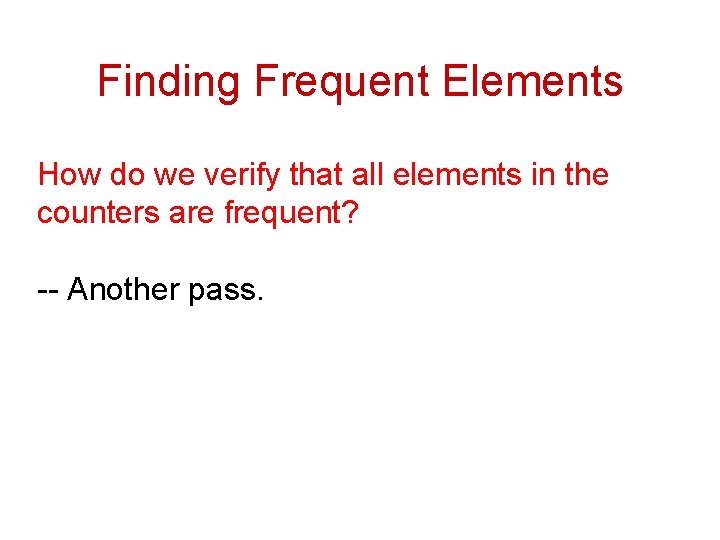
Finding Frequent Elements How do we verify that all elements in the counters are frequent? -- Another pass.