
The Minority Experience in WWII US History Mrs
- Slides: 11
The Minority Experience in WWII US History Mrs. Housenick 2/8/13
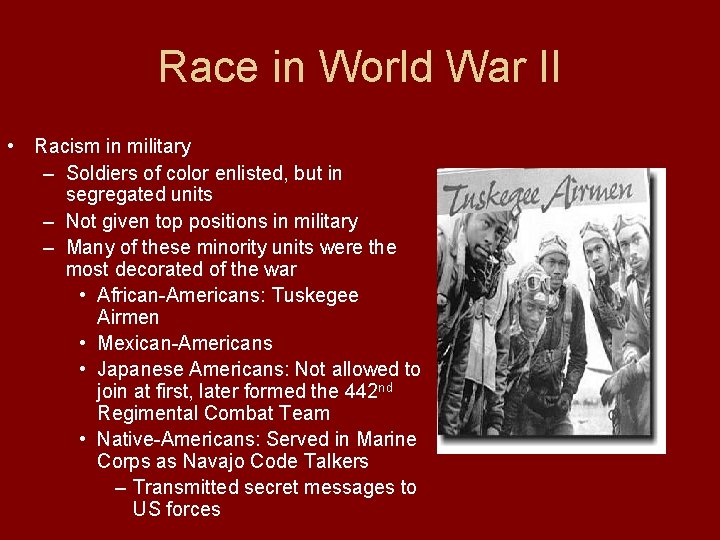
Race in World War II • Racism in military – Soldiers of color enlisted, but in segregated units – Not given top positions in military – Many of these minority units were the most decorated of the war • African-Americans: Tuskegee Airmen • Mexican-Americans • Japanese Americans: Not allowed to join at first, later formed the 442 nd Regimental Combat Team • Native-Americans: Served in Marine Corps as Navajo Code Talkers – Transmitted secret messages to US forces
African-Americans During War • Double Victory campaign: Victory against dictators abroad, and racism at home • Some victories: more job opportunities, increased migration to North and West (esp. CA) • Still, much racism: blacks paid less, discriminated in housing, in public facilities
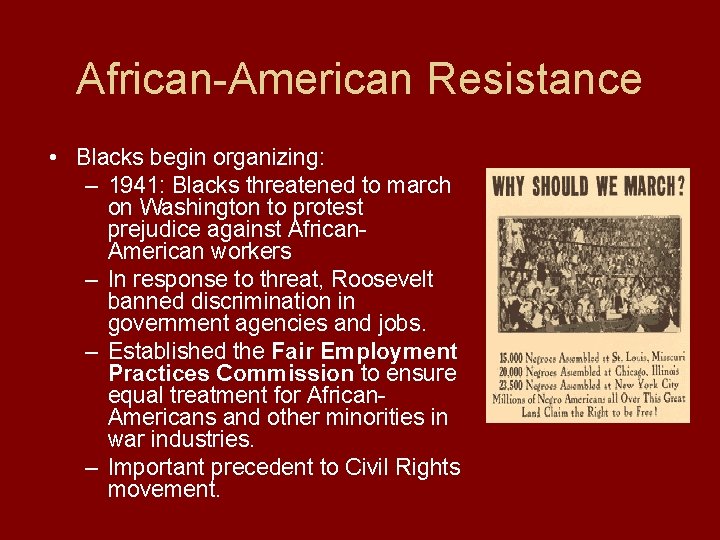
African-American Resistance • Blacks begin organizing: – 1941: Blacks threatened to march on Washington to protest prejudice against African. American workers – In response to threat, Roosevelt banned discrimination in government agencies and jobs. – Established the Fair Employment Practices Commission to ensure equal treatment for African. Americans and other minorities in war industries. – Important precedent to Civil Rights movement.
Clip from American Me • In your notes, jot down three examples of hatred, tension or violence between whites and Mexican Americans in WWII Los Angeles.
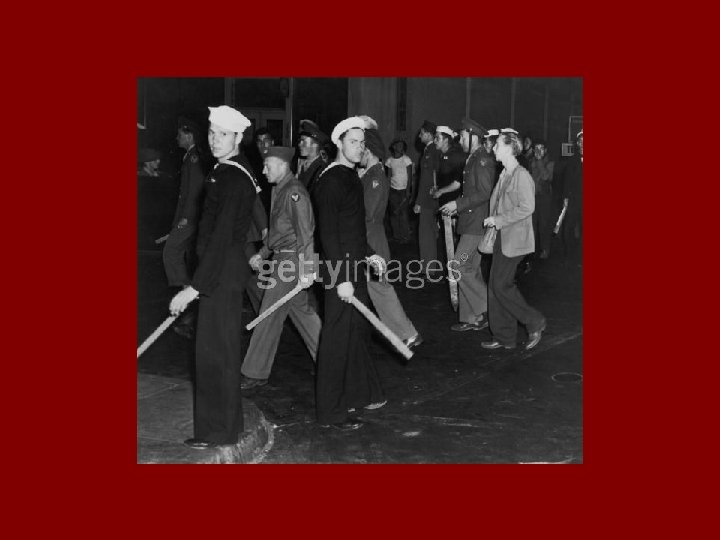
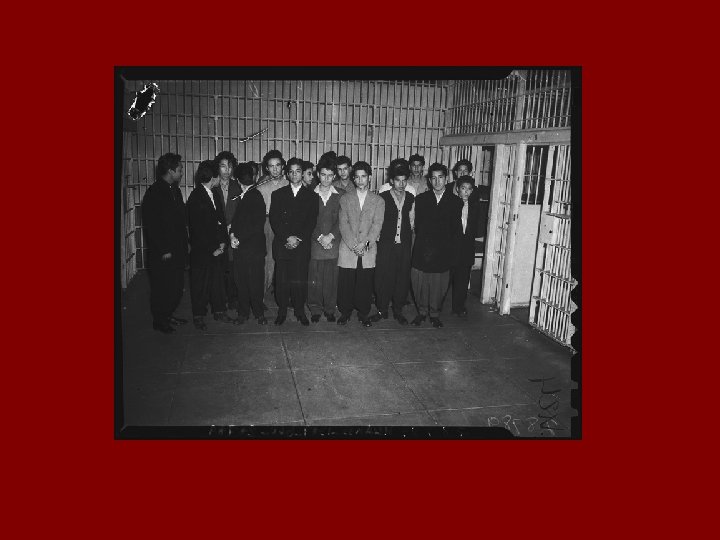
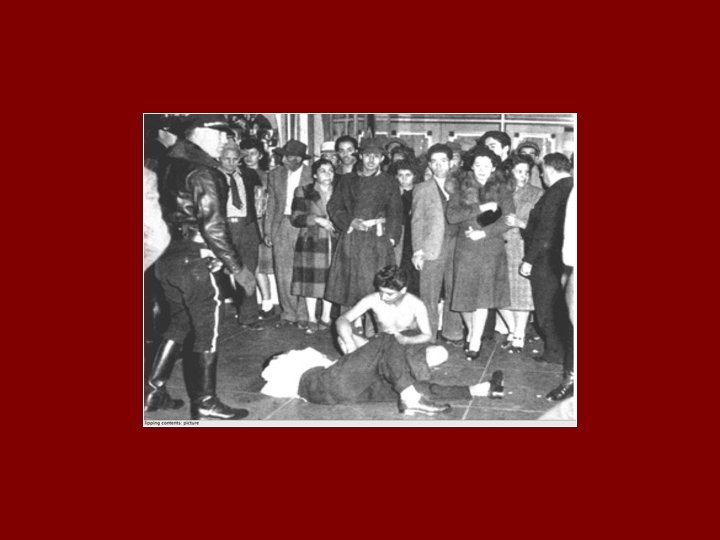
Racial Tensions in LA during WWII • Racism against Mexican Americans and the fear of teen crime • Mexican American teenagers who wore “zoot suits” were targeted. – Seen as unpatriotic and unsupportive of war • June 1943: 2500 soldiers and sailors attacked Mexican American neighborhoods in LA--> ZOOT SUIT RIOTS
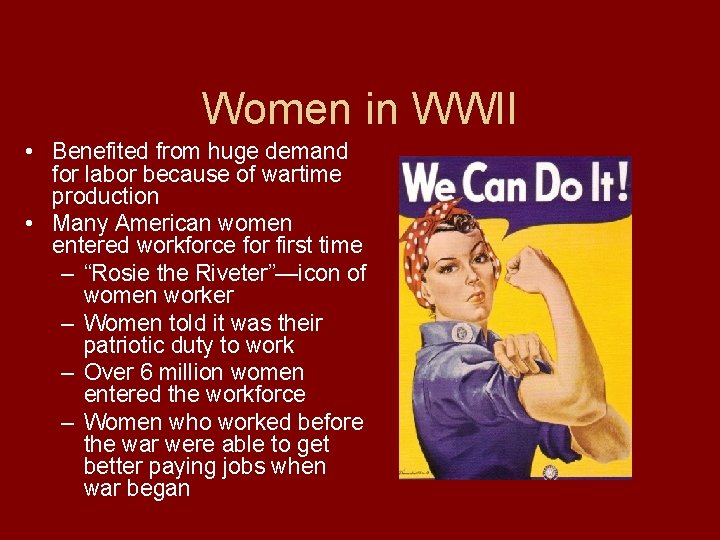
Women in WWII • Benefited from huge demand for labor because of wartime production • Many American women entered workforce for first time – “Rosie the Riveter”—icon of women worker – Women told it was their patriotic duty to work – Over 6 million women entered the workforce – Women who worked before the war were able to get better paying jobs when war began
Did Women’s Roles Really Change? • Men continued to dominate supervisory positions • Women still paid less • WOMEN FORCED OUT OF THE WORKFORCE AT THE END OF THE WAR! • Women veterans were not recognized for benefits until 1979.