
The Minoans Who The Minoans emerged from Cycladic
- Slides: 22
The Minoans
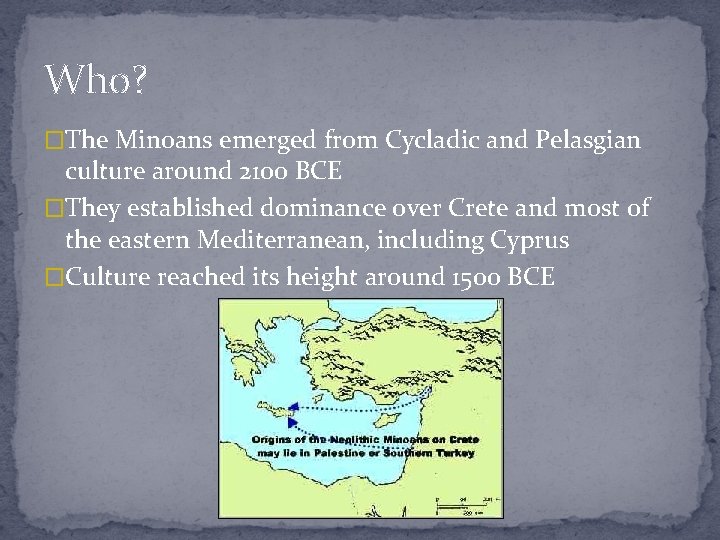
Who? �The Minoans emerged from Cycladic and Pelasgian culture around 2100 BCE �They established dominance over Crete and most of the eastern Mediterranean, including Cyprus �Culture reached its height around 1500 BCE
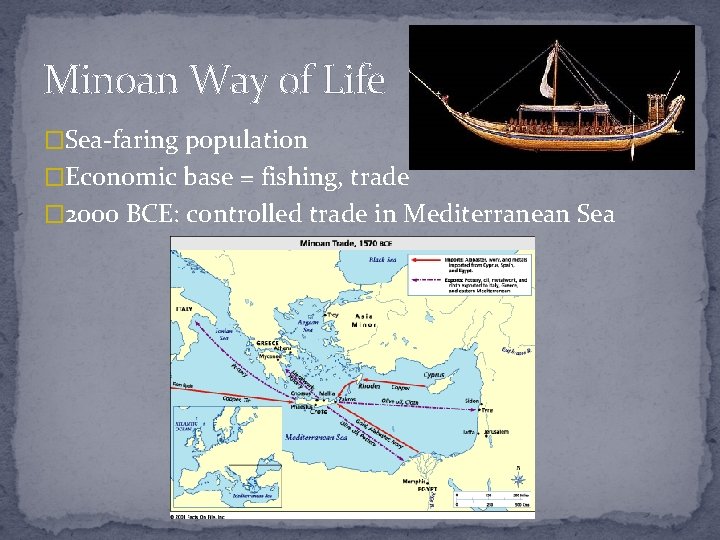
Minoan Way of Life �Sea-faring population �Economic base = fishing, trade � 2000 BCE: controlled trade in Mediterranean Sea
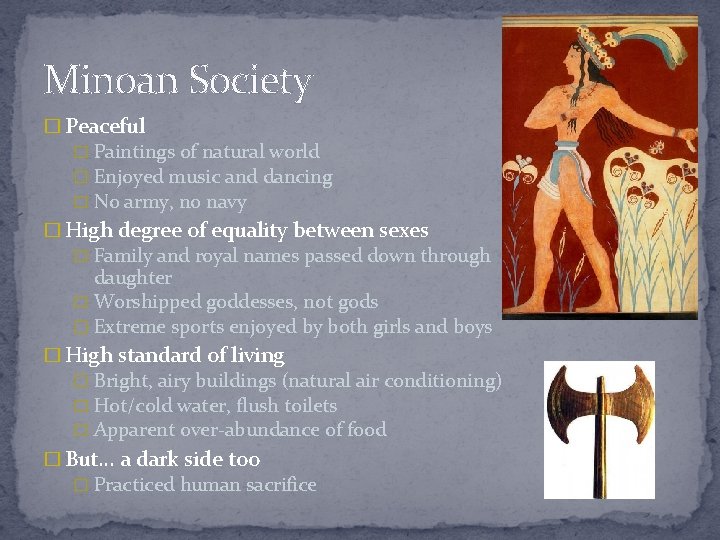
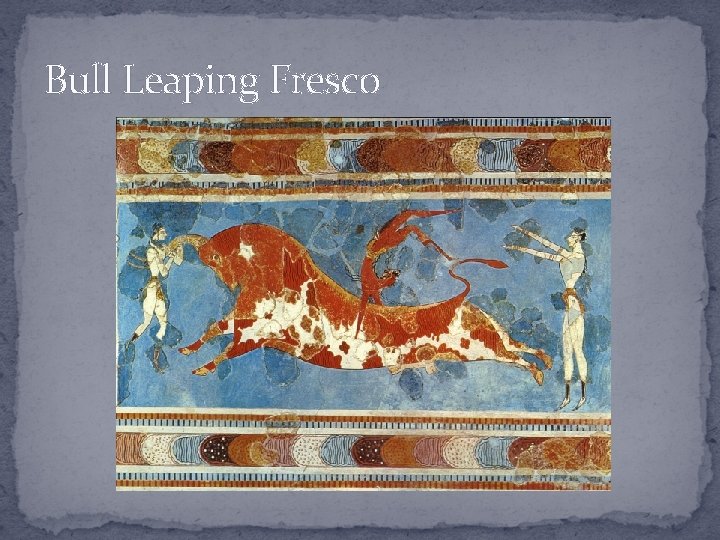
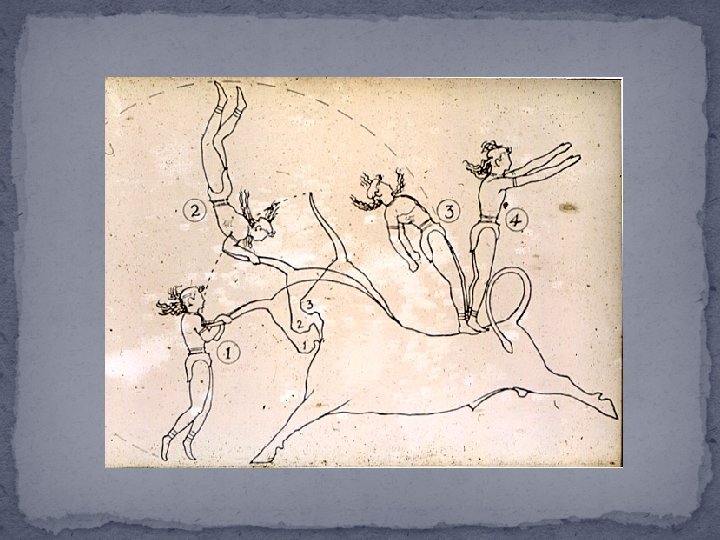
Minoan Society � Peaceful � Paintings of natural world � Enjoyed music and dancing � No army, no navy � High degree of equality between sexes � Family and royal names passed down through daughter � Worshipped goddesses, not gods � Extreme sports enjoyed by both girls and boys � High standard of living � Bright, airy buildings (natural air conditioning) � Hot/cold water, flush toilets � Apparent over-abundance of food � But… a dark side too � Practiced human sacrifice
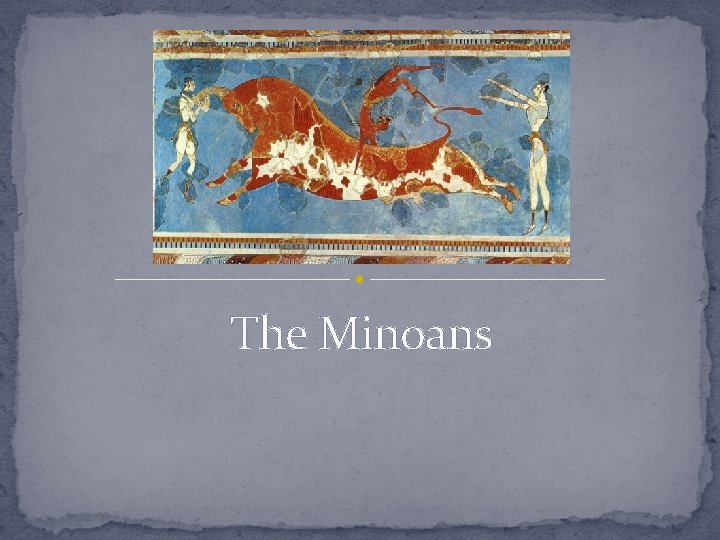
Bull Leaping Fresco
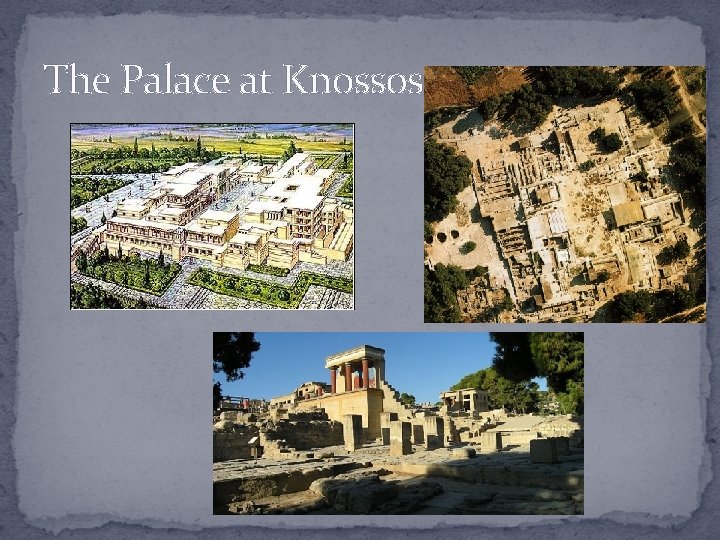
The Palace at Knossos
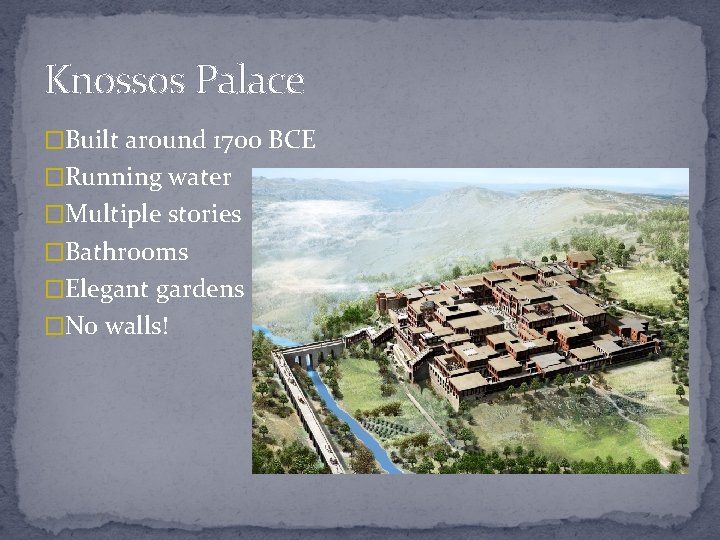
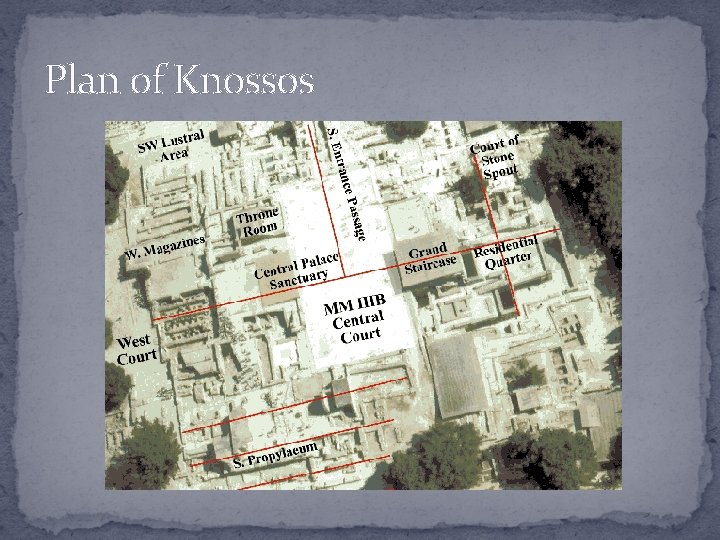
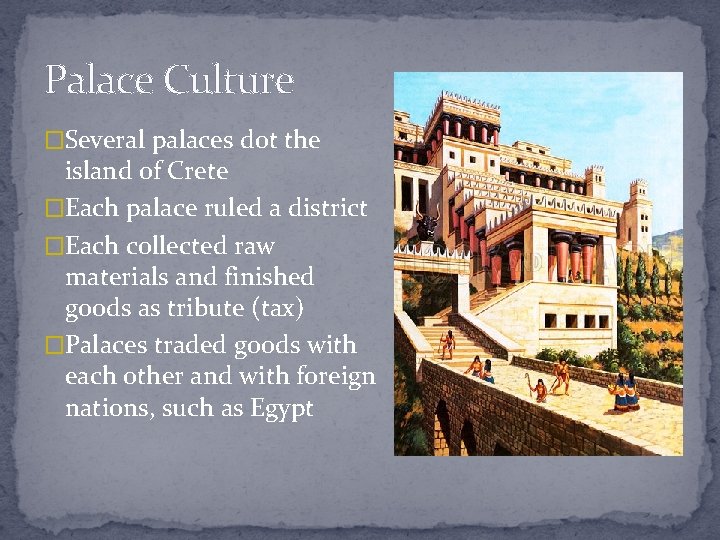
Knossos Palace �Built around 1700 BCE �Running water �Multiple stories �Bathrooms �Elegant gardens �No walls!
Plan of Knossos
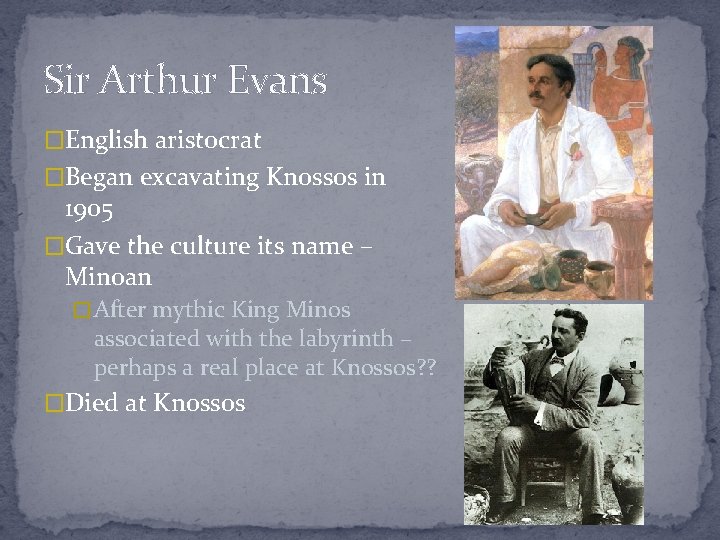
Sir Arthur Evans �English aristocrat �Began excavating Knossos in 1905 �Gave the culture its name – Minoan � After mythic King Minos associated with the labyrinth – perhaps a real place at Knossos? ? �Died at Knossos
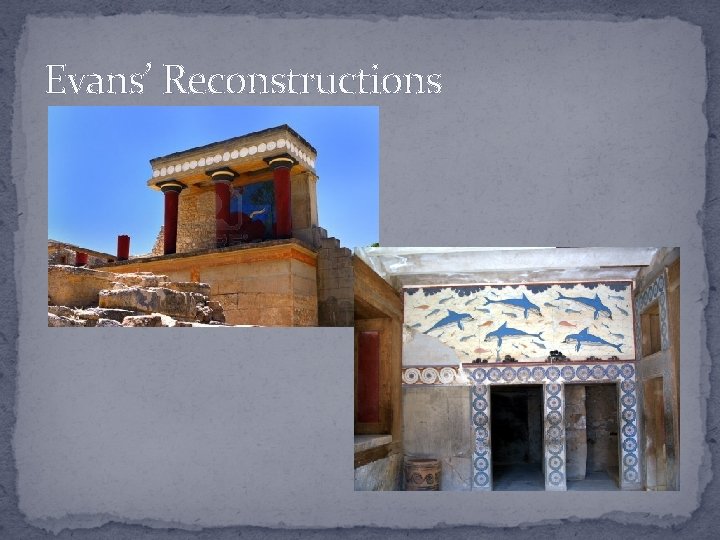
Evans’ Reconstructions
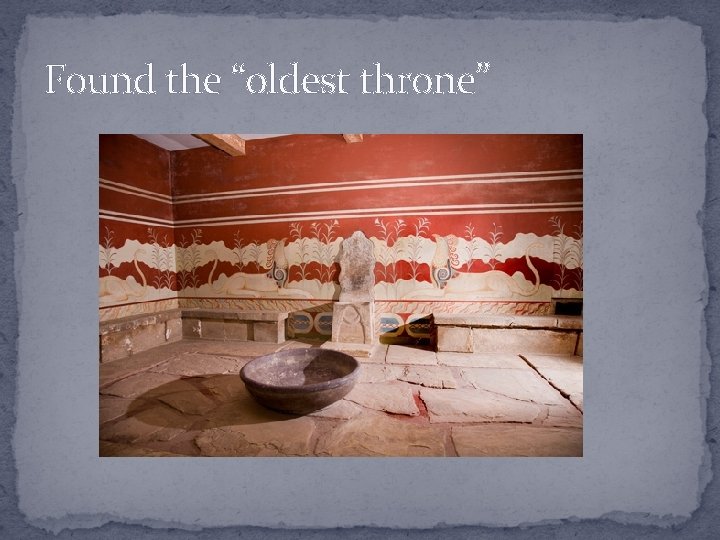
Found the “oldest throne”
Palace Culture �Several palaces dot the island of Crete �Each palace ruled a district �Each collected raw materials and finished goods as tribute (tax) �Palaces traded goods with each other and with foreign nations, such as Egypt
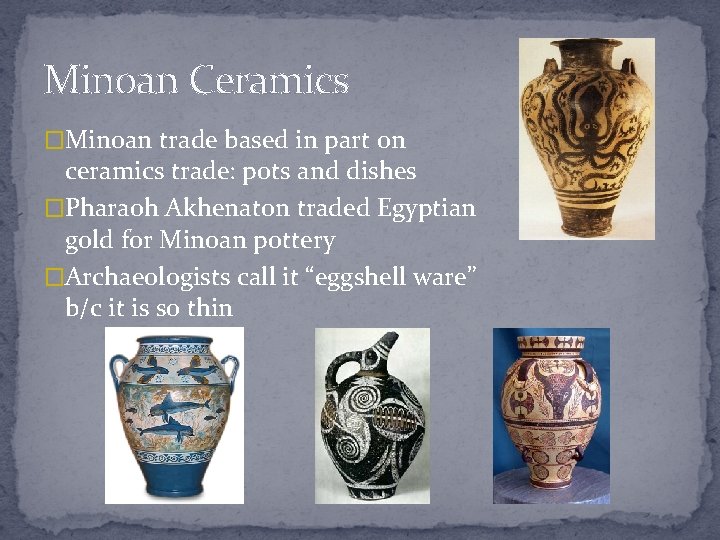
Minoan Ceramics �Minoan trade based in part on ceramics trade: pots and dishes �Pharaoh Akhenaton traded Egyptian gold for Minoan pottery �Archaeologists call it “eggshell ware” b/c it is so thin
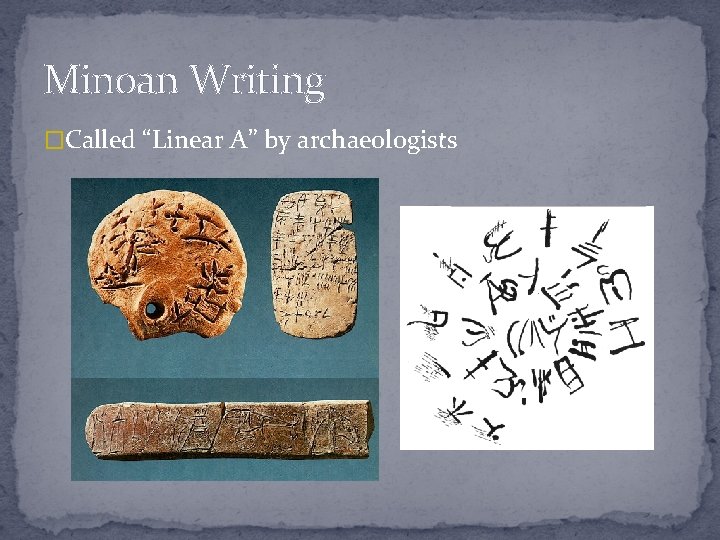
Minoan Writing �Called “Linear A” by archaeologists
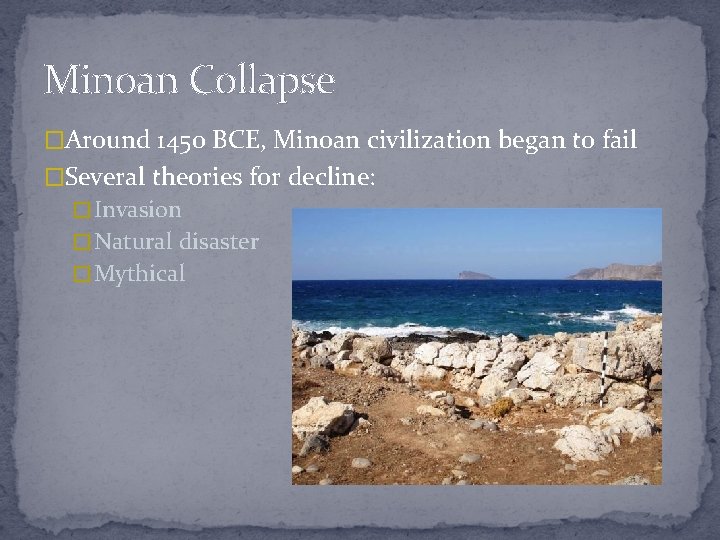
Minoan Collapse �Around 1450 BCE, Minoan civilization began to fail �Several theories for decline: � Invasion � Natural disaster � Mythical
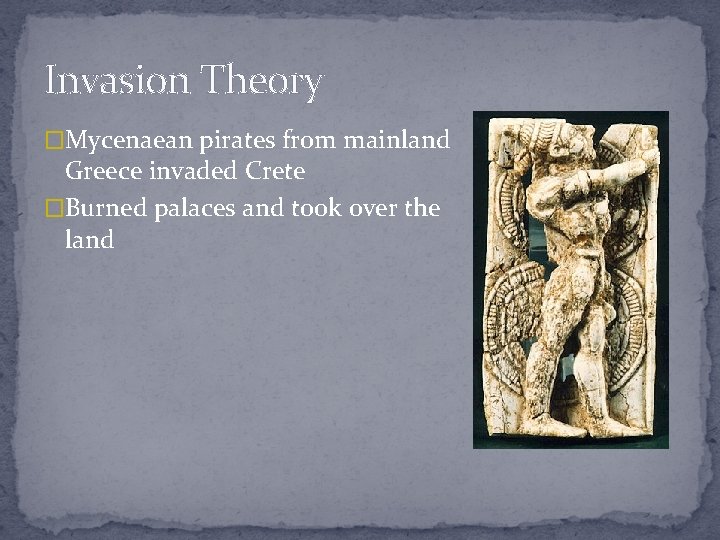
Invasion Theory �Mycenaean pirates from mainland Greece invaded Crete �Burned palaces and took over the land
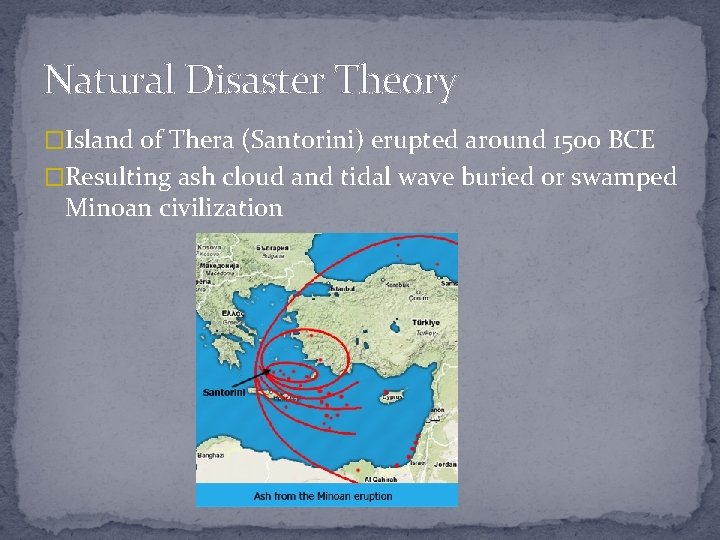
Natural Disaster Theory �Island of Thera (Santorini) erupted around 1500 BCE �Resulting ash cloud and tidal wave buried or swamped Minoan civilization
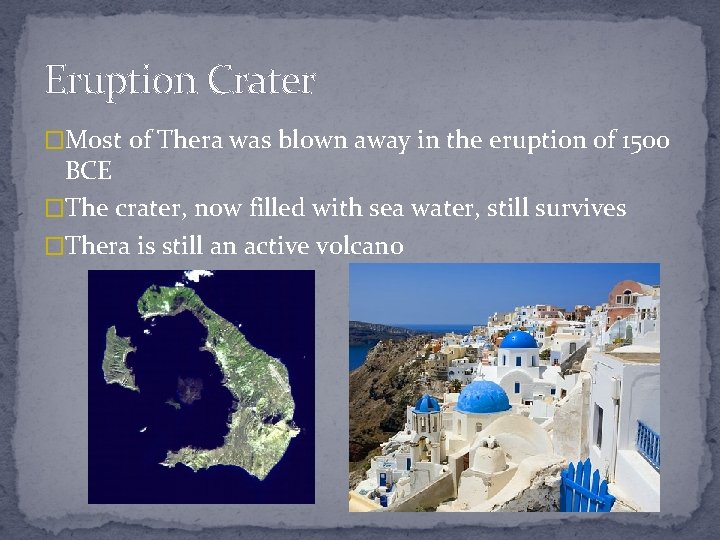
Eruption Crater �Most of Thera was blown away in the eruption of 1500 BCE �The crater, now filled with sea water, still survives �Thera is still an active volcano
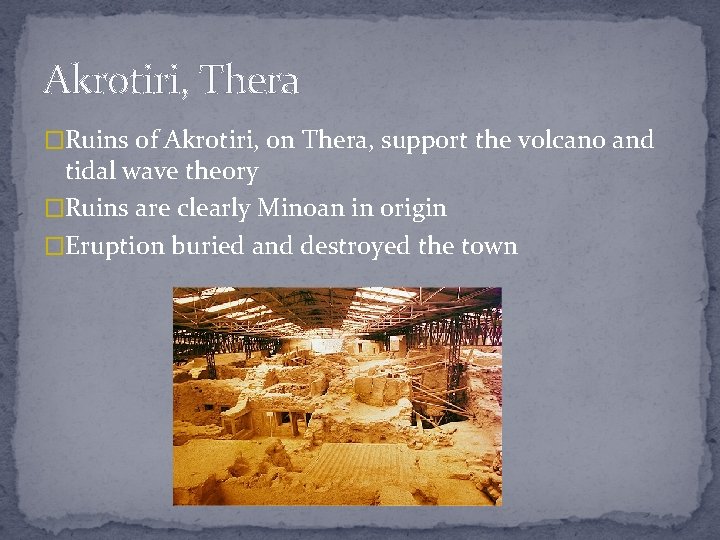
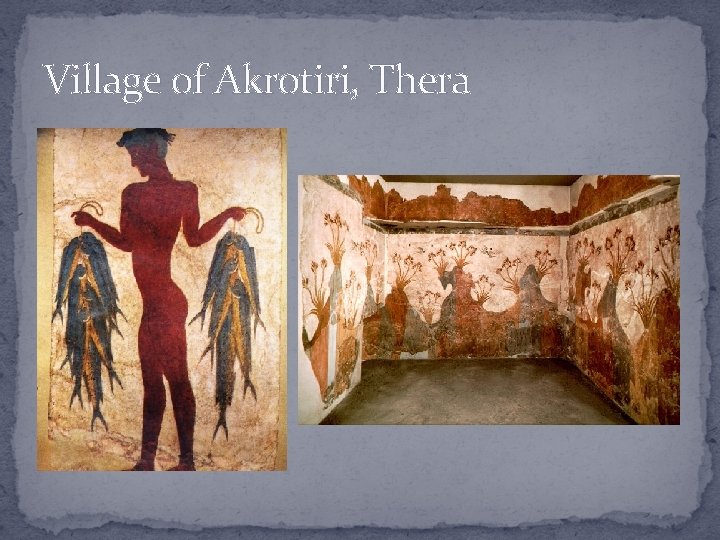
Akrotiri, Thera �Ruins of Akrotiri, on Thera, support the volcano and tidal wave theory �Ruins are clearly Minoan in origin �Eruption buried and destroyed the town
Village of Akrotiri, Thera
Myth of the Minotaur �A young Greek prince, Theseus, was brought to Knossos �He was to be sacrificed to the Minotaur – a huge monster the King kept in the palace labyrinth �The Minotaur had the head of a bull and lived on human flesh �Theseus was put into the labyrinth where he fought the monster with a magical sword and killed it �When the Minotaur died, the power of the Minoans died too